
2027 Best College Programs for Work-Life Balance

Co-Founder and Chief Data Scientist
A program can fit around your job yet lead to a career with unpredictable hours. Choosing for work-life balance means checking both the demands of studying and the conditions of the work that follows. That distinction matters: the U.S. Bureau of Labor Statistics (BLS) reports a May 2024 median annual wage of $93,600 for registered nurses, but nursing schedules vary widely by setting. This guide compares master's program families for working adults and career changers, showing where flexible study may lead to predictable work - and where clinical training, licensing, or on-call duties can change the calculation.
Key Things You Should Know
- For predictable hours, compare the occupation and employer, not just the degree: an education, business, or IT role may offer a different schedule from a hospital or emergency-services role.
- For study flexibility, check live attendance, placement hours, and part-time course availability; "online" alone does not answer whether you can keep working.
- Pay is only one measure: BLS reports a May 2024 median annual wage of $133,080 for software developers, but that occupational figure is not a promised salary for computer science graduates.
Top 10 Best College Programs for Work-Life Balance
Business Programs
An MBA or master's in management can suit professionals seeking operations, finance, or project roles without a mandated clinical placement. Part-time and online formats may make the degree manageable, but group projects and scheduled meetings still take time. Compare course calendars and employer tuition benefits before enrolling. For career balance, ask about the target role: internal operations jobs may have steadier hours than consulting, while management positions can bring travel and after-hours responsibility. An MBA is not required for every business role, so weigh its full cost against experience and shorter credentials.
Healthcare Programs
A master's in healthcare administration or health informatics may appeal to people who want to work in healthcare without providing bedside care. These programs commonly cover operations, policy, data, and quality improvement; some include an internship or capstone. Online coursework may fit a work schedule, while placements can limit flexibility. Administrative jobs in outpatient organizations may have more regular hours than hospital leadership roles, which can involve urgent staffing or operational problems. Clinical experience may be preferred for certain jobs, and the degree alone does not confer a healthcare license.
Information Technology Programs
A master's in information technology, information systems, or cybersecurity can support careers in systems management, security, and enterprise technology. Project-based online courses can be convenient, but labs and team assignments still have deadlines. Balance depends heavily on the job: internal systems roles may follow regular business hours, whereas security incident response and infrastructure support may require on-call coverage. Compare concentrations with actual job descriptions before paying for a graduate degree; relevant experience or an industry certification may be a more direct route to some positions.
Computer Science Programs
A computer science master's typically emphasizes algorithms, software engineering, and advanced technical electives; applicants without a computing background may need foundation courses. Many programs offer project or thesis options, which can affect scheduling and completion time. Software development can allow remote or hybrid work, but release deadlines and production incidents may extend the workday. This path fits students who want substantial technical depth. Someone mainly seeking a faster career change should compare prerequisite requirements and portfolio-building alternatives before assuming a master's is necessary.
Nursing Programs
Master of Science in Nursing programs prepare eligible registered nurses for tracks such as education, leadership, and advanced practice. Admission commonly requires an active RN license; advanced-practice tracks also involve supervised clinical training and additional certification or licensure. Online lectures do not remove placement hours. A nurse educator or outpatient role may offer a more predictable schedule than inpatient shift work, but openings and schedules vary. Choose the track for its intended role, not for the word "online," and confirm that clinical placements and state requirements fit your circumstances.
Psychology Programs
A psychology master's may focus on research, applied psychology, or a specific practice pathway. These are not interchangeable: a general psychology degree does not, by itself, qualify a graduate for psychologist licensure, which generally requires doctoral training and other state requirements. Counseling-oriented programs can require substantial supervised fieldwork and lead to separate licensing pathways. Research or organizational roles may have steadier hours than client-facing crisis work. Before enrolling, match the exact curriculum and accreditation to the occupation and state in which you intend to work.
Education Programs
A master's in education can support curriculum, instructional design, leadership, or specialized teaching goals. A program for licensed teachers differs from an initial teacher-licensure pathway, which may require student teaching and state-approved preparation. Online classes can make graduate study easier to schedule, but school-calendar deadlines and placements may not be movable. District or instructional-design positions may offer more predictable hours than some classroom or administrative roles; school breaks do not necessarily mean work-free time. Confirm whether the degree advances your specific credential or salary schedule before enrolling.
Criminal Justice Programs
A criminal justice master's commonly examines policy, leadership, research, and public administration. Its coursework may be available part-time online, though a capstone or internship can add fixed commitments. Career balance differs markedly between daytime policy or analyst work and patrol, corrections, or emergency-response jobs with rotating shifts. Many law-enforcement positions have their own hiring and academy requirements rather than requiring a master's. This degree makes more sense when its courses match a documented advancement goal than when it is chosen on the assumption that a graduate credential will change shift assignments.
Engineering Programs
A professional master's in engineering can deepen a working engineer's expertise through advanced coursework and a design project; research-focused versions may require a thesis and closer faculty supervision. Online and part-time options exist, but laboratory access, course sequencing, and team projects deserve scrutiny. Established design roles may offer predictable schedules, while fieldwork, construction deadlines, and production failures can disrupt them. A graduate degree does not replace professional engineer licensure where that credential is required. Check prerequisites carefully if your bachelor's degree is outside engineering.
Social Work Programs
A Master of Social Work is a practice-oriented path that generally includes supervised field education, even when academic courses are online. Graduates may seek roles in schools, healthcare, community organizations, or clinical practice; schedules and exposure to crises differ across those settings. Clinical social work requires further supervised experience and state licensure after graduation. Applicants with an eligible accredited Bachelor of Social Work may qualify for advanced standing, but its shorter timeline should not be assumed for other applicants. Ask when placements occur and whether you can complete them alongside your current job.
What college programs lead to careers with the best work-life balance?
For the best chance of predictable work hours, start with the role you want, then select its qualifying program. Education, business operations, healthcare administration, and some software or IT roles can offer regular schedules. Nursing, social work, and other licensed practice fields can also lead to balanced careers, but the setting and coverage responsibilities matter more than the degree label.
This comparison separates flexibility while studying from flexibility at work. It describes possibilities, not guarantees about an employer or a graduate's outcome.
| Master's program family | Study constraint to check | Career schedule question |
| Business or healthcare administration | Team projects, internships, or capstones | Does the role require travel or after-hours operations coverage? |
| IT or computer science | Prerequisites, labs, and project deadlines | Is there on-call or incident-response duty? |
| Education | School-based work or student teaching, if required | What work occurs outside scheduled school hours? |
| Nursing or social work | Clinical or field placements | Are shifts, emergencies, or evening appointments expected? |
If you are still comparing masters degrees, treat a manageable curriculum as one factor - not evidence that the resulting career will be easy or low-stress.
Which degrees offer strong salaries and flexible career options?
Computer science and IT can combine strong occupational pay with a range of work arrangements, but flexibility depends on the position. Business analytics, healthcare informatics, and instructional design can also cross industries, giving applicants more types of employers to consider. A broadly usable degree is valuable only if its curriculum builds skills those employers seek.
For example, BLS projects employment of software developers, quality assurance analysts, and testers to grow 15% from 2024 to 2034. That outlook signals demand across the occupational group, not an offer of remote work or a particular salary to a new graduate. Compare postings in your intended location for required skills, experience, and on-call expectations. If the degree is optional for those jobs, estimate whether its total cost and time away from work justify it.
How can you compare online and campus-based programs for flexibility?
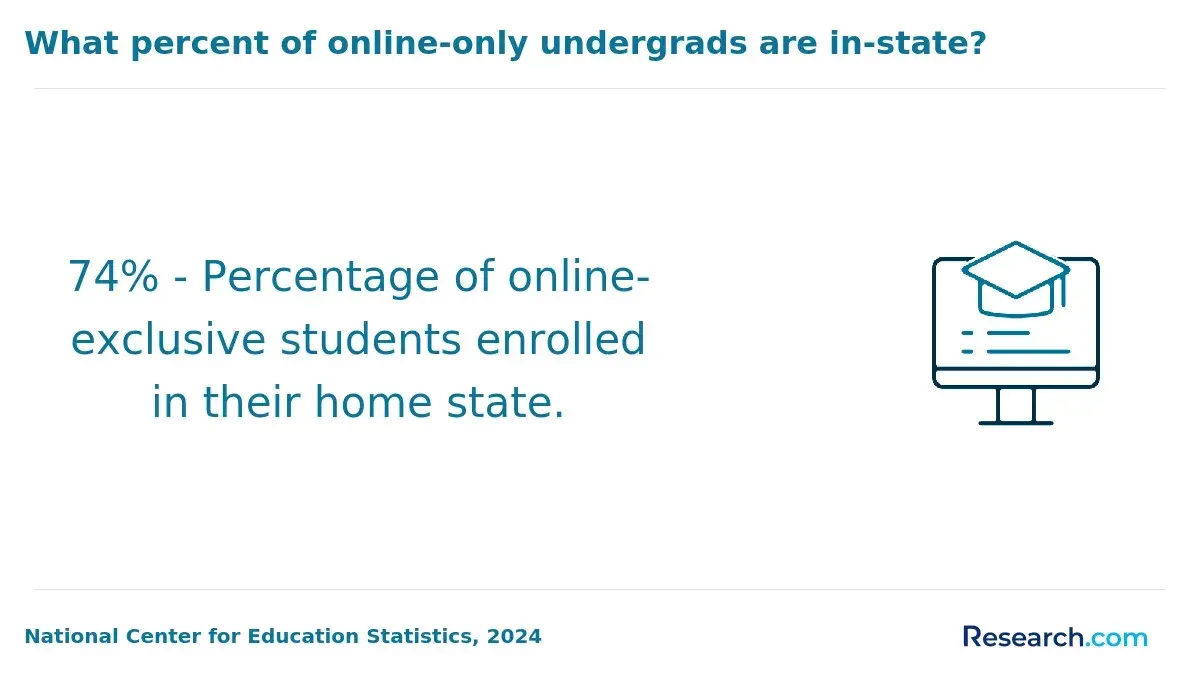
Compare actual weekly obligations, not delivery labels. Asynchronous courses let students access instruction at different times, but they still have deadlines. Synchronous courses require attendance at scheduled times; a campus program may be easier to manage than either format if its classes and support services fit your routine.
Request a sample course calendar and ask whether every required course is offered part-time, whether group meetings are scheduled, and whether exams require live proctoring. For practice-oriented degrees, confirm who arranges placements, where they can occur, and whether hours are available outside your workday. Frequent admission opportunities, including those advertised by online colleges with weekly start dates, do not mean required courses begin every week or that a master's program follows the institution-wide calendar.
What coursework do work-life-balance college programs typically include?
Most of these master's programs combine core courses, a specialization, and applied or culminating work. The combination affects both your weekly workload and how directly the degree prepares you for a role: an MBA may use case studies and group projects, computer science may require coding and advanced mathematics, and an MSW includes field education. Thesis tracks generally demand sustained independent research; non-thesis tracks may use a capstone, examination, or professional project instead.
When assessing quick masters degrees online, inspect prerequisites, course sequencing, and the final requirement. Short classes do not make the whole degree short, and a placement or thesis may determine when you can finish.
What admission requirements apply to these degree and certificate programs?
Graduate admission generally starts with a completed bachelor's degree, transcripts, and a program application, but requirements vary. Computer science and engineering may require specific prior coursework; an MBA may value professional experience. Nursing graduate tracks typically require RN licensure, while some education tracks require a teaching credential. A program can also have its own GPA threshold, recommendations, interview, portfolio, or test policy separate from the university's general admission rules.
If you are changing fields, ask for a written review of foundation courses before committing. If you already hold a relevant credential, ask whether a published bridge or advanced-standing pathway applies to you. Do not assume prior graduate courses or professional experience will count toward degree requirements without a program-specific evaluation.
How long do these programs take, and what do they cost?
A master's program may take roughly one to several years, depending on its required credits, full- or part-time enrollment, prerequisite courses, and culminating work. Clinical and field placements can extend the timeline even when lectures are online. Advanced standing can shorten an eligible MSW pathway, but only after the program confirms that an applicant's prior preparation qualifies.
For cost, compare the amount needed to finish, not a tuition rate in isolation: include required credits, mandatory and program fees, books or software, travel, and any unpaid placement hours. Ask each school for a personalized estimate after transfer-credit review and check federal aid eligibility and employer tuition assistance. Affordable online masters programs are worth comparing, but a low advertised rate can lose its advantage if extra requirements raise the total bill.
What careers, salaries, and job outlooks follow these programs?
Career prospects depend on the occupation, experience, location, and employer - not simply on completing a master's. The BLS figures below are U.S. occupational median annual wages for May 2024. They include workers with different education levels and should not be read as expected earnings for graduates of the programs discussed here.
| Occupation | May 2024 median annual wage | Education and schedule context |
| Registered nurses | $93,600 | Requires nursing education and licensure; shifts vary by setting, and a master's is not required for RN entry. |
| Software developers | $133,080 | Employers commonly seek computing skills; a master's is not universally required, and deadlines vary. |
| Information security analysts | $124,910 | Experience and certifications can matter; incident response may involve on-call work. |
Use job postings to test the connection between a program and your target role. Check whether employers actually request the degree, what experience they expect, and whether the advertised schedule includes travel, shifts, or after-hours coverage. Strong pay cannot compensate for a schedule that conflicts with your priorities.
Which licenses or professional certifications do graduates need?
A degree and permission to practice are different things. RNs need state licensure; advanced-practice nursing roles have additional education, certification, and state requirements. Clinical social workers need post-degree supervised experience and a state license. Public-school teachers generally need the applicable state credential, while professional engineer licensure depends on state rules, examinations, and qualifying experience. Requirements can differ by specialty and state.
Business, IT, and computer science roles generally do not have one profession-wide license. Optional industry certifications may help with particular jobs, but they are not substitutes for a legally required license. Before enrolling in a practice-oriented program, ask the relevant state board whether the specific program and track satisfy its educational requirements.
How can you verify a program's accreditation and career value?
Start by confirming the institution's recognized accreditation through the U.S. Department of Education's accreditation database or the accreditor's directory. Then check whether your target profession calls for additional programmatic accreditation or state approval. For example, a nursing, social work, or educator-preparation program needs closer scrutiny than institutional accreditation alone provides. An online format does not override the licensing rules in the state where you plan to practice.
Finally, request the program's official catalog, tuition schedule, course rotation, placement policy, and any available career-outcome information. A useful comparison identifies the credential awarded, remaining requirements, total estimated cost, and realistic target jobs. Treat an unverified "fully flexible" claim, unclear placement support, or a salary figure presented as a graduate guarantee as a reason to ask more questions before paying a deposit.
Other Things You Should Know About
No. Online programs may require live classes, fixed deadlines, group meetings, or in-person placements. Check a sample schedule for every required component.
There is no universal winner. Business operations, instructional design, and some IT roles may offer predictable schedules, but employer expectations and on-call duties determine the reality.
Not always. Some software, business, and IT roles accept other combinations of education, experience, and skills. Licensed or specialized roles may have stricter degree requirements.
Possibly, but do not assume so. Ask for the required hours, approved sites, and available shifts before enrolling; some placements occur during standard business hours.
References
- Student support in higher education: campus service... - PMC https://pmc.ncbi.nlm.nih.gov/articles/PMC9834745/
- Pell Grant Enrollment Intensity and Cost of Attendance | ed.gov https://fsapartners.ed.gov/knowledge-center/fsa-handbook/2026-2027/vol7/ch3-pell-grant-enrollment-intensity-and-cost-attendance
- Undergraduate Retention and Graduation Rates - COE https://nces.ed.gov/programs/coe/indicator/ctr/undergrad-retention-graduation
- Types of Financial Aid: Grants, Work-Study, and Loans | studentaid.gov https://studentaid.gov/understand-aid/types
- Are students time constrained? Course load, GPA, and failing | sciencedirect.com https://www.sciencedirect.com/science/article/abs/pii/S0047272723001639
- 4 Flexible Ways to Earn a College Degree on Your Schedule | stjohns.edu https://www.stjohns.edu/news-media/johnnies-blog/4-flexible-ways-earn-college-degree-your-schedule-0
- Pell Enrollment Intensity Locking - University of Delaware https://services.udel.edu/TDClient/32/Portal/KB/Article/1355/Pell-Enrollment-Intensity-Locking
- How to Balance Life, Work, and School: A Guide for College Students | Purdue Global https://www.purdueglobal.edu/blog/student-life/work-life-balance-guide-college-students/
- Full-Time Student vs. Part-Time Student - Which Is Right for You? | Dean College https://www.dean.edu/news-events/dean-college-blog/story/full-time-student-part-time-student-which-college-experience-right/
- Time Management Tips to Balance Work, Family, and School | UMass Global https://www.umassglobal.edu/blog-news/working-full-time-and-going-to-school


