2027 Best Degree Programs With No GPA Requirement

Co-Founder and Chief Data Scientist
A low GPA—or no usable GPA after years away from school—can make the search for a degree feel narrower than it is. The important question is whether a specific program requires a minimum GPA, not whether its college describes admissions as flexible. That distinction matters across fields with very different career requirements: the U.S. Bureau of Labor Statistics reports a May 2024 median annual wage of $93,600 for registered nurses, but admission to nursing and eligibility for licensure involve separate checks.
This guide shows you how to find accessible programs, compare their trade-offs, and avoid applying to a pathway that cannot meet your goal.
Key Things You Should Know
- "No GPA requirement" should mean the applicable program has no published minimum GPA for your applicant category; open admission, test-optional admission, and a GPA waiver are different policies.
- Screen master's programs by field, but confirm graduate-specific rules before applying: a college's accessible undergraduate admissions policy does not extend automatically to its MBA, nursing, or other graduate programs.
- Career value depends on more than admission. For context, the Bureau of Labor Statistics reports a May 2024 median annual wage of $133,080 for software developers; that is an occupational figure, not an expected salary for graduates of an accessible computer science program.
Top 10 Best Degree Programs With No GPA Requirement
Business Programs
Master of Business Administration and specialized management master's programs are worth investigating if you want broader management skills or a career change. Compare accounting, analytics, and leadership coursework against your goal; an MBA may carry less value if you primarily need a specific technical credential. This field is a search category, not a confirmed no-GPA admission option. Ask whether the exact graduate program has a minimum undergraduate GPA, considers professional experience instead, or offers conditional admission. Check prerequisites, total credits, and capstone requirements before comparing costs.
Healthcare Programs
Master's programs in healthcare administration or public health can prepare applicants for organizational, policy, or population-health work. They do not, by themselves, qualify someone for a clinical license. A program may consider experience but still impose a graduate GPA cutoff or prerequisite coursework. Confirm the written admissions rule for your concentration, then compare internships, employer partnerships, and whether an online program requires scheduled fieldwork. Applicants seeking hands-on patient care should investigate the appropriate licensed clinical pathway instead.
Information Technology Programs
Master's programs in information technology commonly emphasize systems, networks, cybersecurity, or enterprise technology. They may suit experienced workers who want to move into more specialized work, but employers can also value demonstrated skills and certifications. Ask whether applicants without an IT bachelor's degree need foundation courses and whether professional experience can offset a weak academic record. Do not confuse "no GRE required" with "no GPA minimum"; verify the graduate admissions policy and any separate cybersecurity concentration requirements.
Computer Science Programs
A computer science master's may offer algorithms, software engineering, artificial intelligence, or research-oriented coursework. It is usually a stronger fit for applicants ready for substantial programming and mathematics than for beginners seeking their first coding credential. Even without a stated GPA cutoff, prerequisite courses, a technical assessment, or a competitive review may limit entry. Request confirmation of both the minimum-GPA policy and required preparation; compare thesis and project tracks if your goal is research versus applied development.
Nursing Programs
Master of Science in Nursing programs often require an active RN license and prior nursing education; advanced-practice tracks can add clinical-hour and state authorization requirements. A general university policy cannot establish that an MSN has no GPA minimum. Ask the nursing school about its exact threshold, conditional admission, prerequisite grades, and clinical placement rules. If you are not yet an RN, compare prelicensure routes first: admission to a graduate program and eligibility for nursing licensure are separate decisions.
Psychology Programs
A psychology master's can support research, behavioral-health-adjacent work, or preparation for further study, depending on its curriculum. It does not automatically qualify graduates to practice as licensed psychologists. Counseling-oriented programs may have additional accreditation, supervised practice, and state licensing considerations. Confirm whether the particular program sets a GPA floor or evaluates applicants holistically, and ask what graduates are eligible to do in your state. Choose the credential for its actual career pathway, not its broad field name.
Education Programs
Master of Education and teaching master's programs serve different audiences: some advance current educators, while others include initial teacher preparation. If you need a license, verify state approval, student-teaching requirements, and eligibility for applicants without a teaching credential. A program with flexible academic review may still require prerequisite coursework, examinations, or background checks. Ask specifically whether its graduate admissions policy has a GPA minimum and whether an online format permits the field placement you need locally.
Criminal Justice Programs
A criminal justice master's may emphasize policy, administration, research, or public safety leadership. It can be relevant to experienced professionals, but it is not a substitute for an agency's hiring standards, training academy, or required experience. Compare applied capstones with research requirements and ask whether professional experience plays a role in admission. Obtain the program's graduate GPA policy in writing; a university's open undergraduate admission does not establish eligibility for its master's degree.
Engineering Programs
Engineering master's programs typically expect substantial prior coursework in mathematics and a relevant technical field. A no-minimum-GPA policy, if confirmed, would not remove those academic prerequisites. Compare a research thesis with a professional project, laboratory access, and any campus attendance before choosing a format. If professional engineer licensure is your goal, check your state board's education and experience rules separately; earning a master's degree alone does not confer a license.
Social Work Programs
A Master of Social Work is a practice-oriented route that may include extensive supervised field education. Advanced-standing tracks generally have separate eligibility rules for applicants with qualifying social work bachelor's degrees; prior experience alone is not the same credential. Verify the MSW program's own GPA policy, Council on Social Work Education accreditation, placement support, and your state's licensure requirements. Online coursework may still require in-person field hours, making placement feasibility as important as admissions flexibility.
What Are Degree Programs With No GPA Requirement?
A degree program with no GPA requirement does not set a minimum GPA for the applicable admissions route. It may still request transcripts, evaluate past coursework, or use other criteria. The distinction is especially important when moving from undergraduate to master's study: admissions rules commonly differ by level and by program.
These labels sound similar but support different conclusions. Use this comparison when reading an admissions page or speaking with an advisor.
| Admissions language | What it establishes | What still needs checking |
| No minimum GPA for the named program | The stated applicant group does not face a published GPA cutoff. | Prerequisites, selective review, and other eligibility rules. |
| Open admission | Eligible students can generally enter the institution or a general-study pathway. | Separate admission to the intended major or graduate program. |
| Test optional or no GRE/GMAT | The specified exam is not required. | Whether a GPA minimum still applies. |
| Conditional admission | Some applicants may enroll subject to conditions. | The qualifying GPA range and conditions for staying enrolled. |
A school that does not mention GPA on a short marketing page has not necessarily waived it. The most useful evidence is the current catalog or admissions policy for your exact credential and applicant type.
Which Accredited Colleges Offer Degrees Without GPA Requirements?
Accessible options exist, but colleges should not be treated as having institution-wide no-GPA policies. Southern New Hampshire University describes online undergraduate admission without a minimum GPA; applicants should confirm the current rule for their intended bachelor's program and should not extend it to SNHU graduate admission. General open-admission pathways at public community colleges, such as Dallas College, offer another starting point for associate-degree seekers, while health and other selective programs can impose additional requirements.
Those examples serve different goals: an undergraduate applicant seeking a bachelor's degree should examine the first pathway, while someone rebuilding an academic record might consider an associate degree and later transfer. Neither example verifies admission to one of the master's fields above. For any graduate option, request the specific master's program's written minimum-GPA policy before treating it as a no-GPA choice.
Use lists of accredited online universities to find candidates, then independently check institutional accreditation, the exact program, and its current admissions rules. Accreditation or online availability alone does not establish a GPA waiver.
What Are the Admission Requirements for No-GPA Degree Programs?
No GPA minimum does not mean no application requirements. Undergraduate routes may ask for a high school diploma or equivalent, transcripts, and placement information. Master's programs normally require a completed bachelor's degree and may ask for recommendations, a statement of purpose, a résumé, prerequisite courses, an interview, or professional licensure. Selective majors can review academic performance even when general university admission has no cutoff.
Before paying an application fee, request written answers to the questions that determine whether the route is genuinely available to you:
- Does the named degree and applicant category have any minimum cumulative, major, prerequisite-course, or transfer GPA?
- Is admission direct, conditional, or only to a general-studies pathway before a second application?
- Which transcripts, prerequisites, exams, experience, licenses, and background checks are required?
- Will the school evaluate prior credits before enrollment, and which requirements would those credits actually satisfy?
If an advisor describes a waiver or exception, ask for the governing policy and its conditions. An informal assurance is not the same as an admissions decision.
Which Degree and Certificate Programs Can You Complete Without a GPA?
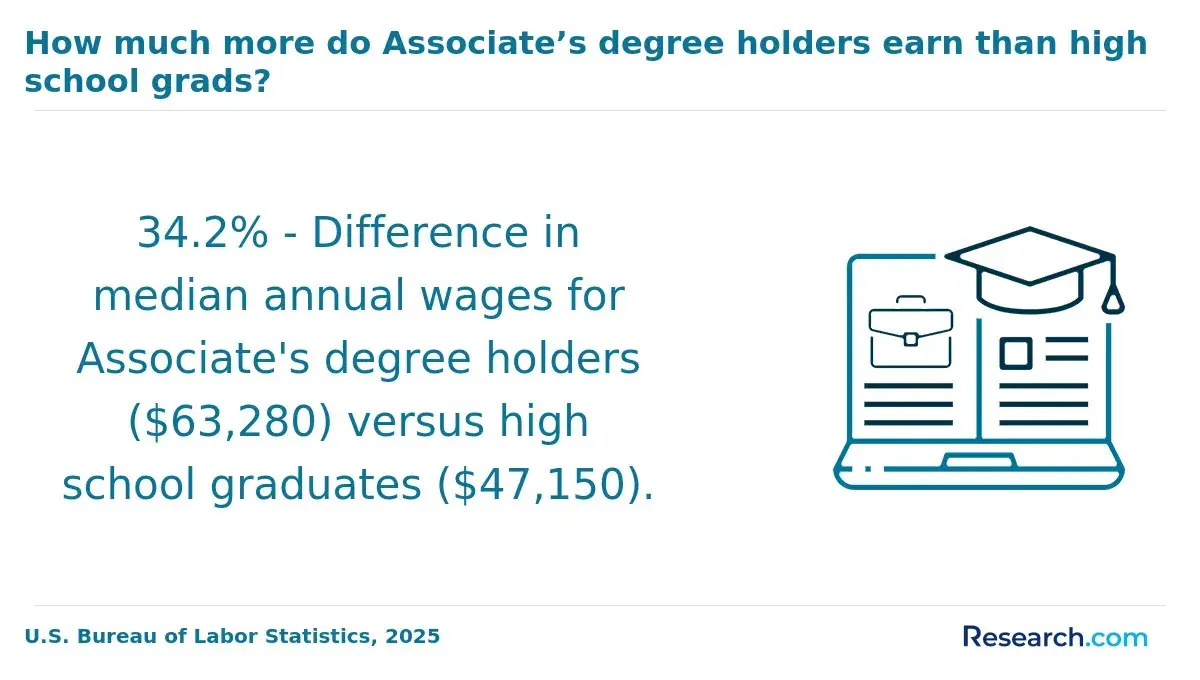
Associate and bachelor's degrees are often the clearest starting points for applicants without a usable GPA, particularly through general-admission or adult-completion pathways. Certificates may have different eligibility rules, but a certificate is not a degree. At the master's level, the business, healthcare, technology, and other fields above are possibilities to investigate—not evidence that every program in those fields waives GPA minimums.
If you already have college credit, ask for a program-specific evaluation showing which courses satisfy general education, major, and elective requirements. Accepted credits do not necessarily reduce every requirement; grades, course age, equivalency, and the minimum credits that must be earned at the new school may matter. Likewise, work experience earns academic credit only when an institution has a qualifying evaluation process.
Some accelerated bachelor degree programs may suit students with applicable prior credit. Compare the credits you would still owe and the courses available each term rather than assuming that a short class format means a short degree.
Are Online or Campus Programs Better for Students Without GPA Requirements?
Neither format makes admission easier by itself. Online study can reduce travel and provide wider program choice; campus study can offer in-person laboratories and local support. Both can contain selective admissions, scheduled classes, and experiential requirements.
This comparison highlights the constraints most likely to affect whether you can complete a program after admission:
| Format | Potential advantage | Constraint to verify |
| Online | Study without routine travel to campus. | Live meetings, fixed deadlines, proctored work, and local placements. |
| Hybrid | Combine remote coursework with some in-person instruction. | Frequency and location of required attendance. |
| Campus | Direct access to facilities and face-to-face instruction. | Commute, scheduled attendance, and course availability. |
For working adults, accelerated online degree programs for working adults are worth comparing only after checking workload and entry requirements. Nursing clinicals, social work field placements, student teaching, and some engineering laboratories may require in-person work even when courses are online.
How Long Do No-GPA Degree Programs Take and What Do They Cost?
There is no standard completion time or price for a no-GPA degree. An associate pathway, a bachelor's program entered with transferable credits, and a master's program with foundation courses leave students with very different amounts of work. Full-time or part-time enrollment, course sequencing, and clinical or field placements can change the timeline further.
Published tuition is only one part of the amount you may pay. Compare these cost components using each school's current schedule and your own remaining requirements:
| Cost component | Why it can change the comparison |
| Tuition for remaining credits | Transfer evaluations and prerequisite courses change the credits you must purchase. |
| Mandatory and program fees | Technology, laboratory, and clinical fees may sit outside the tuition rate. |
| Attendance and materials | Travel, placements, equipment, and books can add substantial costs. |
| Financial aid and employer benefits | Eligibility and award amounts differ by student and program. |
Ask each school for an estimated total cost to completion, not just a per-credit quote. If federal aid is important, investigate online schools that accept FAFSA, then confirm that both the institution and your specific program are aid-eligible. FAFSA submission does not guarantee an award.
What Careers Can You Pursue With a Degree That Has No GPA Requirement?
Career possibilities depend on the field, credential level, prior experience, and any license—not on whether admission required a GPA. A business degree may support applications to administrative or management-track roles; IT and computer science programs can build technical preparation; healthcare, education, nursing, and social work pathways require especially careful checks against occupational rules.
The examples below distinguish educational relevance from permission to practice. They are not job-placement promises:
| Educational direction | Possible career connection | Additional hurdle to check |
| Business or healthcare administration | Operations and administrative roles. | Relevant experience and employer-specific qualifications. |
| IT or computer science | Systems, software, or security work. | Technical skills, projects, and role-specific experience. |
| Nursing or social work | Regulated patient-care or social work roles. | Approved education, supervised practice, examinations, and state licensure as applicable. |
| Education | Teaching or education administration. | State credential rules and, for some roles, prior classroom experience. |
If your target occupation has a license, start with its state requirements and work backward to an eligible program. That prevents the common mistake of enrolling in a related-sounding degree that does not qualify you for the role.
What Salaries and Job Outlook Can No-GPA Degree Graduates Expect?
Occupational wages and projections can help you assess a field, but they cannot predict what a particular program's graduates will earn. The Bureau of Labor Statistics reports a May 2024 median annual wage of $133,080 for software developers. That figure describes people working in the occupation across experience levels and educational backgrounds; admission to a computer science program does not confer the job or its median wage.
Use federal occupational data to compare the role you want, then evaluate whether your intended credential is commonly required, whether local employers seek experience, and whether licensing is necessary. For return on investment, weigh the school's total cost and time away from work against realistic entry-level opportunities—not just an occupation's overall median. A lower-cost certificate or a different degree level may be more appropriate when the target job does not require a master's.
How Can You Verify Accreditation, Licensing, and Program Quality?
Check institutional accreditation through the U.S. Department of Education's accreditation database or the accreditor itself, and verify that the status applies to the institution offering your credential. For regulated fields, check the relevant programmatic accreditor and state licensing board as well. Institutional accreditation alone does not establish that a nursing, social work, counseling, or teacher-preparation program meets a particular licensing rule.
Before enrolling, obtain the current program catalog and written confirmation of admissions eligibility, required credits, total fees, transfer decisions, and any campus or placement obligations. Ask where recent students completed required clinical, practicum, or student-teaching work. Red flags include a school that cannot identify its accreditor, treats "no GRE" as proof of "no GPA requirement," promises licensure without naming the applicable state, or advertises a completion time that assumes undisclosed transfer credit. If a critical answer remains unclear, compare another program before committing.
Other Things You Should Know About
Yes. Some applicable admissions routes have no minimum GPA, while others offer conditional admission. Check the policy for your specific degree and applicant category; selective programs may have separate rules.
No. A college may require transcripts to verify a prior credential, review prerequisites, or evaluate transfer credit even when it does not set an admissions GPA cutoff.
Not automatically. Graduate schools and individual master's programs can set their own minimums. Request the current graduate policy for the exact program before applying.
Only if the program meets the applicable state's education and practical-training rules and you complete any other required steps. Confirm eligibility with the state licensing board before enrollment.
References
- DAPIP | Homepage - Office of Postsecondary Education (OPE) https://ope.ed.gov/dapip/
- Eligibility Requirements | Federal Student Aid https://studentaid.gov/understand-aid/eligibility/requirements
- College Accreditation - U.S. Department of Education https://www.ed.gov/laws-and-policy/higher-education-laws-and-policy/college-accreditation
- School-Determined Requirements - FSA Partner Connect https://fsapartners.ed.gov/knowledge-center/fsa-handbook/2026-2027/vol1/ch1-school-determined-requirements
- Admissions Eligibility | Colorado Department of Higher Education Home https://cdhe.colorado.gov/admissions-eligibility
- Eligibility | michigan.gov https://www.michigan.gov/mistudentaid/programs/michigan-achievement-scholarship/college-and-university/frequently-asked-questions/for-students-and-families/eligibility
- Admissions | floridapoly.edu https://catalog.floridapoly.edu/content.php
- Transfer Admission Requirements | University of North Texas https://www.unt.edu/admissions/transfer/admission-requirements.html
- Basic costs include tuition, food and housing. - The Ohio State University https://undergrad.osu.edu/cost-and-aid/basic-costs
- Admission | astate.edu https://catalog.astate.edu/content.php