
2027 Best Online Colleges With 5-Week Courses

Co-Founder and Chief Data Scientist
A five-week class can fit between work and family commitments, but a short class does not necessarily mean a fast or affordable degree. That distinction matters when choosing among online colleges, especially as career goals change. The U.S. Bureau of Labor Statistics projects 15% employment growth for software developers, quality assurance analysts, and testers from 2024 to 2034.
This guide identifies colleges with published five-week undergraduate formats, explains where graduate-course schedules need separate verification, and shows how to compare workload, total cost, accreditation, and career fit before applying.
Key Things You Should Know
- University of Phoenix and the University of Arizona Global Campus publish five-week undergraduate course formats; confirm the schedule for your specific program and required classes.
- A five-week class runs at roughly three times the pace of a comparable 15-week class. Course length alone does not shorten the credits needed for a degree.
- Compare the credits you still need, required fees, transfer evaluation, and any in-person training, not just the number of weeks printed on a course calendar.
Top 10 Best Online Colleges With 5-Week Courses
Business Programs
An online MBA or master's in management can suit professionals seeking broader finance, operations, and leadership skills. Admission generally requires a bachelor's degree, and some programs expect work experience or foundation coursework.
A five-week undergraduate calendar at a university does not establish that its MBA courses also last five weeks. Ask for the graduate schedule, total credits, capstone requirements, and maximum recommended course load. If your goal is one specific skill, such as accounting software, a shorter credential may be more economical.
Healthcare Programs
Master's programs in healthcare administration and public health generally prepare students for organizational or population-health work, not clinical licensure. Compare concentrations, internships, and admission prerequisites before choosing a course format. Some programs can deliver lectures online while requiring fieldwork at an approved site.
If a college advertises five-week classes, verify that the claim applies to its graduate healthcare courses and that required courses run often enough to support your planned schedule. Healthcare management positions commonly require relevant experience in addition to education.
Information Technology Programs
A master's in information technology may cover systems architecture, cybersecurity, cloud infrastructure, and project management. It is most useful when its technical depth matches the role you want; it is not a substitute for every employer-requested certification or hands-on skill.
Check whether applicants need programming or networking foundations and whether labs, team projects, or a capstone extend beyond a five-week class. Confirm graduate course lengths individually: a university's short undergraduate terms may follow a different graduate calendar.
Computer Science Programs
Master's-level computer science typically emphasizes algorithms, software systems, artificial intelligence, or research. Applicants without a computer science background may need prerequisite courses that increase both cost and completion time.
Compare thesis and project tracks, programming expectations, and the availability of advanced electives. Compressing a demanding technical course into five weeks may be difficult while working full time; request a recent syllabus and verify the actual graduate term length before assuming this format fits your schedule.
Nursing Programs
MSN programs serve licensed nurses pursuing roles such as education, administration, or advanced practice; eligibility and requirements vary by track. Advanced-practice routes can require substantial clinical hours, supervised placements, certification, and state licensure beyond online coursework.
Ask whether you must hold an active RN license, whether the school helps arrange local placements, and which courses last five weeks. A short theory course does not compress clinical-hour or licensing requirements.
Psychology Programs
A general master's in psychology can support research or related professional work, but it does not automatically qualify graduates to practice independently as psychologists. Clinical psychology licensure commonly involves doctoral education and supervised experience; counseling licenses follow different state-specific pathways.
Before enrolling, match the exact degree and accreditation requirements to your intended occupation. Also confirm whether research projects, supervised practice, or required graduate courses follow a five-week schedule rather than assuming every component does.
Education Programs
A master's in education may focus on curriculum, educational leadership, or a specific teaching specialty. Programs designed for licensed teachers differ from initial-licensure programs, which may require student teaching, examinations, and state approval.
Ask whether the degree meets requirements in the state where you intend to work. Five-week online courses may help with classroom-based requirements, but scheduled observations and school placements follow host-school calendars, not necessarily the college's course terms.
Criminal Justice Programs
A criminal justice master's may emphasize policy, administration, research, or public safety leadership. Choose it for a defined career objective rather than assuming it guarantees promotion: hiring and advancement can depend heavily on agency rules and experience.
Compare required research methods, capstones, internships, and elective availability. If five-week terms are important, obtain the graduate course rotation; an accelerated class format offers little scheduling benefit when a required course is offered infrequently.
Engineering Programs
Engineering master's programs can deepen expertise in fields such as electrical, mechanical, or systems engineering. Many require an engineering or closely related undergraduate background, and some involve labs, design projects, or a thesis. Those requirements may not fit uniformly into five-week online courses.
Confirm the exact delivery format and course calendar, especially for specialized electives. If professional engineer licensure is your goal, review your state board's education and experience rules separately from the master's admissions requirements.
Social Work Programs
A Master of Social Work is often a route toward clinical social work licensure, but graduation alone does not confer a license. Look for Council on Social Work Education accreditation, state eligibility, field-placement requirements, and any advanced-standing option for qualifying BSW graduates.
Advanced standing depends on prior education; it is not a benefit of five-week classes. Field hours and supervision may set the pace even if some academic courses are short and online.
What Are Five-Week Online College Courses?
A five-week online college course covers a scheduled class in five weeks rather than spreading it across a longer term. It is not a five-week degree: students must still complete their program's required credits and any prerequisites, capstone, lab, or fieldwork. Online also does not necessarily mean self-paced; assignments may have weekly deadlines or scheduled meetings.
Short terms can work well for someone who prefers concentrating on one subject at a time. They may work less well for someone whose job, caregiving duties, or health needs make several intense weeks unpredictable. Ask whether courses overlap, when each required class starts, and what happens if you need a break between terms.
Which Accredited Colleges Offer Five-Week Online Courses?
Two accredited U.S. universities publish five-week undergraduate online course formats. They are starting points for comparison, not a claim that every course, degree, or graduate program at either institution uses that schedule.
| Online college | Published five-week scope | Accreditation and decision point |
| University of Phoenix | Undergraduate courses are generally offered in five-week formats. | Institutionally accredited by the Higher Learning Commission. Check the calendar and course sequence for the degree you want. |
| University of Arizona Global Campus | Undergraduate courses are generally five weeks; graduate schedules differ. | Institutionally accredited by WASC Senior College and University Commission. Confirm the format of required courses and any experiential components. |
A useful comparison starts with the specific program, not the college-wide advertising. Request its current catalog, academic calendar, and sample course sequence in writing. Neither undergraduate example establishes that a master's program, including those in the fields above, uses five-week classes.
How Much Do Online Colleges With Five-Week Courses Cost?
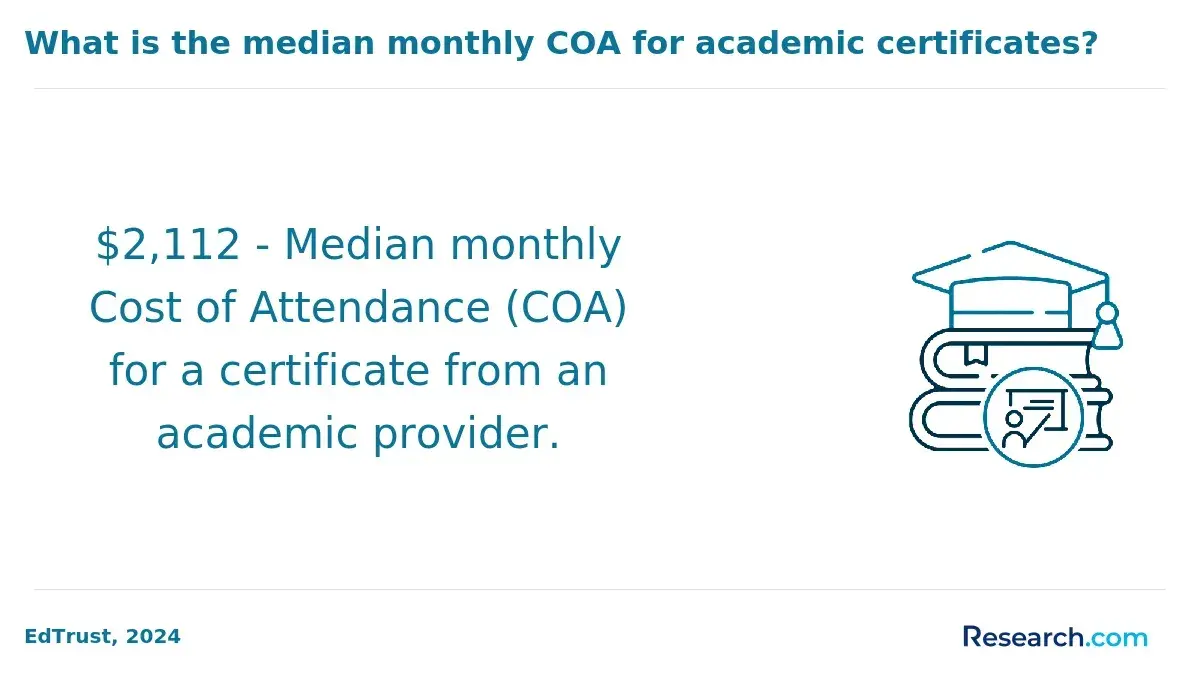
There is no reliable single price for a "five-week college." Schools may charge by credit or course, while the number of courses you still need depends on your transfer evaluation. A shorter term does not, by itself, reduce tuition.
Use these cost categories to compare written estimates for the same credential and remaining coursework.
| Cost item | What to compare | Why it can change the total |
| Tuition | Rate per credit or course multiplied by remaining requirements | Transfer credit helps only when it applies to the intended degree. |
| Required fees | Technology, course, graduation, and program-specific charges | A low advertised tuition rate can exclude mandatory costs. |
| Learning and placement costs | Materials, software, equipment, travel, and fieldwork | Online study can still involve local or campus expenses. |
| Financing | Grants, employer assistance, payment plans, and borrowing | A payment plan changes timing, not necessarily the amount owed. |
For context, the maximum federal Pell Grant for 2025-26 is $7,395, but an individual award depends on eligibility and enrollment. Check the school's federal-aid eligibility and request a personalized aid offer. Compare the total estimated cost to finish, including credits that the college will not accept, rather than choosing solely on a per-course price.
What Degrees Can You Earn Through Five-Week Online Courses?
Five-week classes can be components of undergraduate degrees in fields such as business, information technology, and psychology where a college offers that format.
The credential remains an associate or bachelor's degree with its usual program requirements; a class calendar does not establish a particular graduation date. Graduate degrees may also use accelerated terms, but verify their schedules separately instead of extending an undergraduate claim to master's courses.
If you are considering an associate's degree online, compare its remaining credits and transfer purpose with a bachelor's pathway before enrolling.
For any degree, ask which previously earned credits satisfy general education, major, and elective requirements, and how many credits you must complete at the new institution. A favorable transfer maximum is less useful if accepted courses count only as electives.
How Do Five-Week Online Courses Compare With Traditional Classes?
A five-week course is more compressed than a conventional semester course, not necessarily lighter or easier. The comparison below illustrates how the same academic goal can create different weekly scheduling demands.
| Feature | Five-week course | Longer semester course |
| Weekly pace | Reading, assignments, and assessments arrive in a shorter window. | Comparable work is spread across more weeks. |
| Scheduling | May allow focus on one course, depending on enrollment plan. | Students often take several courses concurrently. |
| Recovery time | Falling behind for a week can be difficult to recover from. | More calendar time may be available between major deadlines. |
| Degree requirements | Required credits and experiential work still apply. | Required credits and experiential work still apply. |
Neither format is automatically faster overall. Compare how many courses you can realistically complete each year, whether required classes are offered when needed, and whether taking fewer simultaneous courses would make the five-week pace manageable.
What Are the Admission Requirements for Accelerated Online Programs?
Admission requirements depend on the credential and program, not the length of its classes. Undergraduate applicants generally need a high school diploma or equivalent; transfer applicants should submit transcripts for a course-by-course evaluation.
Graduate programs generally require a bachelor's degree and may also require prerequisites, professional credentials, or experience. Selective nursing, education, and clinical programs can have additional rules.
Ask admissions to identify the requirements for your exact degree and applicant category, then request a written estimate of applicable transfer credits before relying on an advertised timeline.
If you are also weighing online doctoral programs, evaluate their admission credentials and research or clinical requirements separately; a college's undergraduate five-week calendar says nothing about doctoral eligibility or pace.
What Coursework and Workload Should Students Expect?
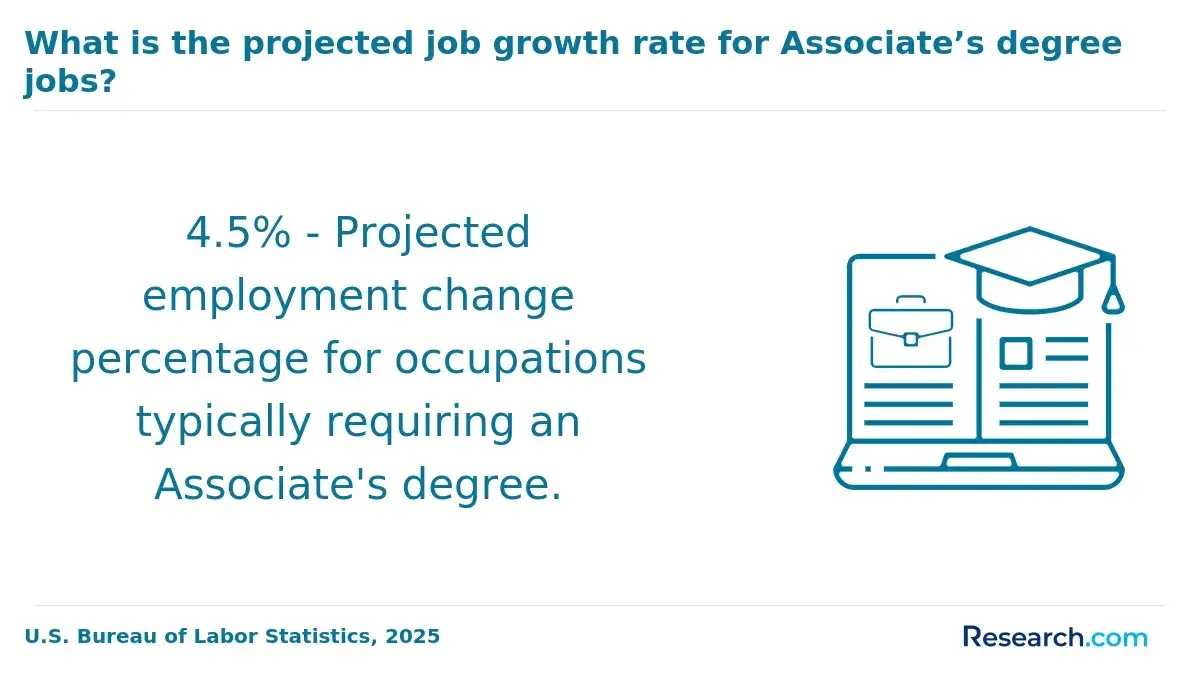
Expect frequent deadlines in a five-week course. Depending on the subject, a week may include assigned reading, discussion, quizzes, writing, coding, or a project milestone. Labs and supervised placements can add hours that are not captured by the online class schedule.
Before registering, obtain a recent syllabus and compare its deadlines with your busiest workweeks. Ask whether meetings are live, whether exams are proctored, how group projects are scheduled, and what support is available if you fall behind. A common mistake is enrolling in multiple short courses because each sounds brief; first establish the workload for one course, then decide whether an overlapping course is realistic.
What Careers and Salaries Follow Five-Week Online Programs?
Employers hire for qualifications and experience, not course-term length. These U.S. Bureau of Labor Statistics occupation-wide median wages provide career context; they are not predicted earnings for graduates of the colleges above.
| Occupation | 2024 median annual wage | Important qualification distinction |
| Registered nurse | $93,600 | Requires an approved nursing education pathway and state licensure; five-week classes alone do not qualify someone. |
| Software developer | $133,080 | Employers assess technical skills and experience; one short course does not establish job readiness. |
Choose a degree for the occupation's actual entry requirements and for skills you can demonstrate. If location flexibility is part of your goal, compare work from home degrees that pay good money with employers' current hiring requirements; an online education does not mean the resulting job will be remote.
How Can You Choose a Reputable Five-Week Online College?
The best five-week college is the one whose verified course schedule works with an accredited degree, manageable workload, and acceptable total cost. A short term should be a deciding advantage only after those basics check out.
Use this sequence to narrow your options before paying an enrollment deposit:
- Confirm institutional accreditation with the accreditor and check any programmatic accreditation or state approval your intended occupation requires.
- Ask for the current program calendar and identify which required courses actually last five weeks, when they start, and whether they overlap.
- Get a written transfer evaluation and a remaining-course plan that includes prerequisites, capstones, and fieldwork.
- Compare itemized total costs, aid eligibility, and the weekly workload shown in a recent syllabus.
Watch for claims that a five-week class means a five-week degree, that an online nursing or teaching program has no placement requirements, or that occupational wages are guaranteed graduate outcomes. If you need a targeted skill rather than a full degree, compare certifications that pay well against the credential employers actually request.
Other Things You Should Know About the Best Online Colleges
No. Five weeks describes an individual course. Degree completion depends on remaining credits, accepted transfer work, course availability, and program-specific requirements.
No. Formats can differ by education level, program, and course. Confirm the schedule for every required class in your intended degree.
Not necessarily. Many have fixed weekly deadlines, and some include live meetings or scheduled assessments. Check a syllabus before enrolling.
Course length alone does not determine eligibility. Aid depends on the institution, eligible program, your circumstances, and enrollment; ask the financial aid office to review your planned schedule.
References
- History and Context of Accreditation in the United States | ed.gov http://www.ed.gov/laws-and-policy/higher-education-laws-and-policy/college-accreditation/overview-of-accreditation-united-states/history-and-context-of-accreditation-united-states
- Comparing student outcomes in traditional vs intensive, online graduate programs in health professional education https://pmc.ncbi.nlm.nih.gov/articles/PMC6196001/
- Academic Regulations | Yale Summer Session https://summer.yale.edu/admitted-students/academic-regulations
- Tuition and Fee Definitions - Student Business Services https://www.sbs.txst.edu/sbs-policies/tuition-and-fee-definitions.html
- Tuition in Detail - One Stop Student Services https://onestop.utk.edu/billing-payments/tuition-detail/
- What's the Difference Between Asynchronous and Synchronous Learning? | Ohio State Online https://online.osu.edu/content-hub/blogs/whats-the-difference-between-asynchronous-and-synchronous-learning/
- Summer Course Type Definitions | uri.edu https://web.uri.edu/summer/types/
- Time Managment Calculator | School of Chemical Sciences | Illinois https://scs.illinois.edu/time-managment-calculator
- Why Is Accreditation Important? | ACE Blog https://ace.edu/blog/why-is-accreditation-important/


