
2027 Best Majors With 6-Week Courses

Co-Founder and Chief Data Scientist
A six-week class can make college easier to fit around work, but it cannot turn an entire major into a six-week degree. The distinction matters if you are choosing a field for a career change or a master's degree.
The U.S. Bureau of Labor Statistics projects 29% employment growth for information security analysts from 2024 to 2034, illustrating why career-focused fields attract attention - but a short course alone does not qualify someone for that role. This guide compares fields where condensed courses may fit, explains their limits, and shows what to check before enrolling.
Key Things You Should Know
- A six-week course is one class taught on a condensed schedule, not a six-week major, certificate, or degree; credit and graduation requirements still apply.
- Business, IT, computer science, and some psychology coursework can suit short online terms; clinical, laboratory, and supervised-practice requirements make nursing, engineering, education, and social work less compressible.
- Compare the full schedule - not just the course length - including prerequisites, course availability, required placements, and total cost. A typical bachelor's degree requires about 120 semester credits, though requirements vary.
Top 10 Best Majors With 6-Week Courses
Business Programs
Business is a practical choice for students seeking six-week courses because subjects such as accounting, marketing, and operations can be divided into focused modules. At the master's level, an MBA or specialized management degree may offer condensed classes while still requiring a substantial sequence of coursework and sometimes a capstone. Choose an MBA for broad management preparation; consider a specialized master's for a defined goal such as analytics or finance. Check whether quantitative prerequisites, team projects, or fixed course rotations make a fast-paced schedule harder to sustain.
Healthcare Programs
Master's programs in healthcare administration or public health may use six-week courses for policy, finance, and research methods. They suit students interested in healthcare systems rather than direct clinical practice. An internship, applied project, or required professional experience can extend the overall timeline. If your goal is to treat patients, do not mistake an administrative master's for a clinical credential. Verify the degree's purpose, any placement requirements, and whether the school offers each required course often enough to support your intended pace.
Information Technology Programs
IT master's programs can organize networking, cloud computing, and cybersecurity topics into six-week modules. This format may work well for professionals who want to apply a focused skill at work soon after studying it. A technical course still demands substantial practice outside scheduled class time, and some programs require a project or prior computing knowledge. Compare the curriculum with actual job postings: an IT management degree may not provide the hands-on preparation expected for a security engineering role.
Computer Science Programs
A computer science master's may offer short courses in algorithms, software engineering, or artificial intelligence, but compressed terms do not remove programming and mathematics prerequisites. Students changing fields may need foundation courses before graduate work begins. A research-oriented program may also require a thesis, while a professional program may culminate in a project. Choose based on the work you want to do - not the shortest advertised class - and ask how often advanced courses run. AI-related coursework is most useful when paired with durable computing fundamentals.
Nursing Programs
Some MSN programs teach theory, leadership, or informatics in short online courses. They are generally pathways for already licensed registered nurses, not substitutes for initial RN education. Nurse practitioner and other practice-focused tracks can require clinical hours, supervised placements, and additional certification or state licensure steps. Those requirements determine much of the real completion time. Before choosing a six-week format, confirm admission eligibility, who arranges clinical sites, whether placements are available in your state, and which professional role the degree prepares you to pursue.
Psychology Programs
Six-week courses can cover graduate psychology topics such as research design, development, and assessment theory. A general master's may support research or related roles but does not automatically qualify a graduate to practice as a psychologist or therapist. Licensure-oriented counseling pathways have distinct accreditation, supervised-practice, and state requirements. If clinical work is your goal, start with the license you need and work backward to an eligible program. If your goal is research, examine methods training and whether a thesis is required.
Education Programs
Master's programs in curriculum, instructional design, or educational leadership may schedule academic courses in six-week blocks. That can appeal to employed teachers, especially when assignments connect to their classrooms. Initial teacher licensure and some leadership credentials, however, involve state-specific coursework, field experience, examinations, or existing teaching credentials. An online class schedule does not eliminate those obligations. Compare programs by your intended role, confirm any required in-person work, and ask whether the credential meets requirements in the state where you plan to work.
Criminal Justice Programs
Criminal justice master's programs may offer condensed courses in policy, criminology, and administration. They can be useful for professionals seeking analytical or supervisory knowledge, but the degree does not replace agency hiring standards or experience requirements. A student aiming for forensic laboratory work may be better served by a science-based path; someone interested in public policy should examine research and statistics coursework. Ask whether the program includes an internship or capstone and whether its course sequence supports the pace you want.
Engineering Programs
Engineering management and some applied engineering master's programs may use six-week courses, particularly for project management, systems, or data-focused subjects. Laboratory-intensive or highly sequenced technical courses can be harder to compress. Admission may require an engineering or closely related background, and some programs assign prerequisite coursework. A master's degree does not by itself grant a professional engineer license. Check lab access, team-project schedules, and whether the program emphasizes technical design or management before treating its short terms as a good fit.
Social Work Programs
An MSW may place classroom topics in short terms, but required field education remains a major scheduling commitment. Advanced-standing MSW pathways can shorten the overall program for eligible applicants with a qualifying social work bachelor's degree; they are not available to every student. Clinical social work licensure also requires steps beyond graduation that vary by state. Compare programs by field-placement support, accreditation, and your eligibility for the intended pathway. A six-week academic course is useful only if the accompanying placement schedule is workable.
What majors can you complete through six-week college courses?
Many majors can include six-week college courses, but the format is more adaptable to some kinds of work than others. At the undergraduate level, business, IT, computer science, psychology, and criminal justice can include lecture- or project-based short courses. Graduate programs in these fields may do the same. Nursing, education, engineering, and social work can also offer condensed classroom courses, but their practical requirements may run on a different timetable.
The comparison below shows what is most likely to determine whether a short-course major fits your schedule. It describes field-level differences, not a promise that every school offers six-week classes.
| Field group | Where six-week courses may fit | Potential scheduling constraint |
| Business and criminal justice | Focused theory, analysis, and project courses | Capstones, group work, or course rotation |
| IT and computer science | Technical modules and applied projects | Prerequisites and intensive practice |
| Healthcare and psychology | Policy, research, and nonclinical coursework | Internships or licensure-oriented training |
| Nursing, education, engineering, and social work | Selected classroom or management topics | Clinicals, student teaching, labs, or field placements |
If your priority is finishing a bachelor's degree sooner, compare total credits and accepted transfer work alongside course length. Some accelerated programs use short terms, but the remaining requirements - not the length of one class - determine your graduation date.
Are six-week courses equivalent to degree or certificate programs?
No. A six-week course is an individual class, not a credential. It may carry the same number of credits and cover the same learning outcomes as a longer-term class, with more work concentrated into each week. A certificate requires its own set of courses; an associate, bachelor's, or master's degree requires the institution's full curriculum.
Even a 1 year masters degree online involves multiple courses and may require previous preparation, full-time study, or a capstone. Ask for a degree audit showing your remaining credits, prerequisites, and required course sequence. Transfer credit can reduce what remains only after the school evaluates it and determines how it applies to your specific program.
Which six-week majors offer the best career opportunities?
The strongest career choice is the field that matches an attainable role and its actual entry requirements. IT and computer science can offer routes into technical work; business and healthcare administration suit different organizational roles. Nursing, education, and social work can lead toward regulated professions, but require the appropriate educational pathway and, where applicable, licensure.
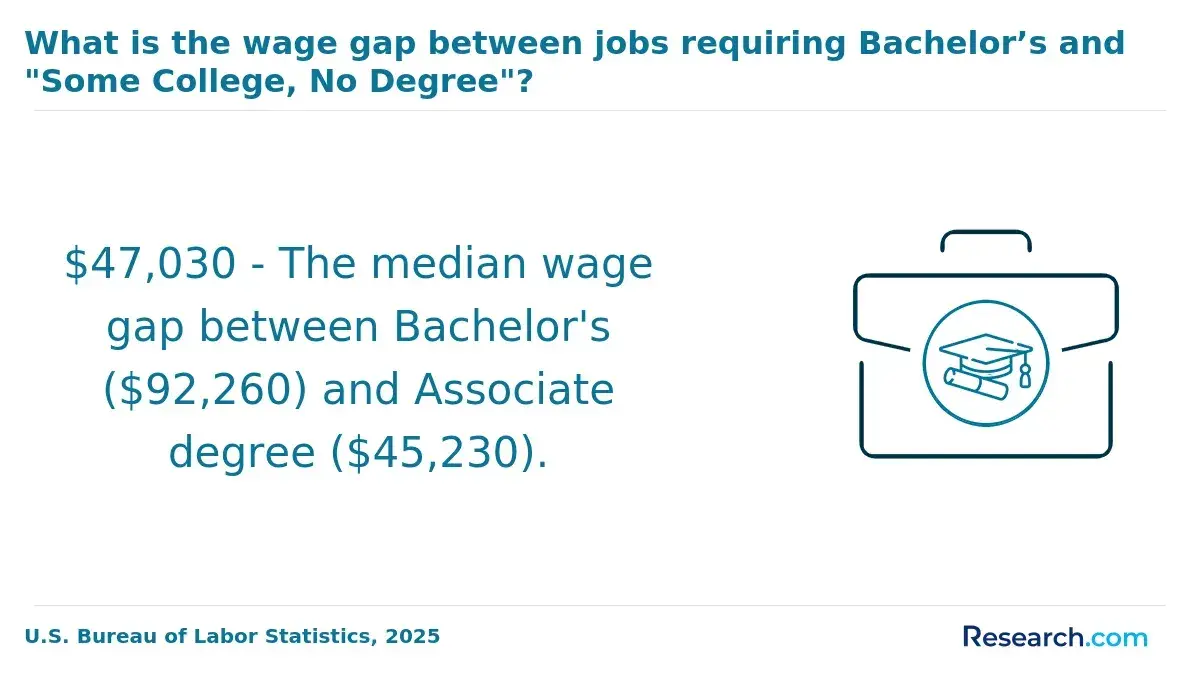
For perspective, the Bureau of Labor Statistics reports a May 2024 median annual wage of $124,910 for information security analysts. That is an occupational wage, not the expected pay from taking a six-week IT course; these roles typically require substantial technical preparation, and employers may seek related experience. If you need a smaller first step rather than a degree, compare short certificate programs that pay well with the qualifications listed in jobs you would actually apply for.
How do online and campus-based six-week programs compare?
Online and campus-based six-week courses differ mainly in how you participate, not in whether the work is demanding. Online study may save travel time, but scheduled meetings, weekly deadlines, group projects, and proctored exams can limit flexibility. Campus study offers direct access to facilities and classmates but may require commuting several days a week. Hybrid courses combine both commitments.
For working students, the decisive question is whether every required component fits the calendar - not simply whether the program is advertised as online. Confirm live-class times, lab access, and placement locations. Students balancing service-related moves may also want to compare military friendly online colleges, then verify the six-week schedule and transfer policies for the specific degree they want.
What do you learn in a six-week major course?
You study a defined part of a major's curriculum, not the entire field. A six-week business course might cover managerial accounting; an IT course might focus on networking; an education course might examine assessment. Expect readings, assignments, and assessments on a tighter schedule than in a standard term. A course with a lab or placement may also have work outside class.
Read the syllabus before enrolling. Check weekly workload, prerequisites, exam dates, required software, and whether assignments build toward a project. Taking fewer condensed courses at once may be more manageable than assuming shorter classes require less effort.
What are the admission requirements for six-week programs?
Admission depends on the credential and program, not on the six-week course format. An undergraduate degree generally requires admission to the institution, while a graduate program typically requires a bachelor's degree and may specify prerequisite courses, a minimum GPA, professional experience, or other materials. Nursing and other practice-oriented graduate programs can have separate eligibility rules.
Ask admissions whether short courses are open to nondegree students and, if so, whether those credits would later count toward your intended degree. Also ask for a review of previous coursework before relying on an advertised timeline. Admission to a college does not necessarily mean admission to a selective major.
How much do six-week courses cost, and what financial aid is available?
There is no standard six-week-course price. Schools may charge by credit, course, or term, so a short calendar does not necessarily mean lower tuition. Compare the full cost of completing your intended credential: required credits after transfer evaluation, tuition, mandatory and program fees, books, technology, travel, and any placement-related expenses.
Federal aid eligibility depends on factors including the student, institution, credential, and enrollment status. A standalone course may not qualify in the same way as coursework within an eligible degree program. Complete the FAFSA when appropriate, review the school's aid offer, and ask about employer assistance or payment plans. Avoid choosing a program from its per-course price without calculating the remaining degree cost.
Do six-week programs meet licensing or certification requirements?
A six-week format does not establish eligibility for a license or professional certification. Licensing bodies evaluate the qualifying program, required coursework, supervised experience, examinations, and other conditions - not how quickly one class was taught. This distinction is especially important in nursing, teaching, social work, counseling, and engineering.
Before paying a deposit, identify the state and occupation you are targeting. Check that state board's educational rules, then ask the school for written confirmation of how the specific program addresses them. If you expect to move, check the destination state as well. Professional certifications have their own eligibility rules and should be verified with the issuing organization.
How can you choose an accredited six-week program?
Verify accreditation and the six-week schedule separately. Use the U.S. Department of Education's accreditation database to check the institution, and consult the relevant programmatic accreditor or licensing board when your career requires it. Accreditation of a school does not prove that every major meets a particular state's professional requirements.
Then request the current catalog and course schedule for your exact degree. Confirm which required courses actually run for six weeks, how often they start, and whether prerequisites, labs, fieldwork, or a capstone change the pace. Finally, obtain a written credit evaluation and cost estimate. A major red flag is a promised completion date based only on short class terms, without accounting for your starting credits and remaining requirements.
Other Things You Should Know About
Generally, no. A degree requires many courses and any applicable capstone or practical work. Six weeks usually describes one course, not the full credential.
They need not cover more material, but the same course work is often due in less time. Check the syllabus and consider your weekly availability before taking multiple condensed classes.
Possibly. The receiving school decides whether to accept the credit and whether it fulfills a requirement in your chosen degree. Get that determination before enrolling if transfer is essential.
Not necessarily. Many online courses have fixed deadlines or live meetings. Confirm the schedule with the school rather than assuming online access means you can study at any time.
References
- Academic Years, Academic Calendars, Payment Periods, and Disbursements | 2024-2025 Federal Student Aid Handbook https://fsapartners.ed.gov/knowledge-center/fsa-handbook/2024-2025/vol3/ch1-academic-years-academic-calendars-payment-periods-and-disbursements
- College Accreditation - U.S. Department of Education https://www.ed.gov/laws-and-policy/higher-education-laws-and-policy/college-accreditation
- DAPIP | Homepage - ed http://ope.ed.gov/dapip/
- Computer and Information Technology Occupations | bls.gov https://www.bls.gov/ooh/computer-and-information-technology/
- Fast Facts: Tuition costs of colleges and universities (76) | ed.gov https://nces.ed.gov/fastfacts/display.asp
- Undergraduate Transfer Credit Policies | baylor.edu https://registrar.web.baylor.edu/records-services/undergraduate-transfer-credit/undergraduate-transfer-credit-policies
- Academic Rules - Course Catalog - Syracuse University https://courses.syracuse.edu/undergraduate/academic-rules
- Academic Policies and Regulations - Content & Navigation | Grand Valley State University https://www.gvsu.edu/catalog/navigation/academic-policies-and-regulations.htm
- College Accreditation Explained: How to Verify It & Why It Matters | America EDU https://america.edu/accreditation/
- Transfer Policy | Miami Academic Transfer Evaluation System https://mates.miami.edu/transfer-policy/index.html


