2027 Best Degrees for High-Paying Careers

Co-Founder and Chief Data Scientist
Choosing a degree for its salary potential is harder than matching a major to a job title. Some well-paid careers require graduate study or a license; others depend heavily on experience. The U.S. Bureau of Labor Statistics (BLS) reported a $49,500 median annual wage across all occupations in May 2024, but pay varies widely by role.
This guide compares degree fields with realistic career paths, using occupational wages alongside training requirements, job outlook, and cost considerations. It is designed to help prospective students and career changers identify a path worth investigating - not mistake a salary figure for a guaranteed return.
Key Things You Should Know
- Computer science and IT can lead toward software development and information security; BLS reported May 2024 median wages of $133,080 and $124,910 for those occupations, respectively.
- High pay may require more than a degree: nurse practitioners need advanced nursing education and state authorization, while financial managers typically need substantial related experience.
- Compare total education cost, time out of the workforce, job demand, and licensing eligibility - not occupational wages alone - before choosing a program.
Top 10 Best Degrees for High-Paying Careers
Business Programs
A bachelor's in accounting, finance, or business can support entry into financial analysis, operations, or accounting. An MBA or specialized master's may help experienced professionals move toward management, but it is rarely an entry-level shortcut. BLS reported a $161,700 May 2024 median wage for financial managers - an occupation that typically requires a bachelor's degree and several years of related experience. Choose a specialization that matches the work you want, and compare graduate tuition with the advancement opportunities you can realistically pursue.
Healthcare Programs
Healthcare degrees lead to very different roles. A bachelor's in health administration may prepare students for operations work, while a master's in public health supports population-health careers; neither qualifies a graduate to practice medicine. Clinical paths generally require profession-specific training, supervised experience, and a license. Consider whether you want direct patient care, research, or administration before comparing salaries. For licensed roles, confirm that the exact program meets the requirements of the state where you intend to work.
Information Technology Programs
IT bachelor's and master's programs commonly emphasize networks, cloud systems, cybersecurity, and systems administration. They can suit students who prefer securing and operating technology over building software products. BLS reported a $124,910 May 2024 median wage for information security analysts, but that occupation typically calls for related experience; an IT degree alone may not qualify a new graduate. Look for hands-on labs, internships, and coursework aligned with the roles employers advertise. Industry certifications may complement - not replace - relevant experience.
Computer Science Programs
Computer science programs focus on programming, algorithms, data structures, and computing theory. A bachelor's is a common route into software development; a master's may be useful for specialized work or a career change but is not generally required for developer roles. BLS reported a $133,080 May 2024 median wage for software developers, not for computer science graduates. Compare curricula and project opportunities: a strong portfolio and internships can matter alongside the credential, particularly when entry-level hiring is competitive.
Nursing Programs
An associate or bachelor's nursing program can lead toward registered nurse (RN) licensure after meeting state requirements and passing the applicable licensing exam. BLS reported a $93,600 May 2024 median wage for RNs. Advanced practice roles, including nurse practitioner, require graduate education and additional state authorization; their higher occupational wages should not be attributed to an entry-level nursing degree. Compare approved programs by clinical-placement support, licensure outcomes, and total cost before enrolling.
Psychology Programs
A psychology bachelor's develops research, communication, and behavioral-science skills, but it does not qualify someone to practice as a psychologist. Licensed psychologist roles generally require a doctoral degree, supervised experience, and a state license; requirements vary by specialty and state. A master's may lead toward certain counseling roles if its curriculum meets the relevant licensing board's rules. Choose based on the exact occupation you want, because the additional years of training can substantially change the cost and timing of a high-paying path.
Education Programs
Education degrees may prepare students for teaching, curriculum work, or school leadership, but those paths have different requirements. Public-school teachers generally need state certification, and administrative roles commonly require teaching experience and graduate study. A master's may support advancement or a pay increase under a particular district's salary schedule; neither is automatic. Compare local employer requirements and salary schedules before paying for an advanced degree, especially if the program is intended for licensed educators rather than new entrants.
Criminal Justice Programs
A criminal justice degree can provide background for work in corrections, investigations, or public-sector administration, but job eligibility often depends on an agency's hiring standards and training. It is not a substitute for law school if your goal is to practice law. A master's may be relevant to experienced professionals pursuing leadership, yet it does not itself confer a promotion. Before enrolling, check target employers' education requirements, physical or background standards where applicable, and whether a less expensive credential would meet your goal.
Engineering Programs
Engineering bachelor's degrees prepare students for technical design and analysis; the right discipline depends on whether they want to work with software, infrastructure, electronics, or mechanical systems. A master's can support specialization but is not universally required for entry-level engineering jobs. For work requiring a professional engineer license, state rules include education, exams, and qualifying experience. Check whether an engineering program has relevant ABET accreditation, particularly if licensure is a goal. Compare job markets by discipline rather than assuming all engineering degrees lead to the same pay.
Social Work Programs
A bachelor's in social work can support entry-level practice, while a master of social work (MSW) is generally the route toward clinical social work. Independent clinical practice also requires supervised experience and state licensure. An MSW may be worthwhile for someone committed to that work, but readers seeking the highest salary with the shortest training period should compare other fields. Check Council on Social Work Education accreditation and ask whether prior accredited social work study qualifies you for an advanced-standing MSW pathway.
What are the highest-paying degrees and careers in the United States?
The highest-paying career is not necessarily the best degree choice. U.S. physicians and surgeons can earn substantially more than many bachelor's-level professionals, but medical school and residency make that a longer, costlier path. The following BLS May 2024 occupational medians illustrate more accessible comparisons. These are wages for people working in each occupation, not starting salaries or earnings promised to graduates.
| Occupation | Median annual wage | Typical path or important qualification |
| Financial manager | $161,700 | Bachelor's degree plus several years of related experience |
| Software developer | $133,080 | Typically a bachelor's degree; relevant technical skills matter |
| Nurse practitioner | $129,210 | Graduate nursing education and state authorization |
| Information security analyst | $124,910 | Typically a bachelor's degree and related experience |
| Registered nurse | $93,600 | Approved nursing education and state licensure |
A student seeking earlier workforce entry might reasonably favor software development or RN preparation over a longer clinical pathway. Someone already established in finance or nursing may see a stronger case for advanced study because prior experience fulfills part of the career requirement.
Which degrees offer the best salary and job outlook?
Computer science, IT, and nursing offer particularly useful combinations of wage potential and identifiable career paths, provided you meet each occupation's entry requirements. BLS projects employment of information security analysts to grow 29% from 2024 to 2034. That signals demand for the occupation, not guaranteed openings for new IT graduates; employers may still expect substantial hands-on experience.
Judge "best" against your starting point. If you want a shorter route into paid work before deciding on a bachelor's degree, compare best associate degrees with the entry requirements of your target occupation. Nursing, for example, has an associate-degree route to RN eligibility, while an associate degree alone is less commonly the standard preparation for software developer roles.
What education and training do high-paying careers require?
High-paying careers span several training models. Software development commonly begins with bachelor's-level preparation and demonstrable coding ability. Financial management generally builds on a bachelor's degree and years in related roles. Advanced practice nursing adds graduate study and authorization after RN preparation. Psychology practice can require a doctorate and supervised training. These differences make "time until eligible to work" a more useful comparison than degree length alone.
If your target role accepts a shorter credential, compare its actual hiring value with a degree before committing to several years of tuition. Some online certificate programs that pay well may help you build marketable skills, but a certificate does not replace a legally required degree or professional license.
Are online degrees effective for entering high-paying careers?
Yes, an online degree can be effective when the institution and program meet the standards for your intended career and you can complete required practical work. Employers may assess skills and experience alongside the credential. Online delivery does not mean self-paced study: programs can have live classes, fixed deadlines, campus sessions, or local clinical and internship placements.
For an experienced professional considering graduate study, a competency based masters degree may offer a different way to demonstrate learning. Check its actual pace, assessment rules, accreditation, and whether the credential meets any licensing or employer requirements before treating flexibility as a cost or career advantage.
What do students learn in high-paying degree programs?
Coursework should build the abilities the target occupation uses. Computer science students study algorithms and software design; IT students may work on networks and security; business students learn finance and organizational decision-making. Nursing combines science with supervised clinical education, while psychology and social work emphasize research, behavior, ethics, and - in practice-oriented programs - field training.
Read the curriculum beyond the degree name. A data-focused concentration, internship, engineering lab, clinical placement, thesis, or capstone can change both career relevance and the time needed to finish. AI tools are also changing technical and analytical work, making it especially valuable to develop judgment, verification, and domain knowledge rather than relying on a narrow toolset.
What are the admission requirements for high-paying degree programs?
Bachelor's programs usually require secondary-school preparation; selective nursing and engineering programs may impose separate prerequisites or admission standards. Graduate programs typically require a bachelor's degree and may ask for prerequisite courses, recommendations, a portfolio, or professional experience. An MBA designed for experienced applicants is not interchangeable with a graduate program built for career changers.
Confirm requirements for the specific program and applicant category. Ask admissions staff whether your previous coursework satisfies prerequisites, when those courses must be complete, and whether admission to the institution also grants admission to the major. Do not assume a general university testing or GPA policy applies to a selective professional program.
How long do high-paying degree programs take and cost?
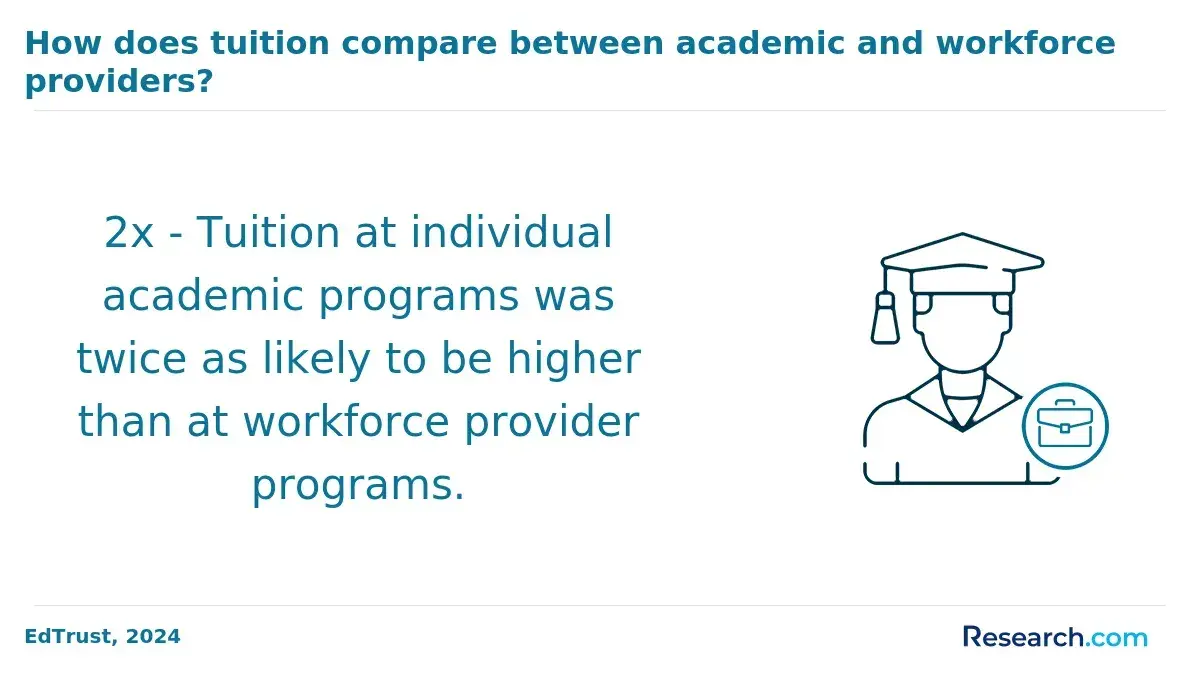
A bachelor's degree commonly requires about four years of full-time study from the start, but transfer credit, prerequisites, course sequencing, and enrollment pace change the timeline. A master's often takes additional years; clinical degrees may also require placements or supervised training after graduation. Compare the total cost to reach occupational eligibility: tuition, mandatory fees, books, equipment, travel to placements, licensing exams, and earnings you may forgo while studying.
Which high-paying careers require licenses or certifications?
Licensing is separate from graduation. RNs must meet state nursing-board requirements and pass the applicable licensing exam; nurse practitioners need further education and authorization. Psychologists and clinical social workers generally need supervised practice and state licensure. Public-school teaching requires state certification, and some engineering work calls for a professional engineer license. Requirements differ by state and role.
Technology certifications can help demonstrate particular skills, but they are generally employer or industry credentials rather than government licenses. Before choosing any licensure-oriented degree, check the intended state board's education rules, the program's eligibility disclosures, and its approach to arranging required placements. A low-cost or fully online label cannot make an ineligible program a good investment.
How can you choose an accredited program for career success?
Start with the occupation, then work backward to the credential it actually requires. Verify that the institution holds recognized accreditation; check relevant program accreditation or state approval when it affects licensure, such as for engineering, nursing, or social work. Accreditation supports quality review but does not guarantee employment, a transferable course, or licensing eligibility in every state.
Next, compare written program requirements and total costs with your budget and schedule. Ask where recent graduates work, but distinguish a school's career-service offerings from documented outcomes. Watch for claims that a degree alone unlocks a management salary, an online program automatically meets every state's rules, or a short course term equals a short degree. The strongest choice is the affordable program that prepares you for the specific next step on your intended career path.
Other Things You Should Know About
Computer science, IT, engineering, and some nursing pathways merit consideration. The best fit depends on your skills, local opportunities, and whether the job also expects experience or a license.
It may be when the target role requires it or an employer rewards the specialization. Compare the full cost and time commitment with realistic opportunities; a master's does not guarantee a raise.
Yes. An approved associate nursing program can provide a route toward RN licensure. Check state requirements and compare the credential with bachelor's-level options for your longer-term goals.
Not by itself. Occupational medians describe current workers, including experienced professionals. Weigh entry requirements, licensing, debt, job prospects, and whether you would enjoy the work.
References
- Linking college majors to careers: Career Outlook: U.S. Bureau of Labor Statistics https://www.bls.gov/careeroutlook/2021/article/field-of-degree-and-careers.htm
- National Survey of College Graduates (NSCG) 2023 | NCSES | NSF https://ncses.nsf.gov/pubs/nsf25322
- Annual Earnings by Educational Attainment - COE https://nces.ed.gov/programs/coe/indicator/cba/annual-earnings
- Field of Study in College and Lifetime Earnings in the United States - PMC https://pmc.ncbi.nlm.nih.gov/articles/PMC5198720/
- Research Summary: Education and Lifetime Earnings | ssa.gov https://www.ssa.gov/policy/docs/research-summaries/education-earnings.html
- The Major Payoff: Evaluating Earnings and Employment Outcomes Across Bachelor's Degrees - CEW Georgetown https://cew.georgetown.edu/cew-reports/major-payoff/
- What a bachelor's degree is worth today | Frontiers https://www.frontiersin.org/journals/education/articles/10.3389/feduc.2025.1727346/full
- Does College Pay Off? A Comprehensive Return On Investment Analysis - FREOPP https://freopp.org/whitepapers/does-college-pay-off-a-comprehensive-return-on-investment-analysis/
- Major decisions: What graduates earn over their lifetimes - The Hamilton Project https://www.hamiltonproject.org/publication/post/major-decisions-what-graduates-earn-over-their-lifetimes/
- Trends in College Pricing Highlights | College Board Research https://research.collegeboard.org/trends/college-pricing/highlights