2027 Best College Degrees With Student Success Coaching

Co-Founder and Chief Data Scientist
Choosing a degree is hard enough without wondering whether you will have help staying on track. Student success coaching can provide regular support with study plans, deadlines, and obstacles, but its availability and scope vary by school and program. The U.S. Bureau of Labor Statistics reported a May 2024 median wage of $65,140 for school and career counselors and advisors, a broader occupation that includes some related advising work - not a salary promise for coaching graduates.
This guide compares ten master's-level fields, explains what coaching support to verify, and helps you separate a degree with coaching from a degree that prepares you to become a coach.
Key Things You Should Know
- For a career in student success coaching, education, psychology, social work, and related student-affairs study usually offer the closest preparation; the other fields make more sense when your primary goal is a career in that field.
- A student success coach may help with goals, accountability, and referrals, but coaching is not the same as academic advising, tutoring, counseling, or a guarantee of graduation or employment.
- Compare the support attached to the specific master's program: who provides it, when it is available, whether online and part-time students qualify, and whether any fees apply.
Top 10 Best College Degrees With Student Success Coaching
Business Programs
An MBA or master's in management can suit students aiming for operations, marketing, finance, or leadership roles. Coaching may be particularly useful for coordinating group projects, recruiting, and study time around a job. Ask whether the service helps graduate business students or only undergraduates, and whether career coaching is separate from academic success coaching. Choose business for its curriculum and career fit - not because coaching alone will lead to a management position.
Healthcare Programs
Master's programs in healthcare administration or public health can prepare students for health-system operations, policy, or population-health work. A success coach can help students plan coursework and connect with academic resources, but cannot replace a field-placement coordinator or professional mentor. Compare required practica, scheduling, and any program-specific accreditation relevant to your goal. A nonclinical healthcare master's does not independently qualify someone for a licensed clinical occupation.
Information Technology Programs
A master's in information technology typically emphasizes applied systems, infrastructure, cybersecurity, or technology management. Coaching can help career changers sequence foundation courses and balance projects with work. Check whether the program expects prior technical coursework and whether coaching includes referrals for technical tutoring. Employers may also value experience and industry certifications; the degree and a coach's support are not substitutes for demonstrable skills.
Computer Science Programs
A computer science master's is often more theoretical or research-oriented than an IT master's, with advanced algorithms, software, or computing electives. It best fits applicants who want deeper technical study and can meet prerequisite requirements. Ask whether a coach can help map a realistic course sequence, especially if bridge courses are needed. Academic coaching does not replace faculty guidance on a thesis, research, or difficult programming assignments.
Nursing Programs
MSN programs serve licensed nurses pursuing roles such as leadership, education, or advanced practice. Success coaching may help with workload planning, while clinical-placement staff handle placement requirements. Before enrolling, verify RN eligibility, specialty accreditation, state authorization, supervised clinical requirements, and the rules for any intended advanced-practice license. Online coursework does not eliminate clinical obligations, and an MSN by itself does not confer licensure.
Psychology Programs
A psychology master's can develop research, behavioral-science, or applied skills relevant to student support. It is worth considering for aspiring coaches who want to understand motivation and learning, provided the curriculum includes useful practice opportunities. Do not assume every psychology master's meets counseling or psychologist licensure requirements; those paths have distinct state rules, supervised training, and sometimes doctoral requirements. Ask how coaching support differs from faculty research supervision.
Education Programs
A master's in higher education, student affairs, or educational leadership is among the most directly relevant choices for aspiring college success coaches. Look for coursework in student development, access, advising, and program evaluation, plus a supervised campus experience if available. A student success coach assigned to you can model support practices, but that service is not professional training by itself. Teacher or school-counselor licensure tracks have different requirements.
Criminal Justice Programs
A criminal justice master's may fit people seeking policy, administration, or research roles in justice organizations. Coaching can support working professionals managing intensive reading and capstone deadlines. For students aiming to coach college learners, the field is most relevant when paired with experience supporting justice-impacted or returning students. Verify whether a degree is actually useful for your intended employer; many justice roles prioritize experience or agency-specific qualifications.
Engineering Programs
An engineering master's can deepen a technical specialty or support a move toward engineering management. Success coaching may help students plan prerequisites and demanding project schedules; faculty advisors remain essential for technical and research decisions. Check laboratory, thesis, and campus requirements rather than assuming an online listing means fully remote study. For licensure-oriented work, confirm your state board's education and experience rules separately.
Social Work Programs
An MSW can build skills in assessment, advocacy, and connecting people with resources - useful foundations for student-support work. Its supervised field education makes placement logistics and coaching access important to compare. Choose an MSW primarily if social work practice fits your goal: accredited education, examinations, and supervised experience may be required for state licensure. A campus success-coaching job does not necessarily require an MSW or social work license.
What college degrees prepare you for student success coaching careers?
The most direct preparation for college student success coaching is typically a master's in higher education, student affairs, or a closely related education field. Psychology and social work offer relevant approaches to motivation and support; an MBA or technical master's may fit coaches serving a specialized student population. A bachelor's degree plus experience in advising, tutoring, mentoring, or student services can also be a viable entry route, depending on the employer.
Keep the two decisions separate: Which subject should I study? and Will this program provide coaching while I study? A strong academic match with clearly documented support is more useful than selecting an unrelated degree solely because its school advertises coaching.
What education and certification requirements do student success coaches need?
Student success coach is not a single, universally licensed occupation. Employers set their own requirements; some seek a bachelor's degree and relevant student-services experience, while positions with greater responsibility may prefer a master's. Training in motivational interviewing, referral practices, accessibility, and student privacy can be valuable, but a coaching certificate is not automatically required or interchangeable with a clinical counseling license.
Check job postings for the institutions where you hope to work before paying for another credential. A doctorate is generally unnecessary for an entry-level coaching role; if research or senior academic leadership is your longer-term aim, compare the cost and purpose of cheapest PhD programs with those of a relevant master's first.
How much do student success coaches earn, and where do they work?
Student success coaches work in colleges, universities, online learning units, community colleges, and organizations that support students. Titles and duties vary: one position may focus on persistence and study habits, while another includes advising or career planning. That variation makes a single national "student success coach salary" figure unreliable.
For context, the Bureau of Labor Statistics reported a May 2024 median annual wage of $65,140 for school and career counselors and advisors. This broader category is not a coach-specific salary estimate, and some positions in it have different educational or licensing requirements. Compare local job postings by title, employer, duties, and required credentials rather than treating that median as your expected pay.
Which accredited colleges offer degrees with student success coaching support?
Arizona State University's ASU Online describes success coaches for its online students. Oregon State University Ecampus describes academic success coaching among its student resources. Western Governors University uses program mentors, a related but differently structured form of ongoing student support. These are examples of institutional support models, not a ranking or a claim that every master's program at these schools offers the same service.
Before shortlisting any school, confirm that it holds recognized institutional accreditation and ask the program whether graduate students in your degree, delivery format, and enrollment status can use the stated service. Get the answer from the current program and student-support pages or an admissions representative; a university-wide promise may not describe your particular experience.
What do student success coaching degree programs teach?
A degree with student success coaching teaches the subject named on the diploma - not necessarily coaching. An MBA teaches business; an MSN teaches nursing; a computer science master's teaches advanced computing. The coach is a support service alongside that curriculum.
A degree intended to prepare future coaches is different. Higher education or student affairs coursework may address student development, equity, advising, assessment, and program design. Compare those courses and any practicum against real job descriptions. Even then, a program's student-support service should not be confused with supervised professional practice or a job-placement commitment.
Are online degrees with student success coaching as effective as campus programs?
An online degree can be an effective choice when its accreditation, curriculum, instructor access, and coaching arrangements fit your needs. Delivery alone does not establish equal outcomes: scheduled meetings, fixed deadlines, laboratories, practica, and clinical work can still limit flexibility. The comparison below helps distinguish formats before you commit.
| Format | Potential advantage | Coaching detail to verify |
| Online | Study without routine campus travel | Remote appointment hours and time-zone fit |
| Hybrid | Mix of remote study and in-person contact | Whether coaching is available between campus visits |
| Campus | Direct access to on-site services | Appointment availability around classes or work |
Students returning to school later in life may also find it useful to compare degrees for seniors, but age alone should not determine format. Ask for a sample weekly schedule and a coaching appointment process before deciding.
How long do these degrees take, and what do they cost?
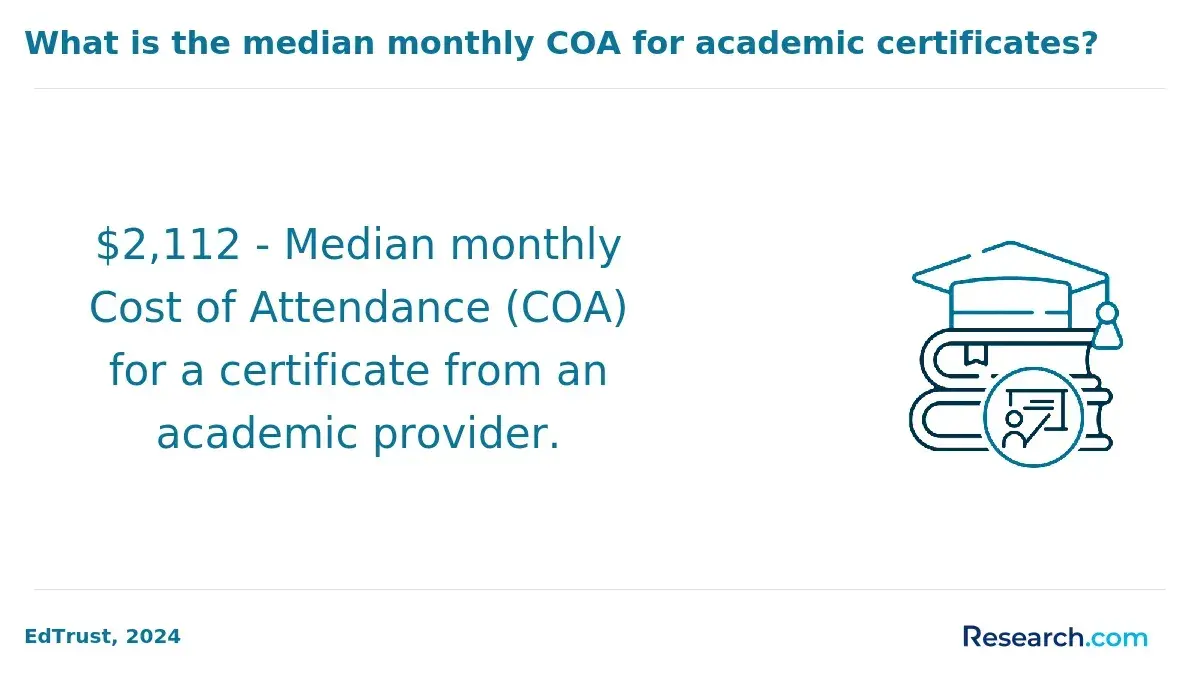
A master's can take roughly one to three years or longer, depending on credits, part-time enrollment, prerequisites, course sequencing, and experiential requirements. Published tuition per credit is only a starting point: include mandatory fees, books, travel, placements, and any added prerequisite courses. Ask whether coaching is included in standard student services or carries a separate charge.
Short-course advertising needs particular scrutiny. When comparing online master degree programs, check the entire degree's required credits and entry assumptions; a short class or an accelerated pathway does not mean every applicant can finish the full degree in that time. An aid offer and program-specific total-cost estimate provide a better basis for comparison than a tuition headline.
What are the admission requirements for student success coaching degrees?
Master's applicants generally need a bachelor's degree, transcripts, and materials specified by the program. Requirements can differ substantially across the fields above: computer science may require computing foundations, an MSN generally requires nursing credentials, and an MSW may have field-placement conditions. GRE or GMAT rules, minimum GPAs, recommendations, and work-experience expectations must be checked for the specific program, not inferred from a university's general graduate admissions page.
If you have previous graduate coursework, ask for a written evaluation showing what applies to degree requirements and what must still be completed at the new school. Do not assume transfer credit will replace a capstone, clinical placement, or practicum.
How should you choose the best student success coaching degree program?
Start with the career you want and the coursework it requires. Then compare eligible programs on accreditation, total cost, completion requirements, schedule, and the coaching service available to you. The following checks turn "student success coaching" from a marketing phrase into something you can evaluate:
- Ask who your coach would be, how often you can meet, and whether meetings cover planning, accountability, referrals, or career questions.
- Confirm eligibility for your exact degree, graduate level, study format, and full- or part-time status.
- Request the full degree plan and total-cost estimate, including prerequisites, fees, travel, and required placements.
- Verify accreditation and any program approval or state licensure requirements tied to your intended occupation.
- Compare the answers with your work schedule and career goal; seek a written clarification when a website's support claim is unclear.
A common mistake is choosing the program with the most appealing support language while overlooking an unsuitable curriculum or required in-person work. Likewise, the easiest online college for one student is not necessarily the best preparation for another's career. Treat coaching as a meaningful advantage when its access and scope are clear - not as a substitute for program fit.
Other Things You Should Know About
Not usually. Advisors commonly address academic rules and course selection; coaches often focus on goals, habits, and obstacles. Schools may combine or divide these duties differently.
Not universally. Employers set requirements, and some roles accept a bachelor's degree with relevant experience. Review actual postings before choosing graduate study for this goal.
Sometimes. Eligibility and appointment formats vary by school and program. Confirm that online graduate students - not just undergraduates - have access.
No. Coaching can help you plan and find resources, but completion also depends on academic requirements, available time, finances, and your circumstances.
References
- The Basics of School Accreditation | Study in the States https://studyinthestates.dhs.gov/schools/apply/the-basics-of-school-accreditation
- Cost of Attendance (Budget) | 2025-2026 Federal Student Aid Handbook https://fsapartners.ed.gov/knowledge-center/fsa-handbook/2025-2026/vol3/ch2-cost-attendance-budget
- Education Requirements for Coaches | HeadStart.gov https://headstart.gov/publication/education-requirements-coaches
- Creating an Integrated Coaching Culture in Higher Education | nih.gov https://pmc.ncbi.nlm.nih.gov/articles/PMC10913097/
- DAPIP | Homepage - Office of Postsecondary Education (OPE) https://ope.ed.gov/dapip/
- Student Success Coach | nunez.edu https://www.nunez.edu/human-resources/unclassified-employment-opportunities/student-success-coach
- Cost of Attendance - Financial Aid and Scholarships | The University of Utah https://financialaid.utah.edu/tuition-and-fees/cost-of-attendance.php
- Peer Coaching Brings Students One Step Closer to Graduation | College of Arts and Sciences | Western Michigan University https://wmich.edu/arts-sciences/peer-coaching
- Academic Success Coaching: Your Path to College Success | AccessAbility Resource Center https://accessability.utdallas.edu/2025/04/23/academic-success-coaching-your-path-to-college-success/
- Find the Right Online Degree Program by Using a Comparison Framework | Columbia Southern University https://www.columbiasouthern.edu/blog/blog-articles/2026/august/find-the-right-online-degree-program