2027 Best Online College Degrees With 2.0 GPA Admission

Co-Founder and Chief Data Scientist
A 2.0 GPA can narrow your college choices, but it does not rule out an online degree. The important question is whether a school accepts your GPA for your applicant type and intended program. The decision matters: Bureau of Labor Statistics data show that workers with a bachelor's degree had median weekly earnings of $1,543 in 2024, compared with $930 for high school graduates. Those figures describe broad groups, not a promised return on any degree. This guide helps applicants compare fields, identify admission barriers, and check costs and career requirements before enrolling.
Key Things You Should Know
- A 2.0 GPA may meet an undergraduate admission threshold without meeting a selective major's requirements; ask whether the published policy applies to your exact degree and applicant type.
- Many bachelor's degrees require about 120 credits, but accepted transfer credits and remaining major requirements - not admission alone - determine your time and cost.
- For nursing, teaching, social work, and other regulated careers, confirm program accreditation and state-specific requirements before choosing an online degree.
Top 10 Best Online College Degrees With 2.0 GPA Admission
Business Programs
An online bachelor's in business administration can suit applicants seeking broad preparation in accounting, operations, marketing, and management. It is often more adaptable than a specialized major if you are still choosing a career direction. A 2.0 admission policy, however, does not necessarily cover a separate business-school application or a required grade in accounting. An online MBA is a different, graduate-level option: undergraduate eligibility at a university does not establish eligibility for its master's programs. Compare each curriculum with the jobs you want rather than assuming a business degree leads directly to management.
Healthcare Programs
Online bachelor's programs in healthcare administration or health information management can prepare students for administrative and data-focused work without claiming to qualify them for clinical practice. Compare courses in finance, health systems, privacy, and analytics. A master's in healthcare administration generally serves a different purpose and may expect prior academic or professional preparation. Ask whether internships or site-based projects are required, whether your 2.0 GPA qualifies for the specific program, and whether any certification you want has separate eligibility rules.
Information Technology Programs
An online IT bachelor's can be a practical choice for students interested in networks, cloud systems, cybersecurity, or technical support. Look for hands-on labs and projects alongside theory; "online" does not mean equipment, proctored assessments, or live meetings are unnecessary. Some jobs value industry certifications in addition to a degree. A master's in IT is generally aimed at specialization or advancement and may have different GPA requirements. If your prior grades were weak in technical courses, ask about prerequisites and academic support before applying.
Computer Science Programs
Choose computer science if you want substantial preparation in programming, algorithms, software design, and mathematics - not simply training in one tool. Online bachelor's programs may require sequenced courses that limit how quickly transfer students finish. A computer science master's may require prerequisite programming and math even when it welcomes applicants from other majors. Confirm that the actual online program admits applicants with your GPA; a university's general admission rule does not establish entry to its computer science major.
Nursing Programs
Nursing is a poor field for assuming that a general 2.0 college minimum is enough. Prelicensure bachelor's programs commonly have separate science prerequisites, competitive admission, clinical placements, and state approval requirements. Online RN-to-BSN programs instead serve applicants who already hold an RN license; they are not an entry route to initial licensure. Graduate nursing programs may require an RN license and nursing experience. Ask the program and your state board whether its specific pathway supports your intended license before paying an application fee.
Psychology Programs
An online psychology bachelor's introduces research methods, statistics, development, and behavior. It can support varied entry-level paths or further study, but it does not qualify graduates to practice as licensed psychologists. Applicants planning clinical work should investigate the required graduate degree, supervised experience, examinations, and state rules. Psychology master's programs differ substantially: some prepare students for research, while particular counseling programs may support a licensing pathway. Check admission and practicum requirements for the exact program rather than relying on the university's undergraduate 2.0 policy.
Education Programs
An online education bachelor's may focus on teaching, educational studies, or work outside licensed classroom teaching. Those are not interchangeable choices. For teacher licensure, verify state approval, required subject tests, background checks, and in-person student teaching; a 2.0 institutional minimum may not satisfy teacher-preparation admission rules. A master's in education might serve licensed teachers seeking advancement or career changers pursuing initial licensure, depending on the program. Choose the pathway that matches the credential your state actually requires.
Criminal Justice Programs
An online criminal justice bachelor's typically examines law, policing, courts, and corrections. It may suit applicants interested in public service or related administrative work, but a degree alone does not bypass agency hiring, background, physical, or academy requirements. Master's programs may emphasize policy, leadership, or research and can set separate admission standards. If you have a specific agency in mind, compare its hiring requirements with the degree's courses before treating a broadly accessible 2.0 admission route as a career shortcut.
Engineering Programs
Engineering requires especially careful program-level checks. An online engineering or engineering technology bachelor's may involve labs, substantial mathematics, and prerequisites that an applicant with a 2.0 GPA must satisfy separately. Engineering and engineering technology also have different curricula and potential professional outcomes. If professional engineer licensure is your goal, investigate the program's ABET accreditation status and your state board's rules. Online engineering master's degrees generally assume relevant undergraduate preparation and do not inherit a university's undergraduate admission minimum.
Social Work Programs
An online bachelor of social work can be a strong fit if you want supervised field education and a route toward social-service roles. A master of social work is the more relevant credential for many clinical licensing pathways; advanced standing is generally reserved for applicants with a qualifying BSW, not simply work experience. Check Council on Social Work Education accreditation, field-placement arrangements, and your state's licensing rules. Fieldwork must be scheduled locally even when classes are online, and program admission may be stricter than a college's general 2.0 minimum.
What online colleges accept students with a 2.0 GPA?
Some online colleges consider applicants with a 2.0 GPA, but acceptance depends on the published policy for your program and applicant category. Open-admission community colleges can also offer a route into online associate degrees and later transfer. Neither route means every major will admit you automatically.
A reliable college shortlist cannot be built from a general claim that a school is "easy to get into." Check the current official admissions page for the degree, then ask admissions whether the 2.0 threshold refers to high school GPA, previous college GPA, or both; whether it applies to transfer applicants; and whether the major has a second application. If direct bachelor's admission is unavailable, ask a community college how its courses would apply to the intended bachelor's degree - not merely whether they transfer as electives.
Are online degrees with 2.0 GPA admission accredited and reputable?
Yes, an online degree that admits applicants with a 2.0 GPA can be accredited and reputable. Admission selectivity is not an accreditation test. Verify the institution's current accreditation with its recognized accreditor and check any programmatic accreditation needed for your occupation. Then examine graduation requirements, instruction and advising, rather than treating accreditation as a complete measure of quality.
For nursing, social work, engineering, and educator preparation, also ask whether the specific online pathway meets applicable accreditation, state approval, and licensing requirements. An accredited university may offer a program that does not fit your state or intended profession.
Which online degree programs offer the best career opportunities?
The best career opportunity is the one for which you can meet both the degree requirements and the occupation's entry requirements. IT and computer science may suit students who want technical projects; business and healthcare administration offer broader organizational paths. Nursing, teaching, and social work can provide clearer professional pathways but add selective admission and supervised, often in-person, training.
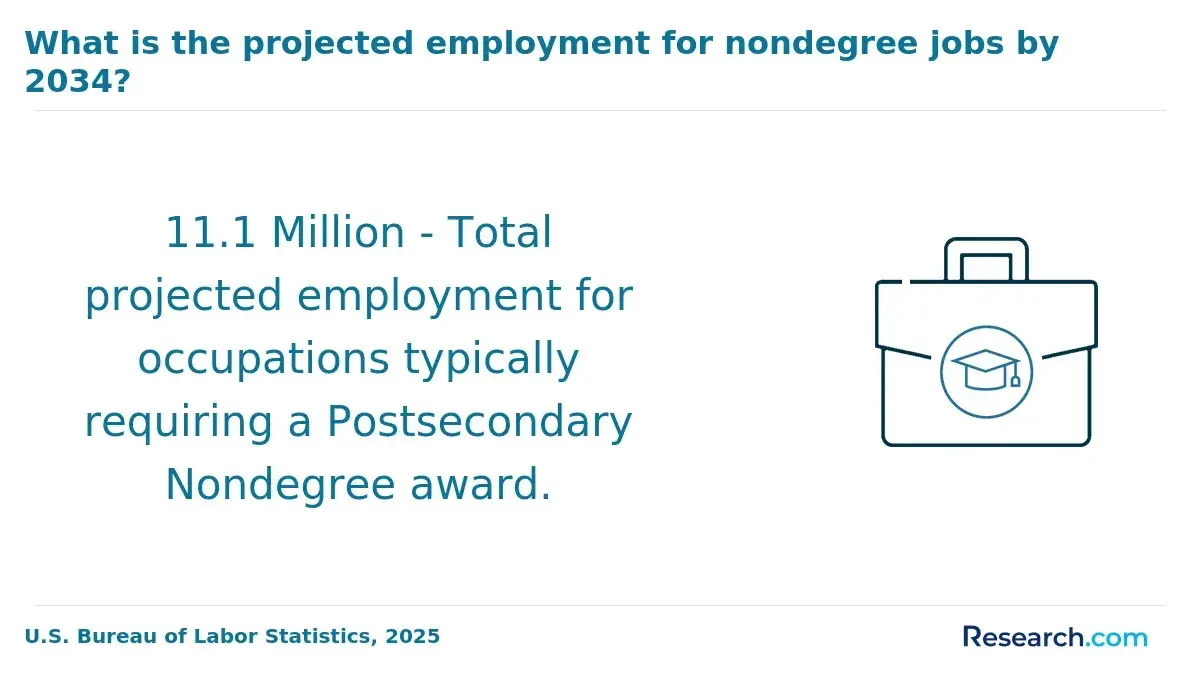
Do not choose by occupational salary alone. Compare the required credential, local opportunities, your interest in the work, and any additional license or experience. A certificate or direct workforce entry may be a better first step if you need employment sooner or are not yet ready for a degree's prerequisites.
What admission requirements apply beyond a 2.0 GPA?
Beyond GPA, colleges may require transcripts, proof of high school completion or an equivalent credential, placement information, and program prerequisites. Selective majors can add minimum grades in particular courses, applications, interviews, background checks, or proof of licensure. SAT or ACT policies, when relevant, apply to the particular undergraduate admission process - not necessarily to transfer applicants.
Ask whether you qualify for full, provisional, or conditional admission and what grades you must earn to remain enrolled. If you are considering an easiest masters degree after a bachelor's, check its graduate admissions page separately: a college's undergraduate 2.0 rule does not carry over to master's admission.
Which online degrees can lead to professional licensing or certification?
Nursing, teaching, and social work degrees can form part of a professional licensing pathway, but the degree alone is not a license. Depending on the occupation and state, you may also need an approved program, supervised practice or clinical hours, examinations, and a background check. Engineering graduates pursuing professional engineer licensure likewise need to review state-specific education, examination, and experience rules.
In less regulated fields, IT certifications can demonstrate particular skills, while some health information credentials have separate examination eligibility rules. Ask the relevant state board or certifying organization whether the exact program qualifies before enrolling; do not rely on a general statement that its graduates work in the field.
How long do online bachelor's degree programs take and cost?
A bachelor's degree commonly requires about 120 credits, but the remaining credits determine your timeline. Full-time students beginning without college credit often plan on roughly four academic years; part-time study, course sequencing, prerequisites, and field placements can extend that schedule. Accepted transfer credit may shorten it only when credits fulfill specific degree requirements.
For cost, request a written estimate covering remaining tuition, mandatory and program fees, books, equipment, and travel for required placements. Compare that total with your likely grants, scholarships, and employer assistance - not just the advertised per-credit price. Students balancing study and caregiving may find the scheduling questions in degrees for moms going back to school useful, but should still confirm live-session and placement requirements with each school.
What do students study in popular online degree programs?
Most bachelor's students complete general education alongside a major. Business commonly covers accounting and operations; IT emphasizes systems and networks; computer science adds programming, algorithms, and mathematics. Psychology often requires research and statistics, while nursing, education, and social work pair coursework with supervised practice.
Course content matters more than a field's reputation for being manageable. If you are comparing easy degrees, review required math, writing, labs, field hours, and capstones against your strengths. Ask for a degree audit showing which previous courses satisfy general education, major, and elective requirements before estimating how many classes remain.
What careers and salaries can online degree graduates expect?
These Bureau of Labor Statistics median annual wages for U.S. occupations in May 2024 provide career context, not predicted earnings for graduates of any particular online program. The roles differ in their education, licensing, and experience requirements.
| Occupation | Median annual wage | Important qualification distinction |
| Software developer | $133,080 | Employers assess programming skills; a degree alone does not secure the role. |
| Registered nurse | $93,600 | Requires an approved nursing education pathway and RN licensure. |
| Social worker | $61,330 | Requirements vary by role and state; clinical practice requires additional qualifications. |
Use wages alongside local job requirements, total education cost, and the time needed to qualify. Entry-level pay and hiring prospects can differ substantially from an occupation-wide median.
How should students choose a reputable online college?
Start with the career you want, then compare schools that publish an applicable admission route for your 2.0 GPA. Confirm the exact online degree, institutional and any necessary programmatic accreditation, state authorization or licensure fit, and a personalized estimate of remaining credits and total cost. Ask whether classes have live meetings or fixed deadlines and whether placements, labs, or campus visits are required.
Two costly mistakes are assuming that "online" means self-paced and that accepted transfer credits all count toward the major. If scheduling is decisive, use accredited self-paced online courses as a starting point for questions, then verify the degree's actual format with the school. Get admission eligibility, transfer evaluation, and placement requirements in writing before committing.
Other Things You Should Know About
Possibly. Check whether the published minimum applies to your applicant category and intended major; meeting a minimum does not guarantee admission.
Not automatically. Graduate programs set their own requirements, which may include prerequisites, relevant experience, or a separate GPA standard.
They may reduce remaining coursework, but the school determines both admission eligibility and how each accepted credit applies to your degree. Request an official evaluation.
The admission threshold alone does not determine its value. Check accreditation, relevant skills and experience, and any licensing rules for your intended job.
References
- Accreditation in the U.S. | ed.gov http://www.ed.gov/laws-and-policy/higher-education-laws-and-policy/college-accreditation/accreditation-in-the-us
- School-Determined Requirements | 2024-2025 Federal Student Aid Handbook https://fsapartners.ed.gov/knowledge-center/fsa-handbook/2024-2025/vol1/ch1-school-determined-requirements
- Price of Attending an Undergraduate Institution - COE https://nces.ed.gov/programs/coe/indicator/cua/price-of-attending-an-undergraduate-institution
- Application Requirements & Deadlines | Undergraduate Admissions https://admissions.charlotte.edu/apply/first-year-students/application-requirements/
- Undergraduate and Graduate Tuition and Fees | Purdue Global https://www.purdueglobal.edu/tuition-financial-aid/undergraduate-graduate-tuition-and-fees/
- Freshman Applicants - UMD Admissions - University of Maryland https://admissions.umd.edu/apply/freshman-applicants
- Academic Common Market (ACM) | schev.edu https://www.schev.edu/financial-aid/academic-common-market
- Online Bachelor's Degree Programs | University of Kansas https://online.ku.edu/undergraduate-programs
- Tuition & Fee Details - Bursar - Oklahoma State University https://bursar.okstate.edu/tuition_fees/tuition_fees
- Transfer Student Admission Requirements | Illinois State https://illinoisstate.edu/admissions/transfer/requirements/