
2027 Best Online College Majors for Career Changers

Co-Founder and Chief Data Scientist
Changing careers means choosing more than an interesting subject: you need a major that leads toward the work you want, fits your schedule, and justifies its cost. The stakes can be substantial. The U.S. Bureau of Labor Statistics (BLS) reports a $133,080 median annual wage for software developers in 2024, but a computer science degree alone does not qualify someone for every software role.
This guide compares online majors for working adults, including master's-level options, and shows how to check career requirements before you enroll.
Key Things You Should Know
- For a move into technical work, compare information technology and computer science by curriculum and portfolio opportunities - not salary alone. BLS reports a $133,080 median wage for software developers in 2024; that is an occupational figure, not a graduate outcome.
- Healthcare, nursing, education, and social work offer clearer occupation-specific routes, but online coursework may still require local clinical work, student teaching, supervised practice, or a state license.
- Start with your existing credentials: a career changer with a bachelor's degree may qualify for a relevant master's, while someone without one may need an associate or bachelor's pathway first. Ask for an evaluation of applicable credits before estimating time or cost.
Top 10 Best Online College Majors for Career Changers
Business Programs
Online master's options include the MBA, Master of Management, and specialized degrees in accounting, finance, or business analytics. They suit career changers who can connect prior experience to operations, analysis, or client-facing work. An MBA may broaden management skills, but management jobs often require relevant experience; an accounting master's may be more targeted if you need specific coursework for CPA eligibility. Compare prerequisite courses, applied projects, employer recognition, and total cost. If you want an entry-level business role without prior professional experience, a bachelor's program or focused certificate may be a better first step.
Healthcare Programs
Online master's programs in healthcare administration, public health, and health informatics can help professionals move into healthcare operations, population health, or health data work. These are generally not clinical licenses. A career changer with experience in management or data may find a clearer bridge into administration or informatics than into direct patient care. Check whether a program requires healthcare experience, statistics prerequisites, an internship, or scheduled sessions. If your goal is to diagnose or treat patients, identify the required professional credential first; an administrative master's does not substitute for it.
Information Technology Programs
Online master's programs in information technology, cybersecurity, and information systems emphasize networks, cloud systems, security, or enterprise technology. Some admit applicants from other majors but require programming or computing foundations; others expect prior technical experience. These programs can fit career changers bringing business or operations knowledge into technology. Compare hands-on labs, projects, and the roles graduates actually enter. A master's does not make cybersecurity an automatic entry-level job: employers may also seek systems experience and relevant certifications. If you need basic technical experience first, consider a certificate, support role, or undergraduate coursework.
Computer Science Programs
An online computer science master's can support a move toward software development, computing research, or specialized technical work. Admission may depend on programming, data structures, algorithms, and mathematics preparation; a non-computing bachelor's degree does not necessarily rule you out, but bridge coursework can extend the timeline and cost. Compare whether the curriculum teaches fundamentals or assumes them. Projects that demonstrate working code matter when changing fields. If you are starting without programming experience and want a quicker test of career fit, introductory courses and a portfolio may be more sensible than applying immediately to an advanced degree.
Nursing Programs
Online nursing master's programs generally serve licensed registered nurses seeking advanced practice, education, leadership, or informatics roles. They are usually not a route into nursing for someone without an RN license. Career changers entering the profession should investigate state-approved prelicensure associate, bachelor's, or accelerated second-degree nursing programs; classroom work may be online, but skills training and clinical placements are in person. For an RN considering a master's, confirm specialty accreditation, clinical-placement arrangements, and eligibility for the intended state license or certification before enrolling.
Psychology Programs
Online master's programs in psychology may emphasize research, applied behavior, or organizational work. They can complement experience in human resources or research, but a general psychology master's does not ordinarily qualify someone to practice independently as a psychologist. If your goal is therapy, compare licensure-oriented counseling or clinical social work pathways instead and check state requirements. Look closely at research methods, practicum expectations, and whether the program prepares students for work or further doctoral study. A non-licensure program may be worthwhile for a specific role, not as a shortcut to clinical practice.
Education Programs
Online master's degrees in teaching, curriculum and instruction, and educational leadership serve different goals. An initial-licensure teaching program may accept applicants with a bachelor's in another field, but typically includes supervised student teaching and state-specific requirements. Curriculum programs often target current educators; leadership programs may require teaching experience. Check which applicant group the program serves before comparing flexibility. Online classes do not eliminate school-day placement commitments. If you want to teach in a public school, obtain written confirmation that the pathway meets the requirements of the state where you intend to work.
Criminal Justice Programs
Online criminal justice master's programs commonly cover policy, administration, criminology, and research. They can suit professionals moving toward public-safety analysis or advancing within an agency, but they do not replace agency hiring, background checks, academy training, or experience. For a newcomer seeking an entry-level role, the master's may be more education than the job requires. Compare employer requirements and program projects before committing. Requirements also differ considerably between policing, corrections, and civilian analyst roles; choose the occupation first, then decide whether graduate study adds value.
Engineering Programs
Online engineering master's degrees are often specialized programs for people who already have engineering, mathematics, or related technical preparation. Some career changers can enter after completing substantial prerequisites, but an online master's is not necessarily a substitute for an undergraduate engineering education. Compare laboratory or residency requirements, the degree's technical focus, and whether the specific undergraduate program holds ABET accreditation if professional engineering licensure is a goal. State licensure commonly involves education, examinations, and experience. If you lack foundational coursework, ask about an undergraduate or structured bridge pathway before assuming graduate admission is practical.
Social Work Programs
An online Master of Social Work (MSW) can provide a defined path into social work for someone with a bachelor's degree in another field. A traditional MSW generally includes foundation coursework and supervised field placements; advanced standing is usually reserved for applicants with a qualifying social work bachelor's degree. Online instruction does not remove in-person field hours. Check Council on Social Work Education accreditation, placement support, and your state's licensure rules. If you want clinical practice, plan for any required post-degree supervision and examination rather than assuming graduation alone permits independent practice.
Which online college majors offer the best career-change opportunities?
The best online major is the one that closes the gap between your current qualifications and a specific job. For career changers, computer science and IT can support technical transitions; business can build on transferable workplace experience; nursing, teaching, and social work offer more prescribed routes into regulated work. None is universally best: prior education, required in-person training, and employer expectations change the answer.
This comparison highlights the main trade-off for each field. "Online" refers to available coursework, not a promise that every program or required activity is remote.
| Major or field | Potential career-change fit | Constraint to check first |
| Computer science or IT | Software, systems, and technical roles | Prerequisites and evidence of hands-on skills |
| Business or healthcare administration | Operations roles that use prior work experience | Whether target jobs require industry experience |
| Nursing, education, or social work | Occupation-specific transitions | State approval, licensure, and in-person placements |
| Psychology or criminal justice | Research, policy, or related organizational roles | Whether the intended job actually requires the degree |
A useful first test is to collect job postings for your intended role and compare their requirements with the curriculum. If employers primarily ask for experience or a license the major does not provide, choose a different pathway or plan for the missing step.
How do you choose an accredited online college major for a career change?
Start with a target occupation and the credential it requires, then compare programs that could realistically get you there. Institutional accreditation matters for academic recognition and federal aid eligibility; programmatic accreditation may also matter for professional preparation, certification, or licensure. Confirm both through the accreditor and, for regulated work, the relevant state board.
Next, compare the specific program - not just the college - on admission prerequisites, total remaining coursework, online scheduling, required placements, and full cost. Ask whether an admissions adviser can provide a written degree audit and whether your state accepts the program for your intended occupation. A school's general accreditation does not establish that every degree meets every state's licensing rules.
What online degree pathways can career changers complete while working?
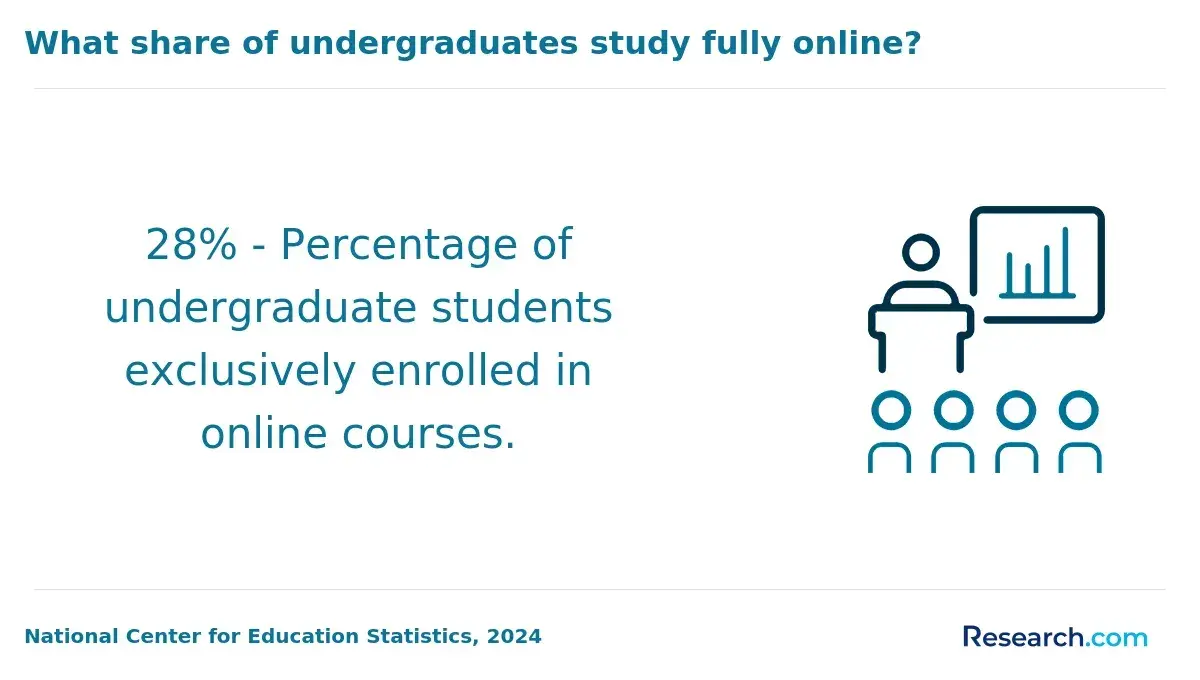
Working career changers can pursue part-time online associate, bachelor's, or master's study, depending on their starting credential. An associate degree may provide an entry point or transferable coursework; a bachelor's may qualify a student for broader roles or graduate admission; a master's may help redirect an existing bachelor's degree toward a specialized field. An online accelerated bachelor's degree is worth examining if you have eligible prior credits, but its advertised pace may assume a particular transfer balance and intensive enrollment.
Ask for a term-by-term schedule before deciding that a pathway fits your job. Asynchronous classes still have deadlines, and online programs may schedule live meetings, exams, laboratories, internships, clinical hours, or student teaching. A predictable part-time route can be more workable than a faster one that conflicts with your shifts.
Which online majors lead to the strongest salaries and job outlooks?
Among the fields discussed, technology offers some of the strongest occupational wage figures, but those figures describe workers in jobs - not what graduates of a particular online major will earn. BLS reports a 2024 median annual wage of $133,080 for software developers. Reaching such a role depends on demonstrable programming ability and hiring conditions, not simply the degree title.
For comparison, BLS reports a $93,600 median annual wage for registered nurses in 2024. Nursing has a clearer credential-to-occupation connection, but a career changer must complete an eligible prelicensure route and meet state licensing requirements; an online nursing master's intended for existing RNs is not that route. Use BLS outlook information alongside local openings, entry requirements, program cost, and your willingness to complete required in-person work.
What are the admission requirements for online degree programs?
Undergraduate online programs generally ask for a high school diploma or equivalent and transcripts; transfer applicants also provide records of prior college work. Master's applicants typically need a bachelor's degree and transcripts. Specific programs may add prerequisite courses, a minimum GPA, professional experience, recommendations, a statement of purpose, a portfolio, or a test requirement. Nursing and other practice-oriented programs may have separate selective admission and placement requirements.
Do not assume a schoolwide test-optional policy applies to a particular graduate program. Likewise, an easiest online masters degree list cannot tell you whether you meet the prerequisites for your intended career. Ask admissions which requirements apply to your program and whether missing foundation courses can be completed before or after admission.
How long do online college majors take, and how much do they cost?
Time and price depend chiefly on credits still required, enrollment pace, prerequisites, course availability, and experiential requirements. Associate degrees commonly require about 60 credits, and bachelor's degrees about 120; master's requirements vary substantially by field and program. Those totals are planning benchmarks, not promises about how many credits you personally must complete. 2 year online degrees may be a lower-commitment starting point, but finishing in two years depends on course load and sequencing.
Compare an individualized total-to-completion estimate: remaining tuition, mandatory and program fees, books or equipment, travel, and any placement-related expenses. Ask how accepted transfer credits apply to the major, not just electives, and how many credits must be earned at the institution. Eligible students can explore federal financial aid, employer tuition assistance, and scholarships; aid eligibility and net price vary. A lower per-credit price is not necessarily the cheaper route if more coursework remains.
What coursework and skills do online majors provide for new careers?
Coursework should match the tasks in your target job. Computer science may develop programming, algorithms, and software projects; IT may emphasize systems, networks, and security labs. Business and healthcare administration may use accounting, operations, data analysis, and applied projects. Teaching, nursing, and social work combine academic preparation with supervised practice.
Read the required-course list rather than relying on a major's name. Look for a capstone, portfolio, internship, or placement that produces relevant evidence of skill, and check whether the school helps arrange it. A program heavy on theory can be valuable for research or later study, but a career changer seeking immediate occupational preparation may need more applied work.
Which online careers require state licenses or professional certifications?
Registered nursing, public-school teaching, and many clinical social work and counseling roles require state authorization beyond earning a degree. Engineering practice under a professional engineer license also involves state-specific education, examinations, and experience. By contrast, business, IT, and many criminal justice roles generally do not have one universal state license; individual employers may still require credentials, background checks, or specialized training.
Check the state where you plan to work before enrolling, especially if an online school is based elsewhere. Ask whether the exact program meets that state's educational requirements and who arranges required placements. Applicants concerned about how a criminal record may affect admission or occupational eligibility can explore best degrees for felons, but should confirm restrictions with the relevant state board or employer rather than assuming a degree removes them.
How can career changers compare online programs and verify career outcomes?
A sound comparison uses the same target job and starting credentials for every school. Request a written assessment of transferable credits, a remaining-course plan, a complete cost estimate, and details of any live or in-person requirements. Then compare those documents with current job postings and the applicable licensing board's rules.
Treat unclear claims as a reason to ask more questions. "Fully online" may leave out local clinical placements; "fast" may assume substantial transfer credit; and access to career services is not evidence of job placement. If a school publishes employment or earnings outcomes, check which students are counted, when outcomes were measured, and whether the figures apply to your specific program. Choose the option that provides a credible route to the role at a workload and total cost you can manage.
Other Things You Should Know About
Sometimes. Programs may accept different undergraduate majors, but technical prerequisites, prior experience, or supervised practice can still be required. Check admission rules and the requirements of the job you want.
Evaluate the institution's accreditation, the program's curriculum, and evidence of relevant skills. For licensed occupations, confirm state eligibility as well; delivery format alone does not establish professional qualification.
Some programs permit remote coursework, but nursing, teaching, and social work commonly require in-person placements. Check live-session, laboratory, exam, and placement rules for the exact program.
Choose based on the target role. A certificate can help test a field or build a specific skill; a degree may be necessary for jobs requiring broader education, graduate admission, or a licensure pathway.
References
- Occupation Finder: Occupational Outlook Handbook | bls.gov https://www.bls.gov/ooh/occupation-finder.htm
- Accreditation in the U.S. | ed.gov http://www.ed.gov/laws-and-policy/higher-education-laws-and-policy/college-accreditation/accreditation-in-the-us
- Fast Facts: Tuition costs of colleges and universities (76) | ed.gov https://nces.ed.gov/fastfacts/display.asp
- Transfer & Credit for Prior Learning | morgan.edu https://www.morgan.edu/college-of-interdisciplinary-and-continuing-studies/new-students/transfer-and-credit-for-prior-learning
- Accreditation | State University System of Florida https://www.flbog.edu/resources/academic/program-review-accreditation/
- The Major Payoff: Evaluating Earnings and Employment Outcomes Across Bachelor's Degrees - CEW Georgetown https://cew.georgetown.edu/cew-reports/major-payoff/
- Career Connections | ccp.edu https://www.ccp.edu/student-services/student-assistance-centers/career-connections
- How Long Are Community College Programs? | Edison State Community College https://www.edisonohio.edu/blog/how-long-are-community-college-programs
- Highest ROI college degrees: What majors pay off (and why) | About the University of Cincinnati https://www.uc.edu/blog/highest-roi-college-degrees.html
- Why Is Accreditation Important? | ACE Blog https://ace.edu/blog/why-is-accreditation-important/


