2027 Best Career Programs for Remote Jobs

Co-Founder and Chief Data Scientist
Choosing a program for remote work means looking beyond whether classes are online: the occupation itself must offer work you can do away from an employer's site. Demand is one reason to look closely. The U.S. Bureau of Labor Statistics (BLS) projects employment of information security analysts to grow 33% from 2023 to 2033, although competition for remote openings can still be strong.
This guide compares master's-level program families, the jobs they may support, and the costs, experience, and licensing requirements that can change which path makes sense for you.
Key Things You Should Know
- For broadly remote-capable work, compare business, IT, and computer science programs first; healthcare and licensed professions usually impose more location or credential restrictions.
- BLS projects 33% employment growth for information security analysts from 2023 to 2033, but that occupation-level forecast does not measure remote openings or guarantee a job.
- A master's degree is not always the shortest route: entry-level candidates may be better served by a relevant bachelor's degree, certificate, portfolio, or experience before paying for graduate study.
Top 10 Best Career Programs for Remote Jobs
Business Programs
An MBA or master's in business analytics, accounting, or marketing can support remote-capable work in operations, financial analysis, digital marketing, and project management. Choose a specialization with tools and projects that match actual job postings; a general MBA alone may be less persuasive for a technical analyst role. Many management positions require substantial experience, so career changers should distinguish analyst openings from leadership openings. Check whether the program offers applied projects and whether scheduled group work fits your availability.
Healthcare Programs
A master's in health administration, health informatics, or public health may fit remote-capable roles in quality reporting, data analysis, population health, and administration. Health informatics is a stronger match for data-focused postings; administration may suit professionals who already understand healthcare operations. Some employers require access to secure systems, state-specific eligibility, or occasional site visits. A healthcare master's does not qualify its holder to practice medicine or another licensed clinical profession. Compare technical coursework and employer experience requirements before enrolling.
Information Technology Programs
A master's in information technology, cybersecurity, or information systems can prepare experienced professionals for systems, cloud, and security work that may be performed remotely. Look for labs using current tools, incident-response exercises, and opportunities to document practical results. Security analyst positions often require prior IT experience; the degree is not a substitute for it. Some roles involve on-call coverage, restricted networks, or clearance requirements that limit remote flexibility. A targeted certificate plus experience may be a better first step for beginners.
Computer Science Programs
A master's in computer science or software engineering can deepen preparation for software development, data-intensive engineering, and related remote-capable roles. Compare prerequisite programming and mathematics requirements: conversion programs for non-CS graduates may add foundation courses and time. Projects, code reviews, and a demonstrable portfolio matter alongside the credential. A research-heavy curriculum may be useful for specialized work but unnecessary for someone seeking an initial developer position, where a bachelor's degree or strong equivalent experience may suffice.
Nursing Programs
An MSN in nursing informatics, education, or leadership may support remote-capable work in clinical systems, utilization review, or training. These paths generally build on registered-nurse preparation and clinical experience. Nurse practitioner tracks are different: they require clinical training and lead toward state-regulated practice, even if some subsequent telehealth work is remote. Verify admission licensure, placement requirements, state authorization, and whether the specific job requires in-person patient contact. Do not choose an MSN solely because a telehealth job posting says "remote."
Psychology Programs
A master's in psychology may be useful for research, user insights, or organizational work, but it does not automatically qualify graduates to provide teletherapy. Counseling and clinical practice depend on the specific degree, supervised training, examinations, and state licensure rules. If therapy is your goal, verify that the program is designed for the license you intend to pursue and can arrange required placements. If your goal is remote research or people analytics, compare methods coursework and job requirements instead.
Education Programs
A master's in instructional design, learning technology, or curriculum and instruction can lead toward remote-capable course-development and corporate-training work. Choose programs that produce a portfolio of learning materials and teach the platforms used in your target sector. An education master's does not necessarily confer a teaching license, and online teaching jobs may require certification, subject expertise, or live sessions. If you want classroom teaching, check state approval and student-teaching requirements rather than assuming a fully remote pathway.
Criminal Justice Programs
A master's in criminal justice or digital forensics may suit policy analysis, compliance, intelligence support, or cyber-investigation roles. Remote opportunities are more plausible in research, documentation, and some compliance work than in policing or field investigations. Digital-forensics jobs may require secure facilities, evidence handling, technical experience, or clearance. Compare the curriculum against specific postings before committing; a cybersecurity or data-analysis program may provide a more direct route to your target remote role.
Engineering Programs
A master's in engineering management, systems engineering, or software-oriented engineering can support remote-capable design coordination, modeling, and project work. Hardware testing, manufacturing, laboratories, and site inspections can still require physical presence. Technical experience often matters more than the master's credential for entry-level openings. If a job requires a professional engineer license, investigate the applicable state's education, examination, and experience rules separately; earning a graduate degree does not itself grant licensure.
Social Work Programs
A Master of Social Work can lead toward telehealth counseling, case coordination, or program administration, but required field education is generally in person or otherwise subject to placement rules. Clinical teletherapy requires the appropriate state license and supervised experience after graduation. Remote vacancies may also restrict where the worker and client can be located. Verify program accreditation, placement support, and licensing eligibility in your intended state. For nonclinical remote work, compare policy or administration tracks with the jobs you want.
What are the best career programs for finding remote jobs?
The best career program is the one that teaches skills for a specific remote-capable occupation you can realistically enter. For many applicants, IT, computer science, and business offer the broadest range of location-flexible tasks. Other fields can work well, but often require an existing professional credential or substantial experience.
This comparison separates the work a program may prepare you to do from the main obstacle to doing it remotely. It is a starting point for evaluating job postings, not a ranking of individual schools.
| Program family | Remote-capable work to investigate | Key constraint |
| IT and computer science | Software development, systems, security | Technical evidence and experience |
| Business | Analytics, marketing, project operations | Role-specific skills; management experience |
| Healthcare and nursing | Informatics, quality, utilization review | Clinical background or secure-system access |
| Education | Instructional design, online training | Portfolio and possible live teaching |
| Psychology and social work | Research, administration, telehealth | Licensure for clinical practice |
| Criminal justice and engineering | Compliance, analysis, modeling | Secure facilities or physical work |
Before choosing a program, read several target-role postings and separate required qualifications from preferred ones. If they consistently ask for experience you lack, plan how you will gain it rather than assuming graduate study will replace it.
Which remote careers offer the highest salaries and job growth?
Software development and information security stand out for their combination of U.S. pay and projected employment growth. BLS reports a 2023 median annual wage of $132,270 for software developers and projects 17% employment growth from 2023 to 2033. That median covers workers across experience levels and work arrangements - not new graduates or remote workers specifically.
BLS reports a 2023 median annual wage of $120,360 for information security analysts, with projected growth of 33% over the same period. Security work commonly calls for related IT experience, so its strong outlook does not make a cybersecurity master's an automatic entry-level shortcut. Compare likely starting roles, required experience, and total education cost - not occupational medians alone. In every field, confirm that the particular employer offers remote work; BLS wage and growth figures do not measure it.
What education do you need for entry-level remote jobs?
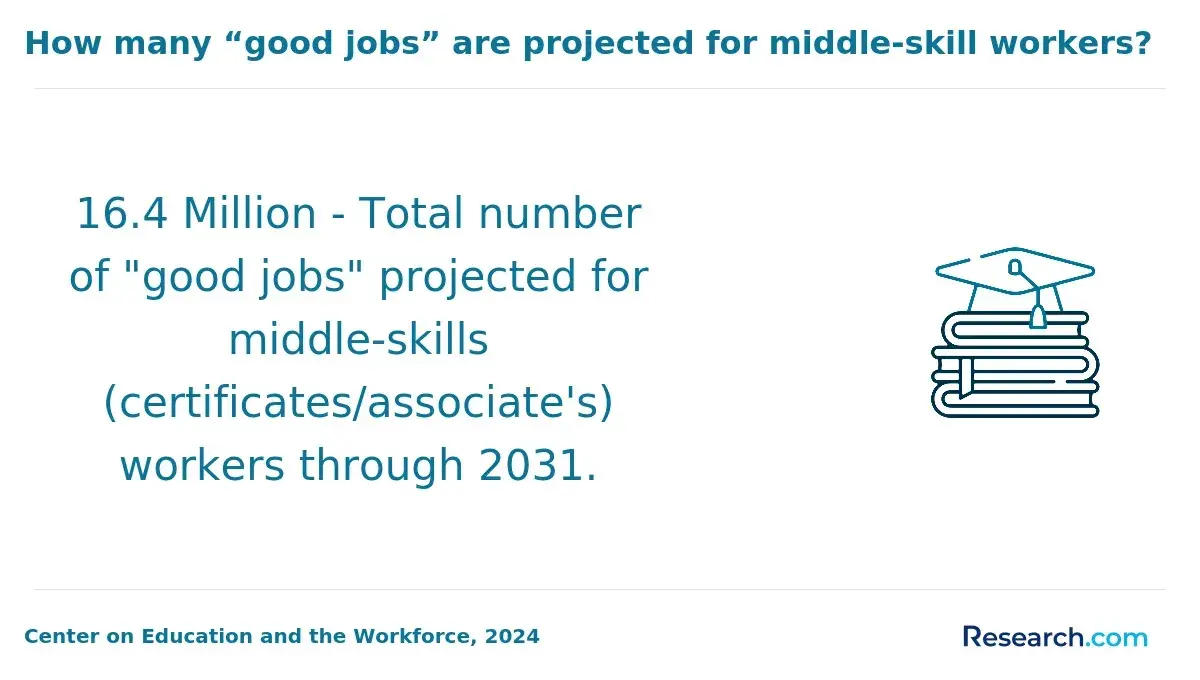
There is no single education requirement for entry-level remote jobs. Some customer-support and administrative positions may accept a high school diploma plus training; many analyst and developer openings request a bachelor's degree or equivalent skills; licensed clinical work follows separate state requirements. Remote status rarely lowers the job's underlying qualifications.
If you are starting without a degree, an associate program or certificate can help you test a field at a lower commitment than a master's. Even an easiest associate degree option should be judged by whether its courses build skills employers request. For technical work, pair coursework with projects you can show; for business roles, seek measurable experience with relevant tools.
Are online programs better than campus programs for remote careers?
Neither format is inherently better for a remote career. Online study can help you practice digital collaboration and avoid commuting; campus study may offer easier access to labs, in-person mentoring, or local employers. What matters is whether the program's training, schedule, and required experiences fit the job you want.
Check for live meetings, fixed deadlines, proctored exams, residencies, and local placements before treating "online" as flexible. Working adults comparing online colleges with flexible start dates should also confirm when required courses are offered: frequent admission does not mean every course starts frequently. A campus or hybrid program may be the better choice if it provides essential equipment or a viable clinical placement.
What do remote career programs typically teach?
Strong programs teach the occupation's tools and ways of working, not simply how to attend class online. That may mean coding and version control in computer science, cloud labs in IT, data analysis in business, electronic health systems in informatics, or accessible course design in education. Applied projects should let you demonstrate what you can do to an employer.
Look at the required courses and culminating work. A capstone or portfolio aligned with your target role may be more useful than electives chosen only for convenience; a thesis may make more sense for research goals. Remote teamwork, written communication, data security, and independent problem-solving cut across fields, but they do not replace occupation-specific preparation.
What are the admission requirements for remote career programs?
The master's programs compared here generally require a bachelor's degree. Depending on the field, applicants may also need prerequisites, a résumé, recommendations, a statement of purpose, professional experience, or a current license. Computer science applicants should check mathematics and programming prerequisites; MSN applicants should check nursing licensure; MSW applicants should check whether a particular standing or placement pathway has separate eligibility rules.
Requirements belong to the specific program, not just its university. Ask admissions to identify missing prerequisites, whether prior graduate coursework can apply, and whether any test policy covers your applicant category. Service members and veterans considering an online military college should also request an evaluation of applicable military education and benefits; neither automatically reduces a master's program's requirements.
How long do remote career programs take and cost?
Master's programs can take about one to several years, depending on required credits, prerequisites, enrollment pace, course sequencing, and experiential work. Clinical placements or a thesis may constrain the schedule even when classes are online. Ask for a degree plan based on your transcript and intended course load rather than relying on an advertised fastest-completion figure.
To compare costs, calculate tuition for the credits you still need, then add mandatory and program fees, books, software, travel, and any placement-related expenses. Ask whether financial aid or employer assistance applies and how much borrowing remains after other funding. For a remote job, a doctorate is usually a separate, longer-term decision, not an assumed next step. Even when exploring 1 year PhD programs online no dissertation, verify the actual credential, dissertation or capstone requirements, and completion assumptions before comparing it with a career-focused master's.
Do remote careers require licenses or professional certifications?
Some do; many do not. Software development and most business roles generally have no state occupational license, although an employer may value relevant certifications. Registered nursing, clinical social work, counseling, and some teaching or engineering roles are regulated. Their rules may include an approved education pathway, supervised practice, examinations, and state applications beyond the degree.
A professional certification is different from a state license, and neither should be assumed to come with graduation. Before enrolling for telehealth or another regulated remote role, check the licensing board for the state where you intend to practice and ask the school to confirm how its program meets those requirements. Remote work across state lines can add further restrictions.
How can you choose an accredited remote career program?
Start by confirming that the institution holds recognized institutional accreditation and that the particular program has any programmatic accreditation needed for your intended license or employer. Institutional accreditation alone does not establish eligibility for clinical social work, nursing, teaching, or another regulated occupation in every state.
Then compare program catalogs and written school policies against your target jobs: required courses, hands-on work, online attendance, placement support, total charges, and career services. Ask for a transcript evaluation before counting on transfer credit; accepted coursework may not satisfy a major or capstone requirement. Red flags include an unverified "fully online" claim that hides required travel, a cost quote that omits fees, or salary claims presented as guaranteed outcomes.
Other Things You Should Know About
It can build relevant skills, but many remote positions still require work samples or prior experience. Check entry-level postings before paying for a graduate program.
IT, software, business analytics, and instructional design are worth investigating if their day-to-day tasks appeal to you. Choose based on prerequisites, local and remote postings, and the projects you can complete.
Online coursework does not necessarily eliminate clinical, field, or other in-person requirements. Confirm placements and state-specific rules with the program before applying.
Employers assess qualifications for the role. Focus on institutional accreditation, relevant skills, practical work, and whether the credential meets any applicable licensing requirement.
References
- Work-Based Learning | New York State Education Department https://www.nysed.gov/career-technical-education/work-based-learning
- Cost of Attendance (Budget) | 2025-2026 Federal Student Aid Handbook https://fsapartners.ed.gov/knowledge-center/fsa-handbook/2025-2026/vol3/ch2-cost-attendance-budget
- Fastest Growing Occupations | bls.gov https://www.bls.gov/ooh/fastest-growing.htm
- Virtual and Project Based Work: Students: Internships & Professional Development: University of Rochester https://www.rochester.edu/internships/students/virtual.html
- Community College FAQs | Community College Research Center https://ccrc.tc.columbia.edu/community-college-faqs.html
- How Internships, Labs, and Projects Translate to Real Tech Careers | CIAT https://www.ciat.edu/blog/how-internships-labs-and-projects-translate-to-real-tech-careers-2/
- Program Prerequisites | School of Medicine Student Affairs https://somsa.ucr.edu/program-prerequisites
- What is the time commitment for different degree options? | Penn State World Campus https://www.worldcampus.psu.edu/about-us/news-and-features/what-is-the-time-commitment-for-different-degree-options
- 25 Remote Jobs, No Experience Needed, & Companies Hiring | flexjobs.com https://www.flexjobs.com/blog/post/find-remote-jobs-no-experience
- 12 High-Paying Remote Jobs to Explore | Coursera https://www.coursera.org/articles/highest-paying-remote-jobs