2027 Best Online College Programs With Conditional Admission

Co-Founder and Chief Data Scientist
A conditional admission offer can open a path to graduate study, but it may also require you to meet a GPA threshold, finish prerequisites, or submit missing documents before you can continue. That distinction matters when a degree is tied to a career goal: the U.S. Bureau of Labor Statistics reports a 2024 median annual wage of $93,600 for registered nurses, but a nursing master's alone does not grant an RN license.
This guide compares online master's program fields and shows you how to confirm that an admissions offer, degree, and delivery format fit your plans.
Key Things You Should Know
- Conditional admission is program-specific: ask for the written conditions, deadline, and consequences before accepting an offer.
- Compare master's programs by prerequisite courses, online attendance requirements, total cost, and whether the credential meets your career or licensure goal.
- For regulated fields, confirm state eligibility and required placements before paying a deposit; an online degree does not automatically qualify you for a license.
Top 10 Best Online College Programs With Conditional Admission
Business Programs
Online MBA, management, and accounting master's programs may suit applicants changing fields or seeking advancement. A program might offer conditional admission while you complete foundation courses or demonstrate graduate-level performance, but an undergraduate business degree is not always required. Compare the exact condition, whether foundation courses add cost, and whether classes meet live. An MBA offers broad management study; a specialized accounting master's may be better for a specific professional goal. Neither guarantees a promotion, and accounting licensure has separate state requirements.
Healthcare Programs
Online master's programs in public health, health administration, and health informatics serve different goals. Public health emphasizes population-level work; administration focuses on organizations; informatics connects healthcare and data systems. Conditional admission may involve prerequisite coursework or a required first-term grade. Check whether your target role expects clinical experience or a separate credential. Some programs are academically online but require an internship or other field experience. Choose the field that matches the work you want, rather than assuming a healthcare degree qualifies you for clinical practice.
Information Technology Programs
An online master's in information technology may cover cloud systems, cybersecurity, and IT management. It can suit experienced practitioners seeking broader responsibilities, while a focused certification may be a lower-cost choice for one specific skill. Applicants without a technical background should ask whether conditional admission requires programming or networking prerequisites. Compare laboratory access, group-project schedules, and the program's fit with the roles you seek. A degree does not replace employer expectations for practical experience.
Computer Science Programs
Online computer science master's programs commonly build on programming, algorithms, and mathematics. A conditional offer for a career changer may depend on completing those subjects first; ask whether prerequisite courses count toward the master's degree or add time and tuition. Compare software-focused coursework with research, artificial intelligence, or data-oriented options. If you need introductory coding skills rather than advanced study, a bridge pathway or smaller credential may be more appropriate. Verify any required live sessions, exams, or project presentations.
Nursing Programs
Online MSN programs may prepare licensed nurses for leadership, education, or advanced clinical study, depending on the track. Admission and licensure requirements differ: many tracks require an active RN license, and advanced practice pathways also require supervised clinical training and state authorization. Conditional admission cannot substitute for a required license. Ask whether conditions concern academic preparation, documents, or clinical eligibility, and confirm who arranges local placements. An "online" MSN can still demand substantial in-person clinical hours.
Psychology Programs
An online master's in psychology can support research-related, organizational, or further-study goals, but it does not automatically qualify a graduate to practice as a licensed psychologist. Conditional admission may require statistics or foundational psychology coursework. Compare the curriculum with your intended occupation: counseling and clinical practice can have different degree, supervised-practice, and licensing rules. Ask whether research projects, practica, or campus visits are required. If independent clinical practice is your goal, verify the applicable state pathway before enrolling.
Education Programs
Online master's programs in curriculum, educational leadership, or teaching serve different audiences. Some are designed for licensed educators; others offer an initial-licensure pathway with student teaching. A conditional offer may require a teaching credential, prerequisite courses, or later submission of records. Confirm whether the specific program meets your state's educator requirements and whether local fieldwork is available. If you already hold a license, a non-licensure degree may fit an advancement goal without repeating initial teacher preparation.
Criminal Justice Programs
Online criminal justice master's programs may emphasize policy, administration, or research rather than training for a particular law-enforcement job. Conditional admission can provide a route for applicants whose academic record needs further review, but the written offer should specify how to earn full standing. Compare methods coursework, capstone requirements, and relevance to your current or intended role. Government and investigative positions can have separate hiring, experience, and background requirements; a graduate degree is not a substitute for them.
Engineering Programs
Online engineering master's programs are often specialized and may require an engineering or closely related undergraduate background. Conditional admission sometimes addresses missing mathematics or technical prerequisites, which can extend the timeline. Compare a practice-oriented capstone with a research thesis and check whether laboratories, exams, or residencies require travel. If professional engineer licensure matters, investigate state rules and your undergraduate degree's accreditation; a master's degree by itself does not establish eligibility.
Social Work Programs
An online MSW may offer a traditional route or a separate advanced-standing route for eligible BSW graduates. Conditional admission does not mean an applicant without the qualifying BSW can enter advanced standing. Compare required field placements, supervision arrangements, and whether the program meets your state's educational rules for licensure. Even online coursework generally accompanies in-person field education. Ask for a placement plan and a realistic schedule before committing, particularly if you must keep working full time.
What Is Conditional Admission for Online College Programs?
Conditional admission is an offer that depends on completing specified requirements. Depending on the school, those might include earning minimum grades in initial graduate courses, finishing prerequisites, or supplying final transcripts. Schools may use terms such as provisional or probationary admission differently, so the label alone does not tell you what is permitted.
Ask whether you can begin degree courses immediately, whether you may register for subsequent terms, and when your status changes to full admission. Distinguish an academic condition from a missing-document deadline: the risks, costs, and available courses may differ. Conditional admission is not the same as unconditional acceptance, and failure to meet its terms can end enrollment.
Which Online Colleges Offer Conditional Admission?
There is no reliable college-wide list of online master's programs with conditional admission. Eligibility can differ by graduate program, applicant background, and admission term; a university's general policy does not establish that a particular online degree offers the option. For the program fields above, treat conditional admission as a feature to confirm, not one to assume.
Start with official graduate admissions and program catalog pages. If a policy appears to apply, request a written answer from the program - not just the central admissions office - confirming that the named online master's program currently considers applicants conditionally. If the school cannot identify the applicable policy and its conditions, do not count that program as a verified option.
What Are the Admission Requirements for Conditional Enrollment?
Requirements vary, but graduate applicants commonly need an earned bachelor's degree, transcripts, and any program-specific prerequisites. Some programs also assess recommendations, a statement of purpose, professional experience, an interview, or standardized tests. A conditional pathway may address one shortfall without waiving the others.
Before applying, request the precise terms you would have to meet. The following checks distinguish a usable pathway from an offer that may delay your goal:
- Identify the applicable program, applicant category, and reason conditional admission is available.
- Get the required courses, grades or GPA, document deadlines, and review date in writing.
- Ask which courses count toward the degree and what happens to enrollment and aid if you miss a condition.
Do not assume a published undergraduate GPA policy governs graduate admission, or that a test waiver removes prerequisite or professional-license requirements.
How Can You Verify Accreditation for an Online College Program?
Check institutional accreditation through the U.S. Department of Education's accreditation database or the Council for Higher Education Accreditation's directory, then confirm the institution's current status with its accreditor. Accreditation applies to the institution; it does not prove every program meets a licensing board's requirements.
For a regulated goal, check the relevant programmatic accreditor and state board separately. Examples include social work, nursing, and educator-preparation requirements. Record the exact program name and online delivery option when asking a board about eligibility. A school's broad accreditation claim is not enough if your intended license depends on a particular program, curriculum, or placement arrangement.
Which Online Programs Lead to Licensure or Professional Certification?
Among these master's fields, nursing, social work, education, and some counseling-related pathways can be closely tied to professional licensure. The applicable degree, prior credential, approved program status, examination, and supervised experience depend on the occupation and state. Engineering licensure also has requirements beyond a master's degree. By contrast, many business, IT, and computer science roles do not require a state-issued license, although employers may value separate certifications.
Ask the program which license or certification it is designed to support, whether your state accepts its online pathway, and how required fieldwork is completed. Get the answer before enrollment: an online program's availability in your state is not, by itself, proof of licensure eligibility.
What Degrees and Certificates Can You Earn Through Conditional Admission?
This guide focuses on online master's degrees. Conditional admission may also exist for other credentials, but a school must publish or confirm a policy for the specific certificate, bachelor's program, or doctoral program you want. Graduate certificates may offer focused study; they should not be assumed to convert automatically into master's credit. Likewise, admission to one credential does not guarantee admission to another.
If you do not yet have the bachelor's degree normally required for graduate admission, compare undergraduate routes first. A bachelor degree online in 2 years pathway generally depends on substantial eligible prior credit; request a degree-specific transfer evaluation rather than relying on an advertised timeline. Once you qualify for graduate study, ask whether prerequisite or certificate courses will count toward your intended master's program.
How Long Do Online College Programs Take and What Do They Cost?
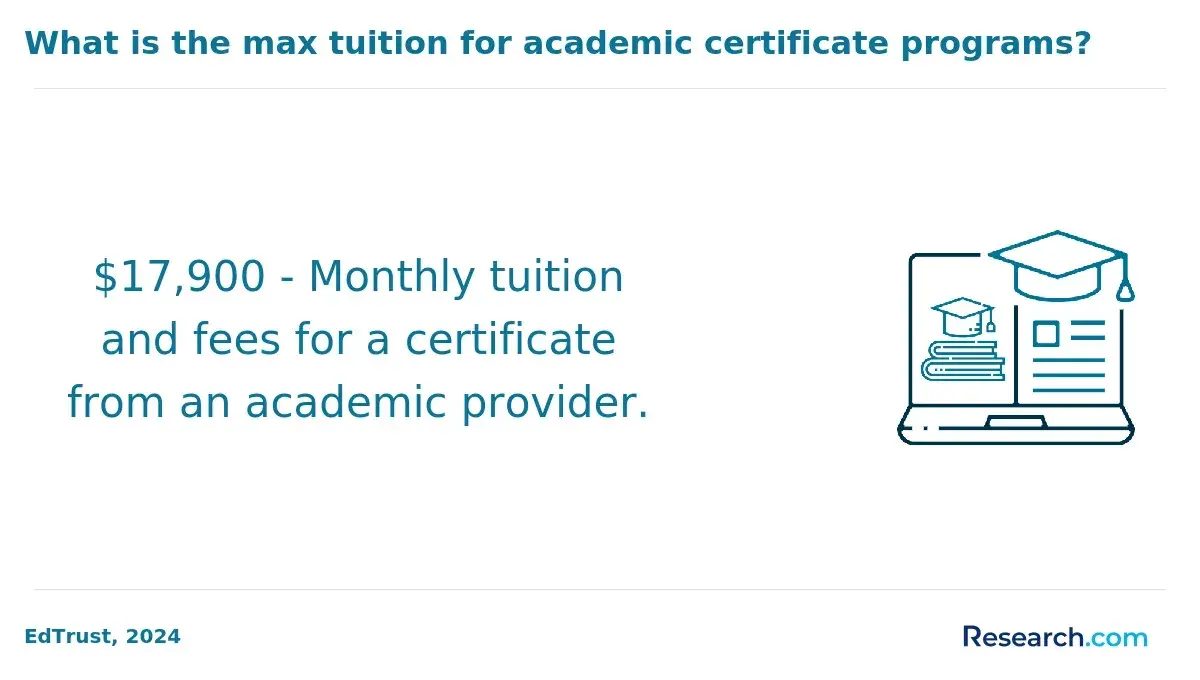
Time and cost depend on degree requirements, enrollment pace, course sequencing, and any conditions you must clear first. A prerequisite that does not count toward the degree adds work; a clinical placement, student-teaching term, thesis, or capstone may limit how quickly you can finish. "Online" does not establish that courses are self-paced or that fieldwork can be completed remotely.
Compare a written, individualized cost estimate rather than tuition alone. Include required credits, tuition by term or credit, mandatory and program fees, prerequisite courses, books or equipment, travel, and placement-related expenses. Ask whether conditional status affects federal aid eligibility and confirm your eligibility with the financial aid office. A longer-term plan may lower your course load but increase fees or living costs. If your goal eventually requires doctoral study, compare that separate commitment using resources on cheapest online PhD programs; doctoral admission, funding, and research requirements are distinct from a master's conditional offer.
What Careers, Salaries, and Job Outlook Do These Programs Offer?
These fields lead toward different kinds of work, not a common salary outcome. The U.S. Bureau of Labor Statistics reports a 2024 median annual wage of $133,080 for software developers. That is an occupational median - not the expected pay of computer science master's graduates - and many developer positions do not require a master's degree. Use occupational wage and outlook information alongside local job postings to judge whether a graduate credential adds value for the roles you want.
For licensed clinical, teaching, nursing, or social work roles, first establish whether the program meets the education requirements; then account for examinations and supervised practice. For business and technology roles, compare the degree with experience and narrower credentials. If location flexibility is central to your goal, explore degrees for remote work while checking actual employer requirements: online study does not guarantee a remote job.
How Should You Choose a Reputable Online Program With Conditional Admission?
The best choice is the program whose verified conditional-admission route lets you reach your specific goal at a manageable cost and pace. Start with the intended occupation or advancement goal, then compare programs on the requirements that could prevent you from finishing - not on the ease of receiving an initial offer. If you are still weighing fields, most versatile masters degrees can help frame that broader decision before you evaluate individual programs.
Use this sequence to narrow your shortlist and avoid expensive surprises:
- Confirm that the exact online program currently offers conditional admission to applicants with your background, and obtain its terms in writing.
- Verify institutional accreditation, programmatic approval where relevant, and state licensure eligibility for your intended location.
- Request a degree plan showing prerequisites, remaining courses, fieldwork, scheduling, and a realistic completion estimate.
- Compare total expected costs and aid eligibility, then ask what support is available if you struggle to meet a condition.
A common mistake is treating a conditional offer as proof that the degree is affordable, fully remote, or license-qualifying. It proves none of those things. If a program cannot clearly document a requirement that matters to your decision, keep comparing options before paying a deposit.
Other Things You Should Know About
Possibly. Some programs consider applicants who can demonstrate readiness through prerequisite work or initial graduate courses. The decision and required grades are program-specific; ask for the current written policy.
Not necessarily. You may be permitted to start certain courses while still needing to meet conditions for full standing. Check the offer's registration limits, deadline, and consequences.
It can. Eligibility depends on your enrollment status, whether courses count toward an eligible program, and applicable aid rules. Ask the school's financial aid office to review your individual offer.
Sometimes, but admission is only one issue. Confirm program approval, state requirements, and any required in-person clinical work, practicum, or student teaching before enrolling.
References
- School-Determined Requirements | 2024-2025 Federal Student Aid Handbook https://fsapartners.ed.gov/knowledge-center/fsa-handbook/2024-2025/vol1/ch1-school-determined-requirements
- Tuition, Billing and Financial Aid FAQs | NYU-MAC https://counseling.steinhardt.nyu.edu/admissions/tuition-financial-aid/faqs/
- Tuition, Billing, and Financial Aid FAQs | MC-UG https://online.morehouse.edu/admissions/tuition-and-financial-aid/faq/
- Financial Aid Glossary | Johns Hopkins University Admissions https://apply.jhu.edu/tuition-aid/financial-aid-glossary/
- Conditional Admission | University of Texas at Rio Grande Valley https://www.utrgv.edu/admissions/graduate/resources/conditional-admission/index.htm
- Admissions | wtamu.edu https://catalog.wtamu.edu/content.php
- Program Specific Admission Requirements - University Catalog https://usuniversity.smartcatalogiq.com/en/current/general-catalog/admissions/admission-requirements/program-specific-admission-requirements/
- Online Schools with Nursing Degree Programs | straighterline.com https://www.straighterline.com/blog/college-nursing-degree-programs