2027 Best Colleges With Short Courses

Co-Founder and Chief Data Scientist
A short course can help you build a skill without committing to a degree, but the college name alone will not tell you whether the course fits your goal. The stakes are especially clear in career-focused fields: the U.S. Bureau of Labor Statistics reports a 2024 median annual wage of $44,200 for medical assistants, yet a brief healthcare course may not provide the preparation an employer requires. This guide helps career changers, working adults, and curious learners compare colleges, distinguish credit from noncredit study, and check costs, schedules, and career relevance before enrolling.
Key Things You Should Know
- Start with the credential: a single short course may provide a transcript, continuing-education credit, or proof of completion, but it is not automatically a certificate or degree.
- Compare the individual course's length and total price, not the duration or tuition of a college's longer certificate program. Required supplies and in-person sessions can change the calculation.
- Check aid eligibility before budgeting: the maximum federal Pell Grant for 2025-26 is $7,395, but many standalone noncredit courses do not qualify for federal student aid.
Top 10 Best Colleges With Short Courses
Business Programs
Business short courses commonly address accounting, project management, marketing, and leadership. University extension courses can suit professionals who want a targeted skill; community college continuing education may be a better fit for someone seeking introductory, applied instruction. Compare assignments and instructor experience with your intended work. A short management course can strengthen an existing résumé, but it does not replace the broader coursework or work experience often expected for management roles, much less a master's degree in business.
Healthcare Programs
Healthcare offerings range from medical terminology to workforce training for specific support roles. These are not interchangeable. Before paying, ask whether the course includes supervised practice, prepares students for a named examination, and meets any applicable state or employer requirements. A brief online anatomy course may be useful preparation for further study without qualifying you for clinical work. If your goal is patient-facing employment, compare the full training pathway rather than choosing by course length alone.
Information Technology Programs
IT short courses often teach networking, cloud fundamentals, cybersecurity, or technical support. Choose a course that matches the tools and tasks in job postings you are targeting. Hands-on labs and instructor feedback may matter more than a prestigious college name, particularly if you are new to troubleshooting. Check whether the course prepares you for a specific third-party certification exam; a college completion badge and an industry certification are different credentials, and exam fees may be separate.
Computer Science Programs
Programming, algorithms, and data science courses can help you test an interest or fill a defined skills gap. Beginners should check prerequisites: a short artificial intelligence course may assume coding or statistics knowledge. Look for substantial projects if you need evidence of practical ability. A standalone class is not equivalent to a computer science degree or master's program, and software employers may also evaluate portfolios, experience, and performance in technical interviews.
Nursing Programs
Short nursing-related courses may cover continuing education, a clinical skill, or preparation for further study. Their usefulness depends on your starting credential. Licensed nurses should verify whether a course meets their state board's continuing-education rules; prospective nurses should not mistake an introductory course for an approved nursing program. Registered nurse licensure requires an eligible nursing education pathway and examination, subject to state requirements. Ask the provider exactly whom its course is designed to serve.
Psychology Programs
Psychology short courses can introduce research methods, human development, or workplace behavior. They may be worthwhile for professional development or for exploring future undergraduate or graduate study. They do not, on their own, qualify someone to practice as a psychologist or licensed counselor. If clinical work is your goal, identify the required degree, supervised experience, and state license first; then decide whether a short course fills a genuine preparatory gap.
Education Programs
Education courses may address classroom technology, instructional design, or a specific teaching strategy. Teachers should confirm whether a course counts toward their district's professional-development rules or state renewal requirements before enrolling. Aspiring teachers need to check approved preparation and licensure pathways separately. For someone exploring instructional design outside schools, a course with a completed lesson or portfolio project may be more useful than one focused only on theory.
Criminal Justice Programs
Criminal justice short courses may explore investigations, corrections, or the legal system. They can help learners assess a field or develop knowledge for an existing role, but they rarely substitute for an agency's hiring and academy requirements. For a particular job, examine the employer's education, background-check, physical, and training standards before choosing a course. A broad introductory class makes less sense if you need a specific technical skill.
Engineering Programs
Engineering-related short courses often concentrate on computer-aided design, manufacturing methods, or specialized software. For technicians and practicing engineers, a course can update a specific skill. It does not replace the extensive mathematics, science, and design education of an engineering degree. If professional engineer licensure is the goal, check your state board's education, examination, and experience rules; a short course alone will not meet that pathway.
Social Work Programs
Social work short courses may cover trauma-informed practice, case management, or continuing education. Licensed practitioners should confirm that the provider and subject satisfy their state board's renewal rules. Newcomers can use an introductory course to explore the field, but a completion certificate does not confer a social work license. Compare any prospective course with the accredited degree and supervised-practice requirements for the role you actually want.
What are short courses, and how do they differ from certificates and degrees?
A short course is an individual class or compact learning experience focused on a defined subject. It may be offered for academic credit, continuing-education credit, or no credit at all. "Short" has no universal college-wide definition: an intensive workshop and a course running through a standard term can both appear in a continuing-education catalog.
A college certificate usually requires a prescribed group of courses; a degree has broader academic requirements. Professional certification is different again: it is generally awarded by an outside credentialing body after its requirements are met. If you may pursue graduate study later, ask whether the course appears on a credit-bearing transcript and whether a future program would accept it. Even credit-bearing courses do not automatically apply toward a master's degree or PhD programs.
Which colleges offer the best accredited short courses?
There is no single best college for every short-course learner. MIT Professional Education, UC Berkeley Extension, UCLA Extension, Stanford Continuing Studies, and Austin Community College are useful starting points for comparing different kinds of short-course catalogs, not a verified ranking of their prices or outcomes. Availability, format, and eligibility depend on the specific course and term.
The comparison below shows why the right institution depends on what you intend to gain. Confirm current offerings in each college's official catalog before treating a course as an option.
| College and course source | Useful starting point for | Key distinction to check |
| MIT Professional Education, Short Programs | Focused professional or technical learning | Whether the offering is noncredit and requires prior technical knowledge |
| UC Berkeley Extension | Individual courses across professional and academic subjects | Whether your chosen course carries academic credit and has prerequisites |
| UCLA Extension | Career development or exploration through individual courses | Course-specific format, fees, and applicability to a longer certificate |
| Stanford Continuing Studies | Personal enrichment and subject exploration | Whether its completion record serves your intended career or credit goal |
| Austin Community College, Continuing Education | Local workforce training and applied skills | Whether training includes required equipment or in-person practice |
These institutions hold institutional accreditation, but that does not mean every noncredit class is separately accredited or transferable. For a regulated occupation, also check any required program approval with the relevant licensing authority. A local accredited community college may be a stronger choice than a nationally known university when affordable, hands-on training is the priority.
How much do college short courses cost, and how long do they take?
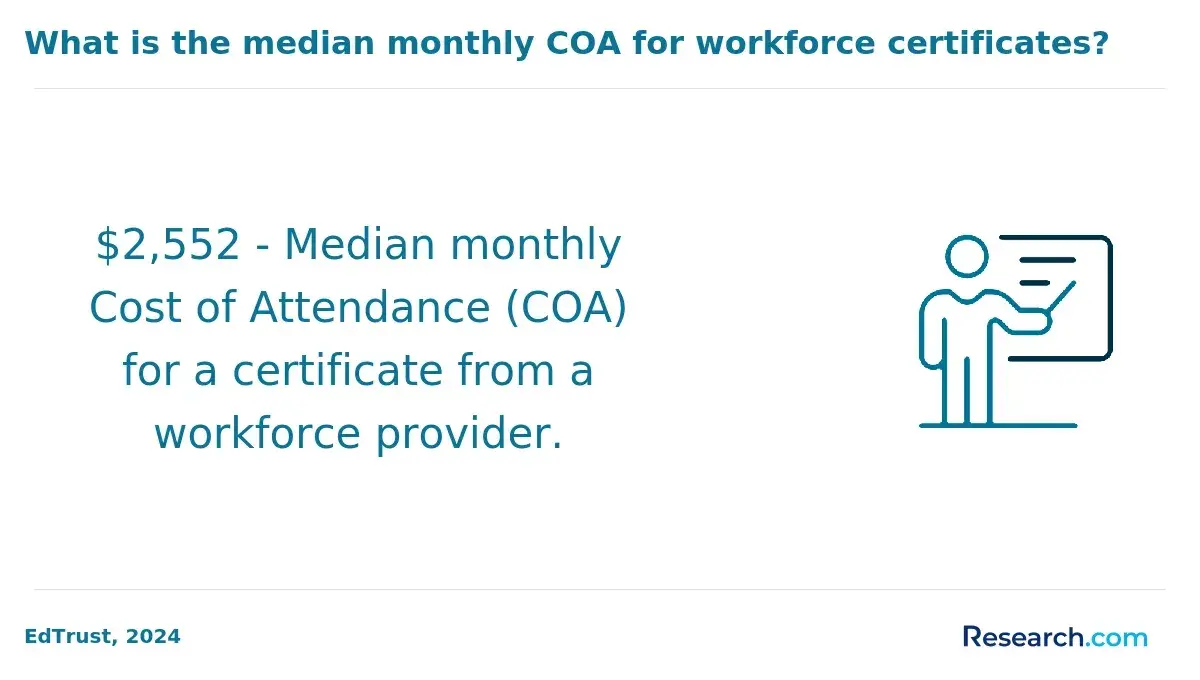
Costs and timelines vary too much to assign one reliable price or duration to "college short courses." An individual workshop may finish quickly, while a credit-bearing class may run for a full academic term. A multi-course certificate takes longer than any one class within it. The published course price may exclude registration fees, books, software, equipment, travel, or a separate certification exam.
Use the distinctions below to compare like with like; each row describes a course category, not a guaranteed schedule or price.
| Course type | Typical scheduling question | Cost or aid question |
| Noncredit workshop | How many meetings and required hours? | What is included in the listed fee? |
| Credit-bearing college course | How long is this specific term, and are there prerequisites? | What are tuition and mandatory fees for your residency status? |
| Workforce training course | Are labs, placements, or in-person sessions required? | Are equipment, testing, or licensing fees extra? |
Federal student aid generally applies only to eligible students in eligible programs, not automatically to a standalone class. Ask the financial aid office about the specific course and enrollment arrangement; also check employer tuition assistance and any published payment options. If you need a full graduate credential rather than a brief class, compare total degree costs separately when asking what is the cheapest online master's degree program.
Are online or campus-based short courses better for your goals?
Choose online study for access, not because it is automatically easier to schedule. An online course may have live meetings, weekly deadlines, proctored assessments, or required software. Campus instruction may be worth the travel for supervised labs, equipment use, or immediate feedback. Hybrid courses can offer both, but they still require you to meet their in-person schedule.
Compare the actual meeting calendar with your work and family commitments before paying. If you need geographically accessible education while navigating military moves, online military colleges provide another institutional comparison; verify the individual short course's format and any applicable benefits separately.
What admission requirements apply to college short courses?
Requirements depend on the course. Some introductory continuing-education classes welcome beginners; others require prior coursework, a professional license, technical proficiency, placement, or admission to a broader program. Do not assume a college's general undergraduate admissions policy governs its extension or workforce classes.
Read the individual course description for prerequisites and registration rules, then ask whether you must submit transcripts or obtain instructor approval. If timing matters, check the actual section's registration deadline and next available date. Lists of online colleges starting soon can help you explore scheduling alternatives, but a college-wide start-date policy does not establish when your chosen short course begins.
What subjects and career fields are covered by short courses?
Colleges offer short courses in business, healthcare, IT, programming, education, the social sciences, engineering-related tools, and many other subjects. The useful dividing line is not simply the field: it is whether the course provides exploration, a job-specific skill, academic credit, or continuing education.
Match the course to a concrete next step. Someone considering a new field might choose an introductory class before investing in a certificate. Someone employed in that field may get more value from an advanced lab or a course aligned with a specific workplace tool. Check current job postings or professional requirements to see whether the skill is relevant, while remembering that a posting does not establish that a single class will qualify you.
Can short courses lead to professional certification or licensure?
Sometimes, but only when the course and the external credential's rules align. A short course might prepare you for a certification examination, provide eligible continuing-education hours, or satisfy one prerequisite. It does not itself award an outside certification or professional license unless the applicable authority expressly recognizes that outcome.
Before enrolling, identify the certifying organization or state board, read its current eligibility rules, and ask the college for the course's approval status and examination details. This is especially important in nursing, teaching, counseling, social work, and clinical healthcare, where degree, supervised-practice, and licensing requirements may extend well beyond a short course.
What jobs and salaries can short-course graduates expect?
A short course can support an existing job, help you compete for an entry-level opening, or clarify whether further training is worthwhile. There is no dependable "short-course graduate salary" across these very different offerings. As one occupation-level benchmark, the U.S. Bureau of Labor Statistics reports a 2024 median annual wage of $44,200 for medical assistants. That figure describes workers in the occupation - not graduates of a particular class - and a brief medical terminology course alone may not satisfy employers' training expectations.
Evaluate an opportunity by comparing job postings with the course's taught skills, required credentials, and practical experience. Be skeptical of providers that present an occupation's median wage as an expected salary from completing one class.
How can you choose a reputable college short-course program?
Choose the course by its fit with your goal, then assess the college. Institutional accreditation is an important check, but course content, applicable program approval, total cost, and scheduling determine whether an otherwise reputable college offers the right option for you.
Before enrolling, work through these checks in order so that a low price or familiar name does not obscure a poor fit:
- Define the outcome you need: exploration, transferable credit, a workplace skill, continuing education, or preparation for a named credential.
- Check the college's accreditation and, for regulated work, verify any required program or provider approval with the relevant authority.
- Request the current syllabus, prerequisites, meeting schedule, assessment method, and written explanation of the completion record.
- Calculate the full price, including mandatory fees, materials, travel, and any external exam; confirm aid eligibility for this exact offering.
- Ask whether the course applies toward a later certificate or degree, and obtain the receiving program's answer rather than assuming credits will transfer.
A red flag is a promise that a short class alone delivers licensure, a guaranteed job, or a specific salary. If the college cannot clearly explain what you will earn and what remains required for your goal, compare another course before paying.
Other Things You Should Know About
Institutional accreditation applies to the college, not automatically as a separate accreditation for every course. Check for additional approval when your intended credential or occupation requires it.
Often, yes, particularly through continuing-education or extension divisions. Credit courses and selective workforce programs may have different registration or admission rules.
Only if the relevant program accepts it and applies it to its requirements. Confirm this in advance, especially for noncredit courses or study at another college.
Not necessarily. Compare its hands-on practice and taught skills with entry-level job requirements; some careers require a longer program, supervised training, certification, or licensure.
References
- Career and College Promise | NC DPI https://www.dpi.nc.gov/students-families/enhanced-opportunities/advanced-learning-and-gifted-education/career-and-college-promise
- Program Integrity Questions and Answers - Credit Hour http://www.ed.gov/laws-and-policy/higher-education-laws-and-policy/program-integrity-information-questions-and-12
- Cost of Attendance (Budget) | 2025-2026 Federal Student Aid Handbook https://fsapartners.ed.gov/knowledge-center/fsa-handbook/2025-2026/vol3/ch2-cost-attendance-budget
- U.S. Short-Term Programs | EducationUSA https://educationusa.state.gov/your-5-steps-us-study/research-your-options/short-term/short-term-programs
- Understanding College Costs | studentaid.gov https://studentaid.gov/resources/prepare-for-college/students/choosing-schools/consider-costs
- Learn New Skills Online | ASUMH Non-Credit Career Training https://asumh.edu/academics/workforce-education/online-non-credit-courses/
- Credit Hours | Enrollment Compliance & Design https://compliance.enrollment.cornell.edu/credit-hours
- Online Career Training and Personal Development Courses | Talladega College https://www.talladega.edu/online-programs/
- Online Training (Non-Credit) | tcatmemphis.edu https://tcatmemphis.edu/business-industry/online-training-non-credit
- Cost of attendance | MIT Student Financial Services https://sfs.mit.edu/undergraduate-students/the-cost-of-attendance/coa/