
2027 Most Affordable Online College Majors

Co-Founder and Chief Data Scientist
The cheapest online major on a tuition page may become expensive once fees, prerequisites, or required travel enter the picture. This guide compares ten fields - including bachelor's and master's pathways - by the costs and requirements that affect what you actually pay. It is for students choosing a first degree, changing careers, or considering graduate study. Career fit matters alongside price: the U.S. Bureau of Labor Statistics (BLS) reported a 2024 median wage of $133,080 for software developers, but a computer science degree alone does not secure that job or salary.
You'll learn how to compare programs without mistaking a low advertised rate for a low-cost degree.
Key Things You Should Know
- Business, psychology, and criminal justice can be comparatively inexpensive to deliver online, but a low-cost school - not the major's name - determines the final bill.
- Compare the credits you still need, tuition, mandatory fees, and any in-person expenses; a typical bachelor's degree requires about 120 credits, while master's requirements vary by program.
- For regulated careers, confirm the specific program's approval before choosing the lowest price: online nursing, teaching, and social work degrees may still require supervised in-person work.
Top 10 Most Affordable Online College Majors
Business Programs
Online business administration and management bachelor's majors are worth comparing for their broad course availability and limited laboratory needs. At the master's level, an MBA or specialized management degree is a different investment: tuition, required credits, and employer tuition assistance matter more than the field's general reputation for affordability. Choose business if you want adaptable organizational skills; choose accounting if a more defined technical curriculum suits your goal. Check whether accounting coursework meets your state's CPA education requirements before paying for a degree.
Healthcare Programs
Healthcare administration and health information management can offer online study without the clinical hours required in many direct-care fields. Compare bachelor's degrees with master's programs such as the MHA by their required credits, program fees, and any internship or residency. A healthcare administration degree prepares students for organizational roles; it does not confer a clinical license or make a new graduate a hospital executive. If your goal is patient care, verify the separate professional pathway rather than selecting an inexpensive administration major.
Information Technology Programs
Online information technology bachelor's majors often emphasize networks, systems, and security. A master's in IT typically adds advanced technical or management coursework and may not be necessary for an entry-level role. Compare software access, certification-exam expenses, and any required hands-on assessments alongside tuition. IT can be a cost-conscious choice when a program accepts relevant transfer coursework, but certificates or industry certifications may be a cheaper first step for someone testing the field. Neither a degree nor a certification guarantees employment.
Computer Science Programs
Computer science focuses more heavily on programming, algorithms, and mathematics than many IT majors. Online bachelor's options may be economical when they avoid campus lab travel, but prerequisites can increase the time and cost for career changers. A computer science master's may offer advanced study; non-CS applicants should check for required foundation courses. Compare access to computing resources, project requirements, and the full remaining credit load. If you primarily want practical programming skills, weigh the degree against a narrower, lower-cost certificate.
Nursing Programs
Online RN-to-BSN pathways serve already licensed registered nurses and should not be confused with initial RN preparation. Nursing master's degrees, including some nurse practitioner pathways, can carry additional clinical, placement, and travel costs despite online coursework. Ask for the complete clinical requirements and confirm state eligibility before comparing prices. A lower tuition rate is little help if you cannot complete placements where you live. A nursing degree does not replace the examination or licensure required for the intended role.
Psychology Programs
Psychology bachelor's majors can be relatively straightforward to deliver online, making tuition and transfer-credit policies especially important cost differences. A general master's in psychology may serve research or applied interests, but it is not interchangeable with a state-approved counseling or clinical pathway. Students seeking independent clinical practice should establish the required degree, supervised hours, and license in their state before enrolling. If graduate study is uncertain, compare the cost of the bachelor's degree with the roles realistically available at that level.
Education Programs
Online education degrees range from nonlicensure studies to teacher-preparation pathways. Student teaching may require local in-person hours, background checks, and placement-related expenses. Master's options may target current teachers seeking advancement or newcomers pursuing initial licensure; their eligibility and costs differ. Confirm whether a program meets your state's requirements before treating its tuition as a bargain. If you already hold a bachelor's degree, compare a master's route with an approved alternative-certification pathway where available.
Criminal Justice Programs
Criminal justice bachelor's coursework is often available online without specialized laboratories, so schools' tuition, fees, and transfer decisions can dominate the price comparison. A master's may be useful for a defined advancement or research goal, but many entry-level justice occupations have separate hiring, training, and background requirements. Check those requirements before paying for graduate school. If your target job does not require a criminal justice degree, a lower-cost major or direct entry into an employer's training pathway may make better financial sense.
Engineering Programs
Engineering is difficult to judge by online tuition alone: laboratories, equipment, proctored work, or campus sessions can materially increase cost. Online master's programs are often designed for applicants who already have technical preparation, while online bachelor's options require careful review of lab access. For an engineering licensure goal, check program accreditation and your state board's education rules before enrolling. An engineering technology degree is not necessarily equivalent to an engineering degree for licensure purposes.
Social Work Programs
Online BSW and MSW programs require supervised field education, which adds time and may create travel or scheduling costs. Some MSW programs offer advanced standing to eligible BSW graduates; the shorter path depends on specific admission and accreditation rules, not simply on having related experience. Check Council on Social Work Education accreditation, field-placement support, and your state's licensing rules. A low-priced general social-services degree is not automatically a substitute for an accredited social work degree when licensure is the goal.
What are the most affordable online college majors?
The most affordable online college majors are the ones you can complete at the lowest acceptable total cost for your goal. Business, psychology, criminal justice, and some IT or healthcare administration programs can avoid costly physical labs. That makes them useful starting points for a price search, not a verified ranking: tuition and degree requirements are set by programs, not by major names.
This comparison shows where costs commonly arise. Use it to narrow your search, then request a program-specific estimate; a broader look at university majors can help you check whether a lower-cost field also fits your career plans.
| Major or pathway | Potential cost advantage | Expense or requirement to check |
| Business, psychology, criminal justice | Many courses can be delivered online without physical labs | Required credits, fees, and graduate-study needs |
| IT, computer science | Online technical coursework may limit travel | Foundation courses, software, and equipment |
| Healthcare administration | Nonclinical study may avoid patient-care placements | Internships and role-specific qualifications |
| Nursing, education, social work, engineering | Online lectures may reduce commuting | Clinicals, student teaching, fieldwork, or labs |
A lower-cost bachelor's degree is not automatically the cheapest route to a licensed occupation. Start with the credential your intended job requires, then compare eligible programs.
How much do affordable online college majors cost?
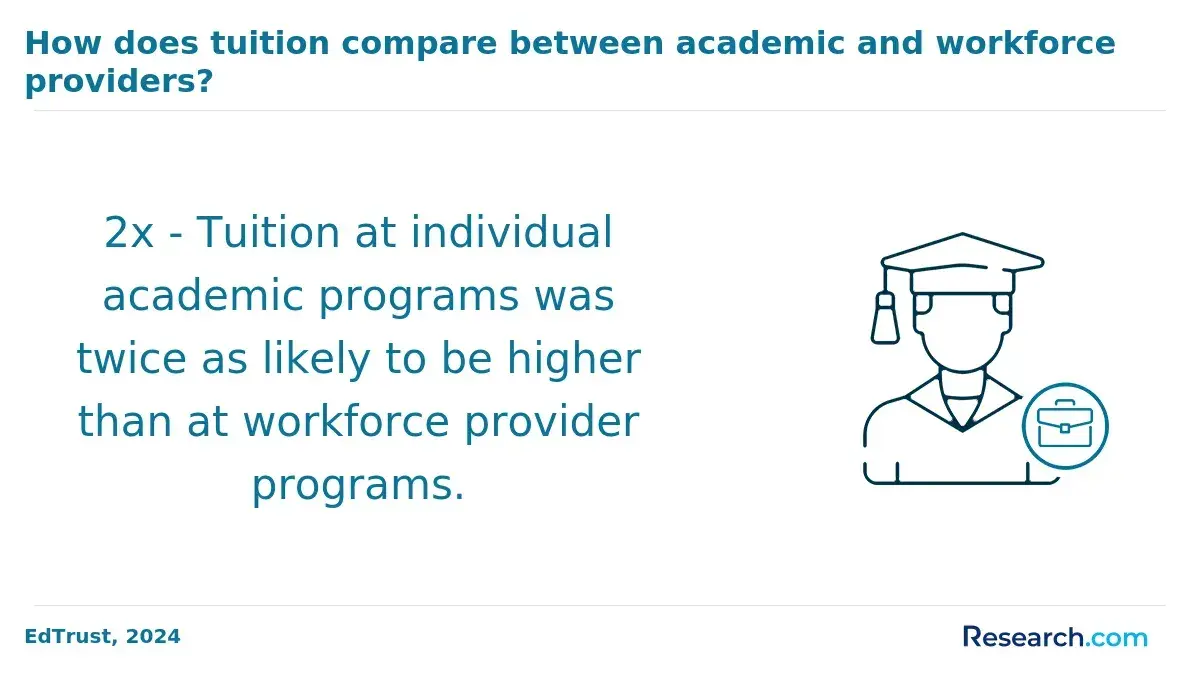
There is no reliable single price for an "affordable online major." Sticker tuition is the published rate, net price accounts for applicable grants and scholarships, and total completion cost includes the courses and required expenses you have left. Comparing online colleges by tuition alone can miss the larger bill.
The following cost components explain why two programs advertising similar rates may lead to different totals.
| Cost component | Why it changes the comparison |
| Remaining credits and prerequisites | Accepted credits may reduce tuition; missing prerequisites may add courses. |
| Tuition rules | Rates can differ by residency, enrollment level, or program. |
| Mandatory and differential fees | Technology, online, laboratory, and professional-program charges can add to tuition. |
| Required experiences | Travel, equipment, unpaid placements, and campus visits may create out-of-pocket costs. |
| Grants and employer assistance | Eligible aid can lower what you pay; loan proceeds reduce the immediate bill but must be repaid. |
Ask each school for a written estimate based on your residency, expected transfer evaluation, enrollment pace, and remaining requirements. Compare that estimate with your aid offer rather than assuming the lowest per-credit rate wins.
Which affordable online majors offer the best career outcomes?
The strongest career outcome is the one that matches the credential you can afford and the work you want to do. Computer science and IT connect to technical roles; nursing and social work lead toward more defined professional pathways but carry licensing or fieldwork obligations. Business offers breadth, which can be valuable, though a broad major alone may not qualify you for a specialized role.
Before paying more for a major with an attractive occupational wage, separate career possibility from entry requirements. The BLS reported a 2024 median wage of $93,600 for registered nurses; that is a wage for people employed in the occupation, not a forecast for nursing students or evidence that an online nursing degree by itself grants RN licensure. Compare the total cost of reaching the occupation - including examinations and required practice - with the opportunities available after graduation.
How can you verify an online college's accreditation?
Check institutional accreditation in the U.S. Department of Education's accreditation database or directly with the recognized accreditor. Then check the exact degree and campus or online program - not just the institution's name - against any programmatic accreditation your goal requires. Accreditation can affect aid eligibility, credit transfer, and professional eligibility, but it does not guarantee that another school will accept credits.
For nursing, teaching, counseling, social work, or engineering licensure plans, compare the program's approval or accreditation with the rules of the state where you intend to work. If the school cannot explain how its online program meets those rules and arranges required in-person work, do not rely on a general statement that it is accredited.
What courses do affordable online majors typically include?
Most bachelor's degrees combine general education, a major, and electives; master's programs concentrate more heavily on advanced field coursework. Business may include accounting and management, IT may include networking and security, and psychology may include research methods and statistics. Computer science typically requires programming and mathematics, while regulated fields add practice-specific preparation.
Course titles are not enough to compare value. Review the catalog for prerequisites, course rotation, electives, and any capstone, lab, internship, clinical, field placement, or student-teaching requirement. A course offered online is different from an entire degree that can be completed remotely.
What admission requirements apply to online college majors?
Bachelor's applicants generally need a high school diploma or equivalent; master's applicants generally need a bachelor's degree. Individual programs may add prerequisite courses, a minimum GPA, a license, professional experience, an interview, or other requirements. For example, an RN-to-BSN pathway is intended for licensed nurses, while an advanced-standing MSW route has separate prior-degree eligibility.
Check the admissions page for your exact program and applicant type rather than assuming a schoolwide test-optional or transfer policy applies. Ask for a transcript evaluation showing which previous courses satisfy general education, major, or prerequisite requirements. Credits accepted only as electives may do little to reduce the cost of your intended major.
How long does it take to complete an online college major?
A bachelor's degree commonly requires about 120 semester credits; a master's program's requirements depend on its field and design. Full-time students starting a bachelor's degree without transfer credit often plan around four academic years, while part-time study takes longer. A master's may take one or more years depending on credits, prerequisites, enrollment, and supervised work.
Be wary of a short completion claim that assumes substantial accepted credit or a prior credential. For a returning learner - including someone considering a one year degree for seniors - the useful question is how many requirements remain after an official evaluation. Online access and short individual courses do not, by themselves, shorten a degree.
What salaries and job prospects can graduates expect?
Occupational pay and growth can inform a major choice, but they cannot predict an individual graduate's outcome. The BLS's 2024 median wages of $133,080 for software developers and $93,600 for registered nurses describe workers in those occupations, across experience levels and employers. They are not starting salaries, and neither degree alone guarantees entry.
Job prospects also depend on location, experience, skills, and required credentials. Technical applicants may need a strong project portfolio; prospective nurses must meet licensing rules; aspiring clinical social workers generally need post-degree supervised practice and state licensure. Use BLS occupation pages to compare the latest wage and outlook information for the specific job you want, then check whether the major is a required or simply one possible route.
How do you choose a reputable affordable online college?
Begin with your target credential and where you intend to live and work. Shortlist programs that offer the complete pathway online or clearly disclose local in-person components. Verify institutional accreditation and, where relevant, program approval and state eligibility. Then obtain a transfer evaluation and compare written estimates of all remaining tuition, fees, and required expenses.
Ask when required courses run, whether live attendance is mandatory, and who arranges placements. Consider grants, employer assistance, and - in eligible cases - military benefits without assuming they cover every charge. Students using those benefits can compare military friendly online colleges, then confirm benefits and program eligibility directly with each school. A red flag is a school that advertises a low rate but will not clarify total costs, online requirements, or licensure implications before enrollment.
Other Things You Should Know About
No. Its courses may have fewer physical-lab expenses, but the school's tuition, fees, required credits, and your accepted transfer credit determine the cost.
No. Some programs require labs or campus sessions, and nursing, education, and social work commonly include supervised work at an approved site. Check the exact program's requirements.
Not automatically. Confirm program approval, required examinations and practice, and eligibility with the licensing board in the state where you plan to work.
Request an official evaluation of previous coursework before enrolling, then compare the remaining credits and full cost at eligible schools. Financial aid or employer assistance may reduce what you pay, but accepted credits must apply to your actual degree requirements to save time and tuition.
References
- Fast Facts: Tuition costs of colleges and universities (76) | ed.gov https://nces.ed.gov/fastfacts/display.asp
- Cost of Attendance (Budget) | 2025-2026 Federal Student Aid Handbook https://fsapartners.ed.gov/knowledge-center/fsa-handbook/2025-2026/vol3/ch2-cost-attendance-budget
- Accreditation in the U.S. | ed.gov http://www.ed.gov/laws-and-policy/higher-education-laws-and-policy/college-accreditation/accreditation-in-the-us
- An Overview of Accreditation of Higher Education in the United States | Congress.gov | Library of Congress https://www.congress.gov/crs-product/R43826
- Types of Financial Aid: Grants, Work-Study, and Loans | studentaid.gov https://studentaid.gov/understand-aid/types
- Qualified Ed expenses | Internal Revenue Service https://www.irs.gov/credits-deductions/individuals/qualified-ed-expenses
- Explanation of Fees | University of Maryland Catalog https://academiccatalog.umd.edu/undergraduate/fees-expenses-financial-aid/explanation-fees/
- College Credit for Work and Life Experience | Purdue Global https://www.purdueglobal.edu/transfer-students/work-life-experience/
- Why Is Accreditation Important? | ACE Blog https://ace.edu/blog/why-is-accreditation-important/
- Trends in College Pricing Highlights | College Board Research https://research.collegeboard.org/trends/college-pricing/highlights


