
2027 Best College Programs for Career Advancement

Co-Founder and Chief Data Scientist
A program can help you advance only if its credential matches the job you want - and its cost, schedule, and requirements fit your life. That matters whether you are considering a first degree, a career change, or a master's program. The U.S. Bureau of Labor Statistics (BLS) reported a 2024 median annual wage of $93,600 for registered nurses, but an RN role also requires licensure; a degree alone is not enough.
This guide compares career-focused program families, explains the trade-offs, and shows you what to verify before enrolling.
Key Things You Should Know
- Match the credential to the target role: nursing, teaching, social work, and some counseling paths have requirements beyond graduation.
- Compare total cost and likely career benefit, not tuition alone; clinical placements, prerequisites, and time away from work can change the calculation.
- For context, BLS reported a $93,600 median annual wage for registered nurses in 2024; that is an occupational figure, not a promised graduate salary.
Top 10 Best College Programs for Career Advancement
Business Programs
An MBA or specialized master's in finance, accounting, analytics, or supply chain management can suit professionals seeking management or specialist roles. An MBA often builds on work experience; a specialized degree may be better when you need deeper technical skills. Compare employer recruiting, applied projects, scheduling, and total cost against your likely next role. A master's does not automatically lead to management, and accounting credentials such as the CPA have separate state requirements.
Healthcare Programs
Master's programs in healthcare administration, public health, and health informatics prepare students for different work: organizational leadership, population health, and health-data systems. Choose based on the work you want to do, not the broad appeal of "healthcare." Check whether a program expects clinical experience, includes an internship, or supports a particular professional credential. An MHA or MPH does not qualify someone to practice a licensed clinical profession.
Information Technology Programs
An MS in information technology, cybersecurity, or information systems can help experienced workers move toward systems leadership, security, or enterprise technology roles. Look for hands-on labs, current tools, and projects relevant to your target job. A technical master's may offer less value if you chiefly need an entry-level credential or practical experience. Security roles often require demonstrated experience, and employers may request certifications separately from the degree.
Computer Science Programs
An MS in computer science can deepen skills in software engineering, AI, data systems, or computing research. It fits applicants pursuing specialized technical work, provided the curriculum matches that goal. Career changers should check programming and mathematics prerequisites: some programs offer bridge coursework, while others expect an undergraduate computing foundation. Compare a thesis with a project-based or coursework-only route; the best choice depends on whether you want research preparation or applied practice.
Nursing Programs
Master of Science in Nursing (MSN) programs may focus on education, leadership, informatics, or advanced practice. Admission often requires an active RN license and prior nursing education; advanced-practice tracks also include clinical training. Verify that the specific track meets the requirements of the state where you intend to practice and supports any necessary certification examination. A general MSN and a nurse practitioner track are not interchangeable.
Psychology Programs
A master's in psychology can support research, human-services, or applied organizational work, but it does not generally qualify someone to practice independently as a psychologist. If therapy is your goal, compare counseling, marriage and family therapy, and social work degrees against your state's licensing rules. For psychology research or doctoral study, examine research methods, faculty interests, and thesis opportunities. The credential's value depends heavily on the intended occupation.
Education Programs
A Master of Education (MEd) can support instructional leadership, curriculum work, or a subject specialization. Some programs serve licensed educators; others offer an initial-licensure pathway. Check which one you are applying to, along with student-teaching requirements and state approval. An MEd does not automatically confer a teaching license or an administrative position. Compare the program's specialization with your school district's advancement and pay policies before committing.
Criminal Justice Programs
A master's in criminal justice, criminology, or public safety administration may suit professionals seeking policy, analysis, or agency leadership work. Compare research and management courses with the requirements of the jobs you want; many law-enforcement roles rely more heavily on academy training and experience than on a graduate degree. Ask whether the program provides useful agency partnerships or applied projects, and avoid assuming the credential guarantees promotion.
Engineering Programs
An MS in engineering can build expertise in a discipline such as electrical, mechanical, civil, or industrial engineering. It may be useful for specialized design, research, or technical leadership, especially when paired with relevant experience. Check prerequisite coursework and whether a thesis or applied project fits your goal. For work requiring a professional engineer license, state rules govern the education, examination, and experience requirements; a master's alone is not a license.
Social Work Programs
A Master of Social Work (MSW) can prepare graduates for advanced social-work roles, including a pathway toward clinical practice. Clinical licensure additionally requires state-specific examinations and supervised experience. Verify that the MSW is accredited by the Council on Social Work Education and that field placements are feasible where you live. Applicants with an eligible bachelor's in social work may qualify for advanced standing, but eligibility and remaining requirements vary by program.
What college programs offer the strongest career advancement opportunities?
The strongest program is the one that closes a specific gap between your current qualifications and a realistic next role. For a licensed occupation, eligibility matters first. For technical or management advancement, weigh the skills and experience employers expect against the credential's cost.
This comparison shows where different program families can be useful - and where another pathway may be a better first move.
| Program family | Strongest fit | Trade-off to check |
| Business | Management or specialized commercial skills | Experience and employer access may matter as much as the degree |
| Computing and IT | Technical specialization or systems leadership | Prerequisites and hands-on experience vary |
| Nursing and social work | Defined professional advancement paths | Licensure and supervised practice may be required |
| Education and engineering | Discipline-specific expertise | State rules or employer policies shape the payoff |
Which degree or certificate pathways lead to in-demand careers?
In-demand work does not always require the longest credential. The right starting point depends on whether you need entry-level preparation, a legally required qualification, or skills for advancement in a field where you already have experience.
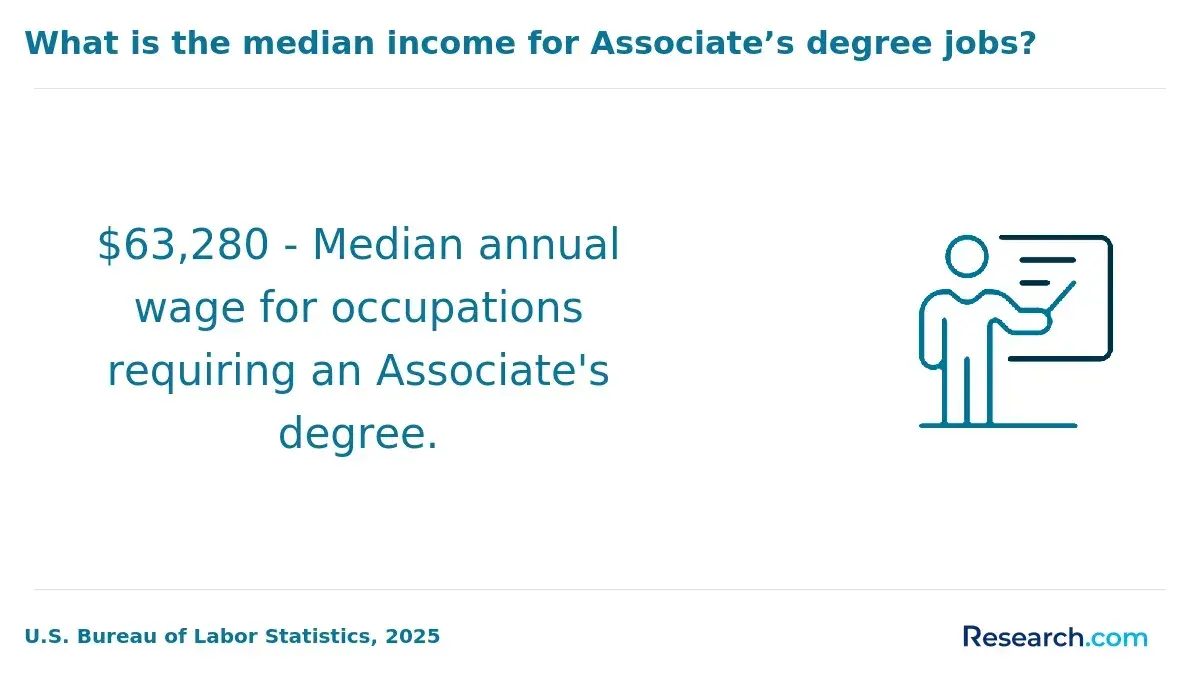
A certificate can be sensible for a focused skill gap, but check whether employers recognize it and whether its credits apply to a later degree. When comparing FAFSA-approved online certificate programs, confirm the particular program's aid eligibility with the school; institutional eligibility alone does not settle that question. An associate degree may prepare students for certain technical roles or transfer, while bachelor's and master's programs can meet different occupational or specialization needs. In licensed fields, work backward from the state's requirements before choosing any credential.
How can you verify a college program's accreditation and licensing requirements?
Institutional accreditation and program-specific approval answer different questions. Institutional accreditation concerns the college; programmatic accreditation or state approval may be essential for a particular license, certification, or employer requirement.
Use this sequence before applying, especially if you expect to practice in a regulated occupation:
- Confirm the college's current institutional accreditation in the U.S. Department of Education's accreditation database.
- Check the relevant programmatic accreditor or state approval list for the exact program and campus or delivery format.
- Ask the licensing board in the state where you plan to work whether graduates of that track meet its education requirements.
- Request written clarification about examinations, clinical hours, supervised practice, and any requirements the degree does not satisfy.
Do not rely on a statement that a college is "accredited" as proof that every program meets licensing rules.
Should you choose an online or campus-based college program?
Online study can reduce travel and make coursework easier to schedule, but it does not mean self-paced study. Some programs require live sessions, fixed deadlines, proctored exams, campus visits, or local clinical placements. Campus-based study may be preferable when frequent lab access, in-person mentoring, or local recruiting is central to your goal.
If you are returning to school, compare the schedules of actual online classes with your work commitments, rather than judging by the program's online label. Ask who arranges experiential placements, where they can occur, and whether part-time students can take required courses when needed.
What coursework and skills do career-focused college programs include?
Career-focused programs combine subject knowledge with work you can apply: business analytics, software projects, engineering design, classroom practice, or patient care, depending on the field. Strong curricula also develop communication, ethical judgment, and the ability to evaluate evidence. AI tools are changing some workflows, making it especially important to ask how a program teaches students to check outputs, protect sensitive information, and demonstrate their own expertise.
Review required courses - not just electives or marketing descriptions - and identify the projects, labs, internships, or practica you could discuss with a prospective employer.
What are the admission requirements for career advancement programs?
Requirements depend on the credential and track. A master's program generally requires a bachelor's degree, while some also require prerequisites, professional experience, a license, recommendations, a statement of purpose, or a portfolio. Selective nursing, counseling, and engineering tracks may have requirements beyond general graduate admission. Ask for the current program-specific policy rather than assuming a collegewide GPA or test policy applies.
If you need a bachelor's degree before applying, accelerated online bachelor degree programs accredited may be worth comparing. Ask each institution to evaluate your previous credits against the intended major: accepted credits do not necessarily fulfill every requirement, and a faster advertised timeline may assume substantial applicable prior coursework.
How long do college programs take, and how much do they cost?
Certificates can be shorter than degrees, but a master's may take substantially longer when prerequisites, part-time enrollment, a thesis, or fieldwork are involved. An advanced-standing MSW, for example, depends on eligible prior social-work education; it is not a shorter route available to every applicant. Request a degree audit showing remaining credits and the order in which required courses are offered.
For cost context, the College Board estimated average published tuition and fees of $11,610 for in-state students at public four-year colleges in 2024-25. That undergraduate figure is not a master's-program price. Compare each program's full tuition and mandatory fees, plus books, travel, placements, and earnings you might forgo. Then ask about grants, assistantships, employer assistance, and federal aid eligibility.
What careers, salaries, and job outlooks follow these programs?
Career outcomes depend on the occupation, location, experience, and any required license - not simply the program name. BLS reported a 2024 median annual wage of $124,910 for information security analysts. That describes workers in the occupation, not typical earnings for MSIT or cybersecurity graduates; relevant experience is commonly important for these jobs.
Use BLS occupational outlook information to test whether the role is growing, but read its typical entry requirements alongside wage figures. Then check a program's reported employment outcomes for the specific credential and ask how those results were measured. A high occupational median is a weak reason to enroll if the program does not address your missing qualifications.
How can you compare reputable college programs and choose the right one?
Compare a small set of programs against the same target role. Accreditation, career relevance, total cost, completion requirements, and a workable schedule should carry more weight than a general ranking or a low per-credit price.
These checks turn program research into a decision you can defend:
- Find job postings for your target role and note required credentials, licenses, and experience.
- Match those requirements to each program's curriculum and documented licensure pathway.
- Request an individualized estimate of remaining credits, total charges, and a realistic part-time or full-time schedule.
- Ask for program-level completion and career outcomes, including how the school defines and collects them.
If military education or service may affect your options, online military friendly colleges can provide a starting point. Verify the specific program's military-credit evaluation, benefits eligibility, and support before enrolling. Red flags include vague licensure claims, unclear fees, and pressure to commit before your credits are evaluated.
Other Things You Should Know About
No. It is most useful when the target role requires it or when its specialized training addresses a clear career gap. Experience, a license, or a shorter credential may be more relevant for some roles.
Sometimes. Verify that the exact program meets the education rules in the state where you intend to practice, including any in-person training and supervised-hours requirements.
Compare its full cost and time commitment with the qualifications needed for your target job, available aid, and credible program-level outcomes. Treat occupational salaries as context, not a forecast of your earnings.
Only if the school accepts them and applies them to requirements you still need. Request an official evaluation showing remaining courses, residency rules, and the resulting completion schedule.
References
- Understanding College Costs | studentaid.gov https://studentaid.gov/resources/prepare-for-college/students/choosing-schools/consider-costs
- Cost of Attendance (Budget) | 2025-2026 Federal Student Aid Handbook https://fsapartners.ed.gov/knowledge-center/fsa-handbook/2025-2026/vol3/ch2-cost-attendance-budget
- Accreditation in the U.S. | ed.gov http://www.ed.gov/laws-and-policy/higher-education-laws-and-policy/college-accreditation/accreditation-in-the-us
- What Makes a Nursing School Accredited? (And Why It Matters) | Stanbridge University https://blog.stanbridge.edu/what-makes-a-nursing-school-accredited/
- Graduate degrees pay - but it's complicated | Brookings https://www.brookings.edu/articles/graduate-degrees-pay-but-its-complicated/
- Why Is Accreditation Important? | ACE Blog https://ace.edu/blog/why-is-accreditation-important/
- A College Degree Still Pays Off - But Student Choices Matter | collegeboard.org https://newsroom.collegeboard.org/college-degree-still-pays-student-choices-matter


