2027 Best Online Degrees for Students With Some College Credit
Audited and Verified:
Our Editorial and Data Verification Process
Research.com uses government datasets, official education statistics and primary institutional information to support its career and degree guides. Our review process checks factual accuracy, occupational definitions, source dates and the requirements associated with the credentials discussed.
How This Article Was Fact-Checked
Our editorial team verifies salary estimates, employment projections, education requirements and program information against original data providers and official organizations. Salary figures are checked against the relevant occupational definitions and reporting periods. Information about licensure, accreditation and required in-person training is reviewed separately.
Fact-checked and verified on:

Co-Founder and Chief Data Scientist
Already have college credits but no bachelor's degree? Your best online option depends less on where you started than on how your credits apply to the degree you want.
The National Student Clearinghouse Research Center recently identified 36.8 million Americans with some college education but no credential - an indication of how many people may benefit from a workable completion path. This guide compares degree fields, explains transfer rules and costs, and shows you how to get a realistic graduation plan before enrolling.
Key Things You Should Know
- Choose a field that matches your career goal and applies the most prior coursework to required classes - not merely free electives.
- Some online bachelor's programs accept up to 90 credits toward a typical 120-credit degree, but major requirements and minimum credits completed at the new school still apply.
- Compare the price of remaining credits, fees, and any in-person requirements; a generous transfer policy can matter more than a low advertised per-credit rate.
Top 10 Best Online Degrees for Students With Some College Credit
Business Programs
An online bachelor's in business administration can suit students whose previous credits cover general education or introductory accounting, economics, and management. Its broad electives may accommodate more prior coursework than a tightly sequenced major, but ask whether credits satisfy business-core requirements.
Accounting is a better fit for a specific finance-related goal, though upper-level courses and state CPA education rules can add requirements. A business master's is an optional later step, not a substitute for completing the bachelor's. Compare concentrations and capstone requirements before choosing.
Healthcare Programs
Healthcare administration and health sciences bachelor's programs may fit students with prior science courses or healthcare experience. Administration emphasizes operations and policy; health sciences may offer broader preparation for further study. Neither degree alone qualifies someone for a clinical license.
Check whether old lab sciences meet current prerequisite rules and whether internships can be completed locally. A healthcare administration master's may support later advancement, but experience and employer requirements also matter.
Information Technology Programs
An online information technology bachelor's typically covers networks, systems, cybersecurity, and applied computing. It can be a practical choice if previous technical courses match the program's requirements; unrelated credits may fill only electives. Ask whether the school evaluates industry certifications or military training for credit through a published process.
Compare hands-on labs, equipment needs, and capstones. A specialized IT master's may be useful later, but a bachelor's paired with demonstrable technical skills may better serve an immediate career goal.
Computer Science Programs
Computer science is a stronger match for students seeking substantial programming, algorithms, and mathematical foundations. It may accept fewer prior courses toward the major than a general IT degree because prerequisite sequences matter.
Before applying, check calculus requirements, whether programming credits are considered current, and whether labs or proctored exams require scheduled participation. An online computer science master's can be a later specialization; it does not erase missing undergraduate foundations.
Nursing Programs
For an already licensed registered nurse, an online RN-to-BSN pathway may apply previous nursing education toward a bachelor's, subject to the school's rules. Nursing courses may be online while clinical, community-health, or practicum activities occur locally.
An applicant who is not an RN needs a different, licensure-qualifying entry pathway; an online degree label alone is not enough. Nursing master's programs generally require additional eligibility and preparation. Confirm accreditation, state authorization, and clinical expectations for the exact program.
Psychology Programs
An online psychology bachelor's can work well when prior credits meet statistics, research-methods, and general education requirements. Review whether remaining electives can accommodate previous coursework. The degree supports a range of nonlicensed roles, but becoming a licensed psychologist requires substantially more graduate education and supervised training under state rules.
A psychology master's also does not automatically confer clinical licensure. Choose this field for its subject matter and realistic career path, not an assumed counseling credential.
Education Programs
Education bachelor's programs may include online coursework, but initial teacher preparation usually requires supervised student teaching in person. Transfer students should ask early whether prior courses satisfy subject-area and professional-education requirements; a late discovery can extend the timeline.
Licensure rules vary by state, so confirm that the specific program supports certification where you intend to teach. A non-licensure education degree or later education master's serves a different purpose and should not be mistaken for an initial teaching credential.
Criminal Justice Programs
An online criminal justice bachelor's may offer room for previous social science or general education credits. Coursework commonly addresses law, corrections, courts, and research; some programs require an internship.
The degree does not guarantee a law-enforcement position, and hiring standards differ by agency. Compare it with public administration or cybersecurity if your interests are policy or digital investigations. A criminal justice master's is generally a later specialization rather than a requirement for entry-level roles.
Engineering Programs
Engineering is often a difficult transfer fit because calculus, physics, labs, and design courses build in sequence. Online availability also varies by discipline; some programs require campus labs or other in-person work. For careers involving professional engineer licensure, investigate the program's ABET accreditation and your state's requirements before enrolling.
Engineering technology follows a different curriculum and may have different licensing implications. An engineering master's cannot be assumed to replace missing undergraduate coursework or resolve an unsuitable licensure pathway.
Social Work Programs
An online bachelor of social work can prepare students for generalist practice, but supervised field education is normally completed in person. Ask whether prior human-services courses meet the major's requirements and whether the school can arrange a placement near you.
Check Council on Social Work Education accreditation and state rules if licensure is a goal. An accredited BSW may provide eligibility for advanced-standing MSW admission at participating schools; admission and the amount of advanced standing are not automatic.
What Are the Best Online Degree Completion Programs for Transfer Students?
The best online degree completion program is the one that accepts useful credits and leaves a feasible path through the major. There is no universal winner: a flexible business major may preserve more electives, while a regulated profession demands closer scrutiny of accreditation and in-person training. If you are still comparing fields, use this alongside broader guidance on best online degrees.
The comparison below highlights how your existing coursework can change the relative appeal of common bachelor's options.
| Degree option | Potential transfer advantage | Main constraint to check |
| Business administration | General education and elective credits may fit | Business-core and capstone requirements |
| Information technology | Relevant technical coursework may apply | Course equivalency and current skills |
| Computer science | Prior math and programming may help | Prerequisite sequence |
| RN-to-BSN | Prior nursing education may qualify | RN eligibility and local experiential work |
| Social work or education | Relevant foundational courses may apply | Field placement or student teaching |
Many bachelor's degrees require about 120 semester credits, but the number you can transfer depends on the receiving school and the specific major. Southern New Hampshire University and the University of Maryland Global Campus each advertise pathways that can accept up to 90 transfer credits toward eligible bachelor's degrees. That is a maximum, not a promise that all your credits will apply or that only 30 credits remain.
Schools evaluate course content, grades, the institution that awarded the credits, and sometimes the age of technical coursework. Accepted credits may satisfy general education, major requirements, or electives; only the first two necessarily replace classes you otherwise must take. Request a written, program-specific evaluation showing remaining requirements and the minimum credits you must earn at the new institution.
For students comparing published transfer limits, Southern New Hampshire University and the University of Maryland Global Campus are two online bachelor's options that advertise acceptance of up to 90 credits. Their policies make them useful starting points, not automatic winners. A school with a lower ceiling could still be cheaper or faster if it applies more of your credits to your chosen major.
Confirm the institution's accreditation, then ask each school for an evaluation of the same transcripts against the same intended degree. If you have examination, military, certification, or portfolio-based learning, request the applicable prior-learning policy separately: experience itself does not automatically become college credit. Recheck residency and major-credit requirements before interpreting any maximum.
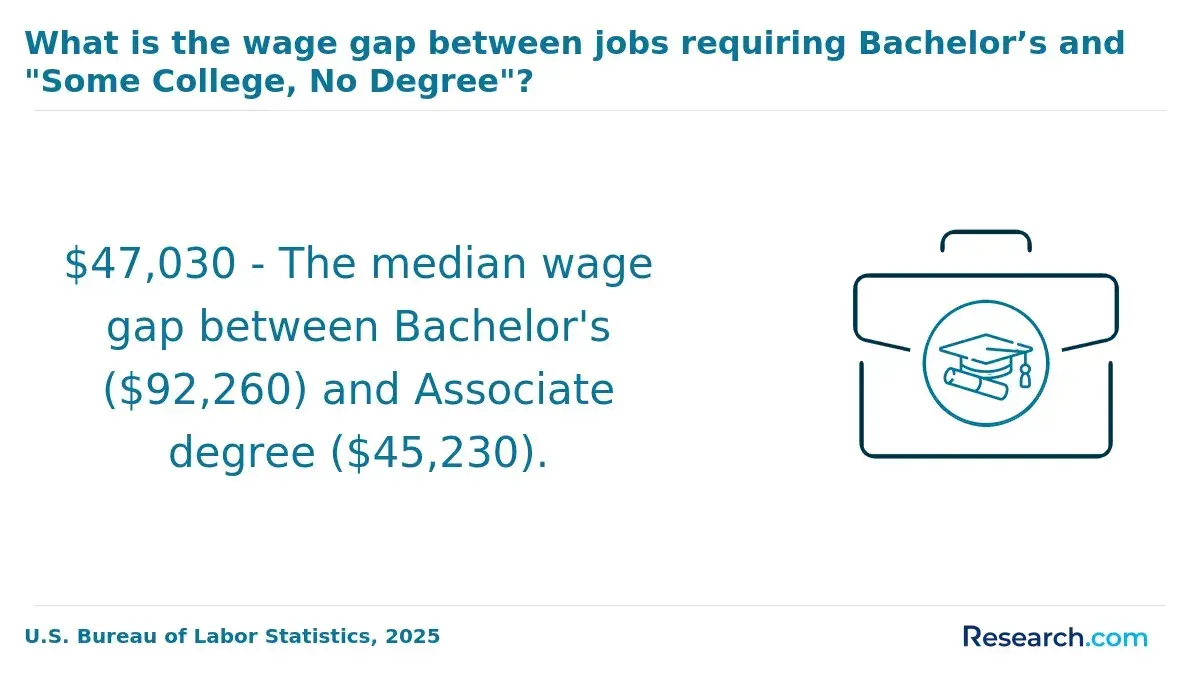
An associate degree can provide a strong starting point for an online bachelor's in business, IT, psychology, criminal justice, healthcare administration, and other fields. An associate of arts or science often aligns with general education requirements; an applied associate degree may contain more occupational courses that transfer as electives. Neither guarantees junior standing in a particular major.
Ask whether the school has an articulation agreement for your exact associate degree and whether your completed courses satisfy prerequisites. RN-to-BSN programs require nursing-specific eligibility, while teacher-preparation and social-work programs retain their field requirements. Courses from an associate degree also do not automatically count toward a master's degree.
Cost and time depend on the credits still required, your course load, tuition and mandatory fees, and whether remaining classes are offered when you need them. If a 120-credit degree accepts 90 applicable credits, 30 remain before accounting for any unmet major or residency rules. That might represent roughly a year of full-time study, but part-time enrollment, prerequisite sequences, and placements can extend it.
Compare written estimates for remaining tuition, technology and program fees, books, and travel or placement expenses. Complete the FAFSA to learn what federal aid you may qualify for, and ask about employer tuition assistance. If graduate study is also in your plan, consider what is the cheapest online master's degree program as a separate decision; low graduate tuition does not offset unnecessary bachelor's coursework.
Online bachelor's completion applicants typically submit transcripts from every previous college and meet the school's transfer-admission rules. A selective major may impose additional prerequisites, minimum grades, a GPA threshold, licensure, or a separate application. RN-to-BSN applicants generally need RN eligibility; teacher-preparation and social-work pathways may have separate field-placement screening.
Do not assume that being admitted to the university means being admitted to your intended major. Before paying an enrollment deposit, ask for the major's admissions criteria, a transcript evaluation, and confirmation of any state-specific eligibility requirements. If your GPA is below a published threshold, ask whether the school offers an applicable conditional route rather than assuming one exists.
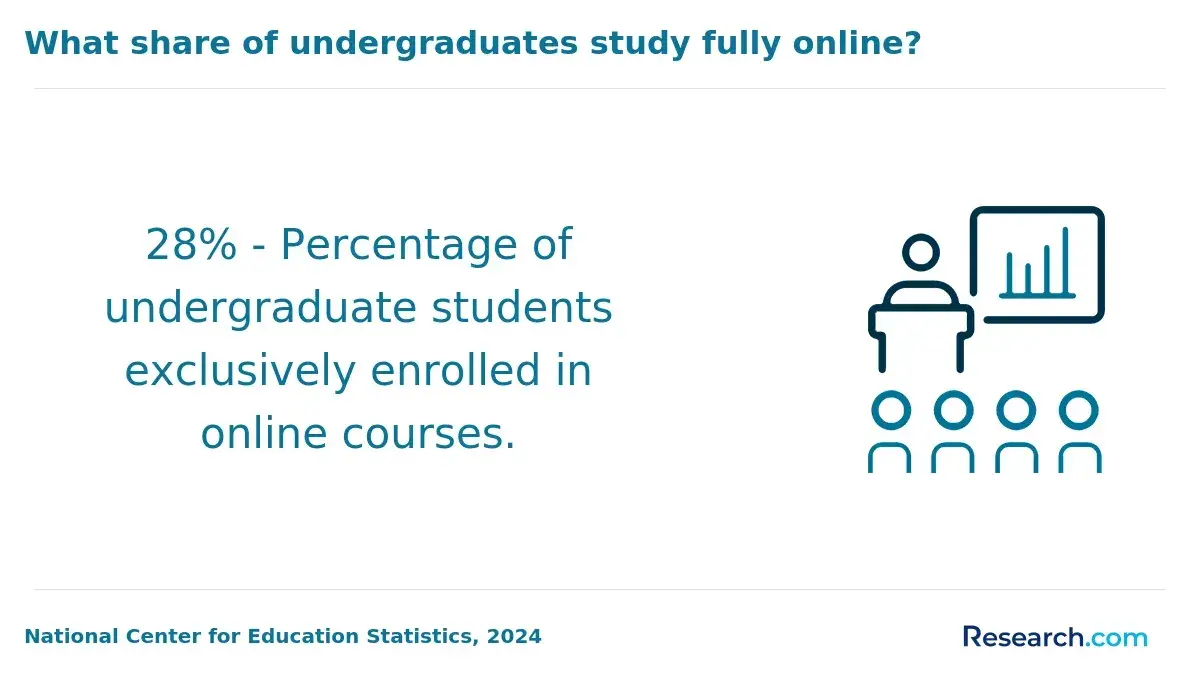
An online bachelor's can support career moves in business operations, IT, healthcare administration, human services, and other fields, but the appropriate degree depends on the role. A computer science major may align with software development; accounting coursework may be more relevant than a general business degree for accounting work. Employers also assess skills and experience.
Regulated careers need extra checks. Teaching requires state certification, nursing requires a license, and clinical psychology generally requires advanced education and licensure. For a later career change or specialization, compare graduate degrees that are worth it only after confirming whether the intended occupation actually requires one.
Occupational pay is useful context, not a prediction of what a particular online graduate will earn. The U.S. Bureau of Labor Statistics reported the following 2024 national median annual wages for selected occupations; experience, location, employer, and qualifications affect individual pay.
| Occupation | 2024 median annual wage | Important qualification |
| Software developer | $133,080 | Employers assess programming ability and experience |
| Registered nurse | $93,600 | State RN licensure is required |
BLS projects continued employment growth for software developers and registered nurses, but growth does not guarantee an opening in a particular market. Evaluate local postings for your target role alongside the degree's remaining cost; neither occupation's median wage should be treated as an expected return on tuition.
How Can You Choose a Reputable Online Degree Program?
Start with institutional accreditation, the exact degree's online availability, and any program accreditation needed for licensure. Then compare written transfer evaluations rather than headline credit limits. The strongest choice is one whose remaining courses, schedule, and total cost you can realistically manage - not simply the school that advertises the fastest finish.
Use the following sequence to avoid common enrollment mistakes, especially assuming that "online" means self-paced or that accepted electives shorten the major.
- Send every prior transcript and request a degree-specific evaluation showing where each accepted course applies.
- Confirm remaining major courses, minimum in-house credits, course availability, and any campus, lab, clinical, or placement obligations.
- Request a total-cost estimate and ask whether aid, employer benefits, or evaluated prior learning could reduce what you pay.
- Check state licensure eligibility when relevant, then compare schedules; consult guidance on the best self-paced online college options if control over study timing is essential.
Other Things You Should Know About
Often, yes. The receiving school must evaluate them, and older technical or prerequisite courses may face additional restrictions. Ask how each credit applies to your intended degree.
Not necessarily. A college may accept a course as an elective without using it to satisfy a major requirement. An articulation agreement can clarify the pathway, but review your individual evaluation.
No. Nursing, teaching, social work, and some other programs may require local clinical work, field placements, labs, or campus visits. Check the exact degree's requirements.
Choose based on applicable credits, not the advertised maximum. Compare the remaining courses, total price, schedule, accreditation, and any licensure requirements before enrolling.
- Certification Procedures - Questions and Answers http://www.ed.gov/laws-and-policy/higher-education-laws-and-policy/certification-procedures-questions-and-answers
- Credit for Prior Learning - Ohio Department of Higher Education https://highered.ohio.gov/initiatives/access-acceleration/credit-for-prior-learning
- Cost of Attendance (Budget) | 2025-2026 Federal Student Aid Handbook https://fsapartners.ed.gov/knowledge-center/fsa-handbook/2025-2026/vol3/ch2-cost-attendance-budget
- Fast Facts: Undergraduate graduation rates (40) | ed.gov https://nces.ed.gov/fastfacts/display.asp
- Transfer Credit FAQ - KU Registrar's Office https://registrar.ku.edu/transfer-credit-faq
- Transfer Credit - College of LSA - University of Michigan https://lsa.umich.edu/lsa/academics/lsa-academic-policies-and-procedures/transfer-information---residence-policy.html
- Credit for Prior Learning (CPL) Glossary | NCCCS https://www.nccommunitycolleges.edu/credit-for-prior-learning-glossary/
- distance learning/online & licensure reciprocity | mecc.edu https://www.mecc.edu/distance-learningonline-licensure-reciprocity
- Online Bachelor's Degree Programs | Purdue Global https://www.purdueglobal.edu/degree-programs/bachelors-degrees/
- Programs Leading to Licensure | txst.edu https://www.distancelearning.txst.edu/about-oxp/state-authorization/professional-licensure-disclosures.html