2027 Best College Programs for High-Paying Careers

Co-Founder and Chief Data Scientist
A high salary can make a college program appealing, but the program may be only one step toward the job. The U.S. Bureau of Labor Statistics (BLS) reports that software developers earned a median $133,080 in 2024; that figure describes employed developers, not new graduates. If you are choosing a major, changing careers, or considering graduate study, this guide compares program families by their realistic career paths, additional requirements, costs, and flexibility. You can use it to shortlist options worth investigating before you enroll.
Key Things You Should Know
- Computer science, engineering, nursing, and selected business programs can lead toward well-paid occupations, but the right choice depends on the job's entry requirements - not its salary alone.
- BLS reports a 2024 median wage of $93,600 for registered nurses; graduates still need the appropriate nursing education and state licensure to practice.
- Compare total cost, required fieldwork, and eligibility for your target job. An inexpensive or fully online course is poor value if it cannot meet a required licensing or hiring standard.
Top 10 Best College Programs for High-Paying Careers
Business Programs
An MBA, Master of Finance, or master's in accounting may suit professionals seeking management, corporate finance, or specialized accounting work. Compare concentrations, employer recruiting, internships, and the experience expected for your target role. An MBA typically builds on prior work experience; it does not by itself qualify someone to become a financial manager. Prospective accountants should check state CPA education rules before choosing courses. A focused certificate may be a better-value alternative when you need one skill rather than a graduate degree.
Healthcare Programs
Healthcare master's programs serve different goals. A Master of Public Health prepares students for population-health work, while health administration programs emphasize operations and management. Clinical paths, such as physician assistant studies, have distinct prerequisites, supervised training, examinations, and licensure requirements. Choose by the occupation you want, not the broad "healthcare" label. Ask whether a program's placements are available near you and whether its curriculum satisfies the rules in the state where you plan to work.
Information Technology Programs
A master's in information technology, cybersecurity, or information systems can build on computing experience for infrastructure, security, or enterprise-technology roles. Compare hands-on labs, cloud and networking coursework, and whether admission requires prior technical study. Security leadership jobs often require substantial experience; a graduate degree alone is not an entry ticket. If you are new to technology, an undergraduate program, targeted certificate, or supervised entry-level role may provide a more practical starting point.
Computer Science Programs
Computer science master's programs typically emphasize algorithms, software systems, AI, or research. Some admit career changers through foundation courses, which add time and cost. Look for substantial programming projects and decide whether a thesis supports your goals better than a course-based or capstone option. Software roles do not universally require a master's degree: applicants with a relevant bachelor's degree and demonstrable work may find that another credential offers limited additional value.
Nursing Programs
Master of Science in Nursing programs may prepare registered nurses for education, administration, or advanced practice. Entry generally requires nursing preparation, and advanced-practice tracks have specific clinical-hour, certification, and state-licensure rules. An MSN is not interchangeable with an entry-level nursing degree. Compare clinical placement support, eligibility in your state, and the exact role the track prepares you for; a nurse practitioner pathway and a nurse educator pathway lead to different work.
Psychology Programs
A psychology master's can support research, applied behavioral work, or a route toward certain counseling credentials, depending on the curriculum and state. It generally does not qualify a graduate to practice as a licensed psychologist, for which doctoral education and other requirements commonly apply. Before enrolling in a clinical or counseling track, confirm its supervised-practice provisions and whether graduates can seek the specific license you want. For research careers, examine methods training and thesis opportunities.
Education Programs
Master's programs in education can focus on curriculum, instructional technology, leadership, or a teaching specialty. A degree intended for experienced teachers may not provide an initial teaching license. If you want classroom or school-leadership work, verify state approval, required student teaching or internships, and experience prerequisites. Teachers considering graduate study should also check their district's published pay rules: a master's degree does not automatically produce a raise.
Criminal Justice Programs
A criminal justice master's may be relevant to policy, analysis, administration, or advancement within an agency. Many law-enforcement roles instead rely on agency training, examinations, and experience; a graduate degree is not a substitute. Compare the curriculum with the job posting you hope to meet. If your goal is forensic laboratory work or cybersecurity investigation, specialized science or computing study may be more directly useful.
Engineering Programs
An engineering master's can deepen expertise in fields such as electrical, mechanical, or civil engineering. Research-intensive programs may require a thesis; professional tracks may use design projects instead. Most engineering occupations have a bachelor's-level entry path, so weigh a master's against work experience and employer support. If professional engineer licensure matters, check your state board's education and experience rules, including how it evaluates your undergraduate program.
Social Work Programs
A Master of Social Work (MSW) can prepare students for advanced social-work practice, but clinical practice requires additional supervised experience and state licensure. Programs usually include field education, which can constrain work schedules even when classes are online. Graduates of eligible bachelor's-level social work programs may qualify for advanced standing; others should not assume the same timeline. Compare placement arrangements, state licensing alignment, and total cost against likely pay in your preferred setting.
What Are the Best College Programs for High-Paying Careers?
The best program is the one that provides an efficient, credible route to a career you actually want. There is no universal ranking: occupational pay, entry barriers, cost, and personal fit pull in different directions. For a broader starting point, compare best degrees before narrowing your search to an occupation.
This comparison distinguishes educational preparation from the requirements to enter or advance in a job.
| Program family | Potential career direction | Key trade-off |
| Computer science or IT | Software development or information security | Projects and experience matter alongside credentials. |
| Engineering | Engineering design and technical specialization | Some roles require labs; licensure has separate rules. |
| Nursing | Registered or advanced-practice nursing | Clinical training and licensure limit scheduling flexibility. |
| Business | Accounting, finance, or management | Higher-paying management roles often require experience. |
| Healthcare professions | Clinical practice or healthcare operations | Entry requirements vary substantially by occupation. |
If you prioritize early career entry, compare bachelor's and associate-level routes first. If you already work in the field, a targeted master's or employer-supported credential may offer a stronger case.
Which High-Paying Careers Require a College Degree or Certificate?
Software developers and many engineers commonly enter with a bachelor's degree; registered nurses can enter through an approved nursing education pathway and must obtain state licensure. Other attractive roles have a longer runway. Nurse practitioners, for example, need graduate-level preparation, certification, and state authorization. Financial management typically requires relevant professional experience in addition to education.
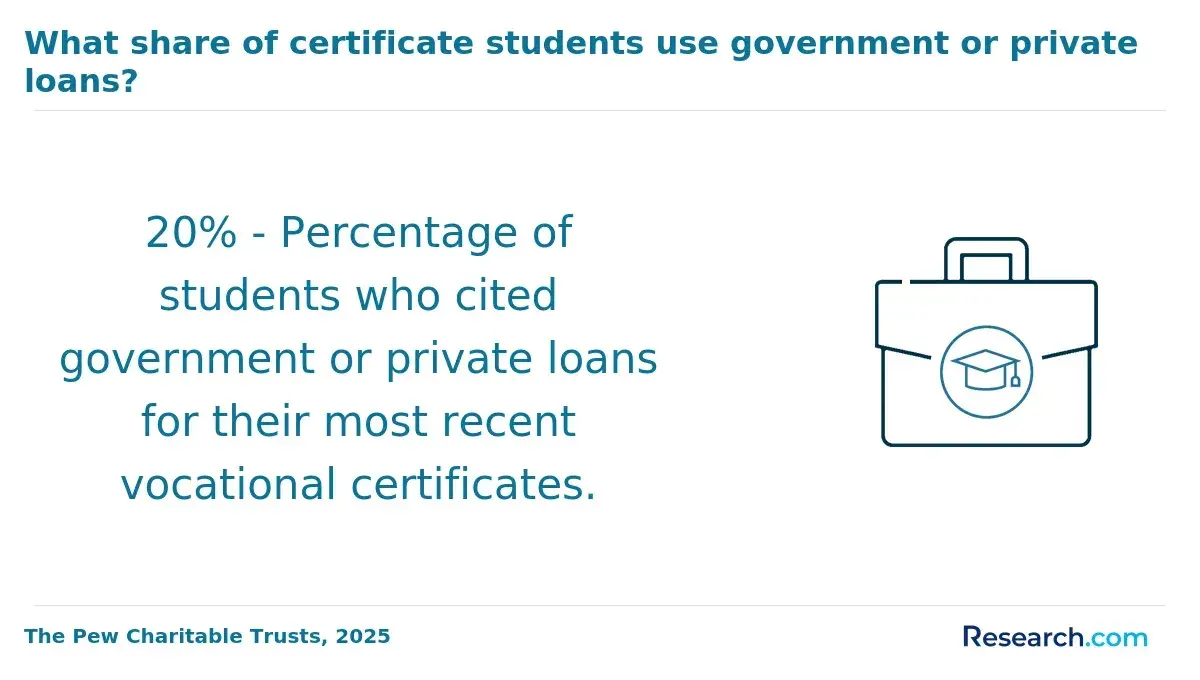
A certificate can be useful for focused skills, but it is not a universal shortcut into licensed practice. Check the occupation's actual hiring or licensing requirements before paying for a credential - especially one advertised as qualifying graduates for several unrelated jobs.
How Much Do Graduates of High-Paying Career Programs Earn?
Occupational medians are not graduate starting salaries. They include workers at different career stages, employers, and locations. The following BLS 2024 median annual wages provide context for evaluating highest paid degrees, not a prediction of what any program's students will earn.
| Occupation | 2024 U.S. median annual wage | Important qualification |
| Software developer | $133,080 | A bachelor's degree is a common entry route; demonstrated skills matter. |
| Information security analyst | $124,910 | Related IT experience is commonly expected. |
| Registered nurse | $93,600 | State licensure is required. |
When assessing a program's return, compare its full price and any earnings you would forgo while studying with credible outcomes for people at your career stage. Ask schools for program-level employment and debt information rather than treating a national occupational median as a promise.
Which College Programs Offer the Strongest Job Outlook?
Information security is a notable growth area: BLS projects employment of information security analysts to grow 29% from 2024 to 2034. That signals demand, not easy entry; many openings call for prior systems, networking, or security experience. Healthcare also offers paths shaped by continuing care needs, while software opportunities can shift with tools and employer expectations, including AI.
Use projections to identify fields worth exploring, then examine local job postings for required skills, experience, credentials, and pay. Fast growth from a smaller occupation does not necessarily mean more openings than slower growth in a large one.
What Degrees and Certificates Lead to High-Paying Careers?
The shortest suitable credential depends on the job. An associate degree or approved nursing diploma can lead toward RN licensure; a bachelor's degree is a common foundation for software development and engineering; and an occupation-specific graduate degree may be necessary for advanced clinical practice. Certificates can strengthen existing skills but rarely replace required degrees or licenses.
Entry-level preparation and advancement are different decisions. Before committing to a master's program, determine whether employers prefer it for your target role, whether you already meet the entry requirements, and whether paid experience would move you closer to the same goal.
How Do Online and Campus Programs Compare for Career Preparation?
Online study can reduce travel, but it does not eliminate scheduled classes or hands-on requirements. A program may deliver lectures online while requiring local clinical placements, labs, internships, or student teaching. Campus programs may offer easier access to equipment and in-person recruiting, but commuting can make them harder to combine with work.
If flexibility is essential, compare schedules and required attendance - not just labels such as "online" or "self-paced." Explore self paced bachelor's degree options only after confirming that the specific program, required courses, and any fieldwork fit your timeline.
What Accreditation and Licensure Requirements Should Students Check?
Check a college's institutional accreditation and, for regulated fields, the approval or programmatic accreditation that your intended state board or certifying body requires. These are separate questions: an accredited university can offer a program that does not meet a particular state's licensing requirements. Requirements may also differ for students completing fieldwork outside the school's home state.
Before applying, ask the program and the relevant licensing board whether the exact curriculum and placements meet current rules where you intend to work. Do not assume an online option is exempt from clinical, examination, or supervised-practice requirements.
What Do High-Paying Career Programs Cost and How Long Do They Take?
Total cost includes tuition, mandatory and program fees, books or equipment, travel, and potentially unpaid fieldwork - not merely the advertised price per credit. Time varies with prerequisites, course sequencing, enrollment intensity, and experiential requirements. A graduate program for someone changing fields may require foundation coursework; an eligible advanced-standing pathway may reduce an MSW student's remaining requirements.
Request a written estimate of required credits and total charges for your starting point. Ask how transfer work will apply to the degree, whether scholarships or federal aid are available to eligible students, and whether an employer will fund relevant study. Compare that estimate with a lower-cost credential or a slower part-time schedule before borrowing.
How Can You Choose a Reputable Program for Your Career Goals?
Begin with a specific target occupation, then work backward from its entry requirements. A useful shortlist compares the same facts for every program rather than relying on rankings or a headline salary. If studying remotely is important, research online universities that are accredited, then verify the accreditation and delivery of the particular program you want.
Use these checks before accepting an offer; they expose the most costly mismatches between a program and a career goal.
- Identify the job's usual degree, experience, examination, and state-licensure requirements from authoritative occupational and licensing sources.
- Ask the school for its catalog requirements, schedule, fieldwork locations, accreditation details, and a personalized total-cost estimate.
- Request program-level completion, placement, and debt information where available; ask how outcomes were measured.
- Confirm in writing which prior credits apply and what requirements remain, then compare at least one alternative pathway.
A red flag is a promise that a degree alone guarantees a high-paying job. Equally risky is choosing the lowest tuition without checking fees, required placements, or licensure eligibility.
Other Things You Should Know About
No program guarantees the highest pay. Some technology, engineering, business, and advanced healthcare occupations have high occupational medians, but their entry requirements and career timelines differ.
Not always. Many software developers and engineers enter with a bachelor's degree. Certain advanced clinical roles require graduate education and additional credentials.
It may, if the specific program meets your state's education rules and you can complete required clinical or other in-person training. Confirm eligibility with the licensing board before enrolling.
Compare the full cost and time to completion with realistic pay for the occupation and your experience level. Include borrowing costs and any earnings lost while studying; do not use an occupational median as a new-graduate salary.
References
- About the tool "Your Financial Path to Graduation" | consumerfinance.gov https://www.consumerfinance.gov/paying-for-college/your-financial-path-to-graduation/how-we-got-these-numbers/
- Education pays: U.S. Bureau of Labor Statistics https://www.bls.gov/emp/chart-unemployment-earnings-education.htm
- Annual Earnings by Educational Attainment - COE https://nces.ed.gov/programs/coe/indicator/cba/annual-earnings
- Post-Secondary Employment Outcomes Tool Shows What You Might Earn Depending on the College You Attend | Census.gov https://www.census.gov/library/stories/2022/06/job-and-earnings-prospects-by-college-and-degree.html
- Research Summary: Education and Lifetime Earnings | ssa.gov https://www.ssa.gov/policy/docs/research-summaries/education-earnings.html
- Variation in Education Costs and Future Earnings | NBER https://www.nber.org/digest/apr17/variation-education-costs-and-future-earnings
- Career earnings by college major - The Hamilton Project https://www.hamiltonproject.org/data/career-earnings-by-college-major/
- Work Experience and Field of Study Matter for Graduates' Earnings - Public Policy Institute of California https://www.ppic.org/blog/work-experience-and-field-of-study-matter-for-graduates-earnings/