
2027 Best Online Career Programs That Pay Well

Co-Founder and Chief Data Scientist
Choosing an online program because its advertised career pays well can be an expensive mistake if the credential does not qualify you for the job. The opportunity is real: the U.S. Bureau of Labor Statistics (BLS) projected 33% employment growth for information security analysts from 2023 to 2033. But entry requirements differ sharply across technology, healthcare, and licensed professions.
This guide compares career-focused program families - including master's options - for working professionals and career changers. You'll learn which paths fit your starting credentials, what training may need to happen in person, and how to weigh pay potential against cost and time.
Key Things You Should Know
- For strong pay potential without a professional license, compare software development and cybersecurity programs against the skills employers request; BLS reported a $120,360 median wage for information security analysts in 2023, not for program graduates.
- Higher-paying clinical roles can require substantial preparation: becoming a nurse practitioner requires nursing licensure, graduate education, and additional credentialing - not just an online course.
- Compare total program cost and remaining requirements before enrolling; an online classroom may still come with in-person labs, clinical placements, or supervised practice.
Top 10 Best Online Career Programs That Pay Well
Business Programs
An online MBA or specialized master's in accounting, finance, or business analytics can support advancement for professionals who already have relevant experience. An MBA emphasizes management and decision-making; an accounting master's may help students satisfy education requirements for CPA licensure, which vary by state. Neither credential automatically leads to an executive role. Choose a specialization by the work you want to do, and compare employer tuition assistance with the full cost of the degree. For an initial business role, a targeted certificate or bachelor's degree may be a less costly starting point.
Healthcare Programs
Online master's programs in health administration, public health, and health informatics prepare students for different work. Health administration focuses on operations and finance; informatics connects clinical workflows with data systems. BLS reported a $110,680 median wage for medical and health services managers in 2023, but these jobs commonly require related work experience, not simply a master's. Some programs include internships or applied projects. If you want to diagnose or treat patients, an administration degree is the wrong path: investigate the specific clinical credential and its in-person training requirements.
Information Technology Programs
An online master's in information technology or cybersecurity may suit experienced IT workers seeking deeper skills in networks, cloud systems, risk, or security management. BLS reported a $120,360 median wage for information security analysts in 2023; that occupation's pay should not be treated as a master's graduate outcome. Employers may also value hands-on experience and relevant certifications. Beginners should compare a bachelor's program, a shorter technical credential, and entry-level IT experience before paying for graduate study. Ask whether required labs use remotely accessible equipment and whether classes meet live.
Computer Science Programs
Online computer science master's programs typically cover algorithms, software systems, and electives such as AI or data science. They can fit developers seeking specialization, but applicants without programming or math preparation may need foundation courses that add time and cost. BLS reported a $132,270 median wage for software developers in 2023; employers generally assess coding ability and experience, and a master's is not the standard entry requirement for every developer job. Compare a project-based curriculum with a research or thesis track according to whether your goal is industry practice or further academic study.
Nursing Programs
Online Master of Science in Nursing programs may focus on leadership, education, or advanced practice. Nurse practitioner tracks require eligible nursing preparation and supervised clinical training; graduates must also meet applicable certification and state licensure rules. BLS reported a $126,260 median wage for nurse practitioners in 2023, not for everyone holding an MSN. Confirm your state's authorization and clinical-placement arrangements before applying. If you are not already a nurse, an MSN designed for licensed RNs is not an entry shortcut; investigate an appropriate initial nursing pathway instead.
Psychology Programs
An online psychology master's may support research, behavioral-health support, or organizational work, depending on its curriculum. It generally does not, by itself, qualify someone to practice independently as a psychologist; that occupation usually requires doctoral education and state licensure. A counseling-focused master's follows a different pathway and may require a qualifying program, practicum, supervised experience, and exams. Before comparing salaries, identify the exact job title and your state's requirements. Choose a program whose supervised training and online format actually match that goal.
Education Programs
Online master's programs in curriculum and instruction, educational leadership, or special education can serve different career goals. A degree intended for licensed teachers may not lead to an initial teaching license; leadership positions may require teaching experience and an additional credential. Student teaching or fieldwork can also require local, in-person placements. Ask your state education agency which program approvals matter for your intended role. If your goal is a pay increase in your current district, check its salary schedule before assuming the degree will raise your earnings.
Criminal Justice Programs
An online criminal justice master's may develop skills in policy, administration, or analysis for people already working in public safety. It is rarely a universal requirement for police or federal investigative jobs, which have separate hiring, training, and experience standards. Compare the degree with employer-funded training or a more specialized analytics credential if advancement is your goal. For career changers, review actual job postings first: the program's subject matter may be relevant without being the credential employers require.
Engineering Programs
Online engineering master's programs can deepen expertise in systems, electrical, mechanical, or industrial engineering. They often suit applicants with an engineering or closely related bachelor's degree; missing math or technical prerequisites can extend the timeline. Some courses require labs, team projects, or campus visits, so verify delivery at the program level. A master's alone does not grant a Professional Engineer license, which has separate state requirements. For experienced engineers, compare specialization and employer support against the career benefit of remaining in the workforce while studying.
Social Work Programs
An online Master of Social Work can be a route toward clinical social work, but online coursework does not replace supervised field education. Graduates seeking clinical practice must meet their state's postdegree supervision, examination, and licensing requirements. Advanced-standing MSW tracks are generally for applicants with an eligible social work bachelor's degree; they should not be mistaken for a faster route open to everyone. Confirm field-placement support and the program's accreditation before applying, particularly if you need to arrange placements near home.
What Are the Best Online Career Programs That Pay Well?
The best online career program is the one that prepares you for a well-paying occupation you can realistically enter without taking on disproportionate cost. For someone with a technical background, computer science or cybersecurity may offer a clearer route than an unrelated graduate degree. For a licensed RN, an appropriate advanced-practice nursing program may make sense; for a career changer, a bachelor's degree or entry-level certificate may be the necessary first step.
This comparison shows where each program family is most useful. "Pay potential" refers to occupations, not a promised salary for graduates.
| Program family | Potential occupational direction | Most important qualification check |
| Computer science or IT | Software development or security analysis | Required technical skills and experience |
| Nursing | Advanced nursing practice | RN eligibility, clinical training, and licensure |
| Healthcare administration | Health services management | Relevant professional experience |
| Engineering | Specialized engineering work | Technical prerequisites and any licensing goal |
| Business | Finance, accounting, or management | Role-specific experience or CPA requirements |
Work style matters too, but a preference for independent work does not establish pay or eligibility. Use descriptions of introvert jobs to explore fit, then verify the actual qualifications and wages for each occupation.
Which Online Programs Lead to High-Demand Careers?
Demand is strongest when a program teaches skills tied to an occupation with documented openings and prepares you to meet its entry requirements. In BLS projections for 2023-2033, employment of information security analysts was expected to grow 33%. That makes cybersecurity worth investigating, but it does not mean a certificate or degree alone will secure a security job.
Software development and healthcare roles also merit comparison. An aspiring developer should build demonstrable projects alongside coursework; a prospective nurse practitioner must first satisfy nursing and clinical requirements. Check whether local employers seek entry-level workers or mainly experienced applicants before treating national growth as a personal job forecast. AI-related coursework may be valuable, but favor programs that also build durable foundations in computing, data, or professional practice.
Do Online Career Programs Require Accreditation or Licensure?
Institutional accreditation matters for every degree, while program approval or specialized accreditation can be essential for regulated careers. Verify a school's accreditation with the accreditor or the U.S. Department of Education's recognized-accreditor resources. Then check the requirements for your intended occupation separately.
Nursing, social work, counseling, teaching, and some clinical programs may have program-specific approval, supervised-training, examination, and state licensing requirements. CPA and Professional Engineer pathways also depend on state rules. Before enrolling, ask the program and the relevant state board whether your exact track meets educational requirements where you plan to work. A program being online or accredited does not mean it qualifies graduates for every state license.
Which Degrees, Certificates, or Training Paths Fit Each Career?
Start with the job's normal entry requirement, then choose the least costly credible credential that meets it. A master's can be valuable for specialization or a regulated advanced role, but it is not automatically the best first credential.
| Career goal | Path to investigate | Why a shorter credential may not be enough |
| Software developer | Computer science bachelor's, relevant training, and a project portfolio | Employers may expect substantial programming ability |
| Information security analyst | Relevant IT education, technical experience, and possibly certification | Security roles often build on broader IT skills |
| Nurse practitioner | Eligible nursing preparation, graduate advanced-practice program, and licensure | Clinical and licensing requirements are mandatory |
| Clinical social worker | Qualifying MSW followed by state-required supervision and licensure | The degree alone does not authorize independent practice |
| Health services manager | Relevant degree plus healthcare experience | Management work commonly calls for experience |
If you need an accessible starting point rather than a graduate credential, a quickest associates degree comparison can help you explore shorter pathways. Confirm whether any resulting credits would apply to the bachelor's program or occupation you ultimately want; speed alone does not establish career value.
What Do You Learn in High-Paying Online Career Programs?
High-paying career programs teach different combinations of theory, applied skills, and supervised practice. Computer science may emphasize programming, algorithms, and software projects; IT may cover networks, cloud systems, and security exercises. Healthcare administration combines operations, finance, and policy, while an MBA develops broader management skills. Engineering programs add advanced technical design or analysis.
Licensed fields add requirements that cannot simply be learned through recorded lectures: nursing needs clinical work, social work requires field education, and teacher preparation may involve student teaching. Review required courses and the capstone, thesis, portfolio, or placement before comparing programs. A course title mentioning AI or another fast-changing tool is less useful than evidence that you will practice the underlying skills employers or licensing bodies assess.
How Long Do Online Career Programs Take and Cost?
Certificates may take months, while degrees typically require a longer commitment; there is no reliable single price or timeline for "online career programs." Compare each school's published credits, per-credit tuition or program price, mandatory fees, and expected course load. Add books, equipment, travel, and any unpaid placement time. A lower tuition rate can still produce a higher total bill if prerequisites or additional terms are required.
Ask for a written estimate based on your transcript and enrollment plan. Accepted transfer credit may reduce remaining bachelor's coursework, but it must apply to specific requirements; prior learning is not automatically awarded credit. Advanced-standing and bridge routes have separate eligibility rules. An advertised fast finish may assume previous credentials or full-time enrollment.
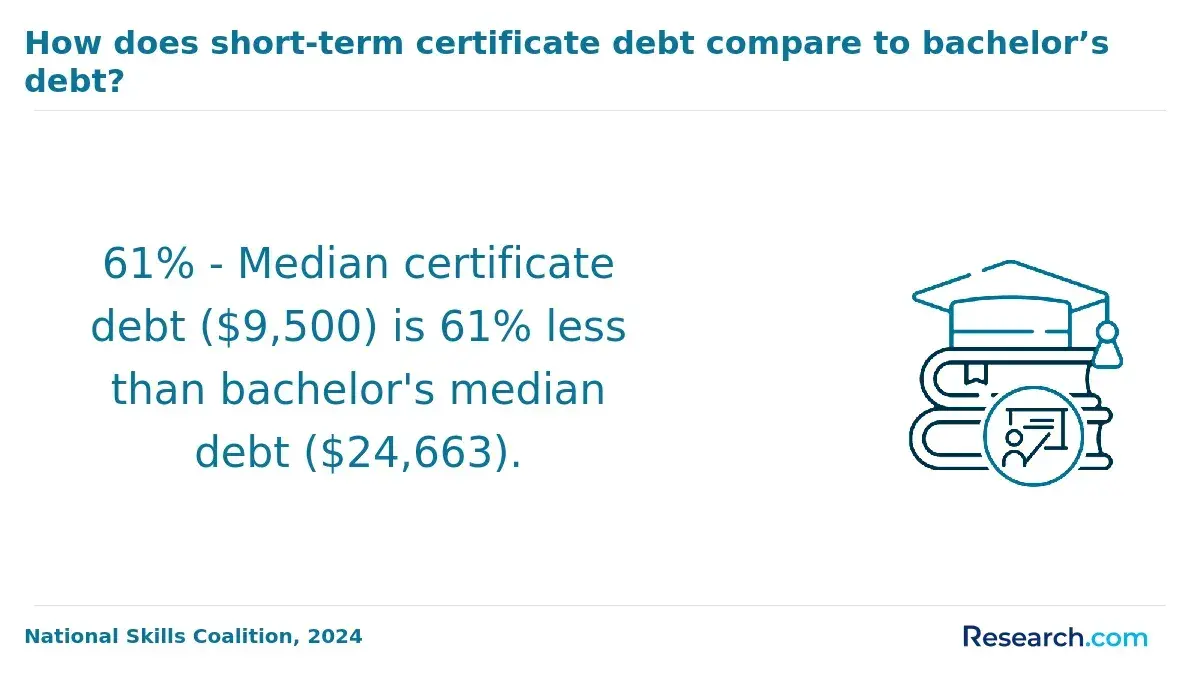
Compare eligible online colleges using total cost after grants and employer assistance, not tuition alone. Federal aid eligibility depends on the school, program, and student; borrowing adds repayment costs that should be weighed against realistic career prospects.
What Are the Admission Requirements for Online Career Programs?
Requirements depend on the credential. Undergraduate programs generally assess prior schooling; graduate programs typically require a bachelor's degree and may specify prerequisite courses, professional experience, recommendations, or a minimum GPA. Technical master's programs may require programming or advanced math. MSN tracks can require an RN license, and advanced-standing MSW tracks generally require an eligible social work bachelor's degree. Tests, interviews, and conditional admission policies vary by program.
If your grades are a concern, researching colleges that don't care about GPA can uncover options to investigate, but do not assume a school's general admissions policy applies to a selective nursing or graduate program. Request the exact track's current criteria and ask whether prerequisite or foundation courses must be completed before admission.
What Salaries and Job Outlook Can Graduates Expect?
Occupational wages provide context, not expected earnings for graduates of any particular online program. The following BLS median annual wages are for U.S. workers in each occupation in 2023; they combine people with different education, experience, locations, and employers.
| Occupation | 2023 median annual wage | Important entry consideration |
| Software developer | $132,270 | Programming ability; a master's is not universally required |
| Nurse practitioner | $126,260 | Graduate clinical preparation and applicable credentials |
| Information security analyst | $120,360 | Relevant technical skills and often related experience |
| Medical and health services manager | $110,680 | Healthcare experience is commonly important |
BLS projected 33% growth for information security analysts from 2023 to 2033, but national growth does not predict openings in your area or an offer after graduation. Compare current job postings, entry qualifications, and local pay with your projected education cost. Especially for management and advanced clinical work, distinguish a program that helps you progress from one that actually makes you eligible to enter the occupation.
How Can You Choose a Reputable Online Career Program?
A reputable program should have a clear connection between what you will pay, what you will learn, and the job you can pursue. Use these checks before committing:
- Identify a target occupation and verify its typical entry requirements with employers or the relevant licensing board.
- Confirm institutional accreditation and any program approval needed for certification, licensure, or field placement.
- Request the full curriculum, including prerequisites, live meetings, campus visits, labs, and local experiential work.
- Get a personalized estimate of remaining credits, total required charges, likely completion time, and available aid.
- Ask for career-outcome information for the specific program, including how the school defines and measures employment outcomes.
Red flags include a guaranteed salary, vague placement claims, pressure to enroll before a credit evaluation, or assurances that an online degree qualifies you for licensure everywhere. The strongest choice may be a slower or more expensive program if it provides the required clinical preparation or a credible route to your goal; it may also be a shorter credential if an advanced degree is unnecessary.
Other Things You Should Know About
Yes, some related occupations have six-figure median wages, but the program does not guarantee that pay. Experience, location, credentials, and the specific role matter.
Start with the entry requirements for a job you want. A relevant certificate or associate degree may provide an initial route; other goals require a bachelor's degree or licensed clinical training.
Coursework may be online, but qualifying programs include in-person clinical or field placements. Confirm placement arrangements and state eligibility before enrolling.
It may be if it meets a required credential, supports a realistic advancement opportunity, or adds skills employers value. Compare its full cost and time commitment with shorter training and your current experience first.
References
- Cost of Attendance (Budget) | 2025-2026 Federal Student Aid Handbook https://fsapartners.ed.gov/knowledge-center/fsa-handbook/2025-2026/vol3/ch2-cost-attendance-budget
- Annual Earnings by Educational Attainment - COE https://nces.ed.gov/programs/coe/indicator/cba/annual-earnings
- Professional certifications and occupational licenses | bls.gov https://www.bls.gov/opub/mlr/2019/article/professional-certifications-and-occupational-licenses.htm
- Certification Procedures - Questions and Answers http://www.ed.gov/laws-and-policy/higher-education-laws-and-policy/certification-procedures-questions-and-answers
- Career Outcomes | University of Delaware https://www.udel.edu/apply/career-outcomes/
- 2025-2026 Estimated Cost of Attendance | howard.edu https://financialservices.howard.edu/tuition-fees/cost-attendance/2025-2026-estimated-cost-attendance
- Employer Tuition Assistance Plans May Help Pay for College | Campus https://campus.edu/blog/financial-aid/employer-tuition-assistance-programs-can-help-pay-for-college
- Practicums, Internships and Projects What's the Difference? | Oregon State University https://health.oregonstate.edu/internships/types-of-experiential-learning
- Tuition and Fees Charts - Student Financial Services https://sfs.gsu.edu/resources/student-acct/tuition-breakdown/


