
2027 Best Online Career Programs

Co-Founder and Chief Data Scientist
Choosing an online career program means deciding more than what to study, you need a credential employers recognize, training you can complete, and a realistic path to the work you want. The stakes are clear in the U.S. Bureau of Labor Statistics' projection that employment of information security analysts will grow 29% from 2024 to 2034, but not every technology credential prepares students for that role. This guide compares career-focused program families, explains where online study has limits, and shows how to check costs, accreditation, and licensing before you enroll.
Key Things You Should Know
- The best online career program matches a specific job goal and its entry requirements; a certificate, bachelor's degree, and master's degree are not interchangeable.
- Online coursework may still involve local clinical placements, student teaching, laboratories, or scheduled meetings. Confirm these requirements before applying.
- Compare total cost and required credentials, not just advertised tuition or occupational pay. A degree alone does not guarantee a license or job.
Top 10 Best Online Career Programs
Business Programs
Online MBA, accounting, finance, and management master's programs primarily serve people seeking advancement or a change in business specialty. An MBA offers broad management study; a specialized master's goes deeper into one function. Compare prerequisites, team projects, internship access, and whether the program's emphasis fits the roles you want. A master's is not necessary for every business job, and management positions generally require relevant experience. Accounting students pursuing CPA licensure should check their state's education rules before choosing courses.
Healthcare Programs
Online master's programs in public health, health administration, and health informatics prepare students for different work: population health, organizational operations, and health data systems. They are not substitutes for clinical training or a clinical license. Applicants may need prerequisite coursework or healthcare experience, depending on the program. Look for practical projects, appropriate accreditation where relevant, and a curriculum aligned with your target employer. A health informatics program, for example, should offer meaningful work with data and clinical workflows, not just general management courses.
Information Technology Programs
Online master's programs in cybersecurity, information systems, and IT management suit applicants with different technical backgrounds. Cybersecurity programs may emphasize risk, networks, and incident response; IT management programs often focus more on systems and organizational decisions. Check programming or networking prerequisites and whether projects provide hands-on practice. A master's can support specialization, but many IT roles also value demonstrated skills and experience. Students new to the field may be better served first by an introductory degree, certificate, or entry-level technical role.
Computer Science Programs
An online computer science master's typically develops advanced computing skills through algorithms, software systems, artificial intelligence, or related concentrations. Some programs admit career changers through foundation courses; others expect a strong computing background. Compare prerequisite requirements, substantial coding projects, and thesis versus coursework options. This path makes sense for deeper technical study, not simply because a job posting mentions software. Applicants seeking their first programming role should weigh a bachelor's pathway or focused training against the extra prerequisites and cost of graduate study.
Nursing Programs
Online MSN programs may prepare registered nurses for education, leadership, or advanced clinical practice; the tracks have different entry and licensing requirements. Many require an active RN license and arranged in-person clinical hours or practicums, even when classes are online. Prospective nurse practitioner students should check state authorization, clinical placement support, program accreditation, and eligibility for the intended certification exam. A nonclinical MSN does not itself qualify a nurse for advanced practice, and an MSN is not a route to initial RN licensure.
Psychology Programs
Online master's options in psychology, applied behavior analysis, and counseling lead toward different goals. A general psychology master's may support research-related or nonclinical work, while a counseling program may include supervised fieldwork and coursework designed for a particular state license. These credentials are not interchangeable, and psychologist licensure generally requires further doctoral-level preparation. Before enrolling, compare the exact degree title, practicum arrangements, and your state board's rules. Choose based on the occupation you intend to pursue, not the subject name alone.
Education Programs
Online master's programs in curriculum and instruction, educational leadership, special education, and teaching serve different career stages. Some are designed for already licensed teachers; others offer an initial-licensure pathway with supervised student teaching. Check admission rules, placement locations, state approval, and whether the concentration qualifies you for the endorsement or administrator credential you need. A flexible online course schedule will not necessarily make classroom placements flexible. Teachers seeking professional development without a new license may prefer a nonlicensure program.
Criminal Justice Programs
Online master's programs in criminal justice, criminology, and forensic studies can support policy, analysis, research, or advancement in related organizations. Coursework may cover law, research methods, and organizational practice, but an advanced degree is not a universal entry requirement for law enforcement. Some investigative and federal roles have additional hiring, training, or experience requirements. Compare applied projects and employer expectations before paying for graduate study. If your goal is an entry-level position, check whether direct application or a lower-cost credential is sufficient.
Engineering Programs
Online engineering master's programs commonly offer specialties such as electrical, mechanical, civil, or systems engineering. They generally build on substantial undergraduate mathematics and engineering preparation. Compare technical electives, laboratory or project requirements, and whether any visits are required. For work involving professional engineering licensure, review your state board's education and experience rules; an online master's does not replace them. A specialized program is most useful when its coursework matches the systems or problems you expect to work on.
Social Work Programs
An online MSW can prepare students for social work practice, but required field education takes place in person at an approved site. Programs may offer a standard pathway and an advanced-standing pathway for eligible graduates of accredited bachelor's social work programs; the shorter pathway is not available to everyone. Check program accreditation, placement assistance, and the state requirements for the level of practice you want. Clinical social work licensure typically also requires postdegree supervised experience and an examination.
What Are the Best Online Career Programs for In-Demand Jobs?
The best online career program depends on the job you want and the credential needed to reach it. For career entry, compare certificates and undergraduate degrees alongside graduate programs: a master's is valuable when it adds required preparation or a meaningful specialization, not merely because it is more advanced.
This comparison shows where several program types fit and where an additional requirement can change the decision.
| Career goal | Program type to consider | Key qualification check |
| Business operations or management | Business bachelor's or, for experienced professionals, an MBA | Relevant experience often matters alongside education. |
| Software development | Computer science degree or substantial technical training | Assess programming ability through projects. |
| Cybersecurity | IT or cybersecurity program | Check technical foundations and practical exercises. |
| Registered nursing | State-approved nursing pathway | Verify clinical training and eligibility for RN licensure. |
| Licensed clinical social work | Accredited MSW | Plan for fieldwork and state postdegree requirements. |
Demand can help narrow the options, but it cannot establish that a particular program will lead to a job. If pay is a primary goal, compare occupational requirements before using lists of highest paying jobs to choose a field.
How Do You Choose an Accredited Online Career Program?
Accreditation is the starting point, not the final verdict. Check that the institution holds recognized accreditation, then determine whether your specific program needs programmatic accreditation or state approval for its intended profession. A school appearing among accredited online colleges does not establish that every degree it offers meets every licensing board's rules.
Use these checks to turn a promising program into a defensible enrollment decision:
- Identify the exact occupation and credential you need, including the state where you expect to work.
- Confirm institutional accreditation and any required program approval with the accreditor, program, or licensing board.
- Ask for the required courses, online schedule, in-person activities, and placement responsibilities in writing.
- Compare total costs and ask how accepted transfer credit or prior learning would apply to remaining requirements.
A red flag is a promise of licensure based only on the word "accredited." Another is an advertised completion time that assumes transfer credits you have not yet been awarded.
What Careers Can You Start With an Online Certificate or Degree?
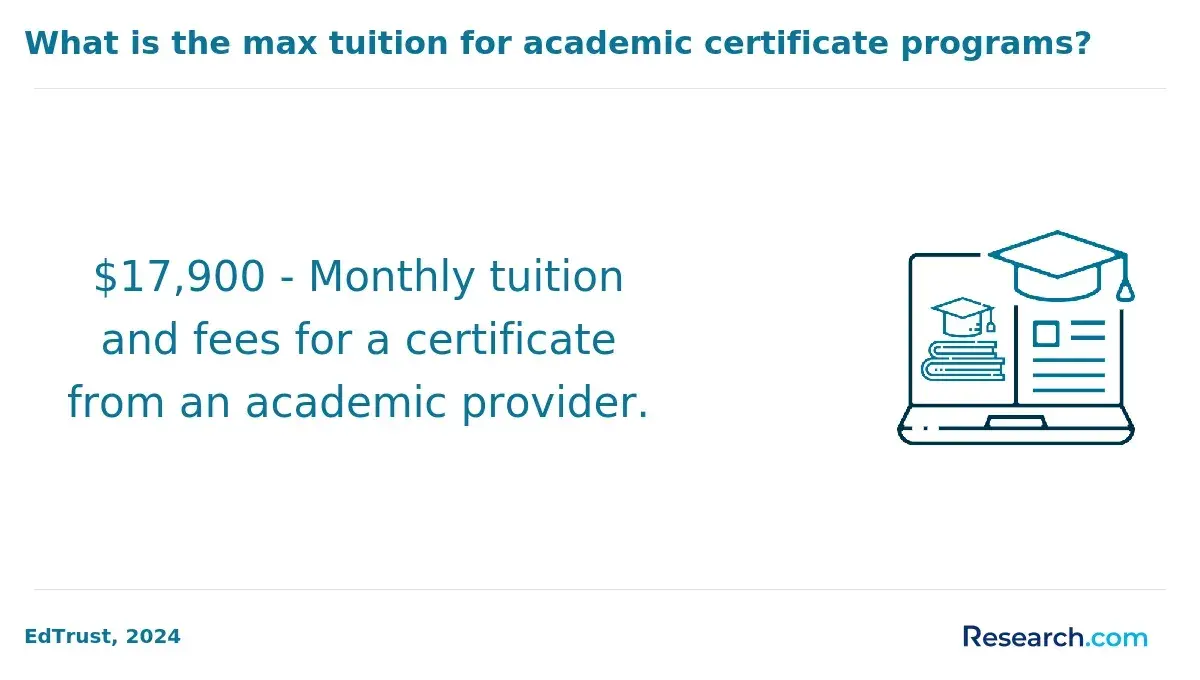
An online certificate may support entry into some administrative, technical support, or specialized assistant roles, depending on employer requirements. An associate or bachelor's degree can open other entry routes; master's programs more often serve specialization, advancement, or licensed professions with additional requirements. None of these credentials automatically confers professional certification.
Work backward from current job postings: identify the required education, experience, software skills, and licenses, then compare them with the program's courses and hands-on work. For an entry-level goal, test whether a shorter credential plus a portfolio or relevant experience meets employer expectations before committing to a graduate degree.
How Do Online Career Programs Compare With Campus Programs?
Online and campus programs can teach the same subject, but they differ in how students access instruction, facilities, and placements. Online is a delivery method - not a promise of asynchronous classes, lower cost, or faster completion.
The format comparison below highlights practical differences to check against your schedule and learning needs.
| Format | Potential advantage | Potential constraint |
| Online | Study without routine travel to campus | May require live meetings, fixed deadlines, or local placements |
| Hybrid | Combines remote coursework with planned in-person learning | Travel days may be difficult to accommodate |
| Campus | Direct access to facilities and face-to-face activities | Commuting and scheduled attendance may limit flexibility |
Choose based on required activities, not the format label. A student who needs a laboratory, clinical site, or structured face-to-face support may find a hybrid or campus option more workable than a nominally convenient online one.
What Do Online Career Programs Teach?
Career programs teach a combination of field knowledge and work-relevant application, but the balance varies. Business students may analyze budgets and decisions; computing students may build software; healthcare administration students may examine operations and policy. Strong programs make the connection visible through projects, simulations, portfolios, supervised practice, or a capstone.
Read the course sequence rather than relying on a program title. Check whether electives cover your intended specialty and whether a thesis, internship, practicum, or clinical placement is required. For technology paths, AI-related coursework can be useful, but it should complement the foundational skills the target job requires.
What Are the Admission Requirements for Online Career Programs?
Requirements depend on the credential. Certificates may ask for prior education or specific skills; undergraduate programs generally require secondary-school preparation; master's programs normally require a bachelor's degree and may specify prerequisites, professional experience, a license, or a portfolio. Admission to the institution does not necessarily mean admission to a selective nursing, counseling, or other professional program.
Ask admissions to evaluate your transcript against the specific program, including any missing prerequisites and whether tests or a minimum GPA apply. If you are considering what is the easiest bachelor's degree to get, remember that manageable admission or coursework is useful only if the degree also fits the career's requirements.
How Long Do Online Career Programs Take and What Do They Cost?
Completion time depends on credential level, required credits, enrollment pace, course sequencing, and any placement or capstone. A focused certificate may take less time than a degree, while a student entering a master's without prerequisites may need additional coursework. An advanced-standing or transfer-based timeline applies only after a program evaluates your eligibility.
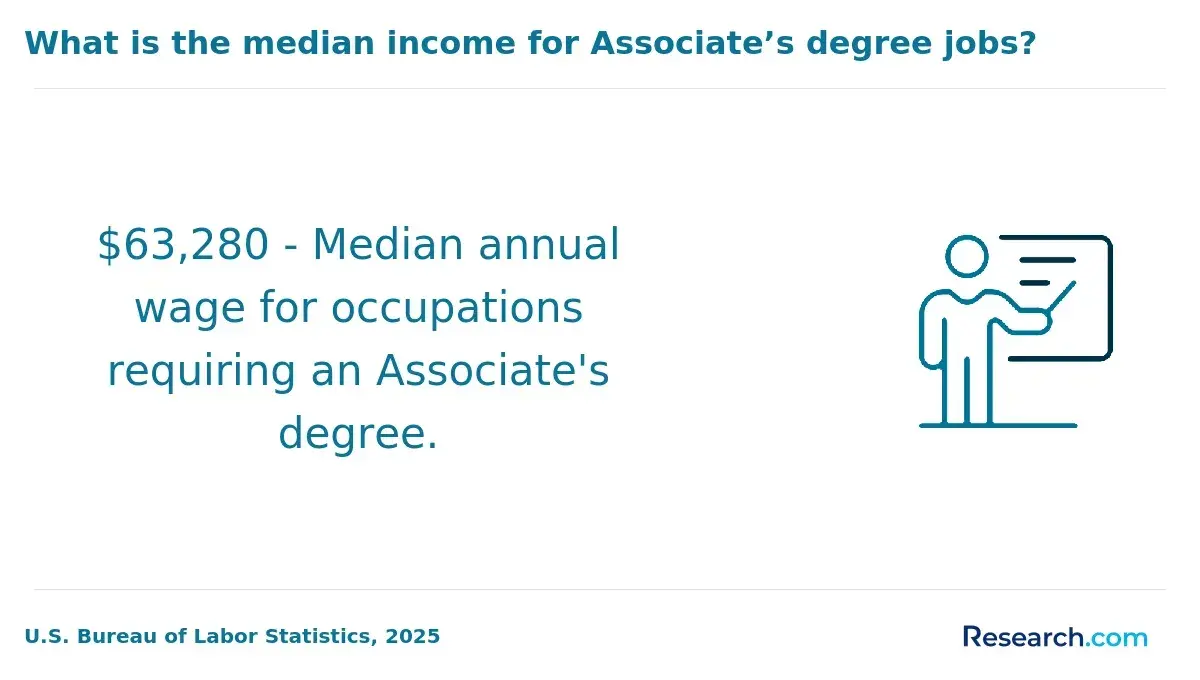
Published U.S. tuition benchmarks illustrate why comparing only a school's per-credit rate can be misleading. The College Board reported these average tuition and fee figures for 2024-25; they are annual sector averages, not online career-program prices or total completion costs:
- Public two-year colleges, in-district is $4,050.
- Public four-year colleges, in-state is $11,610.
Request a program-specific estimate that includes mandatory fees, materials, technology, travel, and placement expenses. Ask about aid eligibility and employer assistance, then calculate the cost of your remaining credits after an official transfer evaluation. Doctoral study serves a different goal; even lists of best 1 year PhD programs online should not be treated as a substitute for checking a doctorate's full research and completion requirements.
What Salaries and Job Outlook Can Graduates Expect?
Occupational wages describe people working in a role, not the expected pay of new graduates. The U.S. Bureau of Labor Statistics reported a 2024 median annual wage of $93,600 for registered nurses. That figure spans workers with differing experience and does not mean completing an online nursing program will produce that salary. RN candidates also need to meet state licensing requirements.
Use BLS wage and employment projections for the specific occupation you want, then check local job postings for entry requirements. Compare likely starting opportunities, program cost, and any time away from paid work. Fast-growing fields can still be competitive for applicants without the necessary skills, license, or experience.
Which Licenses and Certifications Do Online Career Programs Prepare You For?
Some programs prepare students to seek a separate credential; others provide useful study without leading to a license. Nursing pathways may lead toward eligibility for the RN licensing exam, while qualifying advanced nursing tracks can support applications for specialty certification. Counseling, teaching, engineering, and social work credentials depend on the applicable state's education, supervised-practice, and examination rules. In IT, vendor or professional certifications can complement a degree but are not automatically awarded with it.
Before paying a deposit, ask the program which exact examination or license its curriculum is designed to support in your state. Confirm the answer with the relevant board or certification body, including any required in-person training.
Other Things You Should Know About
Employers assess the credential, institution, skills, and experience - not just the delivery format. Confirm accreditation and build evidence of your work through projects or supervised training.
Often not. Nursing, teaching, counseling, and social work pathways commonly require in-person clinical work, student teaching, or field placements, even when coursework is online.
Choose the least extensive credential that meets the target role's requirements. A certificate may be enough for some skills-based entry routes; regulated professions and other roles may require a particular degree.
Ask for written details on total cost, accreditation, required in-person activities, transfer-credit decisions, completion assumptions, and eligibility for any license or certification you intend to pursue.
References
- An Overview of Accreditation of Higher Education in the United States | Congress.gov | Library of Congress https://www.congress.gov/crs-product/R43826
- Cost of Attendance (Budget) | 2025-2026 Federal Student Aid Handbook https://fsapartners.ed.gov/knowledge-center/fsa-handbook/2025-2026/vol3/ch2-cost-attendance-budget
- Certification Procedures - Questions and Answers http://www.ed.gov/laws-and-policy/higher-education-laws-and-policy/certification-procedures-questions-and-answers
- Showcase Your Experience with a Career Portfolio | txst.edu https://www.careerservices.txst.edu/students-alumni/resources-services/career-guides/portfolio-guide.html
- Ready or Not, Here It Comes! New Regulations When Offering Programs Leading to a License Effective July 1! | WCET https://wcet.wiche.edu/frontiers/2024/05/16/ready-or-not-here-it-comes-new-regulations-when-offering-programs-leading-to-a-license-effective-july-1/
- Professional Licensure Disclosures | UMSL https://www.umsl.edu/oiec/regulations/professional-licensure-disclosures.html
- Student Attestations for Professional Licensure Programs | Virginia Commonwealth University https://academics.provost.vcu.edu/assessment-accreditation-and-compliance/compliance/attestations/
- Professional Licensure Disclosures | M State https://www.minnesota.edu/academics/professional-licensure-disclosures
- Professional Licensure Disclosures | Monroe Community College https://www.monroecc.edu/about-mcc/professional-licensure-disclosures/
- Gainful Employment & Placement Rate Methodology | NWC https://nw.edu/ge-placement-methodology/


