
2027 Best College Degrees for Job Security

Co-Founder and Chief Data Scientist
A degree can open doors, but it cannot protect a job from layoffs, changing technology, or weak local demand. If you are choosing a major or considering graduate school, the better question is which path prepares you for work employers will continue to need. The U.S. Bureau of Labor Statistics (BLS) projected 46% employment growth for nurse practitioners from 2023 to 2033—a strong outlook, but one that depends on advanced training and licensure.
This guide compares degree fields by career access, adaptability, cost, and professional requirements so you can choose a path that fits your goals.
Key Things You Should Know
- Nursing and other licensed healthcare paths offer a particularly clear connection between education and essential services, but a degree alone may not satisfy licensing requirements.
- Technology offers substantial opportunity: BLS projected 33% employment growth for information security analysts from 2023 to 2033, although experience and current skills matter alongside a degree.
- For any major, compare the occupation you want, required credentials, local openings, and total education cost—not occupational pay alone.
Top 10 Best College Degrees for Job Security
Business Programs
A bachelor's degree in accounting can lead toward work needed across industries; a master's in accounting may help students meet additional education requirements for CPA licensure, which varies by state. Business administration or MBA programs can support advancement but rarely provide the same direct entry route to a regulated occupation. Choose accounting if you want specialized, portable skills. Consider an MBA when you already have experience and a specific advancement goal; compare its total cost with likely career benefits before enrolling.
Healthcare Programs
Healthcare administration and public health master's degrees can prepare graduates for operations, policy, and population-health work. They do not, by themselves, qualify someone to practice medicine or nursing. A healthcare administration program may fit an experienced professional seeking supervisory work, while public health suits interests in research, prevention, or community programs. Review internships and employers in your area: demand for healthcare services does not mean every nonclinical role is equally easy to enter.
Information Technology Programs
Master's programs in information technology, cybersecurity, and information systems often build on computing or professional experience. They can support roles in infrastructure, security, and enterprise systems, but a master's is not the standard entry requirement for every job. For job security, favor programs with hands-on labs, current tools, and opportunities to demonstrate your skills. Cybersecurity applicants should check whether target roles also expect systems experience, certifications, or a security clearance.
Computer Science Programs
A master's in computer science can deepen software, data, or AI expertise, particularly for someone moving into a specialization. Many software development roles are accessible with a relevant bachelor's degree, so graduate study is most compelling when it fills a defined skills gap. Check prerequisites: career-change programs may require foundation courses in programming and mathematics. As AI tools change development workflows, the ability to test, secure, and maintain systems remains important.
Nursing Programs
For most prospective registered nurses, an approved nursing pathway and RN licensure come before a nursing master's degree. An MSN may prepare an experienced RN for advanced practice, education, or leadership, depending on its track. Nurse practitioner preparation has a strong projected employment outlook, but it also involves clinical training, national certification, and state-specific licensure. Before choosing a program, confirm that its specialization and clinical-placement arrangements meet requirements where you intend to work.
Psychology Programs
A psychology bachelor's degree offers broad preparation but does not qualify someone to practice as a psychologist. A master's in counseling or a related clinical field can lead toward certain licensed roles if the program meets state education requirements; supervised practice and an exam typically follow. Psychologist roles generally require doctoral education. Choose a specific occupation first, then check the applicable board's rules. A general psychology master's is not interchangeable with a license-eligible counseling program.
Education Programs
Master's programs in teaching, special education, or educational leadership can serve different career stages. An initial-licensure teaching program may suit a career changer; a leadership degree commonly targets educators with teaching experience. Schools need qualified staff, but demand varies by subject and district. Check state approval, student-teaching requirements, and whether the degree leads to the exact credential you need. Do not assume an online course schedule eliminates in-person fieldwork.
Criminal Justice Programs
A criminal justice master's may support specialization in policy, analysis, or administration, especially for people already working in the field. It is not a universal requirement for policing, corrections, or federal employment; those roles have distinct hiring and training standards. If your goal is a particular agency or job, check its published qualifications before paying for graduate school. Relevant experience, analytical skills, or a different specialty may be more useful than the degree alone.
Engineering Programs
Master's degrees in civil, electrical, mechanical, and other engineering fields can deepen expertise for specialized projects. Many entry-level engineering jobs instead start with a relevant bachelor's degree. Civil engineering can offer work tied to infrastructure, while electrical and mechanical engineering serve varied industries; each has different exposure to project cycles. If professional engineer licensure matters to you, check the state board's education and experience rules and the accreditation status of your undergraduate program.
Social Work Programs
A Master of Social Work (MSW) can prepare graduates for roles beyond those generally available with a bachelor's in social work. Clinical practice requires additional supervised experience and state licensure. An advanced-standing MSW may shorten study for eligible graduates of accredited BSW programs, but eligibility and remaining coursework vary. This path may appeal to people seeking direct service across healthcare and community settings; assess local pay, field-placement demands, and potential debt before committing.
What college degrees offer the strongest job security?
Nursing is among the clearest degree-to-occupation paths for job security because it connects approved education, licensure, and continuing demand for care. Engineering and accounting offer portable technical skills; computer science and IT can lead to growing roles but require continual skill renewal. Education and social work can provide durable career paths where local demand and credential requirements align.
"Job security" means more than projected growth: consider how many employers need the skill, whether the credential qualifies you for a role, and how easily you could change workplaces. This comparison highlights the main trade-off in each field:
| Degree field | Security advantage | Important limitation |
| Nursing | Licensed role tied to ongoing patient care | Clinical work and state licensing requirements |
| Engineering | Technical skills used across sectors | Hiring can follow industry and project cycles |
| Accounting | Organizations need financial reporting and controls | Some roles reward CPA eligibility or experience |
| Computer science and IT | Skills applicable to many employers | Tools change quickly; entry-level competition varies |
| Education and social work | Work tied to community needs | Pay, openings, and licenses vary by location |
Which majors have the best salary and job-growth potential?
Technology and advanced healthcare stand out for projected growth, while engineering can combine substantial occupational pay with multiple industry options. Neither a high median wage nor a fast-growing occupation guarantees a graduate an offer: the figures describe workers or jobs in an occupation, not the outcomes of a particular degree program.
The following BLS benchmarks use May 2023 median occupational wages and 2023-2033 employment projections. They are useful for comparing career directions, but you should check newer BLS releases and openings in your intended location before making a final decision.
| Occupation | Median occupational wage | Projected employment growth | Education-path caution |
| Registered nurse | $86,070 | 6% | Requires an approved nursing pathway and RN licensure |
| Software developer | $132,270 | 17% | A computer science master's is not normally required for entry |
| Information security analyst | $120,360 | 33% | Related IT experience may matter substantially |
| Nurse practitioner | $126,260 | 46% | Requires graduate preparation and additional credentials |
For value, weigh likely education expenses and time out of work against the role you can realistically enter. An advanced degree is a weaker investment if the occupation does not require it or an employer would pay for it later.
How do you choose an accredited degree program for career stability?
Start with institutional accreditation, then check any approval or programmatic accreditation needed for your intended occupation. A school can be institutionally accredited while a particular program still fails to meet a state licensing board's requirements.
To compare programs without mistaking a low tuition rate for a low total cost, work through these checks before applying:
- Name the occupation and state where you intend to work; confirm required education, exams, and supervised experience with the relevant board.
- Verify the program's accreditation or state approval and ask whether graduates are eligible for the credential you need.
- Request a total-cost estimate covering tuition, mandatory fees, supplies, travel, and required placements; ask about aid and employer assistance.
- Ask which of your previous credits apply to degree requirements, what remains, and when required courses and placements are offered.
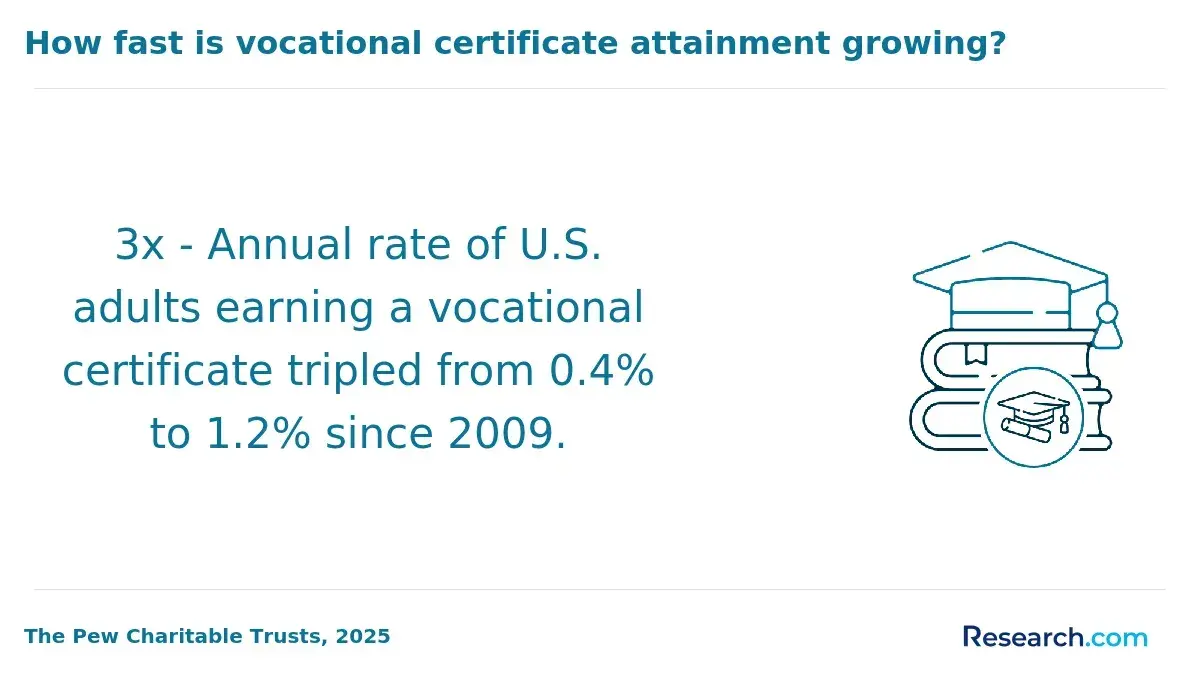
An online associate's degree may be an economical starting point for some careers or transfer plans, but confirm how its credits apply to the eventual bachelor's or licensed pathway. A common mistake is assuming admission to a school guarantees admission to a selective clinical program.
Which healthcare degrees lead to licensed, in-demand careers?
Nursing provides several degree routes into licensed work, but the credential and occupation must match. An approved associate or bachelor's nursing program can lead toward RN eligibility; graduates must also meet state requirements and pass the licensing exam. An MSN or other qualifying graduate pathway can prepare an RN for an advanced practice specialty, followed by the applicable certification and state credential.
Social work and counseling are other options for people who want licensed patient-facing or behavioral-health work. Their graduate coursework, placements, supervised practice, and state exams differ. Confirm license eligibility before enrolling, especially if you expect to study online or move to another state.
Which technology degrees prepare graduates for growing fields?
Computer science is a strong foundation for software development; information technology and information systems focus more on deploying and managing technology; cybersecurity programs concentrate on protecting it. Data-focused programs can prepare students for analytical work, although job titles and entry requirements differ by employer.
Choose by the work you want to perform, not by a broad promise of "tech jobs." Compare required programming, statistics, networking, and security coursework with job postings. Build a portfolio through projects or internships, and budget time for learning new tools after graduation. A master's can deepen a specialty, but experience may be the more valuable next step for someone already qualified for entry-level work.
What engineering degrees provide reliable career opportunities?
Civil engineering suits interests in structures, transportation, and water systems; electrical engineering focuses on electrical and electronic systems; mechanical engineering offers a broad route into design and manufacturing. These are different labor markets, so compare employers and projects where you want to live rather than treating "engineering" as one job.
A relevant bachelor's degree is commonly the starting credential. Graduate study can help with specialization but is not automatically necessary. For roles involving a professional engineer license, verify your state's education, examination, and experience requirements. A program's laboratories, design projects, and internship access may matter more to your first job search than an appealing specialization name.
What coursework do job-focused degree programs typically include?
Job-focused degrees generally combine foundational theory with applied work. The exact mix tells you whether a program prepares you for entry, specialization, research, or a regulated profession.
When reviewing a curriculum, look for the components that connect directly to your target role:
- Foundations: mathematics and programming for computing; anatomy and clinical science for nursing; accounting and reporting for finance roles.
- Applied work: laboratories, design projects, casework, simulations, or a portfolio that demonstrates usable skills.
- Supervised experience: clinical placements, practicums, internships, or student teaching when the occupation or license requires them.
- Completion requirements: a capstone, thesis, examination, or specialty courses that may affect both timing and cost.
If you already have a bachelor's degree, compare graduate prerequisites and remaining coursework rather than assuming all master's programs take the same time. Many easy masters degrees should not be judged by workload alone when your goal is a specific job or license.
How do online degrees compare with campus programs for employability?
Employability depends more on the relevant skills, credential eligibility, and practical experience than on whether lectures happen online or on campus. Online study may make employment while enrolled easier, but it does not necessarily eliminate live sessions, fixed deadlines, proctored assessments, or in-person placements. Campus programs may offer convenient access to labs and local employers, though commuting can add cost.
Ask each school how students complete internships or clinical work near home and whether the program meets requirements in your state. If speed matters, an accelerated bachelor's degree may reduce time in school for an eligible student; check its course load, transfer-credit assumptions, and total cost rather than relying on the word "accelerated."
Are certificates or degrees better for entering secure careers?
A certificate or professional certification can be the better first move when a job requires a focused skill rather than another degree. An associate or bachelor's degree makes more sense when employers expect broader preparation or a licensing pathway requires it. For advanced clinical roles, a short certificate cannot replace required graduate education and supervised training.
Compare credentials against actual job postings and state rules before paying for either route. Someone with relevant experience may find a targeted credential sufficient for a career change; someone entering a licensed profession may need a full degree. Competency based masters degrees may suit experienced learners in some fields, but verify how assessments, pacing, costs, and any professional requirements work in the specific program.
Other Things You Should Know About
Nursing offers a direct route toward a licensed, widely needed occupation, but no major guarantees a job. Check program approval, licensing eligibility, clinical demands, and openings in your area.
It can provide adaptable technical foundations, especially when paired with projects and experience. Graduates still need to keep skills current and compete for available roles.
Often not. Many nursing, engineering, accounting, and technology paths begin at the associate or bachelor's level. A master's is most useful when a target occupation requires it or it fills a clear career gap.
Compare total education costs and time with the entry requirements, local openings, and occupational pay for your target job. Verify licensure eligibility and ask how much credit or employer assistance you can actually use.
References
- Fastest Growing Occupations | bls.gov https://www.bls.gov/ooh/fastest-growing.htm
- Is Healthcare Employment Resilient and "Recession Proof"? | nih.gov https://pmc.ncbi.nlm.nih.gov/articles/PMC8655443/
- After Everything: Projections of Jobs, Education, and Training Requirements through 2031 - CEW Georgetown https://cew.georgetown.edu/cew-reports/projections2031/
- Recession-Proof Industries: The 6 Most Secure Jobs | USC Online https://online.usc.edu/news/recession-proof-industries-careers-economic-downturn/
- 6 of the 10 U.S. jobs projected to grow fastest over the next decade are in one industry - and it's not tech or AI | CNBC https://www.cnbc.com/2026/09/02/the-fastest-growing-jobs-of-the-next-decade-in-the-us-according-to-bls.html
- Fastest Growing Careers | careeronestop.org https://www.careeronestop.org/Toolkit/Careers/fastest-growing-careers.aspx
- The Labor Market for Recent College Graduates | newyorkfed.org https://www.newyorkfed.org/research/college-labor-market


