2027 Best College Programs for Low Student Debt

Co-Founder and Chief Data Scientist
A program can look affordable until required fees, clinical placements, or an extra semester turn into additional borrowing. The College Board reported average published tuition and fees of $11,610 for in-state students at public four-year colleges in 2024-25 - and that excludes living costs. If you're choosing a first credential or considering graduate school, the better question is what you will pay to finish relative to the work the credential prepares you to do. This guide compares program families, identifies costly assumptions to avoid, and shows you how to check your likely debt before enrolling.
Key Things You Should Know
- Start with the lowest credential that meets your career goal: an associate degree, certificate, or employer-supported pathway may avoid unnecessary graduate borrowing.
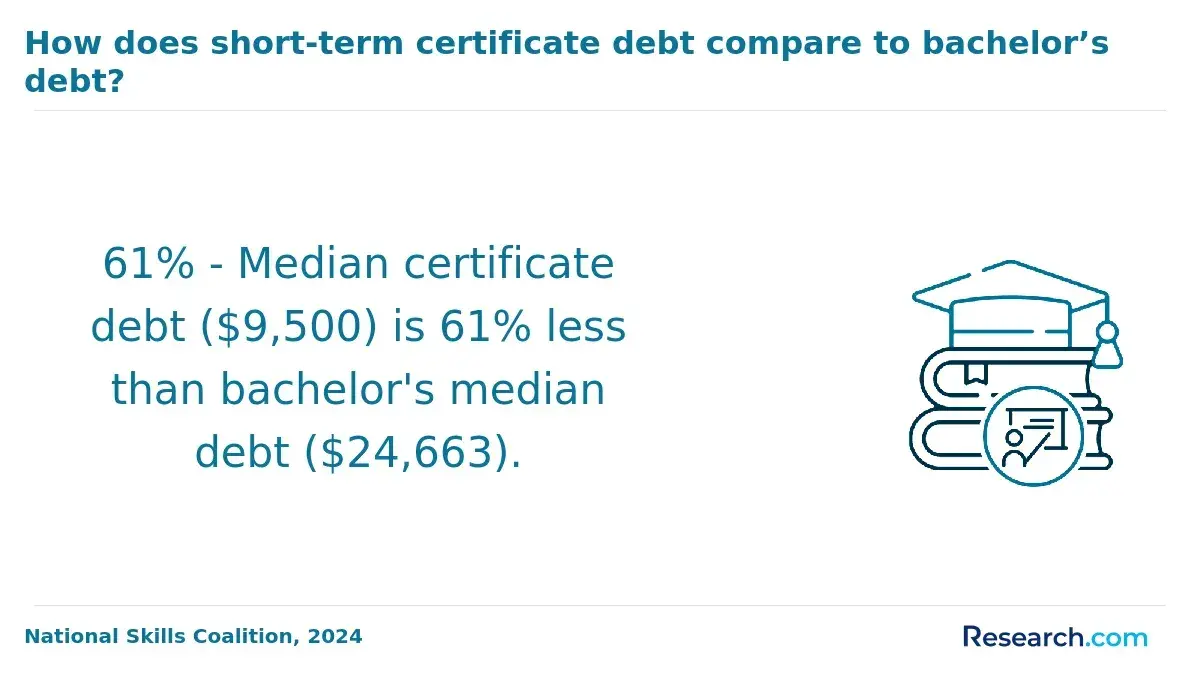
- Compare each program's estimated cost after grants and scholarships, not tuition alone. The College Board's 2024-25 average published tuition and fees for public two-year colleges was $4,050, before aid and living costs.
- Use program-level debt and earnings as a screening tool, then verify completion rates, accreditation, and licensing eligibility; an occupational salary is not a promise about your own earnings.
Top 10 Best College Programs for Low Student Debt
Business Programs
An MBA or specialized master's in accounting, finance, or analytics can make sense when a specific role requires advanced preparation or an employer pays part of the bill. For entry-level business work, a bachelor's degree, community-college transfer route, or targeted certificate may mean less debt.
Compare a master's program's full price with the experience and qualifications employers actually request. A low-cost MBA is not automatically a good investment if it requires you to leave a job or borrow heavily without a clear advancement plan.
Healthcare Programs
Healthcare master's programs range from public health and health administration to clinical degrees with tightly regulated entry requirements. If your goal is a clinical occupation, identify the required license before choosing a program; a general healthcare master's may not qualify you.
Working professionals might benefit from employer tuition assistance, while new entrants should compare lower-cost, occupation-specific associate degrees and certificates. Include placement, equipment, examination, and travel expenses when estimating debt, particularly if required practice hours make paid work difficult.
Information Technology Programs
A master's in information technology may support advancement in systems, cybersecurity, or IT management, but it is rarely the only route into the field. Applicants with experience should compare the degree's cost against employer-funded training and job-relevant certifications.
Career changers should check prerequisite requirements: foundation courses can extend both the timeline and borrowing. Favor programs that build demonstrable technical skills and offer a feasible schedule; do not assume an online format means there are no live meetings or fixed deadlines.
Computer Science Programs
A computer science master's can provide deeper study in algorithms, software systems, or artificial intelligence. It may be worthwhile for a defined specialization, but many software roles do not require a master's degree.
Students without a computing background should ask which mathematics and programming prerequisites count toward the degree and which add cost.
Compare project or research opportunities with the jobs you want, and assess likely debt against your existing qualifications - not against the salary of an experienced software developer.
Nursing Programs
Master of Science in Nursing programs commonly serve licensed nurses pursuing advanced clinical, education, or leadership preparation. Many require an active RN license and relevant experience; advanced practice also involves specialty-specific clinical hours, certification, and state licensure.
If your immediate goal is to become an RN, compare eligible associate and bachelor's nursing pathways instead. Before borrowing for graduate study, confirm clinical placement arrangements, state eligibility, employer assistance, and whether the intended role actually requires the master's credential.
Psychology Programs
A psychology master's may support research, applied work, or preparation for further study, depending on its curriculum. Do not assume it qualifies you to practice independently: psychologist licensure generally requires doctoral preparation, while some counseling or related licenses have distinct master's-level pathways.
Check the relevant state board's degree, supervised-experience, and examination rules before enrolling. Students interested in entry-level human-services work should compare the master's cost with a bachelor's degree and the specific qualifications listed in local jobs.
Education Programs
A master's in education may help a licensed teacher specialize or meet a district's advancement requirements. It does not necessarily provide initial teaching licensure; that depends on the program and state. Ask your district whether the degree changes your pay and whether tuition assistance is available.
Prospective teachers should first compare approved initial-licensure and alternative-certification routes. Budget for student teaching or other fieldwork if it limits employment, even when coursework is online.
Criminal Justice Programs
A criminal justice master's can be relevant to policy, research, or certain leadership goals, but many entry-level justice roles do not require one. Hiring and promotion may depend more heavily on agency requirements and experience.
Before borrowing, ask whether the exact position you want recognizes the degree and whether your employer offers tuition reimbursement. If you are exploring the field, a lower-cost undergraduate pathway or direct entry into an eligible occupation may provide a clearer test of fit.
Engineering Programs
An engineering master's can deepen expertise in a specialty, particularly when supported by an employer. It is not a substitute for checking whether your undergraduate preparation meets admissions prerequisites or a licensing board's rules.
For students entering engineering, compare accredited bachelor's pathways and transfer agreements before considering graduate study. Laboratory access, research requirements, and part-time course availability can change both cost and completion time; request a course plan rather than relying on an advertised timeline.
Social Work Programs
A Master of Social Work is often the relevant graduate credential for advanced social work practice, but clinical licensure also requires state-specified supervised experience and an examination. An advanced-standing MSW may shorten study for eligible graduates of accredited bachelor's social work programs; it is not available to every applicant.
Compare standard and advanced-standing costs, field-placement hours, and paid-placement availability. If your target job does not require an MSW, check whether a bachelor's-level role meets your goals with less debt.
What college programs offer the best balance of low debt and strong earnings?
There is no universally lowest-debt field. Strong candidates combine an attainable net price, a credible route into work, and borrowing that remains manageable if earnings fall below expectations. The comparison below identifies useful starting points, not a ranking of every school or a prediction of graduate earnings.
These program types differ in both price and the credential needed to enter their target occupations. Use the trade-offs to narrow your search before comparing individual schools.
| Program type | Potential low-debt advantage | Important trade-off |
| Community-college transfer pathway | May lower the cost of general education before a bachelor's degree | Credits must apply to the intended major, not merely transfer as electives |
| Career-focused associate degree or certificate | May reach an occupation without paying for a longer degree | Check licensing eligibility, placement capacity, and local openings |
| Public-university bachelor's degree | May offer broad career access at an in-state price | Extra terms and living expenses can outweigh a modest tuition difference |
| Employer-supported master's degree | Tuition assistance may reduce graduate borrowing | Confirm that the target role rewards the degree and review benefit conditions |
For each finalist, compare the school's published program-level debt and earnings information where available, including College Scorecard data. Small cohorts, suppressed results, and differences among students limit what those figures can tell you; they are a prompt for questions, not a guarantee.
How much do low-debt college programs cost after financial aid?
The amount depends on your school, aid eligibility, enrollment pattern, and time to completion. Published price is what a school charges; net price subtracts grants and scholarships, but may still include costs you pay through savings, work, or loans. Loans do not reduce the price.
Complete the FAFSA and compare each school's aid offer on the same basis. Add mandatory and program fees, books and equipment, transportation, housing, and any required clinical or campus travel.
Then estimate costs for the remaining terms - not just the first year. Students exploring what online college gives the most financial aid should compare their actual offers rather than assume the lowest advertised tuition produces the lowest net cost.
Which degrees and certificates lead to high-demand careers with manageable debt?
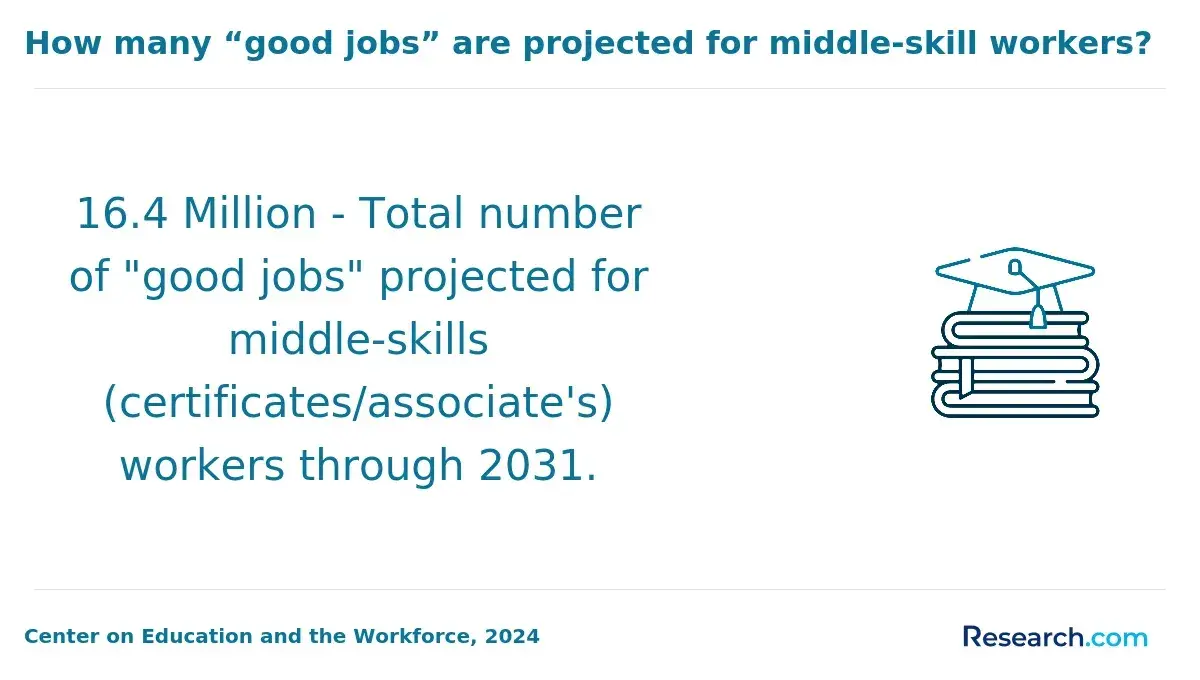
Start with the occupation's actual entry requirements. Nursing, certain allied-health roles, and some technical occupations can have defined education-to-work pathways, but required credentials and local openings vary. Computing and business offer multiple routes, making it especially important to test whether a full degree is necessary for the job you want.
A short certificate can limit tuition and time away from work when an employer recognizes its skills. It is not interchangeable with a professional license or degree: 6-week online courses with certificates describe individual short courses, not proof that a complete degree - or entry into a regulated occupation - takes six weeks. Check local job postings and speak with the relevant licensing board before paying for a credential.
How can accreditation affect the value of a low-debt college program?
Institutional accreditation matters for federal aid eligibility and can affect whether another school accepts your credits. In regulated fields, programmatic accreditation or state approval may also be required for licensure, certification, or admission to a later program. A low tuition price offers little value if the credential does not meet your intended occupation's requirements.
Verify the school's current institutional status through the U.S. Department of Education's accreditation database or the accreditor itself. For nursing, social work, engineering, teaching, and other regulated pathways, confirm the specific program's status and your state's rules. Do not assume that approval of one degree covers every program at the institution.
Should you choose an online or campus-based program to reduce student debt?
Online study may save commuting or relocation costs and help you keep working. Campus study may offer easier access to laboratories, advising, or nearby placements. Neither format is inherently cheaper: online technology fees, in-person intensives, travel, and a reduced work schedule can change the total.
Ask for a term-by-term schedule showing live attendance, deadlines, labs, clinical work, and required visits. Choose the format you can realistically complete. If flexibility helps you take a heavier course load, compare accelerated degree programs carefully: a faster schedule may reduce living costs, but it can be difficult to maintain alongside full-time work.
What admission requirements apply to affordable degree and certificate programs?
Requirements depend on the credential and the specific program. A college may admit undergraduate students broadly while its nursing, engineering, or graduate programs require prerequisites, a minimum GPA, tests, experience, or separate approval. Some career certificates also require placement testing, background checks, immunizations, or eligibility for clinical sites.
Before paying an application fee or taking prerequisite courses, request the current requirements for your exact program and applicant category.
Ask which courses you still need, whether they are included in the quoted price, and when selective program admission decisions occur. General college admission is not the same as admission to a capped or licensed-profession program.
How long do low-debt college programs take to complete?
Certificates may require fewer courses than degrees, while associate, bachelor's, and master's programs have different credit and experiential requirements. The time you personally need depends on accepted transfer credits, prerequisites, enrollment intensity, course availability, and placements or capstones. A shorter program is not cheaper if it leads to a credential you cannot use for your goal.
Ask the school for a written degree audit and a schedule of remaining courses. If you already have credits, confirm which meet major requirements and how many credits must be earned at the new institution. An advertised accelerated timeline may assume prior credits or full-time study; it is not every student's completion date.
What careers, salaries, and job outlooks follow low-debt college programs?
Compare occupations only after confirming the education each requires. The U.S. Bureau of Labor Statistics reports a May 2024 median annual wage of $93,600 for registered nurses. That is an occupational figure across workers, not the expected pay of a new nursing graduate; RN entry also requires an approved education pathway and licensure.
Likewise, software development may offer strong earnings potential, but a computer science master's is not automatically necessary for entry. Look at local postings for required skills and experience, then compare them with the program's curriculum.
Advanced clinical, counseling, and research careers can involve additional supervised practice, licensing, or doctoral study. If considering doctoral programs without dissertation, verify that the particular degree meets your professional goal rather than assuming its format changes licensing requirements.
How can you compare licensing, certification, and program quality before enrolling?
Begin with the job you want, not a program's marketing. A relevant license may be mandatory, a certification may be preferred by employers, and neither is automatically awarded with a degree. Use the following checks to identify expensive mismatches before committing.
- Confirm the occupation's education and examination rules with the licensing board or credentialing body in the state where you plan to work.
- Verify institutional accreditation, any required program accreditation or approval, and the program's placement or fieldwork arrangements.
- Request a personalized cost and completion plan that includes accepted transfer credit, prerequisites, required fees, and remaining terms.
- Compare available program-level debt, completion, examination, and employment information, noting missing or small-cohort data.
Treat vague claims of guaranteed jobs, unusually quick licensure, or "low debt" without a full cost estimate as red flags. Get material answers in writing before making a deposit.
Other Things You Should Know About
Usually it requires less study, but compare total fees and whether employers or licensing boards accept it. A certificate that does not qualify you for the intended job can be a costly detour.
Possibly, but it depends on aid, living costs, and your later school. Confirm in writing that courses will satisfy requirements in your intended bachelor's major.
Not by itself. Occupational medians include experienced workers and do not predict your starting pay. Compare your likely borrowing with realistic entry-level opportunities and any additional credential requirements.
They may be, but eligibility is specific to the school and program. Verify aid eligibility with the school and licensure eligibility with the board in the state where you intend to practice.
References
- What Financial Aid Offers Don't Tell You About the Cost of College | U.S. GAO https://www.gao.gov/blog/what-financial-aid-offers-dont-tell-you-about-cost-college
- Federal Versus Private Loans | studentaid.gov https://studentaid.gov/understand-aid/types/loans/federal-vs-private
- Community Colleges and Student Debt | Community College Research Center https://ccrc.tc.columbia.edu/publications/community-colleges-and-student-debt-fact-sheet.html
- Dept. of Education's College Scorecard shows where student loans pay off... and where they don't | Brookings https://www.brookings.edu/articles/ed-depts-college-scorecard-shows-where-student-loans-pay-off-and-where-they-dont/
- The Effects of For-Profit Colleges on Student Outcomes and Debt | NBER https://www.nber.org/digest/dec18/effects-profit-colleges-student-outcomes-and-debt
- How New Federal Student Loan Limits Could Affect Borrowers | Urban Institute https://www.urban.org/urban-wire/how-new-federal-student-loan-limits-could-affect-borrowers
- The Student Loan Default Divide: Racial Inequities Play a Role | pew.org https://www.pew.org/en/research-and-analysis/reports/2024/12/the-student-loan-default-divide-racial-inequities-play-a-role
- 10 Key Facts about Student Debt in the United States | Peterson Foundation https://www.pgpf.org/article/10-key-facts-about-student-debt-in-the-united-states/
- Takeaways from New Program-Level Data on the College Scorecard - The Institute for College Access & Success https://ticas.org/accountability/data-evidence-and-information/takeaways-from-new-program-level-data-on-the-college-scorecard/