2027 Best Online College Degrees With Short Courses

Co-Founder and Chief Data Scientist
A short online course can fit around work - but will a degree built from short courses actually help you reach your goal? The answer depends on the field, the full program timeline, and any in-person requirements. The stakes are substantial: the U.S. Bureau of Labor Statistics (BLS) reports a 2024 median annual wage of $133,080 for software developers, an occupation for which a bachelor's degree is typically the entry-level credential. This guide compares ten master's-degree fields, explains what short courses can and cannot accelerate, and helps you check costs, accreditation, and career fit before enrolling.
Key Things You Should Know
- Best fit: Business, IT, and some computer science master's programs may lend themselves to short online terms; clinical, teaching, and licensure-focused fields often have fixed placement requirements.
- Course length is not degree length: A short class still counts toward a larger set of credits, and prerequisites, course sequencing, and enrollment intensity determine the finish date.
- Check the occupation, not just the credential: BLS reports a 2024 median annual wage of $93,600 for registered nurses, but an online master's degree does not replace an RN license or qualify every graduate for advanced practice.
Top 10 Best Online College Degrees With Short Courses
Business Programs
Online MBA and specialized master's degrees in accounting, finance, analytics, or management can suit professionals who want short, sequential courses alongside work. Compare whether a program requires foundation classes, team meetings, a capstone, or a residency; these can affect the schedule more than individual course length. An MBA offers broad management study, while a specialized degree may better fit a defined technical goal. Neither guarantees a promotion. Before enrolling, confirm that the specific online program offers short terms and that its total course sequence fits your available study time.
Healthcare Programs
Master's degrees in public health, healthcare administration, and health informatics serve different goals: population health, organizational leadership, and health-data systems. Online coursework may be offered in short terms, but an internship, practicum, or capstone can run on a longer schedule. Choose based on the work you want to do, not the broad "healthcare" label. A healthcare administration degree, for example, is not a clinical license. Check placement requirements and whether the program's accreditation or curriculum matters to your intended employer or next credential.
Information Technology Programs
Online master's programs in IT, cybersecurity, and information systems can work well when classes are organized into focused modules. They often emphasize infrastructure, risk, governance, and applied projects rather than the deeper algorithms found in some computer science degrees. Ask whether labs use remotely accessible tools, whether classes have live sessions, and how often required courses run. For a narrowly defined skill gap, a certificate or industry certification may cost less and take less time than a master's; compare that alternative against the roles you want.
Computer Science Programs
An online computer science master's may cover algorithms, software engineering, artificial intelligence, or data systems. Short course terms can make progress feel steady, but intensive programming assignments may be difficult to manage alongside full-time work. Career changers should check for required undergraduate coursework or bridge classes before trusting an advertised timeline. A project-based degree may suit applied development goals; a research or thesis pathway may better serve someone considering doctoral study. Verify that required courses - not merely electives - are available online in the advertised format.
Nursing Programs
Online MSN programs may prepare licensed nurses for leadership, education, informatics, or an advanced practice pathway. Admission commonly requires an RN license, and some tracks require clinical hours, specific prior coursework, or experience. Short online classes do not shorten supervised clinical requirements or make placements virtual. Advanced practice eligibility also depends on the track, certification rules, and state licensure requirements. Compare RN-to-MSN, BSN-to-MSN, and other pathways only if you meet their entry conditions, and request written details about who arranges local clinical placements.
Psychology Programs
Online psychology master's programs may focus on general psychology, research, organizational psychology, or preparation for further study. A general psychology degree is not automatically a counseling or clinical-psychology license pathway. If your goal is therapy, check the exact program type, state licensing board requirements, supervised-practice hours, and any in-person training before considering course length. Students interested primarily in research should compare methods training and thesis options; those seeking workplace applications may prefer an applied concentration.
Education Programs
Online M. Ed. and related master's degrees may focus on curriculum, educational leadership, special education, or teacher preparation. Programs designed for practicing teachers can differ substantially from initial-licensure pathways. Short academic terms cannot eliminate required student teaching, fieldwork, or state examinations. Check whether a program accepts applicants without a teaching license and whether it meets the requirements of the state where you intend to work. If you want advancement rather than a new license, compare the degree's focus with your district's applicable requirements.
Criminal Justice Programs
An online master's in criminal justice, criminology, or public safety can support study in policy, leadership, research, or emergency management. Short courses may suit employed professionals, but some programs include a substantial research project or capstone. Match the curriculum to your target role: a policy-oriented degree differs from training for policing or a specialized federal position. Hiring, academy, background-check, and experience requirements are separate from the degree. Ask whether the credential is necessary for your goal before taking on graduate-school costs.
Engineering Programs
Online engineering master's degrees can offer advanced study in areas such as electrical, mechanical, or systems engineering. Courses may use short terms, yet technical prerequisites, laboratory access, and limited course sequencing can extend completion time. Some programs target working engineers, while others expect a closely related bachelor's degree. An engineering master's does not itself confer a professional engineer license; state rules govern that credential. Confirm how labs are delivered and whether the program supports the technical specialty you need.
Social Work Programs
Online MSW programs combine academic coursework with supervised field education. Short online classes may help with scheduling, but field placements generally require substantial time at an approved site. Applicants with a qualifying bachelor's in social work may be eligible for an advanced-standing pathway; others should not assume the same completion timeline. If clinical practice is the goal, verify program accreditation, state-specific licensing requirements, and post-degree supervision. Ask who finds and approves placements before enrolling, particularly if you live far from the school.
What Are Online College Degrees With Short Courses?
An online college degree with short courses is a full degree program that delivers at least some required classes in shorter academic terms. It is not a degree earned by taking a single brief course. Schools may also offer nondegree short courses or career certificates, but those count toward a degree only when the institution explicitly allows it.
Because course calendars differ by institution and program, a field's appearance in this guide does not establish that every online master's in that field uses short terms. The useful comparison is the complete path: required credits, available starts, course sequence, weekly workload, experiential requirements, and the date you could realistically finish.
Which Online Degrees Offer Short Courses and Career Certificates?
Business, IT, computer science, and some healthcare administration degrees are often worth investigating for modular coursework or stackable certificates. Education, nursing, and social work may also offer short online classes, but required fieldwork can limit how much scheduling flexibility the overall program provides. Certificate availability and degree applicability must be confirmed for each institution.
The comparison below separates the appeal of focused coursework from the requirement most likely to affect your overall timeline.
| Master's-degree family | Potential short-course appeal | Key constraint to check |
| Business or IT | Focused subjects can support term-by-term study | Whether every required course runs often enough |
| Computer science or engineering | Specialized technical coursework | Prerequisites, labs, and course sequencing |
| Nursing, education, or social work | Online academic classes | Clinical, teaching, or field-placement schedules |
| Healthcare, psychology, or criminal justice | Focused applied or research topics | Capstones, internships, and career-specific eligibility |
Ask for the catalog's certificate-to-degree policy if you hope to stack credentials. A certificate bearing the same subject name as a master's concentration does not necessarily reduce the master's remaining credits.
Are Online Degrees With Short Courses Accredited?
Short courses do not have a separate form of degree accreditation. First, confirm that the degree-granting institution holds recognized institutional accreditation. Then check whether your intended field calls for specialized programmatic accreditation or approval - particularly if you plan to pursue nursing, social work, teaching, counseling, or another regulated occupation.
Accreditation alone does not establish that an online program meets your state's license requirements. Confirm the applicable program status and eligibility with the accreditor, institution, and state licensing authority before paying a deposit. Be cautious if a school describes itself as "accredited" but cannot identify the accrediting body or clarify which program and campus or online pathway its claim covers.
What Do You Learn in Online Degree and Short-Course Programs?
Coursework depends on the degree: an MBA might combine finance and operations; an MS in cybersecurity might cover network defense and risk; an MSW combines social-work theory with field education. Most master's programs also require advanced work in the specialty, and some include electives, a capstone, thesis, portfolio, internship, or supervised practice.
A short term changes the pace of instruction, not necessarily the material covered. Before enrolling, review sample syllabi and ask how many hours of reading, projects, and scheduled meetings each class requires. Taking one intensive class at a time may be manageable; taking several simultaneously may undermine the flexibility you wanted.
What Are the Admission Requirements for Online Degree Programs?
For the master's fields compared here, applicants generally need a bachelor's degree. Additional requirements vary: computer science and engineering may require technical prerequisites; nursing tracks may require an RN license; and advanced-standing MSW admission generally requires a qualifying social-work background. Programs may also review transcripts, recommendations, statements, relevant experience, or a portfolio. Confirm any published GPA or test policy for the specific graduate program, not just the university.
If upfront application costs matter, a comparison of online colleges no application fee can help you find places to investigate. Check the graduate program's current fee separately: an undergraduate or institution-wide listing may not apply to your application.
How Long Do Online Degrees and Short Courses Take?
A short course may last only part of a conventional semester, but completing a degree requires finishing every applicable course and experiential requirement. A master's may take roughly one to several years depending on the program and enrollment pace; a stand-alone short course can take far less time but does not award the same credential. Clinical hours, student teaching, field placements, or a thesis may follow a schedule that does not match the online course calendar.
For a realistic estimate, ask an advisor to map your remaining requirements by term, including prerequisites and the next scheduled offering of each required class. Request separate timelines for part-time and full-time study. If a school advertises a fast finish, ask what prior degree, accepted credits, license, or advanced-standing eligibility that estimate assumes.
How Much Do Online Degrees and Short Courses Cost?
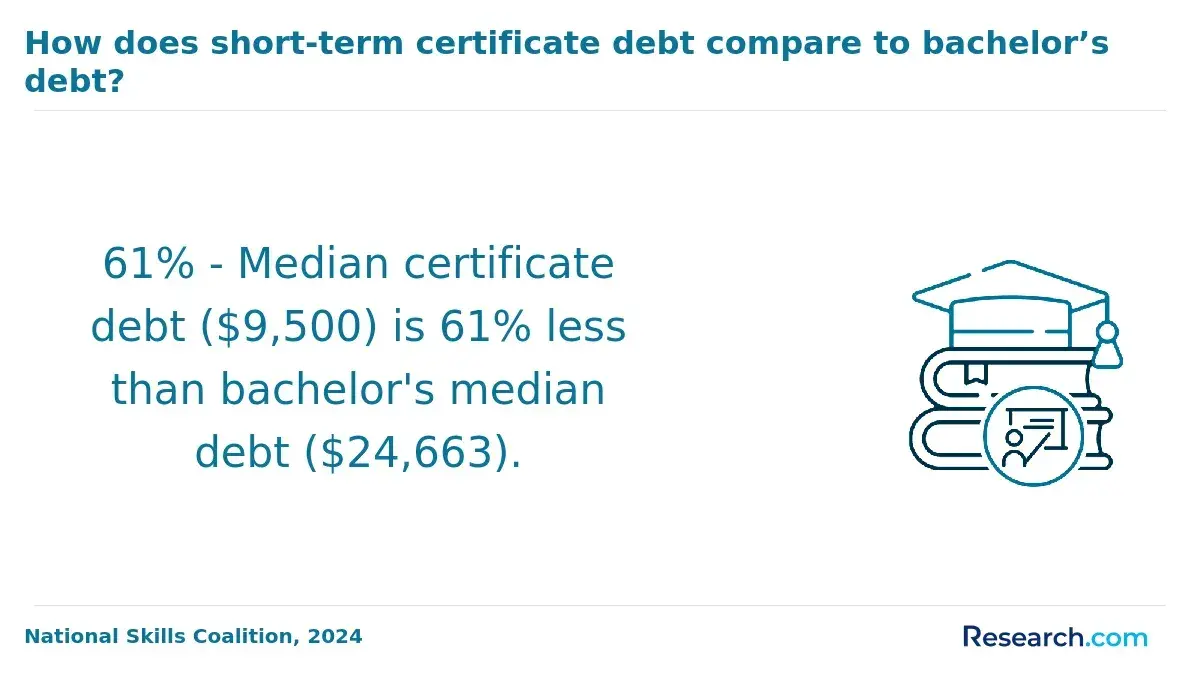
There is no single price for an online degree with short courses. Schools may charge per credit or per term, and a shorter class does not necessarily have lower tuition than a semester-length class carrying the same credits. Compare the estimated total to graduate, not just the price of one course. A guide to the lowest cost online bachelor's degree may help readers who have not yet earned the undergraduate credential required for most of the master's options above; its prices should not be used as graduate-cost estimates.
Request a written estimate that includes these charges and the costs tied to your particular pathway:
- Tuition for all remaining required credits, including any prerequisite courses.
- Mandatory technology, program, laboratory, or graduation fees.
- Books, equipment, exam fees, and travel or placement-related expenses.
- Expected out-of-pocket cost after confirmed grants, scholarships, or employer assistance.
Ask how accepted transfer credit would apply to required courses and whether financial aid is available for your enrollment status. For eligible students, federal aid depends on the institution and program as well as individual circumstances; a short course's duration alone does not establish eligibility.
What Jobs and Salaries Can Online Degrees With Short Courses Lead To?
These degrees can relate to work in management, software development, cybersecurity, nursing leadership, education, or social services, but the connection varies by role. BLS occupational wages describe people employed in an occupation - not the typical earnings of graduates from a particular online program. Some roles require a license, a particular prior degree, supervised practice, or substantial experience in addition to a master's.
Evaluate value by comparing the total program cost and time away from other priorities with the requirements of jobs you actually want. If the target job does not require a master's, a shorter certificate, certification, or work project may be a better first investment. Readers comparing a bachelor's starting point can also review most affordable online colleges, while checking each school's current aid eligibility and full cost independently.
How Do You Choose a Reputable Online Degree Program?
A reputable choice is one that fits your career goal and provides a workable route through every required course. A list of most reputable online universities can be a starting point, but the applicable accreditation, online delivery, and short-term calendar still need to be checked for the exact degree you want.
Use this sequence to compare finalists before you apply:
- Confirm institutional accreditation, relevant program approval, and state licensure eligibility where applicable.
- Obtain the degree plan and academic calendar; identify the length and frequency of required courses, not just electives.
- Ask about live meetings, campus visits, labs, placements, and who arranges local experiential work.
- Request a personalized credit evaluation, completion timeline, and total-cost estimate in writing.
- Compare that plan with job requirements and with a certificate or other lower-commitment alternative.
Red flags include an advertised finish date that assumes undisclosed prior credits, an "online" label that obscures required travel, and claims that a degree alone leads to licensure or a particular salary. If a school cannot resolve those questions clearly, keep comparing.
Other Things You Should Know About
Not necessarily. They may cover comparable material in less time, increasing the weekly workload. Review the syllabus before taking multiple courses at once.
Some programs allow online academic coursework, but others require labs, residencies, clinical placements, student teaching, or fieldwork. Verify the exact program's requirements and locations.
Only if the degree-granting school accepts it and applies it to specific requirements. Get that determination in writing before relying on the certificate to shorten your degree.
Ask for a personalized, term-by-term degree plan showing required courses, in-person components, estimated total cost, and your likely completion date.
References
- An Overview of Accreditation of Higher Education in the United States | Congress.gov | Library of Congress https://www.congress.gov/crs-product/R43826
- College Accreditation | U.S. Department of Education http://www.ed.gov/laws-and-policy/higher-education-laws-and-policy/college-accreditation
- Cost of Attendance (Budget) | 2025-2026 Federal Student Aid Handbook https://fsapartners.ed.gov/knowledge-center/fsa-handbook/2025-2026/vol3/ch2-cost-attendance-budget
- Tuition & Expenses | Student Financial Services https://financialaid.wsu.edu/tuition-and-expenses/
- State Authorization - Office of Academic Compliance https://academic-compliance.provost.virginia.edu/state-authorization
- Academic Policies and Requirements for Graduate Students | utk.edu https://catalog.utk.edu/content.php
- Transfer Credits - Undergraduate - Policies - Campus Offices https://campus.collegeforcreativestudies.edu/policy/transfer-credits-undergraduate/
- Credit for What You Know | Online https://cps.unh.edu/online/apply-register/transfer-credit-evaluation/credit-what-you-know
- Credit for Prior Learning | University of Arizona Catalog https://catalog.arizona.edu/policy/courses-credit/credit/credit-prior-learning
- How Many Hours of Work Per Online Course Credit | ASU Online https://asuonline.asu.edu/newsroom/online-learning-tips/discover-weekly-number-hours-online-students-study/