2027 How Scholarships Work

Co-Founder and Chief Data Scientist
Scholarships can lower college costs without creating debt, but the rules are not always obvious. College Board's 2024 Trends report lists the average 2024-25 public four-year in-state student budget at $24,920, making even partial awards meaningful. This guide is for high school students, college students, adult learners, and parents who want to understand how scholarships are awarded, paid, renewed, taxed, and compared. You will learn how to use scholarships strategically so you can reduce borrowing, avoid scams, and choose funding options that fit your education plan.
Key Things You Should Know
- Scholarships are gift aid that usually does not need to be repaid, but each award can have rules for eligibility, enrollment status, GPA, major, citizenship, financial need, or renewal.
- Scholarship funds may cover tuition, fees, books, supplies, housing, meals, transportation, or other costs, but the tax treatment can differ depending on how the money is used.
- For 2024-25, the maximum federal Pell Grant is $7,395, so combining need-based grants with private, institutional, and local scholarships can materially reduce the amount a student must pay or borrow.
How do scholarships work and what college costs can they cover?
Scholarships are financial awards given to students to help pay for education. Unlike student loans, they generally do not require repayment as long as the student follows the award rules, such as attending an eligible school, enrolling in enough credits, or maintaining required academic progress.
A scholarship may be awarded by a college, foundation, employer, nonprofit, professional association, religious organization, local club, state agency, or private donor. Some awards are based on need, some on merit, and many use a combination of academic, personal, demographic, community, or career-based factors.
The table below shows common college costs and how scholarships often apply to them. This matters because an award that looks large may be less flexible if it can only be used for certain charges.
| College cost | Can scholarships cover it? | What to check |
| Tuition | Often yes | Whether the award is limited to tuition-only charges |
| Mandatory fees | Often yes | Whether technology, lab, health, or program fees count |
| Books and supplies | Sometimes | Whether receipts or course-required materials are needed |
| Housing and meals | Sometimes | Whether the award allows room and board expenses |
| Transportation and personal expenses | Less often | Whether the scholarship permits indirect cost-of-attendance items |
| Online course fees | Sometimes | Whether online enrollment is eligible under the scholarship rules |
Scholarships can be especially useful when the student is choosing between programs with different prices and timelines. For example, a student comparing traditional graduate study with one-year online master's programs should look not only at the award amount, but also at whether the scholarship can be used for accelerated terms, online fees, or year-round enrollment.
The practical takeaway is simple: read the award terms before counting the money in your plan. A $2,000 tuition-only scholarship and a $2,000 flexible scholarship may have very different value if your largest gap is housing, books, or transportation.
What are the main types of scholarships and how do they differ?
The main types of scholarships differ by who funds them, what they reward, and how competitive they are. Understanding the category helps you estimate your chances and decide where to spend your application time.
The table below compares common scholarship types. Use it to build a balanced list instead of applying only to the biggest, most competitive national awards.
| Scholarship type | Typical basis for selection | Best fit | Common limitation |
| Merit-based | Grades, test scores, leadership, talent, or achievement | Students with strong academic, artistic, athletic, or service records | May require a minimum GPA for renewal |
| Need-based | Financial need shown through FAFSA, CSS Profile, or school forms | Students with a demonstrated gap between cost and ability to pay | May change if family income or aid package changes |
| Institutional | Admission profile, major, residency, need, or department criteria | Students applying to or enrolled at a specific college | Usually cannot be transferred to another school |
| Private or local | Community service, essay, identity, employer connection, field of study, or local residence | Students willing to apply to smaller targeted awards | Deadlines and documentation vary widely |
| Program-specific | Major, career goal, credential level, or workforce shortage area | Students with a clear academic or career path | May require enrollment in an approved program |
| Employer or military-affiliated | Employment, dependent status, service connection, or workforce training | Working adults, veterans, service members, and dependents | May require continued employment or service-related documentation |
Large national scholarships can be valuable, but smaller local awards often have fewer applicants and more specific eligibility rules. A strong strategy usually includes institutional scholarships, local awards, field-specific opportunities, and renewable awards that reduce costs over more than one term.
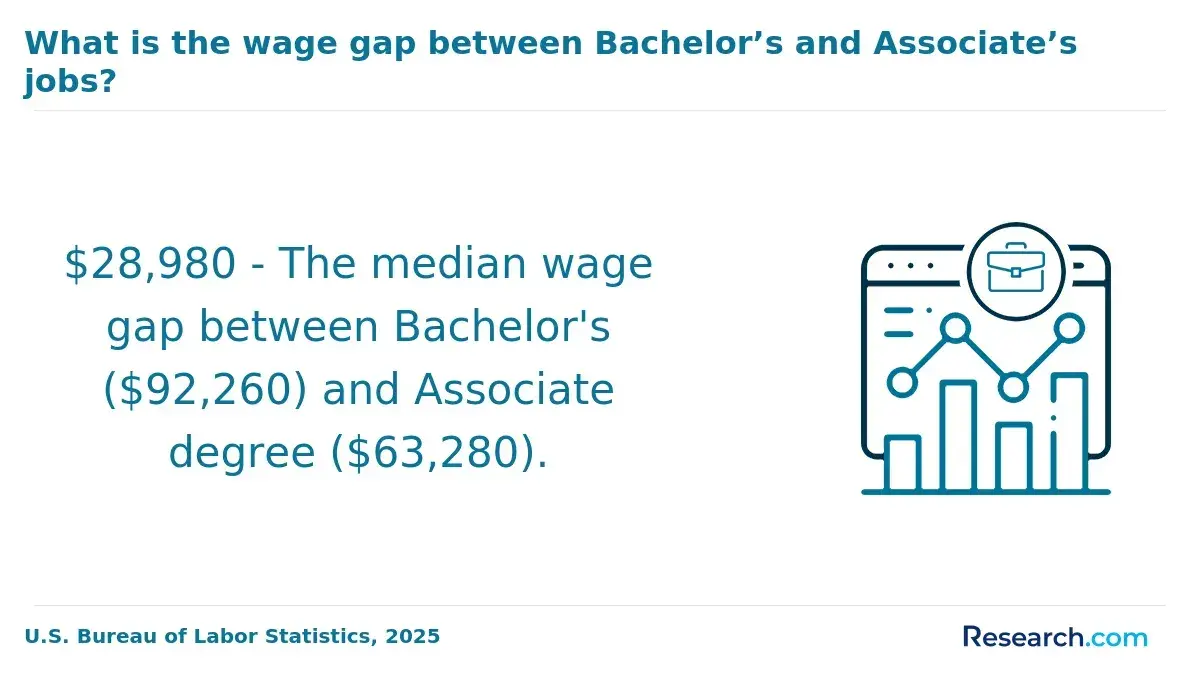
Students should also match scholarships to the credential they are pursuing. Someone comparing bachelor's programs and long-term earnings may find it helpful to review 4-year degrees that pay well before prioritizing major-specific scholarships, because some awards are tied to fields with clear workforce demand.
How does the scholarship application process work from search to award?
The scholarship process usually moves from search to eligibility screening, application, committee review, notification, verification, and payment. The steps are simple, but the timing matters because many scholarship deadlines fall months before the academic year begins.
A smart application process reduces wasted effort and helps you avoid missed deadlines. Use the following sequence to organize your search and improve the quality of each submission.
- Build a scholarship calendar at least six to nine months before the term begins, including school priority deadlines, FAFSA dates, private scholarship deadlines, and renewal dates.
- Screen each opportunity for eligibility before writing anything, including citizenship or residency rules, enrollment level, major, GPA, financial need, school type, and required documents.
- Create a reusable document folder with transcripts, resume, activity list, recommendation contacts, financial aid documents, proof of enrollment, and polished short essays.
- Customize each essay to the sponsor's mission, selection criteria, and prompt instead of submitting the same generic statement everywhere.
- Ask recommenders early and provide them with your resume, deadline, scholarship purpose, and submission instructions.
- Submit before the deadline, save confirmation emails, and track whether the sponsor needs additional verification after selection.
- If selected, notify your college financial aid office and ask how the award will affect your bill and aid package.
Committees commonly look for fit, credibility, and evidence. A focused application that directly answers the prompt, shows specific achievements, and follows instructions often performs better than a longer application filled with unrelated accomplishments.
One current trend is the use of AI writing tools. They can help brainstorm or proofread, but applicants should not let AI produce generic essays that sound detached from their actual experience. Some sponsors may also use plagiarism or authenticity checks, so the safest approach is to write in your own voice and use technology only as a support tool.
How do scholarships interact with financial aid, grants, and student loans?
Scholarships interact with financial aid because colleges must keep a student's total aid within the school's official cost of attendance. That means an outside scholarship can reduce a remaining balance, but it can also change parts of an aid package depending on school policy and federal rules.
Federal Student Aid lists the maximum Pell Grant for 2024-25 at $7,395. For students with high financial need, the best outcome is often a package where scholarships reduce unmet need or loans first, but each college decides how outside awards are applied within regulatory limits.
The table below explains how scholarships compare with other common forms of aid. This helps you see which funds reduce debt most directly and which create future repayment obligations.
| Aid type | Repayment required? | Typical source | How it affects planning |
| Scholarship | Usually no | College, private sponsor, nonprofit, employer, state, or community group | Can reduce out-of-pocket cost, loans, or unmet need depending on policy |
| Grant | Usually no | Federal, state, or institutional aid programs | Often based on financial need and may depend on FAFSA information |
| Work-study | No, but must be earned | Federal or institutional employment program | Provides wages over time rather than an upfront bill credit |
| Student loan | Yes | Federal government or private lender | Creates repayment obligations and may accrue interest |
| Tuition payment plan | Not a loan in the traditional sense | College or payment processor | Spreads payments across a term but does not reduce the total price |
The most important concept is scholarship displacement, which happens when a college reduces institutional aid after a student receives an outside scholarship. Some schools reduce loans first, which benefits the student; others may reduce grants after certain thresholds. State rules and institutional policies vary, so students should ask the financial aid office for the exact order of aid adjustment.
When comparing programs, do not look only at the scholarship amount. Compare the final net price after grants, scholarships, required fees, living costs, and borrowing. A smaller scholarship at a lower-cost school may be worth more than a larger scholarship at a higher-cost school.
What eligibility criteria do scholarship committees typically use to select winners?
Scholarship committees typically select winners by comparing eligibility, application quality, and fit with the sponsor's purpose. Some awards use a scoring rubric, while others rely on committee discussion after screening out incomplete or ineligible applications.
The most common criteria fall into a few broad categories. Knowing these factors helps you decide which awards are realistic and how to position your application.
- Academic performance: GPA, course rigor, class rank, academic honors, or improvement over time.
- Financial need: FAFSA information, household income, special circumstances, or a school-certified financial aid gap.
- Leadership and service: Volunteer work, student organizations, work responsibilities, caregiving, civic involvement, or community impact.
- Major or career goal: Intended field, workforce shortage area, professional commitment, or career essay.
- Identity or affiliation: Residency, heritage, first-generation status, military connection, employer affiliation, union membership, religious community, or local membership.
- Talent or achievement: Athletics, arts, research, entrepreneurship, debate, technical skills, or other documented accomplishments.
- Application strength: Essay quality, recommendation letters, completeness, authenticity, and ability to follow instructions.
Applicants often underestimate how much instructions matter. A strong student can lose consideration by missing a transcript, exceeding a word limit, submitting the wrong file type, or failing to answer the actual essay prompt.
Common red flags include scholarships that require a fee to apply, ask for bank login credentials, guarantee an award, pressure you with unusual urgency, or use vague sponsor information. Legitimate scholarship sponsors may request personal information for verification, but they should clearly explain who they are, why the information is needed, and how the award will be paid.
How does scholarship money get paid out and applied to your college bill?
Scholarship money is usually paid either to the college, to the student, or jointly to both. The payment method affects how quickly the award reduces your bill and whether you need to document expenses.
Many institutional scholarships appear directly as credits on the student account. Private scholarships often send a check to the college after the student provides enrollment verification, student ID, and financial aid office information. Some sponsors pay the student directly, especially for smaller awards or reimbursement-style scholarships.
The table below summarizes common payout methods. Understanding the method helps you avoid cash-flow problems at the start of the term.
| Payout method | How it usually works | Planning issue |
| Direct school payment | The sponsor sends funds to the college and the award appears on the student account | Processing can take time, so confirm when the credit will post |
| Co-payable check | The check is made out to both the student and the college | The student may need to endorse it before the school applies it |
| Student payment | The sponsor sends funds directly to the student | The student may need to keep receipts and handle tax reporting correctly |
| Reimbursement | The student pays first and submits proof of eligible expenses | This can create upfront cost pressure if the student lacks cash reserves |
| Term-based disbursement | The award is split across semesters, quarters, or payment periods | The full annual amount may not be available at once |
If scholarship funds exceed direct charges, the college may issue a refund after tuition, fees, housing, or other eligible institutional charges are paid. A refund is not "extra free money" in every sense; it may need to be used for education costs, may affect aid calculations, and may have tax implications depending on the expense.
Before the bill is due, students should confirm three things with the financial aid office: whether the award has been received, how it will be applied, and whether it changes loans, grants, work-study, or unmet need. This is especially important for outside scholarships that arrive after the initial aid package is issued.
How do renewable scholarships work and what GPA or progress is required?
Renewable scholarships provide funding for more than one term or academic year if the student continues to meet requirements. They can be more valuable than one-time awards because they make future costs more predictable.
Renewal rules vary, but most are built around academic performance and enrollment progress. Students should review the renewal contract before accepting the award, not after a GPA problem or course withdrawal occurs.
- Minimum GPA: Many renewable awards require a cumulative GPA or term GPA, and some programs set higher standards for specific majors or honors scholarships.
- Satisfactory academic progress: Colleges often require students to complete a certain share of attempted credits and stay on track toward a credential.
- Enrollment intensity: Some awards require full-time enrollment, while others allow part-time study with prorated funding.
- Major or program continuity: A scholarship tied to nursing, teaching, engineering, business, or another field may end if the student changes majors.
- Annual forms: Students may need to submit FAFSA updates, renewal applications, transcripts, thank-you letters, or service documentation.
- Conduct or participation rules: Athletic, leadership, honors, or service scholarships may require team participation, meetings, mentoring, or campus engagement.
Students in accelerated or flexible programs should ask whether the scholarship covers summer courses, compressed terms, competency-based courses, or nonstandard academic calendars. This is also relevant for doctoral students exploring alternatives such as the easiest PhD without dissertation, because program format and academic progress rules can affect institutional aid eligibility.
The biggest mistake is assuming renewal is automatic. Put renewal requirements on your calendar, meet with an academic advisor before dropping courses, and contact the scholarship office immediately if illness, family responsibility, military service, or other circumstances could affect your status.
How can students effectively find and compare reputable scholarship opportunities?
Students can find scholarships through college financial aid offices, academic departments, high school counselors, state grant agencies, employers, professional associations, local foundations, libraries, community organizations, and reputable scholarship databases. The best search strategy combines broad databases with highly specific local and program-based opportunities.
Use the following steps to compare opportunities efficiently. The goal is not to apply to every scholarship, but to prioritize awards where you meet the criteria and can submit a strong application.
- Start with your college's scholarship portal because institutional awards are often matched to your admission file, major, residency, or FAFSA information.
- Search locally through community foundations, civic groups, religious organizations, credit unions, chambers of commerce, and employer benefit programs.
- Use specific keywords that match your profile, such as major, county, career goal, first-generation status, military affiliation, disability status, transfer status, or adult learner status.
- Rank scholarships by eligibility fit, award amount, renewal potential, required effort, deadline, and likelihood of competition.
- Verify the sponsor by checking contact information, past winners, official organization pages, privacy terms, and whether the award requires a fee.
- Track every application in a spreadsheet with deadline, documents, submission status, notification date, and renewal rules.
The table below can help you compare scholarships without being distracted by award size alone. A smaller renewable or local award can sometimes be more valuable than a large one-time award with extremely broad competition.
| Comparison factor | Why it matters | Better signal |
| Eligibility fit | Broad awards attract more applicants | You meet every required criterion, not just some preferences |
| Renewability | Multi-year awards can reduce future borrowing | Clear renewal rules and realistic GPA expectations |
| Allowed expenses | Some awards are tuition-only | Flexible use for required educational costs |
| Application effort | Time is limited during admissions season | Effort matches award size and probability |
| Sponsor credibility | Scams target students seeking aid | No application fee, clear sponsor identity, and transparent terms |
Career-focused students should also search by credential level, not just degree level. For example, applicants considering shorter workforce pathways can compare scholarships for community college, apprenticeship-related study, and certificate programs that pay well to find funding aligned with a faster employment goal.
How do online, part-time, or nontraditional programs affect scholarship options?
Online, part-time, transfer, adult, and nontraditional students can qualify for scholarships, but eligibility rules may be narrower. The most important variables are accreditation, enrollment intensity, program approval, credit load, degree level, and whether the scholarship requires campus participation.
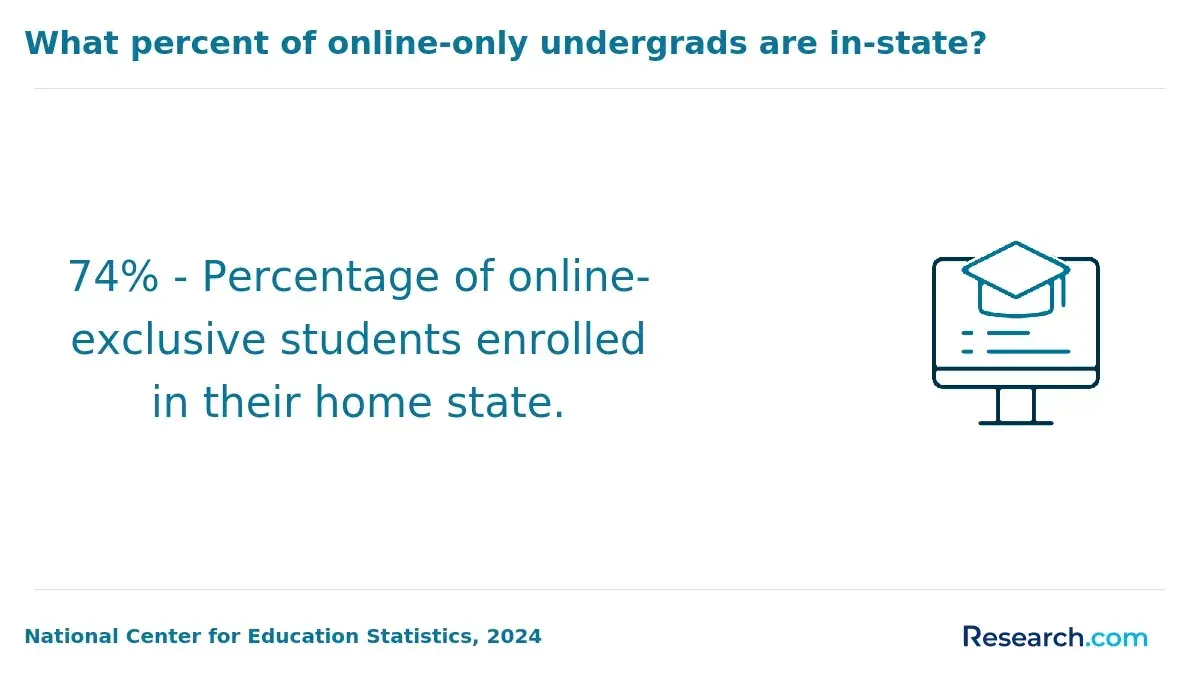
Online learning has become a normal part of U.S. higher education, but scholarship policies have not always caught up evenly. Some awards treat online and campus students the same if the institution is accredited and the program is Title IV eligible, while others exclude online-only programs, nondegree study, or less-than-half-time enrollment.
The table below shows how different enrollment choices can affect scholarship options. Use it before assuming that a scholarship will follow you into a flexible format.
| Student or program type | Scholarship impact | What to verify |
| Fully online degree student | Often eligible for institutional or private awards if the program is approved | Accreditation, state authorization, and whether online students can receive the same awards |
| Part-time student | May receive prorated awards or be excluded from full-time scholarships | Minimum credit requirement and payment adjustment |
| Transfer student | May qualify for transfer-specific awards but miss first-year scholarships | Transfer GPA rules, credit minimums, and priority deadlines |
| Adult learner | May qualify for employer, workforce, state, or return-to-college scholarships | Age, work history, prior credits, and degree-completion requirements |
| Nondegree or certificate student | Eligibility varies widely | Whether the program is credit-bearing, approved, and aid-eligible |
Students pursuing flexible lower-division pathways should ask whether scholarships cover transfer-oriented programs, technical programs, and online associate degree programs. This is important because some scholarships require enrollment in a degree-granting program, while others are limited to bachelor's-level study.
Nontraditional students should also ask about employer tuition assistance, prior learning credit, state workforce grants, and department-level awards. A scholarship is only one part of affordability; transfer credits, shorter timelines, and flexible scheduling can also reduce the total cost of finishing a credential.
What tax, legal, and reporting considerations apply to scholarship funds?
Scholarships can have tax, legal, and reporting implications, especially when funds are used for living expenses or paid directly to the student. General rules are helpful, but students should confirm details with the school, sponsor, or a qualified tax professional because individual circumstances vary.
Under IRS rules, scholarship amounts used for qualified tuition and required fees, books, supplies, and equipment are generally tax-free for a degree candidate. Amounts used for room, board, travel, optional equipment, or personal expenses may be taxable. The key distinction is not simply who paid the money, but how the funds were used.
Students should keep clear records throughout the year. The following documents can help if the college, sponsor, or tax preparer asks how scholarship funds were applied.
- Scholarship award letters and renewal terms.
- Student account statements showing tuition, fees, housing, payments, refunds, and adjustments.
- Receipts for required books, supplies, equipment, uniforms, software, or course materials.
- Records of direct payments from sponsors to the student.
- Forms from the college, such as tuition statements, when provided.
- Emails from the financial aid office explaining how outside scholarships affected the aid package.
Students must also report outside scholarships to the college financial aid office, even if the sponsor pays the student directly. Failing to report an award can create billing corrections later, reduce future aid unexpectedly, or violate school policy.
Legal and consumer-protection issues matter too. Avoid paying application fees for scholarships, sharing bank passwords, or signing broad rights to personal information without understanding the terms. If a sponsor asks for sensitive information such as a Social Security number, confirm that you have actually won the award and that the request is necessary for tax or payment processing.
Other Things You Should Know About
Most scholarships do not have to be paid back. However, repayment can be required if a student withdraws, becomes ineligible, fails to meet service obligations, or receives funds under incorrect information.
Yes. Many students combine institutional, private, local, state, and employer scholarships. You must report outside awards to your financial aid office so the school can apply them correctly.
No. Some scholarships are academic, but many focus on financial need, community service, career goals, location, identity, employer affiliation, military connection, talent, or personal background.
The remaining amount may be applied to other eligible costs or refunded to you, depending on the award rules and school policy. Funds used for nonqualified expenses may be taxable.
References
- How do scholarships work? A complete guide https://www.citizensbank.com/student/articles/faqs-about-scholarships.aspx
- Will This Scholarship Affect My Financial Aid? https://www.mefa.org/article/will-scholarship-affect-financial-aid/
- Types of Scholarships https://financialwellness.firstent.org/public/featured-this-week-topic.cfm
- The Big Questions About Scholarship Taxability - Scholarship America https://scholarshipamerica.org/blog/the-big-questions-about-scholarship-taxability/
- Scholarship Secrets: How Scholarships Work & What They Really Cover https://www.credithuman.com/building-slack/scholarships-secrets-how-they-work-and-what-they-cover
- What is a scholarship and how does it work? - NSSA https://www.nssa.dk/en/what-is-a-scholarship-and-how-does-it-work/
- Top 50 Scholarships for Non-Traditional Students to Apply for in July 2026 https://bold.org/scholarships/by-type/non-traditional-scholarships/
- Scholarship Selection Process https://bbpa.org/scholarship-selection-process/
- Tips and strategies to navigate the scholarship application process https://galleryteachers.com/2023/07/tips-and-strategies-to-navigate-the-scholarship-application-process/
- What Scholarship Committees Look For In Students (Selection Secrets Explained). https://scholarshipinfocenter.com/what-scholarship-committees-look-for-in-students/