2027 How to Pay for College as an Adult Learner

Co-Founder and Chief Data Scientist
Paying for college as an adult often means balancing tuition with rent, family costs, work hours, and existing debt. The stakes are high: Federal Student Aid reported more than $1.6 trillion in federal student loan debt across about 43 million borrowers in late 2024. This guide is for working adults, parents, career changers, veterans, and returning students who want a realistic funding plan. You will learn how to combine aid sources, compare programs, reduce tuition, avoid risky debt, and choose a college path that fits your budget and career goals.
Key Things You Should Know
- Adult learners should start with the FAFSA because federal, state, and many college grants are based on it; the maximum Federal Pell Grant is $7,395 for the 2025-26 award year.
- The most affordable plan usually combines several sources: grants, employer tuition assistance, transfer credit, scholarships, tax credits, payment plans, and only then loans.
- Before enrolling, compare total program cost, accreditation, transfer-credit rules, completion time, and expected career value; BLS 2024 data shows bachelor's degree holders had median weekly earnings of $1,543, but outcomes vary by field and employer.
How can adult learners combine financial aid options to pay for college affordably?
The most affordable way for adult learners to pay for college is rarely one single source. A strong funding plan layers "free money" first, uses benefits and credits next, and borrows only what is needed after the net price is clear.
Start by separating the sticker price from the net price. Sticker price is the published tuition and fees. Net price is what remains after grants, scholarships, employer payments, military benefits, and tax credits. Adult students should make decisions from the net price, not the advertised tuition.
A practical order of operations helps you avoid borrowing too early. Use this sequence before accepting loans:
- Complete the FAFSA and review federal, state, and school-based grant eligibility.
- Ask your employer about tuition assistance, reimbursement, apprenticeships, or approved degree pathways.
- Request a transfer-credit evaluation before enrolling, including prior college, military training, professional certifications, and credit for prior learning.
- Apply for adult learner, career changer, parent, first-generation, and local scholarships.
- Compare the full cost of at least three accredited programs, including fees, books, technology, travel, and childcare.
- Estimate tax credits after checking eligibility with current IRS rules or a tax professional.
- Use federal student loans before considering private loans, and borrow only after calculating monthly payments.
If you need a starting point for lower-cost options, compare cheapest online colleges that accept FAFSA in USA with public in-state and community college pathways. The key is not just choosing the lowest tuition, but choosing the lowest credible path that you can realistically finish.
The main trade-off is time versus cost. A part-time program may be easier to manage while working, but it can delay graduation and career advancement. A full-time accelerated program may reduce months of fees and living-cost pressure, but it can also reduce work income. Adult learners should compare both scenarios before committing.
What federal, state, and institutional programs help adults pay for college?
Adult learners can qualify for many of the same financial aid programs as traditional-age students. Age alone does not disqualify you from federal aid, but prior borrowing, enrollment status, degree level, income, dependency status, and satisfactory academic progress can affect eligibility.
The table below summarizes major aid sources and how adult students should think about them. Use it to identify which programs to ask about when speaking with a school financial aid office.
| Aid source | How it helps adult learners | Key limitation to check |
| Federal Pell Grant | Provides need-based grant aid that does not usually need to be repaid. | Eligibility depends on FAFSA results, enrollment intensity, lifetime limits, and degree status. |
| Federal Supplemental Educational Opportunity Grant | Can add grant funding for students with high financial need at participating schools. | Funds are limited and not every school participates. |
| State grants | May support residents attending in-state public, private nonprofit, or approved workforce programs. | Deadlines can be earlier than federal deadlines, and part-time rules vary. |
| Institutional grants | Colleges may offer adult completion grants, transfer scholarships, or need-based awards. | Some awards require full-time enrollment, minimum GPA, or specific majors. |
| Work-study | Provides part-time work tied to financial aid eligibility. | Availability depends on the school and may not fit a full-time worker's schedule. |
Federal Pell Grant funding is especially important for adults returning to complete a first undergraduate credential. The maximum award is $7,395 for the 2025-26 award year, but not every eligible student receives the maximum. Your award depends on FAFSA calculations, cost of attendance, enrollment level, and remaining lifetime eligibility.
State and institutional aid often require extra attention because deadlines and rules vary. Adults should submit the FAFSA as early as possible, then ask each school these questions:
- Do you offer grants specifically for adult learners, returning students, transfer students, parents, veterans, or degree completers?
- Can part-time students receive institutional aid, or is funding limited to full-time enrollment?
- Will summer classes be covered by grants or scholarships?
- What GPA or course-completion rate must I maintain to keep aid?
- Will changing majors, stopping out, or reducing credits affect my aid package?
A common mistake is assuming that the financial aid award letter shows the final cost. Ask for a full cost of attendance estimate that includes fees, books, supplies, technology, transportation, clinical or lab fees, and any required campus visits.
How do scholarships and grants for nontraditional and adult students work?
Scholarships and grants for adult learners are usually awarded based on need, career goals, life circumstances, academic progress, employer or community affiliation, military status, or field of study. Unlike loans, they generally do not have to be repaid if you meet the award conditions.
Adult learners should treat scholarship searching as a targeted process rather than a lottery. The strongest opportunities are often local, field-specific, or tied to your background.
- Adult completion scholarships: Designed for students who started college previously and are returning to finish a degree.
- Career-change scholarships: Often connected to high-need fields such as nursing, teaching, cybersecurity, accounting, or skilled technical roles.
- Parent and caregiver scholarships: May support students balancing education with family responsibilities.
- Professional association awards: Offered by industry groups for students entering or advancing in a specific profession.
- Community foundation grants: Often less competitive than national awards and may prioritize residents of a city, county, or region.
- College-based transfer scholarships: Offered to students moving from a community college into a bachelor's program.
Scholarship rules matter. Some awards are paid directly to the school, some reimburse after enrollment, and some reduce other financial aid if your total aid exceeds cost of attendance. Ask the financial aid office how outside scholarships will affect your package before assuming they will reduce your bill dollar for dollar.
To improve your chances, build a reusable scholarship file. It should include a short personal statement, resume, unofficial transcript, FAFSA confirmation if applicable, recommendation contacts, and a paragraph explaining your career goal. Adult learners often have a strong story because they can connect education directly to work experience, family goals, and community impact.
Red flags include application fees, guaranteed-award claims, requests for bank passwords, and scholarships that require unnecessary personal information. Legitimate scholarships may be competitive, but they should be transparent about eligibility, deadlines, selection criteria, and payment method.
Employer Confidence in Online vs. In-Person Degree Skills, Global 2024

How should adults compare online and campus programs for cost and flexibility?
Online programs can be a strong fit for adult learners because they reduce commuting time and may allow asynchronous coursework. Campus programs may be better for students who need labs, clinical placements, hands-on equipment, in-person tutoring, or a highly structured schedule.
Cost comparisons should go beyond tuition. NCES data published in 2024 showed average tuition and required fees at public four-year institutions were far lower for in-state students than at private nonprofit four-year institutions in 2023-24. That matters because adult learners often have less room for trial and error; a higher-cost program may still be worthwhile, but only if it clearly supports completion and career outcomes.
The table below compares online and campus formats using factors that commonly affect adult students' budgets and schedules.
| Program format | Best fit | Cost and flexibility considerations |
| Fully online asynchronous | Working adults with unpredictable schedules | May reduce transportation and childcare costs, but requires strong self-management. |
| Online synchronous | Students who want live instruction without commuting | Offers structure, but scheduled class times can conflict with work shifts. |
| Hybrid | Students in fields needing labs, practicums, or occasional campus support | Can balance flexibility with hands-on learning, but travel costs still matter. |
| Campus-based | Students who need in-person resources or intensive hands-on training | May provide more structure, but commuting, parking, and schedule constraints can raise total cost. |
If your goal is to finish an undergraduate credential while keeping work hours, compare accredited online bachelor degree options against local public universities and community college transfer pathways. The lowest tuition is not always the best choice if the schedule makes it hard to persist.
Adults should also check whether online courses are charged differently from campus courses. Some schools add online learning fees, proctoring fees, technology fees, or residency requirements. Others charge the same tuition regardless of residency, which can help out-of-state students but may not beat in-state public tuition.
For licensure fields such as nursing, teaching, counseling, and social work, confirm that the program meets requirements in your state. An online program can be accredited and still fail to meet a specific state licensing requirement.
How do employer tuition assistance and education benefits help fund college?
Employer tuition benefits can significantly reduce out-of-pocket cost for adults who are already working. These benefits may appear as tuition reimbursement, direct billing, student loan repayment, paid training, apprenticeship sponsorship, or partnerships with specific colleges.
Under current federal tax rules, employers can generally provide up to $5,250 per year in tax-free educational assistance to an eligible employee. For adult learners, that amount can cover several community college courses, a meaningful share of public university tuition, or a portion of graduate coursework.
Before enrolling, ask human resources for the written policy. The details can determine whether the benefit truly helps your cash flow.
- Find out whether the employer pays the school upfront or reimburses you after grades are posted.
- Check whether you must earn a minimum grade to receive payment.
- Ask whether the benefit applies to certificates, associate degrees, bachelor's degrees, graduate degrees, books, fees, or only tuition.
- Confirm whether you must use a partner school or an approved major.
- Review any repayment clause if you leave the employer within a certain period.
Employer support is most valuable when your degree aligns with advancement opportunities. For example, if your company promotes from within for roles in accounting, IT, health administration, logistics, analytics, or management, tuition assistance can lower cost while helping you build internal mobility. You can also compare fields using bachelor's degrees job outlook information to see whether a degree supports roles with stronger long-term labor market value.
The trade-off is that employer-approved programs may limit your choices. If your desired career requires a different major, licensure pathway, or accreditation type, a restricted employer benefit may save money but slow your real goal. Choose the benefit only if it fits both your budget and your career path.
How can transfer credit, prior learning, and military benefits reduce tuition costs?
Transfer credit is one of the most powerful cost-reduction tools for adult learners. Every accepted credit is one less course you may need to pay for, but policies vary widely by school, program, grade earned, course age, accreditation, and major requirements.
Adults should request a formal transfer evaluation before committing. An informal estimate from admissions is helpful, but it is not the same as a degree audit showing exactly which credits apply to general education, electives, prerequisites, or major requirements.
Several types of prior learning may reduce the number of courses you need:
- Previous college coursework: Credits from accredited colleges may transfer, especially general education courses.
- Community college pathways: Associate-to-bachelor transfer agreements can reduce cost when credits apply cleanly.
- Credit for prior learning: Some colleges award credit for portfolios, exams, licenses, corporate training, or documented professional learning.
- Military training: Veterans and service members may receive credit based on evaluated military transcripts.
- Standardized exams: CLEP, DSST, Advanced Placement, or school-approved challenge exams may satisfy certain requirements.
Military-connected students should also review GI Bill benefits, Yellow Ribbon participation, state veteran grants, tuition assistance, and transfer-of-benefit rules if applicable. Because eligibility can depend on service history, benefit tier, school approval, and enrollment status, contact both the school's veteran services office and the relevant benefits administrator before enrolling.
Prior learning can also shorten graduate study, although graduate transfer rules are usually stricter than undergraduate rules. If you already hold a bachelor's degree and need a faster credential for advancement, compare accredited fastest masters degree online options carefully, paying attention to accreditation, workload, and whether accelerated pacing is realistic while working.
A common mistake is choosing a school before seeing how credits transfer. Two colleges with similar tuition can produce very different final costs if one accepts 60 credits and the other accepts 24. Always compare total remaining credits, not just cost per credit.
What role do federal student loans and private loans play for adult learners?
Loans can help adult learners close a funding gap, but they should be the last part of the plan, not the first. Borrowing makes more sense when the program is accredited, the credential supports a realistic career goal, and the expected monthly payment fits your post-graduation budget.
Federal student loans usually offer stronger borrower protections than private loans. These may include fixed interest rates, income-driven repayment options, deferment, forbearance, and possible forgiveness programs for eligible public service or qualifying repayment situations. Private loans may be useful for some borrowers, but approval, interest rate, repayment options, and co-signer requirements depend on the lender and credit profile.
The table below compares loan types at a high level so adult learners can understand the main decision points before borrowing.
| Loan type | When it may make sense | Risk to evaluate |
| Federal subsidized loan | Undergraduate students with financial need who qualify through the FAFSA | Annual and lifetime borrowing limits apply. |
| Federal unsubsidized loan | Undergraduate or graduate students who need additional funding after grants and savings | Interest accrues while in school unless paid during enrollment. |
| Federal PLUS loan | Graduate students or parents who need more than standard loan limits | Can lead to higher debt because borrowing limits are broader. |
| Private student loan | Borrowers with strong credit who have exhausted safer options and understand the terms | May lack federal repayment protections and may require a co-signer. |
Before accepting any loan, estimate your monthly payment under realistic income scenarios. BLS 2024 data shows workers with a bachelor's degree had lower unemployment and higher median weekly earnings than workers with only a high school diploma, but that does not mean every degree produces the same return. Field, location, experience, school quality, licensure, and local labor demand matter.
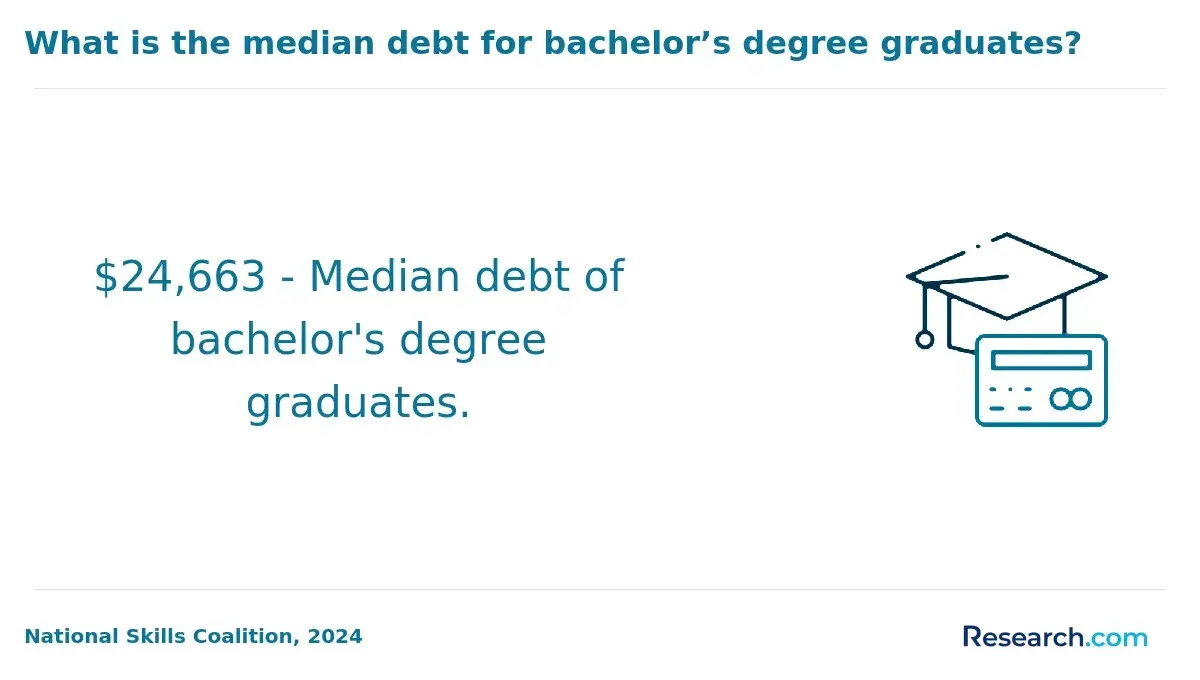
Adult learners should avoid borrowing for a program that lacks recognized accreditation, has unclear career outcomes, pressures quick enrollment, or will not disclose total cost. If you are unsure, ask the school for median debt, completion rates, job placement methodology, licensure pass rates if relevant, and the exact refund policy.
How do education tax credits and deductions lower college costs for adults?
Education tax benefits can reduce the effective cost of college, but they usually help after you pay expenses rather than at the moment tuition is due. Adult learners should plan for timing: a tax credit may improve your refund or reduce tax owed, but it may not solve an immediate bill.
The two most common federal education credits are the American Opportunity Tax Credit and the Lifetime Learning Credit. The American Opportunity Tax Credit can be worth up to $2,500 for eligible students in the first four years of higher education. The Lifetime Learning Credit can be worth up to $2,000 per tax return for eligible tuition and related expenses, including many graduate and continuing education situations.
These credits have eligibility rules, income phaseouts, documentation requirements, and restrictions on double-counting expenses already paid with tax-free aid. Keep records throughout the year so you can evaluate eligibility accurately.
- Save tuition statements, payment receipts, book and supply receipts, scholarship notices, and employer reimbursement records.
- Ask whether your school provides the required tax form and verify that your expenses are reflected correctly.
- Do not count the same expense for both a tax-free scholarship and a tax credit.
- If you are unsure, consult a qualified tax professional because eligibility can depend on filing status, income, enrollment level, and prior credit use.
Tax benefits should be treated as part of your affordability plan, not as the foundation of it. They can lower the net cost, but they do not replace grants, scholarships, payment planning, or careful program selection.
How can adult learners build a step-by-step affordability and budgeting plan?
A good college budget shows how you will pay each term without relying on hope, credit cards, or last-minute borrowing. Adult learners should plan by semester or payment period because cash flow often matters as much as total cost.
Use the steps below to build a clear affordability plan before enrolling. This process helps you see whether the program is affordable under real-life conditions.
- Define your goal: job change, promotion, licensure, degree completion, graduate school preparation, or personal development.
- List required credentials for that goal, including degree level, major, accreditation, licensure, certification, or clinical requirements.
- Collect total cost estimates from at least three schools, including tuition, fees, books, supplies, technology, transportation, childcare, and lost work time.
- Complete the FAFSA and collect award letters from each school.
- Add employer benefits, scholarships, military benefits, transfer credits, tax credits, and savings.
- Calculate the remaining gap by term, not just by year.
- Decide whether to reduce the gap by taking fewer credits, choosing a lower-cost school, transferring more credits, applying for more aid, or using a payment plan.
- If loans remain necessary, estimate monthly payments and compare them with conservative expected income.
- Set a stop-loss rule, such as a maximum debt amount or a requirement to reassess if credits do not transfer as expected.
The table below helps you compare common affordability trade-offs. It is useful when two programs look similar but differ in speed, structure, or support.
| Choice | Potential advantage | Potential downside |
| Part-time enrollment | Easier to balance with work and caregiving | May extend time to graduation and delay career benefits |
| Full-time enrollment | Can shorten completion time | May reduce work income and increase stress |
| Community college first | Can lower lower-division costs | Requires careful transfer planning |
| Accelerated program | May reduce time in school | Can be difficult while working full time |
| Lower-tuition program | Reduces borrowing pressure | May offer fewer supports, fewer scheduling options, or less specialized coursework |
Adult learners should also build an emergency buffer. A flat tire, childcare disruption, reduced work hours, or medical bill can derail enrollment if every dollar is already committed. If possible, keep at least a small reserve before increasing course load.
How do adults evaluate accredited programs, outcomes, and debt before enrolling?
Adults should evaluate a college program the same way they would evaluate a major financial decision: verify quality, compare cost, assess risk, and confirm the credential supports the intended outcome. Accreditation is the first checkpoint because it affects federal aid eligibility, transfer credit, employer recognition, graduate admissions, and licensure in many fields.
Look for institutional accreditation recognized by the U.S. Department of Education or the Council for Higher Education Accreditation. For career-specific fields, also check programmatic accreditation when relevant, such as nursing, counseling, social work, education, business, engineering technology, or allied health.
The table below highlights common red flags and better alternatives. Use it before signing an enrollment agreement or accepting loans.
| Red flag | Why it matters | Better move |
| Pressure to enroll immediately | High-pressure sales can prevent careful cost and accreditation review. | Ask for written cost, refund, transfer, and outcome information before deciding. |
| Unclear accreditation | Credits may not transfer, and aid or licensure eligibility may be affected. | Verify accreditation through official recognized-accreditor databases. |
| No formal transfer evaluation | You may pay to repeat courses unnecessarily. | Request a degree audit showing accepted credits and remaining requirements. |
| Vague job placement claims | Marketing language may not reflect outcomes in your field or location. | Ask how outcomes are measured and whether data is program-specific. |
| Debt higher than realistic early-career income | Monthly payments can limit financial flexibility after graduation. | Compare loan payments with conservative salary expectations before enrolling. |
Outcomes should be evaluated by program, not just by school brand. Ask about completion rates for adult or part-time students, licensure exam pass rates where applicable, internship or clinical placement support, employer partnerships, graduate school acceptance, and median debt for completers.
Advanced adult learners should be especially careful with graduate and doctoral programs because costs can rise quickly. If you are comparing applied doctoral options, review whether a doctorate without dissertation aligns with your profession, accreditation expectations, and employer recognition before assuming it will be faster or more valuable.
The smartest enrollment decision is the one that fits your goal, budget, schedule, and risk tolerance. A program can be reputable and still be the wrong choice if it requires too much debt, too many unpaid hours, or a format you cannot sustain.
Other Things You Should Know About
Yes. Adult learners can complete the FAFSA for federal grants, loans, work-study, and many state or school-based aid programs. Eligibility depends on factors such as income, enrollment level, degree status, prior aid use, and satisfactory academic progress.
Start with grants, scholarships, employer tuition assistance, military benefits, transfer credit, and tax credits. Then compare the remaining net price across schools. Use federal loans only for the remaining gap, and avoid private loans unless you fully understand the terms and repayment risk.
Sometimes, but not always. Online programs can reduce commuting, parking, relocation, and childcare costs, but some charge technology or online course fees. Compare total cost, transfer credits, accreditation, flexibility, and completion support before choosing.
Part-time study is often better for adults who need steady income or caregiving flexibility. Full-time study may be better if you can afford reduced work hours and want to finish faster. The better choice is the one you can complete without taking on unsustainable debt.
References
- EdAssist | 7 tips to fund continued education as an adult learner https://www.brighthorizons.com/resources/blog/edassist/7-tips-to-fund-continued-education
- Financial Aid for Adult Learners: Grants, Scholarships & How to Pay for College (2026 Guide) https://www.straighterline.com/blog/financial-aid-resources-adults
- Employer-offered educational assistance programs can help pay for college | Internal Revenue Service https://www.irs.gov/newsroom/employer-offered-educational-assistance-programs-can-help-pay-for-college
- Prior Learning Credit https://www.cambridgecollege.edu/admissions/prior-learning-credit
- How to Get Your Employer to Pay for College With Tuition Assistance Programs https://www.umassglobal.edu/blog-news/get-your-employer-pay-college-tuition-assistance-programs
- How to Budget Money: A Step-By-Step Guide - NerdWallet https://www.nerdwallet.com/finance/learn/how-to-budget
- Differences Between Federal and Private Loans - EDCAPNY.org https://www.edcapny.org/resources-for-future-students/ways-to-pay-for-college/federal-private-student-loans-comparison/
- How to Pay for College as an Adult Learner - ReUp Education https://reupeducation.com/blog/how-to-pay-for-college-as-an-adult-learner/
- Sending Kids to College https://turbotax.intuit.com/tax-tips/college-and-education/sending-kids-to-college/L0I7clLFg
- Financial literacy for adult learners: How to teach budgeting, debt and savings https://abclifeliteracy.ca/news/financial-literacy-for-adult-learners-how-to-teach-budgeting-debt-and-savings/