2027 How to Talk to Your Family About Paying for College

Co-Founder and Chief Data Scientist
Paying for college is often a family decision, not just a student decision. College Board data for 2024-25 puts the average published tuition and fees at $11,610 for in-state public four-year colleges and $43,350 for private nonprofit four-year colleges, before housing and other costs. That gap can change which schools, majors, and loan choices make sense. This guide is for students and families who need a clearer, calmer way to discuss affordability, aid, borrowing, school type, and long-term return before making a commitment.
Key Things You Should Know
- Start with the total cost of attendance, not tuition alone; College Board's 2024-25 average on-campus budget was $29,910 for in-state public four-year students and $62,990 for private nonprofit four-year students.
- Federal Direct Loans have annual limits for dependent undergraduates, starting at $5,500 for first-year students, so large funding gaps often require scholarships, savings, work income, lower-cost options, or parent/private borrowing.
- The strongest family plan connects school choice, major, graduation timeline, accreditation, and likely repayment capacity instead of treating college as one emotional yes-or-no decision.
How can you prepare for a family conversation about paying for college?
A productive family conversation starts before anyone is upset about an admissions letter or a bill. The goal is not to pressure one person into paying; it is to make the full financial picture visible enough that everyone can make realistic choices.
Before the conversation, gather documents and write down the questions you need answered. This keeps the discussion focused on facts instead of assumptions.
- Collect each school's estimated cost of attendance, including tuition, fees, housing, food, books, transportation, health insurance, and personal expenses.
- List every known funding source, such as savings, 529 plans, income from work, employer tuition benefits, veterans or military education benefits, grants, scholarships, and family contributions.
- Separate money that is guaranteed from money that is only possible, such as competitive scholarships or future part-time earnings.
- Decide what you need from the conversation: a yearly contribution amount, a loan limit, permission to live at home, help comparing schools, or agreement on a backup plan.
- Set a calm time to talk, and make it clear that the goal is to compare options, not to blame anyone for what college costs.
If military service is part of your household's education plan, discuss benefits early because eligibility, tuition assistance rules, transferability, and school participation can vary. Families comparing flexible options may also want to review an online college for military learners if deployment, relocation, or full-time work affects attendance.
A common mistake is starting with a dream school and asking, "Can we make it work?" A better approach is to compare several realistic paths side by side, then decide which one is financially safe enough to support the student's goals.
What college costs and financial aid basics should everyone understand before talking?
Everyone in the conversation should understand the difference between sticker price, net price, and out-of-pocket cost. Sticker price is the published cost. Net price is the cost after grants and scholarships. Out-of-pocket cost is what must be paid through savings, income, payment plans, or loans.
The table below summarizes common college cost terms so the family can talk about the same numbers. This matters because many families underestimate expenses that are not listed as tuition.
| Term | What it means | Why it matters in a family conversation |
| Tuition and fees | The amount charged for instruction and required institutional fees. | It is usually the largest visible cost, but it is not the full cost of college. |
| Cost of attendance | The school's estimated total yearly budget, including direct and indirect costs. | Financial aid eligibility is usually calculated against this broader number. |
| Net price | Cost of attendance minus grants and scholarships. | This is often the most useful number for comparing schools. |
| Grants and scholarships | Aid that generally does not have to be repaid if conditions are met. | This reduces cost more safely than loans. |
| Loans | Borrowed money that must be repaid with interest. | This shifts today's college cost into future monthly payments. |
| Work-study or student earnings | Money earned through approved work-study jobs or regular employment. | This can help with living costs but should be balanced against study time. |
For 2024-25, College Board reported average published tuition and fees of $4,050 at public two-year colleges, $11,610 for in-state students at public four-year colleges, and $43,350 at private nonprofit four-year colleges. This does not mean one option is automatically better; it means families should compare the net price after aid and the student's likely completion path.
Financial aid usually starts with the FAFSA. The redesigned FAFSA uses the Student Aid Index rather than the old Expected Family Contribution, and the federal Pell Grant maximum for 2024-25 is $7,395. That maximum is helpful, but it does not cover the full cost at many four-year residential colleges, so families should treat grants as one part of a larger plan.
How do you realistically discuss what your family can afford for college each year?
The most useful affordability conversation is specific: "What can we safely pay each year without damaging the family's emergency fund, retirement security, or basic household needs?" Families should avoid vague promises such as "We will figure it out," because unclear expectations can lead to rushed borrowing later.
A simple affordability framework can help turn emotions into numbers. Use the following steps to identify a yearly limit before committing to a school.
- Estimate the student's annual net price at each school after grants and scholarships, using the school's aid offer or net price calculator.
- Identify the amount parents or relatives can contribute from current income without relying on credit cards or retirement withdrawals.
- Identify the amount the student can contribute from savings, summer work, or part-time work while still preserving enough time to complete courses successfully.
- Set a maximum annual student loan amount and a separate maximum parent loan amount, if parent borrowing is even on the table.
- Compare the remaining gap across schools and mark any school as financially risky if the gap depends on uncertain future scholarships, excessive work hours, or high-interest borrowing.
Families should also discuss who is responsible for each cost category. For example, one family may agree that parents cover tuition after grants while the student covers books and personal expenses; another may decide the student must choose a school where federal student loans and work income cover the gap.
One red flag is using the first year's bill as if it represents the entire degree. Tuition, housing, transportation, and fees can rise, and some scholarships have GPA or renewal conditions. A safer estimate includes all expected years to graduation, not just the first semester.
How should you talk about using financial aid, scholarships, and grants to reduce costs?
Scholarships, grants, tuition discounts, employer benefits, and shorter credentials can reduce the amount a family must pay or borrow. The key is to separate "free money" from aid that creates obligations, such as loans or work requirements.
Use the aid offer to identify what actually lowers the bill. Families should review each award carefully because the same aid letter may include grants, loans, and work-study in one package.
- Prioritize grants and scholarships that do not require repayment, but check renewal rules such as GPA, full-time enrollment, major restrictions, or campus residency requirements.
- Ask each college whether outside scholarships reduce unmet need, student loans, or institutional grants, because the answer affects the real value of the award.
- Apply for local scholarships from community foundations, employers, civic groups, and high school counseling offices, where applicant pools may be smaller than national competitions.
- Compare whether a shorter credential, transfer pathway, or employer-paid program can meet the career goal with less debt than a traditional four-year residential route.
Some students do not need a full degree immediately to improve earnings or enter a field. If the family's main goal is a faster, lower-cost workforce credential, it may be worth comparing certificate programs that pay well with degree options, especially for fields where employers value specific technical skills.
A common mistake is treating a large scholarship as automatically affordable. A $20,000 scholarship at a high-cost private college may still leave a larger bill than a lower-cost public option with less aid, so families should compare net price rather than award size.
How can you explain the impact of student and parent loans on future finances?
Loans can make college possible, but they also create long-term obligations that affect rent, transportation, graduate school, family support, and career flexibility. The family conversation should include both student loans and parent loans because the borrower, interest rate, repayment options, and legal responsibility differ.
For federal loans first disbursed during the 2024-25 award year, the fixed interest rate is 6.53% for undergraduate Direct Subsidized and Unsubsidized Loans, while Direct PLUS Loans carry a 9.08% rate. That difference matters because parent borrowing can be more expensive and less flexible than a student's limited federal loan eligibility.
The table below compares common borrowing options at a high level. It is not a repayment quote, but it shows why families should decide who borrows and how much before the bill is due.
| Borrowing option | Who is legally responsible | Important limitation | Family discussion point |
| Federal Direct Subsidized Loan | Student | Available only to eligible undergraduates with financial need. | Often safer than private loans because federal protections may apply. |
| Federal Direct Unsubsidized Loan | Student | Interest begins accruing after disbursement. | Useful within limits, but the student should understand future repayment. |
| Parent PLUS Loan | Parent borrower | Can cover a large gap up to cost of attendance after aid, subject to eligibility. | Parents should consider retirement, other children, and monthly payment risk. |
| Private student loan | Student and often a cosigner | Terms depend on lender, credit, rate type, and cosigner rules. | Families should be cautious because protections vary by lender. |
Dependent undergraduates can generally borrow up to $5,500 in federal Direct Loans in the first year, $6,500 in the second year, and $7,500 in later undergraduate years, with an aggregate limit of $31,000. If a school requires far more than that each year, the family should discuss whether the gap is worth parent borrowing, a different school, commuting, transferring, or delaying enrollment to save money.
A useful rule for the conversation is to convert total borrowing into a future lifestyle question: "Would this debt still feel manageable if the first job pays less than hoped, if graduate school is needed, or if living costs are high?" This keeps borrowing tied to realistic future choices, not just present excitement.
How do you connect college major and career choices to salary and loan repayment?
College affordability is not only about the price of the school; it is also about the student's path through the program and the labor market connected to that path. A major does not guarantee a salary, but it can influence internship access, graduate school requirements, licensure, and the kinds of entry-level jobs available after graduation.
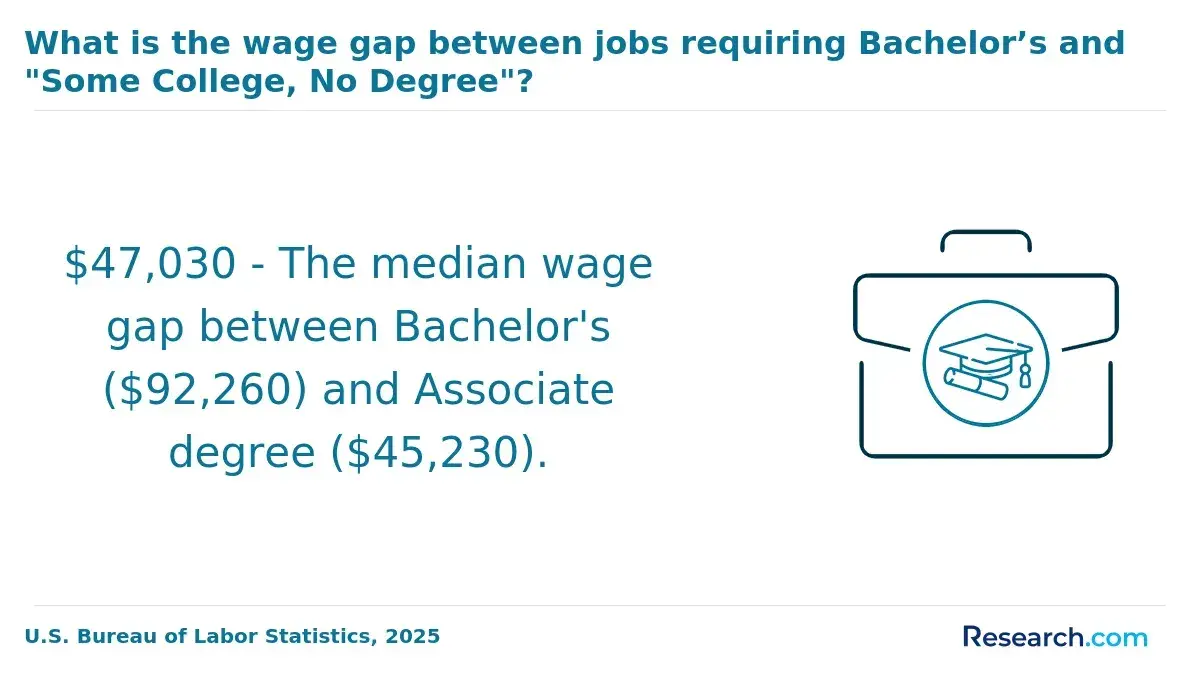
BLS 2024 education data shows that workers age 25 and older with a bachelor's degree had median weekly earnings of $1,543, compared with $930 for workers with only a high school diploma. That broad gap supports the long-term value of education, but it does not mean every degree, school, or borrowing amount produces the same financial result.
The table below helps families connect academic choices to repayment risk. It is a comparison tool, not a prediction of any individual student's outcome.
| Academic path | Typical financial consideration | What families should discuss |
| High-earning bachelor's pathways | Some fields, such as engineering, computer science, nursing, accounting, and data-related roles, may support stronger repayment capacity. | Whether the student is prepared for the coursework and whether the program has strong career placement support. |
| Public-service or helping professions | Some careers may require graduate study or licensure and may start with modest pay. | Whether debt levels fit expected early-career earnings and whether loan forgiveness programs may be relevant. |
| Creative or competitive fields | Income may depend heavily on portfolio, location, networking, freelance work, or internships. | Whether the school provides industry access that justifies the cost. |
| Undecided major | Extra semesters can increase total cost if exploration is not structured. | Whether a lower-cost first year, advising plan, or transfer route would reduce risk. |
Families comparing majors can use salary and employment data as one input, not as the only reason to choose a field. Students exploring high-ROI undergraduate options may want to compare best bachelor degrees alongside their interests, academic strengths, and willingness to complete required training.
Current hiring trends also make skills more important. AI and automation are changing entry-level work in fields such as business, media, technology, and administration, so students should ask whether a program builds durable skills such as quantitative reasoning, communication, ethical judgment, technical literacy, and applied problem-solving.
How should you compare community college, public, and private universities with your family?
Community colleges, public universities, and private universities can all be smart choices depending on the student's goals, finances, academic preparation, and support needs. The best option is usually the one the student can afford, complete on time, and use toward a realistic next step.
The table below compares common college routes from a family decision-making perspective. It highlights trade-offs rather than ranking one category as universally better.
| Option | When it can make sense | Potential drawback | Best family question |
| Community college | The student wants a lower-cost start, plans to transfer, needs flexibility, or wants an associate degree or workforce credential. | Transfer credits may not apply cleanly unless the student follows an approved pathway. | Which credits are guaranteed to transfer into the intended major? |
| In-state public university | The student wants a four-year campus experience with lower tuition than many private options. | Housing, fees, and limited course availability can still raise total cost. | Can the student graduate in four years in the intended major? |
| Out-of-state public university | The program is uniquely strong, aid is generous, or residency rules may change later. | Nonresident tuition can create a large gap if aid is limited. | What is the four-year net price compared with in-state options? |
| Private nonprofit university | The student receives strong institutional aid, needs a specific program, or benefits from smaller classes or strong networks. | The sticker price may be high, and aid renewal rules matter. | What will the family pay after grants for all four years? |
| Private for-profit institution | The student needs a career-focused schedule or program not easily available elsewhere. | Costs, transferability, completion rates, and employer perception require close review. | Is the program accredited, affordable, and recognized by employers or licensing boards? |
One major mistake is assuming community college is always the cheapest route or private college is always unaffordable. A student who loses credits during transfer may spend more than planned, while a private college with strong grants may have a competitive net price. Families should compare the full path to completion, not just the first-year tuition line.
How do you discuss online versus campus programs and their value with your family?
Online and campus programs can both offer value, but they serve different needs. The family should discuss learning style, schedule, career goals, technology requirements, internships, networking, and whether the program's format affects licensure or clinical placements.
The table below compares online and campus formats in ways that often affect family finances and student success.
| Format | Possible advantage | Possible limitation | Best fit |
| Fully online | Can reduce relocation and commuting costs and may fit work or caregiving schedules. | Requires strong self-management and may offer fewer in-person networking experiences. | Students who are organized, comfortable with technology, and need flexibility. |
| Hybrid | Combines online flexibility with some in-person labs, meetings, or clinical work. | Campus visits can still create travel and scheduling costs. | Students in fields where hands-on learning or local placements matter. |
| On-campus | Offers face-to-face instruction, campus resources, housing, clubs, and direct networking. | Housing and transportation can significantly raise total cost. | Students who benefit from structure, residential support, labs, or campus recruiting. |
For graduate study, online formats can be especially useful for working adults who cannot pause their careers. Families comparing future education costs can evaluate whether an online masters degree offers enough flexibility, employer relevance, and time savings to justify the investment.
The red flag is choosing online only because it looks convenient. Students should ask whether online learners receive advising, tutoring, library access, career services, internship support, disability services, and faculty interaction comparable to campus students.
How can you talk about choosing accredited programs and meeting licensing requirements?
Accreditation is one of the most important quality checks in any college funding conversation. In the United States, institutional accreditation affects federal financial aid eligibility, credit transfer, graduate school admission, and employer recognition. Programmatic accreditation may also matter in fields such as nursing, education, counseling, social work, engineering, architecture, and allied health.
Licensing requirements vary by state and profession, so families should not assume that any degree with a familiar name leads to the required credential. This is especially important for online programs, out-of-state schools, and careers with clinical, practicum, student-teaching, or supervised experience requirements.
Before committing to a program, families should verify the following items directly with official sources and the school.
- Confirm that the institution is accredited by an agency recognized for federal student aid purposes.
- Check whether the specific program has required programmatic accreditation for the intended career.
- Ask whether the program meets licensure requirements in the student's state, especially if the school is online or located elsewhere.
- Review graduation, transfer, exam pass rate, and job placement information when available, while recognizing that outcomes vary by student and market.
- Get transfer and licensure answers in writing rather than relying only on verbal admissions promises.
Common red flags include pressure to enroll immediately, unclear accreditation language, unusually vague career claims, credits that do not transfer, and promises of guaranteed jobs or salaries. A legitimate school should be able to explain accreditation, total cost, aid, refund policies, and student outcomes clearly.
How do you create a shared long-term plan with your family for paying for college?
A strong college payment plan should cover the full timeline from enrollment to graduation, not just the first bill. The family should revisit the plan at least once per year because aid, income, major choice, housing, and academic progress can change.
Use a shared plan to make responsibilities clear. The plan should be simple enough to update but detailed enough to prevent surprises.
- Choose a target graduation timeline and identify the courses or milestones required each year.
- Set annual spending limits for tuition, housing, transportation, books, and personal expenses.
- Assign responsibility for each cost category among the student, parents, relatives, savings, earnings, grants, and loans.
- Create a scholarship and aid renewal calendar with FAFSA deadlines, school deadlines, GPA requirements, and document requests.
- Decide in advance what will trigger a change in plan, such as losing aid, changing majors, needing an extra year, or exceeding the borrowing limit.
- Schedule a yearly family review before accepting loans or signing housing contracts for the next academic year.
Families should also discuss graduate school early if the student's career goal usually requires it. For example, a student planning counseling, advanced nursing, education leadership, data science, or business graduate study may need to preserve borrowing capacity; comparing the most affordable online masters options later can help keep the full education path manageable.
The best long-term plan is flexible but not vague. It allows the student to pursue a meaningful goal while protecting the family from debt that depends on perfect circumstances, uncertain scholarships, or income that may not appear on schedule.
Other Things You Should Know About
Start before applications are finalized, and revisit the topic after financial aid offers arrive. The earlier you talk, the easier it is to build a school list that includes financial safety options.
Focus on options that reduce the funding gap: grants, scholarships, community college transfer pathways, in-state public colleges, commuting, part-time work, employer tuition benefits, and federal student loans within safe limits. Avoid assuming private loans are the only solution.
Not automatically. Compare net price, graduation timeline, program quality, accreditation, support services, career outcomes, and transfer policies. The cheapest first year may not be the cheapest path to a completed credential.
There is no single safe number for everyone. A practical approach is to compare total expected borrowing with likely early-career earnings, required graduate school, living costs, and repayment options. If the plan depends on unusually high income or parent borrowing that strains retirement, it is a warning sign.
References
- How To Get Accredited Official Guide | CLE, CME, CEU, CPD and More https://www.beaconlive.com/how-to-get-accredited-official-guide
- How do I talk to my teenager about paying for college? https://bethkobliner.com/teens/talk-teenager-paying-college/
- How to Become an Accredited Training Center https://aaa-accreditation.org/how-to-become-an-accredited-training-center/
- Client Challenge https://www.khanacademy.org/college-careers-more/financial-literacy/xa6995ea67a8e9fdd:careers-and-education/xa6995ea67a8e9fdd:cost-of-post-secondary-education-and-training/a/public-vs-private-vs-certification-vs-community-college-what-is-the-difference
- Tips to help you pay for college https://www.ameriprise.com/financial-goals-priorities/education-planning/how-to-pay-for-college
- How to Pay for College https://www.savingforcollege.com/article/how-to-pay-for-college
- Online Classes or On Campus: Which is Right for You? - Graduate Programs for Educators https://www.graduateprogram.org/blog/online-classes-or-on-campus-which-is-right-for-you/
- How Your Degree May Determine Student Loan Payments https://www.collegexpress.com/articles-and-advice/financial-aid/articles/scholarships-grants-loans/how-your-degree-could-help-determine-student-loan-payments/
- Parents’ Guide to Kids Online Learning Programs https://destinationscience.org/parents-guide-to-kids-online-learning-programs/
- Confirmation of professional qualifications in Poland https://www.biznes.gov.pl/en/portal/001822