2027 How to Choose a College You Can Actually Afford

Co-Founder and Chief Data Scientist
Choosing a college is a financial decision as much as an academic one. College Board's 2024-25 data shows average published tuition and fees of $11,610 for in-state public four-year colleges and $43,350 for private nonprofit four-year colleges, before grants and living costs. This guide is for students and families trying to avoid unaffordable debt while still choosing a strong program. You will learn how to estimate your real price, compare aid offers, spot hidden costs, evaluate outcomes, and decide which college gives you the best value for your goals.
Key Things You Should Know
- The most affordable college is usually the one with the lowest net price, not the lowest advertised tuition; net price means total cost of attendance minus grants and scholarships you do not repay.
- For 2024-25, College Board reports average published tuition and fees of $4,050 at public two-year colleges, $11,610 for in-state public four-year colleges, $30,780 for out-of-state public four-year colleges, and $43,350 for private nonprofit four-year colleges.
- A safe college list should include financial fits, academic fits, and outcome fits; compare graduation rates, loan debt, job placement, and salary data before treating any acceptance letter as affordable.
How can you figure out what college price range your family can realistically afford?
To figure out what your family can realistically afford, start with a number you can pay without relying on risky borrowing. That number should come from monthly cash flow, savings, expected student earnings, and reasonable federal student loan limits, not from the college's suggested payment plan alone.
Affordability means the yearly out-of-pocket cost fits your family's budget and the total borrowing remains manageable compared with your likely post-graduation income. The FAFSA now uses the Student Aid Index, or SAI, instead of the older Expected Family Contribution, but the practical question is the same: how much will the college expect you to pay after grants, scholarships, work-study, and loans?
Use the following sequence to create a realistic college price range before you fall in love with a campus:
- Estimate what your family can pay from income each year without missing essential expenses such as housing, food, health care, transportation, and emergency savings.
- Add any college savings you can use annually, but avoid draining all emergency reserves in the first year.
- Estimate student earnings from a realistic part-time job or summer work schedule, accounting for academic workload and transportation.
- Decide how much federal student debt is acceptable over the full degree, not just during freshman year.
- Set a maximum net price per year and use it as a filter when comparing colleges.
The 2024-25 maximum federal Pell Grant is $7,395 for eligible students. That can make a major difference, but it rarely covers the full cost of attending a four-year college, so families should still compare housing, transportation, food, books, fees, and loan amounts.
A practical affordability benchmark is this: if the only way to attend a school is to use large parent loans, private loans, or credit cards, the school is probably outside your realistic price range unless there is a clear, verified plan to repay that debt.
How do you compare the real cost of different colleges using net price calculators?
Net price calculators help you compare what colleges may actually cost after grants and scholarships. Every college that participates in federal student aid programs must provide one, but calculators vary in quality, and the estimate is only as accurate as the information you enter.
The table below explains the main cost terms you will see while comparing colleges. Understanding these terms prevents one of the most common mistakes: comparing one school's tuition with another school's full cost of attendance.
| Term | What it means | Why it matters |
| Sticker price | The published cost before financial aid | It can be misleading because many students receive grants or scholarships. |
| Cost of attendance | Tuition, fees, housing, food, books, supplies, transportation, and personal expenses | This is the full annual budget you should compare across colleges. |
| Net price | Cost of attendance minus grants and scholarships | This is the best starting point for judging affordability. |
| Out-of-pocket cost | What remains after grants, scholarships, work-study, savings, and loans are considered | This shows what your family must actually cover during the year. |
| Unmet need | The gap between your financial need and the aid offered | This often leads families to borrow more than planned. |
When you use a net price calculator, enter the same household income, assets, family size, student academic profile, residency status, and housing choice for every school. A calculator that asks for GPA, test scores, or class rank may estimate merit scholarships more accurately than one that only asks for income.
Take these steps when comparing calculator results:
- Run each calculator using the same assumptions, including whether the student will live on campus, off campus, or at home.
- Save or screenshot the estimate, including the date, because aid policies can change.
- Separate grants and scholarships from loans and work-study so you can see the true discount.
- Check whether the estimate applies to all four years or only the first year.
- Ask the financial aid office whether scholarships are renewable and what GPA or enrollment status is required.
Do not treat a net price calculator as a final aid offer. It is a planning tool, not a contract. Still, if the calculator shows a cost that is far above your maximum affordable price, it is a warning to keep safer financial options on your list.
What steps should you take to read and compare financial aid offers from multiple schools?
Financial aid offers can be hard to compare because colleges use different formats and labels. One school may clearly separate grants from loans, while another may group everything under "aid," making an expensive school look more affordable than it is.
Before comparing offers, remember the most important rule: grants and scholarships reduce the price; loans only delay the bill. Work-study is also not an upfront discount, because the student must earn those funds through eligible campus employment.
Use this process to compare offers from multiple schools on equal terms:
- Find the full cost of attendance for each college, not just tuition and fees.
- Subtract only grants and scholarships first to calculate the net price.
- List loans separately by type, including subsidized, unsubsidized, parent PLUS, and private loans if included.
- Confirm whether each scholarship is renewable and whether the amount can change after the first year.
- Estimate the four-year cost by multiplying the first-year net price and adjusting for likely tuition, housing, and fee increases.
- Compare the remaining balance with your family's annual affordability number.
- Contact financial aid offices if your family's financial situation has changed because of job loss, medical expenses, divorce, or another documented circumstance.
The table below shows how to classify common items in a financial aid offer. This matters because two offers with the same "total aid" can leave you with very different debt.
| Aid item | Repayment required? | How to treat it in your comparison |
| Federal Pell Grant | No | Subtract from cost of attendance. |
| Institutional scholarship | No, if requirements are met | Subtract, but verify renewal rules. |
| State grant | No, if eligibility continues | Subtract, but check residency and enrollment requirements. |
| Work-study | No loan repayment, but must be earned | Do not subtract as guaranteed upfront aid. |
| Federal Direct Subsidized Loan | Yes | Count as debt, even though interest treatment is more favorable while enrolled. |
| Federal Direct Unsubsidized Loan | Yes | Count as debt and remember interest can accrue while enrolled. |
| Parent PLUS Loan | Yes | Count as parent debt and compare against parent repayment ability. |
| Private student loan | Yes | Use cautiously because terms vary and protections are usually weaker than federal loans. |
If a college's offer is unclear, ask for a plain-language breakdown of total cost, free aid, loans, work-study, and remaining balance. A school that cannot clearly explain the bill before you enroll may become even more frustrating after classes begin.
How do tuition, housing, and hidden costs differ between in-state, out-of-state, and private colleges?
Tuition is only one part of affordability. Housing, meals, transportation, health insurance, program fees, lab costs, technology, and lost work hours can change the true price of a college by thousands of dollars per year.
College Board's 2024-25 published tuition and fee averages show why residency and institution type matter. These figures do not include every living expense, but they are useful for understanding the starting price differences between common college options.
| College type | Average published tuition and fees for 2024-25 | Affordability implications |
| Public two-year in-district | $4,050 | Often the lowest tuition path, especially for students planning to transfer. |
| Public four-year in-state | $11,610 | Usually a strong value when the program is reputable and graduation rates are solid. |
| Public four-year out-of-state | $30,780 | Can cost close to a private college unless the school offers large merit aid. |
| Private nonprofit four-year | $43,350 | May become affordable with strong institutional grants, but sticker price alone is not enough to judge value. |
Hidden costs can make an apparently affordable school harder to manage. Review the college's cost of attendance line by line and ask whether the school has extra fees for your major, such as nursing clinical fees, engineering lab fees, art supplies, business school fees, or required software.
These cost categories are especially important when comparing in-state, out-of-state, private, campus-based, and online options:
- Housing and meals: Living at home can reduce costs, but commuting time and transportation expenses still matter.
- Transportation: Flights, parking, gas, public transit, and car maintenance can make distant colleges more expensive than expected.
- Health insurance: Some colleges require proof of coverage or charge for a student health plan.
- Books and course materials: Open educational resources can help, but some programs still require costly textbooks, kits, or subscriptions.
- Technology: Online courses and some majors may require a reliable laptop, webcam, software, or high-speed internet.
- Time away from work: A program with daytime classes or unpaid clinical hours can reduce earnings during school.
Students who need maximum flexibility may also compare campus options with the cheapest online university choices, but the right answer depends on accreditation, transfer credit, student support, and whether the format fits the student's learning style.
How should you balance college affordability with program quality, outcomes, and graduation rates?
A college is not affordable just because it is cheap. It also needs to help you complete the credential you came for and move toward a realistic academic or career goal. A low-cost college with poor advising, limited course availability, or weak completion outcomes can become expensive if it adds extra semesters or leads to credits that do not transfer.
Program quality should be evaluated at the major level whenever possible. A college may have strong overall reputation but weak outcomes in your intended field, or it may be less famous but have excellent employer connections in nursing, engineering technology, accounting, education, or computer science.
The table below summarizes quality indicators that affect value. Use these as context, not as automatic deal-breakers, because outcomes can vary by student background, major, region, and career goal.
| Indicator | What it tells you | Why it affects affordability |
| Graduation rate | How many students finish within a reported time frame | Taking extra years can increase tuition, living costs, and debt. |
| Retention rate | How many first-year students return for the next year | Low retention may suggest weak support, poor fit, or affordability problems. |
| Program accreditation | Whether a specific program meets external standards | It can affect licensure, employment eligibility, and transfer options in some fields. |
| Course availability | Whether required classes are offered often enough | Limited availability can delay graduation. |
| Advising and career support | How well the school helps students plan courses, internships, and job searches | Better support can reduce wasted credits and improve career preparation. |
| Licensure alignment | Whether the program meets state requirements for regulated careers | A cheaper program is risky if it does not qualify you for the role you want. |
BLS 2024 education-and-earnings data shows median weekly earnings of $1,543 for workers with a bachelor's degree, compared with $1,099 for workers with an associate degree. That does not mean every bachelor's degree is worth any price, but it does show why completion and career alignment matter when evaluating long-term value.
For students considering graduate study later, affordability should be evaluated across the full education path. For example, a student planning for academia, research, or advanced professional roles may want to compare undergraduate debt carefully before considering a cheap online PhD or another doctoral pathway.
A smart balance is to choose the least expensive college that still offers the program quality, accreditation, completion support, and career preparation you need. If a low-cost option lacks those basics, it may not be the best value.
How can you decide between an online program and a campus program based on total cost?
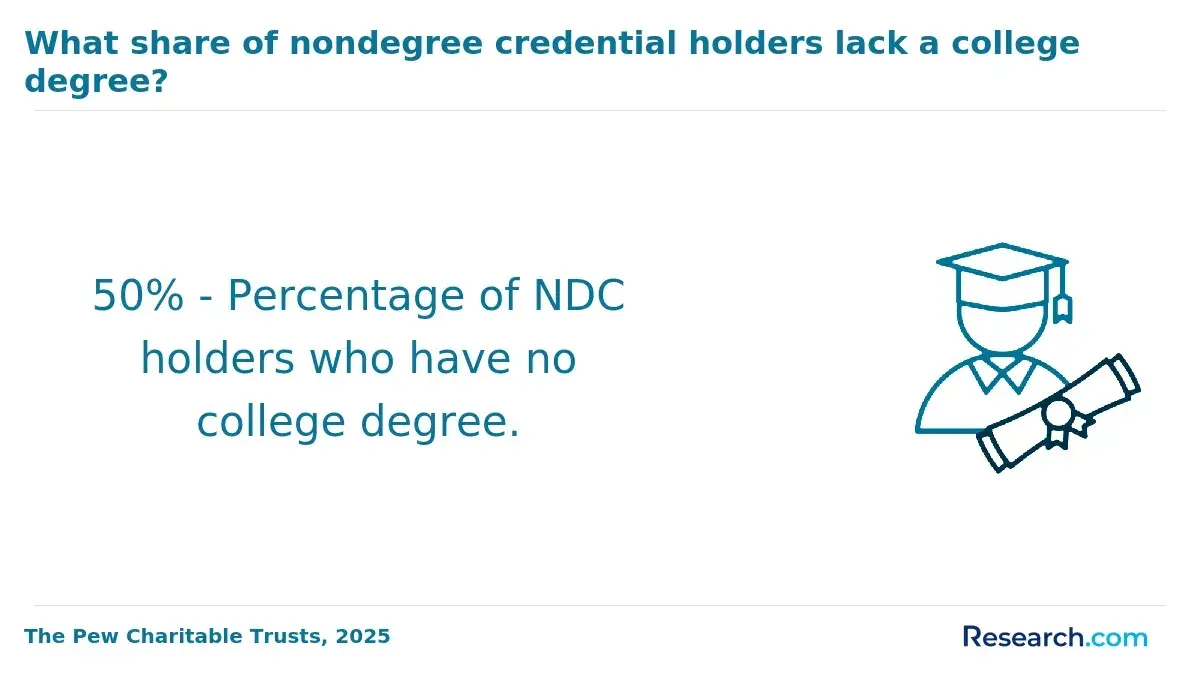
Online programs can lower total cost, but they are not automatically cheaper for every student. The real comparison should include tuition, fees, technology, commuting, housing, schedule flexibility, and whether the student can keep working while enrolled.
Online study tends to make the most financial sense for students who already have stable housing, reliable internet, strong time-management skills, and a job or family responsibility that makes commuting difficult. Campus programs may be worth the extra cost when the student needs labs, clinical placements, studio work, residential support, networking, or a structured daily environment.
The table below compares cost factors in online and campus programs. Use it to identify which format lowers your total cost, not just which one has lower tuition.
| Cost factor | Online program | Campus program |
| Housing | May allow students to live at home or keep current housing | May require residence hall, meal plan, or higher local rent |
| Transportation | Usually lower commuting costs | May include parking, gas, transit, or travel home |
| Work schedule | Often easier to combine with employment if courses are asynchronous | May limit work hours if classes meet during the day |
| Technology | Requires reliable equipment and internet | May still require technology, but campus resources can help |
| Student support | Varies widely by institution | May provide easier access to tutoring, advising, labs, and student services |
| Hands-on requirements | May require local placements, intensives, or proctored exams | Often easier for labs, clinicals, studios, and fieldwork |
Before choosing an online option, confirm that the college is institutionally accredited, that credits are transferable, and that the program meets any licensure or certification requirements in your state. Students comparing flexible formats can start by reviewing reputable online degrees, but they should still verify costs, outcomes, and program fit directly with each school.
Online programs are not ideal for every learner. If you struggle with self-directed study, need frequent face-to-face support, or are entering a field with extensive hands-on training, a campus or hybrid program may be a better investment even if the upfront cost is higher.
What role should federal and private student loans play in choosing an affordable college?
Student loans can help close an affordability gap, but they should not be the foundation of your college plan. A manageable amount of federal student debt may be reasonable for a strong program with good completion and career outcomes. Large private loans or parent loans for an uncertain outcome are much riskier.
For 2024-25, the fixed interest rate for federal Direct Subsidized and Unsubsidized Loans for undergraduates is 6.53%. That rate matters because interest affects the real cost of borrowing, especially if you take loans every year or choose a repayment plan that stretches payments over a longer period.
The table below compares common borrowing options. It is not a substitute for loan counseling, but it shows why the type of loan matters as much as the amount.
| Loan type | Primary borrower | General risk level | Key consideration |
| Federal Direct Subsidized Loan | Student | Lower than many alternatives | Available based on financial need, with more favorable interest treatment while enrolled. |
| Federal Direct Unsubsidized Loan | Student | Moderate | Interest can accrue while the student is in school. |
| Parent PLUS Loan | Parent | Can be high | Parents are legally responsible, and borrowing can affect family finances near retirement. |
| Private student loan | Student and often co-signer | Often higher | Terms vary, and borrower protections are usually more limited than federal loans. |
Use loans only after you have compared lower-cost colleges, scholarships, grants, work options, community college pathways, and transfer routes. If borrowing is necessary, keep the total projected debt in line with the likely entry-level earnings for your field rather than the highest salary you hope to earn later.
Avoid these borrowing mistakes:
- Borrowing the maximum offered without calculating the four-year total.
- Treating parent PLUS loans as "financial aid" instead of family debt.
- Using private loans before exhausting federal student loan options.
- Assuming you will qualify for a high-paying job immediately after graduation.
- Ignoring whether your major has unpaid clinical, internship, student teaching, or portfolio requirements that may limit work income.
If a school requires unusually high borrowing in the first year, the cost will likely become harder in later years. Tuition, fees, housing, and personal expenses often rise, while aid does not always increase enough to keep up.
How can community college, transfer pathways, and part-time study lower your overall degree cost?
Community college, transfer pathways, and part-time study can lower degree cost when they are planned carefully. They can also backfire if credits do not transfer, required courses are unavailable, or the student loses access to scholarships by changing enrollment status.
Community college is often strongest for students who want to complete general education requirements at a lower tuition rate, improve their academic record, explore majors, or stay close to home before transferring. It is less ideal if the student's target major has a tightly sequenced four-year curriculum and the transfer pathway is unclear.
Before choosing a lower-cost pathway, ask specific questions so you do not save money in the short term but lose time later:
- Does the community college have an articulation agreement with the target four-year college?
- Which courses transfer into the major, not just as general elective credit?
- What GPA is required for guaranteed admission or scholarship consideration?
- Will the student enter the four-year college as a junior in the intended major?
- Are there separate admissions requirements for programs such as nursing, engineering, education, business, or social work?
- Will part-time enrollment affect grants, scholarships, housing, health insurance, or loan repayment status?
Part-time study can help students keep working and reduce annual out-of-pocket cost, but it may increase the total time to degree. That trade-off can be worthwhile if the student avoids high-interest debt, but it requires discipline, advising, and a course plan that prevents unnecessary credits.
Self-paced programs may also help working adults move faster through material they already know. Students comparing flexible formats should review the best online self-paced colleges with close attention to accreditation, tuition structure, credit transfer, and student support.
Certificates can be another cost-saving option when the student needs job-ready skills more than a full degree right away. Short programs are not a replacement for every bachelor's degree, but in fields such as healthcare support, IT, skilled trades, and business operations, well-chosen credentials may help students earn income before continuing their education.
How do you evaluate a college's job placement, salary outcomes, and debt levels before enrolling?
Before enrolling, evaluate whether the college's outcomes support the price you will pay. The goal is not to chase the highest salary at any cost. The goal is to understand whether students in your program tend to complete, borrow manageable amounts, and move into jobs or further education that fit their goals.
Use federal and institutional data carefully. College Scorecard can show median earnings and debt information for many programs, but outcomes may vary by major, location, student background, graduate school enrollment, and local labor markets. A single salary figure should never be treated as a promise.
The table below identifies outcome measures that are useful when judging affordability. Look for program-level data when available because college-wide averages can hide big differences between majors.
| Outcome measure | What to look for | How to interpret it |
| Graduation rate | Completion within a reasonable time frame | Low completion can raise total cost even if tuition is low. |
| Median debt | Typical federal debt among borrowers | Compare debt with likely early-career earnings in the field. |
| Median earnings | Reported earnings after attendance or completion | Use as a broad signal, not a guaranteed salary. |
| Job placement rate | Clear definition of what counts as placed | Be cautious if the school includes unrelated jobs or cannot explain the metric. |
| Licensure pass rate | Pass rates for nursing, teaching, counseling, accounting, or other regulated fields | Important when licensure is required for employment. |
| Internship or clinical access | Availability of supervised experience | Can affect employability in hands-on fields. |
Ask admissions, department chairs, or career services for specific information about your intended major. General claims such as "our graduates get great jobs" are not enough when you are making a large financial commitment.
Use these questions before committing to a school:
- What percentage of students in this major graduate, transfer, or leave without a credential?
- What is the typical debt level for students who complete this program?
- What employers, graduate schools, or licensure pathways do recent students pursue?
- Are job placement rates independently verified or self-reported?
- Does the program require internships, clinicals, student teaching, portfolios, or exams that add cost?
- What support exists for first-generation students, working adults, commuters, online learners, or transfer students?
If your goal is quick entry into a better-paying role rather than a full degree, compare the return on shorter credentials too. Some students may find that 6-month certificate programs that pay well offer a more practical first step before committing to a longer and more expensive degree.
What signs indicate that a college is financially risky or not a good long-term fit?
A financially risky college is not always the most expensive one. Risk can also come from unclear pricing, weak outcomes, poor transfer policies, low support, aggressive recruiting, or a program that does not match the student's career goal.
Pay attention to warning signs before you submit an enrollment deposit. The earlier you identify a risky fit, the easier it is to choose a safer option.
- The aid offer is loan-heavy: If most of the "aid" must be repaid, the college may not be affordable.
- The school will not clearly explain total cost: Vague answers about fees, housing, or program expenses make budgeting difficult.
- Scholarships have strict renewal rules: A high GPA requirement or limited renewal period can raise costs after freshman year.
- Credits do not transfer easily: Poor transferability can trap students or force them to repeat coursework.
- Graduation rates are weak: A low completion environment can increase total cost and debt.
- Program accreditation is missing where it matters: This is especially risky in fields tied to licensure or certification.
- Recruiters pressure you to enroll quickly: High-pressure sales tactics are a red flag for any major financial decision.
- Career claims sound guaranteed: No college can promise a specific job or salary.
A poor long-term fit can also be personal. If the campus is too far from support systems, the online format does not match your learning style, or the major is not connected to your real goals, the financial risk increases because stopping out or transferring can add cost.
The best decision is usually not the cheapest school or the most prestigious school. It is the school where the net price, academic fit, support system, completion odds, and career path make sense together.
Other Things You Should Know About
A reasonable amount depends on your field, expected early-career income, family support, and loan type. As a general decision rule, avoid choosing a school that requires large private loans or parent loans when lower-cost accredited options can lead to the same goal.
Not necessarily. A large scholarship at a high-priced college can still leave a higher net price than a smaller scholarship at a lower-cost school. Compare total cost of attendance minus grants and scholarships, then review debt, renewal rules, and outcomes.
Community college often lowers tuition costs, but it works best when credits transfer cleanly into the intended major. Without a clear transfer plan, students may lose credits, extend their timeline, and reduce the savings.
Sometimes. Online programs can reduce housing and commuting costs, especially for working adults, but tuition, fees, technology, accreditation, student support, and hands-on requirements still matter. Compare total cost, not just the delivery format.
References
- How can I tell if a college is financially strong? https://talk.collegeconfidential.com/t/how-can-i-tell-if-a-college-is-financially-strong/2084131
- Using Job Placement Data in the College Search Process https://blog.estrelaconsulting.com/using-job-placement-data-in-the-college-search-process
- Private Vs. Federal Student Loans: Which Is Better In 2025? | Bankrate https://www.bankrate.com/loans/student-loans/federal-vs-private-student-loans/
- How does a college degree improve graduates’ employment and earnings potential? - APLU https://www.aplu.org/our-work/4-policy-and-advocacy/publicuvalues/employment-earnings/
- A Guide to Assessing an Institution’s Financial Stability - Collegiate Consulting https://collegiateconsulting.com/a-guide-to-assessing-an-institutions-financial-stability/
- Advancing Student Success at High-Graduation-Rate Institutions - Ithaka S+R https://sr.ithaka.org/publications/advancing-student-success-at-high-graduation-rate-institutions/
- Is College Worth It? - Public Policy Institute of California https://www.ppic.org/publication/is-college-worth-it/
- Federal and Private Student Loans: What’s the Difference? https://www.navyfederal.org/makingcents/college-planning/federal-vs-private-student-loans.html
- Fixing the transfer process https://www.ccdaily.com/2026/01/fixing-the-transfer-process/
- Why starting at community college is a smart path to a four‑year degree | The College Grind https://collegegrind.org/posts/why_starting_at_community_college_is_a_smart_path_to_a_four_year_degree/