2027 Why Your Cheapest College Option Might Not Be the Lowest Net Price

Co-Founder and Chief Data Scientist
The lowest tuition number is not always the best college deal. College Board data for 2024-25 lists average published tuition and fees at $11,610 for in-state public four-year colleges and $43,350 for private nonprofit four-year colleges, but financial aid can narrow or even reverse that gap. This guide is for students and families comparing college offers, online programs, transfer paths, and debt risk. You will learn how to calculate true net price, spot hidden costs, and choose the option that supports both affordability and long-term value.
Key Things You Should Know
- Net price is the amount you pay after grants and scholarships, not the published tuition; a higher-sticker-price college can be cheaper if it offers stronger gift aid.
- The maximum Federal Pell Grant for the 2024-25 award year is $7,395, so aid eligibility can materially change the real cost of a low-income student's college options.
- Price should be weighed against completion and outcome risk; BLS 2024 data shows median weekly earnings of $1,543 for workers with a bachelor's degree, but the payoff depends on finishing, borrowing wisely, and choosing a program aligned with career goals.
What is the difference between a college's sticker price and its true net price?
A college's sticker price is the advertised cost before financial aid. It usually includes tuition and fees, and sometimes a broader cost of attendance estimate that adds housing, food, books, supplies, transportation, and personal expenses. Sticker price is useful for understanding the school's published baseline, but it is not the number most students should use to compare affordability.
Net price is the amount you are expected to pay after grants and scholarships are subtracted from the total cost of attendance. Loans and work-study can help you cover the bill, but they do not reduce the price in the same way because loans must be repaid and work-study requires earned wages.
The table below separates the major price terms students often mix together. Understanding these labels helps you compare aid offers without mistaking a financing option for a discount.
| Term | What it means | Why it matters |
| Sticker price | The published tuition, fees, and sometimes estimated full cost of attendance before aid | It can overstate what aid-eligible students actually pay |
| Cost of attendance | The school's full annual budget estimate, including direct and indirect costs | It is the best starting point for comparing real college costs |
| Gift aid | Grants and scholarships that generally do not need to be repaid | It lowers your actual net price |
| Net price | Cost of attendance minus grants and scholarships | It is the clearest affordability number for side-by-side comparison |
| Out-of-pocket cost | What your family pays from savings, income, loans, or payment plans | It shows the cash-flow burden after aid and financing |
For example, a college with a $55,000 cost of attendance and $35,000 in grants has a $20,000 net price. A college with a $24,000 cost of attendance and $2,000 in grants has a $22,000 net price. The second school looks cheaper at first, but the first school costs less after gift aid.
Why can the "cheapest" college option end up costing you more overall?
The cheapest college option can cost more overall when the low published price hides weak aid, poor transfer policies, longer time to graduation, higher living costs, or lower completion odds. A school is not truly cheaper if you need extra semesters, lose credits, borrow more for housing, or switch programs because the first one was not a good fit.
College Board's 2024-25 figures show why sticker price can mislead: average published tuition and fees at public two-year colleges are $4,050, much lower than four-year options. That lower starting point can be a smart path, but only if credits transfer cleanly and required courses are available when you need them.
Common reasons a low-cost option becomes more expensive include the following. Use this list to pressure-test any college that looks like the cheapest choice on paper.
- Low grant aid: A school with low tuition but little institutional aid may have a higher net price than a more expensive college with generous scholarships.
- Extra time to degree: One additional semester can add tuition, fees, living expenses, and lost full-time earnings.
- Credit loss after transfer: If a four-year college accepts your credits only as electives, you may have to retake major requirements.
- High local living costs: A low-tuition campus in an expensive city may cost more than a higher-tuition campus with affordable housing.
- Program mismatch: A cheaper school that does not offer the right major, internship access, licensure preparation, or employer connections can reduce the value of the degree.
- Heavy loan packaging: An offer can appear affordable if the aid letter includes loans, but borrowing shifts the cost into future repayment.
If your goal is fast entry into a stable career, compare total cost with completion time and labor-market fit. Some fast online degrees that pay well may offer a better value than a low-cost program that takes longer or does not connect clearly to your target role.
How do financial aid, grants, and scholarships change your real cost of attendance?
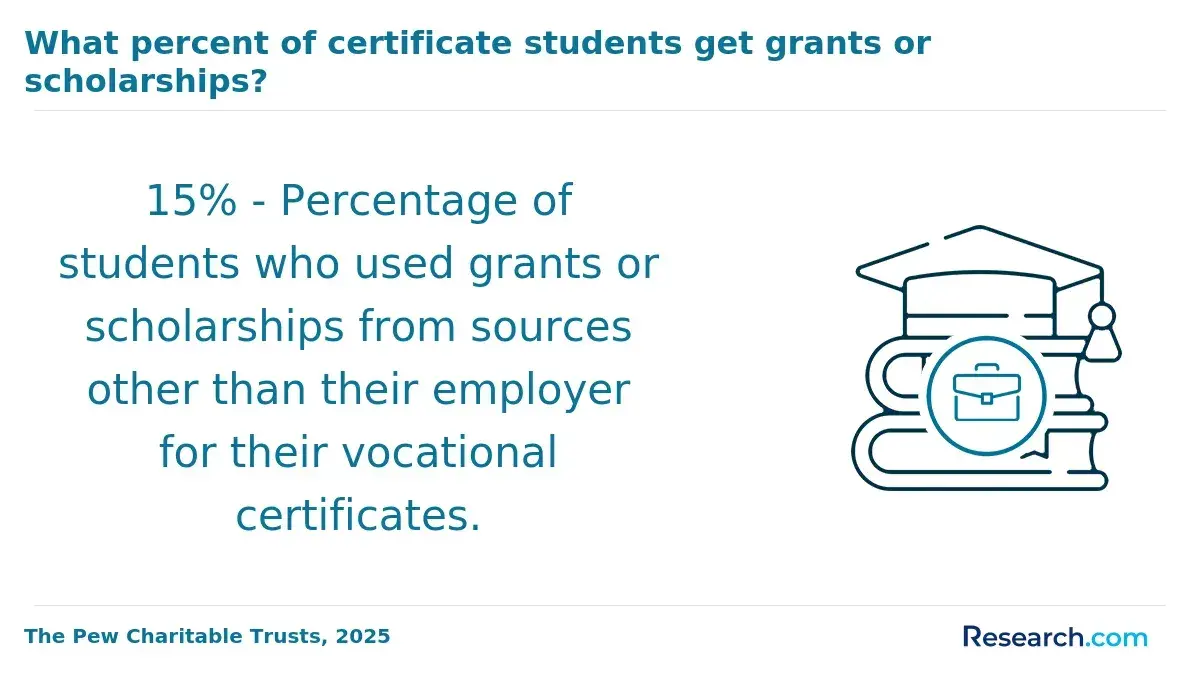
Financial aid changes your real cost by reducing, financing, or spreading out what you owe. The most valuable aid is gift aid, such as federal grants, state grants, institutional grants, and private scholarships, because it reduces net price directly. Loans and work-study can still be useful, but they should not be counted as discounts.
The Federal Pell Grant is one of the clearest examples. For the 2024-25 award year, the maximum Pell Grant is $7,395. For an eligible student comparing a $12,000 annual community college budget with a $25,000 public university budget, that grant can substantially change affordability, but it may not cover housing, transportation, or food.
When reviewing an aid offer, separate each item by how it affects your real cost. The categories below help you avoid the common mistake of treating every line on the award letter as free money.
- Grants: Usually based on financial need and generally do not need to be repaid if you meet enrollment and eligibility rules.
- Merit scholarships: Usually based on academic, talent, leadership, or other criteria; check whether they renew automatically and what GPA is required.
- Need-based institutional aid: Offered by the college and often varies widely by school, even for the same student.
- Federal student loans: Helpful for access, but they increase total repayment cost after interest and fees.
- Parent loans or private loans: Potentially useful but riskier because rates, repayment terms, and borrower protections vary.
- Work-study: A chance to earn wages through eligible jobs, not a guaranteed upfront reduction in the bill.
Two aid offers with the same total amount can have very different value. A $20,000 package made mostly of grants is stronger than a $20,000 package made mostly of loans. Always calculate net price using grants and scholarships only, then separately decide whether loans are manageable.
How do I use a net price calculator to compare colleges accurately?
A net price calculator is a college-provided tool that estimates your cost after grants and scholarships based on information such as household income, assets, family size, residency, academic profile, and housing plans. Every college that participates in federal student aid programs is expected to provide one, but calculators vary in accuracy and detail.
Use each calculator the same way so your comparisons are fair. The steps below turn scattered estimates into a decision-ready shortlist.
- Start with the same academic year and enrollment plan for every school, such as full-time undergraduate study with on-campus housing or full-time online study from home.
- Enter financial information consistently, including parent income, student income, assets, household size, and number of family members in college when requested.
- Record the full cost of attendance, not just tuition and fees, because indirect costs can change the affordability ranking.
- Subtract only grants and scholarships to calculate net price; keep loans, work-study, and payment plans in a separate column.
- Check whether scholarships are renewable for every year or only available to first-year students.
- Compare four-year cost, not just first-year cost, and adjust for likely tuition increases, transfer credit limits, or program-specific fees.
- After admission, compare the calculator estimate with the official financial aid offer and ask the school to explain major differences.
Be careful with calculators that ask very few questions. A short calculator can be convenient, but it may produce a broad estimate rather than a reliable projection. If your family owns a business, has divorced or separated parents, has major medical expenses, or has unusual income changes, contact the financial aid office before relying on the estimate.
If you are comparing remote options, review program format and institutional fit as carefully as price. Lists of popular online colleges can help you build a starting shortlist, but the net price calculator and official aid letter should drive the final cost comparison.
Which hidden costs beyond tuition should I include in my college budget?
Hidden costs are expenses that do not always appear in the tuition line but still affect whether you can afford to enroll, persist, and graduate. They matter because a school with slightly higher tuition may be cheaper overall if it lowers transportation, housing, technology, or time-to-degree costs.
The table below summarizes the non-tuition costs most likely to change your real budget. Use it when building a side-by-side spreadsheet for each college.
| Cost category | What to check | Why it can change net price |
| Fees | Technology, lab, course, graduation, health, online learning, and student activity fees | Mandatory fees can add meaningful cost even when tuition is low |
| Housing and food | Dorm rates, meal plans, off-campus rent, utilities, deposits, and summer housing needs | Living costs can exceed tuition at some public and community colleges |
| Books and supplies | Textbooks, access codes, software, tools, uniforms, or clinical equipment | Some majors have unusually high materials costs |
| Transportation | Parking, gas, public transit, flights, car maintenance, or commuting time | A cheap campus far from home can become expensive to reach regularly |
| Technology | Laptop requirements, internet, webcams, specialized software, or testing platforms | Online and hybrid courses may shift equipment costs to students |
| Health and insurance | Student health insurance rules, immunizations, background checks, or clinical screening | Health-related requirements can be mandatory for enrollment or field placements |
| Lost income | Reduced work hours, unpaid internships, student teaching, clinical rotations, or travel time | Opportunity cost affects affordability even when it is not on the bill |
College Board's 2024-25 cost-of-attendance estimates show why this matters: the average published in-state tuition and fees at public four-year colleges are $11,610, while the average full budget for an in-state student living on campus is much higher once housing, food, books, transportation, and personal expenses are included. For decision-making, the full budget is the better number.
Hidden costs also vary by major. Nursing, engineering, aviation, art, education, and laboratory-based sciences may require equipment, clinical placements, travel, or licensing-related expenses that are not obvious in a general tuition comparison.
How do online programs and campus programs differ in total net price?
Online programs can lower total net price when they let you avoid relocation, continue working, reduce commuting, or complete courses on a flexible schedule. They can also cost more than expected if the school charges online program fees, requires proctored exams, limits institutional aid for online students, or offers fewer support services.
The best format depends on your schedule, learning style, career goal, and local cost of living. The comparison below shows where online and campus programs typically differ financially and academically.
| Factor | Online program | Campus program |
| Housing and relocation | Often lower if you can live at home or avoid moving | Can be higher if on-campus or nearby housing is required |
| Work flexibility | Often better for working adults and caregivers | May be harder if courses meet during standard work hours |
| Fees and technology | May include online learning, platform, proctoring, or technology fees | May include campus, activity, facility, lab, or health fees |
| Networking and services | Depends heavily on virtual advising, career services, and faculty access | May offer easier access to labs, clubs, internships, and in-person recruiting |
| Program fit | Strong for many business, IT, education, healthcare administration, and liberal arts programs | Often better for programs requiring labs, studios, clinical work, or extensive hands-on training |
Online enrollment remains a major part of U.S. higher education, and many colleges now design online programs for adult learners rather than treating them as secondary options. That trend gives students more flexibility, but it also makes quality checks more important because online programs differ widely in interaction, advising, and career support.
If your goal is remote employment, program choice matters as much as format. Degrees connected to digital communication, business operations, analytics, computer science, and health administration may align well with degrees for work from home jobs, but you should still verify internship options, portfolio expectations, and employer recognition.
How does starting at a community college affect long-term net price and degree cost?
Starting at a community college can reduce long-term degree cost because tuition is usually much lower for the first two years. It can be an especially strong option for students who need time to choose a major, improve academic preparation, live at home, work part time, or complete general education requirements at a lower price.
The trade-off is transfer risk. A community college start saves money only if credits apply to the eventual bachelor's degree, required courses are available on time, and the student transfers before accumulating excess credits. The cheapest first year is not helpful if it creates a more expensive fifth year.
Before choosing this path, take the following steps to protect the savings. These actions are especially important if you plan to enter a competitive major such as nursing, engineering, business, education, computer science, or allied health.
- Choose the intended four-year college early, even if you are not ready to apply yet.
- Use an official transfer pathway or articulation agreement whenever possible.
- Confirm which courses count toward major requirements, not just general electives.
- Ask whether the bachelor's program has minimum GPA, prerequisite, portfolio, test, or clinical requirements.
- Meet with advisors at both the community college and the destination institution before registering each term.
- Track financial aid limits because excess credits, repeated courses, or part-time enrollment can affect eligibility.
- Apply for transfer scholarships before the deadline, not after admission.
Community college can be a smart affordability strategy, but it is not automatically the best route for every student. Students who receive strong first-year institutional grants from a four-year college, need immediate access to specialized labs, or want a tightly sequenced cohort program may find that starting directly at the four-year school has a lower practical cost.
How do accreditation and program quality influence the value of a lower-cost college?
Accreditation and program quality determine whether a lower-cost college is a real value or a false bargain. Institutional accreditation affects federal financial aid eligibility, credit transfer, graduate school admission, and employer acceptance. Programmatic accreditation may also be required or strongly preferred in fields such as nursing, education, counseling, social work, engineering, and allied health.
A low net price is risky if the program does not meet the standards needed for your next step. For example, a nursing or teacher preparation program that does not meet state licensing requirements may force you to take additional coursework, delay employment, or become ineligible for the role you wanted.
Use this quality checklist before committing to a lower-cost option. It helps you separate genuine affordability from underinvestment in the student experience.
- Confirm institutional accreditation through the U.S. Department of Education's recognized accreditor information or the school's official accreditation page.
- Check whether your specific program needs programmatic accreditation for licensure, certification, graduate admission, or employer recognition.
- Review graduation, retention, transfer-out, and student loan repayment indicators instead of relying only on marketing claims.
- Ask whether courses are taught by qualified faculty with relevant academic or professional experience.
- Verify access to advising, tutoring, career services, disability support, library resources, and internship or clinical placement help.
- Look for transparent curriculum maps that show when required courses are offered and how long the degree normally takes.
- Be cautious if a school pressures you to enroll quickly, avoids cost questions, or cannot clearly explain credit transfer and aid renewal rules.
Quality also affects major choice. If you are comparing high-ROI fields, review academic fit alongside expected labor-market value; guides to the most lucrative majors can be useful, but the better choice is the affordable accredited program you are likely to complete and use.
How should I weigh graduation rates, earnings, and debt against net price?
Net price tells you what college costs, but graduation rates, earnings, and debt help you judge whether the cost is likely to be worth taking on. A very low net price is less valuable if students often fail to complete the program. A higher net price may be reasonable if the program has strong completion support, low debt at graduation, and clear career pathways.
BLS 2024 education data reports median weekly earnings of $1,543 for workers with a bachelor's degree, compared with $1,099 for workers with an associate degree. This does not mean every bachelor's program pays off equally; it means degree level is associated with higher median earnings across the labor market, while individual outcomes still depend on major, region, experience, and occupation.
The table below shows how to interpret outcome measures when comparing colleges. These indicators are most useful when reviewed together rather than one at a time.
| Metric | What it tells you | How to use it carefully |
| Graduation rate | How many students complete within a defined time period | Compare similar student populations and program types when possible |
| Retention rate | How many first-year students return for the next year | Use it as a signal of advising, fit, affordability, and student support |
| Median earnings | Typical earnings for former students after enrollment or completion | Compare by program when available because major matters more than institution-wide averages |
| Median debt | Typical amount borrowed by students who took loans | Review debt together with completion and earnings, not in isolation |
| Loan repayment outcomes | Whether former students are making progress on repayment | Treat weak repayment as a warning sign, especially for programs with high borrowing |
| Licensure or certification pass rates | Performance on required professional exams | Essential for careers where passing an exam is required for employment |
A practical rule is to compare total expected debt with the earnings range for the specific career you are targeting. Avoid assuming that institution-wide earnings apply to your major. Computer science, education, social work, nursing, accounting, fine arts, and biology can have very different early-career earnings even within the same college.
For advanced study, the same logic applies. Some graduate degrees that are worth it may improve career mobility, licensure eligibility, or earnings potential, while others may not justify the extra debt unless they are required for your field.
What strategies can I use to reduce my net price without harming my career goals?
You can reduce net price without weakening your career prospects by targeting gift aid, choosing flexible formats, protecting transfer credits, and selecting programs with strong completion support. The goal is not simply to spend the least; it is to spend the least on a credible path to the outcome you want.
Start with strategies that lower cost without reducing program quality. The list below focuses on actions that preserve accreditation, degree fit, and career alignment.
- Apply to a balanced college list that includes at least one financial safety, one academic fit, and one school known to offer strong institutional aid for your profile.
- Submit the FAFSA as early as possible and complete any state or institutional aid forms before priority deadlines.
- Ask each school whether grants and scholarships are renewable, whether aid changes after the first year, and what GPA or credit load is required.
- Compare net price by year, not just first-year aid, especially if the offer includes one-time scholarships.
- Use transfer credits, dual enrollment, AP, IB, CLEP, military credits, or prior learning assessment only when they apply to required courses.
- Consider living at home, choosing a lower-cost housing plan, or attending online if it does not reduce access to labs, clinicals, internships, or networking needed for your field.
- Work part time only at a level that does not threaten grades, course sequencing, or timely completion.
- Appeal financial aid if your family has experienced job loss, medical expenses, income changes, or other special circumstances.
- Choose the right major early enough to avoid excess credits, but not so quickly that you ignore fit, prerequisites, and career realities.
- Borrow federal loans before considering private loans, and estimate monthly payments before accepting any debt.
Also avoid shortcuts that create long-term risk. Do not choose an unaccredited program because it is cheap, enroll before seeing the full cost of attendance, ignore required licensure rules, or assume that all credits will transfer. If a college cannot explain total cost, aid renewal, accreditation, and career outcomes clearly, treat that as a red flag.
The best final choice usually balances four questions: Can I afford the net price? Can I complete the program on time? Does the program meet accreditation or licensure requirements? Does it connect realistically to the career or graduate pathway I want?
Other Things You Should Know About
No. Net price is cost of attendance minus grants and scholarships. Out-of-pocket cost is how you cover that amount through savings, income, loans, payment plans, or work.
Not always. Choose the lowest net price only if the college also fits your major, accreditation needs, completion timeline, support needs, and career goals. A slightly higher net price may be better if it reduces transfer risk or improves your chance of graduating.
No. Loans help pay the bill, but they do not reduce net price because they must be repaid. When comparing colleges, subtract only grants and scholarships first, then evaluate loans separately.
Yes, for some students. Private colleges often have higher sticker prices, but some offer large institutional grants. The only way to know is to compare each school's full cost of attendance after grants and scholarships.
References
- Does College Pay Off? A Comprehensive Return On Investment Analysis - FREOPP https://freopp.org/whitepapers/does-college-pay-off-a-comprehensive-return-on-investment-analysis/
- How can you reduce costs without it having a negative effect on your company? - MyABCM https://myabcm.com/reduce-costs-without-negative-effect/
- Students can now see exactly how much they can expect to earn based on college, major and degree—here's how https://www.cnbc.com/2019/11/27/how-to-use-college-scorecard-to-see-how-much-college-graduates-earn.html
- Budgeting for College Reality Check: Estimating Costs BEYOND Tuition https://www.cirkledin.com/library/scholarships-and-financial-aid/real-cost-college-budgeting-beyond-tuition/
- How to Find Affordable Christian Colleges (Without Compromising Your Education) - Great Lakes Christian College https://glcc.edu/how-to-find-affordable-christian-colleges-without-compromising-your-education/
- How to Use a College Net Price Calculator https://collegehound.com/blog/how-to-use-net-price-calculator/
- B.Tech Colleges in Indore with Low Fees | SAIT Fee & Value Guide https://www.aurogroup.ac/news/btech-colleges-in-indore-with-low-fees--sait-fee--value-guide
- The Effects of Rising Student Costs in Higher Education - Ithaka S+R https://sr.ithaka.org/publications/the-effects-of-rising-student-costs-in-higher-education/
- Cost of Attendance: What It Really Includes and How to Lower It https://www.fastweb.com/financial-aid/articles/cost-of-attendance
- Estimate your college cost | USAGov https://www.usa.gov/estimate-college-cost