2027 Cheapest Accredited Online Communication Disorders Degree Programs: Tuition, Fees, and Financial Aid

Co-Founder and Chief Data Scientist

Reviewed by Rhea Paul, PhD
SLP Education & Research Expert
Choosing an affordable online Communication Disorders degree is not just about finding the lowest tuition rate. Mandatory fees, transfer rules, accreditation, and financial aid can change the real price dramatically. The U.S. Bureau of Labor Statistics reported a $95,410 median annual wage for speech-language pathologists in May 2024, which keeps demand for communication sciences pathways strong.
This guide is for students comparing accredited online programs, including future speech-language pathology applicants, and explains how to judge total cost, net price, aid options, and value before enrolling.
Key Things You Should Know
- Among commonly available accredited online Communication Disorders bachelor's options, Fort Hays State University is often one of the lowest published-cost choices at about $257.33 per credit, while other affordable public options commonly fall near $299 to $460 per credit before financial aid.
- A $299-per-credit program with high transfer acceptance and low mandatory fees can cost less than a lower-tuition program that requires more credits in residence.
- For eligible students, federal aid can materially reduce net price; the maximum Federal Pell Grant is $7,395 for the 2025-26 award year, but final aid depends on FAFSA data, enrollment level, school cost of attendance, and remaining eligibility.
What Are the Cheapest Accredited Online Communication Disorders Degree Programs?
The cheapest accredited online Communication Disorders degree programs are usually public university bachelor's or bachelor-completion programs in communication sciences and disorders, communicative disorders, speech-language pathology foundations, or a closely related title.
These programs are typically designed for students who want a lower-cost pathway into graduate study, speech-language pathology assistant roles where permitted, audiology preparation, or related human services and education careers.
For cost comparison, the table below focuses on online or substantially online undergraduate Communication Disorders options from institutionally accredited U.S. schools. Because schools update rates and fee schedules, use these figures as a current comparison framework and confirm the exact cost with the bursar and financial aid office before applying.
| Rank by published online cost | School and online degree | Accreditation to verify | Published online tuition or tuition-and-fee estimate | Estimated cost for 60 credits | Best fit |
| 1 | Fort Hays State University, B.S. in Communication Sciences and Disorders | Institutional accreditation through the Higher Learning Commission | About $257.33 per credit for online undergraduate tuition | About $15,440 | Students seeking a low-cost public online bachelor's route before graduate study |
| 2 | Valdosta State University, online B.S.Ed. in Communication Disorders | Institutional accreditation through SACSCOC | About $299 per credit under common Georgia online eTuition pricing | About $17,940 | Students who want an education-focused communication disorders pathway |
| 3 | Eastern New Mexico University, B.S. in Communicative Disorders | Institutional accreditation through the Higher Learning Commission | Often near the low-$300s per credit after required online charges, depending on residency and course load | Usually about $18,000 to $20,000 | Transfer students looking for a public university with online communicative disorders coursework |
| 4 | Utah State University, online B.S. in Communicative Disorders and Deaf Education | Institutional accreditation through the Northwest Commission on Colleges and Universities | Commonly published around the high-$300s to low-$400s per credit for online undergraduate study | Usually about $24,000 to $25,000 | Students interested in communication disorders with deaf education-related preparation |
| 5 | University of Northern Colorado, online B.A. in Audiology and Speech-Language Sciences | Institutional accreditation through the Higher Learning Commission | Commonly around the mid-$400s per credit through extended campus pricing | Usually about $27,000 to $28,000 | Students comparing a structured online communication sciences pathway from a public university |
The main takeaway is that Fort Hays State University usually appears strongest on advertised per-credit price, but transfer credit, state residency, online course fees, and whether the program requires a full 120 credits can change the winner. A student entering with an associate degree may pay for only 45 to 60 upper-division or major credits, while a first-time college student may need to budget for the full bachelor's degree.
It is also important to distinguish undergraduate affordability from graduate licensure requirements. A bachelor's degree in Communication Disorders can prepare students for graduate admission, but independent speech-language pathologist licensure normally requires a graduate degree, supervised clinical experience, and state-specific licensing steps.
How Were the Cheapest Online Communication Disorders Degree Programs Ranked?
This ranking prioritizes the cost a student is most likely to face after enrolling, not just the lowest number on a marketing page. A program with low tuition but high technology fees, limited transfer credit, or no federal aid access may be less affordable than it first appears.
The ranking used the following cost and quality checks because they directly affect whether an online Communication Disorders program is both affordable and usable for a student's next goal:
- Confirmed institutional accreditation from a U.S. Department of Education-recognized accreditor, because federal financial aid and credit transfer usually depend on it.
- Published online tuition or tuition-and-fee rates, with preference for schools that make per-credit costs easy to find.
- Estimated mandatory cost for a 60-credit completion path, since many online Communication Disorders students transfer general education credits.
- Availability of online delivery for the major, not merely a few online electives.
- Financial aid compatibility, including FAFSA participation and the availability of grants, scholarships, or payment plans.
- Program relevance for graduate school preparation, speech-language pathology assistant pathways, audiology preparation, or related education and health careers.
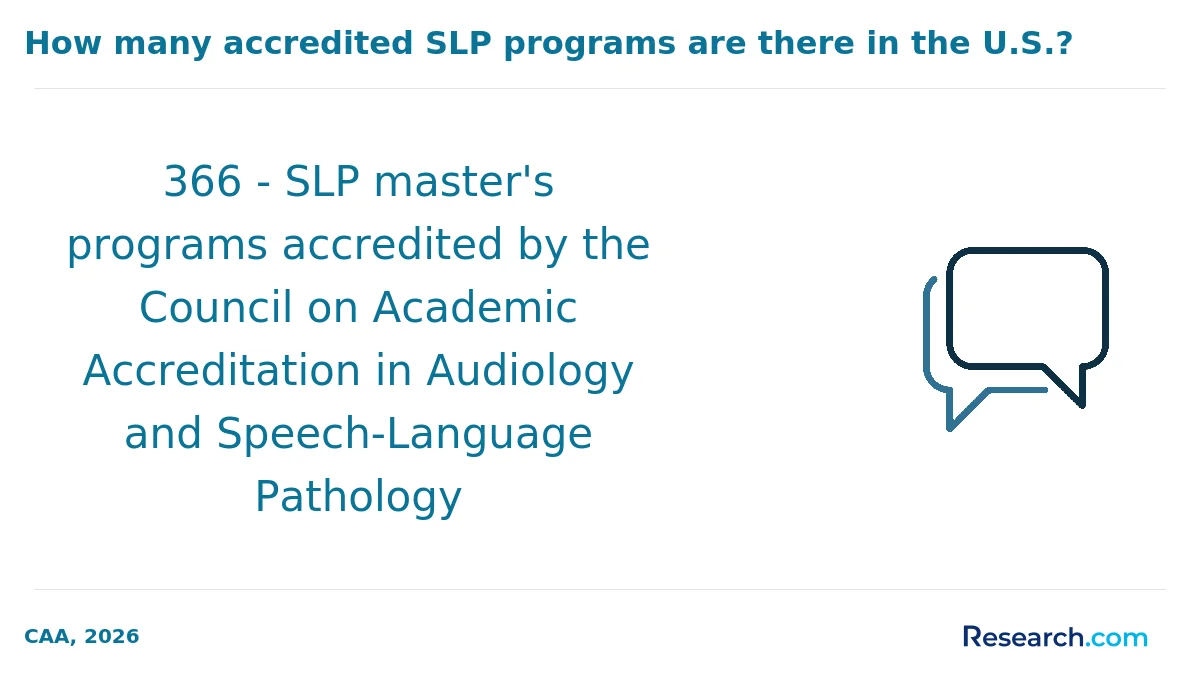
The ranking does not assume that a bachelor's program has programmatic accreditation from the Council on Academic Accreditation in Audiology and Speech-Language Pathology. CAA accreditation applies to many graduate-level speech-language pathology and audiology programs, while bachelor's programs are primarily judged by institutional accreditation, curriculum fit, transferability, and graduate school preparation.
A common mistake is comparing a 120-credit full-degree cost at one school with a 45-credit completion cost at another. The better comparison is the number of credits you personally must complete multiplied by the tuition and mandatory fee rate, then reduced by grants, scholarships, employer benefits, and transfer savings.
How Can You Verify the Accreditation of an Online Communication Disorders Degree Program?
Accreditation is the first affordability checkpoint because an unrecognized program can make credits difficult to transfer, block access to federal financial aid, and weaken preparation for graduate study. For Communication Disorders students, there are two accreditation questions: whether the school itself is institutionally accredited and whether a graduate program, if applicable, has the right professional accreditation.
Use this sequence before you compare prices or submit an enrollment deposit:
- Search the institution in the U.S. Department of Education's Database of Accredited Postsecondary Institutions and Programs to confirm recognized institutional accreditation.
- Confirm that the school participates in Title IV federal student aid programs if you plan to use FAFSA-based aid.
- For master's programs in speech-language pathology or clinical doctorate programs in audiology, verify CAA accreditation status through the professional accreditor rather than relying only on a school webpage.
- Ask whether the online version of the program is covered under the same accreditation and state authorization as the campus program.
- Check whether the curriculum satisfies prerequisite expectations for the graduate programs or state credentials you may pursue later.
The table below summarizes which accreditation checks matter most by degree level. This matters because the cheapest undergraduate program may still be a good value if it is institutionally accredited and prepares you for graduate admission, even though it is not itself a licensure-level program.
| Program level | Main accreditation issue | Why it matters for cost and outcomes |
| Bachelor's in Communication Disorders | Institutional accreditation | Supports credit transfer, federal aid eligibility, and graduate school recognition |
| Post-baccalaureate leveling coursework | Institutional accreditation and graduate prerequisite alignment | Helps career changers avoid paying for courses that do not satisfy master's prerequisites |
| Master's in Speech-Language Pathology | CAA accreditation or candidacy status, plus state authorization | Often required for clinical certification, licensure pathways, and supervised practice eligibility |
| Doctor of Audiology | CAA accreditation and state licensure alignment | Critical for audiology licensure preparation and clinical placement acceptance |
Red flags include vague statements such as "accredited curriculum," no named accreditor, pressure to enroll before you review the catalog, or a refusal to explain whether online students are covered by the same accreditation status as campus students.
An accredited online Communication Disorders degree has four different cost layers: tuition, mandatory fees, total program cost, and net price. Tuition is the per-credit instructional charge.
Mandatory fees are required charges such as technology, distance learning, student service, graduation, assessment, or online course fees. Total program cost is tuition plus required fees for the credits you must complete. Net price is what remains after grants, scholarships, waivers, and other gift aid are applied.
The table below shows how the same tuition rate can produce different real costs depending on transfer credit and required fees. This is the calculation students should use instead of relying only on a school's advertised per-credit tuition.
| Cost scenario | Example calculation | Estimated pre-aid cost | What the student should check |
| Low-cost completion path | 60 credits at $257.33 per credit | About $15,440 | Whether all prior credits transfer and whether major prerequisites are satisfied |
| Mid-cost completion path | 60 credits at $299 per credit | About $17,940 | Whether online fees are included in the published rate |
| Higher-cost public online path | 60 credits at $450 per credit | About $27,000 | Whether the higher price buys better advising, placement support, or graduate preparation |
| Full bachelor's path with no transfer | 120 credits at $299 per credit | About $35,880 | Whether cheaper general education credits can be completed elsewhere first |
Public four-year tuition has continued to put pressure on students' budgets. The College Board's 2024 pricing data placed average published tuition and fees at public four-year colleges at $11,610 for in-state students for 2024-25, before room, board, books, and other expenses. Online students may avoid campus housing costs, but they still need to budget carefully for required fees, books, software, clinical observation requirements, and graduation charges.
To estimate your own cost, request a degree audit before enrolling. Ask the school to show the number of accepted transfer credits, remaining major credits, remaining general education credits, required fees, expected textbook or software costs, and whether tuition changes by course level or residency.
Tuition models matter because online Communication Disorders students often bring transfer credits, work while enrolled, or complete courses part time. The most affordable model is the one that fits your pace without forcing you to pay for unused credits or repeat coursework.
These are the tuition structures most likely to affect the final price of an online Communication Disorders degree:
- Per-credit tuition: Best for part-time students who want predictable billing and do not want to pay for more credits than they can complete in a term.
- Flat-rate block tuition: Best for full-time students who can take the maximum covered credits without hurting grades or delaying graduation.
- In-state online tuition: Best when a public university gives online students the same lower rate regardless of campus attendance requirements.
- Separate online eTuition: Best when the school charges one distance-learning rate to all online students, especially if out-of-state tuition would otherwise be much higher.
- Accelerated terms: Best for students who can handle shorter courses and want to finish faster, but only if course sequencing does not create gaps.
- Competency-based or subscription pricing: Potentially useful for self-paced general education or elective credits, but less common for Communication Disorders major coursework.
Students comparing accelerated and flexible models can also look at how fast track college programs structure tuition, credit loads, and completion timelines. The same principle applies here: faster is cheaper only if you can complete the courses successfully and if the credits count toward the degree you actually need.
A common affordability trap is enrolling part time at a school with per-term fees that do not shrink much when you take fewer credits. In that case, taking 6 credits per term may cost more per credit than taking 12 credits, even when the tuition rate looks identical.
FAFSA is the gateway to most federal student aid for eligible U.S. students, including Pell Grants, federal student loans, and campus-administered aid. Online students can qualify for federal aid when they attend an eligible institution, enroll in an eligible degree or certificate program, and meet general federal aid requirements.
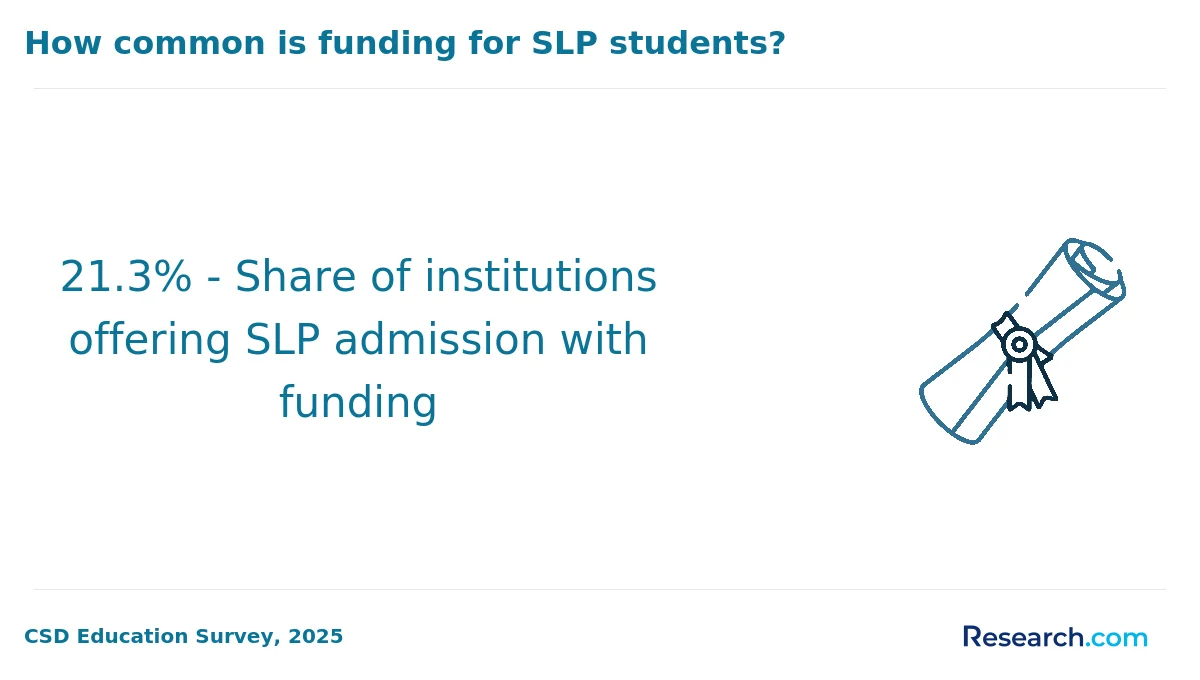
Federal Student Aid lists the maximum Pell Grant at $7,395 for the 2025-26 award year. That does not mean every student receives that amount, but it shows why net price can be lower than the published price for students with grant eligibility.
The FAFSA process changed significantly with the Student Aid Index replacing the older Expected Family Contribution formula beginning with the 2024-25 aid cycle. For online Communication Disorders students, that makes it especially important to file the FAFSA early and compare official aid offers rather than estimating affordability from tuition alone.
Use this practical FAFSA checklist before enrolling:
- Confirm the school and the specific online degree program are eligible for Title IV federal student aid.
- Submit the FAFSA for the correct award year and list every school you are seriously considering.
- Compare aid offers by separating gift aid from loans, work-study, and payment plans.
- Check enrollment rules because dropping below half time can reduce aid or loan eligibility.
- Ask whether summer courses are covered by remaining annual aid or require separate planning.
- Calculate net price after grants and scholarships before deciding how much to borrow.
The same federal-aid logic applies across many online health-related programs, from Communication Disorders to an RN to BSN program without clinicals. The key difference is not the online format; it is whether the institution, program, enrollment level, and student meet federal eligibility rules.
Private student loans should generally be compared carefully against federal loans because federal loans may include fixed interest rates, income-driven repayment options, deferment protections, and potential forgiveness pathways that private lenders do not have to match.
Scholarships, grants, and tuition benefits can make a higher-priced accredited program cheaper than a lower-priced one. The difference is that grants and scholarships usually do not need to be repaid, while loans do. Tuition benefits may come from an employer, military program, state workforce initiative, or school-specific discount.
Look for funding in layers rather than relying on one scholarship search. The strongest affordability strategy usually combines the following:
- Federal grants: Pell Grants and other need-based federal aid can reduce net price for eligible undergraduate students.
- State grants: Many states fund residents attending eligible public or private institutions, but rules may differ for online and out-of-state programs.
- Institutional scholarships: Schools may offer transfer, adult learner, academic merit, first-generation, or department-level awards.
- Communication sciences scholarships: Professional associations, local foundations, and disability-services organizations may support students entering speech, hearing, education, or rehabilitation fields.
- Employer tuition assistance: Schools, hospitals, clinics, early intervention providers, and education organizations may reimburse coursework tied to workforce needs.
- Military and veteran benefits: Eligible students may use GI Bill benefits, tuition assistance, or state veteran education programs at approved institutions.
When comparing aid, ask whether each scholarship is renewable, whether it requires full-time enrollment, whether it covers summer courses, and whether it stacks with other awards. A one-time $1,000 scholarship is helpful, but a renewable $1,000 award over several terms may change the affordability calculation more substantially.
Students comparing health-related graduate pathways may notice similar affordability questions in fields such as the cheapest nurse practitioner programs: the sticker price matters, but renewable aid, employer reimbursement, and clinical-placement costs often determine the real net cost.
Transfer credit is one of the most powerful ways to lower the cost of an online Communication Disorders degree. If a school accepts 60 credits from a community college, the student may only need to pay university tuition for upper-division, major, and residency-required credits.
Before assuming transfer credit will reduce your bill, review the school's limits carefully. These policies determine how much of your prior learning actually counts:
- Maximum transfer credits: Some universities accept up to 60, 75, or 90 credits, but the limit varies by institution.
- Residency requirement: Many schools require a minimum number of credits to be completed through that university.
- Major prerequisite rules: Communication Disorders courses such as phonetics, anatomy, language development, audiology, or speech science may need to meet specific content standards.
- Course age limits: Some programs may reject older science, statistics, or major courses if content is considered outdated.
- Minimum grade rules: Transfer courses may need a C or higher, and some major prerequisites may require stronger grades.
- Prior learning assessment: Credit for workplace learning, exams, or military training may help with electives but may not replace core Communication Disorders courses.
Competency-based study can lower costs when it applies to general education or elective requirements, but students should be cautious with major coursework. Graduate programs in speech-language pathology may expect transcripted prerequisite courses with clear titles, grades, and credit hours.
This is also why students in other career-focused online health programs, such as online radiology tech programs, are often advised to verify transfer and accreditation rules before enrolling. A low-cost credit is only a savings if the receiving school, licensing pathway, or graduate program accepts it.
The most practical step is to request an unofficial transfer evaluation before admission and an official degree plan before registration. Do not rely only on a transfer equivalency database if you have unusual credits, older coursework, military training, or courses from more than one institution.
How Should Students Compare the Net Price, Quality, and Return on Investment of Online Communication Disorders Degree Programs?
The best-value online Communication Disorders degree is the one with the lowest realistic net price for a program that still supports your next step. For many students, that next step is admission to a graduate speech-language pathology program. For others, it may be a school support role, speech-language pathology assistant pathway where allowed, audiology preparation, or a related human services career.
Use the table below to compare affordability and value side by side. This helps prevent the common mistake of choosing a low-cost program that does not align with graduate prerequisites, licensing expectations, or career goals.
| Decision factor | Why it affects value | What to ask before enrolling |
| Net price after aid | Shows the actual cost after grants and scholarships, not just sticker price | What will I pay after gift aid, and how much would I need to borrow? |
| Transfer acceptance | Can reduce the number of university credits required | How many of my credits apply to the major, not just electives? |
| Graduate school preparation | Important for students planning to become speech-language pathologists or audiologists | Do courses meet common prerequisites for CAA-accredited graduate programs? |
| Online format | Affects work schedules, pacing, and travel costs | Are courses asynchronous, synchronous, hybrid, or tied to required campus visits? |
| Student support | Can influence persistence and completion | Will I receive online advising, tutoring, career support, and graduate application guidance? |
| Outcome fit | Helps determine whether paying more is justified | Where do graduates continue their education or work, and how is that measured? |
Salary data should be used carefully. The BLS May 2024 median wage for speech-language pathologists reflects workers who generally hold the required graduate education and licensure, not students who only complete a bachelor's degree. That means a low-cost bachelor's degree may be a smart first step, but it should be evaluated as part of a longer education plan if clinical practice is the goal.
Students comparing adjacent health and wellness fields can apply the same net-price logic when evaluating an online degree in nutrition. In both fields, the right choice depends on accreditation, prerequisites, supervised experience requirements, total cost, and the credential needed for the intended role.
Before making a final decision, ask each school for a written cost breakdown, a transfer evaluation, accreditation confirmation, online course format details, graduate school preparation information, and financial aid renewal rules. If a school cannot answer these clearly, the advertised tuition rate should not be treated as reliable evidence of affordability.
Other Things You Should Know About Communication Disorders Degrees
No. In most cases, becoming a licensed speech-language pathologist requires a master's degree, supervised clinical experience, passing required exams, and meeting state licensing rules. An online bachelor's degree can be a lower-cost foundation for graduate study.
Many online undergraduate programs offer asynchronous coursework, but not all do. Some courses may require live meetings, proctored exams, group projects, observation hours, or scheduled instructor sessions, so students should confirm the format course by course.
Undergraduate programs may include observation or field-related assignments, but licensure-level clinical training is usually completed through approved in-person placements. For graduate programs, students should confirm how placements are arranged and whether their state is approved for online enrollment.
Often, the diploma does not state that the degree was completed online, but policies vary by school. What matters more is that the institution is properly accredited, the transcripted coursework meets your goals, and graduate programs or employers recognize the degree.
- U.S. Bureau of Labor Statistics - Speech-Language Pathologists https://www.bls.gov/ooh/healthcare/speech-language-pathologists.htm
- ASHA EdFind - Accredited Speech-Language Pathology Programs https://find.asha.org/ed/
- O*NET OnLine - Speech-Language Pathologists https://www.onetonline.org/link/summary/29-1127.00
- Idaho State University - Master of Science in Speech-Language Pathology (Online/Distance Education) https://www.isu.edu/slp/programs-offered/slp-graduate-program/
- New York University - Online MS, Communicative Sciences and Disorders (Speech@NYU) https://steinhardt.nyu.edu/degree/online-ms-communicative-sciences-and-disorders
- James Madison University - Master of Science (M.S.) in Speech-Language Pathology (Distance Education / Online) https://www.jmu.edu/chbs/csd/online_ms/index.shtml
- Abilene Christian University - Master of Science in Speech-Language Pathology (Online) https://acu.edu/academics/graduate/master-of-science-in-speech-language-pathology/
- Pepperdine University - Master of Science in Speech-Language Pathology https://healthscience.pepperdine.edu/online-masters-in-speech-language-pathology/