2027 Best Online Communication Disorders Degree Programs at Nonprofit Universities

Co-Founder and Chief Data Scientist
Choosing an online communication disorders degree requires more than finding a nonprofit school with convenient classes: the degree level, accreditation, and clinical pathway can determine whether it supports graduate admission or a licensed career. The U.S. Bureau of Labor Statistics projects 19% employment growth for speech-language pathologists from 2023 to 2033, much faster than average.
This guide helps prospective students compare nonprofit online programs, calculate realistic costs, verify academic quality, and select a path aligned with their career and budget goals.
Key Things You Should Know
- A bachelor's degree in communication disorders can build prerequisites for graduate study, but a master's degree from a properly accredited program is generally required for speech-language pathology licensure.
- The strongest online nonprofit option is not automatically the lowest-priced one; compare institutional accreditation, curriculum, clinical placement support, total cost, transfer rules, and whether the program fits your state's licensing requirements.
- Speech-language pathologists had a median annual wage of $89,290 in May 2024, while BLS projects 19% job growth from 2023 to 2033; these figures describe the occupation, not a guaranteed outcome for any graduate.
What Makes an Online Communication Disorders Degree Program at a Nonprofit University Different?
An online communication disorders degree examines speech, language, hearing, swallowing, voice, and related developmental or acquired conditions. Programs may use titles such as communication sciences and disorders, speech-language-hearing sciences, speech and hearing science, or communication disorders. At nonprofit universities, programs may be offered by public institutions or private nonprofit institutions; private and nonprofit are not opposite categories.
The most important difference is usually not nonprofit status itself. Nonprofit colleges typically reinvest revenue into institutional operations, instruction, student services, and facilities, but students should still assess the specific department, degree, faculty, clinical partnerships, and outcomes. A public nonprofit may offer lower tuition for in-state residents, while a private nonprofit may provide smaller cohorts, structured advising, or a more predictable tuition model.
Communication disorders education has distinct degree routes. The comparison below helps students match the credential to a realistic next step rather than enrolling in a program whose outcome does not meet their intended role.
| Degree level | Typical purpose | Common online availability | Important limitation |
| Associate degree | Introduces communication, health, and general education coursework | Limited | Usually does not qualify a graduate for speech-language pathology licensure |
| Bachelor's degree | Builds foundations for graduate school or related support roles | Available at selected nonprofit universities | Usually insufficient for independent clinical practice as a speech-language pathologist |
| Master's degree | Prepares students for speech-language pathology clinical practice and licensure steps | Often hybrid rather than fully online | Includes supervised clinical education and state-specific requirements |
| Doctoral degree | Supports research, university teaching, leadership, or advanced specialization | Limited online availability | Not generally required for entry-level SLP practice |
Students exploring healthcare education broadly may also compare programs with different clinical structures, such as an RN to BSN program without clinicals. That pathway is not interchangeable with communication disorders training, but it illustrates why students should confirm experiential requirements before assuming an online healthcare degree can be completed entirely remotely.
A bachelor's program fits students beginning their academic path, transferring from community college, or preparing for a master's program. A master's program fits students who already hold an appropriate bachelor's degree and seek a clinical career. Students seeking work in schools or healthcare settings without becoming an SLP should ask employers what credential they require; assistant roles, paraprofessional positions, and support roles have different rules by employer and state.
How Can Students Verify Accreditation for an Online Communication Disorders Degree at a Nonprofit University?
Students should verify two separate forms of quality assurance: institutional accreditation and programmatic accreditation. Institutional accreditation confirms that the university meets broad academic and administrative standards. Programmatic accreditation evaluates whether a professional program meets field-specific educational standards. Neither should be assumed from a school's nonprofit status, brand recognition, or online delivery format.
For a master's program intended to lead toward speech-language pathology certification and licensure, the key specialized accreditor is the Council on Academic Accreditation in Audiology and Speech-Language Pathology (CAA), which is affiliated with the American Speech-Language-Hearing Association. A bachelor's program may be institutionally accredited without CAA accreditation; that can be appropriate, but students should verify that its prerequisites are accepted by the graduate programs they may later pursue.
Use the following process before submitting an enrollment deposit. It protects students from confusing a university-wide accreditation claim with approval of the exact degree or delivery format they plan to enter.
- Find the university in the U.S. Department of Education or Council for Higher Education Accreditation directory and confirm its current institutional accreditor.
- For clinical master's programs, search the CAA program directory and confirm the campus, degree, and accreditation status.
- Ask whether the online or hybrid cohort is included in the accredited program and whether any accreditation action, probation, or teach-out plan affects it.
- Request written confirmation that the curriculum meets educational requirements for the state where you expect to complete clinical training and seek licensure.
- Check the state licensing board separately because licensure rules, clinical-hour requirements, examinations, and supervised fellowship requirements vary.
Red flags include vague claims that a program is "accredited" without naming the accreditor, a master's curriculum that cannot explain clinical placement arrangements, and admissions staff who cannot identify state authorization or licensure disclosures. Accreditation is necessary but not sufficient: students should also examine tuition, faculty expertise, clinical supervision, and completion support.
How Rigorous Are Online Communication Disorders Degree Programs at Nonprofit Universities?
Online communication disorders programs can be academically demanding. Students commonly study phonetics, anatomy and physiology of speech and hearing, language development, neuroscience, audiology, speech science, research methods, assessment, and culturally responsive practice. Graduate curricula add diagnosis, treatment planning, evidence-based intervention, ethics, and supervised clinical education.
Online delivery changes where lectures and discussions occur, not the academic expectations. A rigorous program uses measurable learning outcomes, qualified faculty, regular feedback, proctored or authenticated assessments when appropriate, collaborative case analysis, and clinical competency evaluations. A fully asynchronous bachelor's format may work well for theory-heavy coursework, while clinical master's programs often require live meetings, campus visits, simulations, or local placements.
Applicants should distinguish accelerated pacing from reduced rigor. Accelerated terms compress the same material into fewer weeks, which can make them difficult for students balancing employment, caregiving, or prerequisite science courses. Students considering condensed schedules can review broader fast track college programs to understand the workload trade-off before choosing a rapid format.
Academic rigor should also be evaluated through the program's expectations for clinical readiness. Ask how students are assessed before entering practicum, who supervises telepractice or in-person sessions, what happens if a placement is delayed, and whether the school provides remediation for students who need additional competency development.
Online study is often a strong fit for self-directed learners who can plan weekly study time, participate consistently, and communicate proactively with instructors. Students who learn best through immediate in-person feedback may prefer a hybrid or campus-based route, especially when they are new to anatomy, phonetics, or clinical observation.
Cost depends on degree level, residency, transfer credit, technology fees, course materials, travel, and clinical requirements. Published per-credit tuition is only a starting point. For context, National Center for Education Statistics data for the 2023-24 academic year reported average tuition and fees of $11,260 at public four-year institutions for in-state students and $41,540 at private nonprofit four-year institutions. Those institution-wide averages are not communication-disorders program prices, but they show why public-versus-private comparison deserves attention.
Students should compare a documented total, not an advertised rate. The table identifies expenses that commonly affect the real cost of an online or hybrid program.
| Cost category | Why it matters | What to request |
| Tuition per credit | May differ by residency, modality, or degree level | Rate for your cohort and expected number of credits |
| Mandatory fees | Online, student-service, technology, and graduation fees can add to tuition | Itemized fee schedule |
| Clinical expenses | Background checks, immunizations, liability coverage, travel, and attire may be required | Estimated out-of-pocket clinical budget |
| Books and assessments | Specialized texts, testing materials, and software may not be included | Typical first-year materials estimate |
| Transfer credit | Accepted credits can shorten time and lower cost | Written preliminary transfer evaluation |
| Travel or residency costs | Some online cohorts require intensives or campus visits | Number, location, and timing of required visits |
A lower tuition rate may not represent the best value if a program has limited advising, requires extensive travel, does not accept transferable credits, or leaves students to arrange difficult clinical placements alone. Conversely, a higher-priced nonprofit program may be worthwhile when it offers strong placement coordination, predictable scheduling, and a curriculum that avoids additional prerequisite coursework. Compare net cost after grants and scholarships, then weigh that figure against the time needed to finish and the credential's relevance to your goal.
Students weighing health-related fields with different prerequisite patterns may also explore an online degree in nutrition. It is a separate discipline, but comparing program-specific fees, practicum obligations, and credentialing pathways can sharpen any healthcare education cost analysis.
Eligible students at nonprofit universities may use federal aid, including Pell Grants for qualifying undergraduate students, Direct Loans, work-study, and certain federal grants. Graduate students typically rely more heavily on Direct Unsubsidized Loans, Graduate PLUS Loans, scholarships, employer support, and personal resources because Pell Grants are generally limited to eligible undergraduates.
Financial aid packages vary widely, so students should submit the Free Application for Federal Student Aid early and compare award letters using the same assumptions about enrollment level and housing. Do not assume an online student is ineligible for aid; eligibility depends on the program, enrollment, citizenship or eligible noncitizen status, satisfactory academic progress, and other federal requirements.
Before borrowing, ask each university's financial aid office for these details in writing. They help students avoid accepting an award that appears generous but relies heavily on loans.
- Whether the program qualifies for federal aid and the minimum enrollment needed to maintain eligibility
- Which scholarships are available specifically to online, transfer, adult, or communication disorders students
- Whether institutional grants renew automatically and what GPA or enrollment conditions apply
- How clinical placement, summer enrollment, repeated courses, and part-time study affect aid eligibility
- Whether tuition reimbursement partnerships or payment plans are available for working students
Students should separate gift aid from borrowing when comparing offers. A scholarship reduces the amount to repay; a federal or private loan creates a repayment obligation. Private loans can fill a gap, but borrowers should first understand interest rates, repayment terms, cosigner requirements, and federal protections they may give up by using private financing.
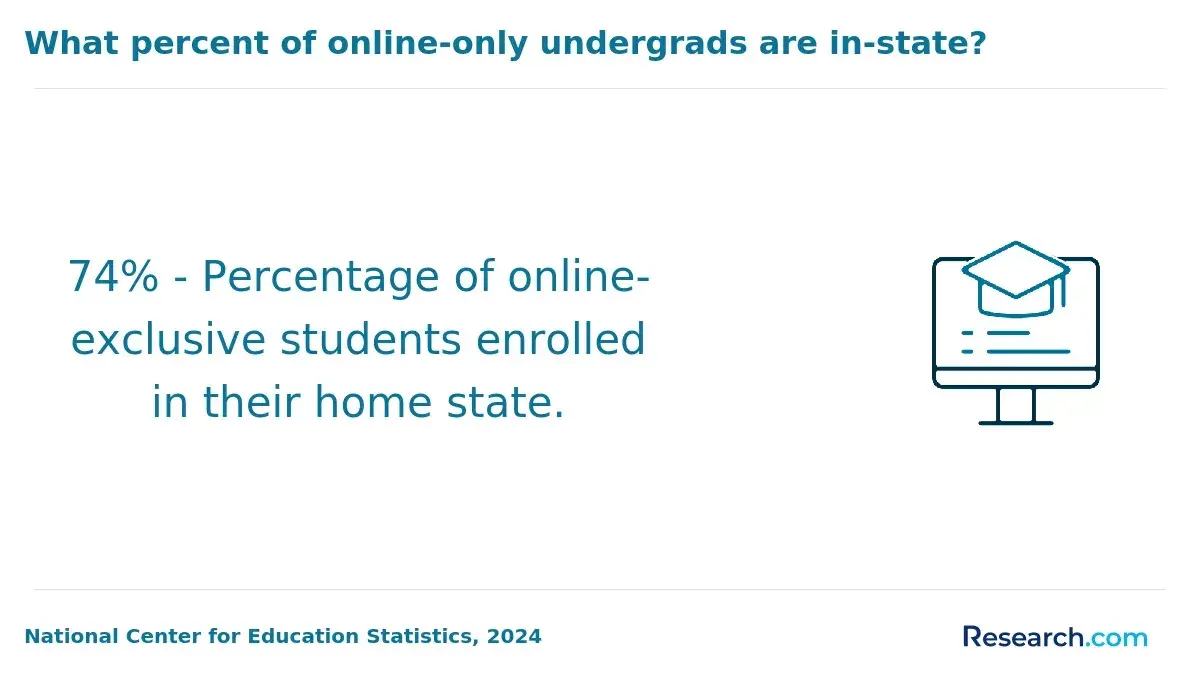
Flexibility varies more than program advertisements may suggest. An online bachelor's program may offer asynchronous coursework with weekly deadlines, while an online master's program may combine recorded lectures with live seminars, fixed clinical hours, group meetings, and on-campus intensives. "Online" should be read as a delivery description, not a promise that every requirement can be completed at any time or from any location.
Working adults should compare program calendars, not just course modality. A part-time sequence can make weekly workload more manageable, but it usually extends the completion timeline. A full-time cohort may be faster and create stronger peer connections, yet it can be difficult to combine with full-time employment once clinical practice begins.
Use these questions to test whether a format is genuinely compatible with your schedule. Answers should come from the academic department rather than only a general admissions representative.
- Are classes fully asynchronous, scheduled live, or a mix of both?
- What time zone governs live sessions, exams, office hours, and clinical meetings?
- How many hours each week should students reserve for coursework, group projects, and practicum?
- Are weekend, evening, summer, residency, or campus attendance requirements mandatory?
- Can students slow their course sequence without losing their cohort, scholarships, or access to required courses?
- Does the university place students at clinical sites near their residence, and is geographic availability guaranteed?
Students considering allied-health alternatives should recognize that clinical flexibility differs sharply by profession. For example, online radiology tech programs generally still require hands-on clinical education, much like clinical communication disorders training. Remote lectures do not eliminate the need for supervised practice when a credential depends on demonstrated clinical competence.
Strong online student support is especially important in communication disorders because students may need help with academic planning, observation opportunities, prerequisite sequencing, technology, clinical preparation, and graduate-school applications. The best nonprofit university for one student may be the institution that offers responsive support in the specific areas where that student needs it most.
Look for evidence that support is designed for distance learners rather than simply available on a campus. Useful services can include assigned academic advisors, faculty office hours across time zones, online tutoring, writing support, library access, disability accommodations, mental health referrals, career coaching, technical support, and an active professional student community.
For clinical master's students, placement support deserves special scrutiny. Ask whether the program has a dedicated clinical education team, whether it secures placements or requires students to locate them, how supervisors are approved, and what contingency plan exists if a site cancels. A school should be transparent about the learner's responsibility, likely travel radius, and any costs associated with clinical experiences.
Also evaluate support for transfer students. A transfer-friendly program provides a timely credit evaluation, clear equivalency decisions, and a course map showing how accepted credits affect time to completion. Students should not rely on an informal statement that "most credits transfer" before obtaining an official review.
Communication disorders education can lead toward meaningful work with children and adults who have speech, language, swallowing, voice, cognitive-communication, or hearing-related needs. The degree level determines which roles are realistic. A bachelor's degree can support entry-level roles in education, healthcare administration, behavior support, rehabilitation support, research assistance, or a future graduate application. It does not ordinarily qualify someone to practice independently as a speech-language pathologist.
For students pursuing speech-language pathology, the labor-market signal is strong but should be interpreted carefully. The Bureau of Labor Statistics projects 19% growth in speech-language pathologist employment from 2023 to 2033. Demand may be shaped by aging-related conditions, survival rates after medical events, early-intervention needs, and school services, but local openings, payer policies, licensure rules, and preferred experience vary by employer and location.
The following comparison separates common career directions from the education normally associated with them.
| Career direction | Typical education path | Common work setting | Key consideration |
| Speech-language pathologist | Accredited master's degree plus state licensure requirements | Schools, hospitals, clinics, skilled nursing facilities, private practice | Licensure and supervised post-graduate requirements vary by state |
| Speech-language pathology assistant | Requirements vary by state and employer | Schools, clinics, rehabilitation settings | A bachelor's degree alone may not meet assistant credential rules |
| Audiologist | Doctoral degree in audiology and state licensure requirements | Hospitals, clinics, private practice, schools | Communication disorders bachelor's coursework can be relevant preparation but is not the terminal credential |
| Research or support role | Bachelor's degree may be sufficient for some positions | Universities, nonprofits, healthcare organizations | Job titles and hiring standards differ substantially |
Career preparation is strongest when coursework is paired with observation, research literacy, cultural and linguistic responsiveness, professional writing, data interpretation, and communication skills. Before enrolling, review the program's career services, graduate acceptance information where available, alumni roles, and opportunities for faculty mentorship. Do not treat occupational median pay as an individual salary forecast; pay varies by region, setting, experience, and work schedule.
Yes, an online bachelor's degree from an institutionally accredited nonprofit university can prepare students for graduate school if it includes the prerequisite coursework required by the master's programs they plan to apply to. Graduate admissions committees generally focus on academic performance, prerequisite completion, recommendation letters, relevant observation or experience, personal statements, and program fit. Delivery format matters less than the academic quality and documented content of the coursework, although each graduate program makes its own admissions decisions.
Students should not assume every communication disorders bachelor's program has identical prerequisites. Graduate programs may expect courses in statistics, biological sciences, physical sciences, social or behavioral sciences, phonetics, language development, anatomy, audiology, and research methods. Requirements may change, so students should compare their undergraduate degree plan against the admissions pages of several target master's programs well before their final year.
A master's degree is generally the professional entry point for speech-language pathology. A doctoral degree may make sense for students focused on research, faculty careers, leadership, or advanced specialty interests, but it is not typically required for entry-level practice. Students whose goals involve advanced nursing rather than speech-language pathology should compare the distinct admission and clinical expectations of cheapest nurse practitioner programs rather than treating graduate healthcare credentials as interchangeable.
To improve graduate-school readiness, maintain a strong GPA, develop relationships with faculty who can write specific recommendations, seek approved observation or volunteer experiences when available, and keep syllabi for prerequisite courses. Students should also ask whether the online bachelor's program provides graduate application advising, mock interviews, writing review, and guidance on state or national professional expectations.
How Should Students Compare the Best Online Communication Disorders Degree Programs at Nonprofit Universities?
There is no single best online communication disorders degree program for every student. The best overall value is the program that meets the necessary accreditation and curriculum standards while fitting the student's degree level, location, schedule, transfer situation, and net cost. A low-cost public nonprofit may be the strongest option for an in-state student with transferable credits, while a private nonprofit may fit a working adult who values structured cohorts, predictable terms, or intensive advising.
Create a shortlist of three to five programs, then compare the same facts for each one. This table provides a decision framework that prevents students from overvaluing rankings, nonprofit status, or a single tuition figure.
| Comparison factor | Why it matters | Stronger evidence |
| Degree and career fit | Different credentials lead to different opportunities | A written course plan tied to your intended role or graduate-school goal |
| Accreditation | Supports degree legitimacy and, for clinical routes, professional eligibility | Current institutional accreditation and CAA status when applicable |
| Total net cost | Tuition alone excludes many expenses | Itemized estimate after grants, scholarships, transfer credit, and clinical costs |
| Online structure | Live sessions and residencies can affect work and caregiving plans | Published calendar with synchronous, campus, and clinical requirements |
| Clinical placement model | Clinical access can determine program completion and licensure progression | Written explanation of placement responsibility, supervision, and contingency procedures |
| Transfer policy | Accepted credits affect time and cost | Official transfer evaluation rather than a verbal estimate |
| Student outcomes and support | Completion and next-step preparation are central to value | Transparent outcomes, advisor access, tutoring, career support, and faculty availability |
Common mistakes include assuming every nonprofit is high quality, confusing institutional accreditation with professional accreditation, overlooking required clinical experiences, comparing only tuition, and selecting an accelerated format without calculating weekly workload. Another frequent mistake is choosing a bachelor's program while expecting it to lead directly to independent SLP practice.
Make a final decision only after completing these practical checks:
- Identify the exact career outcome you want and the minimum credential it requires.
- Verify the university's institutional accreditation and any required programmatic accreditation.
- Request a written cost estimate that includes fees, materials, travel, clinical requirements, and likely transfer credit.
- Confirm whether the online schedule, live sessions, residencies, and placements work from your location.
- Ask for an academic plan showing prerequisites, graduation timeline, and graduate-school or licensure relevance.
- Compare support services and outcomes before accepting the lowest-priced offer.
A program is worth the investment when its verified curriculum and support systems move you efficiently toward a credential you actually need. If a school cannot provide clear answers on accreditation, costs, online requirements, or clinical arrangements, continue comparing options.
Other Things You Should Know About Communication Disorders
Usually no. A bachelor's degree can provide prerequisites and preparation for graduate school, but independent SLP practice generally requires a qualifying master's degree, supervised post-graduate experience, examinations, and state licensure steps.
Bachelor's programs may require observation, practicum, or field experiences depending on the school. Clinical master's programs preparing students for speech-language pathology typically require substantial supervised clinical education, even when academic coursework is delivered online.
Often, yes, particularly for general education courses. Acceptance of science, statistics, psychology, linguistics, and major coursework depends on the receiving university's equivalency rules, grade requirements, and program sequence. Obtain an official evaluation before enrolling.
Helpful skills include careful listening, clear writing, empathy, scientific reasoning, cultural humility, organization, collaboration, and comfort using digital learning tools. Clinical paths also require professionalism, ethical judgment, and the ability to apply feedback consistently.
- Homepage https://speechpathologymastersprograms.com/
- 2025 Most Popular Online Speech Language Pathology Programs https://www.onlineu.com/degrees/speech-pathology
- Fund Your Education - Hearing and Speech Careers https://hearingandspeechcareers.org/fund-your-education/
- Bachelor of Science in Communication Sciences and Disorders | Maryville University Online https://slp.maryville.edu/online-programs/bachelor-of-science-in-communication-sciences-and-disorders/
- Online Master's in Communication Disorders Programs - Including Speech Pathology in 2025 https://www.mastersincommunications.org/online-communication-disorders/
- Tuition and Financial Aid https://online.cudenver.edu/admissions/tuition-and-financial-aid
- Career Opportunities for Speech-Language Graduates https://www.albizu.edu/blog/career-opportunities-for-speech-language-graduates/