2027 Accredited Online Communication Disorders Degree Programs That Accept the Most Transfer Credits

Co-Founder and Chief Data Scientist

Reviewed by Rhea Paul, PhD
SLP Education & Research Expert
Transfer credits can decide whether an online communication disorders degree takes four years or becomes a focused degree-completion path. This matters because speech-language pathologists had a median annual wage of $97,870 in May 2026, according to the U.S. Bureau of Labor Statistics, and many students use undergraduate communication sciences coursework as a step toward graduate study.
This guide is for transfer students, associate degree holders, career changers, and adults with unfinished credits. You will learn which programs are most transfer-friendly, how credits are evaluated, and how to estimate the real time and cost left before enrolling.
Key Things You Should Know
- The most transfer-friendly accredited online communication disorders bachelor's programs commonly allow up to 90 transfer credits, but most students still must complete at least 30 credits through the degree-granting university.
- A high transfer limit is not the same as a short path to graduation; credits save the most time when they satisfy general education, prerequisite, upper-division, and major requirements rather than counting only as electives.
- Cost savings can be substantial because College Board's 2024 Trends in College Pricing reported average published tuition and fees of $11,610 for in-state public four-year colleges and $43,350 for private nonprofit four-year colleges in 2024-25.
Which Accredited Online Communication Disorders Degree Programs Accept the Most Transfer Credits?
The accredited online communication disorders programs that usually offer the strongest transfer-credit potential are bachelor's degree-completion or transfer-friendly programs at regionally accredited institutions.
In this field, "accredited" usually means institutional accreditation for the university; undergraduate communication disorders programs are not typically accredited by the Council on Academic Accreditation, which accredits graduate-level speech-language pathology and audiology programs.
The table below compares online or substantially online communication disorders, communication sciences and disorders, speech and hearing science, or closely equivalent bachelor's programs that are commonly relevant to students seeking a transfer-friendly route. Published transfer rules can change, so students should treat the maximum as a screening tool and request an official evaluation before committing.
| Institution | Online degree path | Institutional accreditation | Common maximum transfer-credit potential | Best fit | Important limitation |
| Maryville University | Online BA in Communication Sciences and Disorders | Higher Learning Commission | Up to 90 credits | Students with substantial prior college coursework who need an online CSD bachelor's path | Major sequencing may still require a set number of CSD courses at Maryville |
| Eastern New Mexico University | Online BS in Communicative Disorders | Higher Learning Commission | Up to 90 credits, subject to residency rules | Cost-conscious transfer students and associate degree holders | Credits must meet degree requirements, not only the university's general transfer rules |
| Utah State University | Online BS in Communicative Disorders and Deaf Education | Northwest Commission on Colleges and Universities | Often up to 90 credits because at least 30 credits must typically be completed through USU | Students preparing for graduate-level speech-language pathology or audiology prerequisites | Upper-division major requirements can limit how much time prior coursework actually saves |
| Arizona State University | Online BS in Speech and Hearing Science | Higher Learning Commission | Transfer-friendly, with community college transfer commonly capped below the 90-credit ceiling used by some degree-completion programs | Students with strong general education preparation and interest in a large online university | Community college, upper-division, and residency rules may reduce usable credits |
| University of South Florida | Online BA in Communication Sciences and Disorders | Southern Association of Colleges and Schools Commission on Colleges | Often strongest for students entering with an AA degree or broad lower-division coursework | Florida transfer students and students whose prior coursework aligns with state articulation | Major admission and upper-division requirements may still determine the true completion timeline |
| Longwood University | Online BS in Communication Sciences and Disorders | Southern Association of Colleges and Schools Commission on Colleges | Potentially transfer-friendly, commonly subject to a minimum institutional credit requirement | Students seeking an online CSD bachelor's program with structured major coursework | Course equivalency and residency requirements should be confirmed before enrollment |
Students comparing transfer-heavy options should focus on "credits that apply" rather than "credits accepted." A school may accept 75 previous credits, but if 20 of them count only as free electives, the student may still need many major, lab science, statistics, or upper-division courses.
Students who want a broader view of accelerated and transfer-conscious undergraduate formats can also compare communication disorders programs with fast track college programs, especially if their main goal is finishing a bachelor's degree efficiently before applying to graduate school.
How Do Online Communication Disorders Degree Programs Evaluate Transfer Credits?
Online communication disorders programs usually evaluate transfer credits in two layers: the university decides whether the credits are acceptable, and the academic department decides how they apply to the major. This distinction is crucial because a course can transfer to the institution but still fail to satisfy a specific communication disorders requirement.
Most transfer evaluations look at several factors at once. Before applying, students should gather evidence that helps the school match previous courses to degree requirements:
- Official transcripts from every college attended, including dual-enrollment and community college records
- Course descriptions or syllabi for anatomy, speech science, phonetics, linguistics, psychology, statistics, biology, and communication disorders courses
- Catalog year information showing when each course was taken and whether the content has changed
- Documentation for AP, CLEP, IB, military, or professional training if the university accepts those credit types
- Previous degree audits, associate degree records, or transfer pathway sheets if available
Programs generally prefer credits from regionally accredited colleges, completed with a minimum grade such as C or higher. Some major courses may also have age limits, especially if the content is tied to current clinical standards, technology, or graduate-prerequisite expectations.
The most common mistake is assuming that "accepted credit" equals "degree-applicable credit." For example, an introductory public speaking course may transfer as elective credit, but it may not replace phonetics, speech and language development, or anatomy of the speech mechanism.
How Can Transfer Credits Shorten an Online Communication Disorders Degree?
A standard bachelor's degree usually requires about 120 semester credits. If a student transfers 60 usable credits, the remaining program may function more like a two-year upper-division major sequence; if the student transfers 90 usable credits, the remaining work may be closer to one academic year, depending on course availability and sequencing.
The table below shows how transfer credits can affect an online communication disorders bachelor's timeline. These are planning estimates, not guarantees, because programs may require courses in a specific order.
| Usable transfer credits | Approximate credits remaining in a 120-credit degree | Likely completion pattern | What can slow completion |
| 0 to 30 | 90 to 120 | Traditional multi-year bachelor's path | General education, math, science, and introductory major courses still needed |
| 45 to 60 | 60 to 75 | Common associate-to-bachelor's route | Missing prerequisites or courses that transfer only as electives |
| 75 to 90 | 30 to 45 | Degree-completion path if the credits align well | Residency requirements, upper-division rules, and major course sequencing |
| 90 or more attempted | Usually at least 30 still required | Fastest realistic route at schools with a 30-credit residency minimum | Excess credits may not apply if the degree has limited elective space |
Transfer credits shorten a degree most effectively when they clear lower-division requirements before the student enters the online major. Students with an associate degree often benefit because they may have already completed English composition, social science, math, natural science, and humanities requirements.
However, communication disorders majors often include sequential courses such as phonetics, speech and language development, audiology, anatomy and physiology of speech and hearing, speech science, and clinical observation. If those courses must be taken at the home institution, even a student with many transfer credits may need multiple terms to finish.
Transfer credits can reduce cost by lowering the number of credits billed by the new university. The savings are most meaningful when the student transfers credits from a lower-cost community college or public institution into a higher-cost university and those credits satisfy required parts of the degree.
The table below illustrates how students can think about tuition exposure after transfer. It does not include fees, books, technology charges, or financial aid, so students should use it as a framework rather than a final price quote.
| Scenario | Credits paid at new university | What drives cost | Decision point |
| No transfer credits | About 120 | Full bachelor's tuition at the enrolling school | Best only for first-time students or those with nontransferable coursework |
| Associate degree transfer | About 60 | Upper-division and major-course tuition | Often strong value if the associate degree satisfies general education |
| High-credit transfer | About 30 to 45 | Residency minimum, major sequence, and institutional fees | Potentially highest ROI if most credits apply directly to the degree |
| High-credit but poor alignment | Often 45 to 75 | Repeated prerequisites, unused electives, and missing major courses | May be less efficient than a program with a lower advertised transfer cap but better course matching |
College Board's 2024 tuition data shows why this calculation matters: the average published tuition and fees at private nonprofit four-year institutions were $43,350 in 2024-25. For a student choosing between two online programs, a more expensive per-credit program may still be cheaper overall if it accepts substantially more degree-applicable credits.
Health-related online degrees vary widely in tuition structure, so students comparing long-term education costs may find it useful to look at cost-focused guides such as the cheapest nurse practitioner programs to see how per-credit pricing, fees, and clinical or practicum requirements can affect total program value.
Some universities award credit for military training, standardized exams, workplace learning, certifications, or prior learning assessment. In communication disorders, these credits are most likely to help with general education or elective requirements, not specialized major courses tied to speech, hearing, language, and clinical preparation.
Students with nontraditional learning should ask the school how each credit type is handled before assuming it will reduce the major. The most relevant credit categories include:
- Military training: Universities may review Joint Services Transcript recommendations, but the credits often apply as electives unless they match a specific requirement.
- CLEP, AP, and IB exams: These can be useful for English, psychology, biology, math, or humanities requirements if the university's score policy permits credit.
- Professional healthcare training: Prior healthcare courses may help with electives or anatomy-related requirements, but communication disorders departments usually require close content matches.
- Prior learning assessment: Portfolio-based credit may be available at some institutions, but it is less likely to replace core CSD major courses.
- Previous licensure or certification coursework: Credits may transfer if they were transcripted by an accredited college and match the degree audit.
The red flag is assuming that work experience alone will replace major coursework. Communication disorders degrees are usually designed to prepare students for graduate prerequisites, assistant-level roles where permitted, or related human services careers, so departments tend to protect the academic sequence.
Students coming from other healthcare backgrounds can compare how transfer and professional-credit rules differ across fields; for example, an RN to BSN program without clinicals may evaluate licensed nursing experience very differently than a communication disorders department evaluates general healthcare work.
The credits that transfer best are usually lower-division general education courses and foundational social, behavioral, and natural science courses. The credits that transfer least predictably are specialized communication disorders courses, especially when course titles are similar but learning outcomes differ.
The table below summarizes common transfer outcomes by course type. Students should use it to decide which syllabi and course descriptions to prioritize when requesting an evaluation.
| Previous coursework type | Transfer likelihood | Where it usually applies | What to verify |
| English composition and college writing | High | General education | Minimum grade and sequence requirements |
| Statistics or college algebra | High to moderate | Quantitative reasoning or prerequisite area | Whether the major requires a specific statistics course |
| General psychology, child development, or lifespan development | High to moderate | Major support, prerequisite, or general education | Whether the course satisfies graduate-prerequisite expectations |
| Biology, anatomy, or physical science | Moderate | Science requirement or major support | Whether lab, content, or recency rules apply |
| Introductory communication disorders coursework | Moderate | Major requirement if outcomes match | Departmental equivalency, not just institutional acceptance |
| Clinical observation or practicum | Low to moderate | Major requirement only if documented and approved | Supervision standards, hours, and whether undergraduate observation is required |
| Unrelated technical or vocational courses | Variable | Electives | Whether the degree has enough elective space to use them |
Students should pay special attention to elective saturation. If a 120-credit degree includes only a small number of free electives, additional unrelated credits may transfer to the transcript without reducing the remaining degree requirements.
A practical strategy is to send syllabi for any course that might overlap with speech science, language development, hearing science, phonetics, linguistics, anatomy, statistics, or psychology. These are the courses most likely to affect the student's actual completion timeline.
Transfer agreements can make degree completion more predictable because they map coursework from one institution to another before the student enrolls. The strongest agreements show exactly which associate degree courses satisfy bachelor's requirements and which courses remain after transfer.
There are several agreement types students may encounter. Each affects transfer efficiency differently:
- Statewide articulation agreements: These often help students transfer an associate degree into a public university system with general education completed.
- Program-to-program pathways: These are especially valuable because they connect a specific community college plan to a specific communication disorders bachelor's degree.
- Course equivalency databases: These help students preview how individual courses have transferred in the past, although they may not replace an official evaluation.
- Reverse transfer agreements: These may help students complete an associate degree after moving to a university, which can improve credential value even before the bachelor's is finished.
- Guaranteed admission pathways: These can simplify transfer admission but do not always guarantee admission to a competitive major or professional pathway.
Transfer agreements are especially useful for students who have not yet finished an associate degree. If the pathway says to take statistics, biology, psychology, and child development before transfer, following that map may save more time than choosing random electives that merely add credit totals.
Students comparing allied health pathways can see similar transfer-planning issues in online radiology tech programs, where prerequisites, accreditation, and applied coursework can strongly affect whether previous credits reduce the remaining program.
The best transfer policy is not always the one with the highest number. Students should compare how credits apply to the degree audit, how many credits must be completed in residence, and whether the remaining courses are offered online often enough to finish efficiently.
Before applying, students should ask admissions and the academic department specific questions. These questions help reveal whether a program is genuinely transfer-efficient:
- What is the maximum number of transfer credits allowed toward this bachelor's degree?
- How many credits must be completed through your university to meet residency requirements?
- How many upper-division credits must be completed at your institution?
- Will my associate degree satisfy general education requirements in full or only course by course?
- Which of my previous courses apply to the communication disorders major rather than electives?
- Are there grade minimums, GPA requirements, or course-age limits for major prerequisites?
- Are all remaining major courses available online, and are they offered every term or only once per year?
- Will the degree meet prerequisite expectations for the graduate programs I may apply to later?
- Do transfer credits affect eligibility for institutional scholarships, financial aid pacing, or academic standing?
- Can I receive an official degree audit before paying an enrollment deposit?
One common red flag is a school that advertises "up to 90 transfer credits" but will not show how those credits apply until after enrollment. Students should push for a written audit showing remaining course names, credit counts, tuition exposure, and expected sequence.
Another red flag is ignoring course availability. If a student needs only 36 credits but several required courses are offered once per academic year, the program may take longer than another option requiring more credits but offering courses more frequently.
Transfer-friendly online communication disorders programs are best for students whose previous coursework aligns with the degree plan. They are especially useful for adults who already completed general education, students with an associate degree, and career changers who need a bachelor's foundation before applying to graduate programs in speech-language pathology, audiology, or related fields.
The table below identifies student profiles that often benefit from generous transfer policies and profiles that should be more cautious.
| Student profile | Transfer-credit benefit | Best program feature to prioritize | Risk to watch |
| Associate degree holder | Often high if general education is complete | Clear associate-to-bachelor's pathway | Assuming the associate degree covers major prerequisites |
| Student with 75+ prior credits | Potentially high if credits are degree-applicable | 90-credit transfer allowance and low residency minimum | Elective overflow that does not reduce remaining requirements |
| Career changer with unrelated bachelor's coursework | Moderate to high for general education | Post-baccalaureate or second-degree advising | Needing most CSD major courses despite many prior credits |
| Future SLP graduate applicant | High if prerequisites align with target graduate programs | Strong CSD course sequence and graduate-school preparation | Choosing the fastest route but missing required prerequisites |
| Student seeking assistant-level work | Variable by state and employer | State-relevant advising and any observation or practicum options | Assuming the bachelor's alone qualifies for every assistant role |
| Student with mostly vocational credits | Often limited | Generous elective policy | Credits may transfer but not shorten the major |
Students should avoid choosing a communication disorders program mainly because it accepts many credits if their goal is graduate admission and the program does not offer the prerequisite courses they need. In this field, saving one term is less valuable if the student later has to take missing prerequisites before applying to a master's program.
Students exploring adjacent health and wellness fields may also compare transfer policies in an online degree in nutrition, where science prerequisites and supervised-practice goals can create similar trade-offs between speed, cost, and career alignment.
How Should Students Choose an Online Communication Disorders Degree Based on Transfer Efficiency?
The smartest choice is the program that leaves the fewest required credits at a reasonable total cost while still supporting the student's next goal. For many students, that next goal is graduate school in speech-language pathology or audiology; for others, it may be a related role in education, healthcare support, disability services, early intervention, or human services.
Students can use a structured decision process to compare programs without being misled by advertised transfer limits:
- List every completed course, credit amount, grade, institution, and year taken.
- Identify whether each course is likely to satisfy general education, major support, major core, upper-division, or elective requirements.
- Request official or preliminary degree audits from at least two programs, not just admissions estimates.
- Compare remaining credits, not accepted credits, because remaining credits determine time and tuition.
- Check course sequencing to see whether required classes are available every term or only once per year.
- Calculate total remaining tuition using the program's current per-credit rate and mandatory fees.
- Confirm whether the bachelor's coursework aligns with graduate programs or state requirements relevant to your goal.
- Choose the option with the best combination of applied credits, academic fit, affordability, and completion predictability.
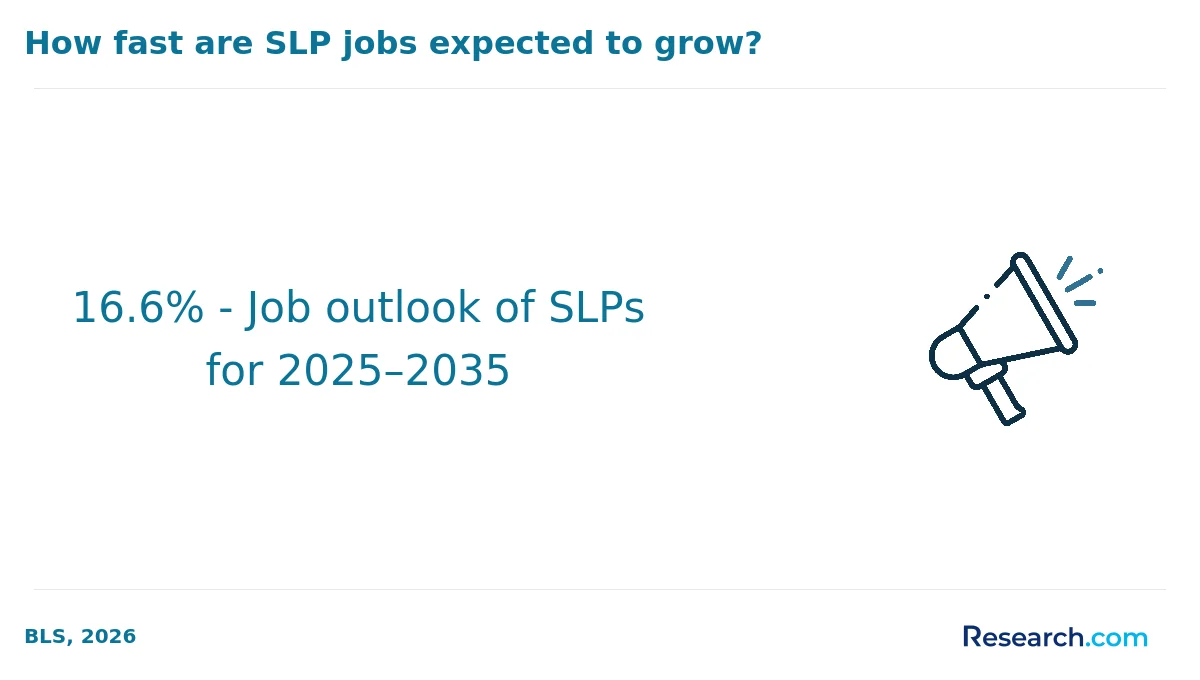
Career context should also be part of the decision. The U.S. Bureau of Labor Statistics projects much faster-than-average employment growth for speech-language pathologists over the 2024-34 period, but entry into that profession generally requires a graduate degree and state licensure. That means an online bachelor's degree should be evaluated partly by how well it prepares students for the next academic step, not only by how quickly it can be finished.
A more expensive program can be worthwhile if it accepts more applicable credits, offers the exact prerequisite sequence needed for graduate applications, and provides reliable online course availability. A cheaper program may be the better investment if it accepts enough credits, has clear advising, and avoids unnecessary repeated coursework.
Other Things You Should Know About Communication Disorders Degrees
Many online communication disorders bachelor's programs can be completed fully online, but requirements vary. Some may include synchronous class meetings, observation activities, exams with proctoring, or optional campus experiences, so students should confirm format details before enrolling.
Usually no. In the U.S., speech-language pathologists generally need a master's degree, supervised clinical experience, exams, and state licensure. An online bachelor's degree can help meet prerequisites for graduate study, but it is normally not the final professional credential.
Graduate schools typically care more about institutional accreditation, prerequisite coursework, grades, recommendation letters, experience, and application quality than whether the bachelor's courses were online. Students should still verify that the online program includes the prerequisites required by their target graduate programs.
Transfer applicants usually need official college transcripts, a completed application, minimum GPA compliance, and sometimes high school records if they have limited college credit. Some programs may also require prerequisite courses, advisor review, or a separate major admission step.
- U.S. Bureau of Labor Statistics - Speech-Language Pathologists https://www.bls.gov/ooh/healthcare/speech-language-pathologists.htm
- ASHA EdFind - Accredited Speech-Language Pathology Programs https://find.asha.org/ed/
- ETS Praxis - Speech-Language Pathology (5331) https://praxis.ets.org/test/speech-language-pathology-5331.html
- California State University-San Marcos - Online MS in Speech-Language Pathology https://www.csusm.edu/slp/programs/mastersonline/index.html
- Baylor University - Master of Science in Speech-Language Pathology (Online) https://csd.robbins.baylor.edu/graduate/online-csd-graduate-program
- James Madison University - Master of Science (M.S.) in Speech-Language Pathology (Distance Education / Online) https://www.jmu.edu/chbs/csd/online_ms/index.shtml
- Pennsylvania Western University - Master of Science in Speech-Language Pathology https://online.pennwest.edu/programs/speech-language-pathology-grad/index.php
- University of Scranton - Master of Science (M.S.) in Speech-Language Pathology https://www.scranton.edu/academics/pcps/health-and-human-performance/programs/speech-language-pathology/index.shtml