2027 Cheapest Accredited Online Communication Disorders Degree Programs That Accept FAFSA

Co-Founder and Chief Data Scientist

Reviewed by Rhea Paul, PhD
SLP Education & Research Expert
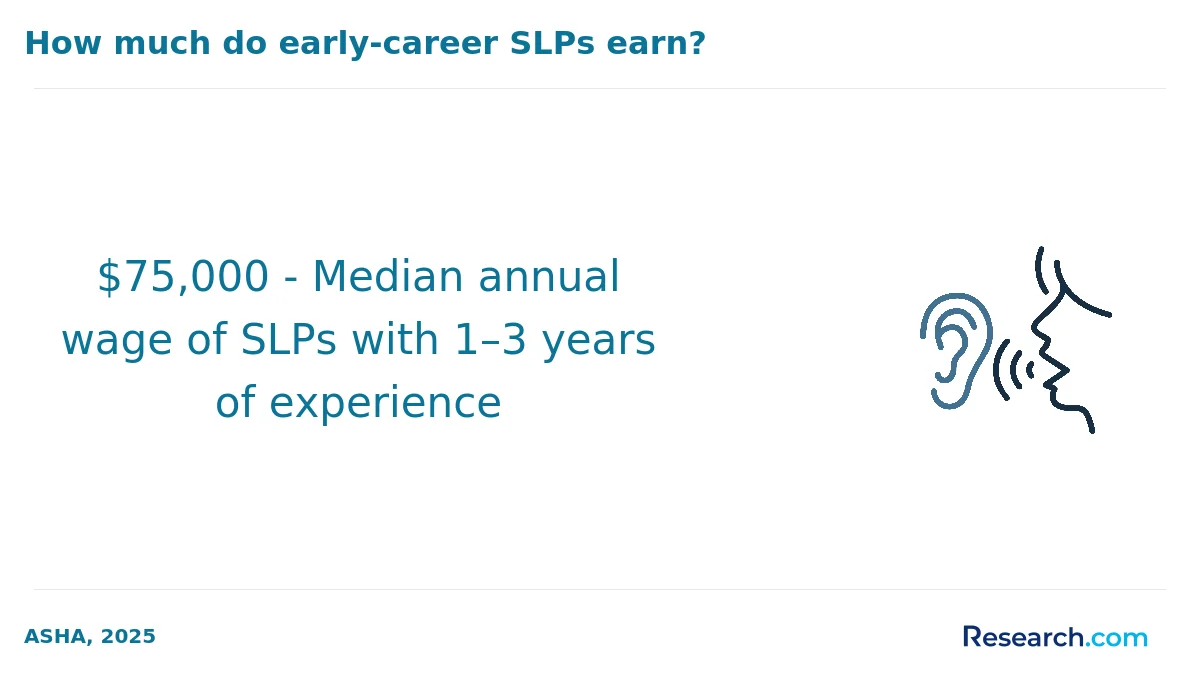
Finding a low-cost online communication disorders degree is not just about choosing the lowest tuition. It is about whether the program is accredited, FAFSA-eligible, transferable, and useful for your career path. The U.S. Bureau of Labor Statistics reported a 2024 median annual wage of $95,410 for speech-language pathologists, but that career typically requires graduate study and licensure.
This guide helps future undergraduates, degree-completion students, and career changers compare affordable online options, understand federal aid, avoid hidden costs, and decide which program offers the strongest value.
Key Things You Should Know
Which Are the Cheapest Accredited Online Communication Disorders Degree Programs That Accept FAFSA?
The cheapest accredited online communication disorders degree programs that accept FAFSA are typically offered by regionally accredited public universities that participate in federal Title IV student aid. Because tuition, fees, residency rules, and online surcharges change often, students should treat any "cheapest" list as a starting point and then confirm the current net price directly with each school's financial aid office.
Communication disorders programs may also be listed as communication sciences and disorders, communicative disorders, speech and hearing sciences, speech-language pathology and audiology, or speech-language-hearing sciences.
The table below highlights FAFSA-eligible online or largely online programs that are commonly considered strong affordability candidates because of public-university pricing, online access, transfer pathways, or degree-completion formats:
| School | Online program type | Accreditation and FAFSA context | Why it may be affordable | Best fit |
| Eastern New Mexico University | Online bachelor's in communicative disorders or related pathway | Institutionally accredited public university; students should confirm Title IV participation and program delivery with the school | Known for relatively low public-university tuition and online access for distance learners | Students seeking a lower-cost bachelor's pathway before graduate study |
| Utah State University | Online communicative disorders and deaf education bachelor's pathway | Institutionally accredited public university; federal aid may apply to eligible students in eligible programs | Online program structure and public-university pricing can make it competitive for transfer and first-time students | Students interested in speech-language, audiology, or deaf education foundations |
| Minot State University | Communication sciences and disorders undergraduate pathway with distance-learning options | Institutionally accredited public university; confirm current online availability and Title IV eligibility | Public tuition and smaller-university pricing may reduce total cost for eligible students | Students who want an affordable CSD foundation from a public institution |
| Western Kentucky University | Online communication disorders undergraduate or pre-professional pathway | Institutionally accredited public university; federal aid generally depends on degree status and enrollment eligibility | Online course access can help working students avoid relocation and campus housing costs | Students comparing flexible online study with preparation for graduate admissions |
| University of Wisconsin-Eau Claire | Online communication sciences and disorders degree-completion pathway | Institutionally accredited public university; students should verify eligibility for their exact program track | Degree-completion formats can lower cost when students transfer substantial prior credits | Students with general education or associate-degree credits already completed |
| Longwood University | Online speech-language pathology assistant or communication sciences pathway, depending on current catalog offerings | Institutionally accredited public university; confirm whether the chosen track is aid-eligible | May offer a targeted pathway for students seeking practical preparation or future graduate study | Students who want a structured route into communication sciences or SLPA-related preparation |
The lowest advertised tuition is not always the lowest real cost. A program with a slightly higher per-credit rate may be cheaper overall if it accepts more transfer credits, charges fewer online fees, offers institutional scholarships, or lets you finish faster without taking unnecessary courses.
How Does FAFSA Eligibility Work for Online Communication Disorders Degree Programs?
FAFSA eligibility starts with the institution, not the academic topic. To use federal student aid, the school must participate in Title IV federal aid programs, the student must meet federal eligibility rules, and the specific degree or certificate program must be approved for aid.
For online communication disorders students, the most important distinction is between institutional accreditation and professional accreditation. Institutional accreditation helps determine federal aid eligibility, while professional accreditation matters most at the graduate level for speech-language pathology and audiology licensure pathways.
Before enrolling, use this process to confirm whether FAFSA can actually apply to your program:
- Search the school's federal school code and confirm that the institution participates in federal student aid.
- Ask the financial aid office whether the exact online communication disorders program is Title IV eligible.
- Confirm whether you must be degree-seeking, enrolled at least half time, or admitted to a specific cohort to receive aid.
- Ask whether online students receive the same institutional grants and scholarships as campus students.
- Request a written cost-of-attendance estimate that includes tuition, fees, books, technology costs, and any required campus visits.
A common mistake is assuming that "accepts FAFSA" means "covered by FAFSA." FAFSA is only the application. Your actual aid package may include grants, loans, work-study, scholarships, or no need-based grant aid at all, depending on your Student Aid Index, enrollment status, dependency status, and remaining eligibility.
How Much Does an Online Communication Disorders Degree Cost After Financial Aid?
The cost after financial aid depends on the gap between total cost of attendance and the grants, scholarships, employer benefits, and loans you are eligible to use. For many students, the right number to compare is not tuition per credit but estimated net price after gift aid.
The table below shows the major cost and aid variables that usually determine what students actually pay for an online communication disorders degree:
| Cost or aid factor | How it affects affordability | What to verify |
| Tuition per credit | Sets the base cost, but may differ for in-state, out-of-state, and online students | Whether the program charges a flat online rate or residency-based tuition |
| Required credits | More remaining credits usually means a higher total cost | How many credits you personally must complete after the transfer evaluation |
| Online and technology fees | Can raise the total price even when tuition looks low | Whether fees are charged per credit, per course, or per term |
| Federal Pell Grant | Can reduce out-of-pocket cost for eligible undergraduates; the maximum for 2025-2026 is $7,395 | Your eligibility amount, enrollment status, and remaining lifetime Pell eligibility |
| Institutional scholarships | May reduce borrowing, but availability varies widely for online students | Whether distance learners and transfer students qualify |
| Federal Direct Loans | Can cover remaining costs but increase repayment obligations after school | Annual and aggregate borrowing limits before accepting loans |
A practical way to compare schools is to calculate your estimated completion cost: remaining credits multiplied by tuition and mandatory fees, minus confirmed grants and scholarships. Then separate "gift aid" from loans so you can see what you are saving versus what you are borrowing.
The best value is not always the lowest sticker price. In communication disorders, value depends on whether the degree prepares you for your next step, such as graduate admission, speech-language pathology assistant roles where allowed, audiology preparation, education support roles, or a related health career.
Students comparing health-focused online degrees may also want to compare cost structures across adjacent fields, such as an online degree in nutrition, because similar tuition levels can lead to very different licensure requirements, clinical obligations, and graduate-school expectations.
The table below compares common "value profiles" so you can decide when paying more may be reasonable and when it may not be.
| Value profile | When it makes sense | When to be cautious |
| Lowest public-university tuition | You need the smallest possible base price and can complete the degree with minimal extra fees | The program accepts few transfer credits or requires courses that do not support your graduate-school goals |
| Transfer-friendly degree completion | You already have an associate degree or substantial general education credits | The per-credit price is low, but the school rejects many of your prior credits |
| Graduate-school preparation focus | You plan to apply to master's programs in speech-language pathology or audiology | The curriculum lacks common prerequisites required by your target graduate programs |
| Working-adult flexibility | You need asynchronous classes, part-time pacing, or predictable scheduling | Finishing too slowly causes you to lose aid eligibility or increases total fees |
| Strong student support | You need advising, placement guidance, tutoring, or graduate-application support | The added cost does not come with measurable support or clear outcomes |
A more expensive program can be worth it if it reduces time to completion, improves transfer acceptance, aligns with graduate prerequisites, or offers advising that helps you avoid retaking courses. It is less likely to be worth it if the added price only reflects branding and does not change your academic or career outcome.
Accreditation is one of the most important checks in this field because it affects financial aid, credit transfer, graduate admissions, and licensure planning. For FAFSA purposes, students should first confirm that the institution is accredited by an agency recognized for federal student aid participation.
For speech-language pathology, professional accreditation becomes especially important at the master's level. The Council on Academic Accreditation in Audiology and Speech-Language Pathology accredits many graduate programs in speech-language pathology and audiology, while bachelor's programs are usually evaluated more through institutional accreditation and prerequisite alignment.
Use these checks before you commit to a low-cost online program:
- Confirm institutional accreditation through the school's accreditation page and federal aid records.
- Ask whether the bachelor's curriculum satisfies prerequisites for the graduate programs you may apply to later.
- If you plan to become a speech-language pathologist, verify the accreditation status of future master's programs, not just the bachelor's program.
- Check your state's requirements for speech-language pathology assistant roles if that is your near-term goal.
- Ask whether online students receive the same transcript, degree title, and academic standing as campus students.
Red flags include vague accreditation language, pressure to enroll before receiving a transfer evaluation, promises of automatic licensure, unclear program eligibility for federal aid, or a refusal to provide total cost estimates in writing.
FAFSA can connect eligible students with several types of federal aid, but the mix depends on undergraduate or graduate status, financial need, enrollment level, and school participation. Gift aid should usually be prioritized before loans because it does not have to be repaid under normal conditions.
Students comparing communication disorders with other graduate health pathways, such as the cheapest nurse practitioner programs, should pay close attention to degree level because federal grant access is more limited for graduate students than for undergraduates.
The table below summarizes common federal aid options and how they may apply to online communication disorders students:
| Aid type | Who it may help | Key limitation |
| Federal Pell Grant | Eligible undergraduate students with financial need | Not available for most graduate study and subject to lifetime limits |
| Federal Supplemental Educational Opportunity Grant | Undergraduates with exceptional financial need at participating schools | Funding is campus-based and may run out |
| Federal Work-Study | Students who qualify for part-time work support through participating schools | Online students may have fewer convenient placement options |
| Federal Direct Subsidized Loan | Eligible undergraduates with financial need | Annual and aggregate borrowing limits apply |
| Federal Direct Unsubsidized Loan | Undergraduate and graduate students who meet eligibility rules | Interest accrues according to federal loan terms |
| Graduate PLUS Loan | Graduate students in eligible programs, including many SLP master's pathways | Requires credit review and can increase total debt substantially |
The best financial-aid strategy is to combine federal grants, state grants, school scholarships, employer tuition assistance, and careful borrowing. If a financial aid award is loan-heavy, compare repayment scenarios before enrolling so the degree does not become unaffordable after graduation.
Transfer credits can be one of the biggest cost reducers for online communication disorders students. This matters because many online programs are designed for students who have already completed general education courses, an associate degree, or previous college credits.
Students who want to finish efficiently should compare communication disorders programs with broader fast track college programs, especially if they already have credits and need a shorter route to a bachelor's credential.
To estimate transfer savings, calculate the number of accepted credits multiplied by the school's tuition and mandatory per-credit fees. For example, if a program charges $350 per credit and accepts 30 applicable transfer credits, the tuition portion of the savings would be $10,500 before considering fee differences.
Before relying on transfer credits, ask each school these questions:
- How many total transfer credits can apply toward the degree?
- Will my prior courses count as general education, electives, or major requirements?
- Is there a minimum number of credits I must complete at your institution?
- Do communication disorders program prerequisites expire after a certain number of years?
- Will transfer credits affect my eligibility for scholarships, graduation honors, or cohort placement?
A higher-tuition program may still be cheaper if it accepts more usable credits. The key word is "usable": credits that transfer only as electives may not shorten your time to graduation or reduce your bill meaningfully.
A low-cost FAFSA-eligible online communication disorders degree is most useful for students who need a flexible route into graduate preparation, school-based support work, speech-language pathology assistant preparation where permitted, or a related healthcare and education career. It is especially valuable when students can keep working while studying and avoid relocation costs.
Working healthcare students often compare flexible completion models across fields, including options like an RN to BSN program without clinicals, because the best online program is often the one that fits around employment without adding unnecessary on-site requirements.
The students who tend to benefit most include these groups:
- Community college transfer students who can apply many lower-cost credits toward a bachelor's degree.
- Working adults who need asynchronous or part-time online coursework to maintain income.
- Career changers who need communication sciences prerequisites before applying to graduate school.
- Students in rural areas who do not live near a campus-based communication disorders program.
- Undergraduates with Pell Grant eligibility who can reduce borrowing by choosing a lower-cost public institution.
Students should be more cautious if they need extensive hands-on clinical preparation immediately, plan to move into a state with strict assistant licensure rules, or are choosing the major mainly because it is affordable rather than because it fits their long-term goals.
Career ROI depends on total education cost, borrowing, graduate-school plans, licensure requirements, and the role you pursue. A bachelor's degree in communication disorders can be a valuable step, but it is usually not the final credential for becoming a licensed speech-language pathologist.
The BLS reported a 2026 median annual wage of $97,870 for speech-language pathologists, but students should interpret that figure carefully. It reflects an occupation that commonly requires a master's degree, supervised clinical experience, certification or licensure steps, and state-specific requirements.
The table below shows how different career goals can change the ROI calculation for an online communication disorders student.
| Career goal | Typical education path | ROI consideration |
| Speech-language pathologist | Bachelor's preparation followed by a graduate SLP program and licensure steps | Undergraduate cost matters because graduate school may add substantial debt |
| Speech-language pathology assistant | Requirements vary by state and may include specific coursework, supervised experience, or registration | Check state rules before assuming a bachelor's degree qualifies you |
| Audiology pathway | Undergraduate CSD foundation followed by doctoral-level audiology study | Longer education timelines make low undergraduate debt especially important |
| Education or support services | Bachelor's degree plus employer-specific requirements or additional credentials | ROI depends heavily on local hiring rules and salary levels |
| Related allied health career | May require a different credential or associate degree | Compare alternatives if you want a shorter route into patient-facing technical roles |
If your main goal is faster entry into an allied health role rather than graduate speech-language pathology preparation, compare the timeline and credential requirements with alternatives such as online radiology tech programs. A cheaper bachelor's degree is not automatically the best ROI if it does not lead to the role you want without additional schooling.
How Should Students Choose the Cheapest FAFSA-Eligible Online Communication Disorders Degree?
Students should choose the cheapest FAFSA-eligible online communication disorders degree by comparing total net cost, accreditation, transfer acceptance, curriculum fit, aid eligibility, and career alignment. The best choice is the program that helps you reach the next required credential with the least unnecessary debt.
Use this decision process before committing to a program:
- Confirm the school's institutional accreditation and federal aid participation.
- Ask whether the exact online program is eligible for federal student aid.
- Request a personalized transfer-credit evaluation before comparing final costs.
- Calculate total completion cost, including tuition, required fees, books, technology costs, and any in-person requirements.
- Separate grants and scholarships from loans in your aid package.
- Compare the curriculum with prerequisites for your target graduate SLP, audiology, or related professional programs.
- Ask about advising, graduate-school placement support, course sequencing, and online student services.
- Check whether your state has rules for speech-language pathology assistant practice if you plan to work before graduate school.
- Estimate likely borrowing at graduation and compare it with your intended career path.
- Choose the lowest net-cost program that still meets accreditation, transfer, curriculum, and support requirements.
The biggest mistake is choosing based only on advertised tuition. A school with a low per-credit rate may become expensive if it adds fees, rejects transfer credits, lacks required prerequisites, or forces you to take extra semesters. A slightly higher-cost program may be the better value if it shortens your path and lowers total borrowing.
Other Things You Should Know About Communication Disorders
Usually, no. A bachelor's degree can prepare you for graduate study, but speech-language pathologist licensure generally requires a qualifying master's degree, supervised clinical experience, exams, and state-specific requirements.
They can be, especially when the school is institutionally accredited and the curriculum covers expected prerequisites. Graduate schools may care more about grades, prerequisite completion, recommendation letters, observation hours, and program fit than whether courses were online.
Some are fully online, while others may require synchronous sessions, proctored exams, observation experiences, clinical-related activities, or occasional campus components. Always ask about in-person requirements before enrolling.
Part-time study can help working students manage cash flow and reduce borrowing, but it may also lower aid amounts, extend fees across more terms, and delay entry into graduate school or employment. Compare both total cost and time to completion.
- U.S. Bureau of Labor Statistics - Speech-Language Pathologists https://www.bls.gov/ooh/healthcare/speech-language-pathologists.htm
- ASHA EdFind - Accredited Speech-Language Pathology Programs https://find.asha.org/ed/
- Audiology and Speech-Language Pathology Interstate Compact https://aslpcompact.com/compact-map/
- California State University-San Marcos - Online MS in Speech-Language Pathology https://www.csusm.edu/slp/programs/mastersonline/index.html
- Pennsylvania Western University - Master of Science in Speech-Language Pathology https://online.pennwest.edu/programs/speech-language-pathology-grad/index.php
- University of Scranton - Master of Science (M.S.) in Speech-Language Pathology https://www.scranton.edu/academics/pcps/health-and-human-performance/programs/speech-language-pathology/index.shtml
- California State University-East Bay - Online Master of Science in Speech-Language Pathology https://ce.csueastbay.edu/programs/speech-language-pathology/
- West Virginia University - Speech-Language Pathology, M.S. - Online https://medicine.hsc.wvu.edu/communications-sciences-and-disorders/speech-language-pathology-ms/future-students/curriculum/online-slp-program/