2027 Best Accredited Online Communication Disorders Degree Programs: Compare Tuition, Admissions, and Career Outcomes

Co-Founder and Chief Data Scientist

Reviewed by Rhea Paul, PhD
SLP Education & Research Expert
Choosing an online communication disorders degree is a high-stakes decision because the path to speech-language pathology, audiology, or assistant roles depends heavily on accreditation, clinical preparation, and state rules. The U.S. Bureau of Labor Statistics reports a May 2026 median annual wage of $97,870 for speech-language pathologists, making program quality and long-term ROI especially important.
This guide is for prospective undergraduate, post-baccalaureate, and graduate students who want to compare accredited online options by cost, admission difficulty, format, support services, and career fit.
Key Things You Should Know
- For independent speech-language pathology practice, most students need a CAA-accredited graduate degree, supervised clinical experience, Praxis-related requirements, and state licensure; a bachelor's degree alone is usually pre-professional.
- Tuition varies widely by institution type and residency status, and College Board's 2024-2025 data shows average published tuition and fees of $11,610 for in-state public four-year colleges versus $43,350 for private nonprofit four-year colleges.
- The strongest overall value usually comes from a program that combines institutional accreditation, verified licensure alignment, transparent clinical placement support, reasonable total cost, and flexible online delivery rather than the lowest tuition alone.
Which Accredited Online Communication Disorders Degree Programs Offer the Best Overall Value?
The best accredited online communication disorders degree program is not the same for every student. A working adult seeking graduate prerequisites may need a low-cost online bachelor's or leveling program, while a student who wants to become a licensed speech-language pathologist should prioritize a CAA-accredited master's program with reliable clinical placement support.
Use the comparison below as a decision framework rather than a fixed ranking. Program availability, tuition, cohort size, and state authorization can change, so students should confirm details directly with each school before applying.
| Student goal | Program type to compare | Examples of online options to research | Best-value indicator | Main caution |
| Prepare for graduate school in speech-language pathology | Online bachelor's in communication sciences and disorders or communicative disorders. | Eastern New Mexico University, Utah State University, University of Florida Online, University of South Florida. | Low per-credit cost, strong prerequisite coverage, transfer-friendly policies. | Undergraduate CSD programs are generally not CAA-accredited because CAA accreditation applies to graduate clinical programs. |
| Change careers into SLP from another major | Online post-baccalaureate or leveling coursework. | University-based CSD prerequisite programs. | Courses match common graduate prerequisites and can be completed without earning a second full degree. | Not every graduate school accepts every leveling course, so students should verify course equivalency first. |
| Become a licensed speech-language pathologist | Online or hybrid master's in speech-language pathology or communication disorders. | CAA-accredited online programs such as Baylor University, Emerson College, NYU Steinhardt, and other approved providers. | CAA accreditation, clinical placement assistance, strong Praxis and completion transparency. | Higher tuition may be justified only if the program fits licensure needs and provides dependable clinical support. |
| Explore allied health before committing to SLP | Related online healthcare degree. | Nutrition, radiologic technology, nursing completion, or other health science programs. | Lower cost and clearer fit with the student's preferred patient population. | Switching later may add prerequisites and extend the timeline. |
For most students, the best overall value is the least expensive program that still meets the next credential requirement. If the goal is graduate admission, prerequisite alignment and transfer policy may matter more than brand name; if the goal is licensure, specialized accreditation and clinical placement quality should carry more weight than tuition discounts.
A common mistake is treating "online" as a single category. Some online programs are self-paced and asynchronous, while others require live classes, local clinical hours, campus visits, or fixed cohorts. Students comparing health-related alternatives may also find that fast track college programs offer a better fit if speed is more important than a direct path to communication disorders practice.
What Accreditation Should Students Look for in an Online Communication Disorders Degree Program?
Accreditation is the first filter students should apply because it affects credit transfer, financial aid eligibility, graduate admission, certification, and licensure. In communication disorders, students need to distinguish institutional accreditation from specialized clinical accreditation.
| Accreditation type | Who grants or recognizes it | Why it matters | Who should prioritize it |
| Institutional accreditation | Accreditors recognized by the U.S. Department of Education or CHEA. | Supports federal financial aid eligibility, credit transfer, and basic academic legitimacy. | All students at every degree level. |
| CAA accreditation | Council on Academic Accreditation in Audiology and Speech-Language Pathology. | Identifies graduate clinical programs designed to meet professional preparation standards. | Students pursuing speech-language pathology or audiology licensure. |
| State authorization | State higher education agencies and institutional authorization systems. | Determines whether an online program may enroll students from a particular state. | Online students studying outside the school's home state. |
| State licensure alignment | State licensing boards. | Confirms whether the curriculum and clinical requirements support a specific state license pathway. | Students planning to practice in a regulated role. |
Students should be especially careful with bachelor's programs. A bachelor's in communication disorders can be valuable preparation for graduate school, but it generally does not qualify someone to work independently as a speech-language pathologist. For clinical practice, the crucial checkpoint is whether the graduate program is CAA-accredited and whether it meets the licensing rules in the state where the student plans to work.
Before applying, students should verify accreditation through official databases rather than relying only on marketing pages. A practical review process should include these steps:
- Confirm the institution's accreditation through a recognized accreditation database.
- For graduate SLP or audiology programs, confirm current CAA accreditation status directly with the accreditor.
- Ask whether the online program is authorized to enroll students in your state.
- Request written clarification on whether the program meets licensure requirements in the state where you intend to practice.
- Check whether clinical placements can be completed near your location or require relocation.
A major red flag is vague wording such as "designed for licensure" without state-specific detail. Licensure rules vary, and students should keep written records of any guidance they receive from schools or licensing boards.
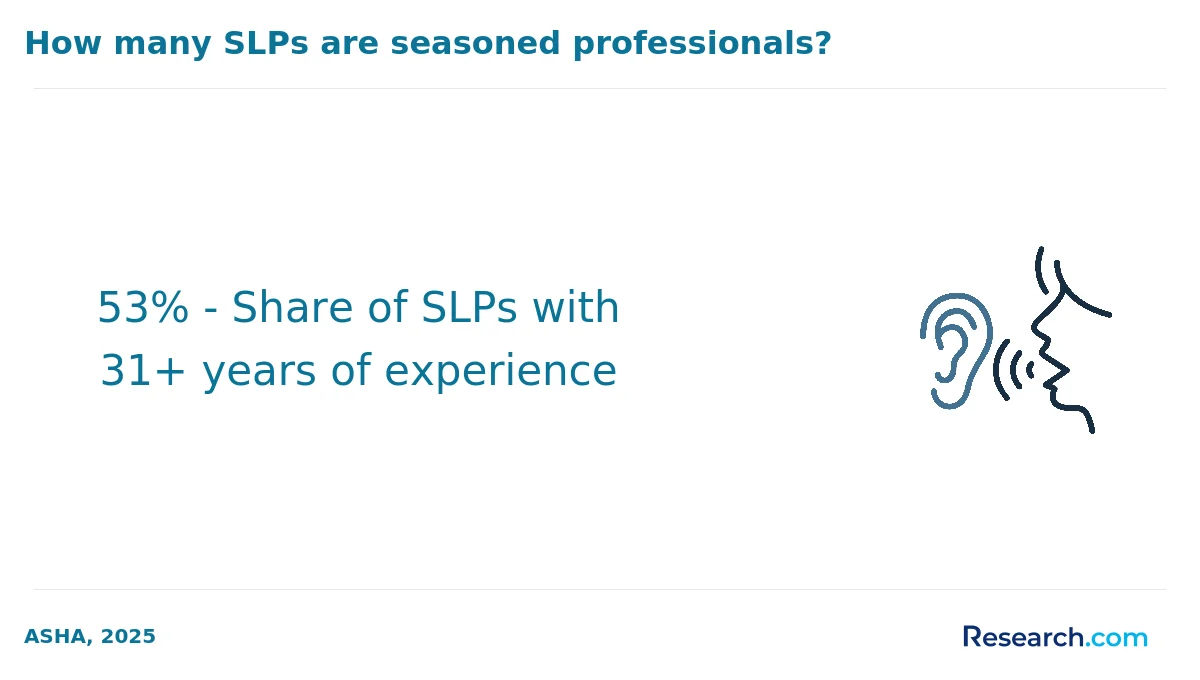
How Do Tuition Costs Compare Across Accredited Online Communication Disorders Degree Programs?
Tuition for online communication disorders programs can differ sharply by degree level, residency, public versus private pricing, and clinical requirements. College Board's 2024-2025 national averages show why this comparison matters: published tuition and fees at private nonprofit four-year institutions are several times higher than in-state public tuition, although scholarships and institutional aid can narrow the net price.
The table below compares the main cost categories students are likely to encounter. It focuses on how costs behave rather than promising a fixed price, because schools update tuition and fees regularly.
| Program category | Typical cost pattern | Costs beyond tuition | Best fit | Cost risk to watch |
| Public online bachelor's in communication disorders | Often lowest for in-state students and sometimes competitive for online out-of-state students. | Technology fees, textbooks, background checks, proctoring, possible residency fees. | First-time or transfer students preparing for graduate school. | Out-of-state tuition may erase the affordability advantage. |
| Private online bachelor's program | Often higher published tuition but may offer institutional aid. | Program fees, online course fees, required software, general university fees. | Students who receive strong grants or need a specific schedule. | Sticker price can be misleading if net price is not compared. |
| Post-baccalaureate leveling coursework | Usually cheaper than a second full bachelor's degree if only prerequisites are needed. | Application fees, transcript evaluation, per-course fees. | Career changers applying to SLP master's programs. | Courses may not satisfy every graduate program's prerequisite list. |
| Online CAA-accredited master's program | Commonly the highest total investment because of graduate tuition and clinical training. | Clinical placement expenses, travel, background checks, immunizations, equipment, possible campus intensives. | Students committed to SLP licensure. | High debt can weaken ROI if the program lacks strong placement and completion support. |
Students should compare total cost of attendance, not only per-credit tuition. A lower tuition program can become expensive if it accepts few transfer credits, requires extra prerequisite courses, or forces students to travel for clinical intensives.
Use this cost-comparison checklist before choosing a program:
- Calculate the total credits required after transfer evaluation, not the catalog credit count alone.
- Ask for all mandatory online, lab, clinical, background check, graduation, and proctoring fees.
- Estimate lost income if the program requires daytime clinical placements or full-time enrollment.
- Compare net price after grants, scholarships, assistantships, employer aid, and tuition discounts.
- Model repayment using federal loan interest rates rather than assuming future income will cover the difference automatically.
Students comparing multiple healthcare pathways should note that clinical requirements affect cost differently across fields. For example, online radiology tech programs may have lower degree-level tuition but require approved in-person clinical training, while communication disorders master's programs often involve graduate-level tuition plus supervised practicum placements.
Admission competitiveness depends on the degree level. Online bachelor's programs in communication disorders are often accessible to first-time and transfer students, while CAA-accredited online master's programs can be much more selective because cohort sizes and clinical placement capacity are limited.
Admissions committees usually look for evidence that applicants can handle language science, anatomy and physiology, research methods, and clinical communication. Graduate programs may also evaluate interpersonal readiness because students will eventually work with clients, families, educators, and healthcare teams.
| Degree level | Common admission requirements | Competitiveness level | How applicants can strengthen the file |
| Online bachelor's in communication disorders | High school diploma or transfer credits, transcripts, minimum GPA, general education requirements. | Low to moderate depending on the institution. | Complete transfer prerequisites, submit transcripts early, and confirm major-entry requirements. |
| Online post-baccalaureate or leveling program | Completed bachelor's degree, transcripts, minimum GPA, sometimes a statement of purpose. | Moderate because seats may be limited. | Choose courses that match target graduate prerequisites and maintain strong grades. |
| Online master's in speech-language pathology | Bachelor's degree, CSD prerequisites, GPA threshold, recommendations, essays, observation hours or related experience in some cases. | Moderate to high because of clinical placement and cohort constraints. | Document relevant experience, explain career goals clearly, and apply to multiple accredited programs. |
Applicants should not assume that a flexible online program is academically easier. Many online SLP master's programs use live sessions, clinical simulations, supervised practica, and intensive faculty evaluation. The flexibility is often about location, not lower expectations.
To avoid wasting application fees, prospective students should take the following steps before applying:
- Request a prerequisite audit from each target graduate program if your undergraduate major was outside communication disorders.
- Ask whether GRE scores are required, optional, or not accepted, because policies vary by school.
- Confirm whether observation hours, shadowing, or related work experience are recommended.
- Review minimum GPA rules separately from the average profile of admitted students.
- Apply early if the program uses rolling admission or limited clinical placement capacity.
A common mistake is applying only to the most recognizable private online program. Brand reputation can help, but students should also compare admission odds, prerequisite fit, clinical placement policies, and debt exposure.
Flexibility in online communication disorders programs depends on class timing, clinical requirements, cohort design, and pace. A program may be marketed as online while still requiring live evening classes, on-campus intensives, daytime clinical placements, or fixed course sequencing.
The table below summarizes the most common online formats and the students they tend to serve best.
| Format | How it works | Best for | Trade-off |
| Asynchronous online coursework | Students complete lectures and assignments within weekly deadlines without scheduled class meetings. | Working adults, caregivers, military-affiliated students, and students in different time zones. | Requires strong self-management and fewer real-time discussions. |
| Synchronous online coursework | Students attend live online classes at set times. | Students who want faculty interaction and peer discussion. | Less schedule flexibility and possible conflicts with work or clinical hours. |
| Cohort-based online program | Students move through a fixed sequence with the same group. | Students who benefit from structure and accountability. | Harder to slow down, pause, or accelerate. |
| Part-time online pathway | Students take fewer credits per term over a longer timeline. | Working students who need to keep income or benefits. | Longer time to completion and possible tuition increases over time. |
| Hybrid online program | Most coursework is online, but some labs, simulations, intensives, or clinical experiences are in person. | Students who can travel occasionally and want hands-on preparation. | Travel costs and schedule disruption can be significant. |
Students should match the format to their real weekly availability, not their ideal schedule. Communication disorders coursework often includes science-heavy content, transcription practice, case analysis, and group assignments, so "online" does not necessarily mean low time commitment.
If speed is a priority, students should ask whether the program allows heavier course loads, summer enrollment, or transfer credit acceleration. Students comparing healthcare degrees may also want to review RN to BSN program without clinicals options, because some nursing completion pathways are designed very differently from communication disorders programs that require direct clinical preparation.
The best flexibility questions to ask admissions counselors are:
- Are classes live, recorded, asynchronous, or mixed?
- How many hours per week should students expect for coursework outside class?
- Are clinical placements arranged by the school, the student, or both?
- Can students continue working full time during practicum semesters?
- Are campus visits, weekend intensives, or weekday daytime commitments required?
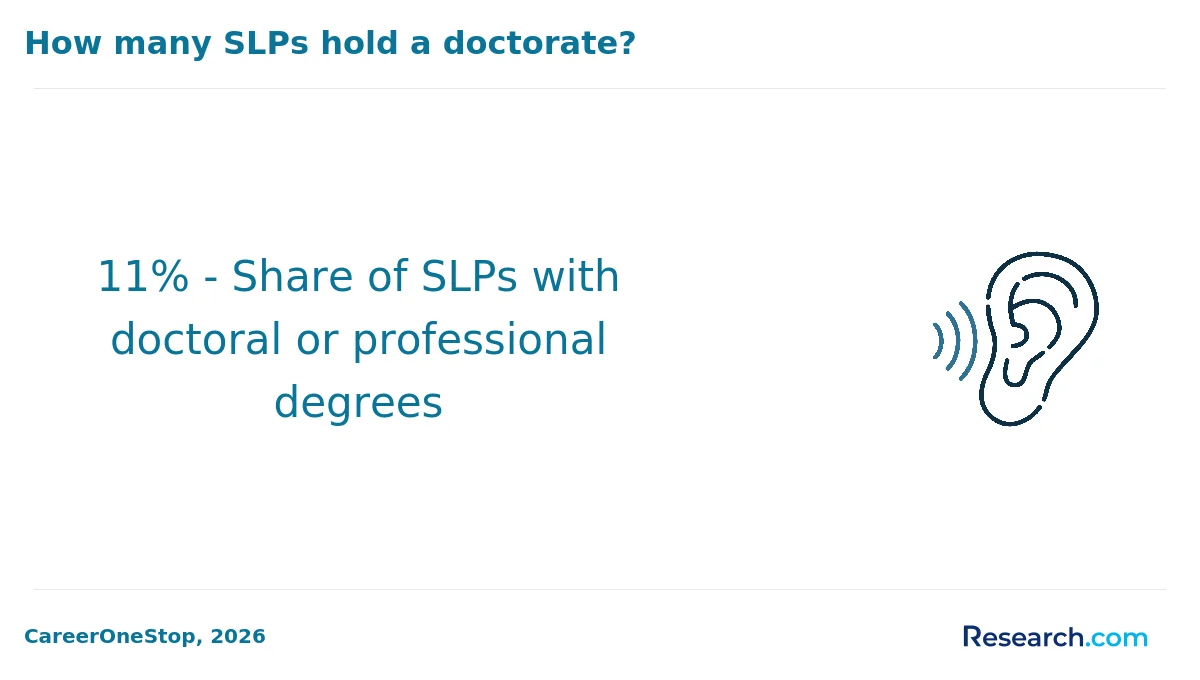
Student support services can directly affect completion, especially in online communication disorders programs where students must coordinate coursework, technology, advising, and clinical readiness from a distance. Strong support is not a bonus; it is a risk-reduction factor.
The most valuable services are those that help students avoid delays in prerequisite sequencing, fieldwork approval, and licensure preparation. Students should look for support that is specific to communication disorders rather than only general online tutoring.
| Support service | Why it matters | What students should ask |
| Dedicated academic advising | Prevents missed prerequisites and delayed graduation. | Will I have an advisor familiar with CSD graduate prerequisites and licensure pathways? |
| Clinical placement support | Helps students secure supervised experiences required for graduate training or licensure pathways. | Who identifies sites, and what happens if a placement falls through? |
| Faculty access | Supports mastery of technical content such as phonetics, anatomy, language development, and assessment concepts. | Are office hours available for online students in different time zones? |
| Career services | Helps students prepare for assistant roles, graduate applications, interviews, or clinical employment. | Does the career office understand SLP, audiology, school-based, and healthcare pathways? |
| Technology and accessibility support | Reduces disruption in online classes, simulations, and exams. | Is technical support available during live class times and exam windows? |
A good program should be able to explain what happens when a student struggles, not only how successful students move through the curriculum. Warning signs include unclear advising responsibility, no written clinical placement policy, limited faculty interaction, and generic career support with no connection to speech-language pathology or audiology pathways.
Students should also ask about support for graduate applications if they are choosing an undergraduate program. Advising should include prerequisite planning, recommendation strategy, observation opportunities where applicable, and guidance on selecting CAA-accredited master's programs.
Financial aid for accredited online communication disorders students may include federal grants, federal loans, institutional scholarships, employer tuition benefits, military education benefits, state aid, and private scholarships. Eligibility depends on the institution, degree level, enrollment status, and whether the student is in a degree-seeking program.
Federal loan costs are especially important for graduate students. For the 2024-2025 award year, federal Direct Unsubsidized Loans for graduate students carried an 8.08% fixed interest rate, which means borrowing decisions should be tied to realistic program cost, completion likelihood, and career goals rather than tuition alone.
| Aid option | Who may qualify | Best use | Limitation to confirm |
| Federal Pell Grant | Eligible undergraduate students with financial need. | Reducing out-of-pocket bachelor's degree cost. | Not available for most graduate programs. |
| Federal Direct Loans | Eligible undergraduate and graduate students at participating institutions. | Covering tuition and required educational expenses. | Interest accrues and borrowing limits apply. |
| Institutional scholarships | Students meeting school-specific criteria. | Reducing net price at public or private institutions. | Renewal rules may require GPA, enrollment intensity, or continuous attendance. |
| Employer tuition assistance | Employees at participating workplaces, including schools, hospitals, or clinics. | Lowering cost for working adults. | May require continued employment or limit eligible programs. |
| Military and veteran benefits | Eligible service members, veterans, or dependents. | Funding online study while maintaining location flexibility. | Benefit rules vary by program approval and student status. |
Students should compare aid offers using net cost, not scholarship amount alone. A private program with a large scholarship may still cost more than a public program with fewer grants, while a graduate program with strong clinical placement support may justify higher tuition if it reduces delays and relocation costs.
Before accepting an offer, students should complete this financial review:
- File the FAFSA if the school participates in federal student aid.
- Ask whether online students qualify for the same scholarships as campus students.
- Separate grants and scholarships from loans when comparing award letters.
- Estimate the total amount borrowed through graduation, including living and clinical placement costs.
- Ask whether part-time enrollment changes aid eligibility or scholarship renewal.
Students still exploring health professions can compare aid structures across fields. For instance, cheapest nurse practitioner programs may appeal to licensed nurses seeking advanced practice roles, but they require a different prior credential and clinical pathway than communication disorders programs.
Career outcomes in communication disorders depend on the credential completed. A bachelor's degree can support graduate school preparation or entry-level support roles, while independent clinical practice as a speech-language pathologist typically requires a graduate degree, supervised clinical experience, certification-related steps, and state licensure.
The strongest labor-market signal is for speech-language pathologists. The U.S. Bureau of Labor Statistics reports a May 2024 median annual wage of $95,410 for speech-language pathologists and projects much faster-than-average employment growth for the occupation, reflecting demand in schools, healthcare settings, and services for older adults and children with communication needs.
| Credential completed | Possible next step or role | Typical setting | Important limitation |
| Bachelor's in communication disorders | Graduate school applicant, speech-language pathology assistant in states that allow it, therapy aide, education support role. | Schools, clinics, early intervention settings, human services organizations. | Independent SLP practice usually requires a master's degree and licensure. |
| Post-baccalaureate CSD coursework | Applicant to SLP graduate programs. | Academic pathway rather than a final career credential. | Course acceptance varies by graduate program. |
| CAA-accredited master's in SLP | Speech-language pathologist after meeting state and professional requirements. | Schools, hospitals, skilled nursing facilities, outpatient clinics, private practice, telepractice settings. | Licensure and certification steps vary by state and employer. |
| Graduate audiology pathway | Audiology practice after completing the required clinical doctorate and licensure pathway. | Hospitals, clinics, hearing centers, educational settings. | Audiology has a separate doctoral-level preparation model. |
Students should evaluate ROI by comparing total debt, time to completion, likelihood of reaching the required credential, and the job market in the state where they plan to work. A low-cost bachelor's program may offer excellent value if it leads efficiently into graduate school, but it may not produce the same salary potential by itself.
Current trends also matter. Telepractice, school-based service demand, bilingual service needs, aging-related communication and swallowing disorders, and assistive communication technologies are influencing employer expectations. AI tools may help with documentation, scheduling, and practice activities, but they do not replace the clinical judgment, interpersonal communication, and licensed decision-making required in speech-language pathology.
Students comparing patient-centered online degrees should also consider whether communication disorders is the right type of care work. An online degree in nutrition, for example, may fit students more interested in food systems, counseling, and diet-related health than speech, language, voice, fluency, or swallowing.
Online and campus-based communication disorders programs can lead to similar academic goals when they are properly accredited and aligned with licensure needs, but the student experience can differ substantially. The best choice depends on schedule, location, learning style, clinical access, and willingness to travel.
The comparison below highlights the practical differences students should weigh before choosing delivery format.
| Factor | Online program | Campus-based program | Decision point |
| Schedule | May offer asynchronous or evening coursework. | Often follows daytime class schedules. | Online may work better for employed students, but clinical hours may still be daytime. |
| Location | Allows study from a distance if state authorization permits. | Requires relocation or commuting. | Online can reduce relocation costs but may require local placement coordination. |
| Clinical preparation | May rely on local placements, simulations, and remote supervision structures. | May use campus clinics and established nearby partnerships. | Students should ask exactly who secures clinical sites. |
| Peer interaction | Depends on live classes, cohort design, and discussion tools. | More informal in-person interaction. | Students who need daily face-to-face contact may prefer campus. |
| Cost | May reduce relocation and commuting expenses. | May provide access to campus assistantships or local clinical networks. | Total cost can favor either format depending on tuition, aid, and living expenses. |
Online programs make the most sense for students who need geographic flexibility, can manage independent study, and have realistic access to approved clinical placements. Campus programs may be better for students who want frequent in-person faculty contact, campus clinic experience, and a more traditional cohort environment.
A common mistake is assuming online programs are always cheaper. Some private online graduate programs have high per-credit tuition, while some campus-based public programs may be less expensive for in-state students. Students should compare net price, clinical logistics, and completion risk across both formats.
How Should Students Choose the Best Accredited Online Communication Disorders Degree Program?
Students should choose an accredited online communication disorders degree by working backward from the role they want. The right program for a future licensed speech-language pathologist is different from the right program for a transfer student, career changer, school paraprofessional, or student still exploring healthcare fields.
The following step-by-step process helps students compare programs without relying too heavily on rankings or marketing claims:
- Define the target outcome: graduate admission, SLP assistant eligibility, master's-level licensure preparation, or career exploration.
- Verify institutional accreditation for every school and CAA accreditation for any graduate clinical SLP or audiology program.
- Confirm state authorization and state licensure alignment before applying to an online program.
- Request a transfer or prerequisite evaluation in writing so you know the true remaining credit load.
- Compare total cost after aid, including fees, travel, clinical expenses, and lost work time.
- Review format requirements, including live classes, cohort pacing, practicum schedules, and campus visits.
- Ask for outcome indicators such as completion support, Praxis preparation, clinical placement policies, and graduate school advising.
- Choose the lowest-risk program that meets your credential goal, budget, schedule, and state requirements.
The biggest red flags are unclear accreditation language, no state-specific licensure disclosure, limited clinical placement support, unusually aggressive admissions pressure, and tuition estimates that omit fees or required travel. Students should also be cautious when a program cannot explain what graduates commonly do next.
Public programs can offer excellent value, especially for in-state students, but private nonprofit programs may be worthwhile when they provide strong aid, specialized support, or a format that prevents delayed completion. Institution type alone does not determine ROI; the better question is whether the program efficiently moves the student to the next required credential.
Students comparing communication disorders with other online healthcare pathways should consider prerequisite burden and clinical expectations. For example, RN to BSN program without clinicals options are designed for licensed nurses completing a bachelor's credential, while communication disorders programs often serve students preparing for a future graduate clinical profession.
Other Things You Should Know About Communication Disorders
Usually no. A bachelor's degree can prepare you for graduate study or some support roles, but independent speech-language pathology practice typically requires a CAA-accredited master's degree, supervised clinical experience, and state licensure.
Employers generally care most about accreditation, licensure eligibility, clinical preparation, and demonstrated skills. The online format is less important when the program is properly accredited and meets professional requirements.
An online bachelor's degree commonly takes about four years for first-time students, less for transfer students. Post-baccalaureate prerequisite programs may take about one to two years, while online SLP master's programs often take two to three years depending on pace and clinical requirements.
Helpful preparation includes biology, anatomy, psychology, linguistics, statistics, child development, and strong writing. Students should also build communication, empathy, observation, and time-management skills because these are central to clinical training.
- U.S. Bureau of Labor Statistics - Speech-Language Pathologists https://www.bls.gov/ooh/healthcare/speech-language-pathologists.htm
- ASHA EdFind - Accredited Speech-Language Pathology Programs https://find.asha.org/ed/
- ETS Praxis - Speech-Language Pathology (5331) https://praxis.ets.org/test/speech-language-pathology-5331.html
- University of Nebraska at Kearney - Speech-Language Pathology, Master of Science in Education (Online Track) https://www.unk.edu/online/degrees-programs/speech-language-pathology-online.php
- West Virginia University - Speech-Language Pathology, M.S. - Online https://medicine.hsc.wvu.edu/communications-sciences-and-disorders/speech-language-pathology-ms/future-students/curriculum/online-slp-program/
- University of North Carolina at Greensboro - Speech-Language Pathology, M.A. (Online) https://csd.uncg.edu/graduate/masters-of-arts-online/
- Pepperdine University - Master of Science in Speech-Language Pathology https://healthscience.pepperdine.edu/online-masters-in-speech-language-pathology/
- Pennsylvania Western University - Master of Science in Speech-Language Pathology https://online.pennwest.edu/programs/speech-language-pathology-grad/index.php