2027 Online Communication Disorders Degree Programs With No Application Fee and Rolling Admissions

Co-Founder and Chief Data Scientist

Reviewed by Rhea Paul, PhD
SLP Education & Research Expert
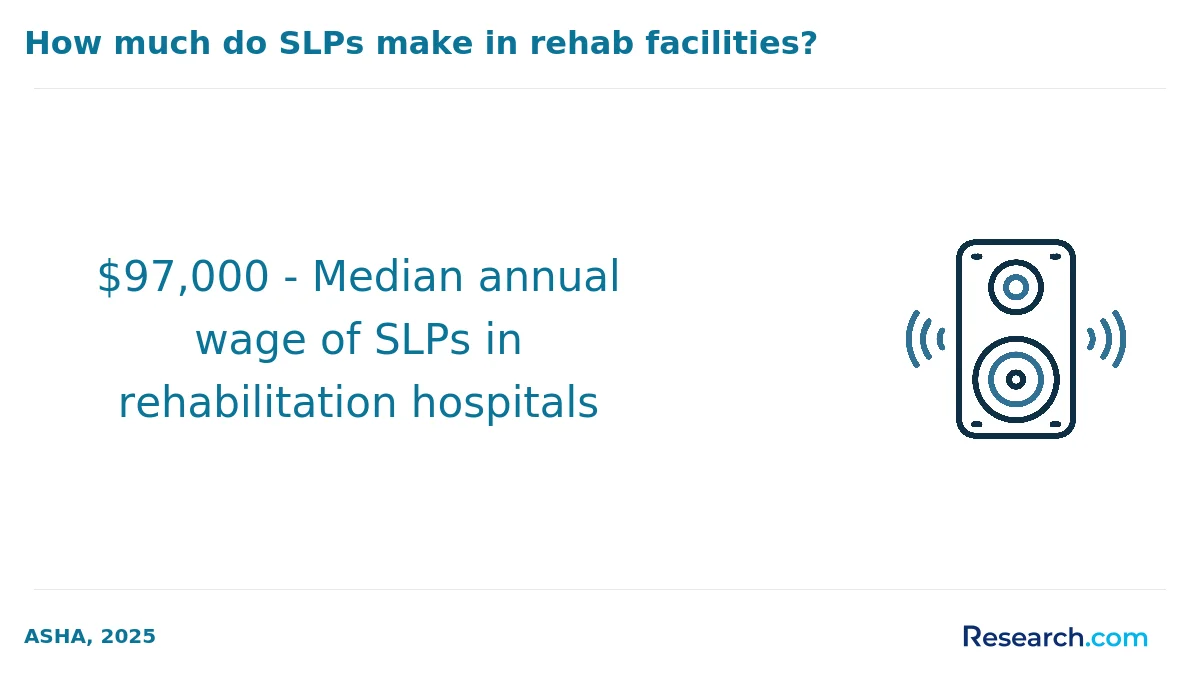
Choosing an online communication disorders degree is easier when you can apply without paying a fee and avoid one rigid deadline. The decision still needs scrutiny: the U. S. Bureau of Labor Statistics reports a 2026 median pay of $97,870 for speech-language pathologists and projects 17% employment growth from 2025 to 2035, but professional licensure usually requires graduate education. This guide helps prospective students compare no-fee, rolling-admission programs by cost, flexibility, accreditation, admissions requirements, and long-term career value.
Key Things You Should Know
- No application fee can reduce upfront risk, but it usually saves far less than tuition, technology fees, textbooks, background checks, and possible clinical-placement costs.
- Rolling admissions means applications are reviewed as they arrive; it does not always mean every start date, course, scholarship, or seat remains available year-round.
- A bachelor's or leveling program in communication disorders can prepare students for graduate study, but independent speech-language pathologist licensure typically requires a CAA-accredited master's degree and supervised clinical training.
Which Online Communication Disorders Degree Programs Have No Application Fee and Rolling Admissions?
Online communication disorders programs with both no institutional application fee and rolling admissions are more common at the undergraduate or pre-professional level than at the master's level. Policies can change by term, so students should treat the table below as a shortlist for verification rather than a substitute for checking the current admissions page or asking an admissions advisor.
| School | Online communication disorders option | Degree level | No-fee and rolling-admission fit | Best-fit student |
| Eastern New Mexico University | Online Bachelor of Science in Communicative Disorders | Bachelor's | ENMU is commonly known for no undergraduate application fee and rolling admission for many undergraduate applicants; students should verify program-specific enrollment timing. | Students seeking an affordable public-university pathway into speech-language pathology or audiology graduate preparation. |
| Maryville University | Online Bachelor of Science in Communication Sciences and Disorders | Bachelor's | Maryville's online admissions model commonly emphasizes no application fee and multiple start opportunities; students should confirm the next available cohort and any documentation deadlines. | Working adults who want a private nonprofit online option with flexible admissions support. |
| Fort Hays State University | Online Bachelor of Science in Communication Sciences and Disorders | Bachelor's | FHSU's online undergraduate admissions process is often positioned as low-barrier, with year-round admissions activity; students should confirm the current application-fee policy and start-term availability. | Transfer students comparing public online tuition, transfer-credit acceptance, and a pre-professional CSD curriculum. |
The most important takeaway is that "no application fee" and "rolling admissions" describe the admissions process, not the academic quality or total price of the degree. A stronger comparison also checks accreditation, faculty expertise, online course delivery, transfer-credit rules, graduate-school placement support, and whether the curriculum satisfies prerequisites for later speech-language pathology or audiology training.
Students comparing healthcare-oriented online pathways may also find it useful to examine how admissions flexibility differs across fields; for example, an RN to BSN program without clinicals may reduce practicum complexity in a way that communication disorders programs usually cannot, especially for students planning to pursue licensure later.
How Does Rolling Admission Work for Online Communication Disorders Degree Programs?
Rolling admission means a school reviews applications continuously or in batches as files become complete, rather than waiting for one final deadline. For online communication disorders degrees, this can shorten the waiting period between submitting materials and receiving a decision, but it does not eliminate internal deadlines for course registration, financial aid, transcript evaluation, or cohort placement.
The table below summarizes how rolling admissions differs from fixed-deadline admissions and why the distinction matters for applicants who are balancing work, family, transfer credits, or graduate-school prerequisites.
| Admissions model | How applications are reviewed | Flexibility advantage | Common limitation |
| Rolling admission | Applications are reviewed as completed files arrive. | Students may receive decisions sooner and apply when they are ready. | Seats, advising capacity, scholarships, and desired courses may still fill before the final enrollment date. |
| Priority rolling admission | Applications are reviewed continuously, but early applicants may receive stronger consideration for aid or preferred start dates. | Students can still apply outside one hard deadline. | Late applicants may have fewer financial aid or registration options. |
| Fixed-deadline admission | Applications are reviewed after a published deadline or within a defined review window. | Applicants know the review calendar in advance. | Missing the deadline may delay enrollment by a full term or year. |
Applying early is usually wise even when a program advertises rolling admission. Communication disorders courses often build in sequence, so a late admission decision may leave a student admitted to the university but unable to start the exact foundational course needed for timely progress.
How Much Can Students Save by Choosing an Online Communication Disorders Degree With No Application Fee?
A waived application fee can be helpful, especially for students comparing multiple schools, but it should not be confused with affordability. The larger financial question is whether the program's total cost, transfer-credit policy, and time to completion make sense for the student's career goal.
Application-fee savings matter most when a student is applying to several programs to compare admissions decisions and aid packages. However, the College Board's 2024 pricing data reported average published tuition and fees of $11,610 for in-state students at public four-year institutions for 2024-25, which shows why a small upfront fee waiver should be weighed against annual tuition and required fees.
Students should compare the following costs before assuming a no-fee program is cheaper overall:
- Per-credit tuition and whether online students pay in-state, out-of-state, or a separate online rate.
- Mandatory online, technology, student-services, graduation, lab, or transcript-evaluation fees.
- Textbooks, assessment tools, clinical observation platforms, background checks, immunization documentation, or placement-related expenses.
- Transfer-credit acceptance, because losing credits can cost more than the application fee saved.
- Time to completion, since an extra semester can add tuition, fees, and opportunity costs.
The best use of a no-fee application is strategic: apply to a small group of legitimate programs, compare real financial aid offers, and then choose based on net cost and fit rather than the absence of a front-end fee.
Admission requirements vary by degree level. A bachelor's program usually evaluates high school records or transfer credits, while a post-baccalaureate leveling program may require a completed bachelor's degree. A master's program in speech-language pathology is more selective because it prepares students for clinical training and licensure-related pathways.
The table below shows common admissions requirements by program type so students can identify which documents they need before applying.
| Program type | Typical applicant background | Common requirements | Important caution |
| Online bachelor's in communication disorders | First-year, adult, or transfer student | Application, official transcripts, minimum GPA standards, transfer evaluation, and sometimes placement testing. | A bachelor's degree alone usually does not qualify a graduate to practice independently as a speech-language pathologist. |
| Online second bachelor's or leveling program | Student with a bachelor's degree in another field | Prior degree transcript, prerequisite review, GPA review, and sometimes a personal statement. | These programs may prepare students for graduate admission but are not substitutes for a clinical master's degree. |
| Online master's in speech-language pathology | Student pursuing clinical preparation | Official transcripts, prerequisite CSD coursework, recommendations, resume, statement of purpose, clinical observation documentation, and possible interview. | Some programs use centralized applications or separate graduate fees even if the university advertises no undergraduate application fee. |
Before applying, students should gather materials in a way that avoids incomplete-file delays. A practical checklist includes:
- Request official transcripts from every college attended, including schools where only one or two courses were completed.
- Ask whether unofficial transcripts can be used for preliminary review while official transcripts are in transit.
- Confirm whether prerequisite courses must be completed before admission or only before starting upper-division or graduate coursework.
- Check whether the program requires synchronous class meetings, campus visits, observation hours, or local clinical documentation.
- Ask whether transfer credits are evaluated before or after admission, because that timing affects total cost and graduation planning.
Applicants exploring multiple health-related degree paths should notice how requirements vary by profession.
For instance, students comparing communication disorders with cheapest nurse practitioner programs will find that NP programs typically require an active nursing license and clinical placements, while CSD pathways focus heavily on speech, language, hearing, anatomy, development, and graduate-school prerequisites.
Students should apply as soon as they can submit a complete, accurate application for their preferred start term. Rolling admissions rewards readiness, not speed alone; submitting early with missing transcripts or unclear prerequisite information can still slow the process.
A good timeline works backward from the desired start date. The sequence below helps applicants avoid the common mistake of assuming "rolling" means "last-minute."
- Six months before the start term, identify programs that match your degree level, state needs, budget, and career goal.
- Four to five months before the start term, request transcripts and ask each school how long transfer-credit evaluation typically takes.
- Three months before the start term, submit applications or complete preliminary reviews so you can compare decisions and costs.
- Two months before the start term, complete financial aid steps, advising appointments, placement requirements, and course registration.
- One month before the start term, confirm technology requirements, orientation, book lists, and whether first-term courses are still available.
Some students prefer accelerated routes, but communication disorders sequences can be less flexible than general education courses because prerequisites may be offered in specific terms. If speed is a major priority, compare CSD options with broader fast track college programs to see whether acceleration is realistic for your intended profession.
A strong application shows that the student understands the field, can handle science-based and language-focused coursework, and has a realistic plan for online learning. This matters even when a program has rolling admissions, because continuous review does not mean automatic admission.
Applicants can improve their file by focusing on evidence that predicts academic readiness and career alignment:
- Use the personal statement to explain why communication disorders fits your goals, especially if you are changing careers or returning to school after a gap.
- Highlight coursework in anatomy, biology, psychology, linguistics, child development, statistics, or education if it appears on your transcript.
- Document related experience such as tutoring, caregiving, classroom support, bilingual communication, disability services, rehabilitation exposure, or volunteer work.
- Choose recommenders who can describe your communication skills, reliability, academic discipline, or ability to work with diverse populations.
- Address weak grades directly if allowed, focusing on what changed and how you are prepared for online coursework now.
Students should also avoid over-relying on admissions convenience. In fields with patient-facing or client-facing outcomes, schools may look for maturity, ethical judgment, and clear communication in addition to grades. This is also true in adjacent allied health programs, such as online radiology tech programs, where online coursework may be paired with strict clinical or competency expectations.
Some no-fee online communication disorders programs are legitimate, but the application policy itself proves nothing about quality. Students should verify both institutional accreditation and the program's relevance to their intended career path.
For bachelor's and leveling programs, regional or institutional accreditation is the baseline because it affects transfer credits, financial aid eligibility, and graduate-school recognition. For students who plan to become speech-language pathologists, the more career-critical checkpoint usually comes at the master's level: graduate SLP programs should be accredited by the Council on Academic Accreditation in Audiology and Speech-Language Pathology when licensure or certification is the goal.
Use this verification process before enrolling:
- Confirm the institution is accredited by an agency recognized by the U.S. Department of Education or the Council for Higher Education Accreditation.
- Ask whether the specific communication disorders curriculum meets common prerequisites for CAA-accredited SLP graduate programs.
- For graduate programs, verify CAA accreditation status directly rather than relying only on marketing language.
- Ask how online students complete observation hours, clinical requirements, or any required campus visits.
- Check state licensure rules if you intend to work as an SLP assistant, speech-language pathologist, or audiologist, because requirements vary by state.
Red flags include vague accreditation claims, pressure to enroll immediately, unclear tuition pages, no faculty credentials, promises of licensure from a bachelor's degree alone, or refusal to explain clinical-placement responsibilities. A no-fee application can be convenient, but legitimacy comes from transparent accreditation, curriculum, outcomes, and student-support information.
Total cost depends on more than tuition. Students should compare net price after grants and scholarships, transfer-credit acceptance, number of credits required, course sequencing, fees, and whether the program requires any in-person components.
The federal Pell Grant maximum is $7,395 for the 2024-25 award year, according to Federal Student Aid. That figure is useful because it shows why completing the FAFSA and meeting aid deadlines can matter far more than saving an application fee, especially for students with financial need.
The table below summarizes cost factors that can change the real price of an online communication disorders degree even when the application is free.
| Cost factor | Why it matters | Question to ask the school |
| Tuition rate | Online programs may charge in-state, out-of-state, flat online, or cohort tuition. | What is the exact per-credit tuition for my residency and program level? |
| Transfer credits | Accepted credits can reduce both cost and time to completion. | How many credits will apply to the major, not just to electives? |
| Mandatory fees | Technology, student-service, graduation, and course fees can raise the final bill. | Can you provide a full program-cost estimate, including fees? |
| Course availability | Limited course rotations can add semesters even for admitted students. | Are required CSD courses available every term or only once per year? |
| Clinical or observation requirements | Some pathways require local arrangements, documentation, or travel. | What requirements must online students complete outside regular coursework? |
Students comparing communication disorders with other online health and wellness degrees should be careful not to compare tuition alone. For example, an online degree in nutrition may have different supervised-practice expectations, credentialing pathways, and state requirements, so ROI should be judged within the profession, not across tuition numbers only.
No-fee, rolling-admission programs are especially useful for students who need flexibility at the application stage but are still committed to comparing quality and total cost. They are not automatically the best choice for every future speech-language pathology, audiology, education, or rehabilitation-services student.
These programs tend to benefit the following students most:
- Working adults who cannot wait for one annual deadline and need a program that offers several entry points.
- Transfer students who want to compare credit evaluations before committing to a school.
- Career changers who need prerequisite CSD coursework before applying to graduate school.
- Budget-conscious applicants applying to multiple schools to compare aid offers without paying several application fees.
- Students who are academically ready now and would lose time by waiting for a fixed application cycle.
Students should be more cautious if they need a highly selective CAA-accredited master's program, a guaranteed clinical placement near home, a specific state licensure pathway, or maximum scholarship consideration. In those cases, a fixed-deadline program with stronger outcomes or better clinical infrastructure may be a better investment than a more convenient admissions process.
How Should Students Choose Among No-Fee Online Communication Disorders Degree Programs?
The best program is the one that fits the student's goal, budget, schedule, and next credential. For many students, the right choice is not simply the first program that admits them; it is the program that minimizes wasted credits, supports progression into graduate study if needed, and provides transparent costs.
Use this decision process to compare programs before enrolling:
- Define the end goal: SLP graduate school, audiology preparation, SLP assistant eligibility, education support, healthcare administration, or a related path.
- Confirm the degree level you actually need, because bachelor's, leveling, and master's programs serve different purposes.
- Verify institutional accreditation and, for graduate SLP programs, CAA accreditation status.
- Ask for a written cost estimate that includes tuition, fees, transfer credits, and expected time to completion.
- Confirm whether rolling admission applies to the program, the university, or only certain start terms.
- Compare course sequencing so you know whether required CSD courses are available when you need them.
- Review online format details, including synchronous meetings, exams, observation requirements, and possible in-person components.
- Check student support, including advising, graduate-school preparation, career services, tutoring, and disability accommodations.
- Choose the program that offers the strongest combination of cost, credibility, flexibility, and career alignment rather than the easiest application.
A simple rule helps prevent costly mistakes: use the free application to gather options, but use accreditation, net cost, curriculum fit, and outcomes to make the enrollment decision.
Other Things You Should Know About Communication Disorders
No, not by itself. A bachelor's degree can prepare you for graduate study, but speech-language pathologists typically need a master's degree, supervised clinical experience, exam completion, and state licensure.
Options vary by state and employer, but graduates may pursue roles such as speech-language pathology assistant, classroom support specialist, early-intervention aide, hearing-screening assistant, or rehabilitation-services support worker. Some roles require additional state approval or supervision.
Yes, it can be a strong major if the curriculum includes the prerequisites required by the graduate programs you plan to apply to. Students should compare prerequisite lists early so they do not miss required courses in speech science, audiology, language development, anatomy, or phonetics.
It depends on the degree level and program purpose. Undergraduate programs may include observation or field-based assignments, while graduate SLP programs require supervised clinical training that must meet accreditation, certification, and state licensure expectations.
- U.S. Bureau of Labor Statistics - Speech-Language Pathologists https://www.bls.gov/ooh/healthcare/speech-language-pathologists.htm
- ASHA EdFind - Accredited Speech-Language Pathology Programs https://find.asha.org/ed/
- ETS Praxis - Speech-Language Pathology (5331) https://praxis.ets.org/test/speech-language-pathology-5331.html
- Pepperdine University - Master of Science in Speech-Language Pathology https://healthscience.pepperdine.edu/online-masters-in-speech-language-pathology/
- Pennsylvania Western University - Master of Science in Speech-Language Pathology https://online.pennwest.edu/programs/speech-language-pathology-grad/index.php
- Emerson College - Master of Science (M.S.) in Communication Disorders (Speech@Emerson, online) https://speech.emerson.edu/
- University of Scranton - Master of Science (M.S.) in Speech-Language Pathology https://www.scranton.edu/academics/pcps/health-and-human-performance/programs/speech-language-pathology/index.shtml
- University of Nebraska at Kearney - Speech-Language Pathology, Master of Science in Education (Online Track) https://www.unk.edu/online/degrees-programs/speech-language-pathology-online.php