2027 Fastest Accredited Online Global Studies Programs: Accelerated Degrees and Completion Times

Co-Founder and Chief Data Scientist
The real question is not just which online Global Studies degree is fastest; it is which accredited program you can finish quickly without losing transfer credits, flexibility, or credibility. NCES distance education tables published in 2024 show that more than 10 million U. S. college students took at least one online course in fall 2022, making online completion pathways a mainstream option. This guide is for transfer students, working adults, military learners, and career changers comparing speed, accreditation, cost, course load, prerequisites, fieldwork, and realistic time to graduation.
Key Things You Should Know
- The fastest realistic accredited online Global Studies bachelor's path is usually a degree-completion program that accepts about 75% of a 120-credit degree, meaning students with up to 90 transferable credits may finish in roughly 12 to 18 months if required courses are available year-round.
- Accelerated online formats commonly use 4-week, 7.5-week, or 8-week courses, but shorter terms compress the workload rather than reduce it; a full bachelor's from zero credits still commonly takes about 3 to 4 years.
- Institutional accreditation is essential; Global Studies usually does not require specialized programmatic accreditation, so students should verify regional or national institutional accreditation, transfer limits, residency requirements, and whether internships, language study, or capstone projects affect completion time.
Which Colleges Offer the Fastest Accredited Online Global Studies Programs?
The fastest accredited online Global Studies programs are usually not "fast" because the degree has fewer requirements. They are faster because the school uses shorter academic terms, frequent start dates, generous transfer policies, or a degree-completion structure for students who already have college credit.
The table below compares accredited U.S. colleges with online Global Studies or closely named global affairs programs and highlights the speed-related features students should verify before applying.
| College and online program | Institutional accreditation | Speed-related format | Credits and transfer-credit note | Best fit for fast completion |
| Liberty University, online B.S. in Global Studies | Southern Association of Colleges and Schools Commission on Colleges | 8-week online courses with multiple annual start dates | 120-credit bachelor's; school commonly allows transfer of up to 75% of a bachelor's degree | Students with substantial prior credit who want a structured Christian university context |
| National University, online B.A. in Global Studies | WASC Senior College and University Commission | 4-week course model designed for adult learners | Quarter-unit system; transfer evaluation determines remaining units | Working adults who can handle one intensive course at a time |
| Arizona State University Online, B.A. in Global Studies | Higher Learning Commission | Online courses commonly offered in 7.5-week sessions | 120-credit bachelor's; transfer credit is reviewed by course equivalency and degree fit | Students who want a large public university with frequent online course offerings |
| University of Arizona Online, B.A. in Global Studies | Higher Learning Commission | Online format with accelerated session options in many online programs | 120-credit bachelor's; transfer evaluation determines general education and major progress | Students seeking a public research university option with global and area-studies coursework |
| Oregon State University Ecampus, B.A./B.S. in Global Studies | Northwest Commission on Colleges and Universities | Quarter-based online calendar with multiple annual terms | 180 quarter-credit bachelor's, broadly comparable to a 120 semester-credit degree | Students who prefer steady quarter-term progress and strong online student support |
For many students, the fastest option in practice is the school that accepts the most applicable transfer credits, not necessarily the one with the shortest course sessions. A 4-week course can move quickly, but if the program accepts fewer prior credits or requires sequential major courses, the total calendar time may be longer than a program with 7.5- or 8-week terms.
A good rule is to ask each school for a degree audit before committing. The audit should show exactly which credits transfer, which requirements remain, whether courses are offered every term, and whether the advertised completion timeline assumes full-time, year-round enrollment.
How Long Does It Take to Complete an Accredited Online Global Studies Degree?
"Completion time" means the calendar time from your first enrolled term in the program to graduation, not the length of a single course. For accredited online Global Studies degrees, the biggest timeline factors are starting credits, course load, term length, course sequencing, and whether the program requires language study, a capstone, study abroad, or an internship.
The table below shows realistic U.S. online completion scenarios. These ranges are more useful than a single "fastest" claim because two students in the same program can graduate at very different speeds.
| Student starting point | Typical remaining credits | Realistic fast timeline | More manageable timeline | Main risk that can slow graduation |
| No prior college credit | About 120 semester credits | About 3 years with heavy, year-round enrollment | About 4 years full time or 5+ years part time | Burnout from taking too many accelerated courses at once |
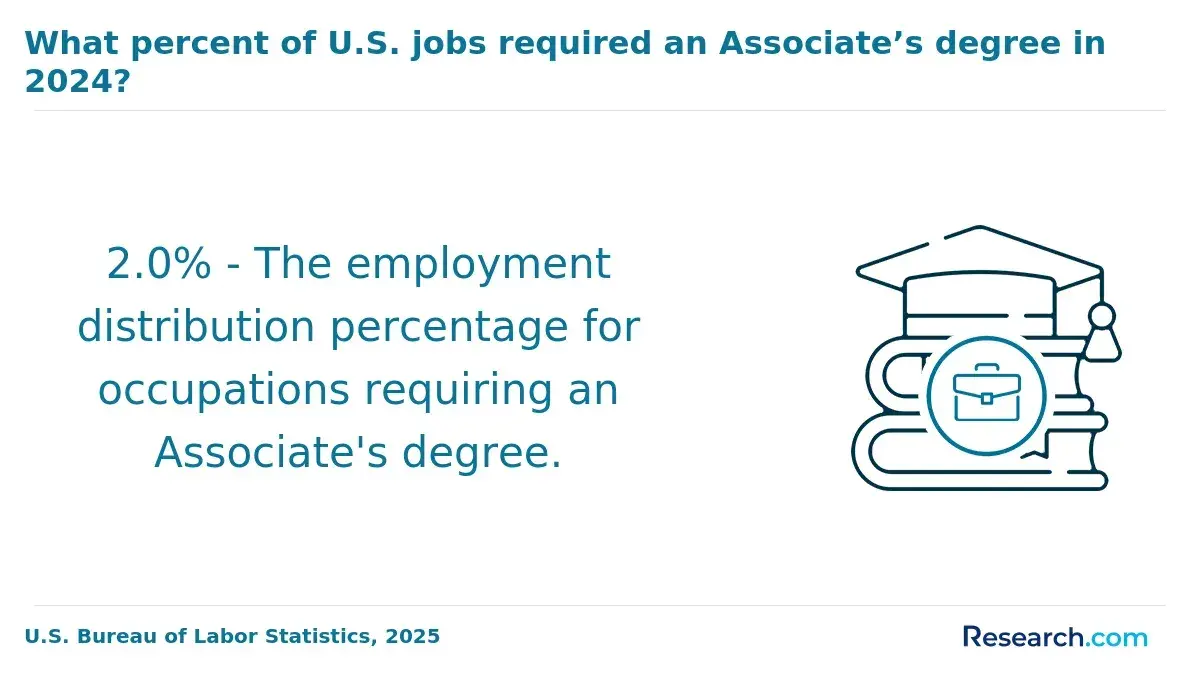
| Associate degree or about 60 credits | About 60 semester credits | About 18 to 24 months | About 2 to 3 years | General education or lower-division credits not matching degree requirements |
| Up to 90 transferable credits | About 30 semester credits | About 12 to 18 months | About 18 to 24 months | Residency rules, major-course sequencing, or capstone timing |
| Online master's in global studies or global affairs | Often about 30 to 36 graduate credits | About 12 to 18 months full time | About 2 years part time | Thesis, practicum, language, or research requirements |
Students comparing accelerated degrees across fields may notice similar trade-offs in options like a fastest online business degree: shorter sessions can reduce calendar time, but they usually require disciplined weekly study and quick turnaround on assignments.
For Global Studies specifically, students should watch for course sequences. If an upper-level regional studies course, research seminar, or senior capstone is offered only once or twice per year, it can delay graduation even when all other courses are online and accelerated.
How Do Accelerated and Competency-Based Online Global Studies Programs Work?
Accelerated online Global Studies programs usually work by compressing courses into shorter sessions and allowing students to stack multiple sessions across the year. Competency-based Global Studies degrees are less common than competency-based business, IT, or health administration programs, but some schools may use self-paced assessments, portfolio credit, or prior-learning evaluation to reduce remaining requirements.
The table below explains the major online formats and how each one affects speed. Use it to match the program structure to your available study time rather than assuming the shortest term is automatically best.
| Format | How it works | How it can speed completion | Best for | Possible drawback |
| 8-week courses | Students complete the same course outcomes in half of a traditional 16-week semester | Two sessions per semester can allow faster credit accumulation | Students who want structure but more frequent start dates | Assignments arrive quickly, and falling behind is hard to recover from |
| 7.5-week courses | Courses are divided into short sessions across fall, spring, and often summer | Students can complete more courses during the year | Students comfortable with steady weekly deadlines | Course availability can still limit major requirements |
| 4-week courses | Students usually focus on one intensive course at a time | Rapid course turnover can help motivated adult learners maintain momentum | Students who prefer deep focus on one subject | Reading- and writing-heavy Global Studies courses may feel intense |
| Competency-based or self-paced elements | Progress depends partly on demonstrating mastery rather than sitting through a fixed term | Prior knowledge can help students complete some requirements faster | Experienced professionals, military learners, and globally engaged workers | Not widely available for full Global Studies majors |
| Degree-completion model | The program is designed for students who already completed general education or an associate degree | Students focus mainly on upper-division major and elective requirements | Transfer students with 60 to 90 applicable credits | Transfer credits must fit the degree plan, not just appear on a transcript |
A genuinely accelerated program should have more than short classes. It should also have frequent start dates, online access to required upper-division courses, clear transfer policies, summer enrollment, advising that maps the entire degree plan, and enough course availability to prevent bottlenecks.
Students should be cautious with any program that advertises "finish fast" but does not publish credit requirements, accreditation status, transfer limits, course rotation, or a sample completion plan. Fast enrollment is not the same as fast graduation.
What Accreditation Should an Online Global Studies Program Have?
For an online Global Studies degree, institutional accreditation is the key quality marker. Accreditation means an external accreditor recognized for U.S. higher education quality review has evaluated the institution's academic standards, student support, faculty qualifications, and financial stability.
Unlike nursing, social work, counseling, or teacher licensure programs, Global Studies usually does not require specialized programmatic accreditation. That makes institutional accreditation especially important because employers, graduate schools, transfer institutions, and federal financial aid rules commonly rely on it.
Before enrolling, students should verify the following accreditation and credibility points because each one can affect transferability, aid eligibility, and long-term value:
- Confirm that the college is institutionally accredited by a recognized accrediting agency and that the online campus or online division is covered by that accreditation.
- Check whether the degree title on the transcript is the same as the advertised online program or whether it appears as a broader major such as international studies, interdisciplinary studies, or political science.
- Ask whether credits from the program are normally eligible for transfer to graduate schools or other accredited institutions, recognizing that receiving schools make final decisions.
- Review any public sanctions, teach-out notices, or accreditation warnings before applying.
- Be skeptical of schools that promise extremely fast degrees for a flat fee without evaluating transcripts, documenting learning outcomes, or requiring substantial coursework.
Accreditation does not guarantee that a program is the right fit, but lack of recognized accreditation can create serious problems. It may limit financial aid access, reduce employer confidence, complicate graduate admission, and make future credit transfer difficult.
How Can Transfer Credits and Prior Learning Shorten an Online Global Studies Degree?
Transfer credit is usually the strongest lever for shortening an online Global Studies degree. A student entering with an associate degree, military training, language credits, or prior college coursework may save more time than a student who simply chooses a school with shorter class sessions.
Students who are still early in college planning can also use lower-cost pathways strategically. For example, completing one of the easy associate degrees may help satisfy general education requirements before transferring into a bachelor's program, as long as the credits align with the target school's degree plan.
The table below summarizes common credit sources and how they may affect time to graduation. Actual credit awards vary by institution, academic department, grade earned, age of coursework, and degree applicability.
| Credit source | How it may count | Potential time-saving value | Important limitation |
| Community college transfer credits | General education, electives, introductory social science, humanities, or language courses | Can reduce a bachelor's timeline by 1 to 2 years when credits apply cleanly | Not all associate-degree credits meet upper-division Global Studies requirements |
| Prior bachelor's coursework | General education, electives, research methods, language, or regional studies | Can support a degree-completion timeline | Old credits or low grades may not transfer |
| Military training | Electives, leadership, international experience, language, or area studies when evaluated | Can reduce elective requirements | Credit depends on official evaluation and school policy |
| AP, IB, CLEP, or DSST exams | General education, language, history, government, or elective credit | Can remove lower-division requirements before enrollment | Score thresholds and maximum exam-credit limits vary |
| Portfolio or prior-learning assessment | Documented college-level learning from work, service, travel, or language experience | Can help experienced adults avoid repeating known material | Often limited, fee-based, and not guaranteed |
To graduate as quickly as possible, students should treat transfer evaluation as a planning process, not a paperwork step. The following sequence can prevent lost credits and unexpected extra terms:
- Request unofficial transfer reviews from several accredited online Global Studies programs before applying or enrolling.
- Ask each school to separate accepted credits from credits that actually apply to the major, general education, electives, and residency requirement.
- Identify remaining upper-division courses and ask when each is offered during the next 12 to 24 months.
- Confirm the maximum number of credits allowed from community college, exams, military training, portfolio assessment, and prior universities.
- Get a written degree plan showing the fastest possible schedule and a backup schedule if a course is full or unavailable.
The most common transfer mistake is assuming that "90 credits accepted" means "30 credits left." A school may accept credits onto the transcript but still require additional major, upper-division, residency, language, or capstone credits before graduation.
What Are the Admission Requirements and Start Dates for Accelerated Online Global Studies Programs?
Admission requirements for accelerated online Global Studies programs are usually similar to other online bachelor's programs, but timelines can move faster because many schools offer multiple start dates per year. That flexibility helps students begin sooner, yet it also means application documents and transfer evaluations need to be ready quickly.
Most online Global Studies bachelor's programs ask for a mix of academic records and readiness documents. These requirements can affect your start date if transcripts, test credits, or international records take time to evaluate.
- High school diploma, GED, or equivalent for first-year applicants.
- Official transcripts from every college previously attended for transfer applicants.
- Minimum GPA requirements, which may differ for first-year, transfer, and readmission students.
- English-language proficiency documentation when required by the institution.
- Application form, identity verification, and sometimes a short personal statement or advising intake.
- Program-specific placement or prerequisites for language, research methods, statistics, or writing-intensive courses.
Accelerated programs may offer monthly, bimonthly, or several annual starts, while public universities may follow fall, spring, and summer calendars with shorter sessions inside those terms. The fastest start date is not always the best one if your transfer audit is incomplete, because enrolling before the audit is finalized can lead to unnecessary courses.
Before choosing a start date, ask admissions and advising teams these practical questions:
- Can I receive a complete transfer-credit evaluation before I pay an enrollment deposit?
- Which required Global Studies courses are available in my first two terms?
- Can I take summer courses, and are upper-division major courses offered during summer?
- Is there a maximum number of accelerated courses I can take at once?
- Will any language, internship, study abroad, or capstone requirement delay my expected graduation date?
Students who need the fastest timeline should apply early enough to resolve transcript issues, financial aid verification, course placement, and advisor approval before registration opens. Waiting until the week before a start date can make an accelerated program slower, not faster.
How Much Does a Fast Online Global Studies Degree Cost, and Is Financial Aid Available?
A fast online Global Studies degree can cost less if it reduces the number of terms you pay for, but speed alone does not guarantee savings. Tuition structure, transfer credits, fees, textbook costs, residency requirements, and financial aid eligibility matter more than the advertised calendar length.
College Board's 2024 pricing data gives useful national context for U.S. bachelor's degree costs. These figures are not specific to Global Studies, but they help students judge whether an online program's tuition is above or below common four-year benchmarks.
- Average published tuition and fees for in-state students at public four-year institutions: $11,610 for the 2024-25 academic year.
- Average published tuition and fees for out-of-state students at public four-year institutions: $30,780 for the 2024-25 academic year.
- Average published tuition and fees at private nonprofit four-year institutions: $43,350 for the 2024-25 academic year.
Students comparing affordability across online degree fields may find it helpful to review how tuition varies in other people-focused programs, such as the cheapest online counseling degree, while remembering that counseling and Global Studies have different accreditation, fieldwork, and career requirements.
Financial aid may be available when the institution and program qualify under federal aid rules. Eligible students may use grants, federal loans, military education benefits, employer tuition assistance, scholarships, payment plans, or state aid, but aid packages depend on enrollment intensity, cost of attendance, dependency status, satisfactory academic progress, and remaining lifetime eligibility.
To estimate total cost, do not stop at price per credit. Multiply the remaining credits after transfer by tuition, add mandatory fees, include books and technology costs, and ask whether accelerated terms affect financial aid disbursement. A student with 90 applicable transfer credits may pay far less than a first-time student at the same school, even when the tuition rate is identical.
Can You Work Full Time While Completing an Accelerated Online Global Studies Degree?
Many students can work full time while completing an accelerated online Global Studies degree, but the realistic pace depends on job predictability, family responsibilities, writing speed, reading load, and whether courses are asynchronous. Global Studies courses often involve research papers, policy analysis, history, culture, economics, language, and current events, so the workload can be reading- and writing-intensive.
The table below compares common enrollment loads for working adults. It can help you choose a speed that is ambitious without becoming unsustainable.
| Enrollment pattern | Typical course load | Likely fit for full-time workers | Completion impact |
| One accelerated course at a time | Often 3 credits per 4- to 8-week session | Most manageable for demanding jobs | Steady progress, but may extend the timeline |
| Two accelerated courses at a time | Often 6 credits per short session | Possible for students with flexible schedules | Can significantly shorten completion time |
| Full-time year-round enrollment | Usually 12 or more credits per semester equivalent, including summer | Difficult with unpredictable work hours | Fastest common path for students without many transfer credits |
| Part-time continuous enrollment | Usually 3 to 9 credits per term | Often best for caregivers and full-time professionals | Slower, but more sustainable |
A practical way to test readiness is to start with one accelerated course in the first session, especially if you have been out of school for several years. If the workload is manageable, add a second course in a later session after you understand the platform, instructor expectations, library tools, and writing requirements.
The biggest mistake working adults make is confusing online flexibility with unlimited flexibility. Asynchronous courses may not require live attendance, but they still have deadlines, group projects, exams, discussion posts, and research assignments that can cluster during busy workweeks.
Are Accelerated Online Global Studies Degrees Respected by Employers and Graduate Schools?
Accredited online Global Studies degrees can be respected by employers and graduate schools when they come from a properly accredited institution and the student can show relevant skills. Employers generally care less about whether coursework was online and more about the institution, degree relevance, communication ability, analytical skills, language ability, internships, work experience, and evidence of cross-cultural competence.
Global Studies is a broad interdisciplinary degree, so outcomes vary widely. Graduates may pursue roles connected to international nonprofits, public policy, immigration support, community programs, research, communications, logistics, government contractors, education support, or global business operations. Some career paths require graduate study, security clearance, language proficiency, specialized experience, or professional credentials.
BLS occupational data released for 2024 illustrates why students should connect the degree to a concrete career plan. For example, political scientists had a median pay of $139,380, but the occupation typically requires a master's degree, which means a bachelor's in Global Studies may be only the first step for that path.
Students who want management, consulting, or international business roles may later compare graduate business options, including online MBA programs, to add quantitative, leadership, or operations training to their global affairs background.
For graduate school, an accelerated online degree is generally strongest when the transcript shows solid grades, rigorous upper-division coursework, research or capstone experience, and clear preparation for the next field. If the program is accredited and academically sound, finishing faster should not be a disadvantage by itself.
How Should You Compare the Fastest Accredited Online Global Studies Programs?
The best fast online Global Studies program is the one that lets you graduate sooner while still supporting your career, graduate-school, financial, and personal goals. A program that is technically fastest may be a poor choice if it limits transfer credit, lacks the concentration you need, requires unavailable courses, or overloads your schedule.
Use the following comparison sequence before enrolling. It focuses on the factors that most often separate an advertised fast timeline from a realistic one.
- Verify institutional accreditation and confirm that the online program is covered by the same accredited institution.
- Request a written transfer-credit audit showing remaining credits by category, including major, upper-division, general education, electives, and residency credits.
- Ask for a term-by-term completion plan based on your actual schedule, not a generic full-time example.
- Confirm course length, start dates, summer availability, and whether required Global Studies courses are offered every term.
- Check whether the degree requires language proficiency, internship, fieldwork, study abroad, service learning, research methods, or a senior capstone.
- Calculate total cost using remaining credits, tuition, fees, books, technology, and the financial aid package you are actually offered.
- Compare career fit by reviewing concentrations, faculty expertise, experiential learning, alumni outcomes when available, and graduate-school preparation.
The table below summarizes common red flags and better alternatives. It is meant to help you avoid choosing a program based only on the shortest advertised timeline.
| Common mistake or red flag | Why it matters | Better way to evaluate the program |
| Assuming "accelerated" means easy | Shorter terms usually compress the same learning outcomes | Review syllabi, weekly workload, writing expectations, and course pacing |
| Ignoring transfer-credit limits | Accepted credits may not apply to degree requirements | Get a category-by-category degree audit before enrolling |
| Choosing based only on course length | Course availability and sequencing may matter more than term length | Ask when each remaining required course will be offered |
| Overlooking residency requirements | Schools may require a minimum number of credits completed through them | Confirm how many credits must be taken at the institution |
| Missing capstone or language requirements | These requirements may not be available every session | Place them on the degree plan early |
| Choosing a broad degree without a career plan | Global Studies is flexible but may need specialization | Match electives to public policy, nonprofit work, business, security, language, or graduate study goals |
If your career goals shift toward a licensed or highly specialized field, compare the Global Studies timeline with the education required in that field. For example, mental-health careers may require a very different graduate path, such as a masters in clinical psychology, supervised experience, and state-specific licensure rules.
Before making a final decision, ask the school one direct question: "Based on my evaluated credits and my weekly availability, what is the fastest realistic graduation date you can document in writing?" The answer will tell you more than any marketing phrase.
Other Things You Should Know About Global Studies
In most cases, diplomas from accredited universities do not specify the delivery format. Policies vary by institution, so ask the registrar whether the transcript or diploma distinguishes online coursework.
Some programs encourage study abroad, internships, or field experiences, but many online programs offer alternatives such as virtual projects, local placements, research seminars, or globally focused capstones. Always confirm this before enrolling because travel or placement requirements can affect timing.
Not exactly. Global Studies is often interdisciplinary and may include culture, history, economics, migration, sustainability, language, and regional studies. International Relations usually focuses more heavily on diplomacy, political systems, conflict, security, and foreign policy.
Yes, if the school awards placement, exam, transfer, or prior-learning credit for language proficiency. However, credit policies vary, and some programs require upper-level language coursework even when students already speak another language.
References
- This site requires JavaScript to work properly. https://europa.unibas.ch/en/studies/ma-european-global-studies/how-to-apply/
- Accreditation of Online Courses | European Association for Higher Education Advancement https://www.eahea.org/international-online-course-accreditation.html
- chea newsroom https://www.chea.org/
- Top 50 Online and Distance Learning Universities 2026 | EUCDL Distance Accreditation Council https://www.eucdl.com/ranking-2026
- Accreditation Guide - Quality Online Schools | Sora Schools https://soraschools.com/blog/accreditation-a-parents-guide-to-quality-online-schools
- Self-Paced Online Degree Programs https://www.umassglobal.edu/why-umassglobal/flexible-ways-to-learn/self-paced
- Corsi di studio e offerta formativa - Università di Parma https://corsi.unipr.it/en/cdl-globals/enrolment-procedures-and-deadlines
- Best Self-Paced Online Courses for College Credit [2026] https://www.straighterline.com/blog/best-self-paced-online-courses-college-credit-2026
- Explore UM | University of Manitoba - Direct Entry Programs Applicant Information https://umanitoba.ca/explore/undergraduate-admissions/requirements/direct-entry
- Accreditation Explained: Guidelines for Global Verification https://www.motaword.com/blog/understanding-accreditation-how-to-verify-institutions-globally