
2027 Online Global Studies Degree Programs That Accept 60, 75, or 90 Transfer Credits

Co-Founder and Chief Data Scientist
If you already have college credit, the real question is not just whether an online Global Studies program accepts 60, 75, or 90 credits-it is whether those credits satisfy the degree. NC-SARA reported more than 2,400 institutions participating in interstate distance education in 2024, giving transfer students more online options but also more policies to compare.
This guide is for degree-completion students with substantial prior coursework. You will learn how transfer limits, residency rules, major requirements, cost, and time-to-finish interact before you enroll.
Key Things You Should Know
- A typical bachelor's degree requires 120 credits, so transferring 60, 75, or 90 credits may leave about 60, 45, or 30 credits before graduation if every accepted credit applies to the online Global Studies degree plan.
- The most transfer-friendly programs often accept up to 75% of a bachelor's degree, but residency, upper-division, major, language, capstone, and general education rules can reduce how many credits actually count.
- Before enrolling, request an official transfer evaluation showing course-by-course equivalencies, remaining credits, estimated tuition, and whether older, military, exam, or prior-learning credits will apply to specific Global Studies requirements.
How Many Transfer Credits Can You Apply Toward an Online Global Studies Degree?
Most online Global Studies bachelor's degrees require about 120 semester credits. When a school says it accepts 60, 75, or 90 transfer credits, that usually refers to the maximum number of credits the university may bring into your record, not a guarantee that all credits will satisfy graduation requirements.
The distinction matters because Global Studies is often interdisciplinary. Your degree plan may include general education, world language, international relations, comparative politics, regional studies, research methods, intercultural communication, electives, upper-division coursework, and a senior capstone. Transfer credits are most valuable when they replace those exact categories.
The table below shows the practical difference between accepted credits and remaining credits in a standard 120-credit bachelor's program. Use it as a first estimate, then confirm the actual degree audit with the school.
| Transfer scenario | Typical credits accepted | Approximate credits left in a 120-credit degree | What students should verify |
| 60-credit transfer | Often an associate degree or two years of college | About 60 credits | Whether lower-division general education is complete and whether introductory global or language courses apply |
| 75-credit transfer | Two years plus additional electives or major-related coursework | About 45 credits | Whether excess electives fit the Global Studies plan or become unused credits |
| 90-credit transfer | Maximum transfer pathway at many transfer-friendly universities | About 30 credits | Whether the remaining 30 credits satisfy residency, upper-division, capstone, and major requirements |
A 90-credit transfer can be powerful, but it is not always better than a 75-credit transfer. If the 90 credits are mostly unrelated electives, a school may accept them to your transcript while still requiring additional Global Studies core courses. Similar logic applies in other degree-completion fields, including transfer-focused options such as online MBA programs, where the fit between prior coursework and required curriculum matters more than the headline transfer maximum.
Which Online Global Studies Degree Programs Accept 60, 75, or 90 Transfer Credits?
Online Global Studies programs may appear under several related names, including Global Studies, International Studies, International Relations, Global Affairs, Global and Cultural Studies, or Interdisciplinary Studies with a global concentration. The strongest option is usually the one that applies the most credits to required categories, not simply the one with the highest published transfer cap.
The table below compares common program types by the transfer-credit patterns students are likely to encounter. Because institutional policies change, treat these as program-selection categories rather than automatic guarantees.
| Program type | Best fit for transfer students with | Common transfer-credit ceiling | Main advantage | Main caution |
| Online BA or BS in Global Studies | Prior coursework in humanities, social sciences, language, history, politics, culture, or geography | Often up to 60 to 90 credits, depending on the university | Most directly aligned with the target degree | Major courses, language requirements, and capstone credits may need to be completed at the new school |
| Online BA in International Studies or International Relations | Credits in political science, economics, foreign language, area studies, sociology, or anthropology | Often up to 75% of the bachelor's degree at transfer-friendly institutions | Good match for students interested in diplomacy, policy, nonprofits, or global business | Some programs require specific theory, research, or comparative politics courses |
| Online interdisciplinary studies degree with global concentration | Mixed credits from several colleges or majors | Often flexible, sometimes up to 90 credits | May apply more elective-heavy transfer credits | May be less specialized than a dedicated Global Studies major |
| Online degree-completion program | Students who already have 60 or more credits | Frequently designed around 60-, 75-, or 90-credit transfer entry points | Usually structured for working adults and part-time learners | May have strict residency or minimum upper-division credit rules |
To compare programs accurately, create a short list of schools and request a transfer estimate from each one. A school that accepts 75 credits and applies 72 credits to the degree can be a better choice than a school that accepts 90 credits but applies only 60 toward required Global Studies coursework.
How Can You Tell Whether Transfer Credits Will Actually Apply Toward Your Global Studies Degree?
The key question is not "How many credits will the university accept?" It is "How many accepted credits will reduce the number of courses I still need for this specific Global Studies degree?" Accepted credits may appear on your record, while applied credits fill requirements in the degree audit.
Use the following checks before assuming a 60-, 75-, or 90-credit transfer will shorten your degree as expected:
- Ask for a written degree audit that separates general education, major core, concentration, electives, upper-division credits, residency credits, language requirements, and capstone requirements.
- Confirm whether each transfer course is accepted as an exact equivalent, a general education course, a major elective, a free elective, or an unused excess credit.
- Check the minimum grade rule, because many schools require at least a C for transfer credit, and some major courses may need a higher grade.
- Verify institutional accreditation and, when relevant, whether credits from nationally accredited, unaccredited, foreign, quarter-credit, or competency-based institutions are handled differently.
- Ask whether your credits are semester credits or quarter credits, because quarter credits usually convert to fewer semester credits.
- Do not enroll until you know which remaining courses are required, how often they are offered online, and whether any prerequisites could delay your graduation plan.
A common red flag is a broad promise such as "transfer up to 90 credits" without a course-by-course explanation. That phrase may be accurate but incomplete. It does not tell you whether your anthropology course covers a regional studies requirement, whether your language credits meet proficiency expectations, or whether your previous international business courses count toward Global Studies electives.
What Types of Previous College Credits Can Transfer Into an Online Global Studies Degree?
Online Global Studies programs often accept a wide range of previous college credits because the field draws from the social sciences, humanities, language study, communication, policy, economics, and culture. Still, each credit source is reviewed differently.
The following categories are the most likely to appear in a transfer evaluation, and each can affect your remaining degree requirements in a different way:
- Community college credits may satisfy lower-division general education, introductory political science, world history, geography, sociology, economics, or foreign language requirements.
- Credits from a completed associate degree may transfer as a block, but the school still decides whether the block satisfies all Global Studies prerequisites and general education categories.
- Credits from another four-year university may be especially useful for upper-division major courses if the course level, content, and accreditation match the receiving institution's standards.
- International relations, international business, anthropology, area studies, communications, environmental studies, religion, and public policy credits may apply as major or concentration electives.
- Foreign language credits may count toward language requirements, electives, or placement, depending on whether the program requires coursework, proficiency, or both.
- Unused electives may transfer to the transcript but may not reduce the number of credits still required if the degree's elective space is already full.
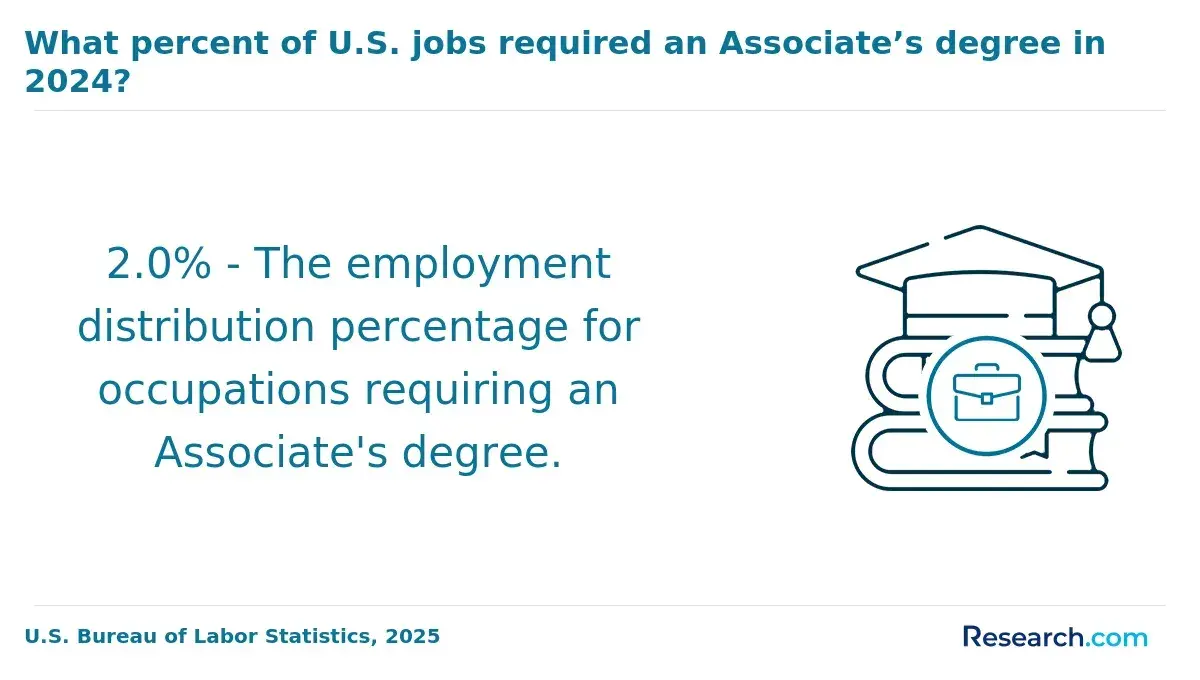
Students coming from easy associate degrees should pay close attention to course fit. An associate degree can be a strong transfer foundation, but a Global Studies major may still require specific language, research, comparative politics, or regional coursework that was not included in the associate curriculum.
How Do Residency and Upper-Division Requirements Affect Global Studies Transfer Students?
Residency requirements define how many credits you must complete through the institution that grants the degree. Upper-division requirements define how many advanced-level credits, often 300- or 400-level courses, you must complete. Together, these rules explain why a 90-credit transfer does not always mean you have only random electives left.
Many bachelor's programs require at least 30 credits in residence, which is why 90 credits is a common maximum transfer limit for a 120-credit degree. Some universities also require a minimum number of upper-division credits in the major, a senior seminar, a research course, or a capstone project completed through the home institution.
The table below shows how these rules can change the value of transfer credits for a Global Studies student.
| Requirement | How it affects transfer students | Why it matters for Global Studies |
| Residency requirement | Requires a set number of credits at the degree-granting university | May prevent you from transferring more than 90 credits into a 120-credit program |
| Upper-division minimum | Requires advanced coursework even if many lower-division credits transfer | Global policy, research, regional analysis, and capstone courses are often upper-division |
| Major residency rule | Requires some major credits to be completed at the new university | Transferred international studies courses may count as electives instead of replacing core major courses |
| Capstone or senior project | Usually must be completed at the home institution | Often integrates global research, policy analysis, intercultural learning, or regional specialization |
| Language or proficiency rule | May require college coursework, placement testing, or demonstrated proficiency | Prior language credits may not satisfy the full requirement without the correct level or assessment |
The best move is to ask the advisor to identify which remaining credits are non-negotiable. If your last 30 credits include required Global Studies courses offered only once per year, your timeline may be longer than the credit count suggests.
How Does the Transfer Credit Evaluation Process Work for an Online Global Studies Degree?
The transfer evaluation process is the formal review that determines how your previous credits fit the online Global Studies degree. Admissions may give you a preliminary estimate, but the official evaluation usually happens after transcripts are received and the academic department reviews major-related courses.
Follow this sequence to avoid surprises before committing to a program:
- Collect official transcripts from every college or university you attended, even if the credits were old, repeated, incomplete, or earned before a degree change.
- Gather syllabi for courses that may be hard to evaluate, especially international topics, language, regional studies, study abroad, independent study, or interdisciplinary courses.
- Apply or request a pre-enrollment review if the school offers one, and ask whether the evaluation is unofficial or binding.
- Review the degree audit line by line, paying attention to credits marked as free electives, excess electives, non-equivalent courses, or pending departmental review.
- Ask the Global Studies department to reconsider any course that appears similar to a major requirement but was not applied that way.
- Request a remaining-course plan that shows course names, credit hours, online availability, prerequisites, and expected term sequence.
- Compare at least two schools using applied credits, remaining credits, tuition, fees, and time-to-completion rather than maximum transfer policy alone.
One of the most expensive mistakes is enrolling after receiving only a verbal estimate. A written evaluation gives you something concrete to compare and helps you identify whether a school's generous transfer policy actually supports your goal of finishing efficiently.
How Long Does It Take to Finish an Online Global Studies Degree With 60, 75, or 90 Transfer Credits?
Completion time depends on the number of credits left, course load, term length, course availability, and whether the required courses are offered every term. For working adults, part-time enrollment is often more realistic, while full-time enrollment may be possible for students with flexible schedules and financial support.
The table below estimates how long it may take to finish a 120-credit online Global Studies degree after transferring 60, 75, or 90 credits. These are planning estimates, not guarantees, because program sequencing and required course availability vary.
| Credits transferred | Estimated credits remaining | Full-time pace | Part-time pace | Timeline risk to check |
| 60 credits | About 60 credits | Roughly 2 academic years | Often 3 to 4 years | Whether lower-division prerequisites or language courses must be completed before upper-division courses |
| 75 credits | About 45 credits | Roughly 1.5 academic years | Often 2.5 to 3 years | Whether remaining credits include required major courses offered in a fixed sequence |
| 90 credits | About 30 credits | Roughly 1 academic year | Often 1.5 to 2 years | Whether residency, capstone, and upper-division rules force a minimum enrollment period |
Accelerated online formats can help, but speed should not be the only factor. Students who compare programs such as the fastest online business degree often face the same trade-off: shorter terms may reduce calendar time, but the weekly workload can be intense, especially when courses require research papers, group projects, language practice, or policy analysis.
For Global Studies students, the biggest timeline risks are missing prerequisites, waiting for a required capstone, and discovering that a needed course is not offered every term. Ask for a term-by-term plan before assuming that 30 remaining credits can be finished in exactly two semesters.
How Much Can Transfer Credits Reduce the Cost of an Online Global Studies Degree?
Transfer credits can reduce cost because you usually do not pay the new university's tuition for courses it applies toward your degree. However, the savings depend on the receiving school's tuition, fees, financial aid, textbook costs, and how many credits actually replace required courses.
College Board's 2024 pricing data reported average published tuition and fees of $11,610 for in-state public four-year students and $43,350 for private nonprofit four-year students for the 2024-25 academic year. For transfer students, that gap is a reminder to compare the remaining cost of the degree, not just the total tuition sticker price.
The table below uses a simple per-credit planning method so you can estimate savings without relying on a school's marketing language. Replace the sample tuition with the actual online tuition and fees from each program.
| Transfer scenario | Credits not taken at the new school | Potential tuition avoided at $400 per credit | Potential tuition avoided at $600 per credit | Important limitation |
| 60 credits accepted and applied | 60 credits | $24,000 | $36,000 | Savings shrink if credits apply only as electives and do not reduce required coursework |
| 75 credits accepted and applied | 75 credits | $30,000 | $45,000 | Some schools may still require major, upper-division, or residency credits |
| 90 credits accepted and applied | 90 credits | $36,000 | $54,000 | The final 30 credits may include higher-cost fees, capstone courses, or fixed residency requirements |
Cost comparisons should include financial aid timing. If a program requires you to take prerequisite courses that do not count toward full-time status, your aid package may be affected. Also check whether online course fees, technology fees, graduation fees, transcript fees, or prior-learning assessment fees change the final amount.
Students comparing affordability across fields, such as those researching the cheapest online counseling degree, should use the same principle here: the lowest per-credit tuition is not always the lowest total cost if fewer transfer credits apply toward graduation.
Can Prior Learning, Military Training, Exams, or Certifications Count Toward an Online Global Studies Degree?
Some online Global Studies programs allow students to use nontraditional credit, but policies vary widely. Prior learning, military training, standardized exams, professional certifications, and language proficiency can sometimes reduce remaining credits, especially in general education, electives, or language requirements.
Ask the school about these options before your transfer evaluation is finalized, because some institutions limit the total combination of transfer, exam, military, and prior-learning credits:
- Military training may be reviewed through Joint Services Transcript recommendations, but the university decides how credits apply to the degree.
- CLEP, DSST, AP, and IB exams may satisfy general education, language, history, economics, or social science requirements if scores meet the school's minimum standards.
- Prior learning assessment may award credit for documented college-level learning from work, travel, nonprofit service, public administration, language use, or intercultural experience.
- Professional certifications may apply as electives if the learning outcomes match college-level coursework, though they are less likely to replace Global Studies core courses.
- Language placement or proficiency testing may reduce or satisfy language coursework, but some schools award placement without credit.
Be cautious about assuming experience automatically equals credit. A student who worked internationally may have excellent practical knowledge, but the university may require a portfolio, faculty review, exam score, or documented learning outcomes before awarding credit.
This is similar to graduate and professional pathways such as masters in clinical psychology, where prior coursework and experience may be useful but still must meet specific academic standards. For Global Studies, the safest approach is to ask how alternative credit will appear in the degree audit before paying assessment fees.
Do Older College Credits Expire When Transferring Into an Online Global Studies Degree?
Older college credits do not always expire, but they may be reviewed more carefully. Global Studies programs often accept older humanities, history, language, political science, sociology, anthropology, or general education credits if they came from an accredited institution and meet current degree requirements.
The issue is usually course relevance, not age alone. A world history course from many years ago may still satisfy a general education requirement, while an older technology, statistics, research methods, or current global policy course may need review because the content changes more quickly.
Before dismissing old credits, send every transcript. Students are sometimes surprised that older credits can fill electives, general education, or introductory requirements. At the same time, do not assume that old major credits will replace current upper-division Global Studies courses, especially if the program emphasizes newer issues such as migration, climate policy, global health, security, data analysis, human rights, or artificial intelligence in global systems.
A practical way to handle older credits is to ask three questions: will the course transfer, will it apply to a requirement, and will it satisfy a current prerequisite? If the answer to the second or third question is no, the credit may still be accepted but may not shorten your path to graduation.
Other Things You Should Know About Global Studies
Yes, often. Credits from business, psychology, communications, humanities, social sciences, criminal justice, education, or general studies may satisfy general education or elective requirements. The closer your courses are to culture, politics, language, economics, history, or international issues, the more likely they are to support the major.
Some programs require foreign language coursework or proficiency, while others offer it as an elective or concentration option. If you already studied a language, ask whether your credits meet the required level or whether you need a placement or proficiency test.
In many cases, the diploma does not list the delivery format, but policies vary by institution. Ask the registrar how the degree, transcript, campus, and program name appear before enrolling if this matters to you.
Yes, depending on the graduate program and your academic record. Global Studies can support paths in international affairs, public policy, law, business, education, social science, nonprofit leadership, and area studies, but some graduate programs may require prerequisites, language skills, research experience, or a minimum GPA.
References
- Transfer to CSU Global | Transfer Credits Accepted | Colorado State University Global https://csuglobal.edu/admissions/transfer-students
- 10 Best Online Colleges that Accept Transfer Credits – Rankings https://www.collegeconsensus.com/rankings/best-online-colleges-accepting-transfer-credits/
- International/Global Studies Pre-Major https://www.shoreline.edu/programs/general-transfer/international-global-studies-pre-major.aspx
- Top Online Schools That Accept Transfer Credits https://www.edvisorly.com/student-guides/online-schools-that-accept-transfer-credits
- Global Studies Associate in Arts Degree for Transfer https://catalog.nocccd.edu/fullerton-college/degrees-certificates/social-sciences/global-studies-associate-in-arts-degree-for-transfer/
















![2027 Best Advanced Standing Online MSW Programs [CSWE Accredited] thumbnail](/uploads/Online_Advanced_Standing_MSW_301dbd5368.jpg)


