2027 Cheapest Accredited Online Global Studies Degree Programs That Accept FAFSA

Co-Founder and Chief Data Scientist
Choosing the cheapest online global studies degree is not just about finding the lowest tuition; it is about finding an accredited program where FAFSA, transfer credit, and career value work together. The Federal Pell Grant maximum for 2024-25 is $7,395, which can materially reduce costs for eligible undergraduates. This guide is for students comparing online global studies, international studies, and international relations programs. You will learn how to verify FAFSA eligibility, compare real net cost, avoid aid mistakes, and decide whether a low-cost program supports your academic and career goals.
Key Things You Should Know
- The lowest published online tuition among widely available FAFSA-participating global or international studies options is often at public universities, with estimated full-program tuition ranging from roughly the low $20,000s for in-state students to more than $70,000 before aid.
- FAFSA eligibility means the institution participates in federal student aid, not that every student will receive grants; the 2024-25 Pell Grant maximum is $7,395 and depends on financial need, enrollment intensity, and remaining lifetime eligibility.
- The best-value program is usually the one with the lowest net price after grants, scholarships, transfer credits, and required fees, not necessarily the one with the lowest advertised per-credit rate.
Which Are the Cheapest Accredited Online Global Studies Degree Programs That Accept FAFSA?
The cheapest accredited online global studies degree programs that accept FAFSA are typically offered by regionally accredited public universities. Because "global studies" may appear under related names such as international studies, international relations, global affairs, or political science with a global concentration, students should compare programs by curriculum fit as well as price.
| School | Online degree or close global studies option | Accreditation type | Typical FAFSA participation | Published tuition basis to verify | Estimated cost signal before aid |
| University of Central Florida | BA in International and Global Studies | Regional institutional accreditation | Yes, for eligible degree-seeking students | In-state and out-of-state undergraduate online tuition | Often among the lowest-cost choices for Florida residents |
| Fort Hays State University | BA or BS in International Studies | Regional institutional accreditation | Yes, for eligible degree-seeking students | Online undergraduate per-credit tuition | Strong low-cost option because online tuition is typically comparatively flat |
| Florida International University | BA in International Relations | Regional institutional accreditation | Yes, for eligible degree-seeking students | In-state and out-of-state online undergraduate tuition | Affordable for Florida residents; higher for nonresidents |
| Troy University | Political science or international/global politics-related online pathways | Regional institutional accreditation | Yes, for eligible degree-seeking students | Online undergraduate per-credit tuition | Moderate-cost public university option with broad online delivery |
| Oregon State University Ecampus | BA or BS in Global Studies | Regional institutional accreditation | Yes, for eligible degree-seeking students | Ecampus undergraduate per-credit tuition | Higher tuition than the lowest-cost public options but strong online infrastructure |
| University of Arizona Online | BA in Global Studies | Regional institutional accreditation | Yes, for eligible degree-seeking students | Online undergraduate per-credit tuition | Higher published tuition, but institutional aid and transfer credits may reduce net cost |
| Arizona State University Online | BA in Global Studies | Regional institutional accreditation | Yes, for eligible degree-seeking students | Online undergraduate tuition by program and credit load | Usually not the cheapest sticker price, but may be valuable for students prioritizing scale and course availability |
For most cost-conscious students, the first shortlist should include public universities with clear online tuition pages, regional accreditation, and a degree title that matches the student's career direction. Students considering other affordability-focused fields can compare how degree pricing varies by discipline by looking at resources such as Research.com's guide to the cheapest online counseling degree, where aid and accreditation also strongly affect value.
How Does FAFSA Eligibility Work for Online Global Studies Degree Programs?
Use this sequence before treating any online program as FAFSA-eligible. It helps separate a legitimate aid-eligible degree from a nondegree certificate, continuing education option, or unapproved online format.
- Confirm that the school has a federal school code and participates in federal student aid programs.
- Verify that the online global studies, international studies, or international relations program is a degree program, not only a certificate or professional enrichment track.
- Ask whether online students in that exact program can receive Pell Grants, federal loans, and institutional aid if otherwise eligible.
- Check whether the program requires full-time enrollment for certain institutional scholarships or whether part-time students can still receive prorated federal aid.
- Request a written cost of attendance that includes tuition, mandatory fees, course materials, technology fees, and any residency or travel requirements.
The most common mistake is assuming that "accepts FAFSA" means "will be free." FAFSA is the application used to determine aid eligibility; it does not promise a grant amount. Grants, subsidized loans, unsubsidized loans, work-study, state aid, and school scholarships can all depend on need, enrollment level, academic progress, dependency status, citizenship or eligible noncitizen status, and deadlines.
Online students should also ask whether accelerated sessions affect aid disbursement. Some schools package aid by term, while others require students to be enrolled in a minimum number of credits across a semester before funds are released.
How Much Does an Online Global Studies Degree Cost After Financial Aid?
The cost of an online global studies degree after financial aid depends on four moving parts: published tuition, required fees, grant and scholarship aid, and how many credits the student actually has to complete. The College Board's 2024 pricing data shows that average published tuition and fees at public four-year colleges are far lower for in-state students than for out-of-state students, which is why residency rules can matter even in online programs.
The table below shows how to think about cost layers. It is not a promise of aid; it is a decision tool for estimating what you may actually pay after grants and other discounts.
| Cost or aid factor | What it means for an online global studies student | Why it changes affordability |
| Per-credit tuition | The base charge for each course credit | A lower rate matters most when you must complete many credits at the school |
| Residency pricing | Some online public universities charge different rates for in-state and out-of-state students | A cheap in-state option may become expensive for nonresidents |
| Mandatory fees | Technology, distance learning, student service, graduation, or course fees | Fees can narrow the gap between schools with similar tuition |
| Pell Grant | Need-based federal grant for eligible undergraduates | Can reduce borrowing, but the amount varies by eligibility and enrollment intensity |
| Institutional scholarships | School-funded merit, need, transfer, adult learner, or online student awards | A higher-tuition school can become competitive if scholarships are renewable |
| Transfer credits | Previously earned credits applied toward the degree | Often the fastest way to reduce total tuition because fewer credits remain |
| Loan borrowing | Federal or private loans used after grants and scholarships | Loans reduce the bill now but increase long-term repayment cost |
A practical way to compare programs is to ask each school for a personalized estimate based on your transcript and FAFSA results. Published tuition may show one school as cheaper, but net price can flip if another school accepts more transfer credits or offers a renewable institutional grant.
This is also why program comparisons across fields can be useful. For example, guides to online MBA programs often emphasize total cost, employer tuition assistance, and debt management; those same principles apply to global studies students, even though the career paths are different.
Which Affordable Online Global Studies Degree Programs Offer the Best Value?
The best value is not always the absolute cheapest tuition. In global studies, value comes from the combination of cost, curriculum relevance, academic support, language and intercultural learning, internship access, transfer-friendliness, and realistic career pathways.
The table below summarizes which type of affordable program tends to fit different student priorities. Use it to identify the option that matches your situation before focusing on price alone.
| Student priority | Best-fit program type | Why it can be a good value | Potential drawback |
| Lowest possible tuition | In-state public university or low flat-rate online public university | Minimizes cost per credit before aid | May have fewer start dates or fewer specialized electives |
| Maximum transfer savings | Transfer-friendly public university or adult-completion program | Reduces the number of credits you must pay for | Degree plan may be less flexible if major requirements are strict |
| Career preparation | Program with internship, research, language, or policy coursework | Builds skills for public service, nonprofits, global business, or graduate study | May cost more than a bare-bones degree-completion option |
| Graduate school preparation | Program with research methods, writing-intensive seminars, and regional specialization | Supports applications to international affairs, public policy, law, or area studies programs | May require more planning and stronger advising |
| Working adult flexibility | Asynchronous online program with multiple starts | Reduces scheduling friction and may support continuous enrollment | Less live interaction with faculty and peers |
A higher-priced program can be worth considering if it accepts substantially more transfer credit, offers strong advising, has reliable course availability, or includes applied learning that supports internships and entry-level employment. A cheaper program may be the better value if your goal is to complete an accredited bachelor's degree with minimal debt and then pursue experience, language credentials, or graduate school separately.
Students should be cautious about choosing a broad global studies curriculum without checking skill development. Employers often value writing, data literacy, policy analysis, cross-cultural communication, language proficiency, and project coordination more than the major title alone.
Are the Cheapest Online Global Studies Degree Programs Properly Accredited?
The cheapest online global studies degree programs can be properly accredited, but students must verify accreditation before enrolling. In the U.S., the most important baseline is institutional accreditation from an agency recognized by the U.S. Department of Education or the Council for Higher Education Accreditation.
Global studies itself usually does not have a required programmatic accreditor the way nursing, counseling, social work, or education may. That makes institutional accreditation especially important because it affects federal aid eligibility, credit transfer, graduate school recognition, and employer acceptance.
Before committing, check these accreditation and legitimacy markers. They help identify whether the low cost is a real opportunity or a red flag.
- The institution is regionally or nationally accredited by a recognized accrediting agency.
- The school participates in federal student aid and lists a federal school code.
- The degree appears in the official academic catalog, not only on a promotional page.
- The diploma and transcript do not distinguish negatively between online and campus delivery.
- The program has clear faculty, curriculum, credit, admissions, and graduation requirements.
- The school discloses tuition, fees, withdrawal policies, and satisfactory academic progress rules.
Red flags include vague accreditation language, pressure to enroll immediately, unclear credit requirements, unusually large "life experience" credit promises, or a refusal to provide a written financial aid estimate. Students comparing regulated or licensure-heavy fields, such as a masters in clinical psychology, will notice that programmatic accreditation and state rules are more central there; global studies is different, but institutional legitimacy still matters.
What FAFSA Grants and Federal Aid Can Pay for an Online Global Studies Degree?
Federal aid can help pay for an online global studies bachelor's degree when the student, school, and program are eligible. The aid package may include grants, loans, and work-study, but the mix varies widely by student circumstances.
These are the main federal aid types undergraduates should understand before comparing net prices. Knowing the difference helps prevent overestimating how much "FAFSA money" will actually reduce the bill.
- Federal Pell Grant: A need-based grant for eligible undergraduate students that generally does not have to be repaid unless eligibility changes or enrollment rules are not met.
- Federal Supplemental Educational Opportunity Grant: A campus-based grant for students with exceptional financial need, available only at participating schools with limited funds.
- Direct Subsidized Loan: A need-based federal loan for eligible undergraduates where the government pays interest during certain periods.
- Direct Unsubsidized Loan: A federal loan that is not based on financial need and begins accruing interest after disbursement.
- Federal Work-Study: Part-time employment funding for eligible students, though availability for fully online students depends on the school and job options.
The 2024-25 Pell Grant maximum of $7,395 can be significant, especially at lower-tuition public universities. However, a student enrolled half time, a student with a higher Student Aid Index, or a student nearing lifetime Pell limits may receive less or none.
Students should also ask about state grants, institutional scholarships, military education benefits, employer tuition reimbursement, and nonprofit scholarships related to international affairs, public service, language study, or community engagement. These funding sources can reduce borrowing but may have separate deadlines and renewal rules.
How Do Transfer Credits Lower the Cost of an Online Global Studies Degree?
Transfer credits can lower the cost of an online global studies degree more than almost any scholarship because they reduce the number of credits you still need to buy. For a 120-credit bachelor's degree, entering with an associate degree or a large block of general education credits can substantially change the total bill.
The table below shows how transfer credit affects the cost logic. The actual savings depend on the school's tuition rate and how credits apply to the major, not just how many credits appear on your transcript.
| Transfer situation | Possible cost impact | What to verify |
| No prior college credit | Highest total cost because all degree credits must be completed | Whether the program has low tuition and strong four-year course planning |
| Some general education credits | Moderate savings if credits fulfill requirements | Whether credits count as requirements or only electives |
| Completed associate degree | Potentially large savings if the school accepts a transfer block | Whether the associate degree satisfies lower-division general education |
| Military or prior learning credit | Can reduce elective or general education requirements | Whether the school evaluates ACE, CLEP, DSST, or military transcripts |
| International coursework | May help, but evaluation can be slower and fee-based | Whether a course-by-course evaluation is required |
Do not assume every accepted credit saves money. A school may accept 60 credits but apply only 45 toward the degree, or it may accept electives that do not reduce major requirements. Ask for an official degree audit before enrolling if transfer savings are central to your decision.
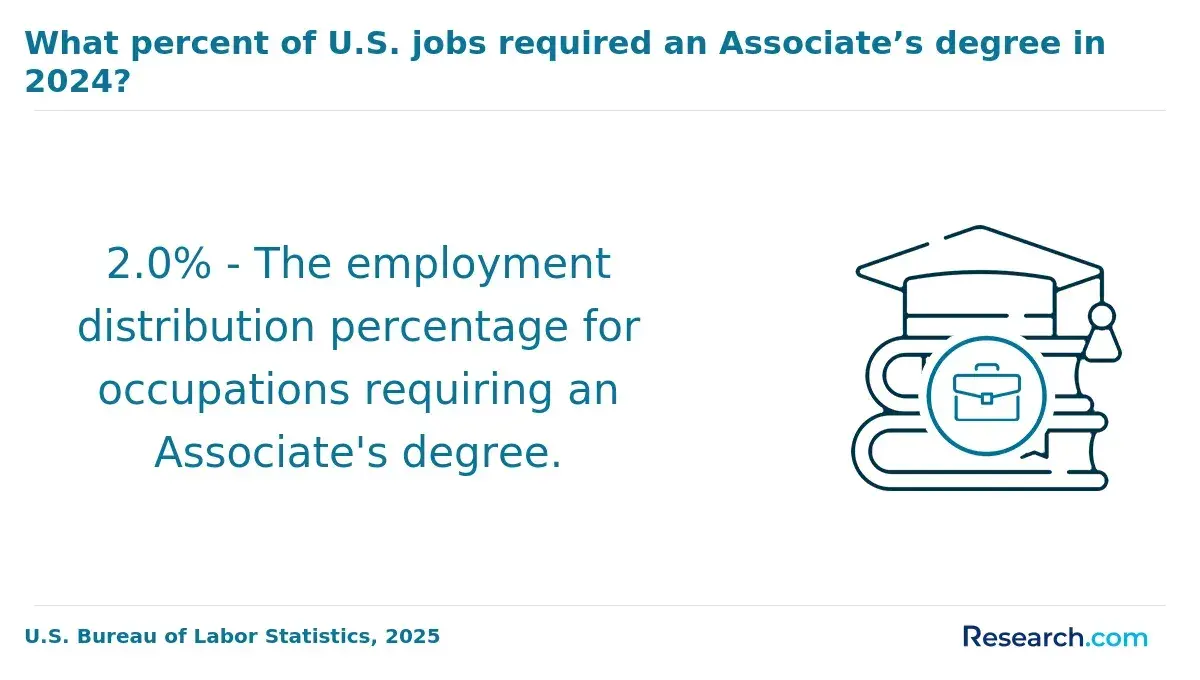
Students still early in their education may use a community college pathway to reduce cost before transferring. Research.com's guide to easy associate degrees can help readers understand how associate-level completion options differ, but global studies students should still choose courses that transfer cleanly into the intended bachelor's program.
The best transfer-friendly choice is usually the school that applies the most credits to graduation requirements while still offering the major courses you need. A slightly higher per-credit rate can be cheaper overall if it leaves fewer credits remaining.
Which Students Benefit Most From a Low-Cost Online Global Studies Degree With FAFSA?
A low-cost online global studies degree with FAFSA can be a strong fit for students who need flexibility, want a broad interdisciplinary education, and plan to keep borrowing low. It is especially useful for learners interested in public service, international nonprofit work, immigration support, global business coordination, policy research, journalism, education support, or graduate study.
These students often benefit most from an affordable FAFSA-eligible online format. The value comes from matching the degree structure to practical constraints, not simply choosing online learning because it is convenient.
- Working adults: Asynchronous courses can make it easier to study while maintaining income and benefits.
- Transfer students: Prior credits can sharply reduce total cost if the program has generous transfer policies.
- Students with financial need: Pell Grants and institutional aid can make a low-tuition program more affordable than a higher-priced private or out-of-state option.
- Military-affiliated students: Federal aid, military education benefits, and transfer credit for training may combine to lower out-of-pocket cost.
- Students planning graduate school: Lower undergraduate debt can preserve borrowing capacity for law, public policy, international affairs, or area studies programs.
Students who need intensive language immersion, study abroad, in-person diplomacy simulations, or a highly structured internship pipeline may prefer a campus or hybrid program even if it costs more. Online global studies can still be valuable, but students may need to be more proactive about building experience.
Some learners comparing flexible online degrees may also consider business-oriented pathways if they want faster completion and broader corporate roles. For that search intent, Research.com's guide to the fastest online business degree can provide a useful contrast, though global studies remains the better fit for students focused on international systems, cultures, policy, and cross-border issues.
How Does the Cost of an Online Global Studies Degree Affect Career ROI?
The cost of an online global studies degree affects career ROI because many related roles do not require the major by name. Employers may care more about writing ability, research skills, languages, data analysis, regional knowledge, and relevant experience than whether the transcript says "global studies" or "international relations."
U.S. Bureau of Labor Statistics May 2024 wage data provides useful context: the median annual wage for political scientists is high compared with many bachelor's-level roles, but many political scientist jobs require a master's degree or higher. For undergraduates, that means ROI often depends on using the bachelor's degree as a platform for internships, entry-level public service work, nonprofit roles, business support positions, or graduate education.
The table below connects common global studies pathways with cost and ROI considerations. It is meant to help students avoid assuming that the major alone determines earnings.
| Career direction | Typical preparation beyond coursework | ROI consideration |
| Public service or government support | Writing, policy basics, research, internships, and sometimes security clearance eligibility | Lower debt can be important because entry-level public-sector pay may be modest |
| Nonprofit or international development support | Grant writing, program coordination, regional expertise, and field experience | Affordable tuition helps if early roles are mission-driven but not highly paid |
| Global business coordination | Business fundamentals, Excel or data tools, language skills, and project management | A minor or certificate in business, analytics, or supply chain can improve practical value |
| Policy research or think tanks | Research methods, statistics, writing samples, and often graduate study | Minimizing undergraduate debt can make later graduate school more financially realistic |
| Education, journalism, or communications | Writing portfolio, media literacy, teaching pathway, or communications experience | ROI depends heavily on internships, portfolio quality, and local job market |
A cheap degree can produce poor ROI if the student graduates without marketable skills or experience. A more expensive program can still be a poor choice if it leads to excessive borrowing for a broad major with uncertain career direction.
Students should compare expected debt against realistic first-step career options, not only long-term ambitions. If the desired role usually requires graduate study, the undergraduate goal should be to keep costs controlled while building the academic record and experience needed for the next step.
How Should Students Choose the Cheapest FAFSA-Eligible Online Global Studies Degree?
To choose the cheapest FAFSA-eligible online global studies degree wisely, compare schools in the order that affects real out-of-pocket cost: eligibility, accreditation, transfer credit, net price, curriculum fit, and career support. Starting with tuition alone can lead to bad decisions because it ignores aid and completion risk.
Use the following checklist before enrolling. It is designed to produce a decision based on total value rather than marketing claims.
- Verify institutional accreditation through recognized accreditation databases and the school's official catalog.
- Confirm that the exact online degree is eligible for federal student aid for degree-seeking students.
- Submit the FAFSA early and ask each school for a financial aid estimate using the same enrollment assumptions.
- Request an official transfer evaluation before comparing total cost.
- Calculate remaining credits multiplied by tuition, then add mandatory fees, books, technology costs, and any residency requirements.
- Ask whether grants and scholarships are renewable and what GPA or credit load is required to keep them.
- Compare course offerings in language, region, policy, economics, research methods, and applied learning.
- Ask how online students access internships, career coaching, faculty advising, and undergraduate research opportunities.
- Estimate total borrowing before enrollment and compare monthly repayment scenarios using federal loan terms.
- Choose the program that offers the best mix of low net cost, credible accreditation, realistic completion timeline, and career-relevant skills.
Common mistakes include choosing the lowest per-credit rate without checking fees, ignoring transfer credit limits, assuming every online student receives the same aid, borrowing up to the maximum without a repayment plan, and enrolling before confirming that required major courses are offered online often enough to graduate on time.
Students should also compare opportunity cost. A slower but cheaper program may be right for working adults, while a more expensive program with better course availability may be worth it if it shortens time to graduation and reduces lost earnings. The right choice is the one that lowers total financial risk while still supporting the student's intended next step.
Other Things You Should Know About Global Studies
Usually no. FAFSA is generally for U.S. citizens and eligible noncitizens. International students should ask schools about institutional scholarships, private funding, employer sponsorship, or country-specific education aid.
Some do, but requirements vary by school. Students interested in diplomacy, international development, translation-adjacent work, or regional expertise should strongly consider programs with language study even when it is optional.
Often yes, but coordination depends on the student's benefit type, school policy, enrollment status, and federal aid package. Military-affiliated students should speak with both the financial aid office and the school's veterans services office.
No. Global studies is not a licensure degree in the way nursing, counseling, teaching, or social work may be. Career outcomes depend on skills, internships, language ability, work experience, graduate education, and the specific field pursued.
References
- Affordable Universities for International Students & Online Degrees 2026 https://northcypruseducation.com/blog/affordable-universities-for-international-students-a-guide-to-online-degrees/
- Step-by-Step Financial Aid Guide for International Students https://www.collegeessayguy.com/blog/financial-aid-international-students
- 8 Universities with High Acceptance Rates & Full Funding for International Students (Part 1) https://williamlebeau.com/blog/high-acceptance-rate-full-scholarships-international-students-part-1
- High Acceptance Rate Online Colleges https://www.affordablecollegesonline.org/college-resource-center/high-acceptance-online-colleges/
- Is College Worth It? - Public Policy Institute of California https://www.ppic.org/publication/is-college-worth-it/
- Cost of College by Country [2025]: Average Tuition Fees https://educationdata.org/average-cost-of-college-by-country
- 2025 Most Affordable Online Colleges & Degrees https://www.onlineu.com/most-affordable-colleges
- Apply to a Master’s Program at CEU https://www.ceu.edu/admissions/master
- Undergraduate Online Financial Aid | Bushnell University https://www.bushnell.edu/financial-aid/undergraduate-online/
- The 4 Best Online Colleges that Accept FAFSA https://joinjuno.com/financial-literacy/financial-aid/online-colleges-accept-fafsa