2027 Best Majors for Students Worried About Debt

Co-Founder and Chief Data Scientist
Choosing a major now means weighing career fit against a very real debt risk. Federal Student Aid reported a federal student loan portfolio above $1.6 trillion in 2024, so the major you choose can shape your finances for years after graduation.
This guide is for students, parents, transfer students, and adult learners who want a practical way to compare majors by cost, earnings, stability, and payoff speed. You will learn which fields tend to offer a stronger return on investment, when a lower-cost credential may be smarter than a bachelor's degree, and how to avoid expensive program-selection mistakes.
Key Things You Should Know
- Majors with the strongest debt-conscious ROI usually combine moderate program cost, clear employer demand, and salaries that can support repayment, such as nursing, computer science, engineering, accounting, cybersecurity, data analytics, and selected allied health fields.
- Degree level matters: College Board's 2024 pricing data shows published tuition and fees of about $4,050 at public two-year colleges versus $11,610 for in-state public four-year colleges, making transfer pathways and associate-level health programs especially important for debt control.
- Use a debt-to-income test before enrolling: a safer target is keeping total borrowing below expected first-year earnings and monthly student loan payments below roughly 8% to 10% of projected gross monthly income.
What are the best college majors for minimizing student loan debt and maximizing return on investment?
The best majors for students worried about debt are not always the highest-paying majors. A high-ROI major is one that has a reasonable total cost, a clear path to employment, enough salary potential to repay loans, and flexibility if your first job is not ideal. The strongest options also have skills that employers recognize across industries.
For debt-conscious students, the most practical short list includes nursing, computer science, information systems, cybersecurity, data analytics, accounting, engineering, construction management, supply chain management, and selected allied health majors such as dental hygiene, diagnostic medical sonography, and radiologic technology. These fields tend to connect classroom training to specific entry-level jobs rather than leaving graduates to translate a broad degree into a career from scratch.
The table below compares majors by the main debt and ROI factors students should review before choosing a program. Salary figures vary by location, employer, experience, and credential, so use them as planning context rather than a promised outcome.
| Major or field | Why it can work for debt-conscious students | Common entry roles | Debt caution |
| Nursing | Clear licensure pathway, strong demand, and options at associate and bachelor's levels | Registered nurse, public health nurse, clinical care coordinator | Must choose a program that qualifies graduates for state licensure exams |
| Computer science | Strong salary ceiling and broad demand in software, systems, and technical roles | Software developer, QA analyst, systems analyst | Portfolio, internships, and technical interviews matter as much as the degree name |
| Cybersecurity or information systems | Practical skills can lead to roles in IT, compliance, cloud systems, and security operations | Security analyst, network administrator, IT auditor | Some roles require experience, certifications, or security clearance |
| Data analytics or statistics | Useful across healthcare, finance, logistics, insurance, and technology | Data analyst, operations analyst, business intelligence analyst | Students need applied projects and strong spreadsheet, SQL, or programming skills |
| Accounting | Structured career ladder and demand across public, private, nonprofit, and government employers | Staff accountant, tax associate, auditor, payroll analyst | CPA goals may require additional credits beyond the bachelor's degree |
| Engineering | Technical degree with access to regulated, infrastructure, manufacturing, and energy roles | Civil engineer, mechanical engineer, electrical engineer | Programs can be rigorous and should be ABET-accredited for many engineering paths |
| Allied health | Many programs are available through community colleges and lead to licensed or credentialed roles | Dental hygienist, sonographer, radiologic technologist | Clinical placement availability and accreditation are essential |
| Supply chain or operations | Applies to logistics, manufacturing, retail, healthcare, and distribution systems | Logistics analyst, procurement specialist, operations coordinator | Internships and software skills can affect early-career outcomes |
A useful way to narrow the list is to ask which major gives you the fastest credible path to a job you would actually accept. For example, a student who enjoys patient care may get a better debt-adjusted outcome from nursing or radiologic technology than from a more general biology major without a graduate school plan.
Students who are unsure about committing to a four-year path can also compare degrees with shorter, skills-based credentials. Some certificate programs that pay well may help students test an industry, build employable skills, or reduce the need to borrow before choosing a full degree.
Which majors have the lowest average student loan debt and why do they cost less?
Majors often cost less when they can be completed through community colleges, public universities, transfer pathways, employer-sponsored programs, or shorter credential routes. The major itself is only part of the cost equation; institution type, time to completion, required equipment, clinical fees, and whether you can work while enrolled often matter just as much.
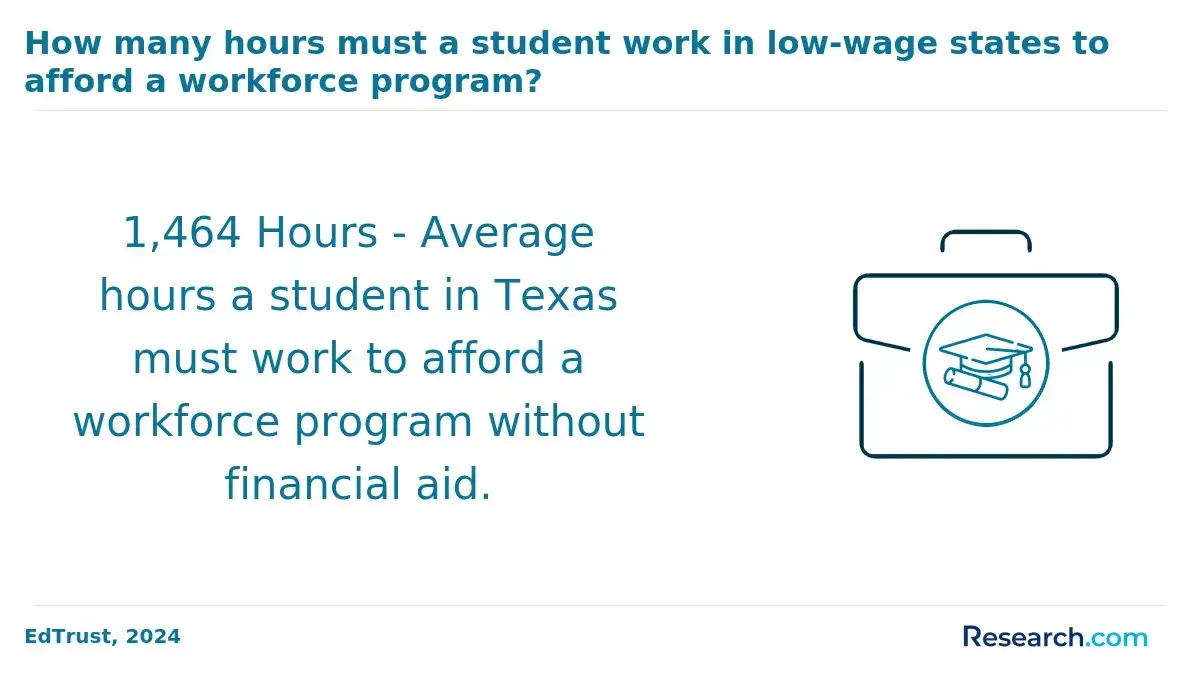
College Board's 2024 data shows a major cost difference between public two-year and four-year tuition. That matters because many low-debt paths start with transferable general education credits or career-focused associate degrees before students decide whether a bachelor's degree is necessary.
| Lower-debt pathway | Majors where it is common | Why debt may be lower | Best fit |
| Community college to bachelor's transfer | Business, accounting, computer science, education, psychology, biology | Students complete lower-division credits at a lower published tuition rate | Students who can verify transfer agreements before enrolling |
| Associate-level licensed health program | Dental hygiene, radiologic technology, respiratory therapy, nursing | Shorter timeline and direct job preparation can reduce total borrowing | Students who want a clinical role without immediately pursuing a bachelor's degree |
| Public in-state bachelor's program | Engineering, accounting, nursing, IT, supply chain | In-state tuition is usually lower than out-of-state or private alternatives | Students who can access strong career services and local employer pipelines |
| Work-compatible online completion program | Business, IT, healthcare administration, criminal justice, liberal studies | Continuing to work can reduce living-expense borrowing | Adult learners, transfer students, and students with family responsibilities |
Lower-cost majors are often found in fields with standardized curricula and many public options. Accounting, business administration, information technology, education, and health technology programs are widely available, which gives students more chances to compare tuition and transfer credit policies.
However, the cheapest major is not automatically the best financial choice. A low-cost degree with weak job alignment can still lead to repayment stress if the student has to borrow for living expenses or later pay for another credential. Before choosing the lowest-cost option, students should review these cost drivers carefully:
- Whether the program requires unpaid clinical hours, student teaching, labs, equipment, travel, or specialized software
- Whether credits transfer cleanly into the next degree level if further education becomes necessary
- Whether the major leads directly to an entry-level role or mainly prepares students for graduate school
- Whether the school's course schedule allows part-time work without delaying graduation
A common mistake is comparing only tuition while ignoring time. Adding an extra semester can increase living expenses, fees, transportation costs, and lost wages, even when tuition looks affordable.
Which majors make it easiest to pay off student loans quickly after graduation?
The easiest majors for faster student loan payoff are usually those that produce dependable entry-level earnings soon after graduation. Fast repayment is less about prestige and more about the gap between required loan payments and early-career income.
BLS 2024 wage data shows why technical and healthcare fields often appear in high-ROI discussions. For example, the median annual pay for software developers was above $130,000, while registered nurses had median pay above $90,000.
These figures do not guarantee individual earnings, but they show that some fields can create more repayment room than others when borrowing is controlled.
| Major category | Why repayment may be easier | Skills that improve payoff potential | Watch out for |
| Computer science and software | Higher-paying technical roles can create more cash flow for repayment | Programming, debugging, cloud tools, version control, technical interviewing | Competitive entry-level hiring and the need for a strong project portfolio |
| Nursing and allied health | Licensure-linked roles can provide clearer hiring pathways | Clinical judgment, patient communication, documentation, safety protocols | State licensure, clinical placement quality, and shift-work expectations |
| Engineering | Technical roles often have structured entry-level hiring and advancement ladders | Design software, applied math, project documentation, problem-solving | Program rigor and the need for ABET accreditation in many paths |
| Accounting and finance | Employers hire consistently across industries and offer advancement through credentials | Excel, tax, audit, financial reporting, data analysis | Additional credits may be needed for CPA eligibility |
| Cybersecurity and IT | Security, compliance, and infrastructure needs support demand in many sectors | Networking, scripting, incident response, risk management, cloud platforms | Some roles are not entry-level and may require certifications or prior IT experience |
Students who want a faster payoff should build a repayment plan before choosing a major, not after graduation. The following sequence helps connect borrowing decisions to realistic job outcomes:
- Identify three target entry-level job titles connected to the major.
- Check whether those jobs usually require a license, internship, portfolio, certification, or specific degree.
- Estimate total borrowing, including living expenses, not just tuition.
- Compare estimated monthly loan payments with conservative entry-level pay in your location.
- Choose the lower-cost school if career outcomes, accreditation, and support services are comparable.
Fast payoff also depends on behavior after graduation. Graduates who avoid lifestyle inflation, use employer repayment benefits, refinance only when appropriate, and make extra principal payments when possible may reduce repayment time. Still, students should avoid assuming that a high-paying field will automatically cancel out excessive borrowing.
How can I compare majors by debt-to-income ratio, salary potential, and job stability?
A debt-conscious major comparison should include three questions: how much you may need to borrow, how much the field may pay early in your career, and how stable the job market looks. Debt-to-income ratio is a practical shortcut because it shows whether expected earnings can reasonably support repayment.
For planning, many students use a simple benchmark: keep total student debt below expected first-year earnings, and preferably well below that level if the field has lower starting pay. This is not a formal guarantee of affordability, but it helps prevent the most dangerous mismatch: high borrowing for a low-wage or uncertain career path.
Use the table below to organize the comparison. It is designed to help you look beyond rankings and focus on whether a major fits your actual financial situation.
| Factor | What to compare | Why it matters | Stronger sign |
| Total program cost | Tuition, fees, books, tools, housing, transportation, lost work hours | Borrowing often rises because students underestimate non-tuition costs | The school provides a full cost of attendance and a clear graduation plan |
| Salary potential | Entry-level roles, median pay, local wages, required experience | Median national pay may not match first-year local earnings | The program publishes career outcomes and connects students to internships |
| Job stability | Demand across industries, licensure, automation exposure, recession sensitivity | Stable demand can reduce the risk of underemployment after graduation | Skills transfer across employers and regions |
| Time to completion | Credit load, prerequisites, course availability, clinical or internship sequence | Extra semesters can raise both debt and opportunity cost | Required courses are offered often enough to graduate on time |
| Credential requirements | Licensure, certification, graduate school, supervised hours | A bachelor's degree alone may not be enough for some careers | The program clearly states what graduates are and are not qualified to do |
Several current trends should shape your comparison. AI is changing entry-level tasks in business, technology, marketing, and analytics, which makes applied skills, internships, and portfolio evidence more important. At the same time, healthcare, infrastructure, cybersecurity, and data-driven operations continue to need workers who can combine technical knowledge with judgment and communication.
If your comparison produces a tie, choose the option with lower debt, stronger advising, better internship access, and a clearer backup plan. Rankings can be useful, but they should never replace a field-by-field affordability check.
Do associate, bachelor's, or master's degrees lead to less debt for different majors?
The lowest-debt degree level depends on the career. In some fields, an associate degree can lead directly to solid employment. In others, stopping below a bachelor's degree may limit earnings or advancement. A master's degree can be worth it for specialized roles, but it can also create unnecessary debt if the career does not require it.
For students worried about debt, an online associate degree or local community college pathway can be a smart starting point when credits transfer, the program is accredited, and the target career accepts the credential. This is especially relevant for business, IT, healthcare support, and transfer-focused general education pathways.
| Degree level | Best debt-conscious uses | Majors where it may fit | When it may not be enough |
| Associate degree | Lower-cost entry into licensed, technical, or transfer pathways | Nursing, dental hygiene, radiologic technology, IT support, business transfer | Roles requiring a bachelor's degree for advancement or licensure |
| Bachelor's degree | Standard credential for professional entry-level roles | Engineering, accounting, computer science, education, nursing, supply chain | Careers that require graduate school for independent practice |
| Master's degree | Specialization, leadership, licensure advancement, or career change | Data science, physician assistant studies, counseling, public health, analytics | When the salary increase is uncertain or the same jobs are available with a bachelor's degree |
| Doctoral degree | Research, academia, advanced clinical practice, or executive specialization | Psychology, nursing practice, education leadership, research fields | When the goal is a role that does not require doctoral-level preparation |
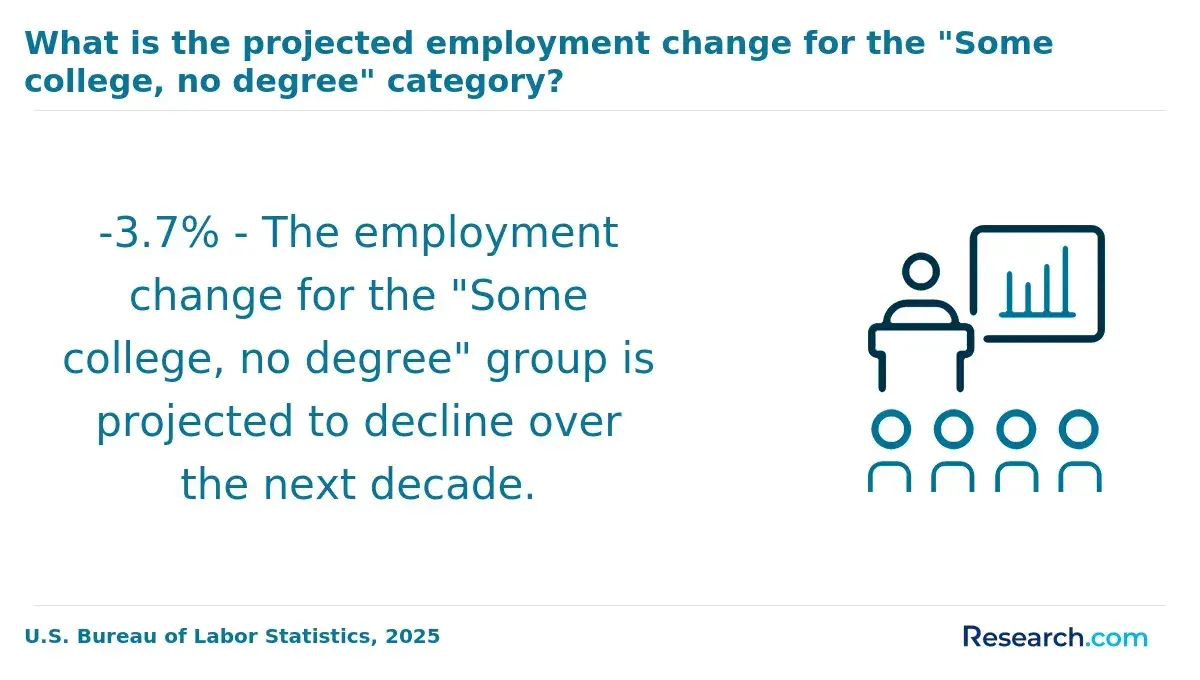
Students should be especially careful with majors that sound career-oriented but require graduate education for the role they actually want. Psychology, biology, political science, and some social science majors can be excellent choices, but debt risk rises when students borrow heavily for a bachelor's degree and then discover that the target career requires a master's, doctorate, or professional degree.
The better strategy is to map the minimum required credential before enrolling. If the career requires graduate school, look for low-cost undergraduate options, strong prerequisite advising, research or clinical experience, and funded graduate pathways where available.
How does choosing an online program versus a campus program affect total student debt?
Online programs can reduce debt when they let students avoid relocation, keep working, reduce commuting costs, or accelerate completion. However, online learning is not automatically cheaper. Some schools charge technology fees, out-of-state online rates, or flat tuition that may not benefit part-time students.
The main financial advantage of online study is flexibility. Students who can continue earning income while enrolled may need to borrow less for living expenses, which are often a major part of total student debt. Online formats can be especially useful for adult learners, military students, caregivers, and students completing a degree after transferring credits.
| Format | Potential debt advantage | Potential drawback | Best fit |
| Fully online | May reduce commuting, housing, and lost-income costs | Requires self-discipline and may offer fewer in-person networking opportunities | Working adults, transfer students, and independent learners |
| Hybrid | Balances flexibility with labs, clinicals, or campus support | Travel may still be required on fixed days | Healthcare, education, business, and technical programs with hands-on components |
| Campus-based | Direct access to labs, faculty, clubs, internships, and recruiting events | Housing and transportation can raise total cost | Traditional students, lab-heavy majors, and students who need structured support |
| Accelerated online | Shorter terms may reduce time away from the workforce | Heavy workload can be risky for students balancing work and family | Motivated students with transfer credits and strong time-management skills |
Short-term online options may also help students test a field before committing to a full degree. For example, 6-week online courses with certificates can be useful for exploring business software, healthcare administration, coding basics, project management, or data tools, as long as students understand that a short certificate does not replace licensure or a required degree.
Before choosing online or campus study, ask the school for a complete cost comparison. Include tuition, fees, books, equipment, proctoring fees, travel for labs or clinicals, internship requirements, and how many credits you can transfer. The cheapest format on paper may not be the lowest-debt format if it delays graduation or limits access to required experiences.
What accreditation standards should debt-conscious students look for in college majors?
Accreditation is one of the most important debt-protection checks. It affects federal financial aid eligibility, credit transfer, graduate school admission, licensure, and employer recognition. Students should verify both institutional accreditation and any programmatic accreditation required for their field.
Institutional accreditation applies to the college or university as a whole. Programmatic accreditation applies to specific majors or professional programs, and it is especially important in healthcare, engineering, education, business, counseling, social work, and other regulated fields.
| Field | Accreditation or approval to check | Why it matters |
| Engineering | ABET accreditation for many engineering programs | May affect licensure, employer screening, and graduate study |
| Nursing | State board approval plus recognized nursing accreditation where applicable | Determines eligibility for licensure exams and clinical preparation quality |
| Teacher education | State approval for educator preparation | Licensure requirements vary by state and subject area |
| Business and accounting | Institutional accreditation and business accreditation where available | Can affect transfer, employer perception, and graduate program options |
| Allied health | Field-specific accreditation tied to certification or licensure | May determine exam eligibility and clinical placement acceptance |
| Counseling, social work, and psychology | Programmatic accreditation and state licensure alignment | Graduate-level licensure rules can be strict and state-specific |
Debt-conscious students should treat accreditation gaps as financial red flags. If a program is not recognized for your intended licensure or certification, you may have to pay for additional coursework elsewhere or become ineligible for the job you planned to pursue.
Use this quick verification process before applying:
- Confirm the school's institutional accreditation through an official accreditor or federal database.
- Check whether your major requires programmatic accreditation, state approval, or licensure alignment.
- Ask admissions which exam, license, or certification the program prepares students to pursue.
- Request recent pass rates, placement rates, and clinical or internship placement details when relevant.
- Verify transfer policies in writing if you plan to start at one school and finish at another.
A common mistake is assuming that "accredited university" means every program meets professional requirements. For debt-sensitive majors, especially healthcare and education, the program-level approval is often the deciding factor.
How can I estimate total program cost, including tuition, fees, and living expenses, by major?
Total program cost is the real number students should compare, not tuition alone. It includes direct charges from the school plus living expenses and opportunity costs. Two programs with similar tuition can produce very different debt levels if one requires relocation, unpaid clinical hours, specialized equipment, or extra semesters.
College Board's 2024 published price data shows why this matters: tuition and fees are only one part of attendance cost, and housing, food, books, transportation, and personal expenses can materially change what students need to borrow. For majors with labs, clinicals, or studio work, program-specific costs can add even more.
Use the following cost categories to build a realistic estimate before choosing a major or school:
- Tuition by credit hour or term, including whether rates change for upper-division, online, out-of-state, or professional courses
- Mandatory fees, technology fees, lab fees, simulation fees, clinical fees, graduation fees, and proctoring fees
- Books, software, uniforms, tools, testing materials, certification exams, background checks, and immunization requirements
- Housing, food, transportation, childcare, internet, insurance, and other living expenses during the program
- Lost income if the major requires daytime clinicals, unpaid internships, student teaching, or full-time enrollment
- Extra-semester risk from prerequisites, limited course availability, failed courses, changed majors, or non-transferable credits
The table below shows how hidden costs differ by major type. This can help you ask better questions before accepting an aid package.
| Major type | Common hidden costs | Cost-control question to ask |
| Nursing and allied health | Uniforms, clinical travel, background checks, exam fees, immunizations | Are clinical placements guaranteed, and how far might I need to travel? |
| Engineering and sciences | Lab fees, software, equipment, extended course sequences | Are required courses offered every term, or could sequencing delay graduation? |
| Computer science and IT | Hardware, cloud tools, certification exams, portfolio hosting | Does tuition include required software and technical resources? |
| Education | Testing fees, background checks, unpaid student teaching, travel | How many unpaid field hours are required before graduation? |
| Business, accounting, and analytics | Exam prep, software, internships, professional association fees | Does the program meet credit requirements for CPA or other credentials? |
Adult learners should also consider whether the degree format fits their life stage and work schedule. Guides to the best degrees for older adults can be useful when comparing flexible programs, transfer-friendly schools, and majors that support career changes without unnecessary borrowing.
The safest approach is to calculate three totals: best-case cost if you graduate on time, realistic cost if you need one extra term, and worst-case cost if you change majors or lose work hours. If the worst-case version is financially unmanageable, the program may be too risky.
What scholarships, grants, and employer tuition benefits reduce debt in high-ROI majors?
The best way to reduce debt is to lower borrowing before it starts. Scholarships, grants, tuition reimbursement, paid internships, apprenticeships, and employer partnerships can make a high-ROI major even stronger. They are especially valuable in fields where employers face persistent demand, such as nursing, teaching, IT, cybersecurity, engineering, accounting, and skilled technical roles.
Students should prioritize aid that does not need to be repaid. Federal Pell Grants, state grants, institutional scholarships, need-based awards, merit scholarships, workforce grants, and program-specific scholarships can all reduce net price. Employer tuition benefits may also help, but students should read service commitments carefully.
These funding sources are worth checking early because deadlines often arrive before admission decisions are final:
- Federal and state grants based on FAFSA eligibility
- Community college transfer scholarships for students moving into bachelor's programs
- Healthcare workforce scholarships for nursing, allied health, behavioral health, and rural service programs
- Teacher shortage grants or loan forgiveness programs tied to high-need subjects or locations
- Employer tuition reimbursement for business, IT, healthcare, logistics, accounting, and management programs
- Paid internships, co-ops, apprenticeships, and work-study positions related to the major
- Military, veterans, public service, union, and professional association education benefits
High-ROI majors can still become high-debt choices if students ignore aid strategy. Apply for departmental scholarships after admission, not just general freshman scholarships. Ask employers whether tuition benefits apply before, during, or after course completion. Check whether you must stay with the employer for a set period or repay benefits if you leave.
Students considering advanced credentials should be especially cautious. Some online PhD programs and professional doctorates can support specific goals, but doctoral study should be tied to a clear career requirement, funding plan, and expected payoff rather than pursued only for prestige.
A major red flag is using loans for a program while ignoring available lower-cost pathways. Before borrowing, ask the financial aid office, department chair, career center, and potential employers what funding options students in that major commonly use.
How should students worried about debt choose between passion, earnings, and job outlook when picking a major?
The best major is not simply the one you love most or the one with the highest salary. It is the one that sits at the intersection of interest, ability, affordability, and labor market demand. Students worried about debt should make the decision with both personal fit and financial resilience in mind.
A practical framework is to sort majors into three groups: strong fit and strong ROI, strong fit but uncertain ROI, and weak fit despite strong ROI. The first group deserves serious attention. The second group may work with a lower-cost school, double major, minor, certificate, internship strategy, or graduate-school plan. The third group is risky because students are less likely to persist in demanding coursework or remain in the field long enough to benefit financially.
Use these questions to make the choice more concrete:
- What job titles can I realistically pursue within one year of graduation?
- What salary range is typical for entry-level roles in my state or metro area?
- How much total debt would I need if I choose the lowest-cost accredited pathway?
- What skills, internships, licenses, or certifications must I add to make the major employable?
- Would I still choose this major if I had to work in one of its less glamorous entry-level jobs?
- What is my backup plan if I do not get into a competitive program, clinical placement, or graduate school?
Students do not have to abandon passion to avoid debt. A student interested in the environment might compare environmental engineering, GIS, data analytics, public policy, and biology rather than assuming one major is the only path. A student drawn to helping people might compare nursing, social work, education, occupational therapy assistant programs, and healthcare administration by cost and credential requirements.
The biggest mistakes are choosing a major based only on salary lists, assuming graduate school will solve uncertainty, ignoring accreditation, borrowing for an expensive private option without comparing public alternatives, and delaying career planning until senior year. A better approach is to pick a major with a clear first job, build experience every year, and keep borrowing low enough that you still have choices after graduation.
Other Things You Should Know About
Nursing, accounting, computer science, engineering, and allied health majors are often strong choices because they connect to specific occupations. The safest option depends on program cost, accreditation, local hiring demand, and whether you can complete required clinicals, internships, or licensure steps.
No. A high-paying major can still be risky if the program is overpriced, graduation takes longer than expected, or entry-level hiring is highly competitive. Compare total debt with realistic first-year earnings, not just median salary data.
Often, yes, especially if the associate program leads to a licensed job or transfers cleanly into a bachelor's degree. Confirm accreditation, transfer agreements, and career outcomes before enrolling so the lower-cost start does not create delays later.
Be cautious with majors that require graduate school for the career you want, have unclear entry-level job paths, or require unpaid experience after graduation. These majors can still be worthwhile, but they need a stronger cost-control and career-planning strategy.
References
- Scholarship: a strategic tool in your Education Benefit Portfolio | Edcor https://www.edcor.com/blog/scholarship-a-strategic-tool-in-your-education-benefit-portfolio/
- How to Pay Off Student Loans as a New Graduate https://www.experian.com/blogs/ask-experian/how-pay-off-student-loans-as-a-new-graduate/
- 10 College Majors With the Highest Average Student Loan Debt After Graduation https://finance.yahoo.com/small-business/articles/10-college-majors-highest-average-090500574.html
- Estimate your college cost | USAGov https://www.usa.gov/estimate-college-cost
- Jobs That Pay for College: 10+ Companies Offering Tuition Assistance https://www.fastweb.com/career-planning/articles/jobs-that-pay-for-college-with-tuition-reimbursement
- College Accreditation Does Not Guarantee Good Student Outcomes - FREOPP https://freopp.org/whitepapers/college-accreditation-does-not-guarantee-good-student-outcomes/
- Cost of Online Education vs. Traditional Education [2025]: Comparison https://educationdata.org/cost-of-online-education-vs-traditional-education
- How Your Degree Can Affect Your Financial Stability https://www.moneymanagement.org/blog/these-college-majors-will-leave-you-drowning-in-debt
- EdAssist | How Employers Can Maximize the ROI of Education Benefits with Degree and Non-Degree Programs https://www.brighthorizons.com/article/employers/how-employers-can-maximize-the-roi-of-education-benefits-with-degree-and-non-degree-programs
- Debt by Degrees: A Distinct Challenge for College Students https://www.nefe.org/news/nefe-digest/2019-spring/debt-by-degrees-challenge-for-college-students.aspx