2027 How to Know When a College Is Financially Out of Reach

Co-Founder and Chief Data Scientist
College affordability is not just about whether you can get admitted; it is about whether the full bill can fit your real budget. College Board's 2024 pricing data shows average published tuition, fees, housing, and food reached $24,920 for in-state public four-year students and $58,600 at private nonprofit colleges. This guide is for students and families comparing college offers, aid letters, and loan options. You will learn how to spot unaffordable choices early, estimate true net cost, compare alternatives, and make a financially safer enrollment decision.
Key Things You Should Know
- A college is financially out of reach when its four-year net price requires unsafe borrowing, unrealistic family contributions, or unpaid balances after grants, scholarships, savings, and manageable work income are counted.
- Use total cost of attendance, not tuition alone: College Board reported 2024-25 average published tuition, fees, housing, and food of $24,920 for in-state public four-year students and $58,600 for private nonprofit students.
- A practical warning line is reached when projected total student debt may exceed likely first-year earnings, monthly loan payments may take more than about 8% to 10% of gross income, or the plan depends heavily on Parent PLUS or private loans.
How can you tell if a college's total cost is realistically affordable for you?
You can tell whether a college is realistically affordable by estimating the net price: the total cost of attendance minus grants and scholarships that do not need to be repaid. The cost of attendance usually includes tuition, mandatory fees, housing, meals, books, supplies, transportation, and personal expenses, so it is a better decision point than tuition alone.
A college starts to become financially risky when the remaining gap cannot be covered through savings, current income, reasonable federal student loans, and a sustainable work schedule. The table below summarizes the main affordability measures families should compare before making an enrollment decision.
| Affordability measure | What it shows | Why it matters |
| Sticker price | The published cost before aid | Useful for context, but often misleading because many students receive aid |
| Net price | What remains after grants and scholarships | The best starting point for comparing schools across public, private, and online options |
| Unmet need | The gap after aid, family contribution, and student contribution | A large gap often leads to high-interest borrowing or unpaid balances |
| Four-year projected cost | The estimated total net cost through graduation | Prevents families from approving a first-year offer that becomes unaffordable later |
| Debt-to-income fit | Borrowing compared with likely early-career earnings | Helps judge whether repayment may be manageable after graduation |
The most useful test is simple: if the college only works because you assume best-case scholarships, unusually high part-time earnings, or large private loans, it is probably not realistically affordable. A school may still be worth considering if it has a clear path to lower costs through guaranteed aid, transfer credits, commuting, or a lower-cost first two years.
What signs show a college is financially out of reach before you apply?
Several warning signs can appear before you even submit an application. Spotting them early helps you avoid spending time and application fees on colleges that are unlikely to produce a workable financial aid offer.
These red flags do not always mean you must remove a school from your list, but they should trigger a closer review before you apply:
- The school's net price calculator shows a family cost far above what you can pay without major borrowing.
- The college offers mostly merit scholarships that are competitive rather than automatic or renewable.
- The school has high housing, transportation, or required fee costs that make commuting or low-cost living difficult.
- Your intended major has modest entry-level pay compared with the school's expected debt.
- The college's four-year graduation pathway is unclear, which can add extra semesters of tuition and living costs.
- The aid page emphasizes loans before grants, need-based aid, transfer pathways, or lower-cost options.
A common mistake is applying to several high-cost schools and waiting until spring to think seriously about affordability. A better approach is to build a balanced college list with at least one financial safety: a college you can afford even if the aid offer is average, not exceptional.
How do net price calculators help you know if a college is too expensive?
Net price calculators help you estimate whether a college may be too expensive before you apply. Every U.S. college that participates in federal student aid programs must provide one, but the quality and accuracy can vary depending on how recently the calculator was updated and how carefully you enter your information.
A net price calculator usually asks about family income, assets, household size, academic profile, residency, and sometimes intended housing status. The result is an estimate, not a final award, but it can reveal whether the school is likely to meet your budget.
Use this process to make the calculator more useful:
- Enter the same family income, asset, household, and academic information for every college so results are comparable.
- Separate grants and scholarships from loans and work-study because only grants and scholarships directly lower the price.
- Check whether merit scholarships are automatic, competitive, or based on maintaining a college GPA after enrollment.
- Run more than one scenario if your family income may change, a sibling may enter college, or you may live off campus.
- Save screenshots or PDFs of results so you can compare them with the final financial aid offer later.
The calculator is especially useful for private colleges because a high sticker price may be offset by institutional grants. However, if the estimated net price still requires borrowing beyond federal student loan limits or a family contribution you cannot realistically make, the college should be treated as financially out of reach unless new aid appears.
What costs beyond tuition make a college unaffordable for many students?
Tuition is only one part of college affordability. Many families underestimate living costs, transportation, course materials, technology, health insurance, and fees tied to specific programs such as nursing, engineering, aviation, art, or lab-based sciences.
College Board's 2024 data shows why this matters: at public four-year colleges, housing and food can make up a large share of the total published budget, even when tuition is comparatively lower. For students comparing campus-based and online options, guides that explain what are the cheapest online colleges can help identify formats where commuting, housing, or relocation costs may be reduced.
Look closely at these non-tuition costs because they often determine whether a school remains affordable after the first bill arrives:
- Housing and meals, especially in areas where off-campus rent is high or first-year students must live on campus.
- Transportation, including parking, flights, gas, public transit, or the cost of keeping a car.
- Books, supplies, equipment, software, uniforms, clinical fees, studio materials, or lab fees required by the major.
- Health insurance, medical expenses, and campus fees that may be mandatory unless you qualify for a waiver.
- Lost income if the program requires daytime classes, unpaid internships, clinical rotations, or student teaching.
- Extra semesters caused by limited course availability, changing majors, failed prerequisites, or credits that do not transfer.
A college that looks affordable on tuition can become unaffordable if it requires moving to a high-cost area or reducing work hours. The safest comparison uses the full annual cost of attendance and then multiplies by the realistic time to degree, not the ideal timeline shown in marketing materials.
How much student loan debt is too much for a given college and career path?
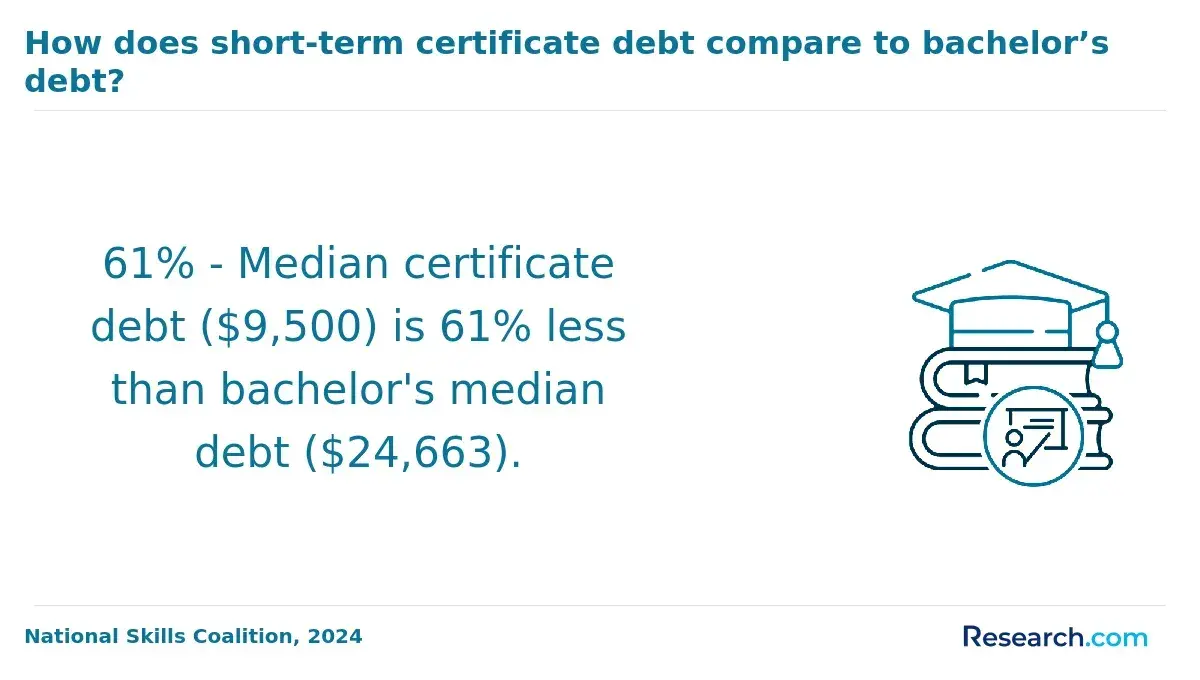
Student loan debt becomes too much when the expected monthly payment limits your ability to pay rent, build savings, handle emergencies, or pursue the career path you chose the college for. There is no single perfect cutoff, but the borrowing amount should be judged against likely early-career income, not just against what lenders are willing to approve.
A practical guideline is to keep total student loan debt at or below your expected first-year salary and to estimate whether monthly payments would stay near or below 8% to 10% of gross monthly income. This is a rule of thumb, not a legal requirement, but it helps families avoid treating loan approval as proof of affordability.
Federal undergraduate loans also create a natural borrowing limit. Federal Student Aid information for current aid years lists an aggregate Direct Loan limit of $31,000 for most dependent undergraduate students, with only part of that amount allowed as subsidized loans. If a college requires far more than that from the student alone, the remaining gap typically shifts to Parent PLUS loans, private loans, work income, or unpaid balances.
Before borrowing for a college, compare the debt plan with these questions:
- What will the total borrowed amount be if tuition rises and aid stays flat?
- Will the debt be federal student loans, Parent PLUS loans, private loans, or a mix with different protections?
- What monthly payment would be required under a standard repayment plan?
- Does the intended major typically lead to earnings that can support the payment?
- Would the plan still work if graduation takes five years or the first job pays less than expected?
Private loans deserve extra caution because they often depend on credit, may require a cosigner, and may not offer the same repayment flexibility as federal loans. Parent PLUS loans can also create long-term risk for families close to retirement or already carrying mortgage, medical, or consumer debt.
How do grants, scholarships, and work-study change whether a college is affordable?
Grants, scholarships, and work-study can make a college more affordable, but they do not all reduce cost in the same way. Grants and scholarships are usually the most valuable because they lower the bill without repayment, while work-study provides the opportunity to earn wages through an approved job.
Some students researching low-cost pathways also look at online colleges that pay you to attend, but it is important to understand the phrase carefully. In most cases, it refers to financial aid refunds when grants and loans exceed direct school charges, not a school paying students as income.
Read every aid offer line by line. The goal is to separate money that truly lowers the price from money that must be earned or repaid.
- Grants: Need-based aid from the federal government, state agencies, or colleges that usually does not require repayment if enrollment rules are met.
- Scholarships: Merit-based, talent-based, identity-based, or program-based aid that may have renewal requirements.
- Work-study: A federal or institutional job opportunity that pays wages as work is completed, not an upfront discount.
- Loans: Borrowed money that helps cover the bill now but increases the long-term cost of attendance.
The biggest mistake is treating the total aid offer as "free money." A $20,000 package made mostly of loans is very different from a $20,000 package made mostly of grants. Also check whether scholarships renew automatically, require a minimum GPA, exclude summer courses, or disappear if you change majors.
How can you compare in-state public, private, and community colleges for affordability?
In-state public universities, private colleges, and community colleges can all be affordable in the right situation, but none is automatically the best value for every student. The best choice depends on net price, time to degree, transferability, program quality, housing needs, and career goals.
The table below compares common college types by affordability factors. It is meant to help you understand trade-offs, not to rank one category as always better than another.
| College option | Typical affordability advantage | Potential financial risk | Best fit |
| In-state public four-year college | Lower tuition for state residents | Housing, fees, and crowded course schedules can raise total cost | Students who want a bachelor's degree with access to state subsidies |
| Private nonprofit college | Institutional grants can significantly reduce net price for some students | High sticker prices can still leave a large gap after aid | Students receiving strong grant aid or entering a program with clear outcomes |
| Community college | Lower tuition and commuting options | Poor transfer planning can cause lost credits and extra semesters | Students seeking an associate degree, certificate, or lower-cost transfer route |
| Online college | May reduce relocation, housing, and commuting costs | Quality, accreditation, and student support vary widely | Working adults, caregivers, military students, and self-directed learners |
If you are comparing online options, check accreditation carefully because it affects federal aid eligibility, credit transfer, employer recognition, and graduate school admission. Researching nationally accredited online colleges can be useful, but students should still confirm whether a specific program's accreditation fits their transfer, licensure, or career goals.
A strong affordability comparison should include at least one in-state public option, one lower-cost transfer pathway if appropriate, and any private or online colleges that show a competitive net price after grants. Do not compare a discounted private college against the sticker price of a public college; compare net price to net price.
How do changes in tuition, fees, and aid over four years affect affordability?
A college that is affordable in the first year may become unaffordable later if tuition rises, fees increase, scholarships are not renewed, or the student needs extra semesters. Families should evaluate affordability across the full expected timeline, not just the first award letter.
The most important trend to watch is the difference between front-loaded aid and renewable aid. Some colleges offer strong first-year grants or scholarships that look attractive, but the renewal rules may require a GPA, full-time enrollment, a specific major, or continued financial need.
Review these four-year cost risks before committing:
- Tuition and mandatory fees may rise each year, while scholarships may remain fixed.
- Housing costs may increase if on-campus rates rise or off-campus rent is higher than expected.
- Merit aid may be lost if the student does not meet GPA or credit completion requirements.
- Need-based aid may change if family income, assets, household size, or sibling enrollment changes.
- Changing majors can add prerequisites, delay graduation, or move the student into a higher-fee program.
- Transfer credits, dual-enrollment credits, or AP credits may not apply to the degree as expected.
Ask the financial aid office for a multi-year estimate if available, including typical tuition increases and scholarship renewal rules. If the college cannot explain how costs may change, use conservative assumptions and build a cushion into the plan.
What financial planning steps should families take to avoid unaffordable colleges?
Families can avoid unaffordable colleges by setting financial boundaries before acceptances arrive. The most effective plan combines a budget, a borrowing limit, realistic school comparisons, and early conversations about trade-offs.
This step-by-step approach can help turn college choice from an emotional decision into a manageable financial decision:
- Calculate what the family can contribute each year without using emergency savings or high-interest debt.
- Estimate the student's reasonable contribution from summer work, part-time work, and savings without harming academic progress.
- Set a maximum total borrowing amount before reviewing admission offers.
- Run net price calculators for every college on the list before application deadlines.
- Build a list that includes academic, admission, and financial safety schools.
- Compare final aid offers by grants, scholarships, loans, work-study, and remaining family cost.
- Appeal for more aid if the family has documented changes such as job loss, medical expenses, or changed household circumstances.
- Choose the school that fits both academic goals and the four-year financial plan, not just the first-year award.
Students returning to college later in life should take the same approach, especially if they are balancing retirement planning, caregiving, or reduced work hours. Resources on online degrees for seniors can help older learners compare flexible formats, but the same affordability rules still apply: check total cost, aid eligibility, transfer credit, and career value before enrolling.
One common planning mistake is assuming a student can "just work more" if costs rise. Work can help, but too many hours may reduce academic performance, delay graduation, or make required internships and labs harder to complete.
How do future earnings and job outlook help judge if a college cost is sustainable?
Future earnings and job outlook help determine whether a college cost is sustainable, but they should be used carefully. A high-cost college may be financially reasonable for some students entering strong-paying fields with clear hiring demand, while the same cost may be risky for a student pursuing a lower-paid field without a debt plan.
The Bureau of Labor Statistics' 2024 employment projections show that total U.S. employment is expected to grow over the 2023-33 period, but growth and pay vary widely by occupation. That means students should evaluate the specific career connected to their major, not assume that any bachelor's degree produces the same return.
The table below shows how career economics should shape college affordability judgments. It does not predict an individual salary; it summarizes the kinds of factors students should weigh.
| Career factor | Why it affects affordability | Financial interpretation |
| Median pay for target occupations | Higher typical pay can support more borrowing, within limits | Debt may be more manageable when payments are small relative to expected income |
| Entry-level wage reality | First jobs often pay less than mid-career roles | Borrowing should be tested against early-career income, not only long-term hopes |
| Licensure or graduate school requirements | Some careers require additional education after the bachelor's degree | Undergraduate debt should leave room for later required training |
| Regional demand | Job availability and pay vary by state and metro area | A degree may be more affordable if the student can work where demand is stronger |
| Major-to-career alignment | Some majors connect directly to occupations, while others require broader exploration | Clearer career pathways make ROI easier to estimate |
Students who are still choosing a major can use information on the highest paying college majors as one input, but pay should not be the only factor. Fit, persistence, licensure requirements, graduate school plans, and local labor markets all affect whether the investment works.
AI and automation also matter. Some entry-level tasks in fields such as business, marketing, coding, design, and administration are changing as employers adopt AI tools. That does not make college unnecessary, but it increases the value of programs that build adaptable skills such as data analysis, communication, ethical judgment, technical fluency, problem-solving, and supervised practical experience.
Other Things You Should Know About
A college is probably too expensive if the net price leaves a gap you can only cover with large Parent PLUS loans, private loans, credit cards, or unrealistic work hours. Compare the four-year net cost with your budget, federal loan limits, and likely early-career income.
No. The cheapest option is not always the best value if credits do not transfer, graduation rates are weak, required courses are unavailable, or the program does not match your career goal. Choose the lowest-cost option that still supports timely graduation and credible outcomes.
Yes, many colleges allow financial aid appeals, especially when your family has documented changes such as job loss, medical expenses, divorce, death of a parent, or unusual financial obligations. An appeal is not guaranteed, but it can be worthwhile before declining a preferred school.
Often, yes, if you choose transferable courses and confirm an articulation pathway to a bachelor's program. Community college can reduce the cost of general education credits, but poor transfer planning can add time and erase savings.
References
- Is College Worth It? - Public Policy Institute of California https://www.ppic.org/publication/is-college-worth-it/
- Financial Planning For College: A Guide For Parents https://www.farther.com/foundations/financial-planning-for-college-a-guide-for-parents
- Average Private vs Public College Tuition [2025]: Data Analysis https://educationdata.org/private-vs-public-college-tuition
- How Much Student Loan Debt Is Too Much Debt? https://www.psychology.org/resources/how-much-is-too-much-debt/
- How Net Price Calculators Can Better Serve Students https://www.ihep.org/how-net-price-calculators-can-better-serve-students/
- 8 Mistakes to Avoid When Planning for College Costs https://www.schwab.com/learn/story/8-mistakes-to-avoid-when-planning-college-costs
- Why you need to use college net price calculators - The College Solution https://thecollegesolution.com/why-you-need-to-use-college-net-price-calculators/
- College majors affect more than just average earnings | CEPR https://cepr.org/voxeu/columns/college-majors-affect-more-just-average-earnings
- Sticker shock: Americans say college costs are too high—and unclear https://www.luminafoundation.org/news-and-views/sticker-shock-americans-say-college-costs-are-too-high-and-unclear/
- Why Education Is Becoming Unaffordable | Robert F. Smith https://robertsmith.com/blog/why-education-is-becoming-unaffordable/