2027 Employer Tuition Assistance Explained

Co-Founder and Chief Data Scientist
Employer tuition assistance can turn an expensive education decision into a manageable career investment, but only if you understand the rules before enrolling. College Board's 2024 data lists average published tuition and fees at $11,610 for in-state public four-year colleges and $43,350 for private nonprofit colleges, making workplace education benefits increasingly valuable. This guide is for employees comparing degrees, certificates, or graduate programs and explains eligibility, tax treatment, covered costs, repayment clauses, and practical ways to choose a program that supports your career goals.
Key Things You Should Know
- Most employer tuition assistance programs pay for approved education costs up to a company-set limit, while federal tax rules generally allow up to $5,250 per employee per year in tax-free educational assistance under Internal Revenue Code Section 127.
- The biggest decision is not simply whether the benefit exists, but whether the approved program matches your career path, schedule, accreditation needs, and any stay-or-repay obligation in your employer's policy.
- Tuition assistance usually works best for employees pursuing job-relevant degrees, certificates, or skill credentials; it is less useful if the program is not approved in advance or if you may leave before satisfying the repayment period.
What Is Employer Tuition Assistance?
Employer tuition assistance is a workplace benefit that helps employees pay for education. It may cover college courses, certificates, professional training, graduate programs, or job-related learning approved by the employer. The employer may pay the school directly, reimburse you after you pass the course, or provide funds through an education benefits platform.
The main value is cost reduction. Instead of relying only on savings, loans, or federal financial aid, you use part of your compensation package to build credentials. For employees, this can make a degree or certificate more affordable. For employers, it can improve retention, upskill workers, and fill talent gaps in areas such as management, healthcare, cybersecurity, data analytics, education, logistics, and business operations.
The benefit is especially relevant because many employers are shifting toward skills-based hiring and internal mobility. That means a short certificate, targeted bachelor's completion program, or graduate course may matter as much as a traditional degree if it aligns with a real advancement path at your company.
This table summarizes common forms of employer education support so you can identify which type your company offers before making financial commitments.
| Benefit type | How it usually works | Best fit | Main risk to check |
| Tuition assistance | Employer pays eligible costs before or during enrollment, sometimes directly to the school. | Employees who need upfront help and can get approval before classes start. | Program approval rules may be narrow. |
| Tuition reimbursement | Employee pays first, completes the course, then submits proof for repayment. | Employees who can temporarily cover costs and meet grade requirements. | You may not be reimbursed if you drop, fail, or miss deadlines. |
| Education stipend | Employer provides a set amount for learning expenses during a benefit period. | Employees pursuing shorter courses, exams, or work-related training. | Unused funds may expire. |
| Partner-school program | Employer works with selected colleges or online providers to offer reduced or covered tuition. | Employees who want simplified billing and preapproved options. | Choice of schools or majors may be limited. |
How Does Employer Tuition Assistance Work?
Employer tuition assistance usually starts with policy review and preapproval. Your employer wants to know what you plan to study, where you plan to study, how much it will cost, and how the course or program supports your current role or future role inside the organization.
Most programs follow a predictable process, although the exact steps vary by employer. Use this sequence to avoid the most common reason employees lose the benefit: enrolling before approval.
- Read the written tuition assistance policy, including annual limits, eligible programs, grade requirements, deadlines, and repayment clauses.
- Choose a school or program that meets employer rules and, when relevant, accreditation or licensure requirements for your career goal.
- Submit a request before the course begins, including course descriptions, estimated cost, start date, and how the program relates to your job or career path.
- Wait for written approval rather than relying on a verbal confirmation from a supervisor.
- Complete the course and keep documentation such as invoices, transcripts, receipts, grade reports, and proof of payment if reimbursement is required.
- Submit final documents by the deadline and monitor your paycheck, benefits portal, or school account to confirm payment was processed correctly.
The biggest practical difference among employers is cash flow. Direct-pay benefits reduce your upfront cost, while reimbursement programs may require you to pay tuition first. If cash flow is tight, ask whether your employer has direct billing, deferred tuition agreements, or partner schools that do not require large out-of-pocket payments at the start of the term.
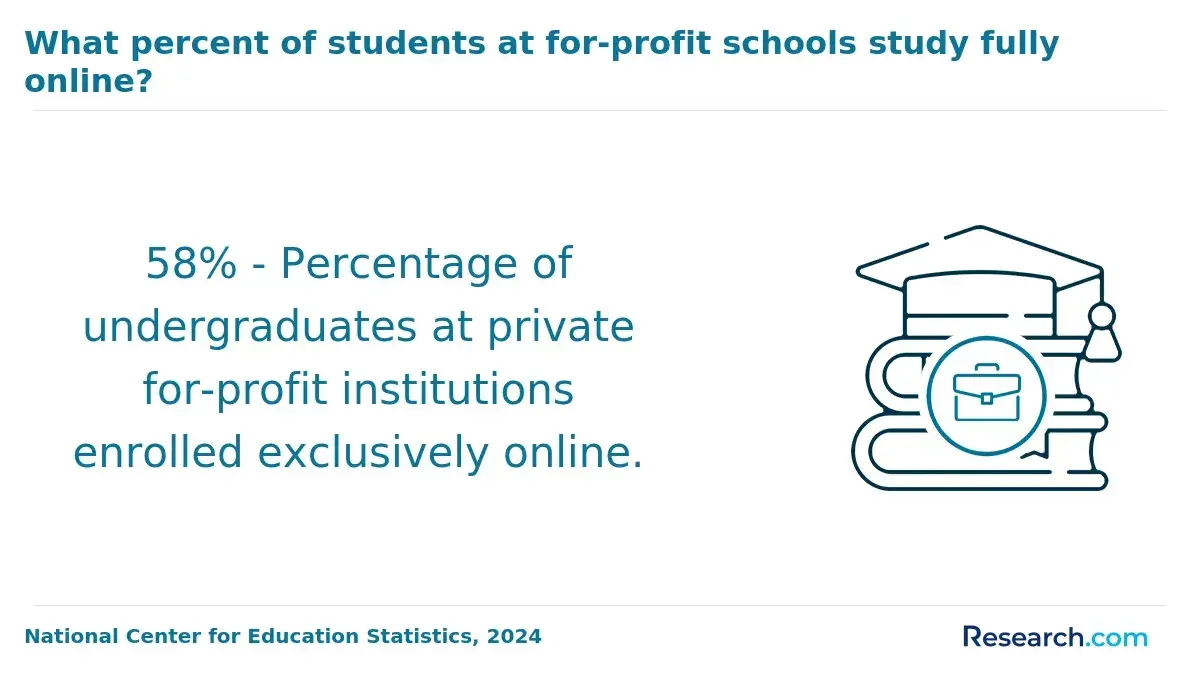
Another important trend is the growth of online and hybrid learning options. These formats can work well for full-time employees because they reduce commuting and scheduling barriers, but you still need to confirm that online credits, clinical placements, internships, or proctored exams meet your employer's and profession's standards.
What Do Employers Typically Cover?
Employers commonly cover tuition, but the details can vary widely. Some policies cover only courses related to your current job, while others support broader career development if the education could help you move into a hard-to-fill role. The most generous programs may include fees, books, exams, or required materials, but many exclude nonacademic costs.
Before you compare schools, separate "tuition" from "total cost." College Board's 2024 pricing data shows average published tuition and fees of $4,050 at public two-year colleges, which helps explain why some employees use employer benefits for community college prerequisites, transfer credits, or bachelor's completion pathways before moving to a more expensive institution.
Here are the cost categories you should check in your employer's policy because they determine how much you will actually pay.
- Tuition for approved undergraduate, graduate, certificate, or continuing education courses.
- Mandatory institutional fees, which may or may not be reimbursable depending on the policy.
- Books, software, lab materials, uniforms, background checks, or equipment required for the course.
- Certification exam fees, licensing preparation courses, or professional association training when directly related to your role.
- Excluded costs such as parking, housing, meals, late fees, repeat courses, noncredit hobbies, or travel unless the policy specifically allows them.
If your goal is to reduce out-of-pocket cost, compare employer benefits with affordable online degree programs rather than assuming the most recognized school name will produce the best return. A lower-cost accredited program that your employer fully covers may be a smarter option than a higher-priced program that leaves you with a large balance.
Who Qualifies for Tuition Assistance?
Eligibility rules are set by the employer, not by a universal federal standard. Most companies limit the benefit to active employees who meet service, performance, job status, and approval requirements. Some benefits are available immediately, while others start after a waiting period.
This table shows common eligibility factors and why each one matters before you enroll.
| Eligibility factor | What employers commonly require | Why it matters |
| Employment status | Full-time employees are most commonly eligible; part-time employees may receive a smaller benefit or have separate rules. | Your scheduled hours can affect both access and annual limits. |
| Length of service | Some employers require a probationary period before benefits begin. | Starting too early may make a course ineligible. |
| Performance standing | Employees may need to be in good standing and not on a final warning or performance plan. | Approval can be denied even if the school is eligible. |
| Program relevance | Courses may need to relate to your current role, a future internal role, or a recognized business need. | A personally interesting course may not qualify. |
| Grade requirement | Many reimbursement plans require a passing grade or a minimum grade such as C or B. | Falling below the standard can shift the cost back to you. |
Employees should be especially careful when changing roles, moving from full-time to part-time, taking leave, or planning to resign. A benefit that was approved under one employment status may not continue automatically after a status change. Ask HR to confirm the rule in writing if your work situation may change during the term.
Managers may support your plan, but HR or the benefits administrator usually has final authority. Treat supervisor approval as helpful, not sufficient, unless the written policy says otherwise.
What Are the Tax Rules for Employer Tuition Assistance?
For federal tax purposes, employer-provided educational assistance is generally tax-free up to $5,250 per employee per year when it qualifies under Internal Revenue Code Section 127. Amounts above that limit may be taxable wages unless another tax rule applies, such as a working-condition fringe benefit for education that maintains or improves skills required for your current job.
The $5,250 limit matters because it affects the real value of the benefit. If your employer pays $8,000 for an approved program, the first $5,250 may be excluded from taxable income under the educational assistance rule, while the remaining amount may need separate review. Payroll treatment can vary based on the employer's plan design, the type of education, and current tax guidance.
These are the tax questions to ask before relying on the benefit for a large program.
- Does the employer have a formal written educational assistance plan under Section 127?
- Will payments above $5,250 be treated as taxable income, or can any amount qualify under another employer-approved tax category?
- Are books, fees, supplies, or equipment included in the tax-free amount under the plan?
- How will the benefit appear on your pay statement or Form W-2 if part of it is taxable?
- Does the employer's policy still address student loan repayment, and how has payroll updated the rule after the temporary federal exclusion that was scheduled through the end of 2025?
Do not assume every education-related payment is tax-free. Also, do not rely on informal advice from coworkers because payroll treatment can change. If the amount is significant, ask HR, payroll, or a qualified tax professional how the benefit will be handled for your situation.
How Do Tuition Assistance and Reimbursement Differ?
Tuition assistance and tuition reimbursement are closely related, but they are not the same. The difference affects cash flow, risk, and whether you need to pay the school before receiving employer support.
This comparison helps you decide which type of program is easier to manage financially.
| Feature | Tuition assistance | Tuition reimbursement |
| Timing of payment | Employer may pay before or during the course. | Employer pays after you complete the course and submit documentation. |
| Upfront cost | Often lower, especially with direct billing. | Often higher because you may pay first. |
| Risk to employee | You may owe money if you drop, fail, or leave early under a repayment clause. | You may never receive reimbursement if you do not meet requirements. |
| Best for | Employees who need help covering tuition before the term starts. | Employees with enough savings, payment-plan access, or low-cost courses. |
| Documentation | Usually requires preapproval and enrollment verification. | Usually requires preapproval, proof of payment, final grade, and receipt. |
Assistance is usually better if you cannot afford to front the cost. Reimbursement can still be valuable, but it requires a backup plan in case your claim is delayed or denied. If your school offers monthly payment plans, ask whether those payments line up with your employer's reimbursement schedule.
The safest approach is to calculate the worst-case cost before enrolling. That means asking what happens if you withdraw, earn a low grade, switch jobs, or exceed the annual cap halfway through a multi-term program.
How Do You Apply for Employer Tuition Assistance?
Applying for employer tuition assistance is partly an education decision and partly a benefits compliance process. A strong application connects the program to business value while showing that the school, course dates, and costs meet policy rules.
Follow these steps to improve your approval odds and avoid reimbursement problems later.
- Download the current policy from your HR portal instead of relying on an old PDF or coworker summary.
- Confirm your eligibility, including employment status, waiting period, annual cap, performance standing, and any excluded programs.
- Choose an accredited school or reputable provider that fits your schedule and career target.
- Prepare a short business case explaining how the course will improve your current performance or prepare you for an internal role.
- Submit the request before the course start date and keep a copy of the approval confirmation.
- Track receipts, invoices, syllabi, grade reports, and proof of completion throughout the term.
- Submit reimbursement or completion documents as soon as the course ends, not near the deadline.
If you are not ready for a full degree, consider whether employer-approved certifications online can build marketable skills with less time and financial risk. This can be a practical test before committing to a longer program.
A common mistake is choosing the school first and reading the employer policy later. Reverse the order. The best program for your resume may still be a poor financial choice if your employer will not approve it or if the billing method creates a cash-flow gap you cannot cover.
Which Schools and Programs Usually Qualify?
Employers usually prefer schools and programs that are accredited, job-relevant, and easy to verify. For degree programs, institutional accreditation is especially important because it can affect transfer credits, graduate admissions, employer recognition, and eligibility for federal financial aid. For professional fields, programmatic accreditation or state approval may also matter.
Program fit depends on your goal. A bachelor's completion program may be best if you need a degree for promotion, while a certificate may be better if you need a specific skill quickly. A graduate degree may make sense for leadership, specialized technical roles, education, healthcare administration, data, or business fields, but only if the cost and time align with your career path.
This table outlines common education options and when they usually make sense under an employer tuition benefit.
| Program type | Typical fit | What to verify |
| Community college courses | General education, prerequisites, associate degrees, or low-cost transfer credits. | Transferability and employer approval before enrollment. |
| Bachelor's degree completion | Employees who have prior credits and need a degree for advancement. | Credit transfer policy, accreditation, total remaining cost, and time to completion. |
| Graduate degree | Employees targeting leadership, specialized, or credential-sensitive roles. | Admissions requirements, employer cap, repayment obligation, and career relevance. |
| Professional certificate | Employees building targeted skills in technology, project management, HR, healthcare, finance, or operations. | Industry recognition, assessment method, and whether the employer treats it as eligible education. |
| Licensure-related program | Employees entering regulated fields such as nursing, teaching, counseling, or accounting. | State requirements, clinical or fieldwork rules, and programmatic approval. |
For employees who want a shorter path, quick certifications may be useful when they match a concrete job requirement or internal promotion pathway. They are less useful when they are unrelated to your role or come from providers that employers do not recognize.
Be careful with programs that advertise speed but are unclear about accreditation, transfer credit, licensure eligibility, or total cost. A fast program can be valuable, but only if the credential will be accepted by your employer, future employers, and any licensing board that applies to your field.
What Happens If You Leave Your Job Early?
Leaving your job early can trigger repayment obligations, especially if your employer paid tuition upfront or reimbursed you shortly before your departure. These clauses are sometimes called service commitments, clawbacks, or stay-or-repay agreements.
Repayment rules vary, but they often depend on when you leave and why. Some employers require full repayment if you resign within a certain period after payment. Others use a prorated schedule that reduces the amount owed over time. Involuntary layoffs, medical leave, military leave, or company restructuring may be treated differently, so read the policy carefully.
Before you accept a large education benefit, ask these questions in writing.
- How long must I remain employed after the course or program is paid?
- Is repayment based on course completion date, reimbursement date, or degree completion date?
- Is the repayment amount prorated over time or due in full?
- What happens if I am laid off, transferred, reduced to part-time status, or placed on leave?
- Can the employer deduct repayment from my final paycheck, and what state wage rules apply?
If you are considering a long doctoral or graduate path while working, compare the repayment period against your career plans. Some employees explore flexible options such as 1-year PhD programs online no dissertation, but speed alone should not drive the decision; accreditation, field expectations, and employer approval matter more.
The key decision is whether the benefit limits your mobility. If you expect to change jobs soon, a smaller certificate or single course may be safer than a high-cost degree that creates a large repayment balance.
What Are the Best Ways to Maximize This Benefit?
The best way to maximize employer tuition assistance is to treat it like a funding strategy, not a coupon. You want the benefit to reduce cost, support promotion or job security, and avoid tax or repayment surprises.
Use these strategies before enrolling and during your program.
- Map the credential to a specific career goal, such as promotion, role change, licensure, or eligibility for higher-responsibility work.
- Use the annual cap strategically by spreading courses across benefit years when your employer allows it.
- Stack funding sources carefully, including employer assistance, scholarships, grants, transfer credits, and low-cost prerequisite courses.
- Choose accredited programs with strong credit-transfer policies, especially if you may change schools later.
- Ask whether your employer has preferred schools with discounts, direct billing, or waived fees.
- Keep documentation organized from day one so you do not lose reimbursement because of missing receipts or late submissions.
- Avoid overloading your schedule; failing or withdrawing can turn a benefit into personal debt.
Employees should also think about where work is headed. Remote and hybrid roles continue to reward digital communication, project management, data literacy, cybersecurity awareness, and independent work habits. If flexibility is part of your career goal, reviewing what degrees allow you to work from home can help you align your tuition benefit with realistic job options.
Common red flags include schools that pressure you to enroll before employer approval, programs that will not disclose total cost, unclear accreditation claims, credits that do not transfer, and benefits policies that require long repayment periods. A good rule is simple: do not start any course until you know who pays, when they pay, what happens if you do not finish, and whether the credential moves you toward a specific career outcome.
Other Things You Should Know About
It can be very valuable, but it is not always risk-free. You may need preapproval, a minimum grade, eligible enrollment, and continued employment. If you leave early or fail to meet policy rules, you may owe some or all of the money back.
Usually no. Employers often require the degree or course to relate to your current job, a future internal role, or a business need. Some companies approve broad education goals, but others limit benefits to selected schools, majors, or credentials.
It can. Schools may count employer-paid education benefits as part of your overall financial resources, which can affect your aid package. Ask the school's financial aid office how employer payments are treated before you finalize your enrollment plan.
Start by reading the current written policy and confirming eligibility with HR. Then compare approved programs by accreditation, total cost, schedule, transfer credit, career relevance, and repayment rules before you apply or enroll.
References
- Employee tuition reimbursement is tax-free up to $5,250 https://www.instead.com/resources/blog/employee-tuition-reimbursement-is-tax-free-up-to-5-250
- Tuition Reimbursement Programs [A Guide for HR and Employers] https://compt.io/blog/employee-tuition-reimbursement/
- Admission Requirements to Study in Poland — 2026 - StudyinEurope.eu https://www.studyineurope.eu/study-in-poland/admission-requirements/
- 5 Tips to Increase Employee Benefit Utilization - Personify Health https://personifyhealth.com/resources/5-tips-to-increase-employee-benefit-utilization/
- Employer Student Loan Repayment vs Tuition Reimbursement Benefits | Highway Benefits https://www.highwaybenefits.com/post/student-loan-repayments-vs-tuition-reimbursement-and-assistance
- Forms of financial assistance https://atins.pl/en/school/forms-of-financial-assistance/
- What is Tuition Reimbursement and How Does it Work? https://www.aiuniv.edu/blog/2016/march/what-is-tuition-reimbursement
- WHAT - Translation in Polish - bab.la https://en.bab.la/dictionary/english-polish/what
- How does employer tuition reimbursement work? https://www.citizensbank.com/learning/how-does-tuition-reimbursement-work.aspx
- What Percent of Health Insurance is Paid by Employers? https://www.peoplekeep.com/blog/what-percent-of-health-insurance-is-paid-by-employers