2027 Work-Study Explained

Co-Founder and Chief Data Scientist
Work-study matters because college costs often arrive before students know how they will cover daily expenses. College Board reported that average published in-state tuition and fees at public four-year colleges reached $11,610 for 2024-25, before housing, books, transportation, and food. This guide is for students and families comparing financial aid options. You will learn what work-study is, how to qualify, how earnings are paid, how jobs compare with regular part-time work, and when accepting work-study is a smart choice.
Key Things You Should Know
- Federal work-study is earned financial aid: students must get hired, work approved hours, and receive wages rather than a lump-sum grant.
- Eligibility is based on financial need, school funding, and the FAFSA; the FAFSA has used the Student Aid Index instead of the Expected Family Contribution since the 2024-25 aid year.
- Work-study jobs must pay at least the federal minimum wage of $7.25 per hour, but many campus, state, local, or specialized jobs may pay more.
What is federal work-study and how does it help pay for college?
Federal work-study is a need-based financial aid program that helps eligible undergraduate, graduate, and professional students earn money through part-time employment while enrolled in school. Unlike a grant, it is not automatically credited as free money. Unlike a student loan, it does not have to be repaid. The student earns wages through an approved job, usually on campus or with a qualified off-campus public agency or nonprofit organization.
The main value of work-study is flexibility. Schools are expected to consider a student's class schedule when assigning or approving hours, which can make work-study easier to balance than a regular job with fixed shifts. It can also help students build experience, references, and practical skills before graduation.
The table below compares work-study with other common forms of financial aid so students can understand what kind of support it provides and what trade-offs come with it.
| Option | How it helps | What to watch | Best fit |
| Federal work-study | Provides part-time wages from an approved job | Money is earned over time and usually cannot be received before work is performed | Students who can work limited hours while staying on track academically |
| Grants and scholarships | Reduce education costs without repayment in most cases | May have renewal, GPA, enrollment, or eligibility rules | Students seeking the lowest-cost aid first |
| Federal student loans | Provide upfront funds for tuition and approved expenses | Must be repaid with interest unless forgiven, discharged, or subsidized under specific rules | Students who still have a gap after grants, scholarships, savings, and earnings |
| Regular part-time job | Can provide more job choices and potentially more hours | May be less flexible around classes and exams | Students who need steady income beyond a work-study award |
Work-study is most helpful when it fills a small but important gap: books, transportation, groceries, course supplies, or personal costs. It is less useful when a student needs a large amount of money immediately, because earnings arrive through payroll after hours are worked.
Who qualifies for work-study and how do you apply through the FAFSA?
Students qualify for federal work-study by showing financial need through the FAFSA and attending a participating school. Eligibility is not automatic even if the student has financial need, because each school receives a limited amount of federal work-study funding and decides how to package aid among eligible students.
The FAFSA process changed substantially with the 2024-25 aid year, including the move from the Expected Family Contribution to the Student Aid Index. For students, the practical takeaway is simple: file the FAFSA early, review the financial aid offer carefully, and ask the school whether work-study funds are still available if the award does not appear.
Use this sequence to apply and follow up effectively:
- Complete the FAFSA as soon as it becomes available for the aid year you plan to attend.
- List every school you are seriously considering so each institution can receive your FAFSA information.
- Review each financial aid offer for a line that says Federal Work-Study, FWS, work-study, or student employment.
- If work-study is not listed, contact the financial aid office and ask whether you can be placed on a waiting list or considered if funds open later.
- After enrolling, follow the school's student employment process, which may include job applications, hiring paperwork, identity verification, and payroll setup.
Common eligibility factors include U.S. citizenship or eligible noncitizen status, enrollment in an eligible program, satisfactory academic progress, and demonstrated financial need. Graduate and professional students may qualify, but availability varies widely by school and program.
A frequent mistake is assuming that checking interest in work-study on a school form guarantees a job. A work-study award gives the student permission to earn up to a set amount through approved employment; the student still needs to apply, interview, and be hired.
How does a work-study award amount work and how much can students earn?
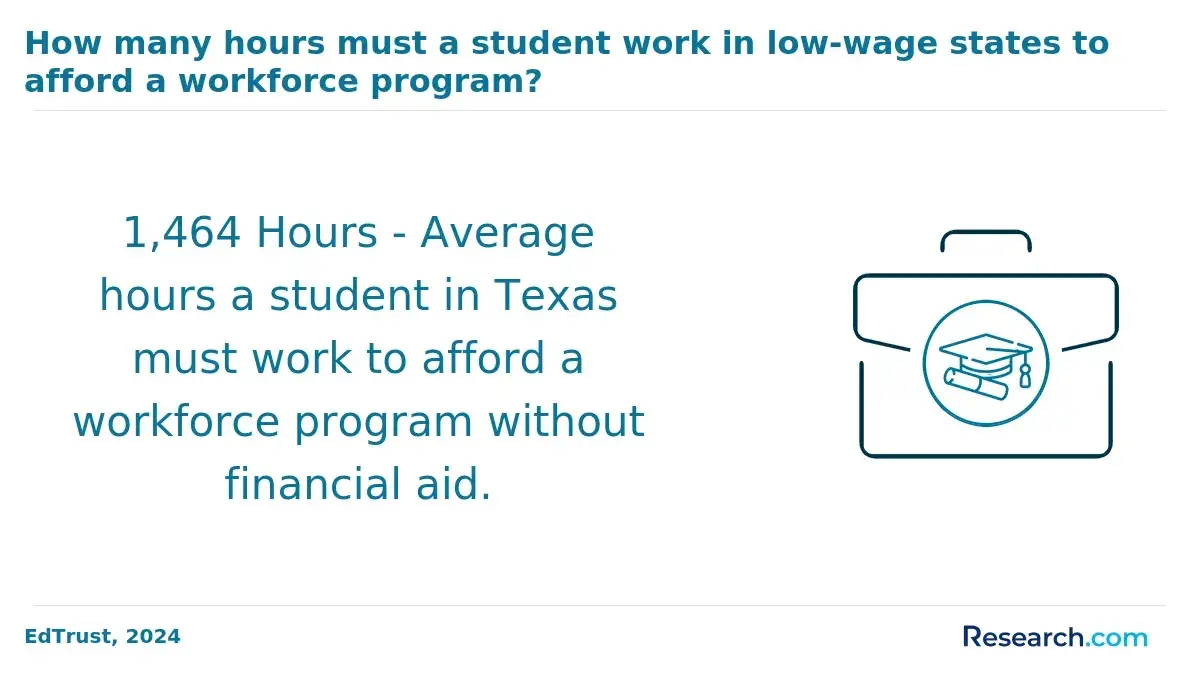
A work-study award amount is the maximum a student may earn through the program for that aid year or term, not a check paid upfront. If a financial aid offer lists $2,000 in work-study, the student generally earns that amount gradually through payroll, based on hourly wages and hours worked.
Several factors shape the award amount: the student's financial need, when the FAFSA was filed, the school's federal work-study allocation, the school's packaging policy, and whether the student remains eligible during the year. Schools may also limit weekly hours so students do not exceed the award too quickly or compromise academic performance.
The table below shows how the same award can translate into different weekly work expectations depending on the hourly wage. These are examples, not promises, because actual pay rates and schedules are set by the employer and school policy.
| Example award | Hourly wage | Approximate hours needed to earn full award | What it means for planning |
| $1,500 | $12 | 125 hours | A manageable term job if spread over many weeks |
| $2,000 | $15 | About 134 hours | Useful for books, transportation, or personal costs |
| $3,000 | $18 | About 167 hours | May require consistent scheduling across the semester |
Students should not treat work-study as guaranteed income unless they have already secured a position and confirmed expected hours. A student who is hired late, works fewer hours, or leaves a job early may earn less than the listed award.
The smartest planning approach is to separate fixed costs from flexible costs. Tuition, housing bills, and meal plans usually require payment by set deadlines, while work-study income is better suited for ongoing costs that occur throughout the term.
How do you find and secure a work-study job on or off campus?
Finding a work-study job is usually a student-driven process. Schools may offer a job board, campus employment portal, departmental listings, career center referrals, or hiring fairs. Some offices hire quickly before classes begin, while others wait until enrollment and aid eligibility are confirmed.
Students can improve their chances by treating the search like a real job hunt, even if the position is on campus. The following steps help students move from award letter to paycheck:
- Confirm with the financial aid office that the award is active and ask whether there are term-specific deadlines.
- Search the official campus job portal first, because those listings are more likely to be approved for work-study.
- Prepare a simple resume that highlights reliability, class schedule availability, computer skills, customer service experience, tutoring experience, or lab skills.
- Apply early to several suitable positions rather than waiting for one perfect job.
- Ask each supervisor about expected hours, training, peak workload periods, remote or hybrid options, and whether hours can change during exams.
- Complete payroll and employment verification paperwork before working, because unpaid "trial shifts" are a red flag.
Off-campus work-study jobs may be available through public agencies, community service organizations, schools, libraries, or approved nonprofits. These can be valuable for education, social work, public health, environmental studies, and civic engagement majors, but students should check travel time before accepting.
Students in flexible programs should also think about how their course format affects job availability. If balancing employment with coursework is a major concern, comparing accredited self-paced online colleges can help students understand whether a different academic structure would make paid work easier to manage.
What types of work-study positions are available and what do students typically do?
Work-study positions vary by campus, but they often fall into a few broad categories: administrative support, academic assistance, technology support, research, student services, recreation, community service, and specialized work related to a student's major. The best job is not always the highest-paying one; the better choice is often the role that builds relevant skills without hurting grades.
The table below summarizes common work-study job types and the kind of experience students may gain from each.
| Position type | Typical duties | Skills developed | Good fit for |
| Library assistant | Checking materials, shelving, helping patrons, maintaining quiet study areas | Organization, attention to detail, customer service | Students who prefer structured, lower-noise environments |
| Office assistant | Answering phones, scheduling, filing, data entry, front-desk support | Professional communication, software use, reliability | Students exploring business, administration, or student services |
| Tutor or peer mentor | Helping students with coursework, study strategies, or transition to college | Teaching, leadership, subject mastery | Students with strong grades in specific subjects |
| Research assistant | Collecting data, preparing materials, supporting faculty projects | Research methods, documentation, lab or analytical skills | Students considering graduate school or research-based careers |
| Technology support | Helping users troubleshoot accounts, devices, printers, or classroom technology | Problem-solving, technical communication, help-desk skills | Students interested in IT, cybersecurity, or systems support |
| Community service role | Supporting nonprofits, schools, public agencies, or outreach programs | Public service, teamwork, cultural awareness | Students interested in education, policy, health, or social impact work |
Current workplace trends are changing some campus jobs. More departments use digital scheduling systems, online help desks, learning management platforms, and AI-supported productivity tools. Students do not need to be technology experts for every role, but comfort with email, spreadsheets, shared documents, and basic troubleshooting is increasingly useful.
Students who prefer quieter or more independent work may benefit from choosing roles such as library support, data entry, research assistance, or technical documentation. Those exploring long-term job fit can also compare work-study roles with broader options in high paying careers for introverts.
How are work-study wages paid, and can they be used for tuition and living costs?
Work-study wages are typically paid through the school's regular payroll system, not automatically deducted from the tuition bill. Students may receive direct deposit or another approved payment method, depending on institutional policy. Under federal rules, students must be paid at least once per month.
In most cases, students can use work-study wages for any education-related or living expense, including books, transportation, food, personal supplies, and small emergency costs. Some schools may allow students to request that wages be applied directly to their student account, but that usually requires written permission.
Before deciding how to use the money, students should identify which expenses are due immediately and which occur gradually. Work-study income is especially useful for the following types of costs:
- Textbooks, access codes, lab materials, and course supplies that are not fully covered by other aid.
- Transportation expenses such as gas, transit passes, parking, rideshare use, or occasional travel home.
- Food and household basics when meal plans or family support do not cover daily needs.
- Personal expenses such as professional clothing, software, phone costs, or required equipment.
- Small emergency savings so an unexpected bill does not automatically become credit card debt.
A key budgeting mistake is using projected work-study earnings to cover a tuition balance due before the semester begins. If the payment deadline arrives before the student has earned wages, the school may still require another payment source, payment plan, scholarship, loan, or family contribution.
How does work-study compare with regular part-time jobs and other financial aid options?
Work-study is one tool in a financial aid plan, not a complete replacement for grants, scholarships, savings, or loans. It works best when the student needs modest ongoing income and wants a job that is designed around enrollment. It may be less helpful for students who need higher weekly income, full-time work, or immediate cash for a large balance.
The table below compares work-study with common alternatives from a decision-making perspective.
| Option | Main advantage | Main limitation | When it makes sense |
| Work-study | School-aware scheduling and need-based eligibility | Limited earnings and job availability | You can work part time and want campus-connected experience |
| Regular part-time job | Broader job market and possibly more hours | Employer may not prioritize class schedule | You need more predictable income or a specific industry role |
| Scholarships | No repayment in most cases | Competitive and may require renewal | You can invest time in applications before and during college |
| Federal loans | Can cover larger upfront gaps | Creates repayment obligation | You have exhausted lower-cost aid and understand borrowing limits |
| Payment plan | Spreads direct costs over several payments | Does not reduce total cost and may include fees | You have reliable monthly cash flow |
Federal student aid rules set annual borrowing limits; for example, the first-year dependent undergraduate federal loan limit is $5,500 under current federal policy. That figure matters because students who decline work-study may still face borrowing caps and may need other ways to close a remaining gap.
Students who are mainly trying to lower total education cost should look beyond the job itself. Choosing a shorter or more efficient academic path can also affect affordability, especially for students comparing the fastest degree to get with traditional timelines.
What rules, hour limits, and performance expectations apply to work-study employees?
Work-study employees are real employees, so they must follow workplace rules as well as financial aid rules. Schools and supervisors usually set expectations for attendance, timekeeping, confidentiality, dress, communication, job training, and performance. Students can lose a position if they repeatedly miss shifts, falsify hours, perform poorly, or violate workplace policies.
Important rules vary by school and job, but students should clarify the following before accepting a position:
- Maximum weekly hours during regular class weeks, breaks, finals, and summer sessions.
- Whether the job is only for the academic year or can continue into another term.
- How time is recorded, approved, corrected, and submitted for payroll.
- Whether remote work is allowed and what technology or privacy rules apply.
- Who to contact if the student needs schedule changes because of exams, illness, or academic obligations.
- What happens if the student approaches the full award amount before the term ends.
Students should also understand that federal work-study jobs are not supposed to replace existing employees or impair service contracts. Off-campus employers must meet program requirements, and some jobs are restricted if they involve political activity, religious instruction, or work that does not meet federal program rules.
One common red flag is a supervisor who pressures a student to work more hours than the student can handle academically. Another is a job that offers vague duties but demands immediate availability. A good work-study position should have a clear supervisor, defined tasks, approved payroll process, and reasonable schedule expectations.
How do work-study earnings affect future financial aid, taxes, and budgeting decisions?
Work-study earnings are generally taxable as wages, so students may receive a W-2 and may need to file a tax return depending on total income, filing status, and IRS rules. Students should not assume work-study is tax-free simply because it is part of a financial aid package.
For future financial aid, work-study has an important advantage over many regular earnings: need-based employment income such as federal work-study can be excluded from the income considered in the federal aid calculation when reported correctly through the aid process. Students should keep pay records and follow the school's FAFSA guidance because reporting details can matter.
For budgeting, students should estimate net pay rather than gross pay. Payroll taxes, withholding choices, state tax rules, and benefit deductions if any can reduce the amount deposited. A simple budget can prevent students from overcommitting work-study money before it arrives.
Students can use this budgeting framework before the term starts:
- List fixed school charges first, including tuition, fees, housing, meal plan, and required insurance if applicable.
- Subtract grants, scholarships, waivers, savings, and confirmed family contributions.
- Identify the remaining balance that must be paid by school deadlines.
- Reserve work-study earnings for costs that occur after paychecks begin, unless the school allows wages to be applied to the account and timing works.
- Track hours and remaining award balance monthly so earnings do not stop unexpectedly.
Work-study can be especially useful for students with caregiving responsibilities because it may offer shorter shifts and campus-aware scheduling. Parents returning to school may also want to compare academic pathways such as the best degrees for stay-at-home moms to find programs that fit both earning and caregiving needs.
How can students decide whether to accept work-study and choose a good position?
Students should accept work-study when it supports their academic plan, not just because it appears in the financial aid offer. The right decision depends on schedule, transportation, course load, financial gap, career goals, and whether a suitable job is realistically available.
A strong work-study position usually has three qualities: predictable hours, a supervisor who respects academic responsibilities, and duties that build transferable or career-relevant skills. A poor fit may pay slightly more but create long commutes, late-night shifts, excessive stress, or conflicts with required classes.
Before accepting a job, students should ask practical questions that reveal whether the role is sustainable:
- How many hours per week do students usually work in this role?
- Can the schedule change during midterms, finals, clinicals, labs, student teaching, or major projects?
- What training is provided, and is training paid?
- Will the job continue next term if performance is strong and funding remains available?
- What skills, software, equipment, or certifications are required?
- How will the supervisor help the student avoid exceeding the award amount too early?
Students should consider declining or reducing work-study if they are taking a heavy course load, commuting long distances, managing major family responsibilities, completing unpaid clinical or internship hours, or at risk of losing scholarships tied to GPA. In those cases, a smaller job, summer employment, more scholarships, or a revised enrollment plan may be safer.
Accelerated students should be especially careful because compressed programs leave less margin for weekly work. If speed is the priority, comparing options like a best 1-year bachelor degree online can help students weigh whether work-study fits the pace or whether other funding strategies are more practical.
Other Things You Should Know About
No. Work-study is earned aid. You receive wages only after you are hired for an approved job and work scheduled hours.
No. You can decline it or ask the financial aid office how declining might affect your overall aid package. It is optional, but it can be useful if you want part-time income.
Maybe. Some employers may keep you as a regular student employee if they have funds, but they are not required to do so. Ask your supervisor before you reach the limit.
Yes, if the job is approved under the program. Off-campus roles are often with public agencies, nonprofits, or community service organizations, and the school must confirm eligibility.
References
- What Is Work-Study and How Does It Pay for College? - The Scholarship System https://thescholarshipsystem.com/blog-for-students-families/what-is-work-study-and-how-does-it-pay-for-college/
- Work-Study Programs: Everything You Need to Know https://collegefinance.com/financial-aid/work-study-programs-everything-you-need-to-know
- How Part-Time Work Affects College Financial Aid and Taxes - Abacus! https://abacuspro.com/how-part-time-work-affect-college-financial-aid-and-taxes/
- What Is Federal Work-Study and How Much Does It Pay for College? https://thecollegeinvestor.com/32614/federal-work-study/
- Why a work-study job instead of a regular job? https://talk.collegeconfidential.com/t/why-a-work-study-job-instead-of-a-regular-job/883615
- Federal Work-Study: How It Works and How to Qualify https://www.fastweb.com/financial-aid/articles/work-study-everything-you-need-to-know
- What is work-study? Everything you need to know. https://www.citizensbank.com/learning/what-is-work-study.aspx
- What is Federal Work-Study? https://www.mefa.org/article/what-is-federal-work-study/
- What Is Federal Work-Study? How It Works & How to Apply https://www.act.org/content/act/en/students-and-parents/college-planning-resources/paying-for-college/work-study.html
- How to Apply for Work Study? - DataFlair https://data-flair.training/blogs/how-to-apply-for-work-study/