2027 Is an Online BS in Business Administration the Right Next Step for Accounts Payable Clerks?
Audited and Verified:
Our Editorial and Data Verification Process
Research.com uses government datasets, official education statistics and primary institutional information to support its career and degree guides. Our review process checks factual accuracy, occupational definitions, source dates and the requirements associated with the credentials discussed.
How This Article Was Fact-Checked
Our editorial team verifies salary estimates, employment projections, education requirements and program information against original data providers and official organizations. Salary figures are checked against the relevant occupational definitions and reporting periods. Information about licensure, accreditation and required in-person training is reviewed separately.
Fact-checked and verified on:

Co-Founder and Chief Data Scientist
Accounts payable work can build strong experience with invoices, controls, vendors, and accounting systems. But moving into broader finance or operations work may require skills - or a degree - that the job does not provide. For clerks considering an online BS in Business Administration, the decision is whether its breadth justifies the time and cost. This guide connects the degree to realistic next roles, compares more targeted alternatives, and shows what to verify before enrolling while continuing to work.
Key Things You Should Know
- An online BS in Business Administration is most useful if you want to move beyond invoice processing into broader operations, procurement, or business roles; an accounting-focused route may fit better if you want to become an accountant.
- The U.S. Bureau of Labor Statistics projects 7% employment growth for project management specialists from 2025 to 2035, but that occupation-wide outlook does not mean a business degree alone qualifies an accounts payable clerk for the role.
- Compare programs using an official transfer-credit evaluation, remaining requirements, total cost, and actual online attendance rules - not advertised completion speed alone.
Is an Online BS in Business Administration Right for Accounts Payable Clerks?
It can be the right next step if your target job requires a bachelor's degree and calls for broader business judgment than your current accounts payable (AP) role develops. A BS in Business Administration generally combines accounting with management, operations, finance, and quantitative coursework. That breadth can complement AP experience, especially if you have begun resolving vendor issues, improving workflows, or coordinating with purchasing and budget teams.
Start with the job you want, not the degree title. For a prospective operations or procurement coordinator, business administration may fill useful gaps. For a future staff accountant, a specialized accounting degree may offer more directly relevant coursework. If your immediate goal is an AP lead position, a new system responsibility, employer training, or a targeted course could be a faster, less costly step.
Online study may allow you to remain employed, but it still competes with month-end deadlines and other commitments. Compare weekly assignment schedules, live meetings, group projects, and exam rules before deciding that a program fits your workday. Programs designed for business administration study while continuing to work are a starting point for that comparison, not a substitute for checking each school's current policies.
What Careers Can Accounts Payable Clerks Pursue With a Business Administration Degree?
AP experience is strongest evidence for roles involving transactions, vendor communication, records, and controls. The table distinguishes plausible next moves from roles that usually need substantial additional preparation.
| Target role | Relevant AP experience | Likely gap to address |
| AP lead or accounting operations coordinator | Invoice exceptions, reconciliations, workflow knowledge | Process ownership, training, reporting, or supervision |
| Procurement or purchasing coordinator | Vendor records, payment terms, cross-team communication | Sourcing, purchase-order controls, and contract processes |
| Project coordinator | Deadline tracking and issue resolution | Schedules, stakeholder updates, project documentation, and direct project experience |
| Staff accountant | Transaction accuracy and account reconciliation | Journal entries, financial reporting, and often more accounting coursework |
For context, the U.S. Bureau of Labor Statistics reports a May 2025 median annual wage of $102,320 for project management specialists. That is an occupation-wide median, not an expected starting salary for a clerk completing a business degree. A coordinator role may be a more realistic transition before specialist-level responsibility.
If project work is your specific goal and you have previous college credit, compare the business degree with project management bachelor's transfer admission options. The better choice depends on which credits meet the requirements and whether the curriculum builds the project skills local employers request.
How Does a Business Administration Degree Improve Accounts Payable Career Prospects?
A degree can help in two distinct ways: it may meet a bachelor's requirement for a particular opening, and its coursework can help you explain business decisions beyond processing payments. Neither effect replaces evidence that you can perform the target role. Employers may value examples such as documenting an invoice-exception process, communicating a recurring issue to purchasing, or preparing a permitted, nonconfidential workflow analysis.
The strongest story connects what you already do with what the next job requires. A clerk pursuing procurement can build on vendor and purchase-order exposure; one pursuing operations can demonstrate process mapping and careful use of performance measures. If you instead want to enter HR, payroll contact alone does not establish HR experience. Compare the duties and education expected at different human resources degree levels before assuming a general business degree is the most direct preparation.
Programs vary, but a business core commonly covers financial and managerial accounting, finance, management, operations, economics, business communication, and quantitative analysis. For an AP clerk, the most valuable courses may be those that move from recording a transaction to interpreting costs, evaluating a process, or explaining a recommendation.
Examine the actual course list rather than relying on a concentration label. Accounting electives may deepen reporting knowledge; operations or supply chain courses may better support a purchasing transition. A formal concentration, an elective cluster, and a separate professional credential are not the same thing. If HR is your intended destination, compare the business curriculum with HR bachelor's programs with flexible transfer pathways and check which degree applies more of your prior coursework.
Ask whether applied assignments can use a workplace problem. A carefully scoped analysis of invoice bottlenecks could be useful, but employment does not automatically satisfy an internship or capstone requirement. Obtain academic approval and employer permission before using internal records; an anonymized or hypothetical case may be safer.
Requirements depend on whether you apply as a first-year or transfer student and whether the business major has separate entry rules. Schools commonly request prior academic transcripts and evidence that you meet their admission standards; some also have mathematics, accounting, or other course requirements. AP work experience may strengthen your application without replacing required coursework.
If you previously attended college, request an evaluation showing not just credits accepted, but where they apply: general education, business core, electives, or remaining prerequisites. Ask admissions about entry requirements, an academic adviser about the degree plan, and the transfer office about equivalencies. An application-cost comparison can include accredited colleges offering free online applications, but a waived application fee says nothing about eventual tuition or transfer fit.
Your timeline depends on usable transfer credit, enrollment pace, prerequisite sequences, and how often required courses run. An accepted course may count only as an elective rather than replace a required business course, so an advertised degree-completion timeline may not describe your situation.
For an AP clerk, the calendar matters as much as the credit count. Ask for a term-by-term plan that accounts for busy payment cycles, required live sessions, and the availability of final courses. Accelerated online business degree programs may shorten calendar time by compressing coursework, but they do not necessarily reduce the work required or the total price. Choose a pace you can sustain through the accounting calendar.
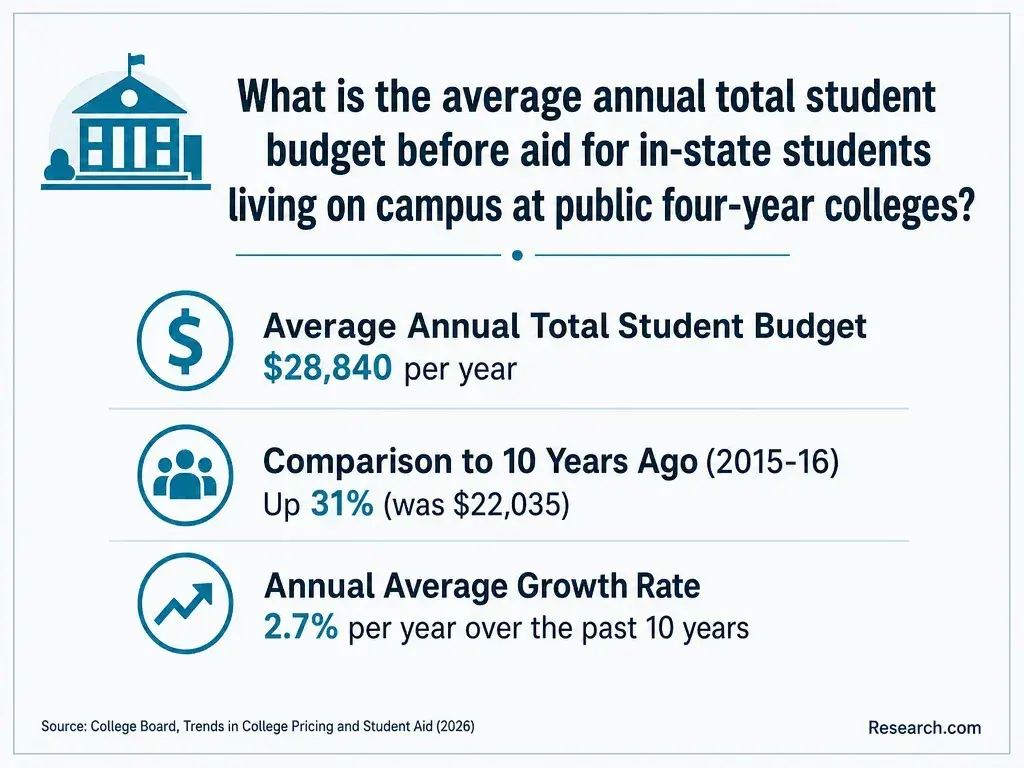
There is no dependable single price without a school, residency or online-tuition policy, and official evaluation of your prior credits. Request an estimate covering all remaining required courses, mandatory fees, books or software, exam costs, and any travel. Compare that total with what you would pay at your expected pace, including possible extra terms if a required course is unavailable.
Check whether your employer reimburses tuition, which courses qualify, when payment arrives, and whether a grade or continued-employment condition applies. Grants and loans also affect your finances differently: grants generally do not require repayment when their conditions are met, while loans do. A discussion of grants versus loans for project management bachelor's study can clarify that distinction, but verify aid eligibility and the actual award for your chosen business program. Do not count a future raise as certain when judging affordability.
The degree format matters less than whether you can complete its obligations and get the support you need. Online courses can remove a commute, but they may impose fixed deadlines, live presentations, proctored exams, and scheduled team work. Campus classes make in-person contact easier but may conflict with AP office hours or month-end demands.
Compare the same features at each school: course availability, faculty access, advising, career services, required visits, and opportunities for applied work. US rankings of online business degree programs can help you assemble options, but verify the exact BS program and its current delivery rules directly. An online label does not mean self-paced study.
Neither is universally required for AP work. Choose based on the qualification your next role calls for. Targeted AP, bookkeeping, spreadsheet, or accounting-system training may help if you want greater responsibility within AP. A bachelor's degree may be more valuable when specific openings require one or when you want broader business preparation. A voluntary certification demonstrates defined learning or experience under its issuer's rules; it is not interchangeable with a degree.
If you want to become an accountant, check the accounting coursework employers expect and the separate education and state requirements for any CPA plans. A general business degree alone does not grant CPA eligibility. If your goal is project work, compare the business degree with lower-cost online project management degree options and with opportunities to gain documented project experience at work. The lowest-priced credential is not the best value if it misses the job's essential skills.
How Can You Choose an Accredited Online Business Administration Program?
First, confirm the institution's accreditation through the accreditor and check that it applies to the school awarding the degree. If a program advertises AACSB, ACBSP, or IACBE accreditation, confirm the exact business school or program covered; business accreditation and institution-level accreditation are different claims.
Then ask each finalist for a written transfer evaluation, an official degree audit or remaining-course plan, an estimated completion schedule, and a full cost estimate. Compare whether the curriculum supports your target role, not merely whether the program accepts your credits. Options for cheaper business administration study with FAFSA-based aid can inform your shortlist, but confirm current aid eligibility and net cost with each school.
Finally, check how students reach required courses and what happens if work forces you to slow down or pause. The right program is one whose approved plan, schedule, and cost fit both your AP responsibilities and a credible route to your next role.
Other Things You Should Know About Business Administration
Possibly, if a school offers an assessment of prior learning and your documented experience meets its standards. Working in AP does not automatically award credit or replace a required course.
It may help if you want education benefits, scheduling support, or a permitted workplace project. You can first ask HR about benefit rules and your manager about development opportunities without committing to enrollment.
Only if your employer permits the proposed use and the school accepts the project. Remove or protect vendor, employee, and financial information as required; a hypothetical dataset is an alternative.
Review openings at your employer and speak with people in adjacent teams before enrolling. If no role clearly calls for a bachelor's degree, a targeted course or new work assignment can help you test your interests first.
- DAPIP | Homepage - Office of Postsecondary Education (OPE) https://ope.ed.gov/dapip/
- Business Administration Bachelor's Degree Online | The Pennsylvania Institute of Technology https://www.pit.edu/programs/b-s-business-administration/
- Types of Accounting Degrees You Can Specialize In | Edison State Community College https://www.edisonohio.edu/blog/types-of-accounting-degrees-you-can-specialize-in
- Bachelor's Degree in Business: Administration or Accounting? | Bay Path University https://www.baypath.edu/news/bay-path-university-blogs/post/bachelor-s-degree-in-business-administration-or-accounting/
- What Jobs Can You Get With a Business Degree? | snhu.edu https://www.snhu.edu/about-us/newsroom/business/what-jobs-can-you-get-with-a-business-degree
- Types of Business Degrees: Your Complete Guide | UWA Online https://online.uwa.edu/news/types-business-degrees/
- Accounts Payable Specialists: How to Become One | Franklin University https://www.franklin.edu/career-guide/bookkeeping-accounting-and-auditing-clerks/how-to-become-accounts-payable-specialists
- Opportunities With a Business Administration Degree | Saint Mary's University of Minnesota https://www.smumn.edu/blog/what-doors-can-a-business-administration-degree-open/
- Earn a Business Administration Degree 100% Online | William Peace University https://peace.edu/lp-ba-business-administration/
- 6 Types of Business Degrees and Career Paths | UMass Global https://www.umassglobal.edu/blog-news/6-types-business-degrees-and-career-paths