2027 Online Criminal Justice Degrees That Maximize Community College Credits

Co-Founder and Chief Data Scientist
For many professionals aiming to enter or advance within the criminal justice field, lengthy degree requirements and rigid program structures can stall critical career moves. Balancing current job demands with education is often complicated by a scarcity of programs that honor already-completed community college credits.
The National Center for Education Statistics reports a 15% surge in online criminal justice enrollment in the past two years, signaling growing demand for flexible pathways. Yet, incomplete credit transfer remains a barrier, reducing time and cost efficiency.
This article evaluates online criminal justice degrees that maximize community college credit transfer, guiding students to optimize educational investment and accelerate workforce entry or progression.
Key Things You Should Know
- Datasets from the National Center for Education Statistics in 2024 reveal that only 45% of online criminal justice programs accept full community college credit transfers, forcing over half of students to retake foundational courses and extend graduation timelines by up to 30%.
- Employers in law enforcement and corrections highlight a growing preference for graduates with applied skills certificates; programs maximizing community college credits often lack specialized forensic or cybercrime training, potentially limiting immediate job placement in high-demand subfields.
- Analysis by Georgetown University's Center on Education and the Workforce shows that degree pathways embedding transferable credits reduce average student debt by 22%, accelerating access to mid-level criminal justice roles, but can delay exposure to advanced theoretical content crucial for career advancement beyond frontline roles.
How can you maximize community college credits in an online criminal justice bachelor's program?
Maximizing community college credits in online criminal justice programs demands strategic evaluation of transfer agreements and curriculum alignment rather than simple credit accumulation. Students should target schools with clear articulation agreements guaranteeing acceptance of at least 60 credits from accredited two-year colleges, as transferring this volume significantly improves bachelor's completion rates.
This matters because criminal justice curricula integrate critical foundational courses in sociology, psychology, and law enforcement—areas that may not transfer seamlessly without advanced validation.
In practice, students transferring community college credits to online criminal justice bachelor's degree programs must verify course equivalencies before enrollment and engage in early credit audits.
For example, a student pursuing a law enforcement career must ensure transferable credits cover essential courses like criminal law and ethics; otherwise, they risk delaying graduation by retaking fundamental coursework. Additionally, some programs permit elective substitutions for transfer credits, but these often require negotiation early in the process.
Maintaining official transcripts, verifying accreditation status, and meeting GPA requirements are baseline steps to prevent transfer denials. For working professionals, maximizing these credits not only reduces tuition but also accelerates entry into the workforce, an essential factor considering the impact of degree completion on licensure eligibility and career trajectory.
Understanding these nuances is crucial—career outcomes such as the FBI criminal profiler salary reflect the direct value of efficient degree pathways in criminal justice.
What should you look for in accredited online criminal justice degrees accepting transfer credits?
Maximizing transfer credits significantly compresses timelines and reduces costs for students in online criminal justice programs that accept community college credits. For instance, Purdue Global allows up to 88 quarter credits to transfer, cutting tuition by more than half-from $41,400 to $20,240-directly impacting working professionals who need expedited credentialing.
Not all credits transfer equally; prioritizing accredited online criminal justice degrees with transfer credit options vetted by recognized agencies such as CHEA or the U.S. Department of Education ensures credits count toward employment and further education. Regional accreditation matters for acceptance, while specific programmatic accreditation signals a curriculum aligned with employer standards.
Beyond credit recognition, students must confirm articulations with community colleges and availability of prior learning or military credit assessments to avoid delays. These operational nuances often determine whether a transferred credit translates into meaningful degree progress or wasted effort.
Course offerings should balance foundational theory with applied skills tailored to job sectors like law enforcement, cybersecurity, or corrections. Generic programs risk leaving graduates underprepared for specialized occupational demands, a critical consideration for career pivots or advancement.
Finally, student support infrastructure for transfer advising and criminal justice career services enhances the practical value of transferred credits. Aligning academic plans with real employer requirements improves employability and salary growth over time.
Individuals uncertain about pathways may explore resources such as what is the best degree for a convicted felon to evaluate suitability in relation to criminal justice education.
How do online criminal justice programs compare to campus-based options for transfer students?
Online criminal justice degree transfer credit policies significantly impact both the cost and duration of degree completion, especially for community college students leveraging credits toward a bachelor's degree. The tuition contrast is stark: for instance, Tarrant County College's AAS in Criminal Justice costs $5,136 for 60 credit hours, whereas Texas public universities charge $13,353 to $38,656 for comparable bachelor's programs.
Prioritizing community college credits can yield substantial savings but requires strategic navigation of transfer credit acceptance to avoid redundant coursework and extended timelines.
Transfer students must engage directly with academic advisors and examine statewide transfer guides to verify credit alignment with target criminal justice degree programs. Unlike on-campus students who benefit from immediate advising and hands-on internship networks, online options demand proactive management of course equivalency amidst less experiential learning and fewer in-person resources.
For working professionals, such as law enforcement officers, online pathways enable balancing employment with education without geographic disruption.
Employers look for a blend of practical experience and academic credentials; while campus programs often facilitate internships through established networks, many online students depend on virtual or locally arranged placements to build relevant skills. Weighing the tradeoffs between affordability, transfer credit policies, and experiential opportunities is essential for optimizing employability in this field.
Those interested in advancing with specialized knowledge may consider related fields like masters in forensic psychology online, which intersect with criminal justice careers and require similar considerations around program flexibility and credit transfer. Understanding how community college credits for criminal justice degrees apply across institutions helps avoid costly setbacks during transfer.
What types of online criminal justice degrees are available for community college graduates?
Choosing online criminal justice degree programs for community college transfers requires evaluating how well credits transfer and align with workforce demands. Associate-to-bachelor's transfer pathways and hybrid applied science degrees emphasize maximizing community college credits, often accepting up to 90 credits to minimize redundant coursework and shorten time to degree completion.
Forensic science technician roles, projected to grow 14% over the next decade with median salaries near $64,940, illustrate the advantage of specialized BS degrees grounded in natural sciences and lab work. These programs demand carefully mapped STEM credits from community colleges.
Conversely, students pursuing careers in law enforcement or corrections management typically find BA criminal justice degrees more practical, as these programs prioritize policy, criminology, and ethics with flexible humanities electives, easing credit articulation.
A key challenge remains ensuring prior credits meet core curriculum requirements, as not all online criminal justice degrees accepting community college credits apply uniform standards. Verifying articulation agreements and consulting dedicated advisors is critical to avoid delayed graduation or financial aid complications.
Job market alignment influences degree choice: rigorous science foundations suit forensic roles, while leadership and policy coursework better serve administrative positions. Prospective students balancing these factors might also explore related workforce insights, such as sports analytics salary data, to understand how specialized skills impact earnings across fields.
What criminal justice courses typically transfer from community colleges into bachelor's programs?
Transferring credits from community colleges into bachelor's criminal justice programs demands careful navigation of which courses align with four-year degree requirements. Key foundational classes-such as introduction to criminal justice, criminology, constitutional law, juvenile justice, and corrections-frequently transfer and reduce time to degree completion.
However, upper-division specialized courses like forensic psychology, cybercrime, and criminal procedure often do not transfer and must be completed at the university level.
General education credits in sociology, psychology, English composition, public speaking, and statistics commonly meet breadth requirements, but students risk losing progress without clear articulation agreements. For instance, a working professional targeting detective roles must confirm foundational credits transfer fully to avoid duplicating coursework that delays entry into competitive positions.
The demand for bachelor's-level criminal justice professionals remains strong, with approximately 62,200 annual openings projected for police and detectives over the next decade, and several of the top-paying criminal justice jobs requiring a bachelor's degree. This creates a need to assess not just credit transferability but also how the educational path affects workforce readiness and time-to-employment.
Effective transfer strategies focus on minimizing educational friction while positioning students for workforce relevancy, rather than simply accumulating credits without regard to career outcomes.
How do admission and GPA requirements affect transfer credit acceptance in online programs?
Transfer credit acceptance in online criminal justice programs hinges heavily on admission criteria and GPA thresholds, which directly shape a student's ability to leverage prior coursework. Programs typically set minimum GPA requirements between 2.5 and 3.0, effectively filtering out credits that fall below these standards. This means students with stronger academic records can accelerate degree progress, a critical advantage for working professionals juggling career demands.
Beyond GPA, the accreditation status and course equivalency of the originating institution significantly affect credit transferability. For instance, a 2.7 GPA course from an accredited community college is more likely to be accepted by programs like Texas State University's online BS, where tuition runs about $405 per credit hour—considerably less than the national average exceeding $500 per credit hour. This tuition difference can yield substantial savings for transfer students by minimizing duplicate coursework.
Employers in criminal justice fields often prioritize candidates whose degree paths are steady and uninterrupted by lost credits or extended timelines. Students are advised to engage in detailed academic advising, confirm articulation agreements, and request official syllabus comparisons to ensure maximum credit applicability.
When GPA thresholds or course matches fail, students risk incurring additional costs and delaying their entry or advancement in the workforce, undermining the cost-effectiveness and timeliness expected from quality online programs.
How long does it take to finish an online criminal justice degree with maximum transfer credits?
Maximizing transfer credits can reduce the time to complete an online criminal justice degree to 1.5-2 years, but this depends heavily on credit acceptance and program design. Community colleges often provide up to 60 transferable credits, enabling students to bypass general education and focus on upper-division courses sooner.
For example, a law enforcement officer with 60 relevant credits can enter a bachelor's program as a junior, completing advanced coursework in roughly 18 to 24 months.
However, transfer policies vary: credits over 5 to 7 years old or unrelated to criminal justice are often rejected, which may extend degree completion time. Students need to navigate articulation agreements, minimum GPA requirements, and subject-specific credit limits to avoid unexpected delays.
Enrollment status impacts timelines as well. Full-time students in accelerated programs might finish within 12 to 15 months, but this demands a rigorous schedule that may not be feasible for working professionals. Conversely, part-time study balances work and education but can double completion time to 3-4 years.
Understanding these trade-offs is critical given the practical payoff: the Bureau of Labor Statistics reports median wages near $74,910 for police and detectives, with 63,000 job openings annually, and $61,800 for probation officers and correctional treatment specialists, who have 7,400 openings per year.
What is the typical cost of completing an online criminal justice degree after community college?
Completing an online criminal justice degree after transferring 48-60 community college credits typically costs between $15,000 and $30,000 in tuition, depending heavily on residency and institution. This model financially benefits students by concentrating payments on upper-division courses while leveraging prior credits, which is especially relevant for working adults balancing education with employment.
Employers in sectors like law enforcement and corrections increasingly prioritize degree completion over credit origin, yet students must proactively confirm transfer credit acceptance to avoid redundant coursework and unexpected expenses. Online programs also shift expenses toward technology, textbooks, and stable internet access, offsetting on-campus costs such as commuting and housing but introducing new indirect financial considerations.
State residency dramatically influences tuition disparities, with some public universities charging up to $500 per credit hour for nonresidents compared to $350 for residents, creating affordability gaps of nearly 40%. Additionally, opportunity costs tied to study time can impact earnings, making employer tuition benefits and military education funds essential tools for cost management.
Prudent planning should factor in:
- Verification of credit transfer policies before enrollment
- Ancillary fees beyond tuition including technology requirements
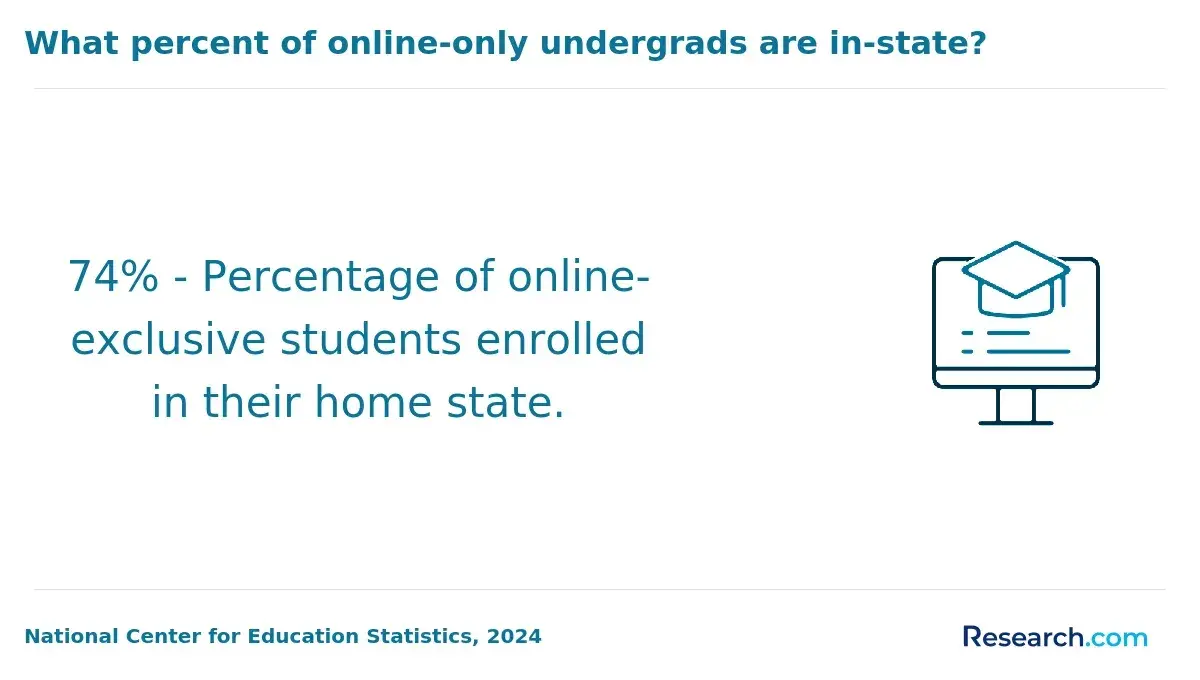
- Differences in in-state versus out-of-state online tuition rates
- Leveraging employer or GI Bill tuition assistance
This approach aligns with a realistic budgeting framework that matches academic progress with workforce demands and financial capacity.
What criminal justice careers, salaries, and job outlook can you expect with an online degree?
Employers increasingly value candidates who combine practical experience with an online criminal justice degree supported by credit transfer pathways, as this approach reduces time-to-degree and overall costs while signaling commitment and efficiency.
For instance, a corrections officer leveraging Dallas College's 60-credit transfer option can accelerate completion of a bachelor's degree, unlocking management roles often tied to salary increases exceeding $10,000 annually. However, degree credits rarely replace state-mandated licensing or training, which can delay workforce entry despite academic progress.
Job growth within protective service occupations is projected at 3% over the next decade, matching average labor market expansion, but remains uneven. Police officers and detectives face hiring constraints driven by budgets, while cybersecurity roles linked to criminal investigations are growing notably faster.
Federal agents command salaries above $85,000 but require rigorous selection beyond academic credentials, whereas probation officers earn median wages near $60,000, balancing experience and degree completion.
Graduates should recognize these disparities and hiring nuances, as limited transfer credits or lack of practical experience can prolong study time and increase tuition debt, limiting mobility within five years. Candidates who navigate credit transfer effectively and satisfy licensing requirements stand to achieve faster advancement and solidify their position in a competitive labor market.
Are there licensing, certification, or background requirements for criminal justice jobs and agencies?
Licensing and certification requirements are decisive gatekeepers in criminal justice careers, shaping who qualifies for many roles more than academic credentials alone. For instance, police officers must pass police academy certification and often face disqualification for felony records, while parole and private security positions typically mandate state-specific professional licensure and fingerprint-based background checks.
State and agency variations complicate the value of online criminal justice degrees. A program maximizing community college credits still cannot substitute for meeting local credentialing demands.
Federal positions usually require U.S. citizenship plus extensive background screenings, unlike some municipal jobs with more flexible entry conditions. Ignoring these factors risks wasted time and out-of-pocket expenses, regardless of degree cost savings.
Take Central Texas College's associate degree as a case example: while affordable at around $7,500 in-district, it does not exempt graduates from separate physical fitness tests, certification exams, or background investigations required by employers.
Practical workforce navigation entails factoring in these multi-layered procedural hurdles upfront. Employers expect candidates to combine academic knowledge with verified legal and procedural compliance, making credential verification and jurisdictional research indispensable steps before pursuing specific criminal justice jobs.
Other Things You Should Know About Criminal Justice
Online criminal justice students frequently overestimate the flexibility offered by remote study, underestimating the workload from extensive reading, research projects, and case studies. Fieldwork requirements, such as internships at police departments or courts, demand careful scheduling and can conflict with work hours. Students should prioritize programs that coordinate flexible practicum timelines or offer evening/weekend options to manage employment obligations effectively.
Yes, not all community college credits transfer equally into specialized criminal justice tracks like forensic science, cybersecurity, or federal law enforcement. General education and introductory criminal justice credits typically transfer smoothly, but specialized courses often require completion at the bachelor's level. Students aiming for a niche career should evaluate transfer policies carefully and consider completing prerequisites for their intended specialization after transferring.
Programs that maintain formal relationships with law enforcement agencies offer distinct advantages for career placement and practical learning. These partnerships often provide exclusive internship opportunities, guest lectures, and networking that boost employability in competitive agencies. For students focused on immediate workforce entry or advancement, prioritizing such programs over those without these connections can significantly improve outcomes.
References
- What to do With a Criminal Justice Degree - Paladin Security https://paladinsecurity.com/security-careers/become-security-guard-canada/
- Online Transfer Completion Program for Criminal Justice https://www.niagara.edu/colleges/college-of-arts-and-sciences/online-transfer-completion-program-for-criminal-justice/
- Criminal Justice | Community College of Philadelphia https://www.ccp.edu/college-catalog/degree-programs/associate-applied-science-aas/criminal-justice
- Explore Bachelor's Degree in Criminal Justice | All Criminal Justice Schools https://www.allcriminaljusticeschools.com/criminal-justice/criminal-justice-bachelors-degree/
- Expanding Access to Public Employment for People with Criminal Records - CSG Justice Center https://csgjusticecenter.org/publications/expanding-access-to-public-employment-for-people-with-criminal-records/
- Undergrad Application and Transfer Guide https://www.criminaljustice.com/resources/undergraduate-application-and-transfer-guide/
- Do Transfer Credits Affect GPA? The Impact on Your Academic Record https://www.edvisorly.com/student-guides/do-transfer-credits-affect-gpa
- 50-State Comparison: Limits on Use of Criminal Record in Employment, Licensing & Housing https://ccresourcecenter.org/state-restoration-profiles/50-state-comparisoncomparison-of-criminal-records-in-licensing-and-employment/
- Online Criminal Justice Degrees: Find the Right Program https://www.degreesforgood.org/online-degrees/criminal-justice-programs/
- Criminal Justice | EICC https://eicc.edu/classes-programs/pathway/government/criminal-justice-transfer/default.aspx