2027 Best Hybrid PharmD Programs With Strong Licensure Preparation

Co-Founder and Chief Data Scientist
Choosing a hybrid PharmD program is really a licensure decision: the format must fit your life without weakening your path to becoming a pharmacist. The stakes are high because the U. S. Bureau of Labor Statistics reported a $137,480 median annual wage for pharmacists in May 2024, but entry still depends on accredited education, exams, and state rules. This guide is for future pharmacists comparing flexible programs. You will learn how hybrid formats work, what reputable programs include, what they cost, and how to choose the option most likely to support licensure readiness.
Key Things You Should Know
- The best hybrid PharmD programs are ACPE-accredited, include required in-person labs and experiential rotations, and prepare students for state licensure steps such as the NAPLEX, MPJE or state law exam, and intern-hour requirements.
- Hybrid does not mean fully online: PharmD students should expect campus immersions, skills assessments, simulations, Introductory Pharmacy Practice Experiences, and Advanced Pharmacy Practice Experiences in approved clinical or community settings.
- Use salary and cost cautiously: BLS data shows a May 2024 median pharmacist wage of $137,480, while federal graduate/professional Direct Unsubsidized Loan limits are generally capped at $20,500 per academic year before Graduate PLUS or other aid.
What is a hybrid PharmD program and how does it differ from online or campus formats?
A hybrid PharmD program is a Doctor of Pharmacy pathway that combines online coursework with required in-person learning. The online portion may include lectures, case discussions, quizzes, recorded demonstrations, team assignments, and faculty office hours. The in-person portion usually includes labs, sterile compounding practice, patient counseling simulations, skills assessments, objective structured clinical examinations, and experiential rotations.
The key distinction is that a hybrid PharmD still leads to the same professional doctoral credential as a campus PharmD when it is properly accredited. It is not a shortcut, certificate, or general health degree. Students are preparing for pharmacist licensure, which requires hands-on competency in medication safety, clinical decision-making, patient communication, and pharmacy law.
The table below compares the main delivery models so prospective students can understand what they are actually choosing. The best format depends less on convenience alone and more on how well the structure supports learning, licensing exams, and required practice experiences.
| Format | How learning is delivered | Best fit | Licensure preparation concern |
| Hybrid PharmD | Online didactic coursework plus required in-person labs, assessments, and rotations | Students who need flexibility but can travel for campus sessions and clinical placements | Must verify ACPE status, state eligibility, rotation availability, and exam-support outcomes |
| Campus PharmD | Most classes, labs, advising, and assessments occur on campus | Students who want frequent face-to-face faculty access and structured daily schedules | May offer more routine lab access, but still requires strong board preparation and placement support |
| Fully online health program | Coursework is delivered remotely with little or no clinical licensure structure | Students pursuing non-licensure healthcare roles | Usually not designed to qualify graduates for pharmacist licensure |
A common mistake is assuming "online PharmD" and "hybrid PharmD" mean the same thing. For pharmacist licensure, the safer question is not whether a program is convenient; it is whether the school can document how students complete required competencies, supervised practice, and exam preparation in the state where they plan to practice.
How do hybrid PharmD programs prepare graduates to meet pharmacist licensure requirements in each state?
Hybrid PharmD programs prepare students for licensure by combining accredited doctoral coursework, supervised experiential training, and board-exam preparation. In most states, graduates must complete an ACPE-accredited PharmD, pass the North American Pharmacist Licensure Examination, pass a pharmacy law exam such as the Multistate Pharmacy Jurisprudence Examination or a state-specific alternative, satisfy intern-hour rules, clear background checks, and submit a state board application.
Licensure is state-controlled, so a strong hybrid program should not give generic promises. Instead, it should provide state-by-state advising, document whether placements meet board rules, and help students understand deadlines for intern registration and exam authorization. This matters especially for students who live far from the university, plan to move after graduation, or want to complete rotations near home.
Before enrolling, students should confirm several licensure details directly with both the school and the state board of pharmacy. These checks reduce the risk of completing coursework that does not align with where the student intends to practice.
- Confirm that the PharmD program has current ACPE accreditation or candidate status appropriate to its stage of development.
- Ask whether the school has previously placed hybrid students in your state or region for required experiential rotations.
- Verify whether your state requires intern registration before IPPE or APPE rotations begin.
- Ask how the curriculum maps to NAPLEX content areas and how early students receive board-style assessment feedback.
- Clarify whether the program provides MPJE or state pharmacy law preparation for the state where you plan to seek licensure.
- Request written guidance on what happens if you move states before graduation or after completing rotations.
The strongest licensure-preparation programs treat exam readiness as a multi-year process, not a final-semester review course. They use cumulative assessments, remediation plans, pharmacotherapy case practice, calculations testing, law review, and faculty coaching to identify gaps before graduation.
Which key accreditation and quality standards should hybrid PharmD programs meet to be considered reputable?
The most important quality marker for a hybrid PharmD is accreditation by the Accreditation Council for Pharmacy Education. ACPE accreditation is central because state boards generally rely on it when determining whether a graduate's education qualifies for pharmacist licensure. Institutional accreditation also matters because it affects federal financial aid eligibility, transferability, and general academic oversight.
Reputable hybrid programs should also show evidence that online delivery does not dilute professional training. That includes documented learning outcomes, qualified pharmacy faculty, secure testing, simulation resources, accessible advising, reliable technology support, and sufficient experiential sites. ACPE standards require substantial experiential education, including Introductory Pharmacy Practice Experiences and Advanced Pharmacy Practice Experiences, so students should examine how those hours are arranged in a hybrid model.
The table below summarizes the quality signals that matter most when comparing programs. Use it to separate meaningful licensure preparation from marketing language.
| Quality signal | Why it matters | What to ask the school |
| ACPE accreditation status | It is the core education standard tied to pharmacist licensure eligibility | Is the program accredited, candidate status, or pre-candidate status, and where is that documented? |
| Experiential education network | Hybrid students need approved sites for IPPEs and APPEs, often near where they live | Who secures placements, and what states or regions are currently supported? |
| Board-exam preparation | NAPLEX and law exam readiness depend on cumulative knowledge and practice | How are calculations, pharmacotherapy, and law readiness assessed before graduation? |
| In-person skills requirements | Pharmacy practice requires verified hands-on competence | How often must students travel, and what competencies are tested during immersions? |
| Student support systems | Remote learners need fast access to advising, tutoring, faculty, and technical help | What support is available outside standard business hours? |
A major red flag is a program that highlights flexibility but is vague about accreditation, rotations, or licensure eligibility. Another warning sign is an admissions representative who says a program "should work" for every state without directing you to written state authorization or board guidance.
What admissions requirements and prior education are typically needed for entry into a hybrid PharmD program?
Hybrid PharmD admissions requirements vary by school, but most programs require prerequisite college coursework in sciences, mathematics, and communication. Common prerequisites include general chemistry, organic chemistry, biology, microbiology, anatomy and physiology, calculus or statistics, economics, psychology or sociology, and English composition. Some programs require or strongly prefer a bachelor's degree, while others admit students after completing a defined pre-pharmacy curriculum.
Many schools have reduced or eliminated PCAT requirements, so applicants should focus on academic readiness, healthcare exposure, communication skills, and evidence that they can manage a rigorous professional curriculum. Hybrid formats add another admissions consideration: students must show they can succeed in online coursework while also meeting fixed in-person requirements.
Admissions committees often review a combination of academic, professional, and personal-readiness factors. The following items are worth preparing early because missing prerequisites or weak documentation can delay entry by a full cycle.
- Official transcripts showing completion or planned completion of prerequisite courses with acceptable grades.
- A competitive overall and science GPA, especially in chemistry, biology, anatomy, physiology, and quantitative coursework.
- Pharmacy or healthcare exposure through work, shadowing, volunteering, research, or patient-facing service.
- Letters of recommendation from faculty, pharmacists, healthcare supervisors, or professional mentors.
- A personal statement explaining motivation for pharmacy, readiness for hybrid learning, and commitment to patient care.
- Interview performance that demonstrates ethical judgment, communication skills, teamwork, and resilience.
Students who want a faster route should compare prerequisite policies carefully, because some schools offer year-round sequencing or three-year options. If speed is a priority, it may also help to review accelerated pharmacist programs and compare whether a faster pace strengthens or weakens your ability to prepare for licensure exams.
The biggest admissions mistake is choosing a program before completing a prerequisite audit. Ask admissions for a written course evaluation, especially if you have community college credits, international coursework, older science credits, pass/fail grades, or a partially completed bachelor's degree.
How is coursework, labs, and experiential training structured in hybrid PharmD curricula?
Hybrid PharmD curricula are usually built around three connected layers: online didactic coursework, in-person skills development, and supervised pharmacy practice experiences. The online coursework covers foundational sciences and clinical decision-making, while in-person sessions verify that students can perform core pharmacist tasks safely and professionally.
The academic content typically progresses from biomedical and pharmaceutical sciences to applied pharmacotherapy and patient care. Students study pharmacokinetics, medicinal chemistry, pharmaceutics, pharmacology, self-care therapeutics, infectious disease, cardiology, endocrinology, oncology, psychiatry, pediatrics, geriatrics, medication safety, healthcare systems, ethics, and pharmacy law.
Because pharmacy is a hands-on profession, hybrid students should pay close attention to how labs and rotations are scheduled. The table below shows how the major curriculum components usually work and why each one matters for licensure preparation.
| Curriculum component | Typical hybrid structure | Licensure preparation value |
| Didactic courses | Online lectures, readings, case discussions, exams, and group projects | Builds the knowledge base needed for pharmacotherapy decisions and NAPLEX readiness |
| Skills labs | Campus immersions or regional intensives with faculty-supervised assessments | Confirms competence in counseling, calculations, compounding, immunization technique, and documentation |
| Simulation | Virtual or in-person patient cases, interprofessional exercises, and medication safety scenarios | Helps students practice clinical judgment before working with real patients |
| IPPE rotations | Early supervised experiences in community, institutional, or service settings | Introduces pharmacy workflow, patient interaction, and professional expectations |
| APPE rotations | Full-time advanced rotations in the final phase of the program | Develops entry-level pharmacist competence across required and elective practice settings |
Technology is also changing PharmD training. Many programs now use electronic health record simulations, remote proctoring, digital drug-information tools, adaptive quizzing, and AI-supported study platforms. These tools can improve practice and feedback, but they do not replace supervised clinical judgment, faculty assessment, or state-required experiential hours.
A practical way to evaluate curriculum strength is to ask how often students receive cumulative performance feedback. Programs with strong licensure preparation usually identify weak areas in calculations, pharmacotherapy, and law long before students sit for board exams.
How long do hybrid PharmD programs take, and what schedule options exist for working adults?
Most PharmD programs take four professional years after prerequisites, although some accelerated options compress the professional phase into three calendar years by using year-round study. Hybrid delivery can make weekly coursework more flexible, but it does not remove the time demands of labs, exams, group work, and rotations.
Working adults should be especially cautious about the final experiential year. APPE rotations are commonly full-time, and students may need to follow the schedule of a pharmacy, hospital, ambulatory clinic, industry site, or health system rather than choosing evening or weekend hours. A hybrid format may support employment during earlier coursework, but full-time rotations can make outside work difficult.
The table below compares common pacing options. The right choice depends on your finances, family responsibilities, academic strength, and tolerance for a compressed workload.
| Schedule option | Typical timeline | Best for | Trade-off |
| Traditional hybrid PharmD | About four professional years | Students who want a more standard pace with time for work, leadership, or research | Longer time before licensure and full pharmacist earnings |
| Accelerated hybrid PharmD | About three calendar years when available | Students with strong science preparation and flexibility for year-round study | Less downtime and potentially greater academic pressure |
| Part-time or extended pathway | Varies by school and is less common in PharmD education | Students with major work or caregiving obligations | May delay rotations, graduation, and licensure eligibility |
| Campus-heavy hybrid pathway | Varies by immersion frequency | Students who learn best with more in-person structure | More travel, relocation, or commuting demands |
Before enrolling, map the entire calendar rather than only the first semester. Include orientation, immersion weeks, exam windows, IPPE dates, APPE blocks, travel time, and any required residency or campus housing costs. This is the clearest way to determine whether the program is truly workable for your life.
What are typical tuition costs, fees, and financial aid options for hybrid PharmD students?
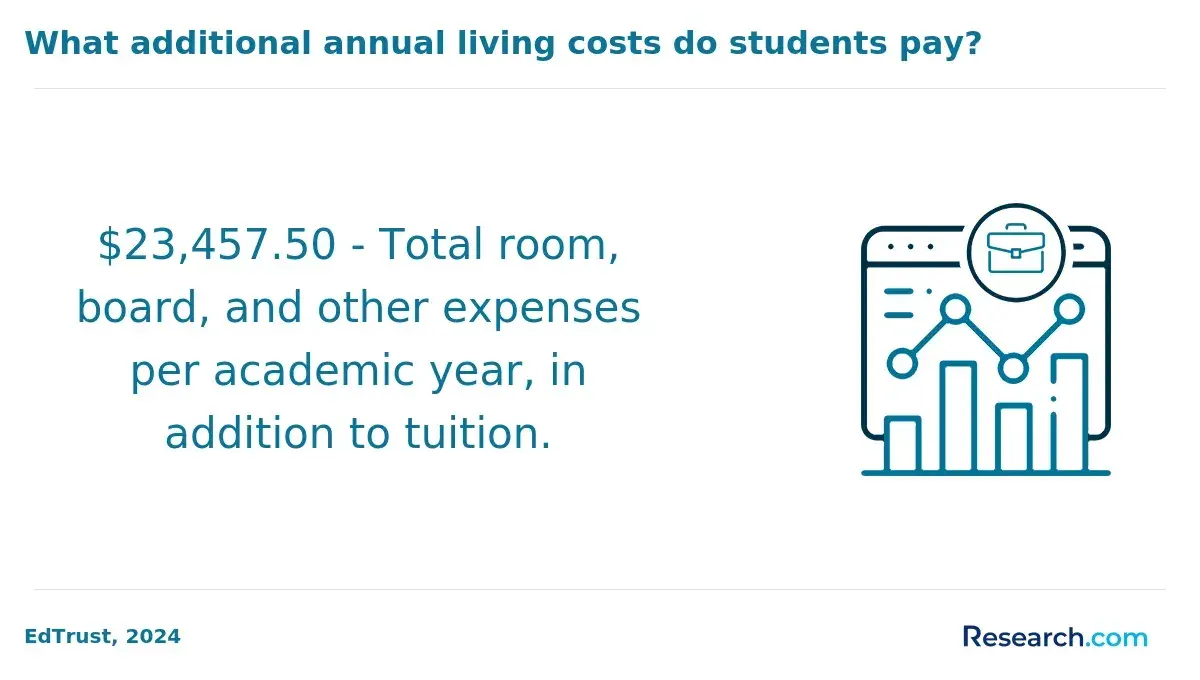
Hybrid PharmD costs vary widely by institution, residency status, program length, and travel requirements. Tuition is only one part of the total cost. Students should also budget for professional fees, technology, books or digital platforms, background checks, immunizations, drug screening, liability insurance, certification fees, campus immersion travel, lodging, and transportation to rotation sites.
For federal borrowing, graduate and professional students are generally limited to $20,500 per academic year in Direct Unsubsidized Loans, with Graduate PLUS Loans potentially available up to the school-certified cost of attendance for eligible borrowers. This matters because PharmD programs can exceed the annual unsubsidized limit, so students may need scholarships, savings, employer support, family support, assistantships, or additional federal credit-based borrowing.
The cost categories below are the ones hybrid students most often underestimate. Review them with financial aid before comparing programs by tuition alone.
- Tuition charged per credit, semester, term, or professional year.
- Mandatory university, pharmacy school, technology, simulation, laboratory, and professional program fees.
- Travel, lodging, meals, and lost wages during required campus immersions.
- Transportation, parking, professional attire, and relocation costs for IPPE and APPE rotations.
- Licensure-related costs, including exam fees, state applications, background checks, intern registration, and law exam preparation.
- Interest accrual on unsubsidized and PLUS loans while enrolled.
Students comparing PharmD with other health-sector paths should compare total cost, not just tuition sticker price. For example, someone more interested in operations, compliance, or health services leadership than direct medication management may want to compare the cost and career fit of an online healthcare administration degree before committing to a licensure-focused doctorate.
A useful affordability test is to calculate your likely debt at graduation and compare it with realistic entry-level pharmacist roles in your preferred location. Avoid assuming that the highest advertised salary will apply to your first job, your state, or your practice setting.
What pharmacist career paths, practice settings, and advanced roles are available after a hybrid PharmD?
A hybrid PharmD can prepare graduates for the same pharmacist career paths as a campus PharmD when the program is accredited and licensure requirements are met. Pharmacists dispense medications, verify prescriptions, monitor therapy, counsel patients, provide immunizations, manage medication safety, collaborate with prescribers, and help patients use medicines effectively.
Practice settings have become more diverse. Community pharmacies remain important, but many PharmD graduates also pursue hospitals, ambulatory care clinics, managed care organizations, long-term care, specialty pharmacy, pharmaceutical industry, public health, academia, informatics, pharmacogenomics, and regulatory roles. Some roles require residency training, fellowships, board certification, or additional experience after the PharmD.
The table below summarizes common career paths and the type of preparation students should look for while comparing hybrid programs. This helps connect program features to real employment goals.
| Career path | Common responsibilities | Helpful preparation during PharmD |
| Community pharmacist | Prescription verification, patient counseling, immunizations, medication therapy support, workflow supervision | Strong self-care therapeutics, law, communication, and community IPPE/APPE experiences |
| Hospital or health-system pharmacist | Medication order review, clinical monitoring, sterile products oversight, interdisciplinary rounds | Institutional rotations, infectious disease, critical care exposure, and residency preparation |
| Ambulatory care pharmacist | Chronic disease management, medication optimization, patient education, collaborative practice support | APPEs in clinics, motivational interviewing, diabetes, cardiology, and anticoagulation training |
| Managed care pharmacist | Formulary management, utilization review, outcomes analysis, prior authorization policy | Managed care electives, population health, pharmacoeconomics, and data literacy |
| Industry or regulatory pharmacist | Medical affairs, drug safety, regulatory documentation, clinical research, market access | Industry electives, research experience, fellowship awareness, and scientific communication |
PharmD graduates who enjoy leadership more than direct practice may later move into management, compliance, quality improvement, or operations. In those cases, additional training in healthcare administration can make sense, especially for pharmacists aiming for director-level or system-level roles.
The best career fit depends on your preferred daily work. If you want direct patient counseling and medication decisions, PharmD is aligned. If you prefer staffing models, budgeting, policy, or organizational strategy, a non-licensure healthcare management path may be more efficient.
What salary ranges and earning potential can graduates of hybrid PharmD programs expect?
Salary potential depends on licensure, location, practice setting, residency or fellowship training, shift differentials, employer type, and experience. A hybrid PharmD does not create a separate salary category; employers typically care whether the applicant has a PharmD from an accredited program, an active license, relevant rotations, and the skills required for the role.
The U.S. Bureau of Labor Statistics reported a May 2024 median annual wage of $137,480 for pharmacists. This figure is useful as a national benchmark, but it should not be treated as a starting-salary promise. New graduates may enter below or above the median depending on geography, workplace demand, residency completion, specialty training, and willingness to work evenings, weekends, or high-need locations.
The table below gives a practical salary-context framework rather than guaranteed earnings. Use it to think through how different pharmacist paths can affect early and long-term compensation.
| Factor | How it can affect earning potential | Decision point for students |
| Practice setting | Community, hospital, managed care, industry, and specialty pharmacy may use different pay structures | Choose rotations that match the setting where you want to compete |
| Location | Regional demand, cost of living, and state labor markets influence offers | Compare salary with rent, taxes, commuting, and loan payments |
| Residency or fellowship | Postgraduate training may support access to clinical, academic, industry, or specialized roles | Ask whether the hybrid program provides residency advising and competitive APPE options |
| Work schedule | Evening, overnight, weekend, or high-need assignments may include differentials | Decide whether higher pay is worth the lifestyle trade-off |
| Leadership responsibility | Management roles can add responsibility for staffing, compliance, budgets, and quality metrics | Develop communication, data, and operations skills during school |
Job outlook is also part of the earning conversation. BLS projections published for 2023 to 2033 show pharmacist employment growing 5%, which is about as fast as the average for all occupations. For students, that means program choice should emphasize licensure readiness, practical experience, adaptability, and networking rather than assuming a degree alone will make the job search easy.
How can prospective students compare and choose the best hybrid PharmD program for their goals?
The best hybrid PharmD program is the one that combines accreditation, licensure alignment, strong experiential placements, credible exam preparation, manageable cost, and a schedule you can actually complete. Rankings can be helpful, but they should not replace direct verification of state eligibility, rotation logistics, and student support.
Use a decision process that starts with licensure and ends with fit. This is especially important for hybrid learners because distance from campus can complicate labs, advising, and clinical placement if the school does not have a mature support system.
- Start with ACPE status and institutional accreditation before reviewing any other feature.
- Identify the state where you plan to become licensed and ask the program how it supports that state's requirements.
- Request details on campus immersion frequency, locations, travel expectations, and required skills assessments.
- Ask who is responsible for finding IPPE and APPE placements and whether placements are available near your home.
- Review board-exam support, including cumulative testing, calculations remediation, law preparation, and faculty advising.
- Compare total cost of attendance, not just tuition, and include travel, fees, interest, and lost wages.
- Ask about career support for your target setting, such as residency advising, industry fellowships, managed care electives, or community pharmacy leadership.
- Speak with current students or recent graduates about workload, communication, faculty access, and rotation placement quality.
The table below turns common red flags into better alternatives. It is designed to help you avoid expensive mistakes before you commit.
| Red flag | Why it is risky | Better alternative |
| The program is unclear about ACPE status | Licensure eligibility may be uncertain | Choose a program with documented accreditation status and board-recognized eligibility |
| Admissions focuses only on convenience | Hybrid flexibility does not replace rigorous clinical preparation | Ask for details on labs, simulations, assessment, and rotations |
| Rotation placement is mostly left to the student | Students may struggle to secure approved sites on time | Prefer programs with dedicated experiential education staff and established site agreements |
| Cost estimates exclude travel and fees | The real cost may be much higher than expected | Build a full budget that includes immersion, rotation, and licensure expenses |
| The program does not match your career goal | Some roles require specific rotations, residency preparation, or networking | Choose a program with electives and APPEs aligned with your intended practice setting |
If you are comparing pharmacy with other healthcare career paths, consider whether you want medication-focused licensure or another advanced clinical route. For example, a registered nurse weighing graduate options may find that a BSN to MSN program aligns better with nursing leadership, advanced practice nursing, or care coordination than a PharmD.
A final rule of thumb: do not choose the cheapest, fastest, or most flexible program unless it also satisfies licensure requirements and supports your target career. In pharmacy education, the best value is the program that helps you become eligible, prepared, and competitive without taking on unnecessary risk.
Other Things You Should Know About PharmD
In 2027, leading hybrid PharmD programs with strong licensure preparation include the University of Southern California, St. John Fisher College, and the University of Florida. These programs offer comprehensive curricula that blend online coursework with in-person clinical experiences to effectively prepare students for the licensure examination.
Yes, they can qualify if they graduate from an accredited PharmD program and meet residency application requirements. Competitiveness depends on grades, rotations, recommendations, leadership, research, work experience, and interview performance.
Many PharmD programs no longer require the PCAT, but policies vary by school. Applicants should check each program's current admissions page and ask whether submitting a score can strengthen an application.
Some programs consider internationally educated pharmacists, but requirements vary. Applicants may need transcript evaluation, English proficiency documentation, prerequisite review, visa guidance, and state-specific licensure advising.
References
- PharmD Admissions Requirements: Understanding Prerequisite Courses and Planning Ahead https://blog.accepted.com/pharmd-prerequisite/
- Tuition & Aid https://www.presby.edu/graduate-programs/pharmacy/admissions/tuition-aid/
- Do All Pharmacy Programs Offer Experiential Education? https://www.belmont.edu/stories/articles/2024/pharmacy-program-experiential-education.html
- Doctor of Pharmacy - On Campus & Online Hybrid https://www.su.edu/admissions/graduate-students/pharmacy-application-information/doctor-of-pharmacy/
- Many Paths of Pharmacy - The Happy PharmD https://thehappypharmd.com/ultimate-guide-to-pharmacy-career-opportunities/
- Pharm.D. Careers https://www.regis.edu/academics/colleges-and-schools/rueckert-hartman/pharmacy/pharmd-careers
- Hybrid PharmD Program | WCU https://westcoastuniversity.edu/programs/pharmd
- Traditional and Non-Traditional Career Pathways in Pharmacy | University of Health Sciences and Pharmacy in St. Louis https://www.uhsp.edu/traditional-and-non-traditional-career-pathways-in-pharmacy/
- Non-Traditional Doctor of Pharmacy Program https://pharmacy.howard.edu/academic-programs/non-traditional-doctor-pharmacy-ntdp-program
- Unlocking the Perfect Fit: Your Ultimate Guide to Selecting the Ideal Pharmacy School https://pharmacyforme.org/2024/02/29/unlocking-the-perfect-fit-your-ultimate-guide-to-selecting-the-ideal-pharmacy-school