2027 Online PharmD Programs for Students Who Want Flexible Clinical Scheduling

Co-Founder and Chief Data Scientist
Choosing an online PharmD program is really a licensure decision, not just a class-format decision. The U.S. Bureau of Labor Statistics reported a $137,480 median annual wage for pharmacists in May 2024, but reaching that role requires accredited coursework, supervised rotations, exams, and state approval. This guide is for students who need flexibility without risking licensure eligibility. You will learn how online PharmD formats work, what "flexible clinical scheduling" actually means, how costs and timelines compare, and how to choose a program that fits your career plans.
Key Things You Should Know
- Online PharmD programs can deliver many lectures remotely, but every licensure-track student still completes in-person Introductory Pharmacy Practice Experiences and Advanced Pharmacy Practice Experiences.
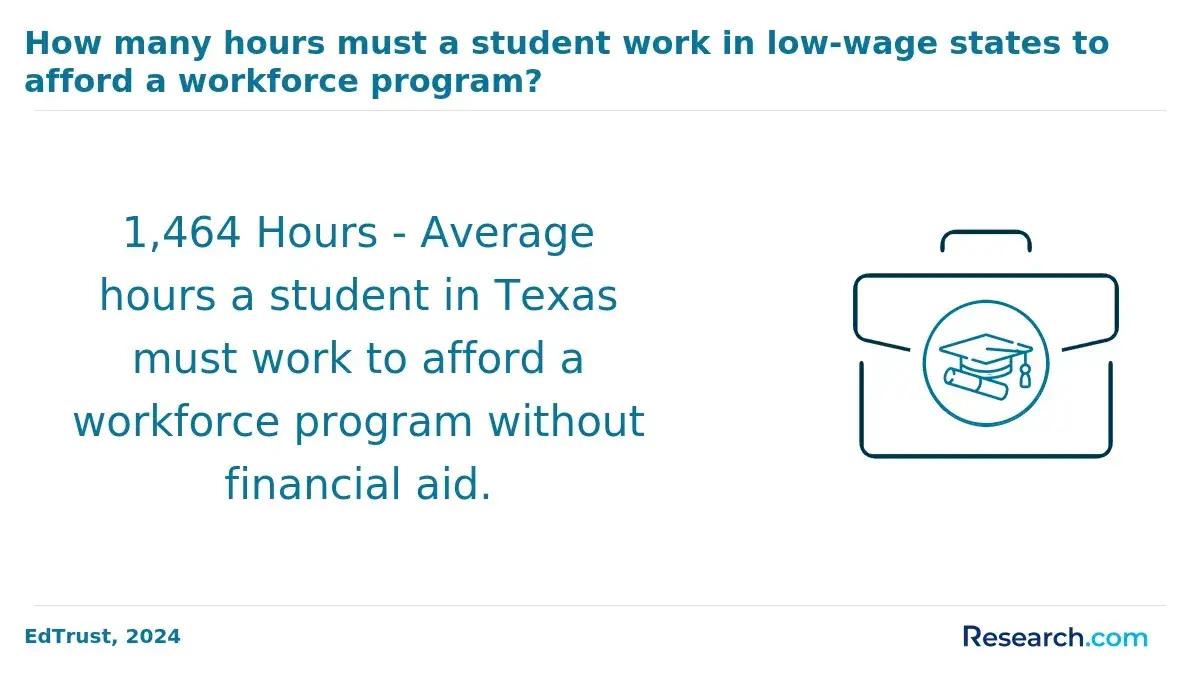
- ACPE-accredited PharmD programs typically include at least 300 Introductory Pharmacy Practice Experience hours and at least 1,440 Advanced Pharmacy Practice Experience hours before graduation.
- The May 2024 median annual wage for U.S. pharmacists was $137,480, but outcomes vary by state, practice setting, residency training, employer, and local demand.
What are online PharmD programs with flexible clinical scheduling?
Online PharmD programs with flexible clinical scheduling are Doctor of Pharmacy programs that combine remote academic coursework with in-person pharmacy practice experiences. They are designed for students who need more control over where and when they study, often because they work, have family responsibilities, live far from campus, or want to complete rotations closer to home.
The key point is that "online" does not mean "no campus visits" or "no clinical hours." A PharmD is a professional licensure degree, so students must demonstrate patient-care skills in real pharmacy settings. Flexible scheduling may mean evening online classes, asynchronous recorded lectures, regional rotation networks, early notice of rotation calendars, or help identifying local clinical sites. It does not mean students can skip required competencies or design their own rotations without school and preceptor approval.
These programs usually fit students who are comfortable learning independently but still want a clinical healthcare career centered on medication therapy, patient counseling, drug safety, and interprofessional care. They are less ideal for students who want a fully remote credential, cannot travel for labs or skills assessments, or need a program that guarantees all rotations within a few miles of home.
Students comparing healthcare pathways should also think about the role they actually want. A registered nurse seeking a broader nursing credential may be better served by an online RN to BSN program, while a student who wants prescribing-support expertise, medication management, and pharmacist licensure should focus on ACPE-accredited PharmD options.
Common flexible PharmD features include several moving parts. Review these features carefully because schools use similar marketing language but may offer very different levels of scheduling support.
- Remote didactic coursework delivered through live sessions, recorded lectures, learning modules, discussion boards, exams, and virtual case activities.
- Required campus immersions for labs, simulations, objective structured clinical examinations, immunization training, compounding practice, or orientation.
- Clinical placement support that may include school-arranged sites, student-suggested sites, or regional placement coordinators.
- Rotation calendars that may offer multiple assignment windows but still require full-time availability during many APPE blocks.
- Technology-enabled learning such as virtual patient cases, medication safety software, pharmacogenomics tools, and electronic health record simulations.
Which accreditation and licensure rules apply to online PharmD programs?
Accreditation is the first non-negotiable requirement. In the United States, the Accreditation Council for Pharmacy Education is the recognized accreditor for professional PharmD programs. A program's delivery format can be online, hybrid, or campus-based, but the professional degree still needs the appropriate ACPE status for graduates to move toward pharmacist licensure.
Applicants should understand the difference between institutional accreditation and professional accreditation. Institutional accreditation applies to the college or university as a whole. ACPE accreditation applies specifically to the PharmD program that prepares students for pharmacist licensure. Both matter, but ACPE status is the critical program-level check for PharmD students.
The table below summarizes the major regulatory checkpoints. Use it to separate school marketing claims from licensure realities before you apply.
| Requirement area | What it means for online PharmD students | Why it matters |
| ACPE status | The PharmD program should hold an appropriate ACPE accreditation status, such as accredited, candidate, or precandidate status depending on program stage. | State boards generally rely on ACPE-recognized professional education when evaluating licensure eligibility. |
| State board rules | Licensure is granted by state boards of pharmacy, and requirements can vary by jurisdiction. | A program that works for one state may require extra verification if you plan to practice in another state. |
| Experiential hours | Students complete supervised pharmacy practice experiences in approved settings with qualified preceptors. | Clinical hours are required to prove practice readiness and may affect exam eligibility. |
| NAPLEX | Graduates typically take the North American Pharmacist Licensure Examination. | This exam assesses entry-level pharmacy practice competence. |
| MPJE or state law exam | Many states require the Multistate Pharmacy Jurisprudence Examination or a state-specific law exam. | Pharmacists must understand the legal rules for the state where they practice. |
Before enrolling, contact the pharmacy board in the state where you plan to seek licensure. Ask whether the specific program, delivery format, experiential model, and expected graduation date meet that state's requirements. This is especially important if you live in one state, attend an online program based in another, and hope to complete rotations in a third state.
How do online and campus PharmD formats compare?
Online and campus PharmD programs lead toward the same professional credential when they are properly accredited, but the student experience can be very different. The better choice depends on your need for structure, your proximity to approved sites, your ability to travel, and your comfort with remote learning.
The table below compares the formats from a decision-making perspective. It focuses on the practical trade-offs that affect time, cost, learning style, and clinical scheduling.
| Factor | Online or hybrid PharmD | Campus PharmD | Best fit |
| Class schedule | Often includes asynchronous lectures, live online sessions, and virtual group work. | Usually follows a more fixed weekly campus schedule. | Online can fit students who need study flexibility; campus can fit students who want routine. |
| Labs and skills checks | May require short campus immersions or regional skills sessions. | Usually completed on campus throughout the term. | Campus is simpler if you live nearby; online is better if travel is occasional and planned. |
| Clinical rotations | May use local or regional placements when available, but assignments still depend on approved sites. | Often tied to established local health systems and community pharmacies. | Online works best for students in areas with viable placement options. |
| Peer interaction | Requires intentional networking through virtual teams, residencies preparation, and campus visits. | More spontaneous interaction with classmates, faculty, and student organizations. | Campus may help students who want daily face-to-face connection. |
| Hidden costs | May include travel for immersions, lodging, technology, and rotation commuting. | May include relocation, parking, campus fees, and higher local living costs. | The lower-tuition option is not always the lower-total-cost option. |
A common mistake is assuming online programs are automatically easier. PharmD coursework is academically demanding in either format, and clinical rotations may require full-time weekday availability. If you need maximum flexibility because you are already working in healthcare, compare academic calendars and rotation blocks before assuming you can keep the same work schedule.
If you are deciding between pharmacy and nursing advancement, compare the daily work before choosing a degree. Students focused on bedside care coordination or nursing leadership may want to review best RN to BSN programs instead of committing to the longer pharmacist licensure pathway.
What prerequisite courses do PharmD applicants need?
PharmD prerequisite requirements vary by school, but most programs expect a strong foundation in chemistry, biology, mathematics, and communication. Some applicants complete two to three years of undergraduate prerequisites before entering a professional PharmD program, while others enter through early-assurance or integrated pathways.
Prerequisites matter because they signal whether you are ready for pharmacology, medicinal chemistry, pathophysiology, pharmacokinetics, and patient-care coursework. Schools may require minimum grades in science courses, recency limits for older coursework, and labs completed in person or through approved formats.
Most applicants should expect some combination of the following prerequisite areas. Check each school's official prerequisite grid because course titles and credit-hour rules can differ.
- General chemistry with laboratory, usually covering atomic structure, bonding, stoichiometry, thermodynamics, and equilibrium.
- Organic chemistry with laboratory, often required because it supports medicinal chemistry and drug mechanism coursework.
- General biology with laboratory, including cell biology, genetics, and organism-level concepts.
- Human anatomy and physiology, sometimes offered as a two-course sequence with labs.
- Microbiology, which helps prepare students for infectious disease pharmacotherapy and antimicrobial stewardship.
- Calculus or college-level mathematics, depending on the program's quantitative expectations.
- Statistics, used for interpreting clinical trials, evidence-based medicine, and population health data.
- English composition, public speaking, or communication courses, because pharmacists counsel patients and collaborate with care teams.
- Social science or humanities electives, often used to build cultural awareness, ethics, and patient-centered communication skills.
Students who are missing prerequisites should ask whether the school accepts community college courses, online labs, CLEP credit, AP credit, or transfer credit. Do not assume all credits will transfer, and do not take extra courses before confirming equivalency with the PharmD admissions office.
What admission requirements do PharmD programs usually require?
PharmD admissions requirements are designed to assess academic readiness, communication skills, ethical judgment, and fit for patient-care work. Requirements vary, but most schools evaluate more than GPA alone because pharmacy practice requires both scientific reasoning and interpersonal judgment.
The PCAT has become less central than it once was, and many schools no longer require it. That shift does not mean admissions are casual. Programs may place more weight on prerequisite grades, interviews, healthcare exposure, essays, and evidence that the applicant understands the profession.
Applicants should prepare for the following common requirements. Use this list as a planning checklist before you request transcripts or submit applications.
- Complete required prerequisite coursework with the minimum grade and GPA standards set by each program.
- Submit official transcripts from every college or university attended, including dual-enrollment and transfer institutions.
- Prepare a personal statement that explains why pharmacy fits your goals and how you understand patient-care responsibilities.
- Request recommendation letters from science faculty, pharmacists, supervisors, or healthcare professionals who can speak to your readiness.
- Document pharmacy, healthcare, research, service, or leadership experience when the application requests it.
- Complete an interview, which may include behavioral questions, ethical scenarios, teamwork exercises, or multiple mini-interview stations.
- Meet technical standards related to communication, observation, motor skills, professionalism, and patient safety.
- Complete background checks, immunization documentation, drug screening, CPR certification, or other onboarding items before clinical placements.
A strong application connects your experience to the realities of pharmacy practice. If your background is mostly academic, try to shadow pharmacists in more than one setting, such as community pharmacy, hospital pharmacy, ambulatory care, or managed care. This helps you answer interview questions with specific examples instead of broad claims about wanting to help people.
How are online PharmD courses and clinical rotations structured?
Online PharmD coursework usually starts with foundational biomedical and pharmaceutical sciences, then moves into pharmacotherapy, patient assessment, drug information, public health, and practice management. Students also complete skills labs and clinical experiences that build from observation and introductory practice to more advanced patient-care responsibilities.
Clinical scheduling is the part applicants should examine most closely. Online lectures may be flexible, but rotations are scheduled around site availability, preceptor capacity, patient-care needs, and accreditation standards. During advanced rotations, many students should expect full-time clinical blocks rather than a part-time evening schedule.
The table below shows a typical PharmD structure. Exact sequencing varies, but the progression helps you understand when flexibility is most likely and when your schedule may become less negotiable.
| Program phase | Typical learning activities | Flexibility level | What to confirm with the school |
| Early didactic phase | Biomedical sciences, calculations, pharmaceutics, communication, and introductory practice skills. | Often most flexible if lectures are asynchronous or recorded. | Ask how many live sessions, proctored exams, and campus visits are required. |
| IPPE phase | Introductory community, institutional, and patient-care experiences. | Moderate flexibility, depending on site location and required hours. | Ask whether placements are school-arranged or student-identified. |
| Advanced didactic phase | Therapeutics, pharmacokinetics, evidence-based medicine, interprofessional care, and electives. | Varies by course design and group-work expectations. | Ask how team projects and assessments are scheduled across time zones. |
| APPE phase | Full-time advanced rotations in settings such as hospital, community, ambulatory care, internal medicine, and electives. | Usually least flexible because rotations follow practice-site schedules. | Ask how far you may need to travel and whether evening or weekend rotations are possible. |
Technology is changing how PharmD students learn, but it is not replacing clinical judgment. Many programs now use virtual simulations, electronic health record training, drug-interaction databases, pharmacogenomics cases, and AI-supported literature searching. These tools can help students practice decision-making, but students still need supervised patient-care experience to become practice-ready.
When evaluating flexible clinical scheduling, ask direct questions before enrolling. These questions are more useful than relying on general claims that a program is "designed for working adults."
- How many campus visits are required, how long do they last, and how far in advance are dates published?
- Can students complete IPPE and APPE rotations near their home area, or only in regions where the school already has contracts?
- Who is responsible for finding and approving rotation sites: the school, the student, or both?
- What happens if a local preceptor cancels, a site loses availability, or a student relocates?
- Are APPE rotations full time, and can students work during those blocks without violating program expectations?
- Does the school have placement experience in the state where you plan to live during rotations?
How long does a PharmD program take and what does it cost?
A traditional PharmD program often takes four professional years after prerequisites, although timelines vary by pathway. Some students enter after two or more years of undergraduate prerequisites, some complete a bachelor's degree first, and others enroll in accelerated or year-round formats that compress the professional phase.
Accelerated pathways can reduce time away from the workforce, but they can also limit breaks, increase academic intensity, and make work-life balance harder. If speed is a priority, compare accelerated PharmD programs carefully against standard online or hybrid formats, especially if you need predictable clinical scheduling.
Cost depends on tuition, professional fees, campus travel, rotation travel, books, exam preparation, licensing fees, health insurance, immunizations, background checks, and lost work time during rotations. A lower tuition rate can be offset by repeated travel or limited ability to work during APPEs.
Federal borrowing costs are also part of the affordability calculation. For loans first disbursed in the 2025-2026 award year, graduate and professional students face the following fixed federal interest rates:
- Direct Unsubsidized Loans for graduate and professional students: 7.94%
- Direct PLUS Loans for graduate and professional students: 8.94%
Those rates matter because PharmD students often borrow for several years. Even if two programs have similar tuition, the one that helps you reduce borrowing, keep paid pharmacy work during early semesters, or avoid relocation may produce a better financial fit.
The table below summarizes cost drivers that online PharmD applicants often overlook. Use it to build a total-cost estimate instead of comparing tuition alone.
| Cost category | Why it matters | What to ask |
| Tuition and professional fees | Professional programs often charge program-specific fees beyond base tuition. | Is tuition locked by cohort, charged by credit, or subject to annual increases? |
| Campus immersion travel | Online students may need flights, lodging, meals, and time away from work. | How many visits are required from enrollment through graduation? |
| Rotation travel and housing | APPE placements may require commuting or temporary relocation. | What is the maximum expected distance for rotations? |
| Licensure and exam costs | Graduates typically budget for NAPLEX, law exams, applications, and score transfers. | Which fees are paid before graduation and which are paid after? |
| Lost earnings | Full-time rotations can reduce work availability. | How many months of full-time clinical scheduling should students expect? |
Which careers can you pursue with a PharmD degree?
A PharmD prepares graduates for pharmacist licensure and medication-focused roles across healthcare. The most familiar role is community pharmacist, but PharmD graduates may also work in hospitals, ambulatory clinics, managed care organizations, pharmaceutical companies, public health agencies, academia, informatics, and research environments.
Career options depend on licensure, residency training, fellowships, board certification, employer needs, and state scope-of-practice rules. Students aiming for clinical specialties should understand that a PharmD alone may not be enough for the most competitive roles; postgraduate residency training is often preferred or required in hospitals and specialized clinical practice.
The table below outlines common PharmD-related career directions. It is not a guarantee of placement, but it can help you match program features to career goals.
| Career path | Typical responsibilities | Extra preparation that may help |
| Community pharmacist | Dispense medications, counsel patients, administer vaccines, identify drug interactions, and coordinate with prescribers. | Community IPPE/APPE experience, immunization certification, strong patient communication skills. |
| Hospital pharmacist | Review medication orders, support inpatient therapy, monitor safety, and work with physicians and nurses. | Hospital rotations, PGY1 residency, sterile compounding knowledge. |
| Ambulatory care pharmacist | Manage chronic disease medication therapy in outpatient clinics and collaborative care settings. | Ambulatory APPEs, residency training, patient assessment skills. |
| Managed care pharmacist | Evaluate formularies, prior authorizations, medication utilization, and population-level drug spending. | Managed care electives, data analysis, health economics exposure. |
| Industry or regulatory affairs pharmacist | Work in medical information, pharmacovigilance, drug development, regulatory documentation, or clinical operations. | Fellowship, research experience, writing skills, industry APPEs. |
| Pharmacy informatics specialist | Support medication-use technology, electronic health records, clinical decision support, and safety alerts. | Informatics electives, health IT experience, data literacy. |
Pharmacy may not be the best path if your main goal is managing healthcare operations rather than practicing as a medication expert. In that case, an accelerated healthcare management degree online may align more directly with leadership, administration, finance, or policy roles.
Current workforce trends make adaptability important. Pharmacists are increasingly involved in immunization, medication therapy management, chronic disease support, pharmacogenomics, specialty pharmacy, and technology-driven medication safety. At the same time, automation and centralized dispensing can change staffing patterns in some retail settings. Students should choose programs that build clinical reasoning, communication, data literacy, and interprofessional teamwork rather than focusing only on dispensing tasks.
What salary can PharmD graduates expect in the United States?
The median annual wage for U.S. pharmacists was $137,480 in May 2024, according to the U.S. Bureau of Labor Statistics. This figure is useful as a national benchmark, but it should not be read as a starting salary promise because compensation varies by state, employer, practice setting, shift schedule, residency training, and years of experience.
Salary expectations should be evaluated alongside debt, program cost, and your target practice area. A student who borrows heavily for a high-cost program may need a different repayment strategy than a student who attends an in-state public program, receives scholarships, or continues earning income during early online coursework.
The table below explains how different employment settings can shape compensation and career trade-offs. It avoids ranking paths by pay alone because schedule, advancement, clinical scope, and residency expectations can be just as important.
| Setting | Salary context | Decision factor |
| Chain or grocery community pharmacy | Often offers broad availability of positions and shift-based compensation structures. | Consider workload, staffing model, patient volume, and schedule expectations. |
| Hospital or health system | May value residency training for clinical roles and offer advancement into specialty practice. | Consider whether you are willing to complete postgraduate residency training. |
| Ambulatory clinic | Compensation may reflect clinical responsibility, collaborative practice authority, and health-system structure. | Consider state scope-of-practice rules and chronic disease management opportunities. |
| Managed care | Roles may reward analytical skills, formulary knowledge, and utilization management experience. | Consider whether you prefer population-level medication strategy over direct dispensing. |
| Industry | Compensation can vary widely by function, geography, and fellowship or experience level. | Consider networking, fellowship competitiveness, and willingness to relocate. |
To estimate your own return on investment, compare expected total debt at graduation with conservative salary scenarios in the state and setting where you plan to work. Also factor in residency pay if your target role usually requires postgraduate training, because residency can delay higher full-time earnings while improving access to clinical positions.
How do you choose a reputable online PharmD program?
Choosing a reputable online PharmD program starts with licensure fit, not convenience. A flexible program is only valuable if it can get you to the credential you need, in the state where you want to practice, with clinical experiences that support your career goals.
Use a structured review process before applying. These steps help you avoid the most common mistakes students make when comparing online professional healthcare programs.
- Verify the PharmD program's ACPE status directly through official accreditation information, not only through advertising copy.
- Contact the state board of pharmacy where you plan to seek licensure and confirm whether the program's format and experiential model satisfy board expectations.
- Request a written list of required campus visits, including timing, duration, location, and estimated travel obligations.
- Ask how IPPE and APPE placements are arranged, especially if you live outside the school's home region.
- Review NAPLEX preparation support, graduation requirements, remediation policies, and progression standards.
- Compare total cost of attendance, not just tuition, including travel, rotation housing, fees, loan interest, and lost work time.
- Ask about career support for your target setting, such as residency advising, industry fellowship preparation, or community pharmacy placement.
- Speak with current students or recent graduates about workload, faculty responsiveness, clinical placement reliability, and technology quality.
Watch for red flags. Be cautious if a school cannot clearly explain rotation placement responsibility, avoids questions about licensure outside its home state, advertises flexibility without disclosing campus requirements, or implies that salary outcomes are assured. Also be careful with programs that are not transparent about accreditation stage, student progression, or clinical site availability.
The best program is not always the fastest, cheapest, or most heavily marketed. It is the one that combines valid accreditation, realistic clinical scheduling, strong student support, transparent costs, and alignment with the pharmacy setting you actually want to enter.
Other Things You Should Know About PharmD
Some students work during early didactic semesters, especially if lectures are asynchronous. Full-time work becomes much harder during labs, exams, IPPEs, and APPEs, and some programs discourage or restrict outside work during intensive clinical blocks.
Usually yes. Expect a reliable computer, webcam, microphone, high-speed internet, exam-proctoring software, and access to learning platforms. Some programs also require specific devices, privacy standards, or technology checks before online exams.
International graduates must complete an accredited PharmD program and pass the Foreign Pharmacy Graduate Equivalency Examination (FPGEE), Test of English as a Foreign Language (TOEFL), and North American Pharmacist Licensure Examination (NAPLEX) to become licensed in the U.S.
A residency is not required for every pharmacist job, but it is often preferred or expected for many hospital, ambulatory care, specialty, and academic roles. Community pharmacy roles may not require residency, though additional certifications can still be useful.
References
- Pharmacist Salary in the U.S. in 2026 I How Well They Earn https://academically.com/blogs/pharmacist-salary-in-the-united-states/
- Earn Your PharmD with Flexibility: Explore the Hybrid Program at West Coast University | West Coast University https://westcoastuniversity.edu/blog/earn-your-pharmd-with-flexibility-explore-the-hybrid-program-at-west-coast-university
- What Jobs Can You Get With a Health Science Degree? https://www.belmont.edu/stories/articles/2024/career-paths-for-pharmd-degree.html
- Digital Pharmacy Accreditation | National Association of Boards of Pharmacy https://nabp.pharmacy/programs/accreditations/digital-pharmacy/
- Admission Requirements https://www.ualberta.ca/en/pharmacy/programs/pharmd-doctor-of-pharmacy/admission-requirements.html
- PharmCAS https://www.pharmcas.org/school-directory/pharmd-directory
- How to Choose the Best Pharmacy School | XULA COP https://www.xula.edu/collegeofpharmacy/choose-the-best-pharmacy-school.html
- Careers in Pharmacy https://pharmacyforme.org/careers-in-pharmacy
- Online PharmD Pathway https://pharmacy.howard.edu/academic-programs/online-pharmd-pathway
- Best Online PharmD Programs https://pharmddegree.com/choosing/best-online-pharmd-programs