2027 Best Online PharmD Programs for Students Interested in Rural Pharmacy Practice

Co-Founder and Chief Data Scientist
Choosing an online PharmD program is harder when your goal is rural pharmacy practice, because the best option must combine distance learning with hands-on care in underserved communities. The latest U.S. Bureau of Labor Statistics outlook projects 5% growth for pharmacists from 2023 to 2033, with openings driven partly by healthcare access needs.
This guide is for students comparing flexible PharmD pathways, rural rotations, licensure requirements, costs, and career outcomes so they can choose a program that fits both their location and long-term practice goals.
Key Things You Should Know
- ACPE-accredited online PharmD programs with experiential rotations in rural health settings improve placement outcomes; verify accreditation status and confirm the program offers dedicated rural internship placements before enrolling.
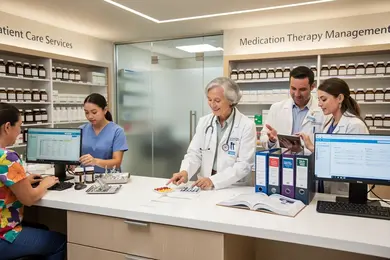
- Rural pharmacy positions require clinical skills in medication therapy management and immunizations—competencies best developed through hands-on rotations in actual pharmacy settings rather than virtual simulations alone.
- Graduates targeting rural practice should expect starting salaries in the $120,000–$135,000 range; programs with strong rural employer networks and loan forgiveness guidance significantly improve career ROI and job satisfaction.
What is an online PharmD program focused on rural pharmacy practice?
An online PharmD program is a Doctor of Pharmacy pathway that delivers some or most classroom coursework through distance learning while still requiring in-person clinical training. A rural pharmacy practice focus means the program helps students prepare for settings where pharmacists often serve as highly accessible medication experts, immunizers, chronic disease coaches, care coordinators, and public health partners.
The key point is that "online" does not mean "no campus or clinical attendance." PharmD students must complete supervised experiences in real pharmacies and healthcare sites. For rural-minded students, the best programs make it realistic to complete approved rotations in community pharmacies, critical access hospitals, federally qualified health centers, tribal health settings, or regional clinics near underserved populations.
Students comparing a pharmacy degree online should look beyond convenience. The most important question is whether the program's distance format, experiential site network, and state authorization match where the student plans to train and eventually seek licensure.
This table summarizes the main types of students who may benefit from an online PharmD with rural-practice preparation. It can help you decide whether this format fits your situation before you compare individual schools.
| Student profile | Why the format may fit | What to verify before applying |
| Student living in or near a rural area | Distance coursework may reduce relocation while allowing local experiential learning when approved sites are available. | Whether the school can approve IPPE and APPE sites within commuting distance. |
| Working pharmacy technician or intern | Online didactic courses may offer more flexibility than daily campus attendance. | Whether the schedule allows employment and whether labs require travel. |
| Student committed to underserved care | Rural tracks can build skills in access barriers, population health, telepharmacy, and chronic disease management. | Whether underserved-care experiences are required, elective, or dependent on site availability. |
| Student seeking licensure in a specific state | An online pathway may let the student remain close to the state where they intend to practice. | State board rules, intern hour recognition, and the school's state authorization status. |
How do online PharmD programs prepare pharmacists for rural and underserved communities?
Rural pharmacy preparation is less about one single course and more about a set of competencies. Graduates need to be comfortable practicing with fewer nearby specialists, longer patient travel times, limited broadband access, medication affordability concerns, and higher reliance on the local pharmacist as a trusted healthcare contact.
Strong programs build those competencies through a mix of remote classroom learning, simulation, local clinical placements, and faculty-guided reflection. Students should expect training that connects medication therapy to practical access issues, not just textbook pharmacology.
When reviewing a program, look for the following rural-practice preparation features because they directly affect readiness for underserved settings:
- Community pharmacy care models, including immunization services, medication synchronization, adherence counseling, and medication therapy management.
- Ambulatory care and chronic disease management experiences involving diabetes, hypertension, asthma, anticoagulation, and behavioral health medications.
- Telepharmacy, remote patient monitoring, and electronic health record communication skills that help pharmacists support patients who live far from clinics.
- Public health training focused on vaccine access, opioid harm reduction, medication safety, emergency preparedness, and health literacy.
- Interprofessional education with nursing, medicine, social work, and public health students so future pharmacists can function in small rural care teams.
- Cultural humility and social determinants of health training for work with agricultural communities, tribal communities, older adults, and medically underserved populations.
A common mistake is assuming that any community pharmacy rotation is automatically rural-practice training. A stronger experience should expose students to access constraints, limited provider availability, collaborative care, and the business realities of maintaining pharmacy services in low-density regions.
Which online PharmD programs offer the strongest rural pharmacy practice training?
There is no single official national ranking of "best online PharmD programs for rural pharmacy practice." A more reliable approach is to compare ACPE-accredited distance or hybrid PharmD pathways by the factors that matter most for rural outcomes: licensure eligibility, experiential site access, underserved-care training, faculty support, and state authorization.
The table below highlights examples of programs and program types that may be strong fits for rural-minded students. Availability, campus visit requirements, experiential site options, and state authorization can change, so applicants should confirm current details directly with each school and state board.
| Program or pathway type | Why it may be a strong rural-practice fit | Best for | Questions to ask admissions |
| Creighton University distance PharmD pathway | Creighton has long offered a distance PharmD option, and students may be able to pursue community, ambulatory care, and underserved care experiences through approved sites. | Students who want an established distance pathway and are willing to travel for required campus or skills components. | Which rural APPE sites are currently available, and how are sites assigned? |
| University of Colorado Skaggs distance or hybrid PharmD options | Colorado's regional healthcare landscape includes rural and frontier communities, making rural access, telehealth, and ambulatory care important areas to investigate. | Students in western states who want distance learning with potential regional experiential opportunities. | Can the program support rural rotations in the student's home state? |
| University of Findlay distance PharmD pathway | A distance pathway may fit students who want flexible didactic delivery while preparing for community and patient-care practice. | Students seeking an online-friendly structure with required experiential learning. | How many required visits, labs, or intensives occur on campus each year? |
| Hybrid PharmD programs at ACPE-accredited schools with rural service missions | Some schools are not fully online but may offer distributed campuses, regional rotations, rural health electives, or underserved-care certificates. | Students who value rural training more than maximum online flexibility. | Is rural pharmacy training required, competitive, or optional? |
| Campus-based PharmD programs in rural states | Programs located in rural or frontier states may have deeper local preceptor networks even if classroom courses are mostly in person. | Students willing to relocate to gain stronger rural immersion. | What share of APPEs can be completed in critical access hospitals, independent pharmacies, or rural clinics? |
To identify the strongest option for your goals, use a decision process instead of relying only on a ranking page. Rural practice depends heavily on site placement, mentorship, and state licensure fit.
- Confirm the PharmD program is ACPE-accredited or has the appropriate ACPE status for its stage of development.
- Ask for a current list of rural, underserved, community, ambulatory care, and hospital rotation categories, not just promotional examples.
- Verify whether the school can approve experiential sites in the state where you live.
- Ask how students are matched with preceptors and what happens if a rural site becomes unavailable.
- Compare required campus travel, technology requirements, tuition, fees, and housing costs during rotations.
- Review NAPLEX preparation support, graduate outcomes, residency match support, and career advising for community and rural practice.
Red flags include vague answers about clinical placement, no clear explanation of state authorization, outdated accreditation language, or an online format that requires frequent travel you cannot realistically afford.
What accreditation and approvals must online PharmD programs have for pharmacist licensure?
For U.S. pharmacist licensure, accreditation is non-negotiable. Students should attend a PharmD program accredited by the Accreditation Council for Pharmacy Education, commonly called ACPE, or a program with an ACPE-recognized status appropriate for its development stage. State boards of pharmacy generally rely on ACPE-accredited professional education when determining eligibility for the North American Pharmacist Licensure Examination and other licensure steps.
Online students also need to check approvals that campus students may overlook. A school may be accredited but still unable to enroll students or place rotations in every state. Licensure is state-regulated, so the safest approach is to confirm requirements with both the school and the board of pharmacy in the state where you intend to practice.
Use this checklist before enrolling because mistakes in accreditation or state authorization can delay licensure and create expensive transfer problems:
- Confirm ACPE accreditation status on the official ACPE program list, not only on the school's marketing page.
- Ask whether the online or distance pathway is covered under the school's accreditation status.
- Verify that the school is authorized to enroll students from your state.
- Confirm whether IPPE and APPE placements can be completed in your state or region.
- Check state board rules for intern registration, supervised hours, NAPLEX eligibility, MPJE requirements, background checks, and vaccination or immunization authority.
- Ask whether the program meets educational requirements for the specific state where you plan to seek initial licensure.
The biggest avoidable mistake is assuming national accreditation automatically solves every state issue. It does not. State authorization, intern hour rules, and exam requirements can vary, especially for students who complete coursework online and rotations across state lines.
How do online and campus PharmD formats compare for rural practice preparation?
Online and campus PharmD programs can both prepare students for rural pharmacy practice if the program is accredited and the experiential training is strong. The better choice depends on your location, support needs, budget, and access to approved clinical sites.
The comparison below shows where each format tends to be stronger. Use it to identify trade-offs rather than assuming one format is automatically better.
| Factor | Online or distance PharmD | Campus PharmD | Decision guidance |
| Flexibility | Often better for students who cannot relocate or need to stay near family, work, or a rural community. | Usually follows a more fixed in-person schedule. | Choose online if relocation would prevent enrollment, but confirm required travel. |
| Peer and faculty access | May rely on virtual advising, discussion boards, video labs, and scheduled skills intensives. | Offers more spontaneous access to faculty, labs, student organizations, and study groups. | Choose campus if you learn best with frequent in-person interaction. |
| Rural exposure | Can be strong if the school approves rural sites near the student. | Can be strong if the school has established rural preceptor networks. | Do not judge by format alone; compare actual rotation access. |
| Clinical placement logistics | May require more student coordination, especially outside the school's home region. | May have more centralized regional placement processes. | Ask who secures sites and what support is guaranteed. |
| Total cost | May reduce relocation costs but can add travel, technology, and short-term housing costs for labs or rotations. | May require relocation but can provide easier access to campus resources. | Compare total attendance cost, not just tuition. |
| Professional networking | Can be local if rotations are near the student's intended practice area. | Can be stronger near the school's health system and alumni base. | Choose the network that matches where you want to work after graduation. |
Students planning rural practice should be especially careful about clinical placement promises. If you need to remain in a specific rural region, ask whether the program has successfully placed students there before and whether those sites are available for both early and advanced rotations.
What courses, clinical rotations, and rural experiences are included in these programs?
Most PharmD curricula cover the same core professional foundations: pharmacotherapy, medicinal chemistry, pharmacokinetics, pharmacy law, patient assessment, evidence-based medicine, ethics, and practice management. Rural preparation comes from how those topics are applied to access-limited environments.
Students interested in rural leadership may also benefit from electives in operations, quality improvement, health policy, or population health. Some pharmacists later add business or healthcare administration courses online to prepare for pharmacy management, clinic leadership, or health-system roles in underserved regions.
This table outlines common PharmD learning experiences and how they connect to rural practice. It is useful when comparing curricula because course titles alone may not reveal whether a program emphasizes underserved care.
| Curriculum component | Typical content | Rural-practice value |
| Pharmacotherapy sequence | Medication selection, monitoring, adverse effects, and patient-specific treatment plans. | Prepares pharmacists to manage chronic conditions when specialist access is limited. |
| Patient assessment and communication | Vital signs, point-of-care testing, motivational interviewing, and counseling. | Supports direct patient care in community and clinic settings. |
| Pharmacy law and ethics | Controlled substances, scope of practice, documentation, privacy, and professional standards. | Helps pharmacists practice safely in expanded-access roles. |
| Public health and population health | Vaccination, screening, prevention, health literacy, and community needs. | Connects pharmacy services to rural health gaps and prevention strategies. |
| IPPE rotations | Early supervised experiences in community and institutional pharmacy settings. | Introduces real-world workflow, patient access issues, and team-based care. |
| APPE rotations | Advanced full-time rotations in community, hospital, ambulatory care, internal medicine, and electives. | Provides the most important opportunity to train in rural, underserved, or critical access settings. |
When speaking with programs, ask direct questions about rotation depth. Rural readiness is stronger when students can complete more than one experience in underserved settings and receive mentorship from pharmacists who actively practice there.
- Ask whether rural APPEs are required, guaranteed, competitive, or elective.
- Ask whether independent community pharmacies, critical access hospitals, tribal health facilities, or federally qualified health centers are current rotation sites.
- Ask whether students can complete longitudinal experiences in the same rural community across multiple semesters.
- Ask how the program evaluates telepharmacy, immunization delivery, chronic disease coaching, and interprofessional collaboration skills.
- Ask whether housing, transportation, or travel stipends are available for distant rural rotations.
What are typical admission requirements for online PharmD programs with rural tracks?
Admission requirements vary by school, but most online or hybrid PharmD programs evaluate academic preparation, communication ability, service orientation, and readiness for a rigorous clinical doctorate. Rural tracks or rural-focused electives may also value evidence that the applicant understands underserved communities.
A major admissions shift is that the Pharmacy College Admission Test was retired in 2024. As a result, many PharmD programs now place more weight on prerequisite grades, interviews, healthcare exposure, essays, references, and evidence of professionalism.
The table below summarizes common admission components and how rural-minded applicants can strengthen each part of the application:
| Requirement | What schools commonly review | How to strengthen a rural-practice application |
| Prerequisite coursework | Biology, chemistry, organic chemistry, anatomy or physiology, microbiology, calculus or statistics, economics, and general education courses. | Complete science prerequisites with strong grades and explain any academic recovery clearly. |
| Minimum GPA | Programs may set minimum cumulative and science GPA thresholds. | Show recent success in upper-level science courses if earlier grades were weaker. |
| Healthcare or pharmacy experience | Technician work, shadowing, volunteering, patient service, or healthcare employment. | Seek experience in community pharmacy, rural clinics, public health events, or medication access programs. |
| Letters of recommendation | Faculty, pharmacists, supervisors, or healthcare professionals who can evaluate readiness. | Choose recommenders who can discuss reliability, patient communication, and service commitment. |
| Interview | Professional judgment, ethics, communication, teamwork, and motivation. | Prepare examples involving access barriers, rural health needs, and interprofessional care. |
| Technology readiness | Ability to participate in online classes, simulations, proctored exams, and virtual teamwork. | Confirm hardware, internet reliability, webcam, software, and quiet testing space before enrollment. |
Applicants should avoid two common mistakes. First, do not apply only to the most flexible online format without checking whether you can meet lab and rotation travel requirements. Second, do not write a rural-service essay that is only emotional; connect your motivation to practical experiences, patient access issues, and specific program features.
How long do these PharmD programs take, and what do they cost overall?
Most PharmD programs take four professional years after completion of prerequisites, although some schools offer accelerated three-year calendars or early-assurance pathways that combine undergraduate preparation with professional study. Online and distance pathways generally do not shorten clinical requirements; they mainly change how didactic coursework is delivered.
Cost depends on tuition model, public or private control, residency status, fees, travel, housing during rotations, technology, and lost work time. Federal student aid rules also matter: graduate and professional students may borrow up to $20,500 per academic year through the Direct Unsubsidized Loan program before considering other financing options, which means many PharmD students must plan beyond one loan type.
Because schools publish tuition differently, compare total cost using the same categories for every program. The following cost items are the main prices students should request from each school before enrolling:
- Tuition and mandatory fees for the full PharmD pathway, including any per-credit, per-term, or professional-year rate changes.
- Campus visit costs, including travel, lodging, meals, parking, and time away from work for required labs or intensives.
- Experiential education costs, including transportation, temporary housing, background checks, drug screening, immunization documentation, and onboarding fees.
- Technology costs, including laptop specifications, webcam, exam proctoring tools, software, internet upgrades, and secure testing requirements.
- Licensure and exam costs, including intern registration, NAPLEX preparation, NAPLEX fees, MPJE or state law exam fees, and initial pharmacist license fees.
- Living costs and opportunity costs, including reduced work hours during full-time APPE rotations.
The best affordability comparison is not "lowest tuition." It is the program that lets you complete the degree, rotations, and licensure steps with the least financial risk for your intended practice state. A cheaper program can become more expensive if you must travel often, pay for distant housing, or delay graduation because rural sites are not available.
Before committing, ask the financial aid office for a full cost-of-attendance estimate and ask the experiential education office for typical rotation-related expenses. If you plan to work in a shortage area, also ask about state rural health incentives, employer tuition support, Indian Health Service opportunities, National Health Service Corps eligibility where applicable, and public service loan forgiveness rules for qualifying employers.
What rural pharmacy career paths, roles, and practice settings can graduates pursue?
Graduates of accredited PharmD programs can pursue pharmacist licensure and work in several rural practice environments. The right path depends on whether you prefer direct patient counseling, clinical care, operations leadership, public health, or ownership.
Some pharmacists eventually move into management, compliance, clinic operations, or health-system administration. Those aiming for broader leadership may compare a healthcare administration degree online accredited with shorter certificates or employer-sponsored leadership training, depending on career goals and budget.
The table below compares rural pharmacy roles by setting and responsibilities. It can help students choose rotations and electives that align with their preferred career path.
| Rural practice setting | Common responsibilities | Best fit for students who enjoy |
| Independent community pharmacy | Dispensing, counseling, immunizations, medication synchronization, adherence programs, point-of-care testing, and local provider collaboration. | Long-term patient relationships, entrepreneurship, and community visibility. |
| Critical access hospital | Medication order review, antimicrobial stewardship, transitions of care, emergency medication support, and collaboration with small clinical teams. | Hospital practice, problem solving, and broad clinical responsibility. |
| Rural health clinic or ambulatory care site | Chronic disease management, medication therapy management, collaborative practice, patient education, and follow-up monitoring. | Direct clinical care and ongoing patient coaching. |
| Federally qualified health center | Medication access support, sliding-fee patient care, chronic disease programs, population health, and interprofessional teamwork. | Underserved care, public health, and mission-driven practice. |
| Tribal or Indian Health Service setting | Clinical pharmacy services, prevention programs, chronic disease care, medication safety, and culturally responsive patient care. | Community partnership, public service, and expanded clinical roles. |
| Telepharmacy or remote dispensing site | Remote verification, patient counseling by video, technician supervision, medication access, and coordination with hub pharmacies. | Technology-enabled care and access expansion. |
| Pharmacy ownership or regional management | Business operations, staffing, payer contracts, inventory, compliance, service expansion, and local health partnerships. | Leadership, financial decision-making, and community service design. |
Students who want rural careers should build a portfolio before graduation. Employers may value licensure readiness, immunization certification, strong communication skills, comfort with limited resources, and evidence that the applicant understands rural patient access challenges.
- Choose APPE electives in rural community pharmacy, ambulatory care, critical access hospitals, public health, or underserved care.
- Document projects involving adherence, immunizations, chronic disease outcomes, medication safety, or access improvement.
- Build relationships with rural preceptors because many rural job opportunities are filled through professional networks.
- Consider residency if your goal is ambulatory care, hospital clinical pharmacy, academia, or advanced collaborative practice.
- Learn basic pharmacy business, reimbursement, inventory, and workflow management if you want independent pharmacy leadership.
What salary ranges and job outlook can pharmacists expect in rural communities?
The U.S. Bureau of Labor Statistics reported a May 2024 median annual wage of $137,480 for pharmacists. That figure is a national median, not a rural salary promise, but it gives students a useful benchmark when comparing PharmD debt, location, and employer type.
BLS also projects 5% pharmacist employment growth from 2023 to 2033, with about 14,200 openings per year on average. For rural students, the takeaway is that demand may be shaped less by national growth alone and more by local access needs, pharmacist retirements, hospital staffing, pharmacy closures, and state scope-of-practice rules.
Rural compensation can vary widely. Some employers may offer competitive pay, sign-on incentives, housing support, or loan repayment opportunities to recruit pharmacists, while others may have tighter margins, especially independent pharmacies affected by reimbursement pressure. Students should compare total compensation, not salary alone.
This table shows the main factors that can influence rural pharmacist earnings and job stability. Use it to evaluate offers and long-term return on investment.
| Factor | How it can affect salary or job outlook | What to evaluate |
| Employer type | Hospitals, chains, independent pharmacies, clinics, government agencies, and telepharmacy employers may pay differently. | Base pay, benefits, staffing model, call duties, and advancement path. |
| Geography | Remote or hard-to-staff areas may use incentives, but cost of living and professional isolation vary. | Housing, commute, relocation support, broadband access, and family needs. |
| Scope of practice | States with broader pharmacist services may create more clinical opportunities. | Immunization authority, test-to-treat rules, collaborative practice options, and reimbursement. |
| Clinical credentials | Residency, board certification, or ambulatory care experience may matter for clinical roles. | Whether the target job requires or prefers postgraduate training. |
| Business conditions | Rural pharmacies can face reimbursement pressure, staffing shortages, and prescription volume constraints. | Financial stability, staffing levels, payer mix, and service expansion plans. |
| Team-based care environment | Pharmacists in integrated rural teams may support chronic disease programs and access initiatives. | Collaboration with physicians, nurses, care managers, and public health workers. |
Rural pharmacists increasingly work with nurses, nurse practitioners, physician assistants, community health workers, and telehealth teams. For readers comparing healthcare career mobility across disciplines, BSN to MSN online programs show how nursing professionals may pursue advanced practice roles that often intersect with pharmacist-led medication management in underserved communities.
When evaluating ROI, avoid assuming that a national median wage applies to your first job. Instead, compare likely local offers, loan repayment options, cost of attendance, residency plans, and whether the program's rural network can help you enter the community where you want to practice.
Other Things You Should Know About PharmD
Some students work part time during didactic coursework, especially if they are pharmacy technicians. Full-time work is difficult during lab intensives and APPE rotations because schedules can be demanding and may follow site hours rather than evening or weekend availability.
Yes. Most accredited online PharmD programs require at least some in-person activities, such as laboratory skills sessions, simulation intensives, or orientation visits. ACPE-accredited programs also require supervised experiential rotations, including community and clinical placements, before graduation.
Sometimes, but it is not automatic. The school must approve the site, preceptor, documentation process, and state requirements. Ask whether the program has existing sites in your area or whether students are expected to help identify potential placements.
Rural pharmacists benefit from adaptability, strong communication, cultural humility, independence, business awareness, and comfort working with small interprofessional teams. Patients may rely heavily on the pharmacist, so trust-building and practical problem solving are especially important.
References
- Doctor of Pharmacy - On Campus & Online Hybrid https://www.su.edu/admissions/graduate-students/pharmacy-application-information/doctor-of-pharmacy/
- Pharmacy Career Outlook: Is a Career in Pharmacy Worth It? - Roseman University https://www.roseman.edu/student-experience/news/pharmacy-career-outlook-is-a-career-in-pharmacy-worth-it/
- Elevate Your PharmD Degree with the FlexPharmD: A Flexible Path to Success https://www.unthealth.edu/college-of-pharmacy/doctor-of-pharmacy-pharmd.html
- PharmD for Practicing Pharmacists https://www.ualberta.ca/en/pharmacy/programs/pharmd-for-practicing-pharmacists/index.html
- International Students and Graduates https://www.aacp.org/resource/international-students-and-graduates
- Doctor of Pharmacy https://www.regis.edu/academics/majors-and-programs/graduate/pharmacy-pharmd
- How Long Does It Take to Become a Pharmacist? https://pharmddegree.com/careers/how-long-does-it-take-to-become-a-pharmacist
- Pharmacy School Costs in 2025 https://pharmacy.uworld.com/blog/how-much-does-pharmacy-school-cost/
- What Goes into the Cost of Pharmacy School? - ELFI https://www.elfi.com/the-average-cost-of-pharmacy-school/
- Pharmacy Accreditation | NABP Accreditation Programs https://nabp.pharmacy/programs/accreditations/