2027 Online PharmD Programs That Help Build Drug Information Skills

Co-Founder and Chief Data Scientist
Choosing an online PharmD is a high-stakes decision because the degree must support both pharmacist licensure and advanced drug information work. The U. S. Bureau of Labor Statistics reports a 2024 median pharmacist wage of $137,480, but the best fit depends on accreditation, experiential training, evidence-based coursework, and state licensure rules. This guide is for prospective pharmacy students, working health professionals, and licensed pharmacists comparing flexible PharmD options. You will learn how online programs teach drug literature evaluation, informatics, clinical decision-making, and career-ready communication so you can choose a program with fewer costly surprises.
Key Things You Should Know
- For first-time pharmacist licensure, choose an ACPE-accredited PharmD pathway with required Introductory Pharmacy Practice Experiences and Advanced Pharmacy Practice Experiences; online coursework alone is not enough.
- Drug information strength depends less on the word "online" and more on courses in evidence-based medicine, biostatistics, pharmacotherapy, informatics, medical writing, and real rotations in hospitals, managed care, industry, or poison control.
- The financial decision should include total tuition, fees, travel for labs or rotations, and borrowing costs; graduate Direct Unsubsidized Loans are capped at $20,500 per academic year, so many students compare scholarships, employer support, and Grad PLUS carefully.
What is an online PharmD program and how does it develop drug information expertise?
An online PharmD program is a Doctor of Pharmacy pathway that delivers a meaningful share of didactic coursework through distance learning while still requiring supervised experiential training in approved practice sites. A PharmD is the professional degree normally required to become a licensed pharmacist in the United States. "Online" does not mean fully remote in the way some non-licensure degrees can be; pharmacy education still includes labs, simulations, assessments, and in-person clinical rotations.
Drug information expertise is the ability to find, evaluate, synthesize, and communicate medication evidence for a specific patient, clinician, payer, publication, or population health question. In practice, this can mean answering whether a new oncology drug is appropriate for a formulary, writing a medication-use policy, evaluating a drug interaction, preparing a medical information response for a pharmaceutical company, or supporting a clinical team during rounds.
Strong online PharmD programs build this skill set through a layered sequence rather than one isolated "drug information" class. Students typically move from foundational biomedical science to pharmacotherapy, then to literature evaluation, evidence-based practice, informatics, and applied rotations. The goal is not memorizing drug facts; it is learning how to defend a recommendation using current evidence, patient factors, safety data, and professional judgment.
For readers comparing professional pharmacy education with broader health administration or policy doctoral paths, the distinction matters. A PharmD is designed around medication expertise and pharmacist licensure, while a PhD in healthcare management online is usually a better fit for research, leadership, systems strategy, or academic work that does not require pharmacist practice authority.
Students who want drug information roles should look for programs that explicitly assess the following abilities before graduation:
- Turning a clinical or formulary question into a searchable evidence question using tools such as PICO or similar frameworks.
- Critically appraising randomized trials, observational studies, systematic reviews, guidelines, labeling, safety communications, and real-world evidence.
- Communicating recommendations in formats used by employers, including concise consult notes, monographs, medication-use evaluations, slide decks, and medical information letters.
- Using drug databases, citation tools, electronic health records, pharmacovigilance systems, and clinical decision support tools responsibly.
- Explaining uncertainty, conflicting evidence, contraindications, adverse effects, pharmacokinetics, cost considerations, and patient-specific risks in plain language.
The best fit is usually a program that treats drug information as a recurring professional habit. If a curriculum only mentions evidence-based practice once and offers limited elective or rotation options, it may still meet licensure standards but be less targeted for medical information, formulary management, managed care, or specialty clinical work.
How do online PharmD programs compare to campus-based options for drug information training?
Online and campus-based PharmD programs can both prepare students for drug information work if they are ACPE-accredited and provide strong experiential training. The real difference is how learning, networking, lab practice, and rotations are organized. Online options often appeal to students who need geographic flexibility, while campus programs may offer easier access to faculty labs, student organizations, and local health-system partners.
The comparison below highlights decision factors that matter specifically for drug information training, not just convenience.
| Factor | Online or hybrid PharmD | Campus-based PharmD | What it means for drug information skills |
| Course delivery | Lectures, discussions, and assessments may be online, often with synchronous requirements | Most didactic work happens in person | Either can work if students receive frequent feedback on evidence appraisal and written recommendations |
| Labs and skills practice | May require campus intensives, local proctored skills activities, or simulation blocks | Typically available on campus throughout the term | Students should verify how the program teaches counseling, drug information responses, sterile skills, and interprofessional communication |
| Rotations | Often arranged near the student when possible, but availability varies by region | Usually tied to established local or regional networks | Drug information-focused students should ask about managed care, hospital, industry, informatics, academia, and medical information APPE options |
| Faculty access | Virtual office hours, online discussion boards, and remote mentoring | In-person office hours, labs, and campus events | Online students should confirm whether faculty mentor research posters, publications, and drug information competitions remotely |
| Networking | Requires more intentional participation in online communities and professional associations | More spontaneous peer and faculty interaction | Students aiming for residencies or fellowships should plan early for references, projects, and professional visibility |
Online health programs have become more normalized across clinical fields, but pharmacy still has stricter licensure and experiential expectations than many non-licensure degrees. Readers comparing flexible healthcare education models may also find it useful to review how top rated online nursing schools WGU comparisons frame accreditation, clinical requirements, and learner support, even though nursing and pharmacy licensure rules are different.
An online PharmD may make sense if you are disciplined with asynchronous learning, live in a region where the school can support rotations, and want flexibility without giving up a licensure-oriented curriculum. A campus program may be better if you want daily in-person faculty access, prefer structured peer study, need local placement support, or are targeting a residency pathway where the school has a strong health-system pipeline.
Common mistakes in this comparison include assuming "online" means easier, assuming campus automatically means better, and failing to ask where rotations are actually completed. A stronger approach is to request examples of recent APPE sites, residency placements, student research projects, and drug information assignments before applying.
Which accredited online PharmD programs are best for building drug information skills?
The strongest online PharmD option depends on your starting point. Some programs serve students who have not yet become pharmacists and need a pathway to initial licensure. Others are nontraditional PharmD completion programs for licensed pharmacists who already hold a bachelor's degree in pharmacy and want the PharmD credential for advancement. Always verify current ACPE accreditation status, state authorization, campus visit expectations, and licensure eligibility before enrolling.
The programs below are examples of accredited or historically recognized distance, hybrid, or nontraditional PharmD pathways that prospective students often evaluate for flexible study. The table is not a ranking; it is a decision-support shortlist based on fit, format, and drug information relevance.
| Program | Best fit | Format to verify | Drug information value to investigate |
| Creighton University Distance Pathway PharmD | Students seeking an established distance pathway for initial PharmD preparation | Online coursework with required labs, campus activities, and practice experiences | Ask about literature evaluation, medication therapy management, interprofessional work, and APPE access in drug information or managed care |
| LECOM School of Pharmacy Distance Education Pathway | Students who want a structured distance PharmD pathway with periodic in-person requirements | Distance didactic delivery with experiential rotations and required campus components | Review how the curriculum supports evidence-based care, written clinical reasoning, and formulary-style assignments |
| University of Colorado Skaggs School of Pharmacy Nontraditional PharmD | Licensed pharmacists with a prior pharmacy degree who want PharmD completion | Designed for practicing pharmacists, commonly with online coursework and experiential requirements | Useful for pharmacists seeking stronger clinical, evidence evaluation, and practice advancement skills |
| Shenandoah University Nontraditional Doctor of Pharmacy | Licensed pharmacists pursuing PharmD completion while working | Online-oriented nontraditional pathway with practice-based components | Ask about clinical projects, drug information assignments, and portfolio expectations for working practitioners |
| MCPHS Non-Traditional PharmD Pathway | Practicing pharmacists who need a flexible PharmD completion route | Primarily online coursework with experiential or practice components to confirm | Consider whether the curriculum aligns with hospital, ambulatory care, managed care, or medical information goals |
To choose among programs, start by separating licensure pathways from post-licensure completion pathways. A student who has not completed pharmacy school needs an entry-level PharmD program that satisfies state licensure education requirements. A licensed pharmacist with a bachelor's in pharmacy may be looking for professional advancement, clinical credibility, or eligibility for roles where PharmD training is preferred.
Use these practical questions when speaking with admissions or faculty, because they reveal more than marketing language:
- Is the program currently ACPE-accredited, and is it designed for initial pharmacist licensure or PharmD completion for licensed pharmacists?
- How many campus visits, lab intensives, proctored exams, or synchronous sessions are required each term?
- Can the school support rotations in my state, and what happens if a local site is unavailable?
- Which APPE electives are available in drug information, medical information, managed care, informatics, academia, industry, or specialty pharmacy?
- Do students complete a drug monograph, formulary review, medication-use evaluation, guideline appraisal, journal club, research poster, or publication-style project?
- What support is available for residency applications, fellowships, professional association involvement, and faculty references?
A red flag is any program that emphasizes convenience but is vague about accreditation, state authorization, experiential placement, or licensure outcomes. Another red flag is a curriculum that prepares students only for general dispensing work when the student's goal is evidence synthesis, clinical policy, medical writing, or industry medical affairs.
What drug information, evidence-based practice, and informatics courses do online PharmD programs include?
Drug information training usually appears across several course categories. Students should not look only for a course with "drug information" in the title. A better curriculum gives repeated practice with evidence retrieval, statistics, pharmacotherapy decisions, patient safety, informatics, and communication.
The table below shows common course areas and how each one contributes to drug information competence.
| Course or content area | What students learn | Why it matters for drug information roles |
| Drug information and literature evaluation | Searching databases, appraising study design, evaluating guidelines, and preparing evidence-based responses | Directly supports medical information, clinical consults, formulary work, and evidence summaries |
| Biostatistics and research methods | Interpreting risk, confidence intervals, bias, endpoints, and clinical significance | Helps students avoid overclaiming evidence and communicate uncertainty responsibly |
| Pharmacotherapy sequence | Applying medication evidence to disease states, patient factors, and treatment goals | Turns literature knowledge into patient-centered recommendations |
| Pharmacokinetics and pharmacogenomics | Dose adjustment, drug exposure, monitoring, genetic variation, and individualized therapy | Strengthens recommendations for complex patients and specialty medications |
| Pharmacy informatics | Medication data systems, electronic health records, clinical decision support, and data quality | Prepares students for technology-enabled drug safety, population health, and medication-use roles |
| Pharmacovigilance and medication safety | Adverse event reporting, safety signals, risk mitigation, and error prevention | Important for industry, health-system safety, regulatory, and quality improvement work |
| Professional communication and medical writing | Writing concise recommendations, presenting journal clubs, counseling, and tailoring messages to different audiences | Drug information specialists must be accurate, fast, and understandable to clinicians, patients, and stakeholders |
AI and automation are changing how pharmacy students search, summarize, and draft. However, these tools increase the need for professional judgment rather than replacing it. A strong program should teach students to verify AI-generated summaries against primary literature, recognize hallucinated citations, protect patient privacy, and document evidence sources clearly.
When reviewing a syllabus or course catalog, look for assessments that mirror real work. The most useful assignments often require students to produce a recommendation under constraints, defend the quality of evidence, and explain limitations. Examples include journal clubs, drug class reviews, prior authorization criteria, medication-use evaluations, guideline critiques, and mock medical information responses.
Students should also ask whether the program teaches paid and institutional drug databases used in practice, not only free public resources. Employers in hospitals, managed care organizations, and industry often expect comfort with clinical databases, product labeling, literature indexing, citation management, and internal knowledge management systems.
What admission requirements do online PharmD programs typically have for prospective students?
Admission requirements vary by school and by pathway. Entry-level PharmD programs are usually designed for applicants who have completed required undergraduate prerequisites but do not yet have a pharmacy degree. Nontraditional PharmD completion programs typically require the applicant to already be a licensed pharmacist or hold a prior pharmacy degree, depending on the program.
One important admissions trend is the reduced role of the PCAT. The Pharmacy College Admission Test was retired in January 2024, so applicants should expect schools to rely more on prerequisite grades, science readiness, interviews, healthcare experience, writing, and holistic review instead of a standardized pharmacy admission test.
Most entry-level online or hybrid PharmD pathways commonly evaluate the following items:
- Completion of prerequisite coursework in areas such as general chemistry, organic chemistry, biology, anatomy and physiology, microbiology, calculus or statistics, economics, communication, and humanities.
- A competitive undergraduate GPA, especially in science prerequisites, with minimums set by each school.
- Official transcripts from all colleges attended and, in many cases, application through PharmCAS or the school's own system.
- Letters of recommendation from faculty, pharmacists, supervisors, or healthcare professionals who can speak to readiness and professionalism.
- Interview performance, often including ethical scenarios, communication exercises, or motivation for pharmacy.
- Evidence of pharmacy exposure, patient-care experience, research, service, leadership, or employment in a medication-related setting.
- Technical requirements for online learning, including reliable internet access, proctoring capability, and the ability to attend required live sessions or campus intensives.
Applicants who are drawn to healthcare but not committed to pharmacist licensure should pause before applying. If your main interest is operations, health system leadership, project management, or administration rather than medication expertise, a degree in healthcare management may be a more direct and less clinically intensive option.
Common application mistakes include applying before prerequisites are mapped, overlooking state authorization, assuming previous healthcare experience substitutes for required science courses, and underestimating the interview. A practical next step is to create a prerequisite checklist for each school, confirm whether courses expire, ask about transfer limits, and request a written admissions review before paying multiple application fees.
How long do online PharmD programs take, and what formats and schedules are offered?
Most entry-level PharmD programs take about four academic years after prerequisites, although some accelerated pathways compress coursework and rotations into a shorter calendar by using year-round study. Nontraditional PharmD completion programs for licensed pharmacists can vary widely because they are often designed around prior education, professional practice, and part-time enrollment.
Format matters because drug information skills require practice, feedback, and clinical context. A flexible schedule is valuable only if the program still gives students enough structured time to develop judgment. Students should compare not just the number of years, but also weekly workload, synchronous expectations, lab travel, exam proctoring, and rotation timing.
Common delivery models include the following, and each has trade-offs for students balancing work, family, and professional goals:
- Mostly asynchronous online coursework, which offers flexibility but requires strong self-management and proactive communication with faculty.
- Synchronous online classes, which provide more real-time interaction but may be harder for students with rotating work schedules.
- Hybrid intensives, where students complete online coursework and travel to campus for labs, skills assessments, simulations, or exams.
- Regionally arranged experiential rotations, which may reduce relocation needs but depend on site availability and school-state authorization.
- Full-time professional study, which is the most common for entry-level PharmD programs and may limit outside employment during demanding terms.
- Part-time or working-professional formats, which are more common in nontraditional completion pathways and may fit licensed pharmacists better than new pharmacy students.
Before choosing an accelerated format, ask whether the faster pace leaves enough time for research, leadership, residency preparation, and drug information electives. A shorter timeline can reduce opportunity cost, but it may also make it harder to build the portfolio needed for competitive clinical, managed care, fellowship, or medical information roles.
A practical planning step is to request a term-by-term curriculum map and mark every required live class, campus visit, lab, exam window, and rotation block. If the map shows a conflict with work or caregiving responsibilities, solve it before enrollment rather than assuming flexibility will appear later.
What tuition, fees, and financial aid options affect the total cost of an online PharmD?
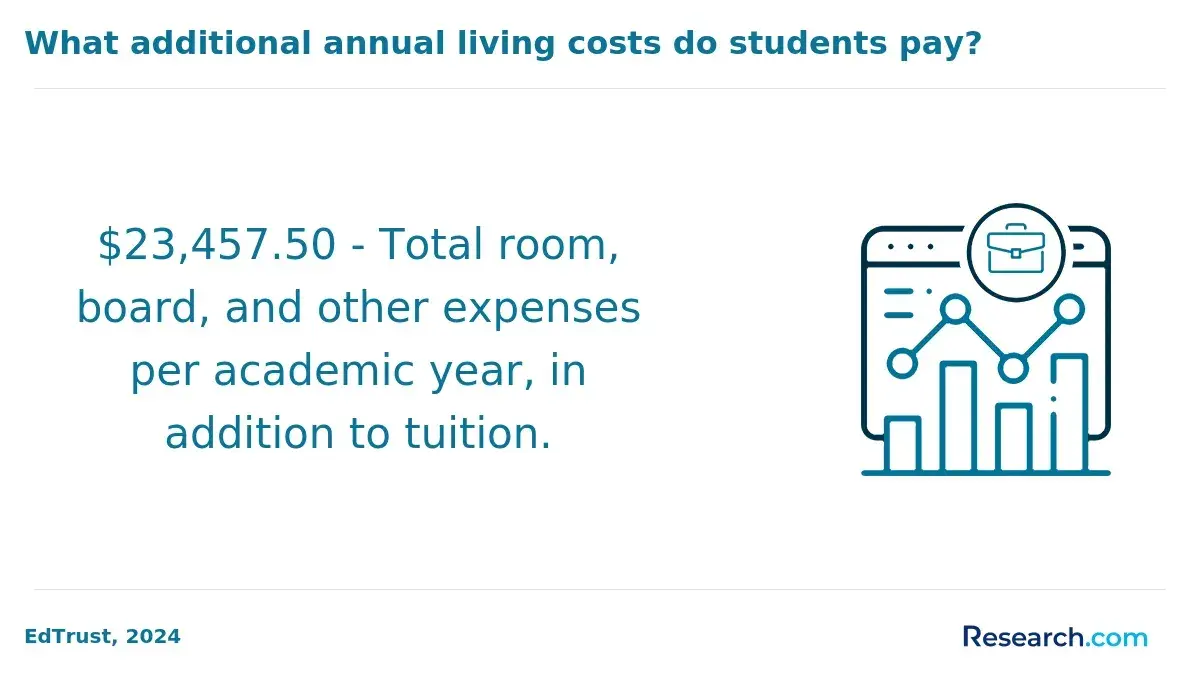
The total cost of an online PharmD includes more than tuition. Students should also budget for university fees, professional fees, books and drug databases, technology, background checks, immunizations, liability insurance, travel to campus intensives, housing during rotations, exam preparation, licensure fees, and lost income if work hours must be reduced.
Federal borrowing rules are especially important for PharmD students because professional programs can be expensive. For graduate and professional students, the Direct Unsubsidized Loan annual limit is $20,500, so costs above that may require savings, scholarships, employer support, payment plans, private loans, or Grad PLUS Loans. That limit helps students estimate whether a program's sticker price will require higher-cost borrowing.
The table below separates cost categories that are easy to see from expenses students often miss when comparing online PharmD programs.
| Cost factor | Why it matters | Question to ask before enrolling |
| Tuition per credit or term | This is the largest visible cost but may not reflect the full program price | Is tuition locked by cohort, and does it differ for online, out-of-state, or professional students? |
| Mandatory university and professional fees | Fees can add substantially to the bill even when tuition looks competitive | What fees apply each term, and are pharmacy lab or assessment fees separate? |
| Campus travel and lodging | Online students may still need to attend in-person labs or skills assessments | How many campus visits are required, and how long is each visit? |
| Rotation-related expenses | APPEs may require commuting, temporary housing, or schedule changes | Can rotations be completed near my location, and who pays travel or relocation costs? |
| Licensure and exam costs | Graduation is not the final expense for students pursuing pharmacist licensure | Which exam, application, fingerprinting, and state board costs should I budget for? |
| Borrowing costs | Interest and origination fees affect the long-term price of the degree | How much debt do similar students typically take on, and what repayment counseling is available? |
Financial aid can include federal loans, institutional scholarships, professional association scholarships, military or veteran benefits, employer tuition assistance, state workforce programs, and payment plans. Students already working in pharmacy should ask employers about tuition reimbursement, schedule flexibility, and promotion pathways tied to PharmD completion.
To compare affordability fairly, build a total-cost estimate rather than ranking schools by tuition alone. Include the following steps in your comparison process:
- Request a full cost-of-attendance estimate for each year of the program, not just first-year tuition.
- Add travel, lodging, technology, immunization, background check, rotation, and licensure-related expenses.
- Subtract only aid that does not need to be repaid, such as scholarships or employer reimbursement that you are likely to receive.
- Estimate borrowing needs by year and separate federal unsubsidized, Grad PLUS, private, and personal funding sources.
- Compare the final number with your target career path, likely residency or fellowship plans, and tolerance for debt.
A common mistake is assuming the cheapest listed tuition is the best value. A slightly higher-cost program may be a stronger investment if it offers better rotation access, residency advising, faculty mentoring, and drug information projects. Conversely, a prestigious program may not justify a much higher cost if it cannot support your state, schedule, or career goal.
How do online PharmD programs prepare graduates for pharmacist licensure and board certification?
For initial pharmacist licensure, students generally need to graduate from an ACPE-accredited PharmD program, complete required experiential hours, pass the North American Pharmacist Licensure Examination, and satisfy state-specific requirements such as a pharmacy law exam, background check, internship documentation, or jurisprudence assessment. Requirements vary by state, so students should confirm rules with the state board where they intend to practice.
Online PharmD programs prepare students for licensure by combining didactic instruction with Introductory Pharmacy Practice Experiences and Advanced Pharmacy Practice Experiences. IPPEs introduce students to community, institutional, and patient-care settings earlier in the curriculum. APPEs are more advanced rotations, usually in the final professional year, and may include required experiences in community pharmacy, health-system pharmacy, ambulatory care, internal medicine, and electives.
Drug information-focused students should use rotations strategically. The strongest licensure preparation also creates a portfolio for post-graduate opportunities. Useful APPE choices may include drug information centers, medical information departments, managed care organizations, health-system formulary teams, poison centers, medication safety offices, specialty pharmacy, informatics groups, and academic pharmacy.
Board certification is different from licensure. Licensure allows a pharmacist to practice; board certification demonstrates advanced competence in a specialty area after meeting experience and examination requirements. Certifications through the Board of Pharmacy Specialties may be relevant for pharmacists in ambulatory care, pharmacotherapy, oncology, critical care, infectious diseases, psychiatric pharmacy, pediatrics, geriatrics, or other specialty areas, depending on the role.
Students who want to become competitive for residency, fellowship, or board certification later should start building evidence of readiness during the PharmD program. Practical steps include the following:
- Choose APPEs that produce strong preceptor evaluations, clinical documentation, and evidence-based writing samples.
- Complete a research poster, medication-use evaluation, quality improvement project, or literature review with faculty mentorship.
- Practice concise oral presentations through journal clubs, case presentations, and interprofessional discussions.
- Track drug information questions answered during rotations and save de-identified examples of your process and final recommendations.
- Ask faculty and preceptors early about residency, fellowship, industry, managed care, or medical writing timelines.
A red flag is assuming that passing licensure exams alone will qualify you for specialized drug information roles. Licensure is foundational, but competitive roles often require strong writing samples, clinical references, residency or fellowship training, project experience, and evidence of professional judgment.
What careers in drug information, medical communications, and clinical pharmacy can an online PharmD support?
An online PharmD can support the same broad pharmacist career categories as a campus PharmD when the program is accredited and licensure requirements are met. For drug information-focused students, the most relevant paths are roles that require evaluating medication evidence, translating complex data, and communicating recommendations to clinicians, patients, payers, or industry stakeholders.
The table below summarizes career options where drug information skills are especially valuable. Job titles vary by employer, and some roles may prefer residency, fellowship, board certification, or prior clinical experience.
| Career path | Typical responsibilities | Additional preparation that may help |
| Drug information pharmacist | Answer medication questions, prepare evidence summaries, support committees, and maintain drug resources | APPE in drug information, residency, strong writing samples, journal club experience |
| Medical information specialist | Respond to product questions, create standard response letters, review labeling, and support pharmaceutical company inquiry systems | Industry fellowship, medical writing portfolio, pharmacovigilance exposure |
| Managed care or formulary pharmacist | Review evidence for coverage policies, prior authorization criteria, medication-use management, and formulary decisions | Managed care APPE, AMCP involvement, outcomes research or pharmacoeconomics exposure |
| Clinical pharmacist | Optimize medication therapy in hospitals, ambulatory clinics, specialty areas, or transitions of care | PGY1 residency, specialty PGY2 residency, board certification when appropriate |
| Medication safety pharmacist | Analyze medication errors, adverse events, safety signals, and process improvement opportunities | Quality improvement projects, informatics exposure, safety committee work |
| Pharmacy informatics specialist | Support electronic health records, clinical decision support, medication data, and workflow optimization | Informatics APPE, health IT projects, data literacy, residency or specialized training |
| Medical writer or medical communications pharmacist | Create educational materials, manuscripts, slide decks, payer resources, or scientific communications | Writing samples, publication experience, agency or industry experience |
Some PharmD graduates also consider adjacent commercial, education, or management roles. If you are comparing medication expertise with business-facing pharmaceutical careers, reviewing pharmaceutical sales salary information can help clarify how sales, medical affairs, and clinical pharmacy differ in daily responsibilities and compensation structure.
Students should choose electives and rotations based on the role they want, not just what is convenient. A student targeting medical information should prioritize writing, industry exposure, pharmacovigilance, and product inquiry work. A student targeting hospital drug information should prioritize internal medicine, formulary review, medication-use evaluation, and residency preparation. A student targeting informatics should seek EHR, data, clinical decision support, and workflow improvement projects.
This path may not be the right investment if you do not want licensure, patient-care training, or a demanding science curriculum. It may be a strong fit if you enjoy reading studies, explaining complex evidence, communicating under pressure, and making medication recommendations that affect patient care or organizational policy.
What salary ranges and job outlook can graduates with strong drug information skills expect?
Salary outcomes vary by region, employer, specialty, experience, residency or fellowship training, and role type. The safest benchmark is the broader pharmacist labor market. The U.S. Bureau of Labor Statistics reported a 2024 median annual wage of $137,480 for pharmacists, which means half of pharmacists earned less and half earned more. This figure is useful as a national reference point, but it should not be treated as a guaranteed outcome for any specific online PharmD graduate.
The job outlook is steady rather than explosive. BLS projections for pharmacists show 5% employment growth from 2023 to 2033, which suggests continued demand but also competition for the most specialized clinical, residency-trained, industry, and informatics roles. For students, that means the PharmD credential matters, but differentiation through projects, rotations, writing, technology skills, and professional networking is increasingly important.
The table below shows how salary expectations can differ by career setting in practical terms, without implying fixed pay for every graduate.
| Career setting | Salary context | Job outlook considerations |
| Community pharmacy | Often aligned with broad pharmacist wage benchmarks | High accessibility for licensed pharmacists, but drug information work may be less specialized than in clinical or industry settings |
| Hospital or health-system pharmacy | May reward residency training, clinical specialization, and shift differentials | Competitive for clinical roles; strong APPEs and residency preparation are valuable |
| Managed care | Compensation may reflect formulary, utilization management, and payer expertise | Evidence appraisal, pharmacoeconomics, and policy writing are important differentiators |
| Pharmaceutical industry medical information | Pay can vary widely by company, therapeutic area, location, and fellowship or experience | Writing, pharmacovigilance, regulatory awareness, and product knowledge are central |
| Informatics and medication safety | May reflect both pharmacy expertise and health technology responsibilities | Demand is influenced by EHR optimization, automation, safety analytics, and clinical decision support needs |
Current technology trends favor pharmacists who can combine clinical judgment with data literacy. AI tools, clinical decision support, electronic prior authorization, real-world evidence platforms, and automated dispensing systems are changing how medication questions are handled. Employers still need pharmacists who can validate evidence, detect risk, explain recommendations, and document decisions responsibly.
To improve ROI, students should align the program with a realistic career plan before enrolling. Practical steps include choosing rotations that match target roles, joining pharmacy organizations early, building a portfolio of evidence-based writing, asking faculty about residency or fellowship outcomes, and comparing total debt with likely career settings. The students who benefit most are usually those who treat the PharmD as both a licensure pathway and a professional portfolio-building period.
Other Things You Should Know About PharmD
Usually no. Even online or hybrid PharmD programs require in-person components such as labs, skills assessments, proctored activities, IPPEs, and APPEs. Ask each school for a written list of required campus visits and rotation expectations.
Employers generally focus on accreditation, licensure, rotations, experience, references, and demonstrated skills rather than the delivery format alone. An ACPE-accredited online or hybrid PharmD can be respected when it provides rigorous clinical training and strong experiential preparation.
2027 online PharmD programs equip students with essential skills for drug information careers through courses in pharmacology, clinical research methods, and information technology. These programs offer virtual simulation labs, interactive modules, and opportunities for real-time collaboration with healthcare professionals, enhancing both clinical knowledge and communication skills important in drug information roles.
Yes. A PharmD program must be accredited by the Accreditation Council for Pharmacy Education, or ACPE, for graduates to qualify for licensure in the United States. ACPE accreditation also supports access to required APPE rotations, including drug information practice experiences.
References
- How to Become a Drug Information Pharmacist | Medical Writing - The Happy PharmD https://thehappypharmd.com/how-to-become-a-drug-information-pharmacist-medical-writing/
- Earn Your PharmD with Flexibility: Explore the Hybrid Program at West Coast University | West Coast University https://westcoastuniversity.edu/blog/earn-your-pharmd-with-flexibility-explore-the-hybrid-program-at-west-coast-university
- Pharmacy School Costs in 2025 https://pharmacy.uworld.com/blog/how-much-does-pharmacy-school-cost/
- Online PharmD Programs: Best Flexible Online Pharmacy Schools https://www.phds.me/online-programs/pharmd-for-rph/
- PharmD Live | Pharmacist-Led Virtual Chronic Care https://pharmdlive.com/
- Admission Requirements https://www.ualberta.ca/en/pharmacy/programs/pharmd-doctor-of-pharmacy/admission-requirements.html
- 2025 Best Online Pharmacy Schools https://www.onlineu.com/degrees/pharmacy
- Compare online PharmD programs | edX https://www.edx.org/doctorate/online-pharmd-programs
- Distance Doctor of Pharmacy Program https://pharmdonline.findlay.edu/programs/online-pharm-d
- PharmD Tuition & Financial Aid https://www.pacificu.edu/pharmacy-pharmd/tuition-financial-aid