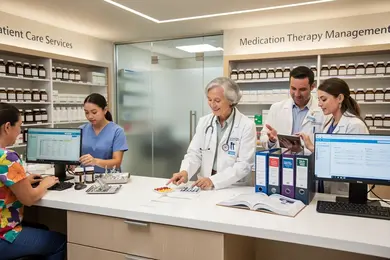
2027 Pharmacy Careers That Reward Strong Patient Communication Skills

Co-Founder and Chief Data Scientist
Choosing a pharmacy career is no longer just about dispensing medications; it is about helping people understand therapy, avoid medication errors, and manage chronic conditions. The U.S. Bureau of Labor Statistics reported a median pharmacist wage of $137,480 in May 2024, making pharmacy a high-responsibility healthcare path where communication can directly affect outcomes. This guide is for students, career changers, and healthcare workers comparing PharmD options, patient-facing roles, licensure steps, salaries, and program formats so they can choose a practical route into patient-centered pharmacy practice.
Key Things You Should Know
- Patient-facing pharmacy careers usually require a PharmD, state licensure, supervised practice experience, and strong counseling skills for medication safety, adherence, chronic disease education, and care coordination.
- According to the U.S. Bureau of Labor Statistics, pharmacists had a median annual wage of $137,480 in May 2024, but pay varies by setting, region, experience, specialization, and schedule.
- The BLS projects pharmacist employment to grow 5% from 2023 to 2033, with demand shaped by clinical services, older adults' medication needs, automation, and expansion of pharmacists' roles in team-based care.
What pharmacy careers rely most on strong patient communication and counseling skills?
The pharmacy careers that most reward communication skills are the ones where pharmacists spend substantial time explaining medications, assessing patient understanding, solving adherence problems, and coordinating with prescribers. These roles are a good fit if you enjoy translating complex medical information into clear, respectful, practical guidance.
Patient-facing pharmacy work can happen in community pharmacies, hospitals, ambulatory care clinics, long-term care facilities, specialty pharmacies, managed care organizations, and public health settings. The table below compares common paths so you can see where communication is central rather than incidental.
| Career path | Typical patient communication focus | Common work settings | Best fit for |
| Community pharmacist | Medication counseling, immunization education, adherence coaching, over-the-counter recommendations, safety screening | Retail pharmacies, grocery pharmacies, independent pharmacies | People who like frequent public interaction and fast decision-making |
| Ambulatory care pharmacist | Chronic disease counseling, medication therapy management, collaborative care planning, follow-up visits | Primary care clinics, outpatient health systems, physician groups | Students interested in long-term patient relationships and clinical problem-solving |
| Clinical pharmacist | Medication reconciliation, discharge counseling, care team communication, patient education during transitions of care | Hospitals, health systems, specialty units | People who want to work closely with physicians, nurses, and complex patients |
| Specialty pharmacist | Therapy onboarding, side-effect counseling, adherence support for high-cost or complex medications | Specialty pharmacies, health systems, payer organizations | Students interested in oncology, autoimmune disease, HIV, transplant, or rare disease therapies |
| Long-term care consultant pharmacist | Medication regimen review, caregiver communication, risk reduction for older adults | Nursing homes, assisted living, consulting firms | People drawn to geriatric care, safety, and interdisciplinary review |
| Public health or immunization pharmacist | Vaccine counseling, community education, preventive care outreach | Pharmacies, public health departments, clinics | Students who value prevention, access, and community-level impact |
These roles differ in pace and depth. Community pharmacists may counsel dozens of patients in a shift, while ambulatory care pharmacists may spend longer visits adjusting medication plans under collaborative practice agreements. If you want the most direct patient education, look for roles that include medication therapy management, chronic disease management, immunizations, transitions of care, or specialty medication counseling.
A common mistake is assuming all pharmacist jobs feel the same. A central-fill, informatics, industry, or distribution-focused role may use pharmacy knowledge but involve less direct counseling. Before choosing a program or rotation site, ask how much time students spend with patients, whether they complete simulated counseling assessments, and which practice sites support direct care experiences.
How does a PharmD education prepare you for patient-centered pharmacy careers?
A Doctor of Pharmacy, or PharmD, is the professional degree required for new pharmacists in the U.S. It combines biomedical science, pharmacotherapy, communication training, ethics, public health, and supervised clinical practice. For patient-centered roles, the most important part of the degree is not memorizing drug facts alone; it is learning how to apply that knowledge with real people who may be anxious, rushed, medically complex, or unsure what to ask.
PharmD programs typically use a progression from classroom learning to simulations and then practice experiences. Students learn how to take medication histories, identify drug therapy problems, counsel patients, communicate with prescribers, document recommendations, and adjust communication for health literacy, culture, age, disability, and language access needs.
Most patient-centered PharmD preparation includes several practical skill areas. These are worth looking for when comparing curricula because they strongly affect readiness for counseling-heavy roles:
- Structured patient counseling practice, including teach-back, motivational interviewing, and plain-language medication education.
- Introductory Pharmacy Practice Experiences, often called IPPEs, where students observe and participate in community, institutional, or direct-care pharmacy settings.
- Advanced Pharmacy Practice Experiences, often called APPEs, where final-year students complete full-time clinical rotations in settings such as ambulatory care, internal medicine, community pharmacy, and health systems.
- Interprofessional education with medical, nursing, physician assistant, social work, or public health students to build team-based communication.
- Objective structured clinical examinations, commonly called OSCEs, that test how students gather information, counsel, document, and respond to patient questions.
Technology is also changing PharmD training. Pharmacists increasingly use clinical decision support, electronic health records, telepharmacy platforms, immunization registries, pharmacogenomics tools, and AI-enabled workflow systems. Strong programs teach students how to use these tools without letting software replace judgment, empathy, or clear counseling.
Students comparing programs should also consider career outcomes and debt carefully. A broad guide to becoming a pharmacist and understanding pharmacist salary context can help you connect education choices with realistic practice settings, licensure requirements, and long-term earning potential.
What are the licensing and certification requirements for patient-facing pharmacists in the U.S.?
Patient-facing pharmacists must be licensed in the state where they practice. Requirements vary by state board of pharmacy, but the general U.S. pathway is consistent: complete an accredited PharmD, pass required exams, satisfy supervised practice requirements, and maintain continuing education.
The licensing process matters because a degree alone does not authorize independent pharmacy practice. The table below summarizes the core requirements most applicants should expect, while noting where state rules may differ.
| Requirement | What it usually involves | Why it matters for patient-facing work |
| ACPE-accredited PharmD | Graduation from a Doctor of Pharmacy program accredited by the Accreditation Council for Pharmacy Education | Confirms the program meets professional standards for curriculum, experiential education, and practice readiness |
| NAPLEX | North American Pharmacist Licensure Examination | Assesses whether candidates can apply pharmacy knowledge to safe and effective patient care |
| MPJE or state law exam | Multistate Pharmacy Jurisprudence Examination or a state-specific alternative | Tests pharmacy law, controlled substance rules, patient safety requirements, and professional responsibilities |
| Intern hours or experiential training | Supervised practice hours completed during or around the PharmD, depending on state rules | Builds real-world judgment in dispensing, counseling, workflow, and documentation |
| Background check and application review | State board review of professional, legal, and educational records | Protects patients and verifies eligibility for licensure |
| Continuing education | Ongoing education after licensure, with state-specific topics and renewal cycles | Keeps pharmacists current on laws, therapies, immunization practices, and safety standards |
Some patient-facing services require additional authorization beyond a general pharmacist license. Immunization authority, point-of-care testing, hormonal contraception prescribing, tobacco cessation prescribing, naloxone dispensing, and collaborative drug therapy management depend on state law and employer policy. This is one reason students should check the state board rules where they plan to work, not just the requirements where their school is located.
If you want a counseling-heavy role, review licensure portability early. Moving states after graduation may require additional exams, license transfers, background checks, or proof of practice. The mistake to avoid is enrolling in a program because it is convenient while assuming it automatically meets every state's licensing pathway.
What degree pathways lead to pharmacy roles emphasizing patient interaction and education?
The standard pathway to pharmacist licensure is the PharmD, but students enter it through different academic routes. Your best option depends on your current education level, budget, time horizon, science preparation, and confidence that pharmacy is the right healthcare profession for you.
The table below compares common pathways into patient-centered pharmacy work. It is designed to help you distinguish the required professional route from related healthcare options that involve patient education but do not lead to pharmacist licensure.
| Pathway | Typical learner | Connection to patient communication careers | Important limitation |
| Pre-pharmacy coursework plus PharmD | Students starting college or changing majors | Builds the science foundation needed for pharmacy school while allowing early healthcare exposure | Prerequisite requirements differ by school, so course planning must be precise |
| Early assurance or 0-6 PharmD pathway | High school graduates committed to pharmacy | Creates a structured route from undergraduate study into professional pharmacy training | Less flexible if you later decide another healthcare field fits better |
| Bachelor's degree plus PharmD | Students who want a broader undergraduate experience first | May strengthen maturity, research exposure, communication experience, and admissions profile | Can add time and cost compared with shorter routes |
| Accelerated PharmD | Students ready for an intensive year-round schedule | Can shorten time to licensure while still requiring experiential training | Heavy workload may limit part-time work and reflection time |
| Pharmacy technician to PharmD | Working pharmacy technicians seeking advancement | Provides practical exposure to workflow, patients, insurance issues, and medication access barriers | Technician experience does not replace PharmD or licensure requirements |
| Related healthcare degrees | Students who like patient education but are unsure about pharmacy | Can lead to nursing, healthcare administration, public health, or allied health roles with patient or community impact | Usually does not qualify graduates to practice as pharmacists |
Students who are drawn to patient counseling but not certain they want the full PharmD commitment should compare pharmacy with other healthcare paths. For example, online ADN programs for non nurses may appeal to career changers who want direct bedside care.
A practical way to decide is to test the work before committing. Shadow a community pharmacist, interview an ambulatory care pharmacist, volunteer in a clinic, or work as a pharmacy technician if your state allows it. If you enjoy medication problem-solving, detail, counseling, and constant patient questions, pharmacy may fit well. If you prefer hands-on procedures, bedside monitoring, or broader case management, another healthcare profession may be a better match.
How do online PharmD programs compare with campus options for developing communication skills?
Online and hybrid PharmD programs can work well for motivated students, but pharmacy is not a fully remote profession. Even when didactic coursework is online, accredited programs still require live skills assessment, labs, simulations, IPPEs, APPEs, and direct patient care experiences that occur in approved practice sites.
The key question is not whether online or campus learning is automatically better. The better question is whether the program gives you enough supervised practice, feedback, and interpersonal training to become confident with patients. The table below highlights the main trade-offs.
| Factor | Online or hybrid PharmD | Campus PharmD | Decision point |
| Flexibility | Often better for students balancing location, family, or work obligations | More structured weekly schedule and in-person routine | Choose the format that you can sustain without falling behind |
| Communication practice | May use virtual simulations, video counseling, remote OSCEs, and periodic residencies | Often has more frequent in-person labs and peer practice | Ask how often students receive live counseling feedback |
| Clinical placement | May require travel or local site approval depending on the program | Often uses established regional partners near campus | Confirm placement support before enrolling |
| Networking | Can be strong if the program has active cohorts, faculty access, and local preceptors | May make informal faculty, peer, and employer interaction easier | Look beyond format and evaluate advising quality |
| Self-management | Requires strong time management and comfort with online learning tools | Provides more immediate in-person accountability | Be honest about your learning style |
For communication-heavy pharmacy careers, online learners should look for programs with recorded counseling feedback, standardized patient encounters, synchronous case discussions, telehealth practice, interprofessional activities, and strong local preceptor networks. If a program mostly emphasizes recorded lectures with limited live assessment, that is a red flag for students who want direct patient care roles.
Campus learners should not assume they will automatically become strong communicators either. Large lectures alone do not build counseling skill. The strongest preparation comes from repeated practice, direct feedback, clinical rotations, and reflection on patient encounters.
What core coursework and clinical training build pharmacist-patient communication competencies?
Patient communication in pharmacy is a learned clinical skill. It combines medication expertise with listening, empathy, risk assessment, cultural humility, documentation, and the ability to explain choices clearly without overwhelming the patient.
Strong PharmD programs typically build communication through both coursework and practice. The following areas are especially important because they connect drug knowledge with real patient behavior and decision-making:
- Pharmacotherapy courses that teach students to select, monitor, and adjust medication regimens based on patient-specific factors.
- Patient counseling and communications courses that cover teach-back, motivational interviewing, difficult conversations, health literacy, and shared decision-making.
- Self-care and nonprescription medication courses that prepare pharmacists to triage symptoms and explain safe over-the-counter options.
- Pharmacy law and ethics courses that clarify confidentiality, informed consent, controlled substance rules, scope of practice, and professional judgment.
- Public health and immunization training that prepares pharmacists to discuss prevention, vaccine hesitancy, and community health needs.
- Pharmacokinetics, pharmacogenomics, and lab interpretation courses that help pharmacists explain individualized therapy decisions in understandable terms.
- Experiential rotations in community pharmacy, ambulatory care, internal medicine, transitions of care, geriatrics, and specialty pharmacy.
Clinical training, like in a BSN online program, should expose students to different patient populations, not just idealized cases. Patients may have limited health literacy, multiple chronic conditions, cost barriers, language needs, mistrust of the healthcare system, or conflicting instructions from different clinicians. Programs that include these realities better prepare graduates for high-impact counseling roles.
One mistake is treating communication as a "soft skill" separate from clinical competence. In pharmacy, poor communication can lead to nonadherence, duplicated therapy, incorrect administration, adverse events, or preventable hospital readmissions. Strong communicators help patients understand not only what to take, but why it matters and what to do when problems occur.
What are typical salaries for pharmacy careers that prioritize patient counseling?
Pharmacist compensation varies by setting, location, experience, schedule, union status, residency training, and employer type. The U.S. Bureau of Labor Statistics reported a median annual wage of $137,480 for pharmacists in May 2024, which provides a useful national benchmark but should not be treated as a guaranteed outcome.
The table below shows how salary context can differ by patient-facing path. It uses role characteristics rather than promises because individual offers depend heavily on local labor markets and employer needs.
| Role type | Salary context | Why pay may vary | Communication value |
| Community pharmacist | Often benchmarked near the general pharmacist labor market | Retail volume, staffing model, geographic area, immunization duties, management responsibility | High daily patient volume makes counseling efficiency and clarity valuable |
| Ambulatory care pharmacist | May depend on health system pay scales, residency training, and clinical service model | Collaborative practice authority, billing model, board certification, clinic specialty | Longitudinal counseling and chronic disease education are central |
| Hospital clinical pharmacist | Often influenced by health system size, residency expectations, shift differentials, and specialty unit | Residency training, critical care or oncology experience, evening or overnight shifts | Patient education is especially important during admission and discharge |
| Specialty pharmacist | May reflect specialty drug complexity, payer interaction, and therapy management expectations | Disease area, accreditation requirements, prior authorization workload, adherence programs | Patients often need detailed counseling for complex, high-risk, or high-cost medications |
| Long-term care consultant pharmacist | Often varies by consulting contract, facility mix, region, and experience | Geriatrics expertise, travel requirements, documentation volume, regulatory responsibilities | Communication with caregivers and facility staff is essential |
Salary should be evaluated alongside education cost and lifestyle. A higher-paying role may involve evenings, weekends, high prescription volume, or management stress. A clinic-based role may offer a different schedule but expect residency training, board certification, or experience with collaborative practice.
Students should also look at total financial fit. Compare tuition, fees, living expenses, interest, lost wages during full-time study, residency salary if applicable, and the realistic pay range in the region where you plan to work. Do not choose a PharmD program based only on a national median wage; use local employer postings and state labor data to estimate likely outcomes.
What is the job outlook for pharmacists focused on direct patient care and communication?
The U.S. Bureau of Labor Statistics projects pharmacist employment to grow 5% from 2023 to 2033, which is about as fast as the average for all occupations. For students, this means pharmacy is not a disappearing field, but it is also not a career where any credential alone makes job choice effortless.
Demand is shifting. Traditional dispensing remains important, but automation, central-fill systems, mail-order pharmacies, and AI-supported workflow tools are changing how employers use pharmacist time. The strongest opportunities for communication-oriented pharmacists are likely to be in settings where clinical judgment, patient trust, medication safety, and care coordination are hard to automate.
Several trends are especially relevant if you want a patient-facing pharmacy career. They show where communication skills can improve employability and long-term adaptability:
- Growth in chronic disease management increases the need for pharmacists who can help patients understand complex regimens, side effects, monitoring, and lifestyle connections.
- Expansion of immunization, testing, and preventive services makes pharmacists more visible as accessible healthcare professionals.
- Health systems are focusing on transitions of care because medication confusion after hospital discharge can create safety risks.
- Specialty medications require intensive education, adherence support, insurance navigation, and side-effect monitoring.
- Telepharmacy and digital health tools create new ways to counsel patients remotely, but they also require clear documentation and virtual communication skills.
The biggest red flag is pursuing pharmacy while expecting the job market to reward only dispensing speed. Employers increasingly value pharmacists who can document interventions, work under protocols, improve adherence, support quality measures, and communicate with both patients and care teams.
Geography still matters. Rural areas, underserved communities, hospitals, and clinics may have different needs than saturated urban markets. Before enrolling, review job postings in your target state, ask schools where graduates are employed, and find out whether students match into residencies or secure direct patient care positions.
How can you evaluate and choose an accredited PharmD program for patient-centered practice?
Choosing a PharmD program is a major academic and financial decision. Accreditation is the first filter, but it should not be the only one. For patient-centered practice, you also need evidence that the program builds communication skills, supports clinical placements, prepares students for licensure, and aligns with your preferred practice setting.
Use a structured review process before applying or enrolling. These steps help you compare programs on outcomes and fit rather than relying only on reputation or convenience:
- Verify ACPE accreditation status directly and confirm whether the program is fully accredited, candidate status, or precandidate status.
- Check whether the curriculum includes repeated live counseling assessments, standardized patient encounters, interprofessional education, and simulation labs.
- Ask how IPPE and APPE placements are assigned, especially if you are considering an online or hybrid program away from campus.
- Review NAPLEX pass rate trends, but interpret them alongside admissions selectivity, student support, and cohort size.
- Compare total cost of attendance, not just tuition, including fees, travel for labs or rotations, housing, equipment, exam costs, and interest.
- Ask where recent graduates work, including community pharmacy, residency programs, ambulatory care, specialty pharmacy, hospitals, and managed care.
- Confirm whether the program supports your intended state licensure pathway, especially if you plan to move after graduation.
- Talk with current students or recent graduates about advising, faculty access, rotation quality, workload, and communication training.
Program affordability deserves careful attention because pharmacy students often finance graduate-level education. If cost is the main constraint and you are still comparing healthcare fields, researching affordable online healthcare degrees can help you compare pharmacy with less clinically intensive routes that may still lead to healthcare leadership, operations, or patient access work.
Common mistakes include choosing the fastest program without considering burnout, selecting the cheapest option without checking rotation quality, assuming online means no travel, ignoring state licensing rules, and overlooking the value of strong preceptor networks. The better approach is to match program format, cost, support, and clinical exposure to the type of pharmacist you want to become.
What additional certifications enhance pharmacy careers in medication therapy management and counseling?
Certifications are not a substitute for pharmacist licensure, but they can strengthen credibility in patient-facing specialties. They are most useful when they match your work setting, employer expectations, and patient population.
The table below summarizes common credentials and training areas that may enhance pharmacy careers involving medication therapy management, counseling, chronic disease education, or direct patient care.
| Credential or training area | Typical focus | Who may benefit | Important note |
| Board Certified Ambulatory Care Pharmacist | Outpatient medication management, chronic disease care, collaborative practice | Pharmacists in clinics, primary care, and health-system ambulatory roles | Often requires practice experience and successful completion of a board exam |
| Board Certified Pharmacotherapy Specialist | Advanced pharmacotherapy across disease states | Hospital, health-system, and clinical pharmacists | Can support clinical credibility but does not replace residency where employers require it |
| Board Certified Geriatric Pharmacist | Medication safety and therapy optimization for older adults | Long-term care, consultant, ambulatory, and community pharmacists serving older patients | Especially relevant where polypharmacy and fall-risk reduction are priorities |
| Medication Therapy Management certificate training | Comprehensive medication reviews, adherence, documentation, patient action plans | Community, ambulatory care, managed care, and consulting pharmacists | Programs vary, so choose training recognized by your employer or practice setting |
| Immunization delivery training | Vaccine screening, administration, safety, storage, and patient education | Community, clinic, public health, and health-system pharmacists | State law determines scope, age limits, protocols, and renewal requirements |
| Diabetes care and education training | Glucose monitoring, medication use, lifestyle counseling, device education | Pharmacists working with diabetes patients in community or ambulatory settings | May pair well with collaborative practice or chronic care management roles |
Before paying for a certification, ask whether employers in your target setting value it, whether you meet eligibility requirements, and whether it leads to a specific responsibility such as MTM services, clinic visits, chronic disease programs, or specialty counseling. The strongest credentials are those connected to real practice opportunities.
Residency can also matter for direct patient care roles. A PGY1 pharmacy residency is commonly preferred or required for many hospital and clinical positions, while a PGY2 may support specialization in ambulatory care, oncology, critical care, infectious diseases, psychiatry, or geriatrics. Residency is competitive and typically pays less than full pharmacist employment during training, so weigh the opportunity cost against your desired role.
Other Things You Should Know About PharmD
Yes, introverted students can succeed in patient-facing pharmacy careers. While strong communication skills are vital, effective listening and empathy, often strengths of introverts, can enhance patient interactions in roles such as clinical pharmacy, where understanding patient needs is crucial.
Sometimes, but it depends on state law, employer policy, and practice agreements. In some states, pharmacists may prescribe or furnish certain medications under protocols, such as vaccines, naloxone, tobacco cessation therapy, contraception, or travel medications.
Community pharmacists use active listening, plain-language counseling, medication reconciliation, and conflict de-escalation most often. They also verify allergies, dosage instructions, and adherence during 5- to 10-minute patient consultations, then document interventions under state pharmacy board rules and employer protocols.
References
- Medication Therapy Management https://www.pharmacist.com/Education/Certificate-Training-Programs/Medication-Management-Services
- Independent Pharmacists Operate at the Top of their License https://www.outcomes.com/blog/pharmacy/pharmacist-license-service
- Pharmacy Career Outlook: Is a Career in Pharmacy Worth It? - Roseman University https://www.roseman.edu/student-experience/news/pharmacy-career-outlook-is-a-career-in-pharmacy-worth-it/
- Careers in Pharmacy: Roles, Qualifications & Progression - Scope Training https://scopetraining.co.uk/pharmacy-careers-opportunities-in-the-uk/
- A Look at 100+ Pharmacy Career Pathways https://pharmacyforme.org/2021/06/24/over-100-pharmacy-career-pathways
- Alternative career paths for pharmacists https://www.sermo.com/resources/pharmacist-alternative-careers/
- Pharmacist Opportunities That Leverage Transferable Skills https://helenysak.com/articles/f/how-pharmacists-can-leverage-transferable-skills
- Traditional and Non-Traditional Career Pathways in Pharmacy | University of Health Sciences and Pharmacy in St. Louis https://www.uhsp.edu/traditional-and-non-traditional-career-pathways-in-pharmacy/
- PowerPak https://www.powerpak.com/mtmpht10/Introduction.htm
- MTM Certification | National Board of Medication Therapy Management https://www.nbmtm.org/about/mtm-certification/