2027 Best Online MSN in Health Systems Management Programs

Co-Founder and Chief Data Scientist
Health systems management is a specialized field within healthcare that focuses on the efficient organization, coordination, and oversight of medical services across hospitals, clinics, and other care facilities. Professionals in this area ensure that healthcare delivery is both high-quality and cost-effective.
For nurses aiming to take on leadership and administrative roles, earning a Master of Science in Nursing (MSN) with a concentration in health systems management is a strategic step. This MSN specialization provides advanced knowledge in healthcare policy, organizational leadership, and evidence-based practice. Pursuing this degree online offers working nurses the flexibility to balance coursework with other commitments.
This article highlights the best online MSN in Health Systems Management programs, helping you compare options, understand core features, and make an informed decision about your career path.
What are the benefits of pursuing an online MSN in health systems management?
An online MSN in health systems management offers a flexible and career-focused pathway for nurses looking to move into leadership roles within the healthcare system. Here are the key benefits:
- Flexibility for Working Professionals: Online programs allow you to study around your work schedule, making it easier to continue your nursing career while earning your degree.
- Leadership and Management Skills: The program equips you with advanced training in organizational leadership, healthcare policy, budgeting, and strategic planning.
- Career Advancement: Graduates are prepared for high-level roles such as nurse manager, health services administrator, or director of nursing.
- Higher Earning Potential: Leadership roles in healthcare typically offer significantly higher salaries than clinical nursing positions.
- Broader Impact on Patient Care: You’ll be positioned to influence healthcare delivery on a systems level, improving outcomes for entire communities or organizations.
What can I expect from an online MSN in health systems management program?
An online MSN in Health Systems Management program blends advanced nursing education with leadership, business, and healthcare operations training. These programs are designed to prepare nurses for executive and administrative roles across healthcare settings. Here's what you can typically expect:
- Comprehensive Curriculum: Courses often cover topics such as healthcare finance, policy and ethics, health informatics, quality improvement, strategic leadership, and organizational behavior.
- Flexible Learning Format: Most programs are fully online with asynchronous classes, allowing you to access lectures and complete assignments on your own schedule. Some may include occasional synchronous sessions or optional in-person residencies.
- Capstone or Practicum Requirements: Many programs include a final project or hands-on practicum in a healthcare setting, where you apply what you've learned to real-world administrative challenges.
- Interdisciplinary Approach: The coursework often combines elements of nursing, public health, business, and information technology to prepare you for complex leadership roles.
- Accreditation and Certification Preparation: Accredited programs ensure academic quality and may prepare you for certification as a Nurse Executive or other related credentials.
Overall, you’ll graduate with the knowledge and skills needed to lead healthcare teams, manage systems efficiently, and contribute to policy and organizational improvements.
Where can I work with an online MSN degree in health systems management?
An online MSN in health systems management opens doors to a wide range of leadership and administrative roles across the healthcare industry. With this degree, you'll be qualified to work in settings that require both clinical knowledge and strong management capabilities. Common workplaces include:
- Hospitals and Health Systems: Serve as a nurse manager, department director, or healthcare administrator overseeing operations, staffing, and quality initiatives.
- Outpatient Clinics and Ambulatory Care Centers: Manage daily operations, coordinate patient care services, and implement efficiency improvements.
- Public Health Agencies: Lead programs that focus on community health, disease prevention, and population-based care strategies.
- Long-Term Care and Rehabilitation Facilities: Oversee nursing teams and develop care plans that align with regulatory standards and patient outcomes.
- Insurance Companies and Managed Care Organizations: Work in utilization review, case management, or policy development roles that bridge clinical care and cost control.
- Healthcare Consulting Firms: Advise organizations on improving systems, workflows, compliance, and patient satisfaction.
With this degree, you'll be equipped to lead change and improve healthcare delivery in both clinical and non-clinical environments.
How much can I make with an online MSN degree in health systems management?
Earning an online MSN in health systems management can lead to a significant boost in salary, especially if you're moving from a clinical nursing role to a leadership position. Here's a simpler breakdown of what you can expect:
- Entry-Level Roles: Around $70,000 to $95,000 per year.
- Mid-Level Managers: Typically $100,000 to $130,000 annually.
- Directors and Nurse Executives: Often $110,000 to $180,000+.
- C-Suite Roles (e.g., CNO, COO): Can exceed $200,000+ in large health systems.
Professionals in high-cost areas like California or Washington, D.C., often earn more than those in smaller or rural regions. Additionally, the more experience you have, the more you can earn—especially in management or executive roles.
- List of the Best Online MSN in Health Systems Management Programs for 2027 List of Programs
- How long does it typically take to complete online health systems management programs (MSN)? How long does it typically take to complete online health systems management programs (MSN)?
- What are the prerequisites for enrolling in online health systems management programs as MSN concentration? Requirements
- What is the average cost of online MSN programs in health systems management? Program Cost
- What are the financial aid options for MSN students enrolling in online health systems management programs? Financial Aid
- What courses are typically included in online health systems management programs? What courses are typically included in online health systems management programs?
- How can I choose the best online health systems management programs for my MSN? How can I choose the best online health systems management programs for my MSN?
- What are the differences between MSN on-campus and online health systems management programs? What are the differences between MSN on-campus and online health systems management programs?
- What is the job outlook for graduates of MSN in online health systems management programs? Job Outlook
- What career paths are available for graduates of MSN in online health systems management programs? Career Paths
- How are emerging technologies and innovative practices addressed in online MSN programs for health systems management? How are emerging technologies and innovative practices addressed in online MSN programs for health systems management?
- How do online MSN programs support professional development and networking? How do online MSN programs support professional development and networking?
Best Online MSN in Health Systems Management Programs for 2027
An online MSN in health systems management is built for registered nurses who want to move beyond bedside care into unit leadership, clinical operations, quality improvement, staffing, budgeting, informatics, policy, or executive nursing roles. The decision matters because healthcare organizations increasingly need nurse leaders who understand both patient care and system-level management.
This guide is for working RNs comparing online MSN programs with health systems management, healthcare systems leadership, nursing administration, or similar leadership concentrations. You will learn which programs made our list, how long they take, what they cost, what admission requirements to expect, how online and campus formats differ, and how to judge whether this degree fits your career goals.
The goal is not only to list schools. It is to help you compare programs realistically: accreditation, practicum expectations, schedule flexibility, total price, leadership focus, and career outcomes all matter when choosing a graduate nursing program.
Quick Answer: What Is the Best Online MSN in Health Systems Management?
The best online MSN in health systems management depends on your budget, schedule, location, practicum needs, and leadership goals. Programs in this field typically prepare experienced nurses for roles such as nurse manager, director of nursing, clinical operations manager, healthcare quality leader, and health services manager. Many programs can be completed in 18 to 24 months full time, while part-time students often take 2.5 to 3 years.
Before applying, confirm that the nursing program is properly accredited, that your state allows you to complete online coursework and practicum requirements, and that the curriculum aligns with the type of leadership role you want. Cost, credit requirements, clinical or practicum hours, and employer tuition reimbursement can significantly affect the value of the degree.
How We Rank Schools
Research.com rankings are developed through research and data review using trusted education sources, including the IPEDS database, Peterson's database, including the Distance Learning Licensed Data Set, the College Scorecard database, and the National Center for Education Statistics.
Because an online MSN is a major academic and financial commitment, this ranking focuses on transparency and practical comparison. The programs listed here include online MSN options with a health systems management, healthcare systems leadership, nursing administration, or related leadership concentration. For a fuller explanation of ranking criteria, see our methodology.
How to Use This Ranking
Do not choose a program based on rank alone. Use this list as a starting point, then compare each school against your personal constraints: licensure state, work schedule, cost ceiling, practicum placement, transfer credit options, and long-term plans such as DNP study or executive nursing leadership.
| Decision Factor | Why It Matters | Question to Ask |
| Accreditation | Accreditation affects graduate credibility, financial aid access, transferability, and employer acceptance. | Is the nursing program accredited by CCNE, ACEN, or another recognized nursing accreditor? |
| Practicum format | Leadership practicums can be difficult to arrange if the school does not support placement planning. | Can I complete practicum hours near home or at my current workplace? |
| Total cost | Per-credit tuition does not always show the full price of fees, books, travel, and clinical requirements. | What is the total estimated program cost, not just tuition? |
| Program pace | Working nurses may need part-time enrollment, asynchronous courses, or multiple start dates. | Can I slow down or speed up if my work schedule changes? |
| Leadership focus | Some programs emphasize administration, while others focus more on quality, informatics, finance, or policy. | Does the curriculum match the role I want after graduation? |
1. Drexel University
Drexel University offers an MSN: Leadership in Health Systems Management for nurses preparing for advanced leadership responsibilities in healthcare organizations. The curriculum emphasizes executive decision-making, conflict resolution, organizational problem-solving, legal and ethical responsibilities, and leadership aligned with a healthcare organization’s mission and goals.
The program also gives attention to information systems management and evidence-based decision-making. Drexel uses four 10-week quarters per year rather than a traditional two-semester calendar, which may help students complete more coursework in a shorter academic cycle. One semester credit is equivalent to 1.5 quarter credits. Students complete a 20-week practicum course with 160 practicum hours across two quarters.
- Location: Philadelphia, PA
- Program: Master of Science in Nursing: Leadership in Health Systems Management
- Program Length: 2-4 years
- Credits Required: 45
- Cost: $1,169 per credit
- Accreditation: Commission on Collegiate Nursing Education (CCNE)
2. Rivier University
Rivier University provides an online MSN: Leadership in Health Systems Management for nurses who want to help improve healthcare delivery, population health, and patient outcomes across settings such as healthcare organizations, insurance groups, regulatory agencies, schools, and industry.
The online format is designed for flexibility and collaboration. The program includes 36 credit hours, and students who transfer up to 12 credits may be able to finish in as little as 1.5 years.
- Location: Nashua, NH
- Program: MSN: Leadership in Health Systems Management
- Program Length: 2 years
- Credits Required: 36-42
- Cost per Credit: Business Courses – $712; Nursing Courses – $747; Clinical Courses – $1,166
- Accreditation: Accreditation Commission for Education in Nursing (ACEN)
3. Regis University
Regis University offers an MSN: Leadership in Health Care Systems in an online format with 8-week terms. Students complete two practicums totaling 210 hours and work with nursing leaders to connect leadership theory with practice.
The program also allows students to add 12 credit hours to pursue one of four certificate options: Health Care Education, Health Care Business Management, Health Care Quality and Patient Safety, or Health Care Informatics. This can be useful for nurses who want a more targeted leadership profile alongside the MSN.
- Location: Denver, CO
- Program: MSN: Leadership in Health Care Systems
- Credits Required: 30
- Cost: $875 per credit hour
- Accreditation: CCNE
4. University of Rochester
University of Rochester offers an MSN in Leadership in Health Care Systems for working professionals with healthcare-related experience. The program is delivered in a hybrid online format, with evening coursework available in person or online.
Students complete coursework and a hands-on capstone project focused on management, leadership, and safe, efficient, high-quality patient care systems. The program also includes 224 clinical hours through mentored field placement with healthcare leaders.
- Location: Rochester, NY
- Program: MSN: Leadership in Health Care Systems
- Credits Required: 31
- Cost: $1,740 per credit hour
- Accreditation: Middle States Commission on Higher Education; CCNE
5. Kent State University
Kent State University offers a 100% online Nursing Administration & Health Systems Leadership program for nurses who want to combine advanced nursing knowledge with management preparation. The concentration introduces students to a holistic approach to healthcare management.
The program highlights small class sizes and individualized attention from nurse educators. Students may choose full-time or part-time academic plans based on their schedule and career timeline.
- Location: Kent, OH
- Program Length: MSN in Nursing Administration & Health Systems Leadership
- Credits Required: 24
- Estimated Program Cost: $18,300-$28,100
- Accreditation: CCNE
6. Lewis University
Lewis University offers an MSN in Healthcare Systems Leadership for nurses who want to manage nursing services, patient care delivery, and healthcare operations. Coursework is designed to build leadership capacity in finance, economics, human resources, and organizational management.
The program requires 36 credit hours and 300 clinical hours, making it a good option to compare carefully if you need a program with substantial applied leadership experience.
- Location: Romeoville, IL
- Program: MSN in Healthcare Systems Leadership
- Credits Required: 36
- Cost: $820 per credit
- Accreditation: Higher Learning Commission
7. University of Missouri-Columbia
University of Missouri-Columbia offers a Master of Science in Nursing with an emphasis in Leadership in Nursing and Health Care Systems. The program uses a blended model, with online coursework and some required campus visits.
The degree is intended for nurses who want to manage clinical work, apply research to improve quality of care, contribute to creative and financial initiatives, and guide nursing teams toward better service delivery and evidence-based practice. The curriculum includes MSN core courses totaling 13 credit hours and leadership specialty courses totaling 19 credit hours.
- Location: Columbia, MO
- Program: Master of Science in Nursing with an emphasis in Leadership in Nursing and Health Care Systems
- Program Length: 2-2.5 years
- Credits Required: 32
- Estimated Cost: $20,506.50
- Accreditation: Higher Learning Commission, CCNE
8. University of Indianapolis
University of Indianapolis offers an online MSN in Nursing and Health Systems Leadership for nurses seeking stronger preparation in health systems leadership, management, negotiation, and decision-making. The coursework is 100% online, with one practicum placement.
The track requires 39 credit hours and 240 clinical hours. Students may complete it part time in 7 consecutive semesters, which may appeal to nurses who need a predictable schedule while continuing to work.
- Location: Indianapolis, IN
- Program: MSN in Nursing and Health Systems Leadership
- Program Length: 3-3.5 years
- Credits Required: 39
- Cost: $544 per credit
- Accreditation: CCNE
9. University of West Georgia
University of West Georgia offers an MSN in Health Systems Leadership that prepares nurses for management of care and the care environment. Coursework is 100% asynchronous, which can make the program easier to manage for nurses with rotating shifts.
Course topics include patient-centered care, evidence-based practice, case management and client-care coordination, pharmacology, holistic health assessment, health policy and systems, care of diverse populations, statistics, business and economics, quality improvement, leadership and management, risk management, and community health.
- Location: Carrollton, GA
- Program: MSN in Health Systems Leadership
- Program Length: 2 years
- Credits Required: 35
- Program Cost: $14,870
- Accreditation: CCNE
10. Jacksonville University
Jacksonville University offers an MSN Leadership in the Healthcare System for working nurses preparing for leadership roles across healthcare settings. The curriculum is aligned with the American Organization for Nursing Leadership (AONL) Nurse Manager and Leader Certification.
Students may choose part-time or full-time study, and online course options are available. The program can be completed in as little as 18 months.
- Location: Jacksonville, FL
- Program: MSN Leadership in the Healthcare System
- Program Length: 18 months
- Credits Required: 35
- Cost: $750 per credit
- Accreditation: Southern Association of Colleges and Schools Commission on Colleges; CCNE
Program Comparison at a Glance
| School | Program | Credits Required | Cost Information | Accreditation Listed |
| Drexel University | MSN: Leadership in Health Systems Management | 45 | $1,169 per credit | CCNE |
| Rivier University | MSN: Leadership in Health Systems Management | 36-42 | Business Courses – $712; Nursing Courses – $747; Clinical Courses – $1,166 | ACEN |
| Regis University | MSN: Leadership in Health Care Systems | 30 | $875 per credit hour | CCNE |
| University of Rochester | MSN: Leadership in Health Care Systems | 31 | $1,740 per credit hour | Middle States Commission on Higher Education; CCNE |
| Kent State University | MSN in Nursing Administration & Health Systems Leadership | 24 | $18,300-$28,100 | CCNE |
| Lewis University | MSN in Healthcare Systems Leadership | 36 | $820 per credit | Higher Learning Commission |
| University of Missouri-Columbia | MSN with an emphasis in Leadership in Nursing and Health Care Systems | 32 | $20,506.50 | Higher Learning Commission, CCNE |
| University of Indianapolis | MSN in Nursing and Health Systems Leadership | 39 | $544 per credit | CCNE |
| University of West Georgia | MSN in Health Systems Leadership | 35 | $14,870 | CCNE |
| Jacksonville University | MSN Leadership in the Healthcare System | 35 | $750 per credit | Southern Association of Colleges and Schools Commission on Colleges; CCNE |
How Long Does It Take to Complete an Online MSN in Health Systems Management?
Completion time depends on your previous nursing education, transfer credits, enrollment pace, and the program’s academic calendar. Most online MSN health systems management programs are designed for working nurses, so part-time options are common.
- Full-Time Students: Many full-time students finish in 18 to 24 months. For comparison, the shortest online MSN programs, often in other concentrations, can be completed in as less as one year.
- Part-Time Students: Nurses studying while working may need 2.5 to 3 years, especially if they take fewer courses each term.
- Accelerated Options: Some schools provide fast-track formats that may take 12 to 16 months, particularly for BSN-prepared nurses with prior leadership experience.
- Bridge Programs for Non-BSN Students: RN-to-MSN and similar bridge options can take 3 to 4 years, depending on your starting point and required undergraduate bridge coursework.
When comparing timelines, look beyond the advertised completion date. Ask whether courses are asynchronous, whether clinical or practicum hours can be completed locally, and whether the school allows you to pause or reduce your course load during demanding work periods.
| Student Situation | Typical Timeline | Best Fit |
| BSN-prepared RN studying full time | 18 to 24 months | Nurses who can manage intensive coursework while working reduced hours or with strong employer support. |
| Working RN studying part time | 2.5 to 3 years | Nurses balancing full-time employment, family responsibilities, or rotating shifts. |
| Accelerated MSN student | 12 to 16 months | Students with strong academic preparation, leadership experience, and availability for a faster pace. |
| RN-to-MSN or bridge student | 3 to 4 years | Registered nurses who do not hold a BSN but want a pathway into graduate nursing leadership. |
What Are the Prerequisites for Online MSN Health Systems Management Programs?
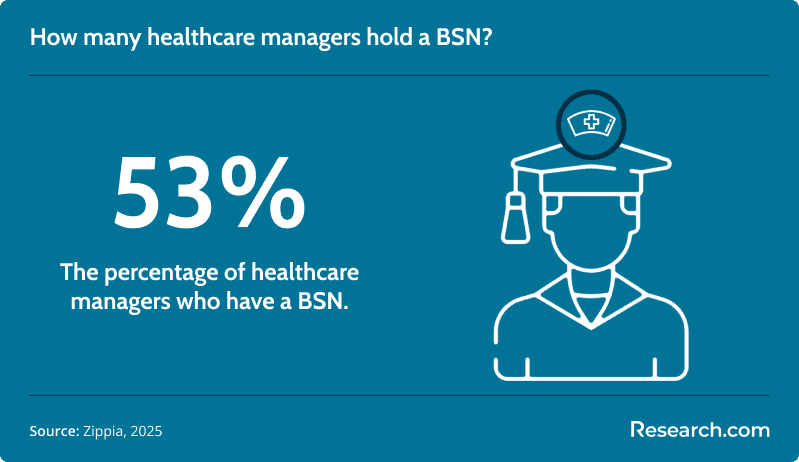
Admission requirements vary, but most online MSN programs in health systems management expect applicants to show both nursing preparation and readiness for graduate-level leadership study. Around 53% of healthcare managers hold a BSN, and many MSN programs are structured around BSN-level nursing preparation.
- Bachelor of Science in Nursing (BSN): Most programs require a BSN from an accredited nursing program. Some schools also offer RN to MSN programs for registered nurses who do not yet hold a BSN.
- Active RN License: Applicants usually need a current, unencumbered registered nurse license in the state where they will complete practicum or clinical requirements.
- Minimum GPA: A cumulative undergraduate GPA of 3.0 or higher is often expected, although some schools may review applicants with slightly lower GPAs if they have strong professional experience or other qualifications.
- Professional Nursing Experience: Some leadership-focused MSN programs prefer or require 1–2 years of clinical nursing experience.
- Letters of Recommendation: Many schools request 2–3 recommendations from supervisors, faculty, or colleagues who can speak to your clinical ability, professionalism, and leadership potential.
- Personal Statement or Essay: Applicants are often asked to explain their career goals, interest in health systems management, and reasons for pursuing graduate nursing study.
- Resume or CV: Your resume should show nursing roles, certifications, committee work, charge nurse experience, quality projects, preceptor experience, and other leadership-related responsibilities.
Do not assume that online admission rules are simpler than campus admission rules. Graduate nursing programs still verify licensure, academic readiness, clinical background, and the ability to complete fieldwork requirements.
| Requirement | What to Check Before Applying |
| RN license | Confirm that your license is accepted for the state where you live and where practicum hours will occur. |
| Prior degree | Verify whether the school requires a BSN or offers an RN-to-MSN bridge option. |
| Experience | Ask whether leadership, charge nurse, committee, preceptor, or quality improvement experience strengthens your application. |
| References | Choose recommenders who can discuss your judgment, reliability, communication, and leadership growth. |
| Practicum eligibility | Ask whether your workplace can be used for practicum and whether preceptors must meet specific credentials. |
What Is the Average Cost of an Online MSN in Health Systems Management?
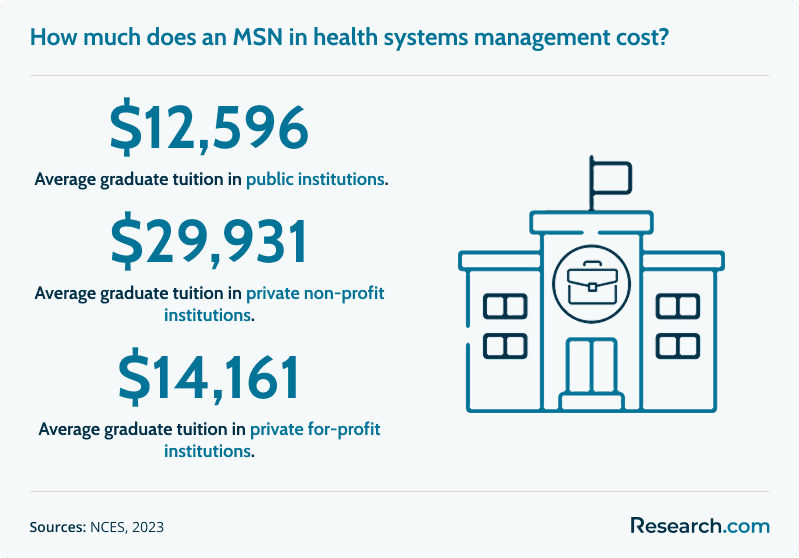
Online MSN health systems management programs vary widely in price. Total cost typically ranges from $19,000 to $30,000 for the entire program. Lower-cost options may be around $11,000 to $15,000, while more expensive private or high-credit programs can exceed $30,000. Tuition is commonly charged per credit hour, averaging between $400 and $800.
Program cost depends on tuition rate, credit count, fees, transfer credits, residency pricing, books, technology charges, and whether travel is required for intensives or campus visits. For comparison, other graduate programs with online delivery, such as multilingual learner education master's programs online, may also use per-credit tuition, although total cost changes by institution and program length.
When building your budget, include more than tuition. Online students may still pay for textbooks, course materials, online learning fees, background checks, immunization documentation, clinical compliance items, and travel tied to campus sessions or practicum requirements. Some programs also require in-person clinical or leadership hours.
If affordability is your main concern, compare your options with the cheapest online MSN programs. A lower price can be valuable, but only if the program is accredited, supports your licensure and practicum needs, and matches your target leadership role.
| Cost Item | Why It Can Change the Total Price |
| Per-credit tuition | Programs with similar names may charge very different rates per credit. |
| Credits required | A lower tuition rate may not save money if the program requires many more credits. |
| Online and technology fees | Some schools charge additional fees each course or term. |
| Clinical or practicum expenses | Students may need compliance documents, travel, uniforms, or site-related materials. |
| Transfer credits | Approved transfer credits can reduce both time and tuition, but limits vary by school. |
| Employer reimbursement | Hospital or healthcare system benefits can reduce out-of-pocket cost if you meet eligibility rules. |
What Financial Aid Options Are Available for Online MSN Health Systems Management Students?
Graduate nursing students in health systems management can use several funding sources, but the best mix depends on eligibility, employer benefits, and long-term repayment plans. Students in related specialties, including MSN nursing informatics online programs, often evaluate many of the same aid options.
- Federal Financial Aid: Graduate students may submit the Free Application for Federal Student Aid (FAFSA) to be considered for Direct Unsubsidized Loans or Grad PLUS Loans.
- Scholarships and Grants: Universities, nursing organizations, healthcare employers, and private groups may offer merit-based or need-based aid for graduate nursing or healthcare leadership students.
- Employer Tuition Reimbursement: Many working nurses should first check hospital, clinic, or health system benefits. Employer support is especially important if the organization needs nurse managers, clinical educators, or quality leaders.
- Loan Forgiveness Programs: Graduates working in public health, underserved communities, nonprofit hospitals, or qualifying public service roles may be eligible for Public Service Loan Forgiveness (PSLF) or Nurse Corps Loan Repayment Programs.
- Military and Veterans Benefits: Eligible students may be able to use GI Bill® benefits, military tuition assistance, or veteran-focused scholarships.
- Payment Plans: Some universities offer monthly payment plans that divide tuition into smaller installments instead of requiring larger term payments.
Before borrowing, compare the full program cost against your likely career path, current income, and leadership opportunities in your region. Reviewing the broader MSN salary outlook can help you think about return on investment, but salary outcomes are never guaranteed.
What Courses Are Included in Online MSN Health Systems Management Programs?
Online MSN programs in health systems management combine graduate nursing knowledge with healthcare administration, leadership, finance, policy, informatics, and quality improvement. The exact course list differs by school, but most programs are designed to help nurses lead teams and improve care delivery across complex systems.
Nurses with prior business coursework, or students comparing graduate management options such as an online MBA general business program, may recognize overlapping themes in finance, organizational behavior, decision-making, and strategic management. The key difference is that an MSN leadership concentration applies these concepts specifically to nursing practice and healthcare operations.
Common Course Areas
| Course Area | Typical Topics | How It Supports Leadership Practice |
| Core graduate nursing | Advanced Nursing Practice; Evidence-Based Practice & Research; Healthcare Policy and Ethics | Builds the graduate-level nursing foundation needed to evaluate evidence, policy, ethics, and systems of care. |
| Advanced clinical foundations | Pathophysiology, Pharmacology, and Health Assessment, if part of an APRN-eligible track | Supports advanced clinical reasoning when included in the program design. |
| Health systems leadership | Healthcare Systems Leadership; Organizational Behavior in Healthcare; Strategic Planning & Decision-Making | Prepares nurses to lead teams, manage change, resolve conflict, and improve operations. |
| Finance and workforce management | Healthcare Financial Management; Human Resources and Workforce Management in Healthcare | Develops budgeting, staffing, resource allocation, and personnel management skills. |
| Technology and quality improvement | Health Informatics and Data Analytics; Quality Improvement and Patient Safety; Information Systems in Healthcare | Helps nurse leaders use data and digital systems to improve safety, efficiency, and outcomes. |
| Population and policy | Public Health and Population Health Management; Health Policy, Regulation, and Advocacy | Connects organizational leadership to broader public health, policy, and regulatory priorities. |
| Applied experience | Leadership Capstone Project; Practicum/Fieldwork | Allows students to address real healthcare problems through supervised administrative or leadership work. |
These courses are intended to prepare nurses for leadership roles in multiple care environments. They may also help graduates understand where health services managers work and how healthcare leadership needs vary by setting.
How Can I Choose the Best Online MSN in Health Systems Management?
The best program is the one that fits your career objective, licensure situation, work schedule, budget, and learning style. A highly ranked program may still be a poor fit if it requires campus visits you cannot attend, does not help with practicum placement, or costs more than your expected career advancement can justify.
- Confirm accreditation first: Look for recognized nursing accreditation, such as the Commission on Collegiate Nursing Education (CCNE), and verify institutional accreditation as well.
- Match curriculum to your goal: A nurse aiming for quality improvement may need different coursework than a nurse targeting director-level operations, informatics leadership, or healthcare finance.
- Check schedule flexibility: Working nurses should compare asynchronous coursework, part-time plans, start dates, course load limits, and policies for taking breaks.
- Calculate the full cost: Compare tuition, fees, textbooks, travel, clinical compliance expenses, and the effect of any transfer credits.
- Review practicum rules: Ask whether the school places students, approves local sites, allows workplace-based projects, or requires specific preceptor qualifications.
- Look at student support: Strong advising, library access, writing support, career services, and online technical support can make a major difference in graduate school success.
- Ask about outcomes carefully: Rankings and testimonials can help, but you should also request program-specific graduation, retention, certification, and employment information when available.
If you expect to continue into doctoral study, ask whether MSN credits can transfer smoothly into a DNP pathway. Some students compare accelerated DNP programs when choosing an MSN so they can reduce duplicate coursework later.
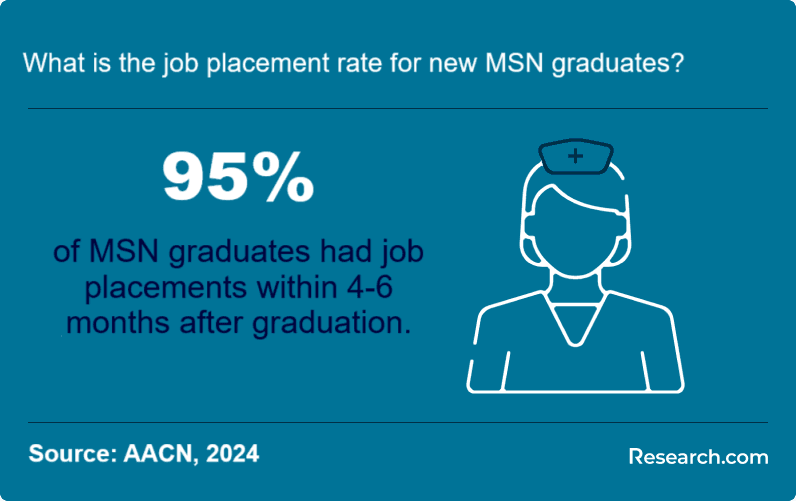
You may also ask schools about job placement support for MSN graduates. An AACN survey found that 95% of new MSN graduates found job placements in within half a year after earning their master's degrees, but individual outcomes depend on location, experience, role type, employer demand, and the graduate’s professional network.
Who Should Consider This MSN Concentration?
| This Program May Fit If You... | Consider a Different Path If You... |
| Want to lead nursing teams, departments, service lines, or healthcare operations. | Prefer direct advanced clinical practice as your primary career goal. |
| Have interest in staffing, budgeting, quality, safety, policy, informatics, or organizational change. | Want a business degree with limited nursing-specific coursework. |
| Already hold or are working toward RN licensure and want graduate nursing leadership preparation. | Need a program that leads to a specific APRN license and the leadership track does not meet that requirement. |
| Can complete practicum or fieldwork requirements in an approved healthcare setting. | Cannot identify a realistic practicum site or preceptor and the school offers little placement help. |
| Want to remain in healthcare while moving into management or executive responsibility. | Are unsure whether you want nursing leadership, education, informatics, care coordination, or clinical specialization. |
Common Mistakes to Avoid When Choosing a Program
| Mistake | Why It Creates Problems | Better Approach |
| Choosing based only on tuition | A low per-credit price may hide fees, extra credits, or weak practicum support. | Compare total estimated cost, time to completion, and student support. |
| Ignoring accreditation | Accreditation can affect employment, financial aid, transfer credits, and doctoral study options. | Verify nursing and institutional accreditation before applying. |
| Assuming online means no in-person requirements | Many online MSN programs still require practicums, clinical hours, campus visits, or local site approvals. | Ask for exact in-person and fieldwork requirements in writing. |
| Overlooking state authorization | Some programs may not be authorized to enroll students or place practicum students in every state. | Confirm eligibility for your state before paying an application fee. |
| Relying only on rankings | A ranked program may not align with your schedule, leadership interests, budget, or location. | Use rankings as a shortlist, then evaluate fit using your own criteria. |
| Assuming salary increases are automatic | A degree can improve qualifications, but role changes depend on experience, openings, geography, and employer needs. | Research job postings in your area and talk with nurse leaders before enrolling. |
Online vs. On-Campus MSN in Health Systems Management: What Is Different?
Online and campus-based MSN programs can lead to the same degree, and accredited programs are expected to meet comparable academic standards. The main differences are in delivery, scheduling, networking, travel, and how much structure students receive. Nurses comparing other flexible graduate nursing options, such as MSN in care coordination programs online, will see similar trade-offs.
| Feature | Online MSN | On-Campus MSN |
| Schedule | Often more flexible, with asynchronous or partially asynchronous coursework. | Usually follows set class times and a more structured weekly schedule. |
| Location | Allows students to study without relocating, though practicum hours may still be local and in person. | Requires regular travel to campus or living near the university. |
| Interaction | Uses discussion boards, video meetings, virtual collaboration, and online faculty communication. | Offers face-to-face classroom discussion and more spontaneous campus networking. |
| Self-management | Requires strong organization, independent study habits, and comfort with online learning systems. | Provides more built-in routine through scheduled class meetings. |
| Campus resources | Resources are usually delivered remotely, such as virtual advising, library access, and online tutoring. | Students may have easier direct access to campus offices, events, and facilities. |
| Best for | Working nurses who need flexibility and cannot commute regularly. | Students who prefer in-person learning, local networking, and a fixed academic routine. |
Both formats can be credible when properly accredited. The better choice depends on how you learn, how much flexibility you need, whether you can travel, and how the program handles field placement. If you are still deciding among types of MSN degrees, compare the career outcome of each concentration before choosing a delivery format.
What Is the Job Outlook for Online MSN Health Systems Management Graduates?
The outlook for healthcare leadership roles is strong because healthcare organizations need managers who can coordinate staff, improve care quality, control costs, implement technology, and respond to regulation and patient safety demands. The U.S. Bureau of Labor Statistics projects employment for medical and health services managers, including nurse leaders, to grow by 29% from 2023 to 2033, much faster than the average for all occupations.
- Demand is tied to healthcare complexity: Hospitals, clinics, long-term care facilities, public health agencies, and insurers need leaders who can manage operations while understanding clinical realities.
- Quality and efficiency remain central: Organizations continue to focus on patient outcomes, safety, cost control, staffing, workflow, and evidence-based improvement.
- Leadership roles are broad: Graduates may qualify for roles in nursing administration, clinical operations, quality improvement, informatics, compliance, and program management.
- Advancement still depends on experience: An MSN can strengthen qualifications, but employers often consider prior leadership, specialty experience, communication ability, and results from improvement projects.
- Technology is changing management work: Telehealth, remote care coordination, analytics dashboards, and electronic health record systems have expanded the skills expected of nurse leaders.
The chart below shows the top-paying industries or sectors for those with MSN degrees in health systems management.
What Career Paths Are Available With an MSN in Health Systems Management?
An MSN in health systems management prepares nurses for roles that combine clinical expertise with administrative judgment. Graduates often work where nursing leadership, staffing, compliance, quality, and patient care operations intersect.
| Career Path | Typical Responsibilities | Good Fit For |
| Nurse Manager or Nurse Supervisor | Supervises nursing staff, coordinates schedules, supports quality care, and manages daily unit operations. | Nurses who want to lead teams while staying close to clinical care delivery. |
| Director of Nursing | Oversees nursing departments, helps set clinical policies, and works with executive leadership. | Experienced nurse leaders ready for broader department-level responsibility. |
| Chief Nursing Officer (CNO) | Provides executive oversight for nursing strategy, operations, staffing, and organizational nursing goals. | Nurses pursuing senior executive leadership over time. |
| Health Services Manager | Manages departments, programs, or service lines with attention to staffing, budget, efficiency, and compliance. | Nurses interested in healthcare operations beyond a single unit. |
| Clinical Operations Manager | Improves day-to-day clinical workflows and ensures operational standards are met. | Nurses who enjoy process improvement, coordination, and problem-solving. |
| Healthcare Program Director | Leads defined programs such as patient safety, quality improvement, compliance, or care management. | Nurses who want to manage initiatives with measurable organizational impact. |
| Healthcare Quality Improvement Coordinator | Develops and monitors strategies to improve patient outcomes, safety, and performance indicators. | Nurses interested in evidence-based practice, measurement, and systems change. |
| Health Informatics Manager | Supports the use of data, digital tools, and clinical information systems in decision-making and operations. | Nurses who want to combine leadership with technology and analytics. |
| Policy Analyst or Consultant | Advises organizations on healthcare policy, regulation, compliance, and systems improvement. | Nurses interested in strategy, regulation, advocacy, or consulting. |
| Public Health Administrator | Manages health initiatives for public agencies or community-focused organizations. | Nurses who want to lead programs affecting populations rather than only individual patients. |
| Population Health Manager | Designs and oversees initiatives aimed at improving outcomes for defined communities or patient groups. | Nurses interested in prevention, care coordination, community health, and outcomes management. |
How Do Online MSN Programs Address Emerging Healthcare Technologies?
Many online MSN programs in health systems management now include learning activities tied to digital health, telemedicine, data analytics, electronic health records, cybersecurity, and technology-supported patient care. For nurse leaders, these topics are no longer optional: managers are often responsible for implementing systems, training staff, evaluating workflows, protecting patient information, and using data to guide decisions.
Programs may use case studies, virtual collaboration, applied projects, and healthcare partnerships to help students connect technology concepts to real operational challenges. Students who previously completed flexible nursing pathways, such as accelerated RN to BSN programs online, may already be familiar with online learning platforms and evidence-based practice assignments, which can make the transition into graduate-level systems management smoother.
How Online MSN Programs Support Professional Development and Networking
Online MSN health systems management programs often include more than coursework. Many provide advising, faculty mentorship, leadership assignments, peer discussion, virtual networking, and career services. These supports can be especially valuable for nurses trying to move from staff or charge nurse roles into formal management.
Look for programs that connect assignments to your workplace, encourage practicum projects with measurable results, and provide access to faculty with leadership experience. Peer interaction also matters: classmates may work in hospitals, clinics, public health, long-term care, insurance, or administration, giving you exposure to management challenges outside your own workplace.
Some schools also help students understand broader nursing education pathways, including resources related to the easiest RN to BSN bridge, which may be useful for nurses mapping out long-term academic progression.
What Graduates Say About an MSN in Health Systems Management
- Louisa: "Completing my online MSN in Health Systems Management helped me build the leadership confidence I needed to become a nurse manager at my hospital. The flexible format let me keep working full time while moving through the coursework. Since graduating, I have led quality improvement work and become more involved in department-level decisions."
- Julie: "My online MSN in healthcare system leadership was immediately useful in my job. I was able to apply lessons on budgeting, staffing, and workflow while I was still enrolled. My practicum focused on improving clinic efficiency, and the project helped reduce patient wait times."
- Andrea: "As a nurse and a mother, I needed a program that could fit around work and family responsibilities. The online MSN in health systems management gave me that flexibility while also helping me develop a stronger leadership voice and a more systems-focused way of thinking."
Step-by-Step: How to Compare Online MSN Health Systems Management Programs
- Define your target role. Decide whether you are aiming for nurse manager, director of nursing, clinical operations, quality improvement, informatics, public health leadership, or executive nursing over time.
- Verify accreditation. Confirm both institutional accreditation and nursing program accreditation before considering cost or convenience.
- Check state authorization and licensure rules. Make sure the school can enroll students in your state and approve practicum activity where you live or work.
- Request a full cost estimate. Ask for tuition, fees, books, technology charges, clinical compliance costs, and any required travel.
- Review the practicum model. Ask who finds the site, who approves the preceptor, whether your workplace is allowed, and what happens if a site falls through.
- Compare course content. Look for alignment with your goals, such as finance, staffing, informatics, quality improvement, population health, or executive leadership.
- Ask about flexibility. Confirm asynchronous options, part-time enrollment, course sequencing, start dates, and leave policies.
- Evaluate support services. Strong online programs should offer advising, technical help, library access, writing support, and career guidance.
- Talk to your employer. Ask about tuition reimbursement, leadership openings, internal promotion pathways, and whether your workplace can support a practicum project.
- Compare return on investment carefully. Weigh total cost against realistic job options in your area, your experience, and your willingness to pursue leadership responsibilities.
Key Insights
- An online MSN in health systems management is best for registered nurses who want to lead teams, departments, programs, or healthcare operations rather than focus only on direct bedside care.
- Most full-time students can expect 18 to 24 months of study, while part-time students often need 2.5 to 3 years. Bridge pathways may take 3 to 4 years.
- Total program cost commonly ranges from $19,000 to $30,000, with some options around $11,000 to $15,000 and higher-end programs exceeding $30,000.
- Accreditation, practicum support, state authorization, flexibility, and curriculum fit are more important than rank alone.
- Leadership-focused MSN coursework usually covers evidence-based practice, healthcare policy, finance, workforce management, quality improvement, informatics, population health, and an applied capstone or practicum.
- The BLS projects 29% employment growth for medical and health services managers from 2023 to 2033, but individual career outcomes depend on experience, location, employer demand, and leadership readiness.
- Do not assume “online” means fully remote. Many programs still require practicum hours, site approvals, local preceptors, or occasional campus visits.
- The best choice is the program that matches your career goal, budget, schedule, licensure state, and ability to complete applied leadership work in a real healthcare setting.
References:
- American Association of Colleges of Nursing. (2025, June). Fact Sheet: Degree Completion Programs for Registered Nurses: RN to Master’s Degree and RN to Baccalaureate Programs. AACN.
- American Association of Colleges of Nursing. (2023). New Graduate Employment Data | 2023 Employment Research Brief. AACN.
- Bhati, D. et al. (2023, October 26). Improving Patient Outcomes Through Effective Hospital Administration: A Comprehensive Review. National Library of Medicine.
- National Council of State Boards of Nursing. (2023, April). The 2022 National Nursing Workforce Survey. Journal of Nursing Regulation.
- United States Bureau of Labor Statistics. (2024, April 3). Occupational Employment and Wage Statistics | 11-9111 Medical and Health Services Managers. BLS.
- United States Bureau of Labor Statistics. (2025, April 18). Occupational Outlook Handbook | Medical and Health Services Managers. BLS.
Other Things You Should Know About the Best MSN in Online Health Systems Management Programs
Many 2027 online MSN programs in health systems management focus on administrative and leadership training rather than clinical practice. While clinical hours are generally not required, these programs typically include coursework in health policy, financial management, and organizational leadership.
Yes, graduates may be eligible to pursue certifications such as the Nurse Executive-Board Certified (NE-BC) or Certified in Executive Nursing Practice (CENP). These credentials demonstrate advanced knowledge and leadership skills in health systems management. Eligibility requirements vary, so it's best to review them early in your academic planning.