2027 Fastest Accredited Online Software Engineering Programs: Accelerated Degrees and Completion Times

Co-Founder and Chief Data Scientist
The hard part is not finding an online software engineering degree; it is knowing which one can be finished quickly without sacrificing accreditation or career value. Software developers remain in demand, with the U. S. Bureau of Labor Statistics projecting 17% growth for software developer, quality assurance analyst, and tester roles from 2023 to 2033. This guide is for students comparing accelerated online options, transfer-friendly bachelor's completion routes, and competency-based programs. You will learn what "fastest" really means, how credits and prerequisites change timelines, and which factors-course load, term length, capstones, internships, and residency rules-can speed up or delay graduation.
Key Things You Should Know
- The fastest realistic path is usually a bachelor's completion program: students entering with about 60 to 90 transferable credits may finish in roughly 12 to 24 months, while students starting from zero credits should expect closer to 3 to 4 years.
- Accelerated online software engineering programs typically use 7.5-week or 8-week courses, year-round start dates, competency-based pacing, or generous transfer policies; shorter terms mean faster sequencing, not lighter coursework.
- Many accredited online bachelor's programs require about 120 to 126 credits, and schools commonly cap transfer credit near 75% of the degree, so residency requirements and upper-division software engineering courses often determine the true fastest completion time.
Which Colleges Offer the Fastest Accredited Online Software Engineering Programs?
The fastest accredited online software engineering programs are not always the ones with the shortest marketing claim. In practice, speed depends on whether the school accepts transfer credits, offers courses frequently enough to avoid bottlenecks, allows year-round study, and has institutional accreditation recognized by the U.S. Department of Education or the Council for Higher Education Accreditation.
The table below compares several online options that are commonly considered by students seeking software engineering, software development, or software-engineering-focused computer science pathways. Program names matter: some schools offer a formal software engineering major, while others offer a computer science or software development degree with software engineering coursework.
| School | Online program type | Typical credits | Acceleration features | Realistic fastest-fit scenario | Accreditation note |
| Western Governors University | B.S. Software Engineering | Competency-based bachelor's degree | Self-paced six-month terms; progress depends on demonstrated mastery | Best for experienced students who can move quickly through familiar programming and IT material | Institutionally accredited by NWCCU |
| Arizona State University Online | B.S. Software Engineering | About 120 credits | Online courses commonly offered in shortened sessions | Best for students who want a structured online engineering curriculum and may bring transfer credit | Institutionally accredited; verify current ABET status for the specific online program before enrolling |
| Penn State World Campus | B.S. Software Engineering | About 126 credits | Online delivery with transfer-credit review | Best for students prioritizing a recognized engineering-oriented degree over the shortest possible timeline | Institutionally accredited; verify current programmatic accreditation for the specific program |
| Southern New Hampshire University | B.S. Computer Science with software engineering concentration options | 120 credits | Eight-week terms; accepts up to 90 transfer credits toward many bachelor's degrees | Best for students with substantial prior college credit seeking a fast software-focused bachelor's pathway | Institutionally accredited by NECHE |
| University of Maryland Global Campus | B.S. Software Development and Security | 120 credits | Multiple online start dates; transfer-friendly structure | Best for adult learners combining prior credit, military training, or professional experience with online study | Institutionally accredited by Middle States Commission on Higher Education |
| St. Cloud State University | B.S. Software Engineering online option | About 120+ credits | Online access to a software engineering curriculum with transfer pathways | Best for students seeking a formal software engineering curriculum and willing to confirm course rotation timing | Institutionally accredited; verify current programmatic accreditation details before applying |
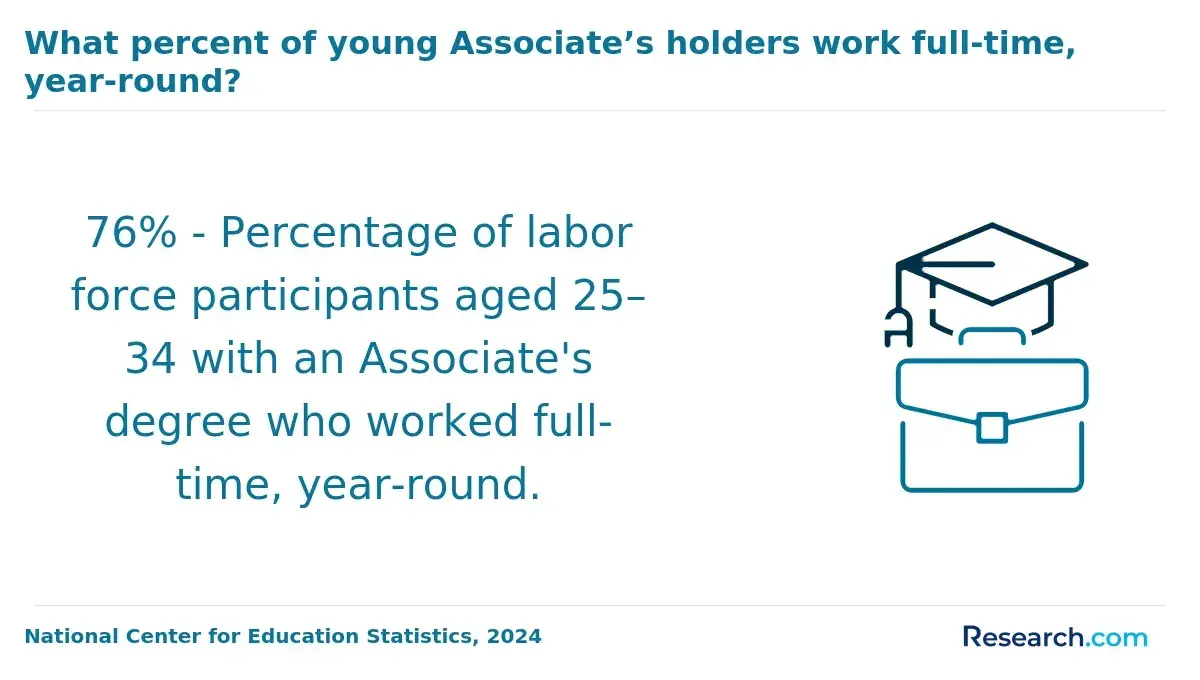
If you need a credential faster than a bachelor's degree, a related associate program can be a practical first step. Some students begin with an accelerated associate degree and later transfer into a software engineering or computer science bachelor's program, but transferability should be confirmed before enrolling.
For most students, the "fastest" accredited choice falls into one of three categories. A competency-based bachelor's can be fastest for experienced programmers, an 8-week transfer-friendly bachelor's completion program can be fastest for students with many completed credits, and an ABET-oriented software engineering program may be fastest only if it offers the required upper-division sequence often enough to support accelerated progress.
How Long Does It Take to Complete an Accredited Online Software Engineering Degree?
An accredited online software engineering bachelor's degree usually requires about 120 to 126 credits. A traditional full-time student taking about 30 credits per year often finishes in four years, while accelerated students shorten the timeline by taking more terms per year, transferring credits, or moving faster through competency-based coursework.
The table below summarizes common starting points and realistic completion ranges. Use it as a planning tool, not a guarantee, because course sequencing, math prerequisites, transfer evaluations, and capstone timing can change the actual graduation date.
| Student starting point | Common credit status | Likely online format | Realistic completion range | Main timeline risk |
| Starting from no college credit | 0 credits | Full bachelor's degree | About 3 to 4 years in an accelerated or year-round format | Heavy course load, calculus or discrete math readiness, and upper-division sequencing |
| Some college completed | 30 to 59 credits | Transfer-friendly bachelor's | About 2 to 3 years | General education gaps and non-transferable technical courses |
| Associate degree or strong transfer record | 60 to 89 credits | Bachelor's completion pathway | About 18 to 30 months | Major-specific prerequisites and residency requirements |
| Near maximum transfer credit | Up to about 90 credits where allowed | Upper-division completion plan | About 12 to 24 months | Required software engineering courses may not be offered every term |
| Experienced programmer in competency-based program | Varies | Self-paced competency-based degree | Potentially faster than term-based study for prepared students | Progress depends on assessments, time available, and prior knowledge |
"Completion time" should mean time from enrollment to graduation after the school has evaluated all credits, not just the length of individual courses. A program with 8-week classes can still take four years if you take only one course at a time, while a 16-week semester program may be faster for a student who can carry a larger full-time load.
Students who are still comparing short credentials and degree options may also want to examine 2 year online degrees that pay well. Those programs can be useful stepping stones, but software engineering bachelor's programs usually require more advanced math, systems design, databases, testing, and team-based development work than shorter credentials.
How Do Accelerated and Competency-Based Online Software Engineering Programs Work?
Accelerated online software engineering programs compress the calendar, not the learning outcomes. Students still complete programming, algorithms, databases, software architecture, testing, security, project management, and capstone requirements; the difference is how quickly courses are offered and how much control students have over pacing.
These formats are the most common, and each affects time to graduation differently. The right choice depends on your prior knowledge, weekly availability, comfort with independent learning, and ability to handle technical assignments quickly.
- Short-course terms: Seven-and-a-half-week or 8-week courses let students complete more course cycles per year, but assignments, coding labs, exams, and team projects arrive faster.
- Year-round enrollment: Programs with fall, spring, and summer terms can reduce idle time between courses, especially when prerequisites are offered multiple times per year.
- Competency-based education: Students progress by proving mastery through assessments or projects, which can shorten the degree for learners who already know programming, databases, networking, or cloud concepts.
- Stackable transfer pathways: Prior associate degrees, military training, professional certificates, and community college courses may reduce the number of remaining credits.
- Credit overload options: Some schools allow motivated students to take more credits per term after proving academic readiness, although overloads can increase burnout risk.
Competency-based formats can be especially attractive to working adults, but they require discipline. If you need frequent live lectures, fixed deadlines, or close instructor pacing, a structured 8-week term may be safer than a self-paced model.
Software engineering also overlaps with analytics, systems thinking, and quantitative reasoning. Students who need to strengthen calculus, discrete math, probability, or logic before entering upper-division computing courses may benefit from exploring online math degree programs or individual online math courses as preparation, although those credits should be preapproved by the target software engineering school.
What Accreditation Should an Online Software Engineering Program Have?
Accreditation is the main quality filter when comparing fast online software engineering degrees. At minimum, the college or university should hold institutional accreditation from an agency recognized by the U.S. Department of Education or CHEA. This matters for federal financial aid, credit transfer, graduate school consideration, and employer confidence.
Programmatic accreditation can also matter, especially for formal software engineering programs. ABET accreditation is widely recognized in engineering and computing fields, but not every reputable online software-focused degree has ABET accreditation. Some programs are institutionally accredited but not programmatically accredited, particularly if they are computer science, software development, or applied technology degrees rather than engineering degrees.
The table below explains how to interpret accreditation when speed is a priority. The fastest program is not a good choice if its accreditation status limits transfer, financial aid, or future graduate study.
| Accreditation type | What it verifies | Why it matters for accelerated students | What to check |
| Institutional accreditation | The overall college meets recognized academic and administrative standards | Often required for federal financial aid, credit transfer, and graduate admissions | Confirm the institution appears in official accreditation databases |
| ABET programmatic accreditation | A specific engineering or computing program meets field-specific standards | May be valued by employers, graduate programs, and engineering-oriented pathways | Verify the exact degree name, campus or online modality, and current accreditation cycle |
| State authorization | The school is allowed to offer online education to students in your state | Can affect whether you may enroll from your location | Ask admissions whether your state is approved for the program |
| Professional licensure alignment | The curriculum may or may not support licensure-related requirements | Less common for software roles, but relevant for certain engineering titles or regulated settings | Ask whether the degree is intended to meet any licensure or professional engineering requirements |
Before applying, confirm accreditation directly through official databases and the school's current catalog. Do not rely only on a webpage headline, because accreditation may apply to one program, campus, delivery format, or catalog year but not another.
How Can Transfer Credits and Prior Learning Shorten an Online Software Engineering Degree?
Transfer credit is usually the biggest time-saver in an online software engineering degree. A student who starts with an associate degree, completed general education credits, or prior technical coursework may bypass months or years of lower-division requirements, but only if the receiving school accepts those credits toward the right degree categories.
The table below shows how different types of prior learning may affect the graduation timeline. The most useful credits are those that satisfy required courses, not just elective space.
| Credit source | Potential time savings | Best use | Common limitation |
| Regionally accredited college courses | High | General education, math, science, and introductory computing requirements | Grades, age of credit, and course equivalency rules may apply |
| Completed associate degree | High | Lower-division completion and transfer pathway entry | May not cover calculus, discrete math, or programming prerequisites |
| AP, CLEP, DSST, or IB exams | Moderate | General education or introductory requirements | Score minimums and credit caps vary by school |
| Military training | Moderate to high | Electives, IT fundamentals, cybersecurity, or technical credit | Evaluation depends on ACE recommendations and school policy |
| Industry certifications | Moderate | Networking, security, cloud, database, or IT foundations | Often applies to electives rather than advanced software engineering courses |
| Portfolio or prior learning assessment | Variable | Documented professional learning | Usually requires fees, faculty review, and strong evidence |
To shorten your timeline safely, ask for a degree audit before committing. The audit should show which credits apply to general education, major requirements, electives, prerequisites, and upper-division residency requirements.
A practical transfer-credit strategy usually follows this sequence:
- Request unofficial transfer evaluations from multiple accredited schools before choosing one program.
- Ask whether old programming, math, or science courses expire or require faculty review.
- Confirm the maximum number of transfer credits and the minimum number of credits that must be completed at the degree-granting school.
- Identify any prerequisite chains, such as programming I before data structures before software architecture.
- Get written confirmation before taking outside courses intended to transfer back into the program.
The biggest mistake is assuming all prior credits will apply cleanly. A school may accept 90 credits in total but still require several major courses, a capstone, and upper-division credits in residence, which can extend completion beyond the advertised fastest timeline.
What Are the Admission Requirements and Start Dates for Accelerated Online Software Engineering Programs?
Admission requirements vary by school and degree level, but accelerated online software engineering programs often look for evidence that students can handle technical coursework at a faster pace. Open or broad-access admissions may be available at some online universities, while engineering-oriented programs may expect stronger math preparation.
Most bachelor's applicants should be ready to provide several materials. Missing documents can delay the transfer evaluation and push a student into a later start date.
- Official transcripts: Schools usually require transcripts from every college attended, even if the student does not expect those credits to transfer.
- High school completion record: First-time college students generally need a high school diploma, GED, or equivalent credential.
- Math placement or prerequisites: Programs may require college algebra, precalculus, calculus readiness, discrete math, or placement testing before upper-division courses.
- Programming background: Some programs start beginners at introductory programming, while others expect prior coursework before advanced software engineering classes.
- English proficiency documentation: International or multilingual applicants may need approved test scores or prior academic records.
- Technology requirements: Students may need a computer capable of running integrated development environments, databases, virtual machines, or cloud tools.
Start dates are another acceleration factor. Programs with monthly, rolling, or six-term annual starts can reduce waiting time, but the presence of frequent starts does not always mean every required course is offered every term.
Before enrolling, ask admissions and academic advising these timing questions:
- When is the next available start date after my transfer evaluation is complete?
- Are all required software engineering courses offered every term, or only once or twice per year?
- Can I take summer courses and still receive financial aid?
- Is there a required orientation, foundation term, or probationary first term?
- Can I double up on courses after the first term if I maintain a required GPA?
- When are capstone, senior project, internship, or team software project courses scheduled?
Students who want the fastest start should apply early, send transcripts immediately, and avoid enrolling until they have a written plan showing the earliest possible graduation date.
How Much Does a Fast Online Software Engineering Degree Cost, and Is Financial Aid Available?
A faster online software engineering degree is not automatically cheaper. It may reduce living costs or time away from the workforce, but tuition structure, transfer credits, books, software, fees, and repeated courses can change the total cost. Competency-based programs may be cost-effective for students who complete many requirements in each subscription term, while per-credit programs may favor students transferring in many credits.
Federal financial aid can apply to eligible accredited online programs. Current Federal Direct Loan annual limits for dependent undergraduate students generally range from $5,500 to $7,500 depending on year in school, which means students should compare aid eligibility against the actual yearly pace of an accelerated program rather than only the total tuition.
The table below explains common cost structures. Focus on total remaining cost after transfer credits, not only tuition per credit or advertised program price.
| Cost factor | How it affects accelerated students | What to verify |
| Per-credit tuition | Students pay for each remaining credit, so transfer credit can directly reduce tuition | In-state, out-of-state, military, employer, or online tuition rates |
| Flat-rate term tuition | Students who complete more courses per term may lower cost per completed credit | Minimum pace, maximum course load, and refund policies |
| Technology and course fees | Online courses may require fees beyond tuition | Software, proctoring, lab, graduation, and assessment fees |
| Transfer evaluation | Accepted credits can shorten time and reduce remaining tuition | Whether credits apply to major requirements or only electives |
| Repeated or withdrawn courses | Accelerated pacing can increase cost if students overload and do not pass | Satisfactory academic progress and retake policies |
| Employer tuition assistance | Working students may reduce out-of-pocket cost | Annual employer caps, grade requirements, and reimbursement timing |
Students comparing software engineering with business leadership or management pathways may also review accelerated MBA programs, especially if their long-term goal is product management, engineering management, or technology operations. The right choice depends on whether you need deeper technical preparation or a faster management credential.
To estimate affordability, calculate the remaining credits after transfer, multiply by the actual online tuition rate, add fees, and compare that total with grants, scholarships, employer assistance, and loans. If a school charges by term, estimate how many courses you can realistically complete per term while maintaining strong grades.
Can You Work Full Time While Completing an Accelerated Online Software Engineering Degree?
Yes, many students work full time while completing online software engineering degrees, but accelerated pacing changes the workload. A single 8-week programming course can feel like two traditional weeks of material compressed into one, especially when assignments require debugging, testing, documentation, and project work.
The table below compares common enrollment intensities. It can help working students decide whether speed is realistic or whether a slightly slower plan will protect grades, health, and job performance.
| Enrollment pace | Typical course load | Best fit | Timeline effect | Main trade-off |
| Part time | One course at a time or fewer than 12 credits per term | Full-time workers, caregivers, beginners in programming | Slower but more sustainable | Longer time to graduation |
| Full time | About 12 to 15 credits in a standard term or equivalent | Students with stable schedules and some academic momentum | Can support traditional or moderately accelerated completion | Requires consistent weekly study time |
| Accelerated full time | Multiple short-term courses or year-round study | Students with strong time management and prior technical experience | Can shorten completion significantly | Higher risk of burnout or lower grades |
| Competency-based high pace | As many assessments as the student can complete successfully | Experienced developers or IT professionals | Potentially fastest for prepared students | Requires independent learning and rapid project completion |
Working students should be especially cautious with project-heavy courses. Software engineering classes often require group coordination, version control, code reviews, design documents, testing plans, and iterative development. Those tasks are flexible online, but they are not effortless.
A manageable acceleration plan may include these safeguards:
- Start with one technical course in the first term to measure workload before increasing pace.
- Avoid taking two highly demanding courses together, such as data structures and discrete math, unless you have strong preparation.
- Use summer terms for general education or electives rather than stacking multiple advanced programming courses.
- Plan weekly blocks for coding assignments because debugging time is difficult to predict.
- Tell academic advisors if your work schedule includes travel, overtime, rotating shifts, or on-call duties.
The fastest plan is only valuable if you can finish with the skills, portfolio, and GPA needed for your next goal.
Are Accelerated Online Software Engineering Degrees Respected by Employers and Graduate Schools?
Employers and graduate schools generally care more about accreditation, skills, projects, experience, and institutional credibility than whether courses were completed online or in an accelerated format. However, "accelerated" can raise questions if the program lacks recognized accreditation, has unclear academic standards, or does not include substantial programming and software design work.
Labor market data supports the value of strong software skills, but it should not be read as a guaranteed outcome. The U.S. Bureau of Labor Statistics reported a May 2024 median annual wage of $133,080 for software developers, while related software quality assurance and testing roles vary by responsibility and industry. For students, this means the degree should be evaluated alongside portfolio strength, internships, Git-based projects, cloud experience, and interview readiness.
Graduate schools may accept accelerated online degrees when they come from accredited institutions and include the prerequisites needed for the target program. For computer science or software engineering graduate study, admissions committees may look for discrete math, data structures, algorithms, systems, databases, and strong quantitative preparation. For leadership-oriented doctoral study, technology professionals sometimes move in a different direction, such as a PhD in organizational leadership, but that path serves different goals than advanced software engineering research.
To improve employer and graduate-school confidence, prioritize programs that include:
- Institutional accreditation from a recognized accreditor.
- Clear software engineering or computer science learning outcomes.
- Substantial coding assignments in multiple languages or frameworks.
- Software design, testing, requirements analysis, and team-based project work.
- A capstone, portfolio, or applied project that can be discussed in interviews.
- Career services, internship support, or employer-aligned project opportunities.
An accelerated degree can be respected when it is rigorous and transparent. The red flag is not speed by itself; it is speed without evidence of meaningful technical preparation.
How Should You Compare the Fastest Accredited Online Software Engineering Programs?
To compare the fastest accredited online software engineering programs, start with your actual starting point: completed credits, programming experience, math readiness, weekly study time, budget, and career goal. A program that is fastest for a transfer student with an associate degree may be slow or frustrating for a beginner who needs foundational math and coding courses.
The comparison table below highlights the major decision factors. Use it to separate true acceleration from marketing language.
| Comparison factor | Why it matters | Better choice if speed is the priority |
| Accreditation | Protects financial aid, transfer, and credibility | Institutionally accredited school; ABET if important for your engineering goals |
| Transfer-credit policy | Often determines the largest time savings | High transfer maximum plus clear major-course equivalencies |
| Course term length | Short terms increase scheduling opportunities | 7.5-week or 8-week terms if you can handle compressed workload |
| Course availability | Rarely offered prerequisites can delay graduation | Required courses offered multiple times per year |
| Competency-based option | Can reward prior knowledge | Best for experienced programmers with strong independent learning habits |
| Capstone or internship | May add fixed sequencing requirements | Capstone offered frequently and available online |
| Total cost after transfer | Fast does not always mean inexpensive | Lowest total remaining cost, not just lowest tuition headline |
| Career alignment | Different programs emphasize engineering, development, security, or applied computing | Curriculum aligned with your target role |
Before enrolling, take these practical steps to avoid the most common mistakes:
- Verify institutional accreditation and, if relevant, programmatic accreditation for the exact degree and delivery format.
- Request a written transfer evaluation showing how each prior course applies to the degree plan.
- Ask for the fastest possible course sequence based on your evaluated credits, not a generic program timeline.
- Confirm whether required courses have prerequisites that may slow your progress.
- Compare full-time, part-time, summer, and overload options before assuming the advertised timeline fits your life.
- Ask whether capstone, senior project, internship, or team-based software project courses are offered every term.
- Calculate total remaining cost, including fees, books, software, assessments, and possible repeated courses.
- Review outcomes support, including career services, portfolio development, internship guidance, and employer partnerships.
Red flags include unclear accreditation, vague degree names, pressure to enroll before transfer evaluation, promises of unrealistically fast completion from zero credits, and programs that cannot provide a course-by-course graduation plan. A slightly slower accredited program with stronger course availability, better transfer fit, and clearer outcomes may be the better decision.
Other Things You Should Know About Software Engineering
In 2027, Arizona State University and Southern New Hampshire University offer accredited online software engineering programs with accelerated completion options. These programs are designed for faster degree attainment, with pathways enabling completion in as little as two years, catering to those eager to enter the workforce quickly.
A portfolio is strongly recommended, even when it is not required for graduation. Employers often want evidence that you can build, test, document, and explain software. Strong portfolio pieces may include web applications, APIs, mobile apps, automated tests, database projects, cloud deployments, or capstone work.
Prerequisites typically include a high school diploma or equivalent, with strong math and science skills. Some programs may require prerequisite courses in programming or computer science, while others may ask for standardized test scores such as the SAT or ACT.
In 2027, accelerated software engineering programs typically require 120 to 180 credit hours. These programs condense the coursework into shorter academic terms, enabling students to graduate quickly, often within 18 months if transferring credits or pursuing intensive semesters.
References
- Paying for a Computer Science Degree | Scholarships, Grants, Loans https://www.computerscience.org/resources/how-to-pay-for-a-degree/
- A 10-Year Look at Education Returns: Traditional vs Accelerated Pathways https://www.codingtemple.com/blog/traditional-vs-accelerated-higher-education/
- Software Engineering Degree Career Outcomes: Jobs, Salaries & Growth https://hakia.com/degrees/software-engineering/career-outcomes/
- 2025 Most Affordable Online Software Engineering Degrees https://www.onlineu.com/most-affordable-colleges/software-engineering-degrees
- Top Careers for Software Engineering Majors https://www.pointloma.edu/resources/undergraduate-studies/top-careers-software-engineering-majors
- Outcomes Reporting - Tech Elevator https://www.techelevator.com/outcomes/
- IT Scholarships: Your Chance for a Funded Tech Degree https://code.berlin/en/blog/it-stipendien/