2027 How to Become a Dentist – Salary & Requirements

Co-Founder and Chief Data Scientist
Becoming a dentist is a long, regulated path that requires undergraduate preparation, dental school, clinical training, licensure, and, for specialists, additional residency. It can also lead to a stable healthcare career with clinical autonomy, several practice settings, and opportunities to specialize, teach, conduct research, or manage a dental organization.
This guide is for students comparing healthcare careers, pre-dental undergraduates planning prerequisites, career changers evaluating the investment, and dental professionals considering advancement. It explains how long it takes to become a dentist, what education and licensing steps are required, what dentists earn, which skills matter most, and how to decide whether dentistry is the right fit. It also connects dentistry to related paths in healthcare management education and includes resources on the average starting salary for dentists.
Quick Answer: How do you become a dentist?
To become a dentist in the United States, you typically complete college-level prerequisite coursework, earn a Doctor of Dental Surgery (DDS) or Doctor of Dental Medicine (DMD), pass required licensing exams, and meet your state dental board’s licensure rules. Students who want to become specialists, such as orthodontists, periodontists, or oral and maxillofacial surgeons, usually complete additional postgraduate residency training after dental school.
Dentistry remains a significant healthcare workforce field. The United States has 202,485 professionally active dentists, equal to approximately 60 dentists per 100,000 U.S. residents, according to the American Dental Association (2025). For students weighing the cost and time commitment, the decision should come down to academic readiness, manual skill, patient-care temperament, debt planning, and long-term career goals.
How To Become a Dentist Table of Contents
- Career outlook for dentists and dental professionals
- Skills dentists need to succeed
- Steps to become a dentist and enter the field
- Ways to advance after becoming a dentist
- Using advanced degrees to expand dental career options
- Alternative degrees that can support a dental career
- How interdisciplinary training can strengthen dental practice
- Digital tools for dental practice management and patient engagement
- How to pay for dental education
- How data science can improve dental practice
- Mental and physical demands of dentistry
- Mentorship and networking in a dental career
- Biotechnology and dental innovation
- Healthcare administration skills for dentists
- Artificial intelligence in dental education and practice
- How to succeed in dental school
Why choose dentistry as a career?
Dentistry appeals to students who want a healthcare career that combines science, precise hands-on work, patient communication, prevention, diagnosis, and treatment planning. Dentists are doctors; they earn professional doctoral degrees and are licensed to diagnose and treat oral health conditions. Their work affects more than teeth. Oral health can influence nutrition, speech, self-confidence, chronic disease management, and quality of life.
The profession also offers several work environments. Dentists may work in private practices, group practices, hospitals, community health centers, academic institutions, public health agencies, or dental service organizations. Some dentists prioritize ownership and clinical autonomy, while others prefer employment settings with shared administration and more predictable schedules.
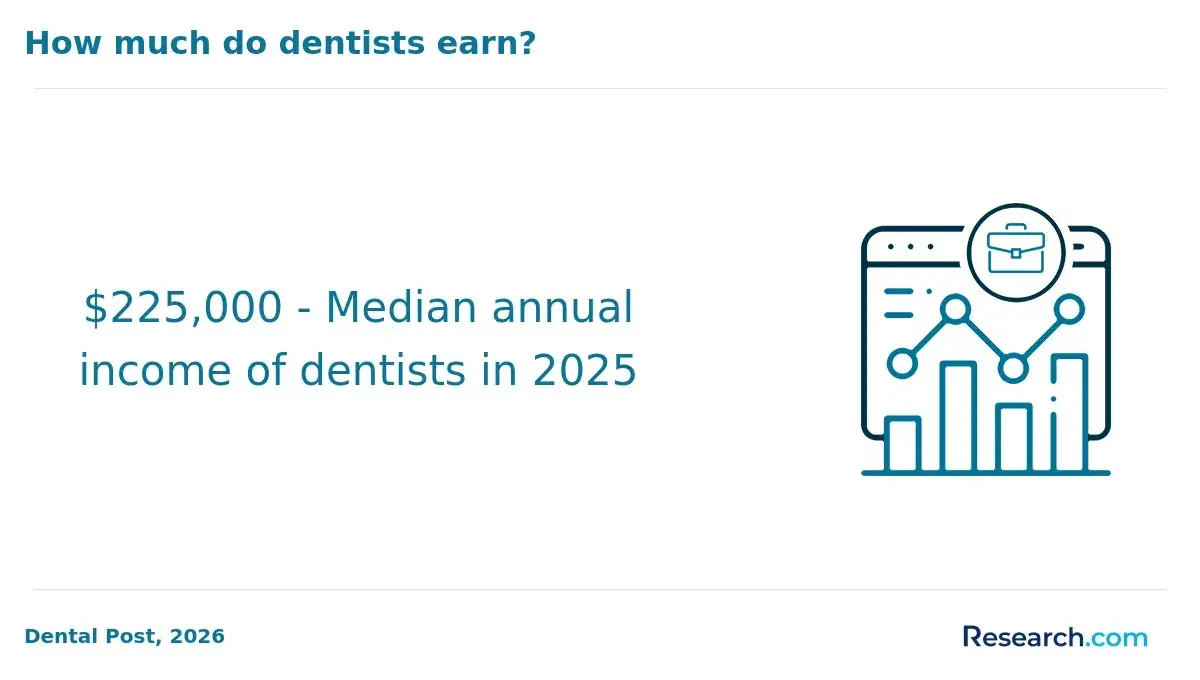
Compensation is another reason students consider the field, but it should not be the only reason. The U.S. Bureau of Labor Statistics reports a median salary of $179,210 for dentists, while a Dental Post survey reports a median salary of $225,000. These figures show strong earning potential, but actual income depends on location, specialty, practice model, experience, payer mix, hours worked, business costs, and student loan obligations.
The main trade-off is the investment. Dental school requires years of preparation, substantial tuition and living costs, and intense clinical training. A good fit for dentistry is someone who is academically prepared, comfortable with close patient interaction, able to work in small anatomical spaces, and willing to keep learning as technology, materials, and standards of care evolve.
Career outlook for dentists and dental professionals
Demand for dental care is supported by population needs, preventive care, cosmetic and restorative treatment, aging-related oral health concerns, and the growing recognition that oral health is connected to overall health. Research has linked oral health with systemic conditions such as cardiovascular disease, diabetes, and adverse pregnancy outcomes, which reinforces the importance of regular dental care.
Dentistry can also be practiced in a broader global context. Some dentists explore international work, volunteer missions, or markets influenced by dental tourism. These paths require careful review of licensure, malpractice coverage, language expectations, and local regulations.
According to BLS data cited for 2025, dentists earn an average salary of $179,210 and have projected growth of around 4%. Dental hygienists earn an average salary of $94,260 and have a 7% growth rate. Dental assistants earn an average salary of $47,300 and have a 6.4% growth rate. Dental technicians earn around $48,310 and show a declining employment rate of -4.7%.
| Role | Average salary | Growth rate | Best fit for |
| Dentist | $179,210 | Around 4% | Students seeking a doctoral-level clinical career with diagnostic and treatment authority. |
| Dental hygienist | $94,260 | 7% | Students who want direct preventive care work with a shorter education path than dentistry. |
| Dental assistant | $47,300 | 6.4% | Students seeking an entry point into dental offices and chairside support. |
| Dental technician | $48,310 | -4.7% | Students interested in dental appliances, restorations, lab work, and fabrication. |
Skills dentists need to succeed
Dentistry requires more than strong grades in science courses. Dentists must combine clinical judgment, fine motor control, ethical decision-making, communication, business awareness, and resilience. Students comparing dentistry with fields such as public health may find it useful to review options to study public health online, but dentistry is more procedure-intensive and patient-facing at the point of care.
Core clinical and technical skills
- Manual dexterity: Dentists work in tight spaces using small instruments, mirrors, burs, scanners, and restorative materials. Precise hand control is essential for safe and accurate procedures.
- Clinical knowledge: A dentist must understand oral anatomy, pathology, radiographic interpretation, anesthesia, pharmacology, infection prevention, restorative care, oral surgery, and treatment planning.
- Attention to detail: Small errors can affect fit, bite, comfort, esthetics, and long-term outcomes. Dentists must carefully evaluate records, images, margins, occlusion, restorations, and patient history.
- Diagnostic problem-solving: Dentists interpret symptoms, radiographs, intraoral findings, periodontal measurements, medical histories, and patient concerns to develop appropriate treatment options.
- Infection control discipline: Dental care involves exposure risks, so clinicians must follow sterilization, PPE, instrument processing, and safety protocols. The University of Illinois Chicago explains why infection control must be treated seriously.
Professional and interpersonal skills
- Ethics and professionalism: Dentists make decisions that affect patient health, finances, and trust. Confidentiality, informed consent, documentation, and honest treatment recommendations are central to the job.
- Patient education: Strong dentists explain conditions, options, risks, prevention, and home care in language patients can understand. This improves adherence and reduces anxiety.
- Commitment to lifelong learning: Materials, digital imaging, implants, aligners, anesthesia techniques, and practice systems continue to change. The same expectation applies to students considering medical or science-based paths, including higher-paying careers for biology majors.
- Adaptability: Dentists treat children, adults, older patients, anxious patients, medically complex patients, and people with different financial constraints. Flexibility matters, just as it does for students reviewing nursing school prerequisites and other healthcare requirements.
Steps to become a dentist and start your career
The path to dentistry is structured because the profession is licensed and clinically complex. While requirements vary by school and state, most aspiring dentists follow a sequence that includes undergraduate preparation, dental school admission, professional dental education, clinical competencies, licensing exams, and state licensure.
Typical path to becoming a dentist
- Complete college prerequisites: Dental schools commonly expect coursework in biology, chemistry, organic chemistry, physics, and related sciences. Many students major in biology, chemistry, health sciences, or another field that allows them to complete prerequisite courses.
- Build dental exposure: Shadow dentists, volunteer in oral health settings, work as a dental assistant if permitted, or participate in community health activities. Admissions committees often value evidence that applicants understand the profession.
- Prepare a strong application: Competitive applicants typically show academic strength, service, leadership, communication skills, and commitment to patient care.
- Earn a DDS or DMD: The Doctor of Dental Surgery and Doctor of Dental Medicine are professional degrees that prepare graduates for licensure as dentists.
- Pass licensing requirements: Graduates must meet exam and state board requirements before practicing independently.
- Decide between general practice and specialization: General dentists may begin practice after licensure, while specialists complete additional training in areas such as orthodontics, periodontics, pediatric dentistry, prosthodontics, endodontics, or oral and maxillofacial surgery.
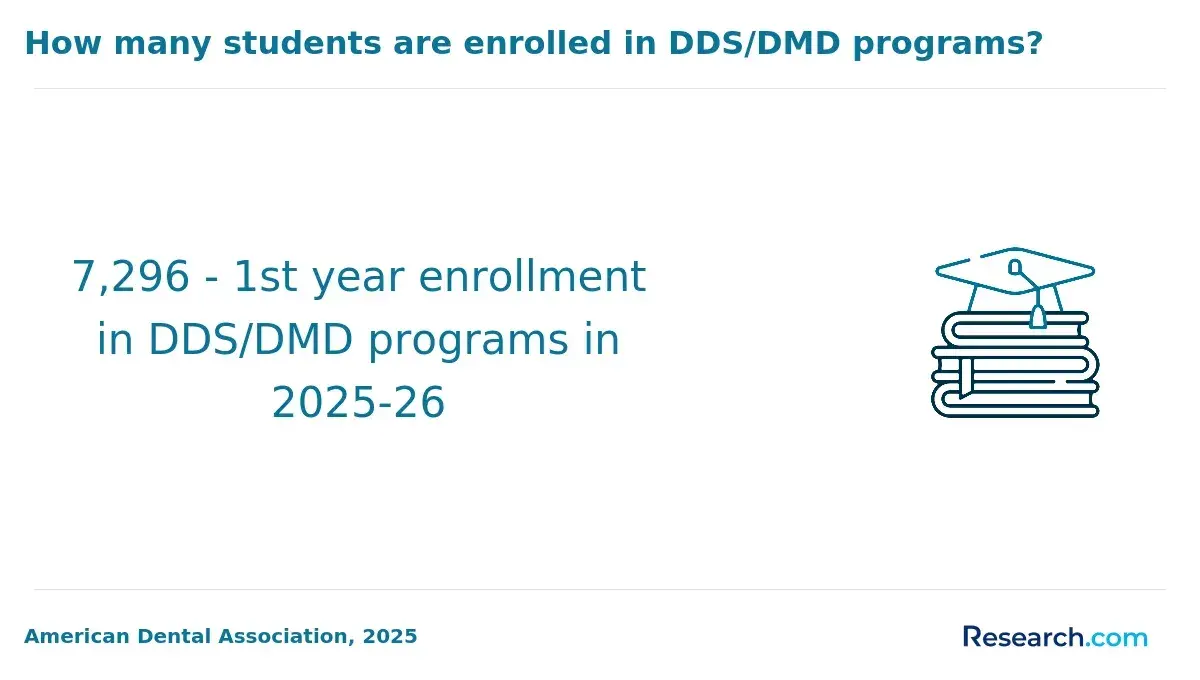
In 2025, enrollment for Doctor of Dental Surgery and Doctor of Dental Medicine programs reached 7,296. Choosing dentistry can position graduates to help meet oral healthcare needs, especially in communities with limited access to comprehensive dental services.
General dentists provide examinations, diagnoses, preventive care, restorations, treatment plans, patient education, and referrals when specialized care is needed. Orthodontists treat misaligned teeth and jaws with braces, aligners, and other appliances. Periodontists manage gum disease, periodontal surgery, and dental implants. Oral surgeons perform surgical care involving the mouth, jaw, face, extractions, facial pain, and trauma. The answer to “How long is dental school?” depends partly on whether the student stops at general dentistry or pursues a specialty residency.
Dental career options by education level
| Education level | Possible role | What the role involves | Average salary |
| Certificate or postsecondary training | Orthodontic assistant or related dental support role | Supports orthodontists with instruments, impressions or molds, sterilization, chairside preparation, and patient flow, depending on state rules. | $57,759 |
| Associate’s degree or approved training | Orthodontist assistant | Assists during orthodontic appointments, prepares materials, maintains instruments, and supports patient care under supervision. | $57,759 |
| Bachelor’s degree in dental hygiene | Dental hygienist | Provides preventive care, cleans teeth, takes X-rays, applies fluoride treatments, and educates patients under dentist supervision. Students comparing healthcare timelines may also ask, how long does it take to become a nurse anesthetist. | $94,260 |
| DDS or DMD | Dentist | Diagnoses and treats oral disease, restores teeth, performs preventive and restorative procedures, and manages patient treatment plans. | $179,210 |
Can you work in dentistry with only a certificate?
A certificate alone does not qualify someone to practice as a dentist. Dentistry requires a DDS or DMD and state licensure. However, certificates can help students enter dental offices in support roles, build experience, and decide whether the profession is right for them.
For example, a credential such as the Certified Orthodontic Assistant exam can support advancement in orthodontic assisting when it aligns with state requirements. Some states also have credentials or permits for dental sedation assisting, but eligibility varies and should be checked with the relevant dental board.
Dental specialties and related roles
| General Dentist | Orthodontist | Periodontist | Oral Surgeon | |
| Primary work | Identifies, treats, and helps prevent oral health problems; performs exams, cleanings, restorations, and patient education. | Corrects tooth and jaw alignment with braces, aligners, and appliances; tracks progress and updates treatment plans. | Treats periodontal disease, performs gum-related surgery, and places dental implants. | Performs surgical procedures involving the mouth, jaw, and face; removes teeth and treats facial pain and trauma. |
| Junior Management Jobs | Dental Assistant ($47,300) | Orthodontist Assistant ($57,759) | Periodontist Assistant ($43,296) | Oral Surgery Assistant ($46,495) |
| Middle Management Jobs | Dental Hygienist ($94,260) | Orthodontic Treatment Coordinator ($46,738) | Periodontics Office Manager ($74,953) | Dental Nurse ($84,575) |
| Senior Management Jobs | Dentist ($179,210) Chief Dental Officer ($151,203) | Orthodontist ($239,200) | Periodontist ($225,770) | Oral and Maxillofacial Surgeon ($239,200) |
How can I advance my career as a dentist?
Dentists can grow their careers by specializing, developing business and leadership skills, pursuing board certification, adding advanced clinical services, teaching, conducting research, or moving into public health and administration. The right path depends on whether you want deeper clinical expertise, higher leadership responsibility, practice ownership, academic work, or a less procedure-heavy role.
Specialization can be a strong choice for dentists who enjoy a focused clinical area, are willing to complete additional training, and can manage the added opportunity cost. Similar to students evaluating in-demand nursing specialties, dental students should compare training length, patient population, income potential, competitiveness, and lifestyle before committing to a specialty.
What can a master’s degree add to a dental career?
Example role: Chief Dental Officer
A chief dental officer helps oversee clinical quality, care protocols, dental teams, and coordination across providers. This role may suit dentists who want to influence systems of care rather than focus only on chairside practice. Dentists interested in leadership, budgeting, compliance, or operations can also compare online master’s programs in healthcare administration.
Average salary: $151,203
What can a doctorate or specialty training lead to?
Example role: Periodontist
A dentist can become a periodontist after earning a DMD degree or a PhD in medical sciences and completing residency training. A periodontics residency typically lasts for three years and provides advanced preparation in periodontal therapy, gum surgery, implant placement, and related procedures.
Average salary: $225,770
Which certifications matter in dentistry?
Certifications are most useful when they match a dentist’s scope of practice, specialty, or clinical services. They should not be chosen just to decorate a résumé. Board certification can demonstrate advanced competence in a specialty, while clinical credentials in areas such as sedation or implantology may support specific practice offerings when allowed by state rules.
Dental specialty board certification is available through organizations tied to recognized dental disciplines. Examples include:
- American Board of Orthodontics (ABO) for orthodontists
- American Board of Periodontology (ABP) for periodontists
- American Board of Endodontics (ABE) for endodontists
- American Board of Oral and Maxillofacial Surgery (ABOMS) for oral and maxillofacial surgeons
Other credentials may include Advanced Life Support Certification, Sedation Dentistry Certification, or Implantology Certification. Before enrolling, confirm whether the credential is recognized by employers, insurers, professional boards, or your state licensing authority.
Using advanced degrees to expand dental career options
Advanced education can help dentists move beyond general clinical practice into specialty care, practice leadership, healthcare administration, research, policy, or education. The most valuable degree is the one that solves a specific career problem: gaining a specialty credential, preparing for ownership, managing a multi-site practice, teaching in dental education, or working in public health systems.
For practicing dentists who need flexible study options, an online one-year master’s program may be worth comparing if it fits career goals and workload. Programs connected to healthcare management can help dentists strengthen finance, operations, staffing, compliance, and strategic planning skills, all of which are important for running or leading a dental practice.
What alternative degrees can support a dental career?
Not every useful credential has to be a dental specialty degree. Some dentists benefit from supplemental education in business, healthcare administration, informatics, public health, data science, or technology. Students who are still exploring healthcare entry points can also compare the best-paying associate degrees to understand shorter pathways in healthcare, administration, and technical support roles.
| Supplemental field | When it makes sense | Possible benefit for dentists |
| Healthcare administration | You want to manage a practice, lead teams, or move into executive roles. | Builds skills in operations, budgeting, compliance, and strategy. |
| Public health | You want to work on access, prevention, community oral health, or policy. | Supports population-level oral health planning and program design. |
| Data science or informatics | You want to use clinical and operational data to improve outcomes and efficiency. | Helps with analytics, forecasting, quality improvement, and decision support. |
| Artificial intelligence or technology | You want to understand emerging diagnostic, imaging, workflow, or automation tools. | Improves technology evaluation and adoption decisions. |
| Business or finance | You plan to own or scale a dental practice. | Strengthens pricing, staffing, revenue cycle, and investment decisions. |
How can interdisciplinary training strengthen a dental career?
Interdisciplinary training can help dentists understand how oral healthcare connects with medical care, billing systems, patient coordination, technology, and team-based service delivery. For example, training aligned with allied health roles can improve communication between dentists, assistants, hygienists, office managers, and medical partners.
Programs such as affordable online medical assistant programs may be useful for students exploring clinical support work before dental school or for dental practices cross-training staff. Dentists themselves should choose interdisciplinary education strategically, focusing on skills that improve patient care, workflow, compliance, or leadership.
How can digital tools improve dental practice management and patient engagement?
Digital systems now influence nearly every part of dental practice, from scheduling and reminders to imaging, records, billing, treatment presentation, and follow-up. The right technology can reduce administrative friction and improve patient communication, but poor implementation can create costs, training burdens, and workflow problems.
Practice management software, electronic records, automated reminders, digital consultation tools, and teledentistry platforms can help practices organize patient care and improve access. Billing accuracy and coding knowledge also matter for financial sustainability, making online billing and coding courses relevant for office managers, administrative staff, or dentists who want stronger revenue cycle awareness.
How can I finance dental education?
Dental education can require major financial planning. Prospective students should compare tuition, fees, instruments, exams, insurance, living expenses, relocation, interest, and lost income while in school. The best financing plan usually combines scholarships, grants, savings, federal or private loans, service-based repayment programs, institutional aid, and realistic budgeting.
Students should ask each dental school for total cost of attendance, average debt at graduation if available, scholarship renewal rules, clinical supply costs, and whether residency or specialization is likely for their goals. Some students also consider interdisciplinary training that opens alternative career options; for example, a master’s in bioinformatics online could support interests in computational health, research, or data-driven healthcare, though it is not a substitute for dental licensure.
Questions to ask before borrowing for dental school
- What is the full cost of attendance, not just tuition?
- How much debt do graduates typically carry?
- What repayment options are available after graduation?
- Does the school offer scholarships, service commitments, or need-based aid?
- How do licensing exam, board, instrument, and relocation costs affect the budget?
- Will your intended specialty require additional years of training before full earning potential?
How can data science transform dental practice?
Data science can help dental practices move from intuition-based management to evidence-informed decision-making. Dentists and practice leaders can use data to evaluate appointment patterns, treatment acceptance, patient outcomes, recall compliance, inventory needs, and equipment maintenance. In larger organizations, analytics may also support quality improvement, population health initiatives, and predictive planning.
Dentists who want deeper analytics skills can compare programs and costs related to affordable online master’s in data science programs. This path is most relevant for clinicians interested in health technology, research, analytics leadership, or multi-location practice operations.
What are the mental and physical demands of dentistry?
Dentistry can be rewarding, but the work is physically and emotionally demanding. Students should assess these realities before committing to the profession.
- Physical stamina and posture: Dentists often work in seated or bent positions for long periods. Ergonomics, core strength, magnification, and proper operatory setup can reduce strain.
- Fine motor control: Procedures require steady hands and precise movement in a small workspace where visibility can be limited.
- Vision demands: Continuous focus on small details can contribute to eye fatigue. Regular eye care, loupes, lighting, and breaks can help.
- Patient anxiety management: Many patients fear dental treatment. Dentists need calm communication, empathy, and confidence under pressure.
- Time pressure: Clinical schedules, emergencies, documentation, staff issues, and business responsibilities can compete for attention.
- Emotional resilience: Dentists must handle complications, dissatisfied patients, financial conversations, and the stress of clinical responsibility.
How can mentorship and networking help a dental career?
Mentorship can shorten the learning curve in dentistry. Experienced dentists can help students understand admissions, clinical expectations, specialty decisions, practice ownership, associate contracts, patient communication, and mistakes to avoid. Networking also matters because many opportunities in dentistry arise through school relationships, residencies, professional associations, study clubs, conferences, and local dental societies.
Technology-focused networking is becoming more valuable as dental practices adopt digital imaging, AI-supported tools, and automation. Dentists interested in this direction may explore an online artificial intelligence degree to understand the technical foundations behind emerging healthcare tools.
How can biotechnology support dental innovation?
Biotechnology influences dentistry through biomaterials, tissue engineering, regenerative procedures, implant surfaces, diagnostics, and oral disease research. These developments may improve treatment planning and clinical outcomes, but adoption should be evidence-based and aligned with patient safety, regulatory standards, and professional guidelines.
Dentists interested in research, product development, or translational science may benefit from learning more about career options with a master’s in biotechnology. This route may be especially relevant for dentists who want to move into dental materials, regenerative medicine, diagnostics, or biotech entrepreneurship.
Alternative career options for dentists
The U.S. dental workforce has remained relatively stable in recent years, with active dentists around the 202,000 to 202,500 range, according to ADA data from 2025. Enrollment has also been stable, with 28,925 enrollees in 2025.
Some dentists eventually choose careers outside daily chairside practice. These alternatives can be a good fit for dentists who want to reduce physical demands, focus on research or education, influence policy, or apply clinical knowledge in business settings.
- Dental researcher: Works in universities, research institutions, clinical trials, dental product development, or materials science to study oral disease, techniques, technologies, and treatment outcomes.
- Dental educator: Teaches future dentists, hygienists, assistants, or residents in dental schools, universities, or training programs.
- Public health dentist: Designs and supports oral health programs, prevention initiatives, access efforts, and policy work for communities and underserved populations.
- Forensic dentist: Applies dental records, identification methods, and bite mark analysis in collaboration with law enforcement or medical examiner offices.
- Dental sales and marketing: Uses clinical expertise to support dental products, equipment, software, or technology companies. Those considering this route can review what a dental sales representative does.
Integrating healthcare administration skills into dental practice
Clinical ability alone does not guarantee a successful dental practice. Dentists who understand administration can make better decisions about staffing, scheduling, compliance, purchasing, revenue cycle management, patient experience, and growth. These skills are especially important for practice owners, partners, chief dental officers, and dentists working in large organizations.
Why healthcare administration matters for dentists
- Practice efficiency: Administrative knowledge helps dentists manage scheduling, billing, inventory, delegation, staff workflows, and patient communication.
- Strategic growth: Dentists with business and management skills are better prepared to evaluate new technology, add services, open locations, or negotiate partnerships.
- Patient-centered operations: Strong administration can reduce wait times, improve follow-up, clarify treatment estimates, and support better continuity of care.
Dentists who want formal leadership training may compare a one-year online master’s in healthcare administration. This option may suit working clinicians who need flexible study while developing finance, leadership, operations, and organizational management skills.
How can artificial intelligence transform dental education and practice?
Artificial intelligence is increasingly relevant in dental imaging, diagnostic support, treatment planning, patient communication, claims workflows, and administrative automation. AI tools may help identify patterns in radiographs, streamline routine tasks, and support more consistent decision-making, but they do not replace clinical judgment, informed consent, or professional accountability.
Dental education is also affected by digital simulation, AI-supported learning tools, and technology-rich clinical training. Dentists who want to understand these systems more deeply can explore the most affordable online AI degree options, particularly if they are interested in health technology, analytics, or innovation leadership.
Tips for success in dental school
Dental school is academically intense and clinically demanding. Success depends on structure, consistency, and early help-seeking rather than last-minute studying.
- Use a reliable organization system: Track lectures, labs, exams, clinic requirements, patient appointments, and deadlines in one place.
- Study actively: Use practice questions, drawings, flashcards, case discussions, and peer teaching instead of only rereading notes.
- Protect clinical practice time: Hand skills improve through repetition. Take preclinical labs seriously and ask for feedback early.
- Manage time before it becomes a crisis: Dental students balance coursework, simulation, clinic, boards, and personal responsibilities. Build weekly routines and avoid falling behind.
- Prioritize health: Sleep, nutrition, movement, posture, and stress management directly affect performance and clinical focus.
- Use support systems: Faculty, advisors, classmates, mental health resources, tutors, student organizations, and mentors can help students navigate difficult periods.
- Consider complementary credentials carefully: Some students explore quick medical certifications that pay well for healthcare exposure, but any added credential should support your timeline rather than distract from dental school requirements.
Common mistakes to avoid when planning a dental career
| Mistake | Why it causes problems | Better approach |
| Choosing dentistry only for salary | The training is long, expensive, and hands-on. Income alone may not offset poor fit. | Shadow dentists, talk to students, and evaluate the daily work before applying. |
| Ignoring accreditation and licensure rules | Dental practice is regulated, and requirements vary by state. | Confirm dental school accreditation and state board requirements before enrolling. |
| Looking only at tuition | Fees, instruments, exams, housing, transportation, and interest can change the real cost. | Compare total cost of attendance and projected borrowing. |
| Assuming every specialty is worth the extra training | Residency can delay earnings and increase opportunity cost. | Compare training length, competitiveness, lifestyle, patient population, and long-term goals. |
| Underestimating physical strain | Poor ergonomics can lead to pain, fatigue, and reduced career satisfaction. | Build healthy posture habits, use proper equipment, and take ergonomics seriously from the start. |
| Neglecting business skills | Many dentists eventually manage staff, budgets, systems, or ownership decisions. | Learn practice management, finance, billing basics, and leadership early. |
Is becoming a dentist worth it?
Becoming a dentist can be worth it for students who want a doctoral-level healthcare career, enjoy detailed manual work, are comfortable treating patients, and can make a realistic plan for school costs and licensure. It is especially compelling for people who want the option to practice independently, specialize, lead a clinical team, or combine patient care with business ownership.
It may not be the best fit for students who dislike close patient interaction, struggle with fine motor tasks, want a shorter training path, or are uncomfortable with debt risk and high academic pressure. Students unsure about committing to dental school may first explore dental assisting, dental hygiene, public health, healthcare administration, or related science careers.
For dentists who later want to move into management, a healthcare administration degree online can help build knowledge in operations, leadership, and healthcare systems. The strongest career plan is one that connects clinical training, financial planning, licensure requirements, and long-term professional goals.
Key Insights
- Dentistry is a doctoral-level healthcare profession: Practicing as a dentist generally requires a DDS or DMD, licensing exams, and state board approval.
- The workforce need remains important: The U.S. has 202,485 professionally active dentists, or about 60 dentists per 100,000 residents, according to ADA data.
- Earnings can be strong but vary widely: BLS reports a median salary of $179,210, while Dental Post reports a median salary of $225,000. Location, specialty, ownership, hours, and debt all affect actual financial outcomes.
- Dental school is only one part of the decision: Students should also evaluate total cost, licensure, physical demands, patient-care fit, and whether they want general practice or specialty training.
- Skills matter as much as credentials: Manual dexterity, diagnostic reasoning, communication, ethics, infection control, and adaptability are central to long-term success.
- Career options extend beyond private practice: Dentists may work in public health, education, research, administration, forensic dentistry, sales, technology, or leadership roles.
- Technology is changing dental work: Digital tools, analytics, biotechnology, and AI can improve practice management and care delivery, but dentists still need clinical judgment and evidence-based decision-making.
References:
- American Dental Association. (2025). 2025-26 Survey of Dental Hygiene Education Programs. Commission on Dental Accreditation. https://www.ada.org/resources/research/health-policy-institute/dental-education
- American Dental Association. (2025, August). The U.S. Dentist Workforce. https://www.ada.org/-/media/project/ada-organization/ada/ada-org/files/resources/research/hpi/us_dentist_workforce_2025.pdf
- Dental Post. (2026). 2026 Dental Salary Survey Report. https://www.dentalpost.net/blog/2026-salary-survey-report-breakdown
- U.S. Bureau of Labor Statistics. (2025, August 28). Occupational projections, 2024–2034, and worker characteristics, 2024. Retrieved February 2026, from https://www.bls.gov/emp/tables/occupational-projections-and-characteristics.htm
- U.S. Bureau of Labor Statistics. (2024, May). Occupational Employment and Wage Statistics Query System. Retrieved February 2026, from https://data.bls.gov/oes/#/industry/000000
- ZipRecruiter. (2026). Orthodontist Assistant Salary. Retrieved February 2026, from https://www.ziprecruiter.com/Salaries/Orthodontist-Assistant-Salary
Other Things You Should Know About How to Become a Dentist
To become a dentist, you need to complete a bachelor's degree, typically in a science-related field, followed by a Doctor of Dental Surgery (DDS) or Doctor of Dental Medicine (DMD) degree from an accredited dental school. This is followed by passing the National Board Dental Examinations and obtaining state licensure.
Continuous learning is crucial in dentistry to maintain licensure and stay updated with evolving technologies and practices. Participation in Continuing Education (CE) courses ensures dentists provide the best care and comply with professional regulations. In 2027, ongoing education remains vital for career development and patient safety.
Essential skills for dentists include manual dexterity, technical competence, attention to detail, problem-solving abilities, and strong communication skills. Dentists also need to have ethical professionalism, patient education skills, and a commitment to continuous learning.
In 2027, the average salary for a general dentist in the United States is approximately $180,000 annually. Dental specialists, such as orthodontists and oral surgeons, often earn more, with salaries ranging from $250,000 to $400,000, depending on experience and location.
Dentists can advance their careers by specializing in fields such as orthodontics, periodontics, or oral surgery, which often require additional education and training. Dentists can also pursue leadership roles such as Chief Dental Officer or become educators in dental schools.