2027 Best Online Bachelor's in Mechanical Engineering With No Full-Time Campus Residency

Co-Founder and Chief Data Scientist
Choosing an online mechanical engineering bachelor's degree is harder than it looks because true ABET-accredited options are limited, lab requirements vary, and "online" does not always mean campus-free. The decision matters: the U.S. Bureau of Labor Statistics reported a 2024 median annual wage of $102,320 for mechanical engineers, making program quality and accreditation especially important.
This guide is for working adults, transfer students, military learners, and career changers who want an engineering degree without relocating. You'll learn how programs compare, what to verify, and how to judge cost, format, and career fit.
Key Things You Should Know
- ABET accreditation is the key filter: only a small number of U.S. online mechanical engineering bachelor's programs offer Engineering Accreditation Commission accreditation without requiring full-time campus residency.
- Most programs require about 120 to 128 credits, and College Board's 2024-25 averages show published tuition and fees of $11,610 for in-state public four-year colleges, $30,780 for out-of-state public colleges, and $43,350 for private nonprofit colleges.
- BLS data lists $102,320 as the 2024 median annual wage for mechanical engineers, but outcomes depend heavily on internships, design projects, location, industry, and whether the degree meets employer or licensure expectations.
What is an online bachelor's in mechanical engineering with no full-time campus residency?
An online bachelor's in mechanical engineering is an undergraduate engineering degree that prepares students to design, analyze, test, and improve mechanical systems such as machines, vehicles, energy systems, manufacturing equipment, robotics components, and thermal systems.
"No full-time campus residency" means students do not need to relocate to campus or attend a traditional semester-based residential program, although some schools may still require short in-person labs, proctored exams, local testing arrangements, or scheduled design presentations.
This degree is usually best for students who want the broadest engineering foundation rather than a narrower technology or technician-oriented path. Mechanical engineering is math-heavy and theory-based; students should expect calculus, physics, mechanics, thermodynamics, materials, fluid systems, computer-aided design, and senior capstone work.
If a program is labeled mechanical engineering technology, manufacturing engineering technology, or engineering technology, it may still be valuable, but it is not the same credential as a mechanical engineering degree and may be treated differently by employers, graduate schools, or licensing boards.
The best-fit student is usually someone who can handle structured independent study, has access to a reliable computer and internet connection, and can schedule time for lab kits, simulations, group projects, and proctored assessments.
Students who need daily face-to-face coaching, frequent physical lab access, or a highly social campus environment may be better served by a traditional program or a hybrid option close to home.
How do fully online mechanical engineering bachelor's programs compare to traditional campus degrees?
At accredited schools, the degree name and academic expectations can be similar, but the learning experience is different. Online students usually trade daily campus access for flexibility, while campus students usually get easier access to labs, faculty office hours, student engineering clubs, machine shops, and in-person recruiting events.
The comparison below helps you judge whether online delivery supports your learning style and career plan. The most important distinction is not whether a program is online or campus-based, but whether it gives you enough accredited coursework, lab exposure, design experience, and employer-facing experience to compete for entry-level roles.
| Factor | Online mechanical engineering bachelor's | Traditional campus mechanical engineering bachelor's | What it means for your decision |
| Schedule | Often asynchronous or partly asynchronous, with deadlines and occasional live sessions | Fixed class and lab times | Online is stronger for working adults; campus may be easier for students who need daily structure. |
| Labs | May use home lab kits, simulations, remote instrumentation, local lab arrangements, or short intensives | Usually uses on-campus labs, machine shops, and testing equipment | Ask exactly how fluids, heat transfer, materials, controls, and capstone labs are completed. |
| Peer interaction | Usually through discussion boards, video meetings, and virtual teams | Frequent in-person teamwork and engineering club participation | Online students need to be intentional about networking and project collaboration. |
| Career services | May be virtual and self-directed | Often includes in-person career fairs and employer visits | Online learners should ask whether they can access the same employer network as campus students. |
| Credential value | Strongest when ABET-accredited and institutionally accredited | Strongest when ABET-accredited and supported by strong labs and recruiting | ABET status matters more than delivery format for many engineering employers. |
Cost can also differ. Some online programs charge a flat distance-learning rate, while others charge standard in-state or out-of-state tuition plus technology fees. If affordability is your top concern, compare total program cost, transfer credit policies, lab fees, and required software before choosing the cheapest online engineering degree that appears on paper.
Which schools offer accredited online mechanical engineering bachelor's degrees without full-time residency?
True online mechanical engineering bachelor's programs are uncommon because ABET-level mechanical engineering requires significant math, science, design, and lab work. The schools below are among the notable U.S. options to investigate if you want an accredited mechanical engineering bachelor's degree without becoming a full-time residential campus student. Always confirm current accreditation, state authorization, and campus-visit rules directly with the school before applying.
This table is meant to support shortlisting, not replace a direct verification step. Program names, delivery formats, and lab requirements can change, and ABET accreditation should be checked for the specific program name and location or delivery mode when applicable.
| School | Online mechanical engineering option | Accreditation to verify | Residency and format notes | Best fit |
| Arizona State University Online | BSE in Mechanical Engineering | ABET Engineering Accreditation Commission status for the mechanical engineering program | Designed for online learners; students should verify current lab, proctoring, and capstone requirements | Students who want a large public university with a mature online learning platform |
| University of Alabama | BS in Mechanical Engineering through distance learning | ABET Engineering Accreditation Commission status for mechanical engineering | No full-time campus residency, but students should confirm whether any labs, exams, or orientations require travel | Working adults who want a traditional engineering curriculum through a distance format |
| University of North Dakota | BS in Mechanical Engineering online | ABET Engineering Accreditation Commission status for mechanical engineering | Online delivery with engineering lab and project requirements; students should verify any short campus or arranged lab components | Learners who want an established online engineering provider and can manage rigorous independent study |
When comparing these schools, avoid ranking them by name recognition alone. A program that fits your transfer credits, state authorization, lab schedule, tuition rate, and employer network may be a better choice than a more recognizable school that forces extra credits or inconvenient travel.
What accreditation and ABET standards should online mechanical engineering programs meet?
The most important accreditation checkpoint is institutional accreditation plus programmatic ABET accreditation. Institutional accreditation applies to the university as a whole and affects federal financial aid eligibility, credit transfer, and basic academic legitimacy.
ABET Engineering Accreditation Commission accreditation applies to the engineering program and signals that the curriculum, faculty, student outcomes, facilities, continuous improvement process, and engineering design requirements meet recognized professional standards.
ABET matters because many engineering employers, graduate programs, and state engineering licensure boards use it as a quality marker. It is especially important if you may later pursue the Fundamentals of Engineering exam, Engineer-in-Training status, or Professional Engineer licensure. Licensing rules vary by state, so students should not assume every online degree automatically meets every state board's requirements.
Use the following steps before you apply. These checks can prevent the most expensive mistake in online engineering education: enrolling in a program that sounds like mechanical engineering but does not match your career or licensure goal.
- Search the ABET database for the exact program name, such as mechanical engineering, not just the university name.
- Confirm that the credential is an engineering degree if your goal is an engineer role, because engineering technology programs may follow different standards.
- Ask admissions whether online students graduate from the same ABET-accredited program as campus students or from a separately listed online program.
- Check your state's engineering licensing board if you plan to pursue PE licensure later.
- Request written details on lab delivery, senior design, proctoring, and any required campus visits before committing a deposit.
A red flag is vague language such as "ABET-aligned," "modeled on ABET standards," or "seeking ABET accreditation" when you need a currently accredited engineering degree. Those phrases may describe a serious program, but they are not the same as current ABET accreditation.
What courses, labs, and hands-on projects are required in online mechanical engineering majors?
Mechanical engineering is one of the broadest engineering majors, so online programs cannot rely only on lectures and exams. Students must learn to model physical systems, analyze forces and motion, understand energy transfer, select materials, design components, interpret data, and communicate engineering decisions clearly.
Most curricula combine foundational math and science, engineering science, design software, lab work, and a senior capstone. The table below summarizes the academic areas you should expect and why each one matters for job readiness:
| Curriculum area | Common courses | Why it matters |
| Math and science foundation | Calculus, differential equations, physics, chemistry, statistics | Builds the analytical base for modeling forces, motion, heat, and fluid behavior |
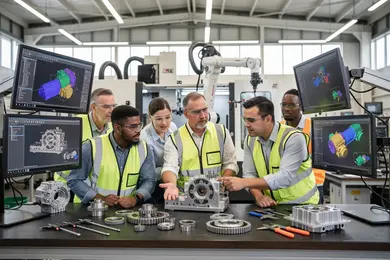
| Core mechanics | Statics, dynamics, mechanics of materials, machine design | Prepares students to analyze loads, motion, stress, and failure risk |
| Thermal and fluids | Thermodynamics, heat transfer, fluid mechanics, energy systems | Supports work in HVAC, aerospace, automotive, power, manufacturing, and process systems |
| Controls and mechatronics | Systems modeling, instrumentation, controls, robotics-related electives | Connects mechanical systems with sensors, automation, and modern manufacturing |
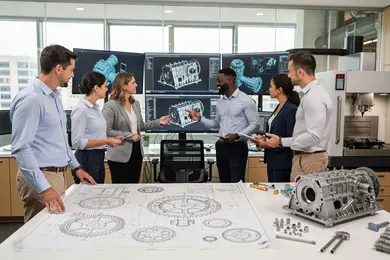
| Design and computing | CAD, computer-aided engineering, programming, numerical methods | Helps students create, simulate, test, and refine engineering designs |
| Capstone and labs | Experimental methods, design project, prototype testing, technical reporting | Demonstrates the ability to apply engineering judgment to open-ended problems |
Because employers increasingly expect digital design and simulation skills, online mechanical engineering students should take computing seriously. If you discover that you prefer software, algorithms, or AI systems more than physical design, comparing this path with the best online computer science degree options can help you avoid choosing the wrong major.
Common mistakes include underestimating the time required for lab reports, assuming simulations fully replace experimental judgment, and treating the capstone as just another class. A strong capstone can become a portfolio piece for internships or entry-level interviews, especially for online students who need evidence of hands-on competence.
How do remote labs, internships, and co-ops work in online mechanical engineering programs?
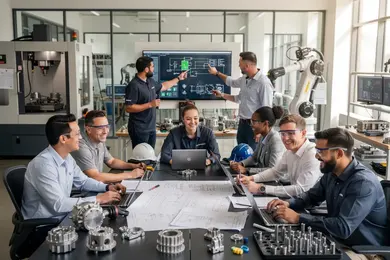
Remote engineering labs are usually delivered through a mix of lab kits, simulation software, remote-controlled equipment, recorded demonstrations, data-analysis assignments, local proctoring, and team-based design projects. The best programs make students collect, interpret, and defend experimental data rather than simply watching a video or completing a worksheet.
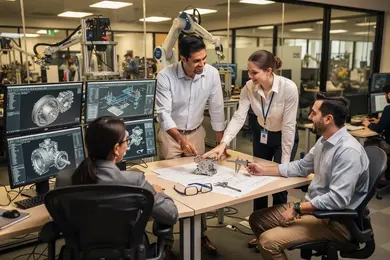
Internships and co-ops are often the difference between earning a degree and launching a strong engineering career. Online students may need to be more proactive because they are not physically present for campus recruiting events, but many can use local employers, manufacturing plants, utilities, defense contractors, automotive suppliers, HVAC firms, or product-development companies for experience.
Before enrolling, ask practical questions that reveal whether the online format will give you enough applied experience. These questions are especially important if you are changing careers and do not already work in a technical environment.
- Which lab courses require physical equipment, and will the school ship lab kits or require local access to tools?
- Are any labs, exams, orientations, or capstone presentations held on campus, and how many days of travel are typical?
- Do online students have access to the same internship postings, Handshake listings, career fairs, and employer events as campus students?
- Can current employment count toward internship or project requirements if the work is engineering-related?
- Are capstone teams allowed to work with industry sponsors, and can online students choose projects connected to local employers?
A good strategy is to build experience in stages: complete software and CAD projects early, pursue a technician or quality role if you need industry exposure, apply for internships before the junior year, and save capstone documentation for your portfolio. Do not wait until the final semester to prove that you can work on real engineering problems.
What are typical admission requirements and prerequisite math and science for these programs?
Admission requirements vary by school, but mechanical engineering is usually more selective than many online bachelor's programs because the curriculum depends on calculus readiness and science preparation.
First-year applicants may need a high school diploma or GED, transcripts, standardized test scores if required by the institution, and evidence of college-preparatory math and science. Transfer applicants usually need college transcripts and may be evaluated course by course for calculus, physics, chemistry, and general education credit.
The most important academic readiness question is whether you are prepared for calculus-based physics and engineering problem-solving. Students who enter without the right math background may still be admitted, but they can add semesters and cost by taking prerequisite algebra, trigonometry, precalculus, or introductory science courses first.
Use this checklist to evaluate your readiness before applying. It can help you decide whether to start directly in mechanical engineering or complete lower-cost prerequisites at a community college first.
- You have completed or are ready to begin Calculus I without extensive remediation.
- You are comfortable with algebra, trigonometry, vectors, unit conversions, and multi-step word problems.
- You can commit regular weekly time to problem sets, labs, discussion work, and team meetings.
- You have access to a computer that can run engineering software or cloud-based CAD and simulation tools required by the program.
- You have reviewed transfer policies for calculus, physics, chemistry, programming, and engineering graphics before taking outside courses.
Students sometimes choose engineering because they like technology but later realize they are more interested in information systems, data organization, or public-service knowledge work.
If that sounds closer to your goals, an MLIS degree online represents a very different graduate-level path and should not be confused with an undergraduate engineering route.
How long do online mechanical engineering bachelor's programs take, and what do they cost?
Most online mechanical engineering bachelor's programs require about 120 to 128 credits. A first-time full-time student usually needs about four years, while part-time working adults commonly take longer. Transfer students with completed calculus, physics, chemistry, and general education credits may shorten the timeline, but engineering sequences can still limit acceleration because courses often have strict prerequisites.
For cost context, College Board's 2024-25 national averages show how much published tuition and fees differ by institution type. These figures are not specific to online mechanical engineering, but they help you benchmark whether a quoted program price is unusually low, typical, or high.
- Public four-year in-state average published tuition and fees: $11,610
- Public four-year out-of-state average published tuition and fees: $30,780
- Private nonprofit four-year average published tuition and fees: $43,350
The table below summarizes the main cost drivers. Use it to estimate total cost rather than comparing tuition alone, because online engineering can include software, lab kits, proctoring, and travel expenses that are easy to overlook.
| Cost factor | Why it matters | What to ask |
| Tuition structure | Some online programs charge per credit, while others use different rates for residents and nonresidents | Is the online rate flat, resident-based, or out-of-state? |
| Transfer credits | Accepted credits can reduce time and cost, but engineering courses may not transfer easily | Will the department preapprove calculus, physics, chemistry, and engineering courses? |
| Lab and software fees | Mechanical engineering may require CAD tools, lab kits, simulation platforms, and testing supplies | Which required costs are not included in tuition? |
| Travel | Short residencies or proctored labs can add transportation and lodging expenses | Are any in-person requirements mandatory, and how often? |
| Time to completion | Extra prerequisite semesters can increase tuition and delay earnings | What is the realistic plan of study for a student with my transcript? |
Financially, the best program is not always the lowest tuition option. A slightly more expensive program may be worth considering if it accepts more transfer credit, has stronger internship access, requires less travel, or offers better support in difficult courses such as dynamics, thermodynamics, and fluid mechanics.
What entry-level jobs, industries, and career paths can graduates pursue?
Graduates of accredited mechanical engineering bachelor's programs can pursue entry-level engineering roles in industries that design, build, test, maintain, or improve physical systems. Common sectors include manufacturing, aerospace, automotive, energy, HVAC and building systems, defense, robotics, medical devices, materials, product development, utilities, and industrial automation.
Entry-level titles vary by employer, and some jobs labeled "engineer" may require ABET accreditation, FE exam progress, security clearance, industry experience, or specific software skills. The table below connects common job titles with the kind of work new graduates may perform.
| Entry-level path | Typical responsibilities | Helpful preparation |
| Mechanical design engineer | Create and revise parts, assemblies, drawings, and design documentation | CAD, machine design, tolerancing, materials, capstone portfolio |
| Manufacturing engineer | Improve production processes, tooling, quality, workflow, and equipment efficiency | Manufacturing systems, statistics, lean methods, internship experience |
| Test engineer | Plan experiments, collect performance data, troubleshoot failures, and write reports | Instrumentation, experimental methods, data analysis, lab discipline |
| HVAC or energy engineer | Analyze heating, cooling, ventilation, building performance, or energy systems | Thermodynamics, heat transfer, fluids, energy modeling |
| Product development engineer | Support concept design, prototyping, validation, and supplier coordination | Design thinking, CAD, prototyping, communication, project teamwork |
Mechanical engineering also overlaps with other technical fields. Students interested in earth systems, mining, energy resources, or environmental site work may want to compare mechanical engineering with online geology programs, especially if they prefer field science over machine design.
To improve early-career prospects, build a portfolio before graduation. Include CAD models, design calculations, lab reports, simulation screenshots, test plans, capstone results, and concise explanations of your role on team projects. For online students, a strong portfolio can help overcome employer uncertainty about hands-on experience.
What salary ranges and job outlook can mechanical engineering majors expect after graduation?
The U.S. Bureau of Labor Statistics reported a 2024 median annual wage of $102,320 for mechanical engineers. This is a national median for the occupation, not a starting salary guarantee. New graduates, career changers, and workers in lower-cost regions may start below the median, while experienced engineers in specialized industries or high-cost labor markets may exceed it.
BLS projections for mechanical engineers show faster-than-average employment growth for the 2024-2034 period. For students, the practical takeaway is that demand exists, but competition for the best roles still depends on internships, ABET status, software skills, communication ability, and demonstrated design experience.
Salary expectations are shaped by several variables. Consider these factors before using any salary figure to judge whether the degree is worth it:
- Industry: aerospace, energy, defense, medical devices, and advanced manufacturing may pay differently from local facilities or small product firms.
- Location: wages often reflect regional labor markets and cost of living.
- Experience: internships, co-ops, technician work, and capstone projects can affect entry-level competitiveness.
- Credential fit: some employers prefer or require an ABET-accredited engineering degree for engineer-track roles.
- Technical stack: CAD, simulation, programming, data analysis, controls, and additive manufacturing skills can strengthen a candidate's profile.
AI and automation are changing the work, but they are not eliminating the need for engineers who understand physical systems. Employers increasingly value graduates who can use simulation, generative design tools, sensors, digital twins, and data analysis while still applying engineering judgment, safety standards, and practical testing methods.
Other Things You Should Know About Mechanical Engineering
Possibly, but requirements vary by state. Many licensing boards consider ABET-accredited engineering degrees favorably, but PE licensure also typically involves exams and qualifying work experience. Check your state board before enrolling if licensure is part of your plan.
Usually, yes. Programs may require CAD, simulation, programming, or remote lab platforms. Some tools may run in the cloud, but you should ask for current hardware and software requirements before classes begin.
The content is difficult in either format. Online study can feel harder if you need frequent in-person help, but it can work well for disciplined students who use tutoring, office hours, study groups, and structured weekly schedules.
When choosing an online bachelor's program in mechanical engineering for 2027, consider accreditation, flexibility, faculty expertise, and access to virtual labs. Ensure the program supports your career goals and offers resources like internship placements and robust online support systems, enhancing virtual learning environments.
References
- Criteria for Accrediting Engineering Programs, 2025 - 2026 - ABET https://www.abet.org/accreditation/accreditation-criteria/criteria-for-accrediting-engineering-programs-2025-2026/
- Online courses for mechanical engineering students to join https://www.skyfilabs.com/blog/top-online-courses-for-mechanical-engineering-students
- Online ABET-Accredited Engineering Degree Guide - Educating Engineers https://educatingengineers.com/online-engineering-schools/abet-accredited-degree/
- Understanding the Prerequisite Requirements for 6 Popular Graduate Programs - Prereqcourses https://www.prereqcourses.com/prerequisite-requirements-for-6-programs/
- Subject requirement (A-G) https://admission.universityofcalifornia.edu/admission-requirements/first-year-requirements/subject-requirement-a-g.html
- 2025 Most Affordable Bachelor's in Engineering Online https://www.onlineu.com/most-affordable-colleges/engineering-degrees
- How to Become a Mechanical Engineer - Degree & Steps https://www.onlineengineeringprograms.com/faq/how-to-become-a-mechanical-engineer
- Remote Engineering Internships | Virtual Internships https://www.virtualinternships.com/interns/career-fields/engineering-internships/
- Best Career Options After Graduation: Top High-Paying Paths https://www.flashfirejobs.com/blog/best-career-options-after-graduation