2027 How to Become a Nutritionist in Wyoming

Co-Founder and Chief Data Scientist
Becoming a nutrition professional in Wyoming is not just an education decision; it is also a scope-of-practice, credential, cost, and career-planning decision. The state has rural communities with limited access to health services, food insecurity concerns, and a need for professionals who can translate nutrition science into practical guidance. According to 2024 data, 1 in 5 children in Wyoming faces hunger, which makes qualified nutrition support especially important in schools, clinics, public health programs, community organizations, and private practice.
This guide explains how to become a nutritionist in Wyoming, how the path differs from becoming a licensed dietitian, what education and supervised experience may be required, how long the process can take, what it may cost, and how to choose the right credential for your goals. It is written for students, career changers, healthcare workers, and wellness professionals who want a clear path into nutrition work in Wyoming.
Quick answer: How do you become a nutritionist in Wyoming?
Wyoming does not treat every nutrition-related role the same way. General nutrition education and wellness coaching may be available through non-licensed pathways, but regulated dietetics practice and protected professional titles require careful attention to state rules. If your goal is to provide medical nutrition therapy, work in clinical settings, or use regulated titles, the safest route is to complete an ACEND-accredited nutrition or dietetics program, finish supervised practice, pass the Commission on Dietetic Registration exam, and apply through the Wyoming Board of Dietetics and Nutrition.
Key things to know before you choose a path
- Wyoming does not require a separate general license for every person offering nutrition-related wellness education, but professionals who want to practice as dietitians must be licensed by the Wyoming Board of Dietetics and Nutrition.
- Licensed dietitian candidates typically need a bachelor's degree in nutrition or a closely related field, accredited supervised practice, and a passing score on the Commission on Dietetic Registration exam.
- Nutrition professionals may also pursue credentials such as the Certified Nutrition Specialist credential, which requires a master's degree and an exam.
- Continuing education matters after certification. Requirements vary by credentialing body, but they commonly range from 15 to 30 hours every two years.
- The dietitian licensure process usually requires documentation of education, supervised practice, exam results, and payment of an application fee to the Wyoming Board of Dietetics and Nutrition.
- Education requirements for nutritionists in Wyoming
- Wyoming licensing rules for nutritionists and dietitians
- How long the process usually takes
- Certification options and how to compare them
- Practical experience and supervised training
- Cost of becoming a nutritionist in Wyoming
- Salary and job outlook in Wyoming
- How collaboration expands nutrition care
- Scholarships and financial aid options
- Advanced education options
- Continuing education and professional development
- Technology trends in Wyoming nutrition practice
- Starting a private nutrition practice
- Career advancement opportunities
- Working with nurse practitioners
- Allied healthcare certifications
- Dual credentials with nurse practitioner training
- Steps to become a registered dietitian
- Nutrition specialization options
- Major challenges for nutritionists in Wyoming
- Research, analytics, and public health strategy
- Legal responsibilities and regulations
What education do you need to become a nutritionist in Wyoming?
Your education requirements depend on the type of nutrition work you want to do. A person offering general wellness education may follow a different route than someone who wants to work in a hospital, provide medical nutrition therapy, or become a registered dietitian nutritionist. Before choosing a school, decide whether you are preparing for a licensed dietetics career, a community health role, a coaching-focused role, or graduate-level nutrition practice.
- Bachelor's degree: A bachelor's degree in nutrition, dietetics, public health nutrition, or a related field is the standard foundation for many professional nutrition roles. The University of Wyoming offers a Bachelor of Science in Family & Consumer Sciences with a concentration in Human Nutrition and Food, an accredited program.
- Master's degree: As of January 1, 2024, a master's degree is mandatory for candidates who want to take the registration examination. The graduate degree can be in any discipline as long as the required nutrition coursework is completed. This higher education requirement matters in Wyoming because nutrition professionals may be asked to address public health concerns, including an obesity rate of 29%.
- Accredited program: If your goal is the registered dietitian nutritionist pathway, look for programs accredited by the Accreditation Council for Education in Nutrition and Dietetics. Currently, the University of Wyoming is the only university in the state with an ACEND-accredited nutrition program. Students who need more flexibility can compare online bachelor's programs in nutritional science, but they should confirm that any program supports their intended credential or licensure pathway.
- Alternative education routes: Students who are not seeking licensed clinical dietetics roles may consider options such as an Associate of Science in Health Science from Northern Wyoming Community College or a Graduate Certificate in Human Nutrition and Functional Medicine from the University of Western States. These options may support wellness, education, or adjacent healthcare work, but they may not meet dietitian licensure requirements by themselves.
| Education option | Best fit | Important caution |
| Associate degree | Students exploring health science, wellness support, or transfer pathways | Usually not enough for registered dietitian eligibility by itself |
| Bachelor's degree in nutrition or dietetics | Students preparing for professional nutrition roles or graduate study | Check ACEND accreditation if you plan to pursue the RDN route |
| Master's degree | Future RDN candidates, advanced practitioners, and specialization-focused professionals | Confirm that required nutrition coursework and supervised practice expectations are included |
| Graduate certificate | Professionals adding nutrition knowledge to an existing healthcare or wellness background | May strengthen expertise but may not replace a degree required for licensure or certification |
Does Wyoming require nutritionists to be licensed?
Wyoming's rules require careful interpretation because everyday use of the word nutritionist can differ from regulated professional practice. There is no separate state license for every general nutrition or wellness role. However, the state regulates dietetics practice and the use of certain professional titles. The Wyoming Department of Health notes that the state regulates the title "nutritionist," and employers may expect recognized credentials even when a role is not strictly clinical.
If you want to practice at the highest professional level, the Registered Dietitian Nutritionist credential is usually the most portable and widely recognized option. The RDN is tied to evidence-based training, supervised practice, and a national exam. It may also support stronger employment options in hospitals, public health agencies, long-term care, education, and clinical nutrition. According to the U.S. Bureau of Labor Statistics, the median annual wage for dietitians and nutritionists in Wyoming was approximately $73,390 as of 2024.
For non-clinical roles, certification can still improve credibility. Employers, clients, and referral partners often want proof that a nutrition professional has formal training, ethics standards, and continuing education. Joining groups such as the Wyoming Academy of Nutrition and Dietetics can also help students and professionals understand state expectations, find mentors, and learn about job openings.
| Goal | Likely credential direction | Why it matters |
| Clinical dietetics or medical nutrition therapy | RDN plus Wyoming licensure | Supports regulated practice in healthcare settings |
| Community nutrition education | Nutrition degree, public health training, or certification | Useful for food access, education, and prevention programs |
| Private wellness coaching | Relevant nutrition certification and clear scope of practice | Helps build trust while avoiding claims outside your training |
| Advanced nutrition consulting | Graduate education or CNS pathway | May support specialized work with complex client needs |
How long does it take to become a nutritionist in Wyoming?
The timeline depends on whether you want an entry-level wellness role, a degree-based nutrition career, or a licensed dietitian pathway. A shorter program may help you enter support roles sooner, while the RDN route requires more education, supervised practice, and exam preparation.
- Associate degree route: An associate degree in a related field generally takes about two years and can provide basic health science preparation or a transfer foundation.
- Bachelor's degree route: A bachelor's degree in nutrition or dietetics usually takes four years and is a common starting point for professional nutrition work.
- Supervised practice: After completing the required degree, dietitian candidates complete an internship or practicum that commonly lasts six to twelve months.
- Master's degree route: Students pursuing advanced practice or RDN eligibility under current exam requirements should plan for a master's degree, which typically adds two years after a bachelor's degree.
In practical terms, the route can range from approximately two years for an associate-level path to over six years for someone completing graduate education and supervised practice. Students interested in adjacent healthcare roles can also compare nutrition work with nutrition nurse responsibilities.
What nutrition certifications are available in Wyoming?
Certification is one of the most important decisions you will make because it affects credibility, job eligibility, scope of work, and long-term mobility. In Wyoming, the most relevant options include the Registered Dietitian Nutritionist credential and the Certified Nutrition Specialist credential.
To become an RDN in Wyoming, candidates complete a bachelor's degree in nutrition or a related field, finish a supervised practice program, and pass the national RDN exam. According to the Wyoming Department of Health, 12 accredited dietetic internship programs are available, and these programs provide the supervised practice hours needed for the credential. The CNS pathway is different: it requires a master's degree in nutrition or a related field, 1,000 hours of supervised practice, and a passing score on the CNS exam. This credential may appeal to professionals who want advanced nutrition science training and a broader consulting focus.
One reason certification matters is that it gives employers and clients a way to evaluate your preparation. A case study from the University of Wyoming reported that graduates with RDN credentials had a 30% higher employment rate than graduates without certification.
| Credential | Typical education requirement | Experience requirement | Best for |
| Registered Dietitian Nutritionist | Bachelor's degree plus current graduate-level exam requirement | Accredited supervised practice | Clinical nutrition, hospitals, public health, long-term care, and regulated dietetics practice |
| Certified Nutrition Specialist | Master's degree in nutrition or a related field | 1,000 hours of supervised practice | Advanced nutrition consulting, integrative nutrition, and specialized client work |
| Non-licensed nutrition certificates | Varies by provider | Varies by provider | Wellness education, coaching support, or continuing education when used within a limited scope |
A Wyoming nutritionist described the RDN route this way: "I pursued the RDN credential because I wanted a qualification that healthcare employers understood. The training was demanding, but it helped clients and colleagues trust my recommendations."
The chart below shows the most common majors for dietitians and nutritionists, as reported by Data USA.
What practical experience do nutritionists need in Wyoming?
Classroom learning is not enough for most nutrition careers. Wyoming nutrition professionals need applied experience with rural health needs, food access barriers, chronic disease prevention, and client education. Supervised practice is mandatory for the RDN route, and field experience is valuable even for non-licensed roles.
- Clinical settings: Experience in hospitals, clinics, or community health centers helps future nutritionists learn documentation, care coordination, and evidence-based counseling. The Wyoming Department of Health reports that approximately 20% of the state's population is enrolled in Medicaid, which highlights the need for nutrition professionals who understand low-income healthcare needs.
- Community programs: Food access and nutrition education work can be especially relevant in Wyoming. The Wyoming Food Bank of the Rockies serves over 50,000 individuals annually, giving nutrition students and professionals a way to understand food distribution, education, and outreach.
- Research projects: Collaboration with institutions such as the University of Wyoming can expose students to regional research on dietary habits, food security, and rural health challenges.
- Private sector settings: Wellness centers, private practices, and employer wellness programs can help nutritionists develop client communication, business, and program design skills. The Wyoming Department of Workforce Services reports increasing private-sector demand, with job openings projected to increase by 10% over the next decade.
How much does it cost to become a nutritionist in Wyoming?
The cost depends on the credential you want, the school you choose, whether you study in state or out of state, and whether you need graduate school. Students should compare total cost, not just tuition, because supervised practice, exams, materials, travel, technology, and licensure fees can affect the final investment.
- Tuition: The University of Wyoming offers a Bachelor of Science in Family & Consumer Sciences with a concentration in Human Nutrition and Food. Tuition fees for in-state students are typically between $5,000 and $10,000 annually, while out-of-state students may pay around $20,000 per year. Community colleges such as Northern Wyoming Community College may cost approximately $3,000 to $5,000 for an Associate degree. Students considering distance learning can compare the best online nutrition programs while confirming accreditation and credential eligibility.
- Licensure fees: Candidates applying through the Wyoming Dietetics Licensing Board pay an initial application fee of $200. The same fee applies for renewal every two years.
- Additional expenses: Books, lab materials, software, technology, and other course-related costs can exceed $1,000. Students in rural areas should also consider travel costs for labs, supervised practice sites, interviews, or exams.
| Cost category | What to check before enrolling | Why it affects ROI |
| Tuition | In-state rate, out-of-state rate, online tuition, fees, and graduate tuition | The lowest tuition is not always the best value if the program does not meet credential requirements |
| Accreditation | Whether the program is ACEND-accredited when needed | Accreditation can affect eligibility for supervised practice and the RDN pathway |
| Supervised practice | Placement support, travel distance, schedule flexibility, and site availability | Delays in placements can extend time in school and increase costs |
| Licensure and exams | Application fees, exam fees, renewal requirements, and continuing education | These costs continue after graduation and should be part of career planning |
What salary and job outlook can nutritionists expect in Wyoming?
The U.S. Bureau of Labor Statistics reports a positive outlook for dietitians and nutritionists in Wyoming, with projected growth of 8% from 2024 to 2034. The average salary for nutritionists in Wyoming is approximately $72,440 per year. Actual earnings can vary by credential, employer, experience, location, specialization, and whether the role is clinical, public health, education-based, corporate, or private practice.
- Population needs: Gradual population growth can increase demand for healthcare and wellness services, including nutrition counseling.
- Healthcare access: Expanding healthcare services can create openings for nutrition professionals in patient care and disease prevention.
- Public health priorities: Programs addressing obesity, chronic disease, food insecurity, and preventive health can expand nutrition-related employment.
- Education and research: Colleges, universities, and public agencies can create roles in teaching, research, program evaluation, and outreach.
- Telehealth: Remote counseling can help nutritionists reach clients in rural areas, although professionals must still follow applicable laws, privacy rules, and scope-of-practice limits.
| Work setting | Typical focus | Credential advantage |
| Hospitals and clinics | Medical nutrition therapy, chronic disease management, patient education | RDN and state licensure are often important |
| Public health agencies | Community programs, prevention, food access, education | Nutrition degree, public health experience, and program skills can help |
| Schools and community organizations | Child nutrition, family education, wellness initiatives | Experience with outreach and culturally responsive education is valuable |
| Corporate wellness | Employee health programs, workshops, coaching, prevention | Certification and communication skills can strengthen credibility |
| Private practice | Individual counseling, group programs, telehealth, niche services | Strong credentialing helps with referrals, trust, and risk management |
How can interdisciplinary collaboration improve nutrition care in Wyoming?
Nutrition work in Wyoming is often most effective when it is connected to broader healthcare and social support systems. Dietitians, nutritionists, nurses, physicians, behavioral health providers, pharmacists, social workers, and community health workers may all see different parts of a client's health picture. Collaboration helps nutrition professionals identify barriers, coordinate referrals, and design plans that fit medical needs, income, transportation, culture, and food access.
This is especially important in rural areas where clients may have fewer nearby specialists. Nutrition professionals who understand how nursing, public health, and allied health roles interact can build stronger care networks. If you are comparing healthcare careers, you may also find it useful to review how to become a nurse in Wyoming.
Are scholarships and financial aid available for nutrition students in Wyoming?
Students should start financial planning before they apply. Wyoming schools, professional associations, federal aid programs, and employer tuition benefits may help reduce the cost of nutrition education. Possible funding sources include institutional scholarships, merit-based grants, need-based aid, federal student aid, and loan forgiveness programs for qualifying public service or healthcare roles.
Ask each school whether scholarships are available specifically for nutrition, dietetics, public health, rural health, or healthcare workforce preparation. Students exploring related behavioral or community health careers may also compare funding pathways in guides such as how to become a substance abuse counselor in Wyoming.
What advanced education can strengthen a nutrition career in Wyoming?
Graduate education can be useful for students pursuing the RDN exam requirement, professionals moving into leadership, and nutritionists seeking specialization in clinical nutrition, public health, research, sports nutrition, or functional nutrition. Advanced programs may also improve skills in evidence appraisal, program design, counseling, metabolism, and chronic disease management.
Online graduate study may be attractive to Wyoming students who cannot relocate or commute regularly. Before enrolling, confirm whether the program supports your credential goals, includes required coursework, and fits your supervised practice timeline. One option to research is an online master's in dietetics.
How should nutritionists maintain professional development?
Nutrition science changes constantly, so continuing education is not optional for serious practitioners. Ongoing training helps professionals stay current on dietary guidelines, chronic disease research, counseling methods, telehealth practices, ethics, food insecurity interventions, and state regulatory expectations. Credentialing organizations may require continuing education, and employers may expect it even when it is not legally mandated for a specific role.
Good professional development should be relevant to your practice setting. A hospital dietitian may need clinical updates, while a community nutritionist may focus on program evaluation, food systems, or culturally responsive education. Professionals who work across healthcare teams may also benefit from understanding compliance models similar to Wyoming nursing license requirements.
How is technology changing nutrition practice in Wyoming?
Technology can help nutrition professionals serve clients across long distances. Telehealth, secure messaging, mobile food tracking tools, wearable devices, and digital education platforms can make follow-up easier for people who live far from clinics or have limited transportation. These tools can also support progress monitoring, appointment access, and personalized counseling.
Technology does not replace professional judgment. Nutritionists still need to protect privacy, interpret data carefully, avoid overpromising results, and stay within their legal scope of practice. Professionals who use technology effectively may strengthen their services and long-term earning potential; for broader context, review this guide to nutrition career paths and salary.
How can nutritionists start a private practice in Wyoming?
Private practice can offer flexibility, but it also requires business discipline. Before launching, decide who you serve, what services you offer, whether you will provide telehealth, how you will document client care, and whether your credential allows the services you plan to advertise. You should also review business registration, liability insurance, privacy practices, referral agreements, and billing procedures.
- Define your niche: Examples include family nutrition, diabetes prevention, sports nutrition, rural food access, weight management, pediatric nutrition, or wellness coaching.
- Clarify scope of practice: Do not market medical nutrition therapy unless your education, credential, and license support it.
- Build referral relationships: Connect with physicians, nurse practitioners, therapists, community programs, schools, gyms, and food access organizations.
- Use systems early: Scheduling software, secure telehealth tools, consent forms, documentation templates, and billing processes prevent operational problems later.
- Track outcomes carefully: Collect client feedback, monitor goals, and adjust services based on measurable needs.
Administrative skills can be a competitive advantage. For a related look at healthcare billing and office operations, see how to become a medical biller and coder in Wyoming.
What career advancement options are available for nutritionists in Wyoming?
Wyoming's nutrition workforce can advance through licensure, graduate education, specialization, leadership, public health program management, research, teaching, consulting, and entrepreneurship. The state's obesity rate of approximately 29% contributes to demand for professionals who can support prevention, education, and care coordination.
- Licensed dietitian or nutritionist roles: Licensure can open doors in hospitals, clinics, long-term care, and other healthcare settings where medical nutrition therapy is needed.
- Public health nutrition: Nutritionists can work with health departments and community agencies on obesity prevention, food access, maternal and child health, and chronic disease programs.
- Corporate wellness: Employers may hire nutrition professionals to design programs that support healthier workplace habits and employee well-being.
- Education and research: Academic institutions, including the University of Wyoming, may offer opportunities in teaching, research, extension work, and nutrition science education.
- Private practice and consulting: Independent nutrition professionals can develop client services, workshops, meal planning support, and niche programs. Those interested in integrative approaches can explore holistic nutrition certification.
The Wyoming Department of Health is one of the largest employers of nutritionists, which reflects the importance of nutrition work in public service, healthcare, and community health.
How can collaboration with nurse practitioners improve nutrition care?
Nurse practitioners can be important referral partners for nutritionists and dietitians. They often assess patients, manage chronic conditions, prescribe medications, and monitor ongoing health concerns. Nutrition professionals can complement that work by addressing diet quality, meal planning, food access, weight-related concerns, and nutrition-related risk factors.
This partnership can be especially useful in communities with limited healthcare access. Shared care plans can help clients receive more complete support without unnecessary duplication. To understand the training behind this partner role, see how to become a nurse practitioner in Wyoming.
Should nutritionists consider allied healthcare certifications?
Allied healthcare knowledge can make a nutrition professional more effective, especially in settings where clients have complex health needs. Training in areas such as health coaching, diabetes education, public health, exercise science, behavioral health, or medication awareness can help nutritionists communicate better with interdisciplinary teams.
Additional credentials should support your actual career goal, not distract from it. For example, understanding medication-nutrition interactions can improve collaboration with pharmacists, but it does not make a nutritionist a pharmacist. If you want to understand that adjacent role, review pharmacist licensure requirements in Wyoming.
Should nutritionists pursue nurse practitioner credentials too?
Dual preparation in nutrition and advanced nursing can be powerful, but it is a major commitment. Nurse practitioner education involves clinical nursing preparation, graduate-level study, and a different scope of practice. This option may make sense for someone who wants to provide primary care while integrating nutrition deeply into patient management.
For most nutritionists, targeted collaboration with nurse practitioners is more practical than earning both credentials. However, professionals who already have a nursing background and want advanced clinical authority may want to compare the best accredited NP programs in Wyoming.
What are the steps to become a registered dietitian in Wyoming?
The registered dietitian pathway is the clearest route for students who want clinical credibility, regulated practice, and broad employer recognition. The process requires planning because education, supervised practice, examination, and licensure must align.
- Choose an accredited nutrition or dietetics program that supports the RDN pathway.
- Complete the required undergraduate and graduate education, including the coursework needed for exam eligibility.
- Finish the required supervised practice experience through an approved internship or coordinated pathway.
- Prepare for and pass the national registration examination.
- Apply for Wyoming licensure through the appropriate state board and submit required documents and fees.
- Maintain your credential through renewal, continuing education, and ethical practice.
For a more detailed walkthrough, review the requirements to become a registered dietitian in Wyoming.
What specialization options can nutritionists pursue in Wyoming?
Specialization helps nutrition professionals stand out and serve specific community needs. In Wyoming, the best specialty depends on your credential, location, employer type, and client population.
- Clinical nutrition: Clinical nutrition focuses on diet-based support for medical conditions. Demand can be tied to obesity, diabetes, cardiovascular disease, digestive disorders, and other chronic conditions. According to the CDC, 36% of adults are classified as obese.
- Sports nutrition: Wyoming's outdoor culture and physically demanding lifestyles can create opportunities to work with athletes, outdoor workers, ranchers, and active adults.
- Pediatric nutrition: Pediatric specialists support children and families. This area is important because childhood obesity affects approximately 14% of children aged 2-5.
- Community nutrition: Community nutrition addresses food insecurity, nutrition education, and public health needs, especially in rural areas and food deserts.
A useful example is the Wyoming Department of Health's work on food insecurity, where nutrition professionals can help develop education and resource programs for low-income families. Students interested in specialization should look for coursework, supervised practice placements, and mentors aligned with their intended population.
What challenges do nutritionists face in Wyoming?
Wyoming offers meaningful nutrition work, but the practice environment can be difficult. Rural distance, limited access to specialists, reimbursement issues, and low public awareness can make service delivery more complex than in densely populated states.
- Geographic distance: Wyoming is the least populous state in the U.S., with a population density of just 6 people per square mile. Long distances and limited transportation can make it harder for clients to attend appointments and harder for nutritionists to build steady referral networks.
- Limited healthcare resources: Some communities have fewer hospitals, clinics, and specialists. According to the Wyoming Department of Health, only 15% of the state's counties have a registered dietitian, which shows how uneven access can be.
- Public awareness: Many residents may not know when to seek nutrition support or how food choices connect with long-term health. Wyoming has an adult obesity rate of 30%, which reinforces the need for education and prevention.
One Wyoming nutritionist described holding free consultations at a local health fair and realizing that many attendees had never connected daily eating habits with energy, chronic disease risk, or family health. Experiences like that show why outreach, trust-building, and plain-language education are essential in the state.
| Common mistake | Why it causes problems | Better approach |
| Choosing a program without checking accreditation | The program may not support RDN eligibility or licensure goals | Confirm ACEND status and ask the school how graduates qualify for supervised practice |
| Looking only at tuition | Fees, travel, technology, graduate school, and supervised practice costs can change the real price | Calculate total cost through graduation, credentialing, and licensure |
| Assuming all online programs meet Wyoming requirements | Some programs may be educational but not credential-aligned | Ask whether the program meets your intended certification and state practice goals |
| Using protected titles without verification | Title misuse can create legal and professional risk | Check Wyoming rules and consult the licensing board before advertising services |
| Expecting salary outcomes to be guaranteed | Pay depends on credential, employer, experience, location, and specialty | Compare job postings and speak with local professionals before committing |
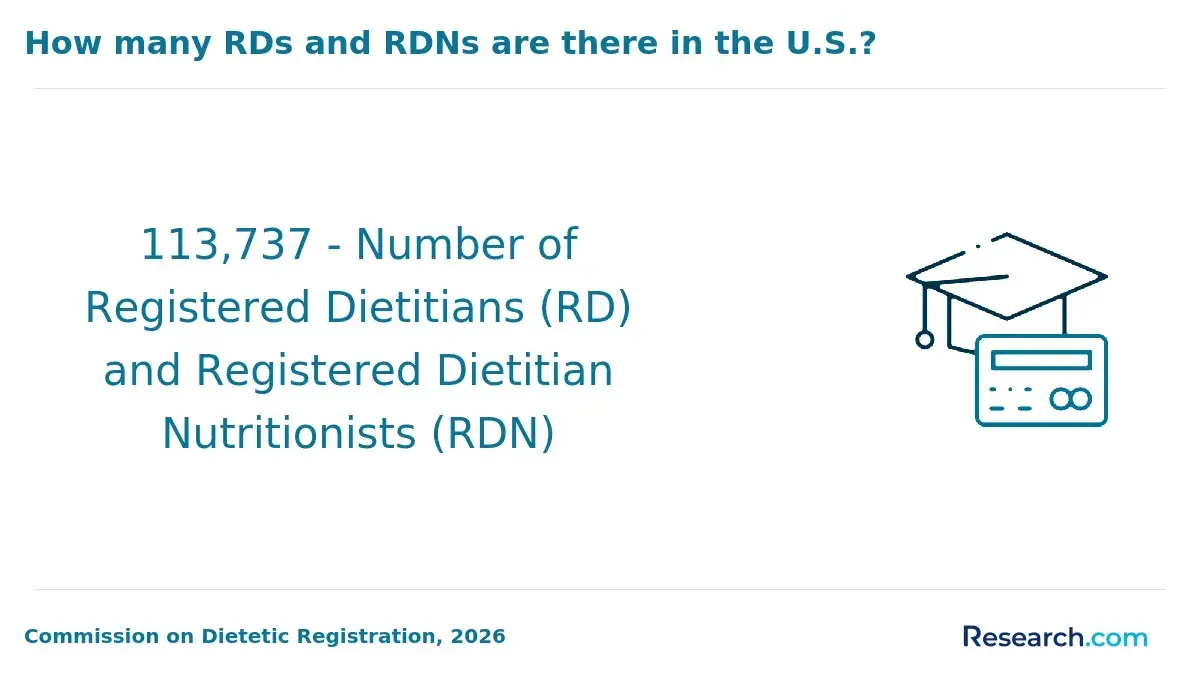
The chart below shows states with the highest number of RDNs, as published by the Commission on Dietetic Registration.
How can research and data analytics improve nutrition strategies in Wyoming?
Nutrition professionals can use data to move beyond one-size-fits-all education. Community health surveys, food access data, school nutrition patterns, chronic disease indicators, and program outcomes can help identify where interventions are most needed. In rural areas, data can also show whether telehealth, mobile services, group education, or partnerships with local organizations are reaching the right populations.
Strong analytics skills are useful in public health, grant-funded programs, research, and program evaluation. Nutritionists who work with data should understand ethical data use, privacy, cultural context, and the limits of what data can prove. For a related example of scientific training and evidence standards, see forensic scientist education requirements in Wyoming.
What legal responsibilities do nutritionists have in Wyoming?
Wyoming nutrition professionals must understand the difference between general nutrition education and regulated dietetics practice. The Wyoming Dietetics Licensing Board oversees licensure for qualified practitioners, and state law limits who may use certain professional titles. This protects the public by helping ensure that people providing clinical nutrition services have appropriate education, supervised practice, and examination credentials.
The Dietetics Licensure Act requires license candidates to meet Commission on Dietetic Registration requirements, including completion of an accredited education program and supervised practice. Some professionals, such as licensed healthcare providers and educators, may be exempt when providing nutrition-related information within the scope of their own profession. Those exemptions do not mean anyone can provide clinical dietetics services or use protected titles without meeting state requirements.
If you are unsure whether your planned services require licensure, contact the Wyoming Dietetics Licensing Board before advertising, taking clients, or using a title. Students who want a broader health and wellness foundation may also compare related fields such as the most affordable online master's degrees in exercise science.
What graduates say about becoming a nutritionist in Wyoming
"Working in Wyoming taught me that nutrition advice has to fit rural life. Families may rely on hunting, seasonal foods, long travel distances, and limited grocery access. Helping people make realistic choices in that context has been the most meaningful part of my career." – Callie
"The outdoor culture here shaped my niche. I work with ranchers, hikers, and active adults who need practical fueling strategies for demanding days. Wyoming made it clear to me that nutrition is not abstract; it has to support the way people actually live." – Jake
"My work with small towns and tribal communities showed me how deeply food access, culture, and health are connected. Building workshops that respect food traditions while introducing current nutrition science has made this career feel personal and purposeful." – Marissa
Related Articles for Nearby States
- 2027 How to Become a Nutritionist in Montana
- 2027 How to Become a Nutritionist in South Dakota
- 2027 How to Become a Nutritionist in Nebraska
- 2027 How to Become a Nutritionist in Colorado
- 2027 How to Become a Nutritionist in Idaho
- 2027 How to Become a Nutritionist in Utah
- 2027 How to Become a Nutritionist in North Dakota
- 2027 How to Become a Nutritionist in Kansas
- 2027 How to Become a Nutritionist in Iowa
- 2027 How to Become a Nutritionist in Nevada
References
- Accreditation Council for Education in Nutrition and Dietetics. (2024). Program Enrollment Trends 2000-2024. ACEND Data. ACEND program enrollment trends
- Commission on Dietetic Registration. (2026, January 26). Registered Dietitian (RD) and Registered Dietitian Nutritionist (RDN) by Region. Retrieved January 2026, from CDR regional registry statistics
- Commission on Dietetic Registration. (2026, January 26). Registry Statistics. Retrieved January 2026, from CDR registry statistics
- Become a Nutritionist. Becoming a Registered Dietitian in Wyoming. Become a Nutritionist Wyoming guide
- U.S. Bureau of Labor Statistics. (2024). Occupational Employment and Wage Statistics: May 2023 State Occupational Employment and Wage Estimates, Wyoming. BLS Wyoming occupational employment and wage estimates
- U.S. Bureau of Labor Statistics. (2025). Occupational Outlook Handbook: Dietitians and Nutritionists. BLS dietitians and nutritionists outlook
- CareerOneStop. (2023). Dietitians and Nutritionists. Occupation Profile. CareerOneStop Wyoming occupation profile
- Data USA. (2023). Dietitians & Nutritionists. Data USA dietitians and nutritionists profile
- eatrightPRO. Wyoming Statutes. Licensure Map and Statutes by State. eatrightPRO Wyoming licensure information
- Feeding America. (2024). What Hunger Looks Like in Wyoming. Feeding America Wyoming hunger data
- Justia. (2023). Title 33 - Professions and Occupations. 2023 Wyoming Statutes. Justia Wyoming dietetics statute
- National Association of Nutrition Professionals. Wyoming State Laws. NANP Wyoming state law overview
- NutritionistDegreeOnline. How to Become a Registered Dietitian in Wyoming. NutritionistDegreeOnline Wyoming guide
- State of Wyoming. Wyoming Dietetics Licensing Board. Wyoming Dietetics Licensing Board
- University of California San Diego. (2024). How to Become a Nutritionist: Career Opportunities and How They Differ from Dietitians. UC San Diego nutritionist career overview
- University of Wyoming. B.S. in Human Nutrition and Food. University of Wyoming human nutrition and food program
- Wyoming Department of Workforce Services. (2024). 2024 Wyoming Workforce Annual Report. Wyoming Workforce Annual Report
Key insights
- The best path depends on scope. If you want clinical authority and broad employer recognition, plan for the RDN route and Wyoming licensure.
- Accreditation is the first filter. Students pursuing dietetics should verify ACEND accreditation before committing to a program.
- The timeline can be short for entry-level wellness roles but much longer for licensed dietetics. Plan for over six years if your route includes graduate education and supervised practice.
- Cost planning should include tuition, supervised practice, exams, travel, materials, licensure, and renewal fees, not just the advertised program price.
- Rural practice is a major factor in Wyoming. Telehealth, community partnerships, and interdisciplinary collaboration can help nutritionists reach clients who might otherwise have limited access.
- Do not assume the title "nutritionist" is risk-free. Wyoming regulates dietetics practice and certain titles, so verify your legal scope before offering services.
- Specialization can improve career direction. Clinical nutrition, community nutrition, sports nutrition, pediatric nutrition, and private practice each require different preparation and strengths.
Other Things You Should Know about Becoming a Nutritionist in Wyoming
In 2027, to become a nutritionist in Wyoming, a Bachelor's degree in Nutrition, Dietetics, or a related field is typically required. Prospective nutritionists may pursue both online and in-person programs, but it's essential to ensure they are accredited by relevant bodies such as ACEND.
As of 2027, Wyoming does not require a specific license to practice as a nutritionist. However, obtaining a Certified Nutrition Specialist (CNS) or a Registered Dietitian Nutritionist (RDN) credential can enhance credibility and career prospects.